









Group members
ZAGHUM SHAFQAT
111731010
AMJAD ALI
111731011
MUHAMMAD SHAFQUE
111731012
Method study
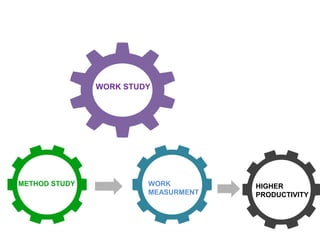
METHOD STUDY HIGHER
PRODUCTIVITY
WORK STUDY
WORK
MEASURMENT
DEFINATION
Method study is the systematic recording
and critical examination of existing and
proposed ways of doing work.
METHOD STUDY
HISTORY
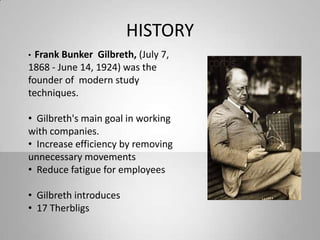
• Frank Bunker Gilbreth, (July 7,
1868 - June 14, 1924) was the
founder of modern study
techniques.
• Gilbreth's main goal in working
with companies.
• Increase efficiency by removing
unnecessary movements
• Reduce fatigue for employees
• Gilbreth introduces
• 17 Therbligs
Therbligs
Reach
Move
Grasp
Release
Reposition
Search
Select
Position
Inspect
Plan
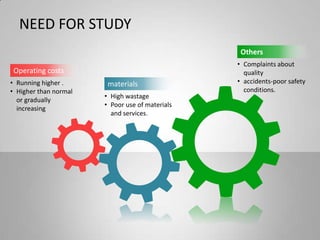
Operating costs
• Running higher .
• Higher than normal
or gradually
increasing
materials
• High wastage
• Poor use of materials
and services.
Others
• Complaints about
quality
• accidents-poor safety
conditions.
NEED FOR STUDY
Objectives of Method Study
• The improvement of processes and
procedures.
• The improvement of the design of plant and
equipment.
• Reduction of unnecessary fatigue.
• Improvements in the use of materials,
machines and manpower.
• Improvement of quality of the products.
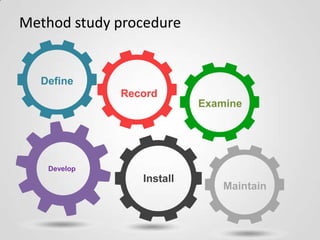
Method study procedure
Define
Record
Install
Develop
Examine
Maintain
Define
• Need of study and
improvement.
• Change for the better.
• Resisted by people.
• The effectiveness of
method study.
Define
• Economic Considerations
• Technical Considerations
• Human Reactions
Record
• Collect and record all the
relevant data.
• A clear and precise record
is necessary.
Recording Techniques
• Recorded information can
write on a page.
• Information can also save
On computer other devices.
Examine
• Examine all the facts.
• Develop the alternatives
• Each activity is questioned
and challenged.
Examine
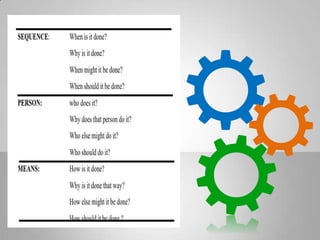
Secondary Questions
Develop the New Method
• The report should show
• All the cost, material,
labour etc
• The cost of installing new
method
• Executive actions
required to implement
the new method.
Defining the improve method
• It also give details
regarding
• The tools and equipment
used
• Description of method
• The diagram of workplace
layout
Develop the New Method
The method which will be
developed, will be most
practical, economic and
effective.
Install
• Gaining acceptance of
change by the management
• Gaining acceptance of
change by the workers
• Keeping a close eye on
the progress of
implementation of new
method
Maintain
• The standard practice by
regular routine checks.
How can workstudy improve productivity
A case study
• We investigated an existing line which had been
working on the order for approximately 10 days, it
was a small order and had several days left to run.
The line was set as follows:
• There were total 45 operators on the line
2 - Supervisors
2 -Final checkers
2- Roving QC
45- Machinists
9 - Helpers
2- Inline checkers
Starting times
• This factory is supposed to start at 9 AM
but everyday it starts at 9.15
• 58 people loosing 15 mins every morning
means 14.5 hrs lost in a day and 47 man
days lost every
month.
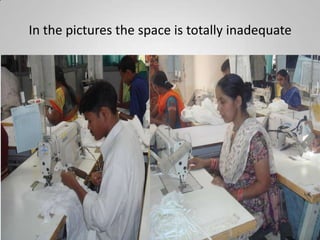
Space between the operators
• Operators hardly have space to sit
Distance between some machines is less than
14’’ with their back
• This spacing makes it possible to put 46
machines on this line
• The ideal distance should be 22 to 24’’
• Under these circumstances it is
Possible to fit only 38 people onto the line
In the pictures the space is totally inadequate
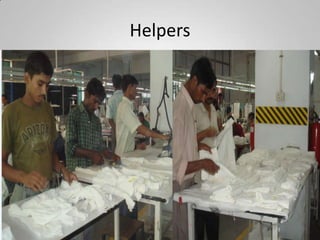
Helpers
• There were a total 9 helpers working outside the
line
• Doing a lot of matching and unnecessary work
• We did not allow helpers to be “Outside” the line,
• All of the operations had to be placed in the line
• Each person is given a sequential workplace
Helpers
WIP
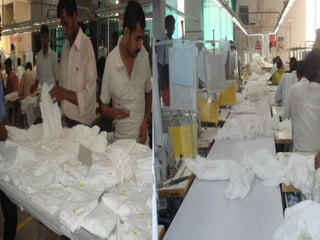
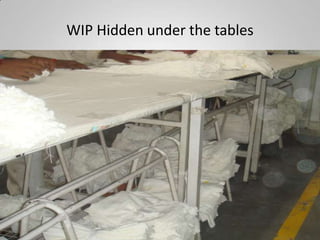
• WIP level on the factory floor is too low
• The line is not balanced properly
• All the WIP that is there is hidden under the tables
• Garments are not moving in bundles,
• Each piece gets passed to the next operator as it is
completed
WIP Hidden under the tables
Summary
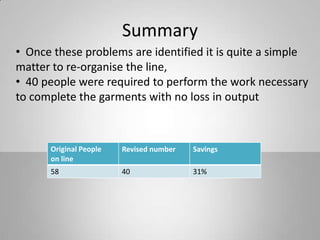
• Once these problems are identified it is quite a simple
matter to re-organise the line,
• 40 people were required to perform the work necessary
to complete the garments with no loss in output
SavingsRevised numberOriginal People
on line
31%4058
Summary
It should be noted by the readers that this factory
produces small orders –2000 to 5000 pieces on
average of course the same principles can be adopted in
factories with larger orders with the added
benefit that the improvements made would last longer
before the next style goes onto the line.
Method study
Method study

Method study

  • 2.
    Group members ZAGHUM SHAFQAT 111731010 AMJADALI 111731011 MUHAMMAD SHAFQUE 111731012 Method study
  • 3.
  • 4.
    DEFINATION Method study isthe systematic recording and critical examination of existing and proposed ways of doing work. METHOD STUDY
  • 5.
    HISTORY • Frank BunkerGilbreth, (July 7, 1868 - June 14, 1924) was the founder of modern study techniques. • Gilbreth's main goal in working with companies. • Increase efficiency by removing unnecessary movements • Reduce fatigue for employees • Gilbreth introduces • 17 Therbligs
  • 6.
  • 7.
    Operating costs • Runninghigher . • Higher than normal or gradually increasing materials • High wastage • Poor use of materials and services. Others • Complaints about quality • accidents-poor safety conditions. NEED FOR STUDY
  • 9.
    Objectives of MethodStudy • The improvement of processes and procedures. • The improvement of the design of plant and equipment. • Reduction of unnecessary fatigue. • Improvements in the use of materials, machines and manpower. • Improvement of quality of the products.
  • 10.
  • 11.
    Define • Need ofstudy and improvement. • Change for the better. • Resisted by people. • The effectiveness of method study.
  • 12.
    Define • Economic Considerations •Technical Considerations • Human Reactions
  • 13.
    Record • Collect andrecord all the relevant data. • A clear and precise record is necessary.
  • 14.
    Recording Techniques • Recordedinformation can write on a page. • Information can also save On computer other devices.
  • 15.
    Examine • Examine allthe facts. • Develop the alternatives • Each activity is questioned and challenged.
  • 16.
  • 17.
  • 19.
    Develop the NewMethod • The report should show • All the cost, material, labour etc • The cost of installing new method • Executive actions required to implement the new method.
  • 20.
    Defining the improvemethod • It also give details regarding • The tools and equipment used • Description of method • The diagram of workplace layout
  • 21.
    Develop the NewMethod The method which will be developed, will be most practical, economic and effective.
  • 22.
    Install • Gaining acceptanceof change by the management • Gaining acceptance of change by the workers • Keeping a close eye on the progress of implementation of new method
  • 23.
    Maintain • The standardpractice by regular routine checks.
  • 24.
    How can workstudyimprove productivity A case study • We investigated an existing line which had been working on the order for approximately 10 days, it was a small order and had several days left to run. The line was set as follows: • There were total 45 operators on the line • There were total 45 operators on the line 2 - Supervisors 2 -Final checkers 2- Roving QC 45- Machinists 9 - Helpers 2- Inline checkers
  • 25.
    Starting times • Thisfactory is supposed to start at 9 AM but everyday it starts at 9.15 • 58 people loosing 15 mins every morning means 14.5 hrs lost in a day and 47 man days lost every month.
  • 26.
    Space between theoperators • Operators hardly have space to sit Distance between some machines is less than 14’’ with their back • This spacing makes it possible to put 46 machines on this line • The ideal distance should be 22 to 24’’ • Under these circumstances it is Possible to fit only 38 people onto the line
  • 27.
    In the picturesthe space is totally inadequate
  • 28.
    Helpers • There werea total 9 helpers working outside the line • Doing a lot of matching and unnecessary work • We did not allow helpers to be “Outside” the line, • All of the operations had to be placed in the line • Each person is given a sequential workplace
  • 29.
  • 30.
    WIP • WIP levelon the factory floor is too low • The line is not balanced properly • All the WIP that is there is hidden under the tables • Garments are not moving in bundles, • Each piece gets passed to the next operator as it is completed
  • 32.
    WIP Hidden underthe tables
  • 33.
    Summary • Once theseproblems are identified it is quite a simple matter to re-organise the line, • 40 people were required to perform the work necessary to complete the garments with no loss in output SavingsRevised numberOriginal People on line 31%4058
  • 34.
    Summary It should benoted by the readers that this factory produces small orders –2000 to 5000 pieces on average of course the same principles can be adopted in factories with larger orders with the added benefit that the improvements made would last longer before the next style goes onto the line.