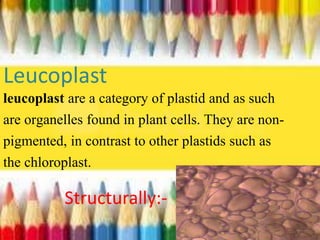
Plastids are organelles found in plant and algae cells that manufacture and store important chemical compounds. There are three main types of plastids: chloroplasts, which use photosynthesis to produce sugars and starches; chromoplasts, which give fruits, flowers, and stressed leaves their distinctive colors; and leucoplasts, which are non-pigmented. Each plastid type has a different structure and function in the cell.




![Plant Tissue [Edited Version]](https://cdn.slidesharecdn.com/ss_thumbnails/3-190118124432-thumbnail.jpg?width=640&height=640&fit=bounds)


