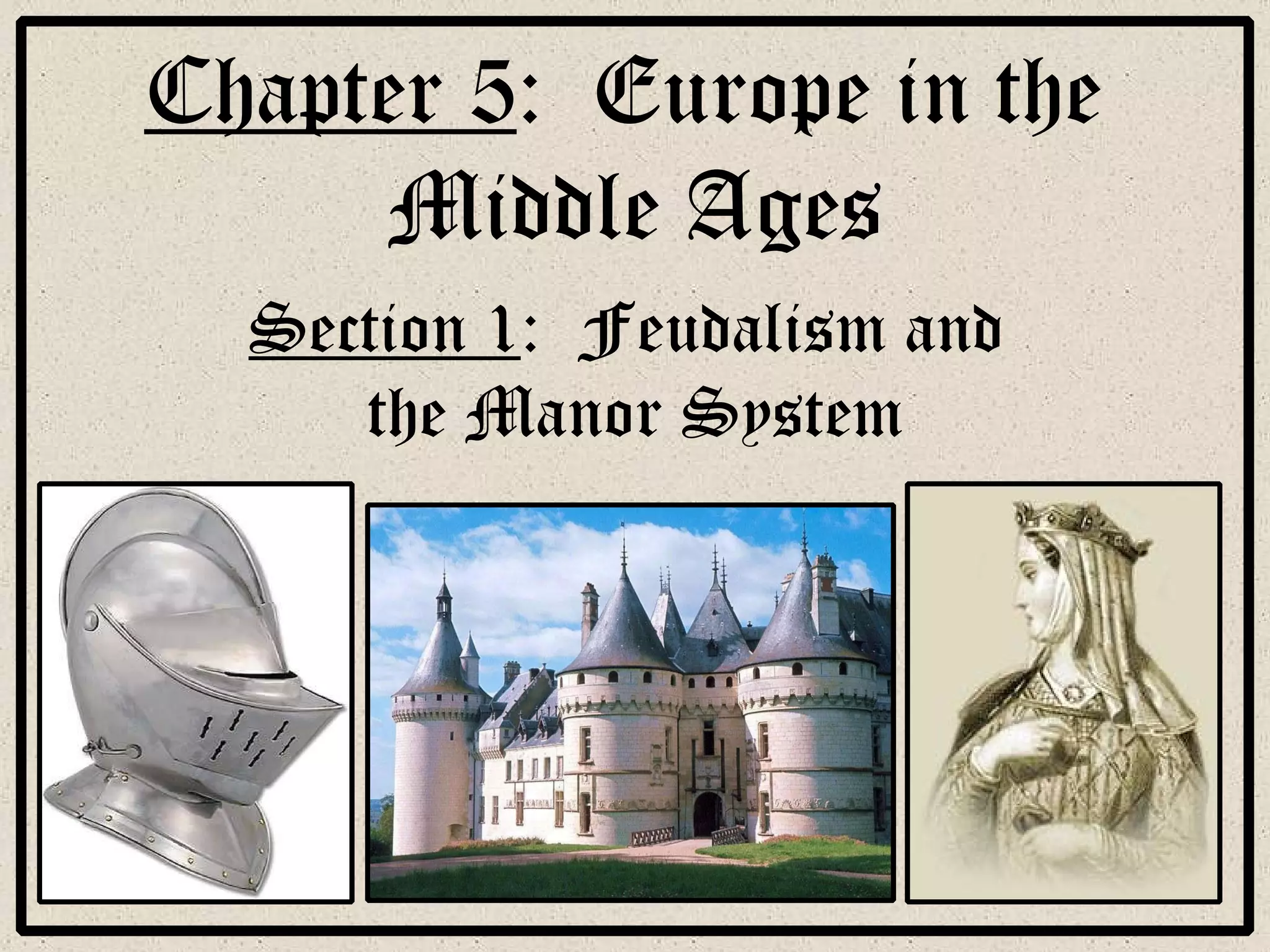
Chapter 5 :  Europe in the  Middle Ages Section 1 :  Feudalism and  the Manor System
Vocabulary Middle Ages :  The years between ancient and modern times Medieval :  Referring to the Middle Ages Feudalism :  A system in which land was owned by kings or lords but held by vassals in return for their loyalty Knight :  A man who received honor and land in exchange for serving a lord as a soldier Peasant :  A poor person who made their living as a farmer or laborer
Vocabulary Continued Fief :  A share of land Manor :  A large estate, often including farms and a village, ruled by a lord  Serf :  A farm worker considered part of the manor on which he or she worked
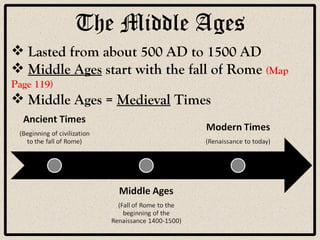
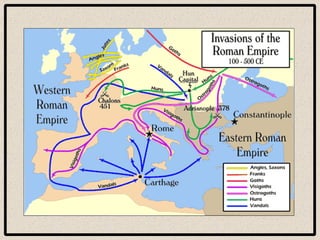
The Middle Ages Lasted from about 500 AD to 1500 AD Middle Ages  start with the fall of Rome  (Map Page 119) Middle Ages =  Medieval  Times
 
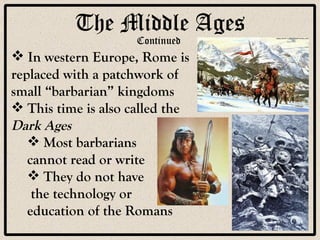
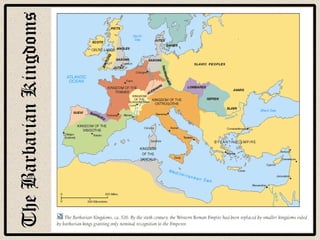
The Middle Ages In western Europe, Rome is replaced with a patchwork of small “barbarian” kingdoms This time is also called the  Dark Ages Most barbarians  cannot read or write They do not have  the technology or  education of the Romans Continued
The Barbarian Kingdoms
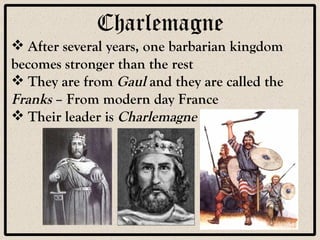
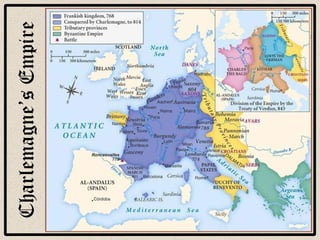
Charlemagne After several years, one barbarian kingdom becomes stronger than the rest They are from  Gaul  and they are called the  Franks  – From modern day France Their leader is  Charlemagne
Charlemagne’s Empire
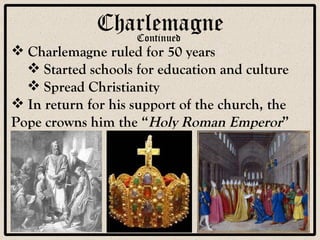
Charlemagne Continued Charlemagne ruled for 50 years Started schools for education and culture Spread Christianity In return for his support of the church, the Pope crowns him the “ Holy Roman Emperor ”
Charlemagne Continued When Charlemagne dies, his empire is divided between his three grandsons They weaken the empire by fighting each other for power Outside  invasions finally  end Charlemagne’s  empire
Charlemagne’s Empire
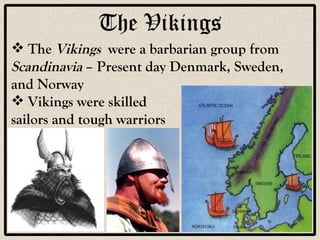
The Vikings The  Vikings   were a barbarian group from  Scandinavia  – Present day Denmark, Sweden, and Norway Vikings were skilled  sailors and tough warriors
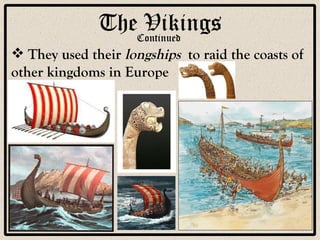
The Vikings Continued They used their  longships   to raid the coasts of other kingdoms in Europe
Viking Raids
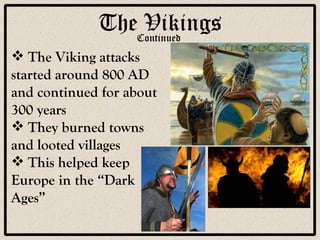
The Vikings The Viking attacks started around 800 AD and continued for about 300 years They burned towns and looted villages This helped keep Europe in the “Dark Ages” Continued
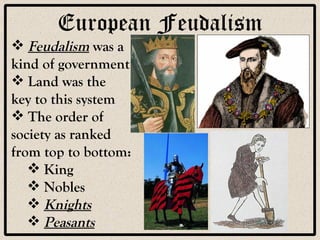
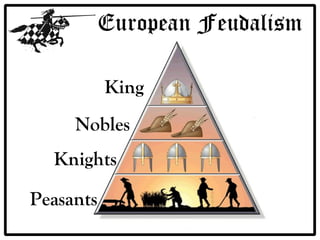
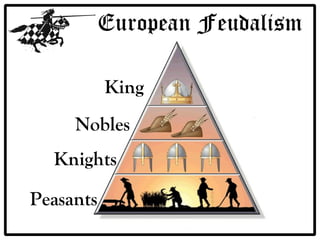
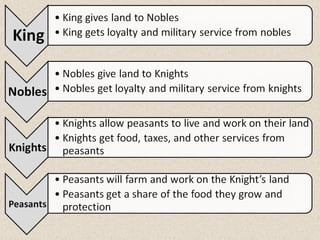
European Feudalism Feudalism  was a  kind of government Land was the  key to this system The order of  society as ranked  from top to bottom: King Nobles Knights Peasants
European Feudalism King Nobles Knights Peasants
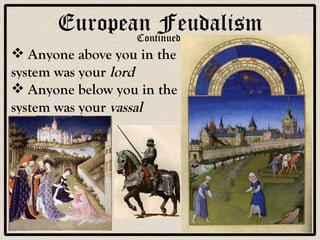
European Feudalism Continued Anyone above you in the system was your  lord Anyone below you in the system was your  vassal
European Feudalism King Nobles Knights Peasants
European Feudalism Lords gave their vassals a  fief  and/or protection In return, vassals gave their  lords some sort of service Continued
European Feudalism King Nobles Knights Peasants
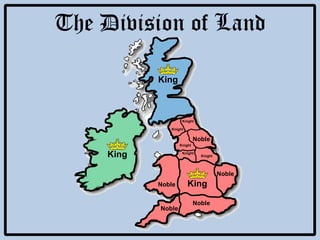
The Division of Land King King King Noble Noble Noble Noble Noble Knight Knight Knight Knight Knight
 
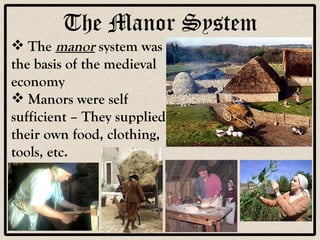
The Manor System The  manor  system was the basis of the medieval economy Manors were self sufficient – They supplied their own food, clothing, tools, etc.
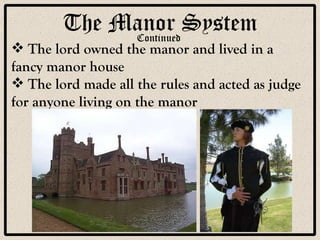
The Manor System The lord owned the manor and lived in a fancy manor house The lord made all the rules and acted as judge for anyone living on the manor Continued
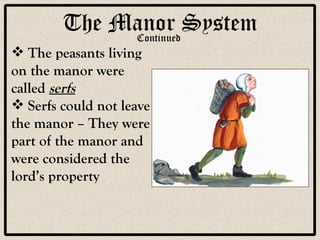
The Manor System The peasants living on the manor were called  serfs Serfs could not leave the manor – They were part of the manor and were considered the lord’s property Continued
 
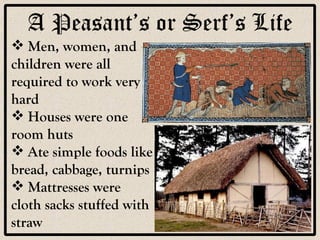
A Peasant’s or Serf’s Life Men, women, and children were all required to work very hard Houses were one room huts Ate simple foods like bread, cabbage, turnips Mattresses were cloth sacks stuffed with straw
 

5 1 feudalism and the manor system

  • 1.
    Chapter 5 : Europe in the Middle Ages Section 1 : Feudalism and the Manor System
  • 2.
    Vocabulary Middle Ages: The years between ancient and modern times Medieval : Referring to the Middle Ages Feudalism : A system in which land was owned by kings or lords but held by vassals in return for their loyalty Knight : A man who received honor and land in exchange for serving a lord as a soldier Peasant : A poor person who made their living as a farmer or laborer
  • 3.
    Vocabulary Continued Fief: A share of land Manor : A large estate, often including farms and a village, ruled by a lord Serf : A farm worker considered part of the manor on which he or she worked
  • 4.
    The Middle AgesLasted from about 500 AD to 1500 AD Middle Ages start with the fall of Rome (Map Page 119) Middle Ages = Medieval Times
  • 5.
  • 6.
    The Middle AgesIn western Europe, Rome is replaced with a patchwork of small “barbarian” kingdoms This time is also called the Dark Ages Most barbarians cannot read or write They do not have the technology or education of the Romans Continued
  • 7.
  • 8.
    Charlemagne After severalyears, one barbarian kingdom becomes stronger than the rest They are from Gaul and they are called the Franks – From modern day France Their leader is Charlemagne
  • 9.
  • 10.
    Charlemagne Continued Charlemagneruled for 50 years Started schools for education and culture Spread Christianity In return for his support of the church, the Pope crowns him the “ Holy Roman Emperor ”
  • 11.
    Charlemagne Continued WhenCharlemagne dies, his empire is divided between his three grandsons They weaken the empire by fighting each other for power Outside invasions finally end Charlemagne’s empire
  • 12.
  • 13.
    The Vikings The Vikings were a barbarian group from Scandinavia – Present day Denmark, Sweden, and Norway Vikings were skilled sailors and tough warriors
  • 14.
    The Vikings ContinuedThey used their longships to raid the coasts of other kingdoms in Europe
  • 15.
  • 16.
    The Vikings TheViking attacks started around 800 AD and continued for about 300 years They burned towns and looted villages This helped keep Europe in the “Dark Ages” Continued
  • 17.
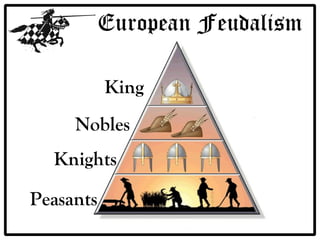
    European Feudalism Feudalism was a kind of government Land was the key to this system The order of society as ranked from top to bottom: King Nobles Knights Peasants
  • 18.
    European Feudalism KingNobles Knights Peasants
  • 19.
    European Feudalism ContinuedAnyone above you in the system was your lord Anyone below you in the system was your vassal
  • 20.
    European Feudalism KingNobles Knights Peasants
  • 21.
    European Feudalism Lordsgave their vassals a fief and/or protection In return, vassals gave their lords some sort of service Continued
  • 22.
    European Feudalism KingNobles Knights Peasants
  • 23.
    The Division ofLand King King King Noble Noble Noble Noble Noble Knight Knight Knight Knight Knight
  • 24.
  • 25.
    The Manor SystemThe manor system was the basis of the medieval economy Manors were self sufficient – They supplied their own food, clothing, tools, etc.
  • 26.
    The Manor SystemThe lord owned the manor and lived in a fancy manor house The lord made all the rules and acted as judge for anyone living on the manor Continued
  • 27.
    The Manor SystemThe peasants living on the manor were called serfs Serfs could not leave the manor – They were part of the manor and were considered the lord’s property Continued
  • 28.
  • 29.
    A Peasant’s orSerf’s Life Men, women, and children were all required to work very hard Houses were one room huts Ate simple foods like bread, cabbage, turnips Mattresses were cloth sacks stuffed with straw
  • 30.