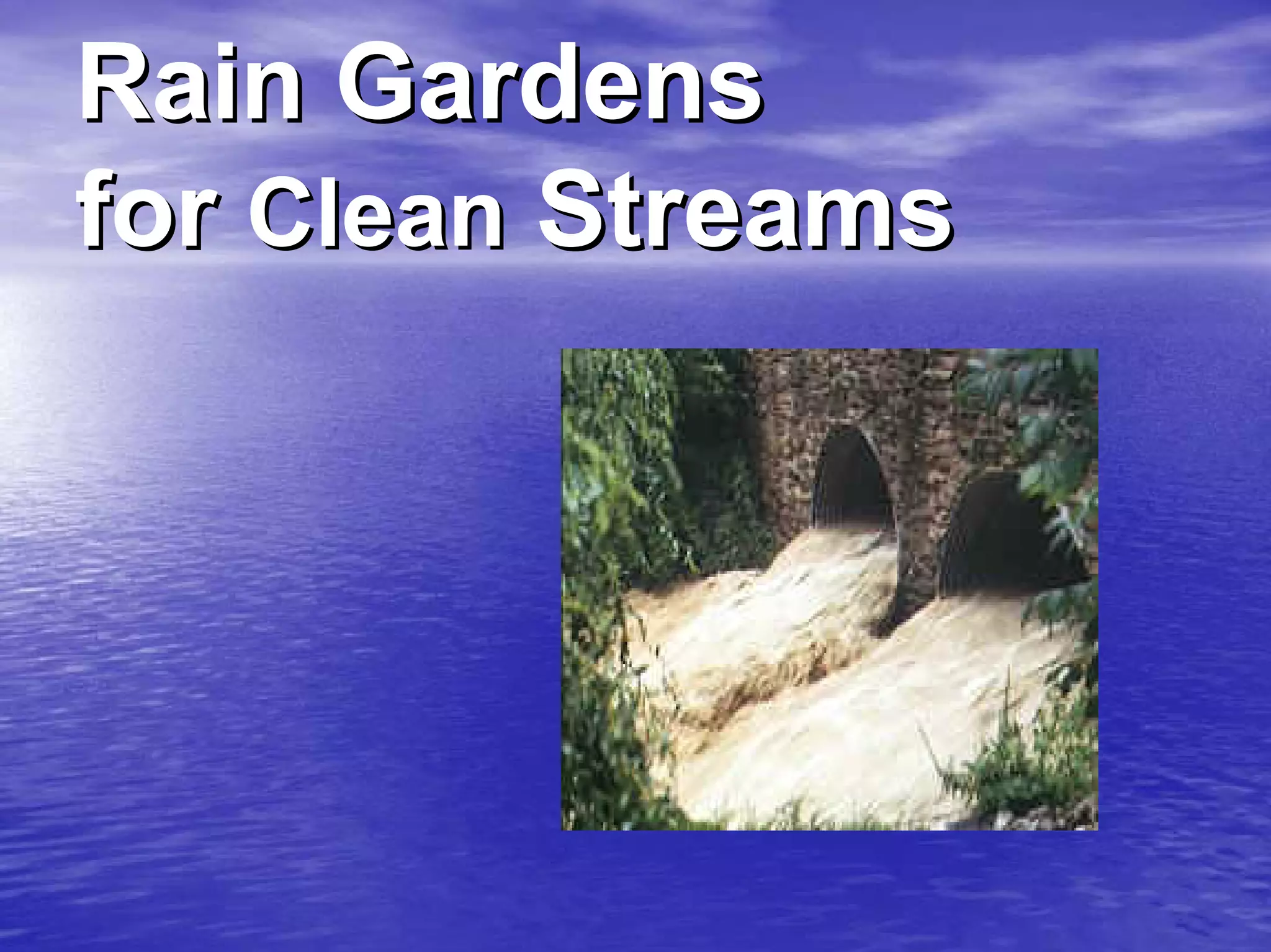
Rain Gardens 
for Clean Streams
Did you know? 
Up to 70% of pollution in streams, 
rivers and lakes comes from storm 
water runoff.
Planting a Rain Garden Garden…… 
•• reduces the amount of storm water entering 
storm drains 
•• helps reduce the amount of flooding by 
keeping water contained so that it can drain 
slowly over a period of time 
•• allows soil to filter out pollutants and reduce 
the amount of nonpoint source pollution 
entering our streams
Nonpoint Source Pollution (NPS) 
is caused by many reasons.
Excess fertilizers, herbicides, and 
insecticides from agricultural lands and 
residential areas
Oil, grease, and toxic chemicals 
from urban runoff and energy 
production
Sediment from improperly managed 
construction sites, crop and forest lands, 
and eroding stream banks
Salt from irrigation practices and acid drainage from abandoned minesmines
Bacteria and nutrients from 
livestock, pet wastes, and faulty 
septic systems
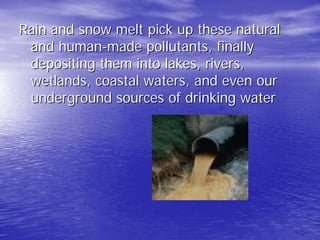
Rain and snow melt pick up these natural 
and human human-made pollutants, finally 
depositing them into lakes, rivers, 
wetlands, coastal waters, and even our 
underground sources of drinking water
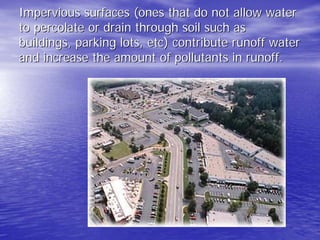
Impervious surfaces (ones that do not allow water 
to percolate or drain through soil such as 
buildings, parking lots, etc) contribute runoff water 
and increase the amount of pollutants in runoff.
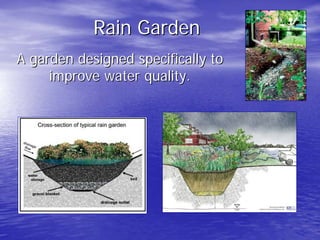
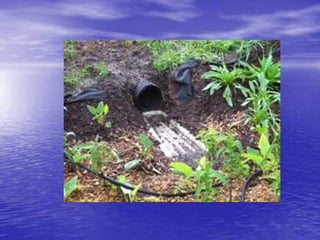
Rain Garden 
A garden designed specifically to 
improve water quality.
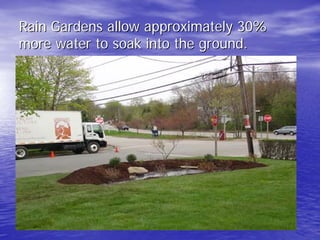
Rain Gardens allow approximately 30% 
more water to soak into the ground.
Is a rain garden hard to install ?
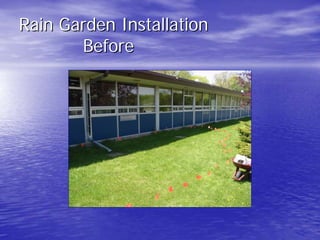
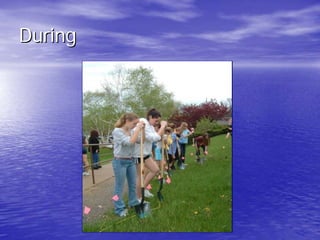
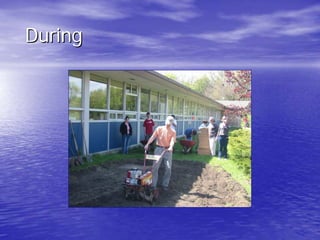
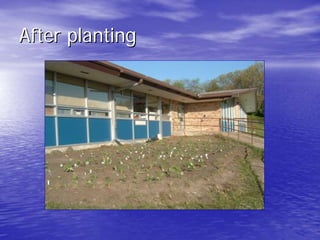
Rain Garden Installation 
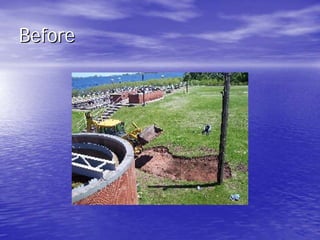
Before
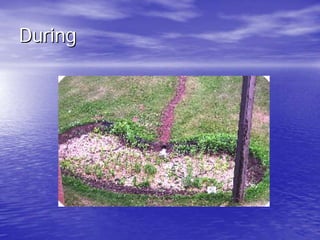
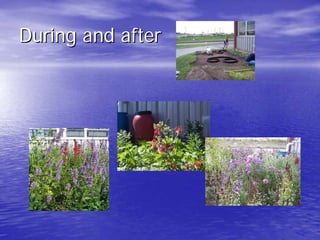
During
During
After planting
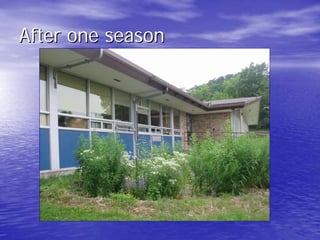
After one season
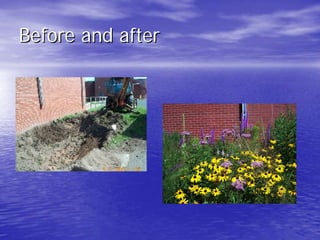
Before
During
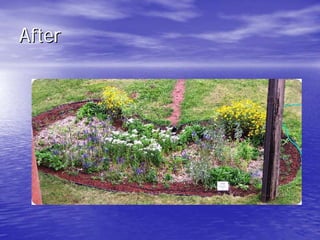
After
Determine the location 

Near the house to catch only roof 
run off or out on the lawn to 
catch water from the lawn and 
roof
Location 
•• A gentle slope (no more than 10%) 
–– Remember that the garden needs to be dug into a 
bowl shape and the greater the slope the deeper the 
bowl that will need to be created 
•• At least 10 feet from your foundation 
•• Near a downspout or where water naturally 
drains 
•• Away from areas where water already ponds as 
there will be little infiltration in this area
Planning stage 
•• Estimate the area which will drain into 
your garden (roof and/or lawn) 
•• Determine the type of soil (sand or clay) 


•• Gardens planted in sandy soil should be 
20 20-30 % the size of the drain area 
•• Gardens planted in clay soil should be 
60% of the drain area
Example 
Dylan Dylan’’s house is 50 feet by 40 feet so the roof area is 2000 
sq ft. (50 x 40 = 2000) 
He has two downspouts and will plant a rain garden in the 
back yard which will collect water from approximately 
half of the roof area or 1000 sq ft. 
His soil is sandy so the size of the rain garden should be 
approximately 250 sq ft. (1000 x .25 = 250)
Remember that a rain garden 
of any size will help to control 
storm water runoff
Building the Rain Garden 
•• Be sure you check with your utility company 
before attempting to dig in your yard. 
•• Lay out the garden with a garden hose or 
landscaper landscaper’’s spray paint. 
•• Start digging on the uphill side of the garden 
•• Remember that you will be moving soil from the 
uphill to the downhill side of the garden to 
create a berm and the bowl shape of the rain 
garden
Creating the berm 
•• The berm will be the highest on the downhill 
side of the rain garden 
•• The berm will gradually decrease as you go up 
the sides of the rain garden 
•• After shaping the berm be sure to stomp it down 
so that it is well compacted 
•• Cover the berm with compost/mulch or plant 
grass or a dry tolerant native plant to control 
erosion on the berm
Planting the garden 
•• Consider the height, color, moisture 
tolerance and bloom time of plant material 
•• Plant in groups of 3, 5 or 7 of the same 
variety 
•• Add rocks, boulders or other ornamental 
features to add interest 
•• Water at least once a week until plants are 
established
Maintaining the garden 
•• Weed out any invasive or non native 
plants until natives are established 
•• Stems and seed heads can be left to stand 
for winter interest and to attract birds and 
other wildlife to the garden 
•• As spring approaches cut back all standing 
growth and compost or discard 
•• Occasionally the plants should be divided
During and after
Before and after
Why plant a rain garden ? 
•• To prevent flooding and excess storm 
water damage 
•• To limit the amount of erosion and cut 
down on sediment entering our waterways 
•• To filter out and limit the amount of 
pollutants reaching our waterways 
•• To provide habitat for wildlife
Rain Gardens for Clean Streams
Financial and other support for this project is provided by the 
Pennsylvania Association of Conservation Districts, Inc. through a grant 
with the U.S. Environmental Protection Agency Agency’’s Section 319 Program. 
The mission of the Bucks County Conservation District is to provide for the wise use, management and development of the county’s soil, water and related natural resources. This is accomplished with the cooperation of public agencies, private groups and individuals
For more information: 
Mary Ellen Noonan 
Environmental Educator 
Bucks County Conservation District 
1456 Ferry Road, Suite 704 
Doylestown, PA 18901 
215.345.7577 
www.bucksccd.org

Rain Gardens for Clean Streams

  • 1.
    Rain Gardens forClean Streams
  • 2.
    Did you know? Up to 70% of pollution in streams, rivers and lakes comes from storm water runoff.
  • 3.
    Planting a RainGarden Garden…… •• reduces the amount of storm water entering storm drains •• helps reduce the amount of flooding by keeping water contained so that it can drain slowly over a period of time •• allows soil to filter out pollutants and reduce the amount of nonpoint source pollution entering our streams
  • 4.
    Nonpoint Source Pollution(NPS) is caused by many reasons.
  • 5.
    Excess fertilizers, herbicides,and insecticides from agricultural lands and residential areas
  • 6.
    Oil, grease, andtoxic chemicals from urban runoff and energy production
  • 7.
    Sediment from improperlymanaged construction sites, crop and forest lands, and eroding stream banks
  • 8.
    Salt from irrigationpractices and acid drainage from abandoned minesmines
  • 9.
    Bacteria and nutrientsfrom livestock, pet wastes, and faulty septic systems
  • 10.
    Rain and snowmelt pick up these natural and human human-made pollutants, finally depositing them into lakes, rivers, wetlands, coastal waters, and even our underground sources of drinking water
  • 11.
    Impervious surfaces (onesthat do not allow water to percolate or drain through soil such as buildings, parking lots, etc) contribute runoff water and increase the amount of pollutants in runoff.
  • 12.
    Rain Garden Agarden designed specifically to improve water quality.
  • 13.
    Rain Gardens allowapproximately 30% more water to soak into the ground.
  • 14.
    Is a raingarden hard to install ?
  • 15.
  • 16.
  • 17.
  • 18.
  • 19.
  • 20.
  • 21.
  • 22.
  • 24.
    Determine the location Near the house to catch only roof run off or out on the lawn to catch water from the lawn and roof
  • 25.
    Location •• Agentle slope (no more than 10%) –– Remember that the garden needs to be dug into a bowl shape and the greater the slope the deeper the bowl that will need to be created •• At least 10 feet from your foundation •• Near a downspout or where water naturally drains •• Away from areas where water already ponds as there will be little infiltration in this area
  • 26.
    Planning stage ••Estimate the area which will drain into your garden (roof and/or lawn) •• Determine the type of soil (sand or clay) •• Gardens planted in sandy soil should be 20 20-30 % the size of the drain area •• Gardens planted in clay soil should be 60% of the drain area
  • 27.
    Example Dylan Dylan’’shouse is 50 feet by 40 feet so the roof area is 2000 sq ft. (50 x 40 = 2000) He has two downspouts and will plant a rain garden in the back yard which will collect water from approximately half of the roof area or 1000 sq ft. His soil is sandy so the size of the rain garden should be approximately 250 sq ft. (1000 x .25 = 250)
  • 28.
    Remember that arain garden of any size will help to control storm water runoff
  • 29.
    Building the RainGarden •• Be sure you check with your utility company before attempting to dig in your yard. •• Lay out the garden with a garden hose or landscaper landscaper’’s spray paint. •• Start digging on the uphill side of the garden •• Remember that you will be moving soil from the uphill to the downhill side of the garden to create a berm and the bowl shape of the rain garden
  • 30.
    Creating the berm •• The berm will be the highest on the downhill side of the rain garden •• The berm will gradually decrease as you go up the sides of the rain garden •• After shaping the berm be sure to stomp it down so that it is well compacted •• Cover the berm with compost/mulch or plant grass or a dry tolerant native plant to control erosion on the berm
  • 31.
    Planting the garden •• Consider the height, color, moisture tolerance and bloom time of plant material •• Plant in groups of 3, 5 or 7 of the same variety •• Add rocks, boulders or other ornamental features to add interest •• Water at least once a week until plants are established
  • 32.
    Maintaining the garden •• Weed out any invasive or non native plants until natives are established •• Stems and seed heads can be left to stand for winter interest and to attract birds and other wildlife to the garden •• As spring approaches cut back all standing growth and compost or discard •• Occasionally the plants should be divided
  • 33.
  • 34.
  • 35.
    Why plant arain garden ? •• To prevent flooding and excess storm water damage •• To limit the amount of erosion and cut down on sediment entering our waterways •• To filter out and limit the amount of pollutants reaching our waterways •• To provide habitat for wildlife
  • 36.
    Rain Gardens forClean Streams
  • 37.
    Financial and othersupport for this project is provided by the Pennsylvania Association of Conservation Districts, Inc. through a grant with the U.S. Environmental Protection Agency Agency’’s Section 319 Program. The mission of the Bucks County Conservation District is to provide for the wise use, management and development of the county’s soil, water and related natural resources. This is accomplished with the cooperation of public agencies, private groups and individuals
  • 38.
    For more information: Mary Ellen Noonan Environmental Educator Bucks County Conservation District 1456 Ferry Road, Suite 704 Doylestown, PA 18901 215.345.7577 www.bucksccd.org