KESHRI S YADAV
JUNIOR RESIDENT
SN MEDICAL COLLEGE AGRA
contents
 Definition
 Introduction
 Epidemiology
 Causes
 Pathogenesis
 Clinical features and investigations
 Potential therapies
 conclusion
Definition
 Non alcoholic fatty liver ds(NAFLD) is a
clinicopathological syndrome encompasses several
clinical entities ranging from simple steatosis to
steatohepatits, fibrosis and ESLD in absence of
signifcant alcohol intake.
 NASH is a part of spectrum of NAFLD and
defined as steatosis with hepatocellular ballooning
plus lobular inflammation.
• Fatty liver disease is defined as more than 5% of the
hepatocytes containing fat or more than 5% of the
liver weight due to fat.
•Macrovesicular Fatty Liver Changes
•Focal Hepatic Cell Necrosis
•Acute & Chronic Inflammatry Cell Infiltration
•Mallory Hyaline
•Fibrosis & Cirrhosis
•No H/O Alcohol Abuse
Non alcoholic fatty liver disease
 Although NAFLD was recognized long ago by Zelman,
et al. it was blissfully ignored for almost 2.5 decade.
 Ludwig et al. brought it into the limelight in 1980 and
coined the term nonalcoholic steatohepatitis (NASH) for
alcohol like liver disease that developed in persons who
were not heavy drinkers.
 Harrison 19 th ed.
•Not heavy drinker –who drink <20 grams/day for
men 2 drink and <10 grams/day for women 1drink).
•One drink means 10 gm of ethanol,1 can of beer,4
ounce of wine or 1.5 ounce of( one shot) of distilled
spirit
EPIDEMIOLOGY
 NAFLD is probably most common liver disorder in
world and mc cause of CLD in many parts of the world
 incidence of 10–24% in the general population
 Mostly in 4th to 6th decade of life
 More common in female
 Very common in type II DM and Metabolic syndrome
 75 % of type II diabetics have some form of NAFLD
 HARRISON 19TH EDITION
 As far as obesity is regarded, steatosis has been
reported in 70% of obese and 35% of lean patients
and NASH in 18.5% of obese and 2.7% of lean
patients in a consecutive study
 2–3% of NASH present cirrhosis
IN INDIA
 Epidemiological studies suggest prevalence of
NAFLD in around 9% to 32% of general
population in India
 with higher prevalence in those with
overweight or obesity and those with diabetes
or prediabetes
API text book-2013
 Clinicopathological studies show that NAFLD is
an important cause of unexplained rise in hepatic
transaminases, cryptogenic cirrhosis and
cryptogenic hepatocellular carcinoma in Indian
patients
 There is high prevalence of insulin resistance and
nearly half of Indian patients with NAFLD have
evidence of full-blown metabolic syndrome.
API text book-2013 CHAP 54
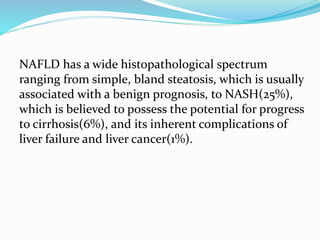
NAFLD has a wide histopathological spectrum
ranging from simple, bland steatosis, which is usually
associated with a benign prognosis, to NASH(25%),
which is believed to possess the potential for progress
to cirrhosis(6%), and its inherent complications of
liver failure and liver cancer(1%).
•The risk factors for NAFLD are -obesity, type 2
diabetes mellitus (T2DM), dyslipidemia and metabolic
syndrome;cardivovascular risks
•other conditions with emerging association include
polycystic ovarian syndrome, hypothyroidism,
hypopituitarism, hypogonadism, obstructive sleep
apnea and pancreatoduodenal resection
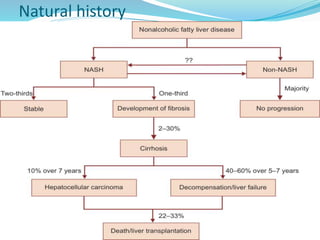
Natural history
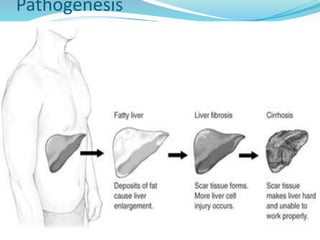
Pathogenesis
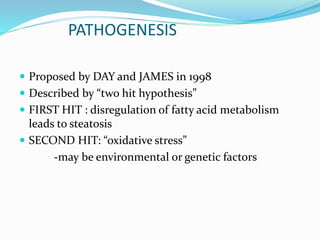
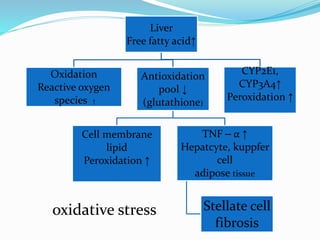
PATHOGENESIS
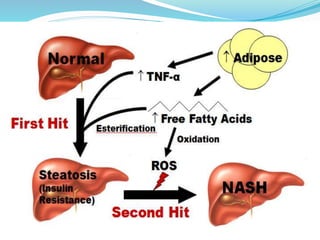
 Proposed by DAY and JAMES in 1998
 Described by “two hit hypothesis”
 FIRST HIT : disregulation of fatty acid metabolism
leads to steatosis
 SECOND HIT: “oxidative stress”
-may be environmental or genetic factors
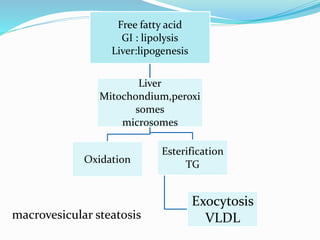
Free fatty acid
GI : lipolysis
Liver:lipogenesis
Liver
Mitochondium,peroxi
somes
microsomes
Oxidation
Esterification
TG
Exocytosis
VLDLmacrovesicular steatosis
Liver
Free fatty acid↑
Oxidation
Reactive oxygen
species ↑
Antioxidation
pool ↓
(glutathione)
Cell membrane
lipid
Peroxidation ↑
TNF – α ↑
Hepatcyte, kuppfer
cell
adipose tissue
Stellate cell
fibrosis
CYP2E1,
CYP3A4↑
Peroxidation ↑
oxidative stress
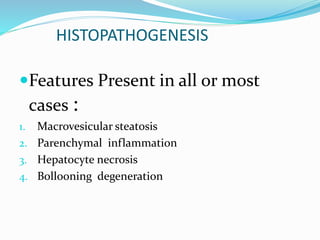
HISTOPATHOGENESIS
Features Present in all or most
cases :
1. Macrovesicular steatosis
2. Parenchymal inflammation
3. Hepatocyte necrosis
4. Bollooning degeneration
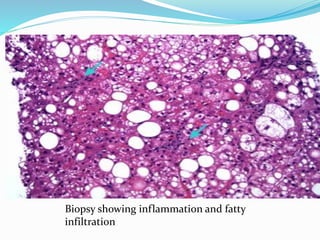
Biopsy showing inflammation and fatty
infiltration
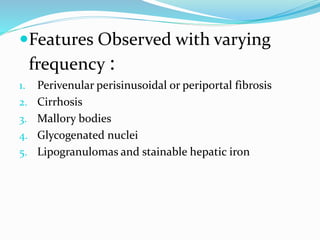
Features Observed with varying
frequency :
1. Perivenular perisinusoidal or periportal fibrosis
2. Cirrhosis
3. Mallory bodies
4. Glycogenated nuclei
5. Lipogranulomas and stainable hepatic iron
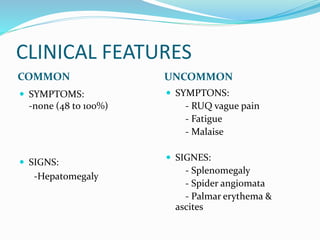
CLINICAL FEATURES
COMMON UNCOMMON
 SYMPTOMS:
-none (48 to 100%)
 SIGNS:
-Hepatomegaly
 SYMPTONS:
- RUQ vague pain
- Fatigue
- Malaise
 SIGNES:
- Splenomegaly
- Spider angiomata
- Palmar erythema &
ascites
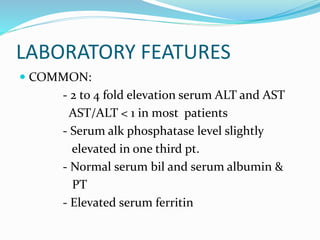
LABORATORY FEATURES
 COMMON:
- 2 to 4 fold elevation serum ALT and AST
AST/ALT < 1 in most patients
- Serum alk phosphatase level slightly
elevated in one third pt.
- Normal serum bil and serum albumin &
PT
- Elevated serum ferritin
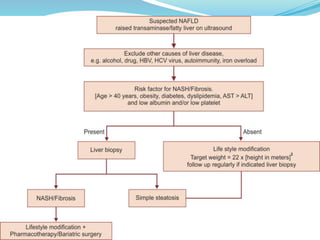
DIAGNOSTIC APPROACH
Elevated lever enzyme or
Heptomegaly
Exclude excessive alcohol and
other form of liver disease by
history & lab tests
Image liver by US , CT or
MRI
Normal Fatty Liver present
Liver
Biopsy
Consider Liver
biopsy to stage
dis& define risk
of progression
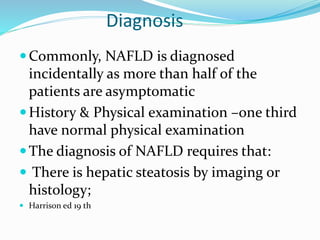
Diagnosis
Commonly, NAFLD is diagnosed
incidentally as more than half of the
patients are asymptomatic
History & Physical examination –one third
have normal physical examination
The diagnosis of NAFLD requires that:
 There is hepatic steatosis by imaging or
histology;
 Harrison ed 19 th
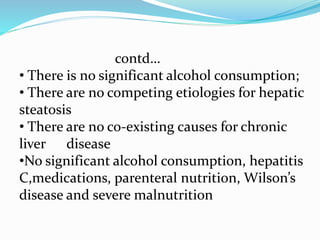
contd…
• There is no significant alcohol consumption;
• There are no competing etiologies for hepatic
steatosis
• There are no co-existing causes for chronic
liver disease
•No significant alcohol consumption, hepatitis
C,medications, parenteral nutrition, Wilson’s
disease and severe malnutrition
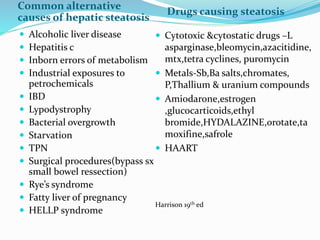
Common alternative
causes of hepatic steatosis
Drugs causing steatosis
 Alcoholic liver disease
 Hepatitis c
 Inborn errors of metabolism
 Industrial exposures to
petrochemicals
 IBD
 Lypodystrophy
 Bacterial overgrowth
 Starvation
 TPN
 Surgical procedures(bypass sx
small bowel ressection)
 Rye’s syndrome
 Fatty liver of pregnancy
 HELLP syndrome
 Cytotoxic &cytostatic drugs –L
asparginase,bleomycin,azacitidine,
mtx,tetra cyclines, puromycin
 Metals-Sb,Ba salts,chromates,
P,Thallium & uranium compounds
 Amiodarone,estrogen
,glucocarticoids,ethyl
bromide,HYDALAZINE,orotate,ta
moxifine,safrole
 HAART
Harrison 19th ed
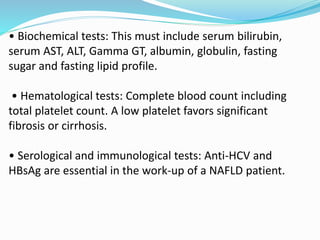
• Biochemical tests: This must include serum bilirubin,
serum AST, ALT, Gamma GT, albumin, globulin, fasting
sugar and fasting lipid profile.
• Hematological tests: Complete blood count including
total platelet count. A low platelet favors significant
fibrosis or cirrhosis.
• Serological and immunological tests: Anti-HCV and
HBsAg are essential in the work-up of a NAFLD patient.
 Other markers of fibrosis that have been evaluated
include high-sensitivity C reactive protein, plasma
pentraxin 3, interleukin 6 and cytokeratin 8 & 18
cleaved during apoptosis
 It differenciate pt. with NASH from those with simple
steatosis or normal liver,higher level suggest worse
scarring(advance fibrosis or cirrhosis)
 Liver biopsy should be considered in situations when
there is a diagnostic uncertainty
harrison 19 the ed
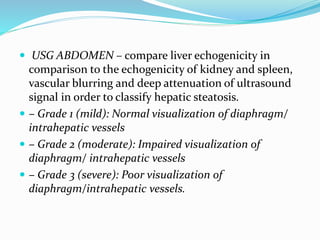
 USG ABDOMEN – compare liver echogenicity in
comparison to the echogenicity of kidney and spleen,
vascular blurring and deep attenuation of ultrasound
signal in order to classify hepatic steatosis.
 – Grade 1 (mild): Normal visualization of diaphragm/
intrahepatic vessels
 – Grade 2 (moderate): Impaired visualization of
diaphragm/ intrahepatic vessels
 – Grade 3 (severe): Poor visualization of
diaphragm/intrahepatic vessels.
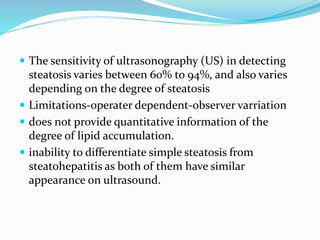
 The sensitivity of ultrasonography (US) in detecting
steatosis varies between 60% to 94%, and also varies
depending on the degree of steatosis
 Limitations-operater dependent-observer varriation
 does not provide quantitative information of the
degree of lipid accumulation.
 inability to differentiate simple steatosis from
steatohepatitis as both of them have similar
appearance on ultrasound.
 NCCT-most accurate CT technique to detect and
characterize hepatic steatosis
 MRI-accurate and rapid assessment of hepatic
steatosis to a lower limit of 3%.
 Magnetic resonance spectroscopy provides a
sensitive, quantitative, noninvasive method to
measure hepatic triglyceride content (HTGC)
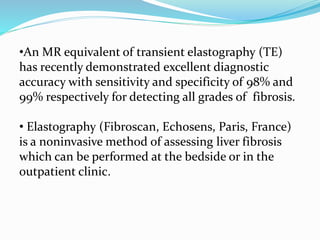
•An MR equivalent of transient elastography (TE)
has recently demonstrated excellent diagnostic
accuracy with sensitivity and specificity of 98% and
99% respectively for detecting all grades of fibrosis.
• Elastography (Fibroscan, Echosens, Paris, France)
is a noninvasive method of assessing liver fibrosis
which can be performed at the bedside or in the
outpatient clinic.
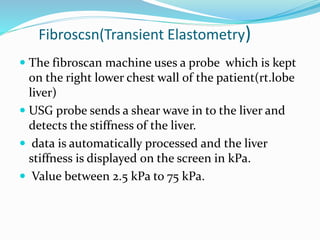
Fibroscsn(Transient Elastometry)
 The fibroscan machine uses a probe which is kept
on the right lower chest wall of the patient(rt.lobe
liver)
 USG probe sends a shear wave in to the liver and
detects the stiffness of the liver.
 data is automatically processed and the liver
stiffness is displayed on the screen in kPa.
 Value between 2.5 kPa to 75 kPa.
Contd..
•90–95% healthy people have value 5.5+1.6kPa
•Male have slightly more 5.8+1.5 vs 5.2+1.6kPa
•Cutof Values differ for different cases of cirrhosis
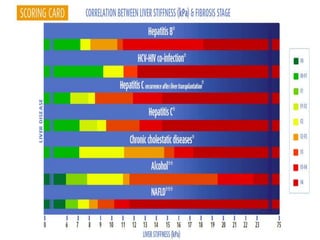
•Results can be converted to Metavir staging of liver
biopsy by using scoring card.
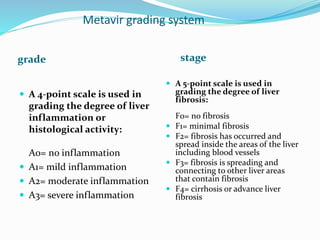
Metavir grading system
grade stage
 A 4-point scale is used in
grading the degree of liver
inflammation or
histological activity:
A0= no inflammation
 A1= mild inflammation
 A2= moderate inflammation
 A3= severe inflammation
 A 5-point scale is used in
grading the degree of liver
fibrosis:
F0= no fibrosis
 F1= minimal fibrosis
 F2= fibrosis has occurred and
spread inside the areas of the liver
including blood vessels
 F3= fibrosis is spreading and
connecting to other liver areas
that contain fibrosis
 F4= cirrhosis or advance liver
fibrosis
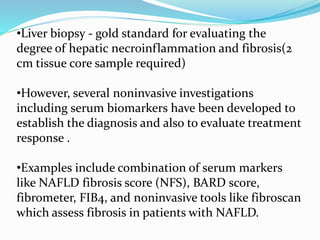
•Liver biopsy - gold standard for evaluating the
degree of hepatic necroinflammation and fibrosis(2
cm tissue core sample required)
•However, several noninvasive investigations
including serum biomarkers have been developed to
establish the diagnosis and also to evaluate treatment
response .
•Examples include combination of serum markers
like NAFLD fibrosis score (NFS), BARD score,
fibrometer, FIB4, and noninvasive tools like fibroscan
which assess fibrosis in patients with NAFLD.
 Grading and staging of histology is done taking
into consideration the degree of steatosis, lobular
inflammation, ballooning degeneration and
fibrosis;
 different systems used to stage/classify include
the old Matteoni classification and Brunt’s system,
but recently the NAFLD activity score (NAS) has
gained popularity and is followed by most
pathologists all over the world.
NAFLD scoring system
 Steatosis(0-3)
 Lobular inflamation(0-3)
 Hepatocyte ballooning(0-2)
 Score 0-2 not diagnostic of nash
 Score 3-4 borderline/positive for nash
 Score 5-8 diagnostic of nash
 Fibrosis evaluated separatly stage 0-none,1-
perisinusidal,2-perisinusdal,portal or peri portal,3-
briding fibrosis,4-cirrhosis
 Stage 1 further devided in 1A-mild,1B-moderate & 1C-
severe
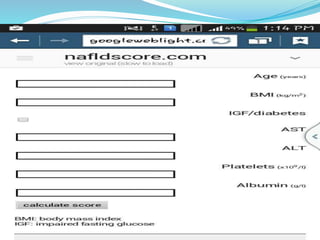
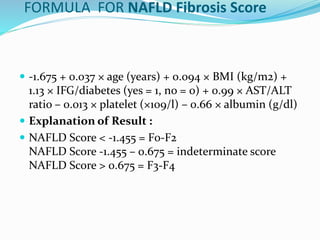
FORMULA FOR NAFLD Fibrosis Score
 -1.675 + 0.037 × age (years) + 0.094 × BMI (kg/m2) +
1.13 × IFG/diabetes (yes = 1, no = 0) + 0.99 × AST/ALT
ratio – 0.013 × platelet (×109/l) – 0.66 × albumin (g/dl)
 Explanation of Result :
 NAFLD Score < -1.455 = F0-F2
NAFLD Score -1.455 – 0.675 = indeterminate score
NAFLD Score > 0.675 = F3-F4
TREATMENT (Harrison 19 th ed)
Specific therapy
• t/t of risk factors
NAFLD associted
comorbidities
• Insulin resistance,
• diabetes,
• dyslipideamia
Treatment of
complications in
advance NAFLD
• T/T of
cirrhosis,pulm.HTN
& prim. liver Ca
Life style interventions-
 The general recommendations for the diet are
individualized, and one should aim to achieve energy
deficit of 500–1000 kcal/day depending on the
patient’s BMI.
 3-5% body weight loss improves steatosis but up to
10% body weight loss ne . eds to improve
steatohepatitis
 Physical activities recommended is 60 minutes/day for
at least 3 days a week and progressively exercise should
be increased to five times a week
Pharmacological agents
 No agents are FDA approved for treatment b/c NAFLD
is strongly associted with metabolic syndrome &
T2DM, trial of inulin senstizer like biguanides
(metformin) and TZD(pioglitazones) have been
evaluated.
 Metformin does not improve liver histology
 TZD reduses AST/ALT & some histologic features also
 there is considerable debate about the long term safety
of TZDs regarding cardiovascular adverse effects
including congestive heart failure, bladder cancer and
bone loss
 Vitamin E- Oxidative stress is considered to be a key
mechanism of hepatocellular injury and disease
progression in subjects with NASH
 THERAPY 800IU/d decreases aminotransferases in
subjects with NASH, and improvement in steatosis,
inflammation, ballooning and resolution of
steatohepatitis in adults with NASH, but it does not
have any effect on hepatic fibrosis.(PIVENS trial)
Ursodeoxycholic acid
 (UDCA) (conventional and high doses) to improve
amino-transferases and steatosis in patients with
NAFLD and liver histology in patients with NASH
 BETAINE- metabolite of choline, decreases cellular
oxidant damage & raise SAM level ,no histological
benefit
 Omega 3Fatty acid- no histological benefit
STATINS
 NAFLD pt. are often on statins which are prescribed
for dyslipidemia before a diagnosis of NAFLD is made
or prescribed statins for dyslipidemia after diagnosis
 There was some confusion earlier regarding safety of
statins in this setting.
 However, statins have been found to be safe in patients
with NAFLD even in the presence of raised liver
enzymes hence can be prescribed safely without
frequent liver function test monitoring
 harrison 19 th ed
NAFLD with Cirrhosis or Advanced Fibrosis
 All NASH patients with cirrhosis or advanced fibrosis
should be periodically screened for hepatocellular
carcinoma as for chronic hepatitis B patients with
cirrhosis, and also should be examined by endoscopy
for appearance of varices too.
 Once varices are diagnosed, they should be managed
in future just like any other cirrhotic with portal
hypertension
 Bariatric surgery- benefit seen only in compensated
CLD & improves steatohepatitis & nacroinflammation
 However effect on hepatic fibrosis is varriable
 Pt. having portal hypertension and cirrhosis should be
excluded from surgery
 Liver transplantation-ESLD pt. evaluated for
transplant .
 Outcome in well selected pt. is good but comorbid
conditions(DM,CVD,obesity) often limit transplant
 NAFLD may recur after liver transplant
Non alcoholic steatohepatitis   copy

Non alcoholic steatohepatitis copy

  • 1.
    KESHRI S YADAV JUNIORRESIDENT SN MEDICAL COLLEGE AGRA
  • 2.
    contents  Definition  Introduction Epidemiology  Causes  Pathogenesis  Clinical features and investigations  Potential therapies  conclusion
  • 3.
    Definition  Non alcoholicfatty liver ds(NAFLD) is a clinicopathological syndrome encompasses several clinical entities ranging from simple steatosis to steatohepatits, fibrosis and ESLD in absence of signifcant alcohol intake.  NASH is a part of spectrum of NAFLD and defined as steatosis with hepatocellular ballooning plus lobular inflammation.
  • 4.
    • Fatty liverdisease is defined as more than 5% of the hepatocytes containing fat or more than 5% of the liver weight due to fat. •Macrovesicular Fatty Liver Changes •Focal Hepatic Cell Necrosis •Acute & Chronic Inflammatry Cell Infiltration •Mallory Hyaline •Fibrosis & Cirrhosis •No H/O Alcohol Abuse
  • 5.
    Non alcoholic fattyliver disease  Although NAFLD was recognized long ago by Zelman, et al. it was blissfully ignored for almost 2.5 decade.  Ludwig et al. brought it into the limelight in 1980 and coined the term nonalcoholic steatohepatitis (NASH) for alcohol like liver disease that developed in persons who were not heavy drinkers.  Harrison 19 th ed.
  • 6.
    •Not heavy drinker–who drink <20 grams/day for men 2 drink and <10 grams/day for women 1drink). •One drink means 10 gm of ethanol,1 can of beer,4 ounce of wine or 1.5 ounce of( one shot) of distilled spirit
  • 7.
    EPIDEMIOLOGY  NAFLD isprobably most common liver disorder in world and mc cause of CLD in many parts of the world  incidence of 10–24% in the general population  Mostly in 4th to 6th decade of life  More common in female  Very common in type II DM and Metabolic syndrome  75 % of type II diabetics have some form of NAFLD  HARRISON 19TH EDITION
  • 8.
     As faras obesity is regarded, steatosis has been reported in 70% of obese and 35% of lean patients and NASH in 18.5% of obese and 2.7% of lean patients in a consecutive study  2–3% of NASH present cirrhosis
  • 9.
    IN INDIA  Epidemiologicalstudies suggest prevalence of NAFLD in around 9% to 32% of general population in India  with higher prevalence in those with overweight or obesity and those with diabetes or prediabetes API text book-2013
  • 10.
     Clinicopathological studiesshow that NAFLD is an important cause of unexplained rise in hepatic transaminases, cryptogenic cirrhosis and cryptogenic hepatocellular carcinoma in Indian patients  There is high prevalence of insulin resistance and nearly half of Indian patients with NAFLD have evidence of full-blown metabolic syndrome. API text book-2013 CHAP 54
  • 11.
    NAFLD has awide histopathological spectrum ranging from simple, bland steatosis, which is usually associated with a benign prognosis, to NASH(25%), which is believed to possess the potential for progress to cirrhosis(6%), and its inherent complications of liver failure and liver cancer(1%).
  • 12.
    •The risk factorsfor NAFLD are -obesity, type 2 diabetes mellitus (T2DM), dyslipidemia and metabolic syndrome;cardivovascular risks •other conditions with emerging association include polycystic ovarian syndrome, hypothyroidism, hypopituitarism, hypogonadism, obstructive sleep apnea and pancreatoduodenal resection
  • 13.
  • 14.
  • 15.
    PATHOGENESIS  Proposed byDAY and JAMES in 1998  Described by “two hit hypothesis”  FIRST HIT : disregulation of fatty acid metabolism leads to steatosis  SECOND HIT: “oxidative stress” -may be environmental or genetic factors
  • 17.
    Free fatty acid GI: lipolysis Liver:lipogenesis Liver Mitochondium,peroxi somes microsomes Oxidation Esterification TG Exocytosis VLDLmacrovesicular steatosis
  • 18.
    Liver Free fatty acid↑ Oxidation Reactiveoxygen species ↑ Antioxidation pool ↓ (glutathione) Cell membrane lipid Peroxidation ↑ TNF – α ↑ Hepatcyte, kuppfer cell adipose tissue Stellate cell fibrosis CYP2E1, CYP3A4↑ Peroxidation ↑ oxidative stress
  • 19.
    HISTOPATHOGENESIS Features Present inall or most cases : 1. Macrovesicular steatosis 2. Parenchymal inflammation 3. Hepatocyte necrosis 4. Bollooning degeneration
  • 20.
    Biopsy showing inflammationand fatty infiltration
  • 21.
    Features Observed withvarying frequency : 1. Perivenular perisinusoidal or periportal fibrosis 2. Cirrhosis 3. Mallory bodies 4. Glycogenated nuclei 5. Lipogranulomas and stainable hepatic iron
  • 22.
    CLINICAL FEATURES COMMON UNCOMMON SYMPTOMS: -none (48 to 100%)  SIGNS: -Hepatomegaly  SYMPTONS: - RUQ vague pain - Fatigue - Malaise  SIGNES: - Splenomegaly - Spider angiomata - Palmar erythema & ascites
  • 23.
    LABORATORY FEATURES  COMMON: -2 to 4 fold elevation serum ALT and AST AST/ALT < 1 in most patients - Serum alk phosphatase level slightly elevated in one third pt. - Normal serum bil and serum albumin & PT - Elevated serum ferritin
  • 24.
    DIAGNOSTIC APPROACH Elevated leverenzyme or Heptomegaly Exclude excessive alcohol and other form of liver disease by history & lab tests Image liver by US , CT or MRI Normal Fatty Liver present Liver Biopsy Consider Liver biopsy to stage dis& define risk of progression
  • 25.
    Diagnosis Commonly, NAFLD isdiagnosed incidentally as more than half of the patients are asymptomatic History & Physical examination –one third have normal physical examination The diagnosis of NAFLD requires that:  There is hepatic steatosis by imaging or histology;  Harrison ed 19 th
  • 26.
    contd… • There isno significant alcohol consumption; • There are no competing etiologies for hepatic steatosis • There are no co-existing causes for chronic liver disease •No significant alcohol consumption, hepatitis C,medications, parenteral nutrition, Wilson’s disease and severe malnutrition
  • 27.
    Common alternative causes ofhepatic steatosis Drugs causing steatosis  Alcoholic liver disease  Hepatitis c  Inborn errors of metabolism  Industrial exposures to petrochemicals  IBD  Lypodystrophy  Bacterial overgrowth  Starvation  TPN  Surgical procedures(bypass sx small bowel ressection)  Rye’s syndrome  Fatty liver of pregnancy  HELLP syndrome  Cytotoxic &cytostatic drugs –L asparginase,bleomycin,azacitidine, mtx,tetra cyclines, puromycin  Metals-Sb,Ba salts,chromates, P,Thallium & uranium compounds  Amiodarone,estrogen ,glucocarticoids,ethyl bromide,HYDALAZINE,orotate,ta moxifine,safrole  HAART Harrison 19th ed
  • 28.
    • Biochemical tests:This must include serum bilirubin, serum AST, ALT, Gamma GT, albumin, globulin, fasting sugar and fasting lipid profile. • Hematological tests: Complete blood count including total platelet count. A low platelet favors significant fibrosis or cirrhosis. • Serological and immunological tests: Anti-HCV and HBsAg are essential in the work-up of a NAFLD patient.
  • 29.
     Other markersof fibrosis that have been evaluated include high-sensitivity C reactive protein, plasma pentraxin 3, interleukin 6 and cytokeratin 8 & 18 cleaved during apoptosis  It differenciate pt. with NASH from those with simple steatosis or normal liver,higher level suggest worse scarring(advance fibrosis or cirrhosis)  Liver biopsy should be considered in situations when there is a diagnostic uncertainty harrison 19 the ed
  • 30.
     USG ABDOMEN– compare liver echogenicity in comparison to the echogenicity of kidney and spleen, vascular blurring and deep attenuation of ultrasound signal in order to classify hepatic steatosis.  – Grade 1 (mild): Normal visualization of diaphragm/ intrahepatic vessels  – Grade 2 (moderate): Impaired visualization of diaphragm/ intrahepatic vessels  – Grade 3 (severe): Poor visualization of diaphragm/intrahepatic vessels.
  • 31.
     The sensitivityof ultrasonography (US) in detecting steatosis varies between 60% to 94%, and also varies depending on the degree of steatosis  Limitations-operater dependent-observer varriation  does not provide quantitative information of the degree of lipid accumulation.  inability to differentiate simple steatosis from steatohepatitis as both of them have similar appearance on ultrasound.
  • 32.
     NCCT-most accurateCT technique to detect and characterize hepatic steatosis  MRI-accurate and rapid assessment of hepatic steatosis to a lower limit of 3%.  Magnetic resonance spectroscopy provides a sensitive, quantitative, noninvasive method to measure hepatic triglyceride content (HTGC)
  • 33.
    •An MR equivalentof transient elastography (TE) has recently demonstrated excellent diagnostic accuracy with sensitivity and specificity of 98% and 99% respectively for detecting all grades of fibrosis. • Elastography (Fibroscan, Echosens, Paris, France) is a noninvasive method of assessing liver fibrosis which can be performed at the bedside or in the outpatient clinic.
  • 34.
    Fibroscsn(Transient Elastometry)  Thefibroscan machine uses a probe which is kept on the right lower chest wall of the patient(rt.lobe liver)  USG probe sends a shear wave in to the liver and detects the stiffness of the liver.  data is automatically processed and the liver stiffness is displayed on the screen in kPa.  Value between 2.5 kPa to 75 kPa.
  • 35.
    Contd.. •90–95% healthy peoplehave value 5.5+1.6kPa •Male have slightly more 5.8+1.5 vs 5.2+1.6kPa •Cutof Values differ for different cases of cirrhosis •Results can be converted to Metavir staging of liver biopsy by using scoring card.
  • 37.
    Metavir grading system gradestage  A 4-point scale is used in grading the degree of liver inflammation or histological activity: A0= no inflammation  A1= mild inflammation  A2= moderate inflammation  A3= severe inflammation  A 5-point scale is used in grading the degree of liver fibrosis: F0= no fibrosis  F1= minimal fibrosis  F2= fibrosis has occurred and spread inside the areas of the liver including blood vessels  F3= fibrosis is spreading and connecting to other liver areas that contain fibrosis  F4= cirrhosis or advance liver fibrosis
  • 38.
    •Liver biopsy -gold standard for evaluating the degree of hepatic necroinflammation and fibrosis(2 cm tissue core sample required) •However, several noninvasive investigations including serum biomarkers have been developed to establish the diagnosis and also to evaluate treatment response . •Examples include combination of serum markers like NAFLD fibrosis score (NFS), BARD score, fibrometer, FIB4, and noninvasive tools like fibroscan which assess fibrosis in patients with NAFLD.
  • 39.
     Grading andstaging of histology is done taking into consideration the degree of steatosis, lobular inflammation, ballooning degeneration and fibrosis;  different systems used to stage/classify include the old Matteoni classification and Brunt’s system, but recently the NAFLD activity score (NAS) has gained popularity and is followed by most pathologists all over the world.
  • 40.
    NAFLD scoring system Steatosis(0-3)  Lobular inflamation(0-3)  Hepatocyte ballooning(0-2)  Score 0-2 not diagnostic of nash  Score 3-4 borderline/positive for nash  Score 5-8 diagnostic of nash  Fibrosis evaluated separatly stage 0-none,1- perisinusidal,2-perisinusdal,portal or peri portal,3- briding fibrosis,4-cirrhosis  Stage 1 further devided in 1A-mild,1B-moderate & 1C- severe
  • 42.
    FORMULA FOR NAFLDFibrosis Score  -1.675 + 0.037 × age (years) + 0.094 × BMI (kg/m2) + 1.13 × IFG/diabetes (yes = 1, no = 0) + 0.99 × AST/ALT ratio – 0.013 × platelet (×109/l) – 0.66 × albumin (g/dl)  Explanation of Result :  NAFLD Score < -1.455 = F0-F2 NAFLD Score -1.455 – 0.675 = indeterminate score NAFLD Score > 0.675 = F3-F4
  • 43.
    TREATMENT (Harrison 19th ed) Specific therapy • t/t of risk factors NAFLD associted comorbidities • Insulin resistance, • diabetes, • dyslipideamia Treatment of complications in advance NAFLD • T/T of cirrhosis,pulm.HTN & prim. liver Ca
  • 44.
    Life style interventions- The general recommendations for the diet are individualized, and one should aim to achieve energy deficit of 500–1000 kcal/day depending on the patient’s BMI.  3-5% body weight loss improves steatosis but up to 10% body weight loss ne . eds to improve steatohepatitis  Physical activities recommended is 60 minutes/day for at least 3 days a week and progressively exercise should be increased to five times a week
  • 45.
    Pharmacological agents  Noagents are FDA approved for treatment b/c NAFLD is strongly associted with metabolic syndrome & T2DM, trial of inulin senstizer like biguanides (metformin) and TZD(pioglitazones) have been evaluated.  Metformin does not improve liver histology  TZD reduses AST/ALT & some histologic features also  there is considerable debate about the long term safety of TZDs regarding cardiovascular adverse effects including congestive heart failure, bladder cancer and bone loss
  • 46.
     Vitamin E-Oxidative stress is considered to be a key mechanism of hepatocellular injury and disease progression in subjects with NASH  THERAPY 800IU/d decreases aminotransferases in subjects with NASH, and improvement in steatosis, inflammation, ballooning and resolution of steatohepatitis in adults with NASH, but it does not have any effect on hepatic fibrosis.(PIVENS trial)
  • 47.
    Ursodeoxycholic acid  (UDCA)(conventional and high doses) to improve amino-transferases and steatosis in patients with NAFLD and liver histology in patients with NASH  BETAINE- metabolite of choline, decreases cellular oxidant damage & raise SAM level ,no histological benefit  Omega 3Fatty acid- no histological benefit
  • 48.
    STATINS  NAFLD pt.are often on statins which are prescribed for dyslipidemia before a diagnosis of NAFLD is made or prescribed statins for dyslipidemia after diagnosis  There was some confusion earlier regarding safety of statins in this setting.  However, statins have been found to be safe in patients with NAFLD even in the presence of raised liver enzymes hence can be prescribed safely without frequent liver function test monitoring  harrison 19 th ed
  • 49.
    NAFLD with Cirrhosisor Advanced Fibrosis  All NASH patients with cirrhosis or advanced fibrosis should be periodically screened for hepatocellular carcinoma as for chronic hepatitis B patients with cirrhosis, and also should be examined by endoscopy for appearance of varices too.  Once varices are diagnosed, they should be managed in future just like any other cirrhotic with portal hypertension
  • 50.
     Bariatric surgery-benefit seen only in compensated CLD & improves steatohepatitis & nacroinflammation  However effect on hepatic fibrosis is varriable  Pt. having portal hypertension and cirrhosis should be excluded from surgery  Liver transplantation-ESLD pt. evaluated for transplant .  Outcome in well selected pt. is good but comorbid conditions(DM,CVD,obesity) often limit transplant  NAFLD may recur after liver transplant