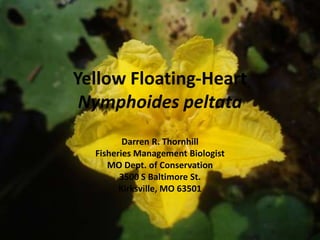
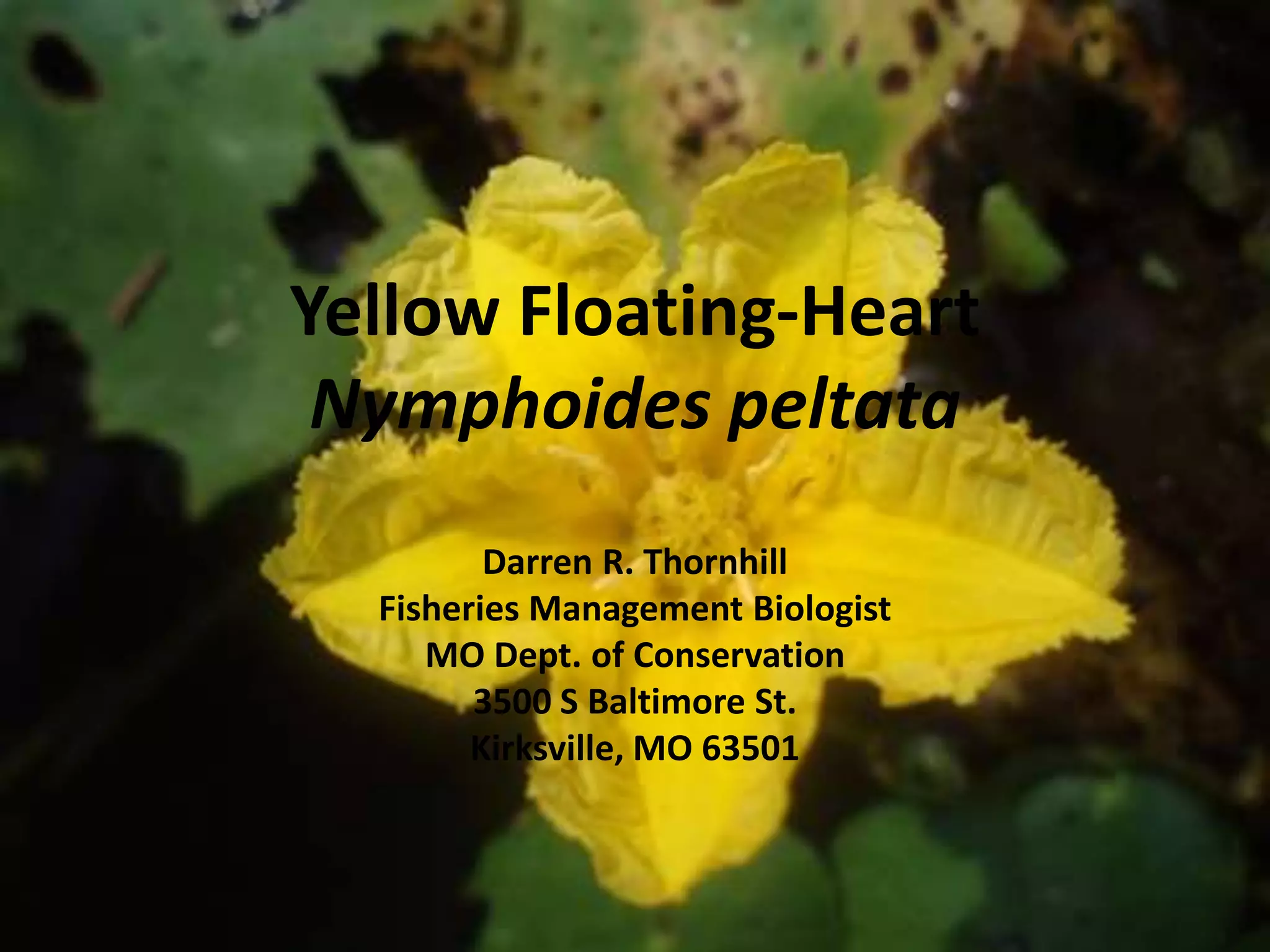
Yellow Floating-Heart
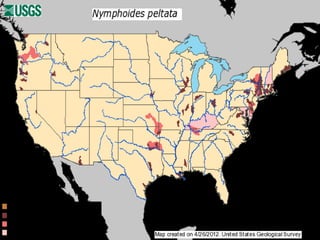
 Nymphoides peltata
         Darren R. Thornhill
  Fisheries Management Biologist
     MO Dept. of Conservation
        3500 S Baltimore St.
        Kirksville, MO 63501
What does it look like?
• Round to heart-shaped leaves (3-12 cm
  diameter)
  – Undersides are often purple


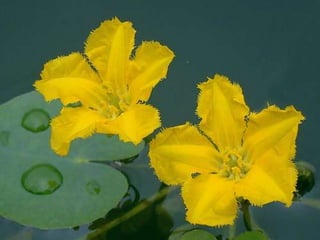
• Two to five yellow flowers (2-4 cm diameter)
  – Fringed petals (5) above water surface
  – Flowers May to October
Ecology
• Reproduces by seed and fragmentation

• Prefers slow moving water and/or damp mud

• Found in depths ranging from 0 to 4 meters

• Develops dense, monotypic mats
How did it get here?
• Native of eastern Asia and the Mediterranean
• Sold and cultivated in New England as a water
  garden plant in 1890’s
• First noted in western states in 1930 (Long
  Lake, Washington)
• Commonly cultivated and sold for ornamental
  use in ponds
How do we get rid of it?
•   Prevention is paramount!
•   Biological control is unknown
•   Mechanical control is not recommended
•   Chemical control is preferred
    – Dichlobenil (effective, but not labeled for aquatic)
    – Glophosate (requires multiple treatments)
    – Imazapyr (requires multiple treatments)

Yellow Floating-Heart

  • 1.
    Yellow Floating-Heart Nymphoidespeltata Darren R. Thornhill Fisheries Management Biologist MO Dept. of Conservation 3500 S Baltimore St. Kirksville, MO 63501
  • 2.
    What does itlook like? • Round to heart-shaped leaves (3-12 cm diameter) – Undersides are often purple • Two to five yellow flowers (2-4 cm diameter) – Fringed petals (5) above water surface – Flowers May to October
  • 5.
    Ecology • Reproduces byseed and fragmentation • Prefers slow moving water and/or damp mud • Found in depths ranging from 0 to 4 meters • Develops dense, monotypic mats
  • 6.
    How did itget here? • Native of eastern Asia and the Mediterranean • Sold and cultivated in New England as a water garden plant in 1890’s • First noted in western states in 1930 (Long Lake, Washington) • Commonly cultivated and sold for ornamental use in ponds
  • 7.
    How do weget rid of it? • Prevention is paramount! • Biological control is unknown • Mechanical control is not recommended • Chemical control is preferred – Dichlobenil (effective, but not labeled for aquatic) – Glophosate (requires multiple treatments) – Imazapyr (requires multiple treatments)