Container
                                      Gardenin
                                       g with
                                       Native
                                       Plants
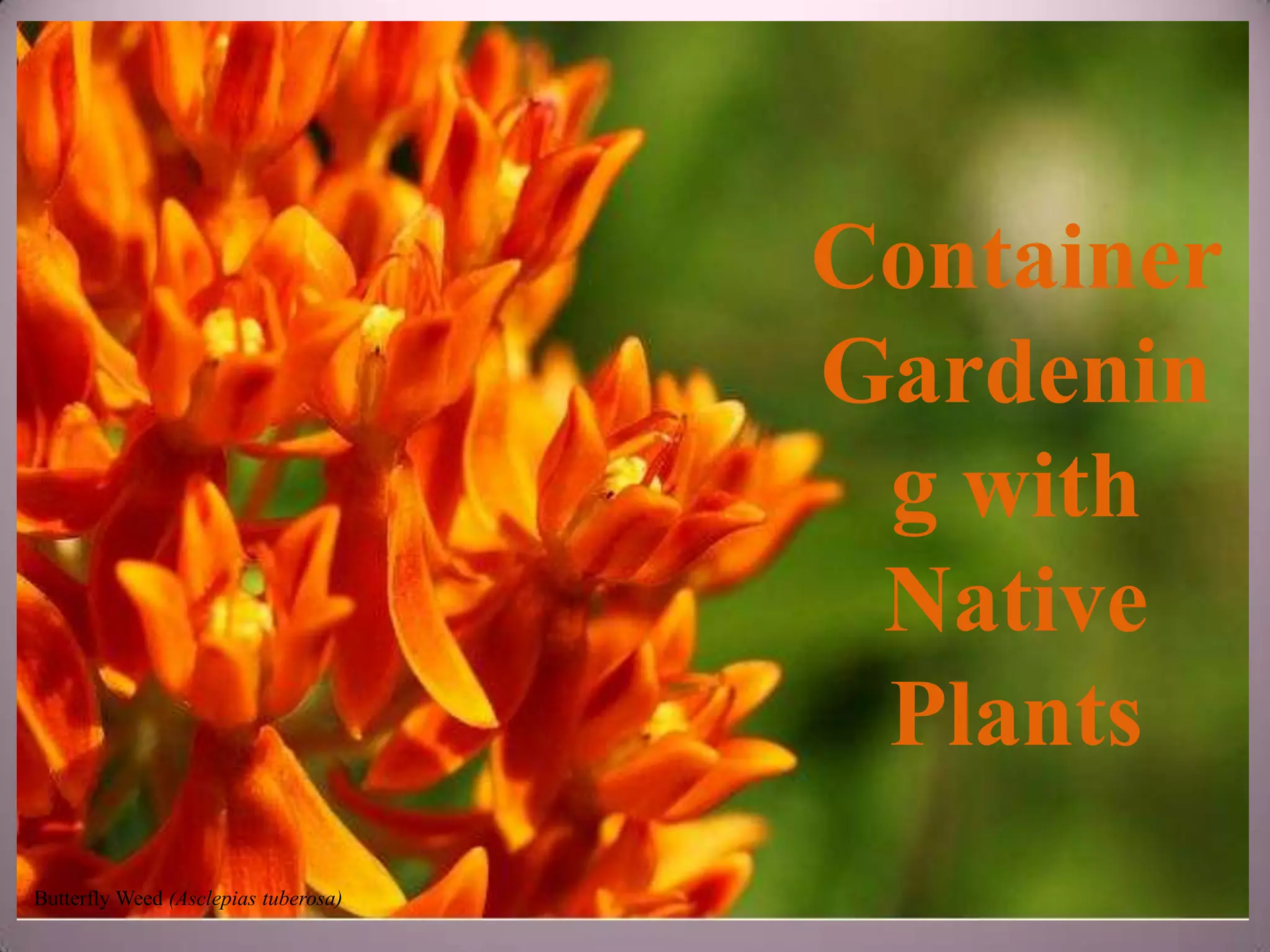
Butterfly Weed (Asclepias tuberosa)
What exactly is a Native Plant?
• Native Plants are the species that occur
   naturally in a given area.
• Native Plants include ferns, grasses, water
   and marsh plants, herbaceous
   perennials, shrubs, trees and vines.
 • There are so many
 choices!
   They come in many
 colors,
   shapes and sizes.
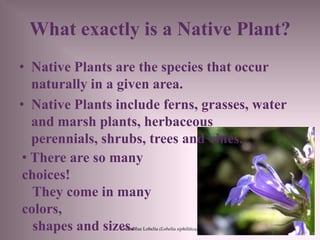
                 Great Blue Lobelia (Lobelia siphilitica)
Why Containers?
• Physical limitations
       – Low maintenance
       – Easy access
• Landscape limitations
              •Propagation
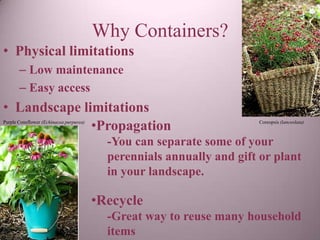
Purple Coneflower (Echinacea purpurea)                                 Coreopsis (lanceolata)


                                           -You can separate some of your
                                           perennials annually and gift or plant
                                           in your landscape.

                                         •Recycle
                                           -Great way to reuse many household
                                           items
Containers 101
• Plan your container

• Determine light and moisture
  requirements
• Select type of container

•Mix soil and any soil
amendments needed
according to VTE
recommendations
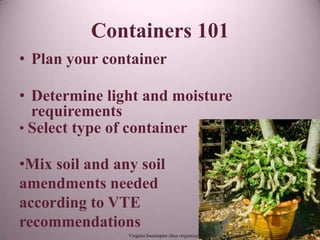
                Virginia Sweetspire (Itea virginica)
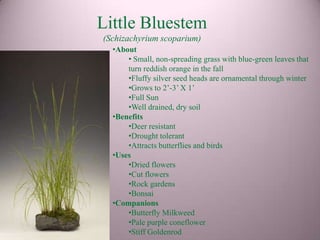
Little Bluestem
(Schizachyrium scoparium)
  •About
      • Small, non-spreading grass with blue-green leaves that
      turn reddish orange in the fall
      •Fluffy silver seed heads are ornamental through winter
      •Grows to 2’-3’ X 1’
      •Full Sun
      •Well drained, dry soil
  •Benefits
      •Deer resistant
      •Drought tolerant
      •Attracts butterflies and birds
  •Uses
      •Dried flowers
      •Cut flowers
      •Rock gardens
      •Bonsai
  •Companions
      •Butterfly Milkweed
      •Pale purple coneflower
      •Stiff Goldenrod
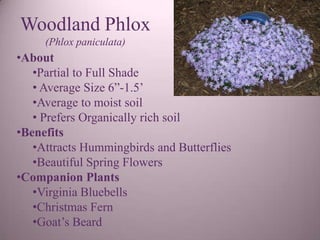
Woodland Phlox
     (Phlox paniculata)
•About
   •Partial to Full Shade
   • Average Size 6”-1.5’
   •Average to moist soil
   • Prefers Organically rich soil
•Benefits
   •Attracts Hummingbirds and Butterflies
   •Beautiful Spring Flowers
•Companion Plants
   •Virginia Bluebells
   •Christmas Fern
   •Goat’s Beard
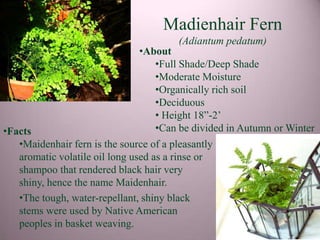
Madienhair Fern
                                         (Adiantum pedatum)
                               •About
                                  •Full Shade/Deep Shade
                                  •Moderate Moisture
                                  •Organically rich soil
                                  •Deciduous
                                  • Height 18”-2’
•Facts                            •Can be divided in Autumn or Winter
   •Maidenhair fern is the source of a pleasantly
   aromatic volatile oil long used as a rinse or
   shampoo that rendered black hair very
   shiny, hence the name Maidenhair.
   •The tough, water-repellant, shiny black
   stems were used by Native American
   peoples in basket weaving.
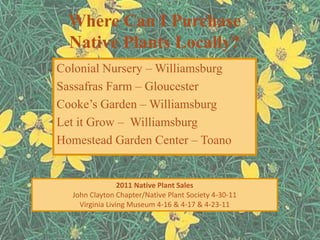
Where Can I Purchase
  Native Plants Locally?
Colonial Nursery – Williamsburg
Sassafras Farm – Gloucester
Cooke’s Garden – Williamsburg
Let it Grow – Williamsburg
Homestead Garden Center – Toano


                 2011 Native Plant Sales
  John Clayton Chapter/Native Plant Society 4-30-11
    Virginia Living Museum 4-16 & 4-17 & 4-23-11
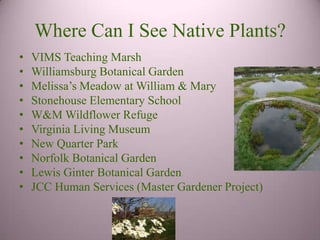
Where Can I See Native Plants?
•   VIMS Teaching Marsh
•   Williamsburg Botanical Garden
•   Melissa’s Meadow at William & Mary
•   Stonehouse Elementary School
•   W&M Wildflower Refuge
•   Virginia Living Museum
•   New Quarter Park
•   Norfolk Botanical Garden
•   Lewis Ginter Botanical Garden
•   JCC Human Services (Master Gardener Project)
Websites of Note
                                           • www.wildflower.org
                                               •Lady Bird Johnson Wildflower Center site has excellent
                                               articles on gardening with natives, including guidelines
                                               for container gardening
                                           •www.nps.gov/plants/pubs/chesapeake/
                                               •Web and PDF versions of handbook, Native Plants for
                                               Wildlife Habitat and Conservation
                                               Landscaping, Chesapeake Bay Watershed, now out of
                                               print.
                                           •www.claytonvnps.org
                                               •John Clayton Chapter, Virginia Native Plant
                                               Society, extensive plant lists by county, excellent photo
                                               gallery.
                                           •www.dgif.virginia.gov/habitat
                                               •Extensive how-to information for environmental
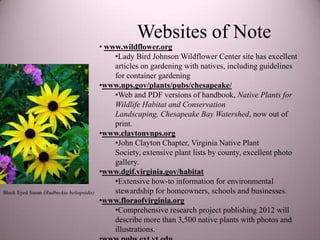
Black Eyed Susan (Rudbeckia heliopsidis)       stewardship for homeowners, schools and businesses.
                                           •www.floraofvirginia.org
                                               •Comprehensive research project publishing 2012 will
                                               describe more than 3,500 native plants with photos and
                                               illustrations.
Great Resources for Native Plant
          Information
   The Essential Guide        Virginia
     Just updated with        Habitat
        FAQ’s and a         Partnership
     regional plant list.       State
                            Certification


     National Wildlife      John Clayton
        Federation            Chapter
    140,000+ registered     VNPS- Local
         habitats             Experts
Why use Native Plants?
• Want to do less watering? Native plants are survivors
  and adapt to whatever is happening in their
  environment.
• Feel concerned about excess nitrogen causing algae
  blooms in the Chesapeake Bay? Natives don’t require
  fertilizer.
• Native Plants provide familiar sources of food and
  shelter for wildlife.
• On a broader ecological scale, planting native species
  contributes to the overall health of natural communities.

Gardening with Native Plants - Container Gardening

  • 1.
    Container Gardenin g with Native Plants Butterfly Weed (Asclepias tuberosa)
  • 2.
    What exactly isa Native Plant? • Native Plants are the species that occur naturally in a given area. • Native Plants include ferns, grasses, water and marsh plants, herbaceous perennials, shrubs, trees and vines. • There are so many choices! They come in many colors, shapes and sizes. Great Blue Lobelia (Lobelia siphilitica)
  • 3.
    Why Containers? • Physicallimitations – Low maintenance – Easy access • Landscape limitations •Propagation Purple Coneflower (Echinacea purpurea) Coreopsis (lanceolata) -You can separate some of your perennials annually and gift or plant in your landscape. •Recycle -Great way to reuse many household items
  • 4.
    Containers 101 • Planyour container • Determine light and moisture requirements • Select type of container •Mix soil and any soil amendments needed according to VTE recommendations Virginia Sweetspire (Itea virginica)
  • 5.
    Little Bluestem (Schizachyrium scoparium) •About • Small, non-spreading grass with blue-green leaves that turn reddish orange in the fall •Fluffy silver seed heads are ornamental through winter •Grows to 2’-3’ X 1’ •Full Sun •Well drained, dry soil •Benefits •Deer resistant •Drought tolerant •Attracts butterflies and birds •Uses •Dried flowers •Cut flowers •Rock gardens •Bonsai •Companions •Butterfly Milkweed •Pale purple coneflower •Stiff Goldenrod
  • 6.
    Woodland Phlox (Phlox paniculata) •About •Partial to Full Shade • Average Size 6”-1.5’ •Average to moist soil • Prefers Organically rich soil •Benefits •Attracts Hummingbirds and Butterflies •Beautiful Spring Flowers •Companion Plants •Virginia Bluebells •Christmas Fern •Goat’s Beard
  • 7.
    Madienhair Fern (Adiantum pedatum) •About •Full Shade/Deep Shade •Moderate Moisture •Organically rich soil •Deciduous • Height 18”-2’ •Facts •Can be divided in Autumn or Winter •Maidenhair fern is the source of a pleasantly aromatic volatile oil long used as a rinse or shampoo that rendered black hair very shiny, hence the name Maidenhair. •The tough, water-repellant, shiny black stems were used by Native American peoples in basket weaving.
  • 8.
    Where Can IPurchase Native Plants Locally? Colonial Nursery – Williamsburg Sassafras Farm – Gloucester Cooke’s Garden – Williamsburg Let it Grow – Williamsburg Homestead Garden Center – Toano 2011 Native Plant Sales John Clayton Chapter/Native Plant Society 4-30-11 Virginia Living Museum 4-16 & 4-17 & 4-23-11
  • 9.
    Where Can ISee Native Plants? • VIMS Teaching Marsh • Williamsburg Botanical Garden • Melissa’s Meadow at William & Mary • Stonehouse Elementary School • W&M Wildflower Refuge • Virginia Living Museum • New Quarter Park • Norfolk Botanical Garden • Lewis Ginter Botanical Garden • JCC Human Services (Master Gardener Project)
  • 10.
    Websites of Note • www.wildflower.org •Lady Bird Johnson Wildflower Center site has excellent articles on gardening with natives, including guidelines for container gardening •www.nps.gov/plants/pubs/chesapeake/ •Web and PDF versions of handbook, Native Plants for Wildlife Habitat and Conservation Landscaping, Chesapeake Bay Watershed, now out of print. •www.claytonvnps.org •John Clayton Chapter, Virginia Native Plant Society, extensive plant lists by county, excellent photo gallery. •www.dgif.virginia.gov/habitat •Extensive how-to information for environmental Black Eyed Susan (Rudbeckia heliopsidis) stewardship for homeowners, schools and businesses. •www.floraofvirginia.org •Comprehensive research project publishing 2012 will describe more than 3,500 native plants with photos and illustrations.
  • 11.
    Great Resources forNative Plant Information The Essential Guide Virginia Just updated with Habitat FAQ’s and a Partnership regional plant list. State Certification National Wildlife John Clayton Federation Chapter 140,000+ registered VNPS- Local habitats Experts
  • 12.
    Why use NativePlants? • Want to do less watering? Native plants are survivors and adapt to whatever is happening in their environment. • Feel concerned about excess nitrogen causing algae blooms in the Chesapeake Bay? Natives don’t require fertilizer. • Native Plants provide familiar sources of food and shelter for wildlife. • On a broader ecological scale, planting native species contributes to the overall health of natural communities.