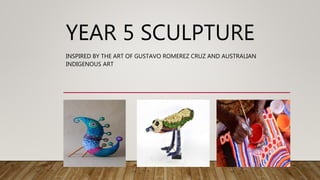
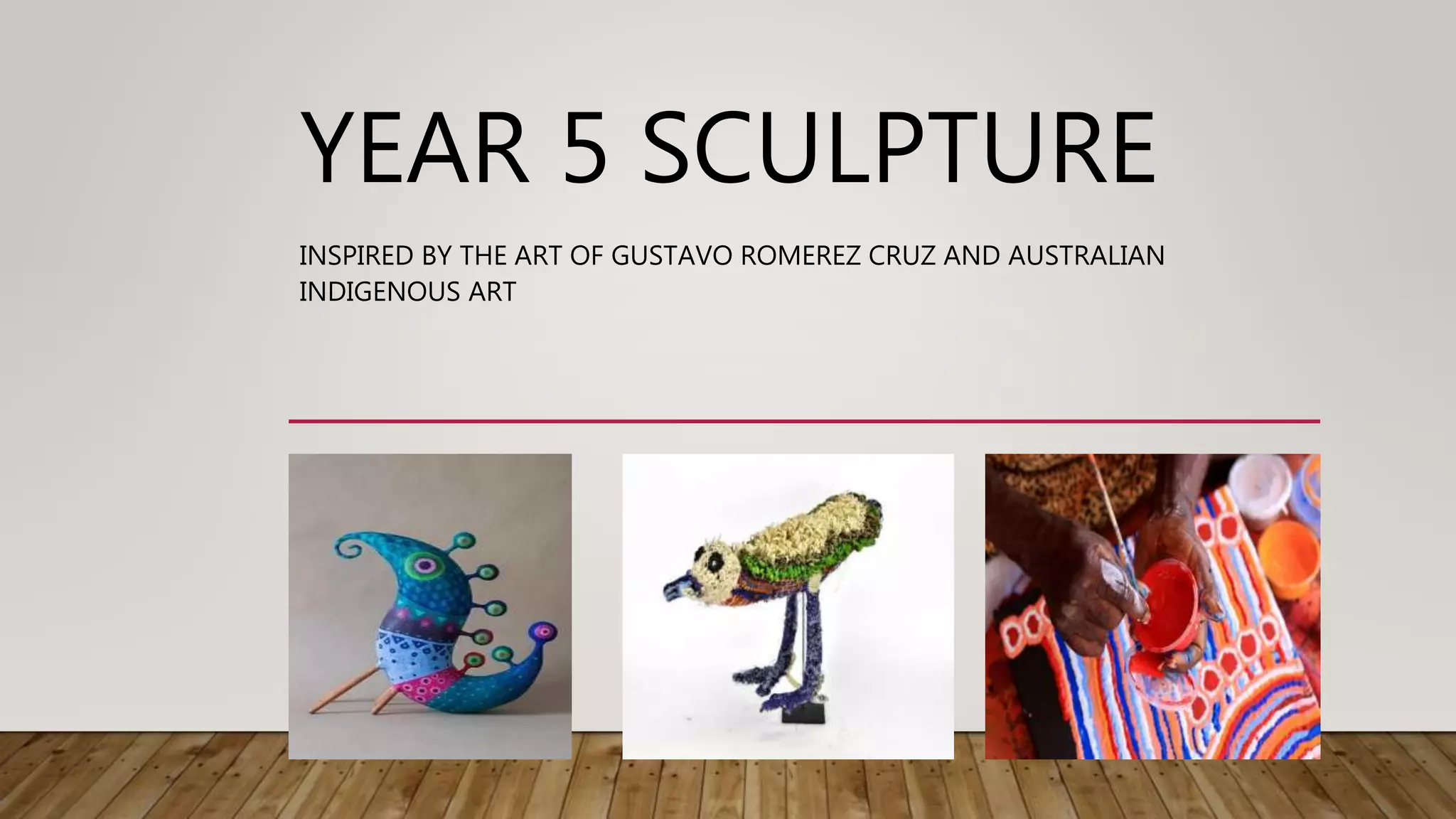
YEAR 5 SCULPTURE
INSPIRED BY THE ART OF GUSTAVO ROMEREZ CRUZ AND AUSTRALIAN
INDIGENOUS ART
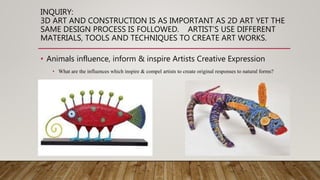
INQUIRY:
3D ART AND CONSTRUCTION IS AS IMPORTANT AS 2D ART YET THE
SAME DESIGN PROCESS IS FOLLOWED. ARTIST’S USE DIFFERENT
MATERIALS, TOOLS AND TECHNIQUES TO CREATE ART WORKS.
• Animals influence, inform & inspire Artists Creative Expression
• What are the influences which inspire & compel artists to create original responses to natural forms?
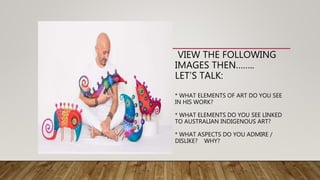
WHO IS GUSTAVO RAMIREZ CRUZ?
My love for art developed throughout the years in my
various studies of graphic design, photography and
illustration. For some years, I did illustration for
children's books in my native country, Colombia.
My first experiences in the technique of paper-mache
started in Barcelona, where I moved in year 2000.
Throughout the years, I had the opportunity to
continuously improve and develop my skills by creating
innovative and distinctive pieces.
Since 2006, I am residing in Amsterdam and Berlin.
VIEW THE FOLLOWING
IMAGES THEN……..
LET’S TALK:
* WHAT ELEMENTS OF ART DO YOU SEE
IN HIS WORK?
* WHAT ELEMENTS DO YOU SEE LINKED
TO AUSTRALIAN INDIGENOUS ART?
* WHAT ASPECTS DO YOU ADMIRE /
DISLIKE? WHY?
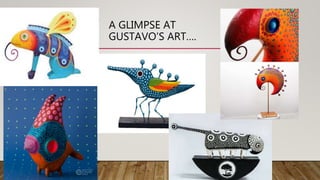
A GLIMPSE AT
GUSTAVO’S ART….
• LATEST WORKS:
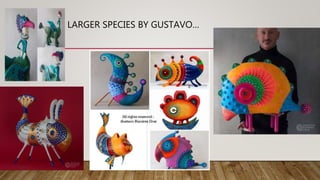
LARGER SPECIES BY GUSTAVO…
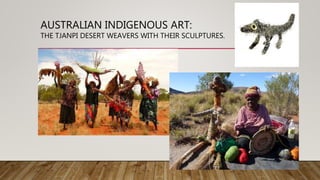
AUSTRALIAN INDIGENOUS ART:
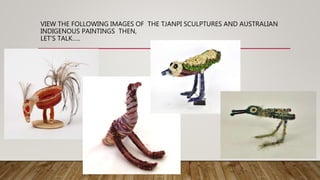
THE TJANPI DESERT WEAVERS WITH THEIR SCULPTURES.
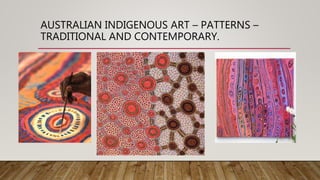
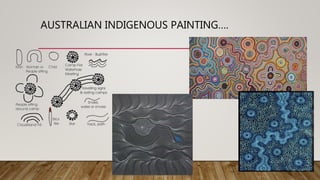
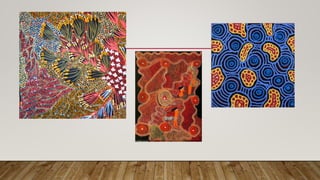
AUSTRALIAN INDIGENOUS ART – PATTERNS –
TRADITIONAL AND CONTEMPORARY.
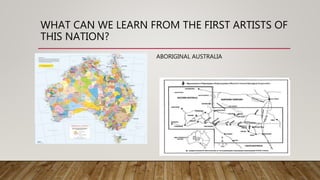
WHAT CAN WE LEARN FROM THE FIRST ARTISTS OF
THIS NATION?
ABORIGINAL AUSTRALIA
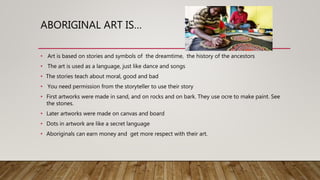
ABORIGINAL ART IS…
• Art is based on stories and symbols of the dreamtime, the history of the ancestors
• The art is used as a language, just like dance and songs
• The stories teach about moral, good and bad
• You need permission from the storyteller to use their story
• First artworks were made in sand, and on rocks and on bark. They use ocre to make paint. See
the stones.
• Later artworks were made on canvas and board
• Dots in artwork are like a secret language
• Aboriginals can earn money and get more respect with their art.
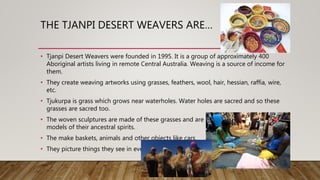
THE TJANPI DESERT WEAVERS ARE…
• Tjanpi Desert Weavers were founded in 1995. It is a group of approximately 400
Aboriginal artists living in remote Central Australia. Weaving is a source of income for
them.
• They create weaving artworks using grasses, feathers, wool, hair, hessian, raffia, wire,
etc.
• Tjukurpa is grass which grows near waterholes. Water holes are sacred and so these
grasses are sacred too.
• The woven sculptures are made of these grasses and are seen as sacred too. They are
models of their ancestral spirits.
• The make baskets, animals and other objects like cars
• They picture things they see in everyday life.
VIEW THE FOLLOWING IMAGES OF THE TJANPI SCULPTURES AND AUSTRALIAN
INDIGENOUS PAINTINGS THEN,
LET’S TALK…..
AUSTRALIAN INDIGENOUS PAINTING….
POINTS OF DISCUSSION:
• * WHAT ELEMENTS OF ART DO YOU SEE IN THE TJANPI SCULPTURES AND
AUSTRALIAN INDIGENOUS ART WORKS?
* WHAT ELEMENTS DO YOU SEE LINKED TO GUSTAVO’S ART?
* WHAT ASPECTS DO YOU ADMIRE / DISLIKE? WHY?
• * HOW CAN WE MAKE A CONNECTION BETWEEN THEM ALL FOR OUR ART
WORK?
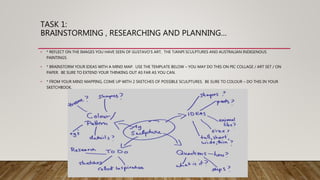
TASK 1:
BRAINSTORMING , RESEARCHING AND PLANNING…
• * REFLECT ON THE IMAGES YOU HAVE SEEN OF GUSTAVO’S ART, THE TJANPI SCULPTURES AND AUSTRALIAN INDIGENOUS
PAINTINGS.
• * BRAINSTORM YOUR IDEAS WITH A MIND MAP. USE THE TEMPLATE BELOW – YOU MAY DO THIS ON PIC COLLAGE / ART SET / ON
PAPER. BE SURE TO EXTEND YOUR THINKING OUT AS FAR AS YOU CAN.
• * FROM YOUR MIND MAPPING, COME UP WITH 2 SKETCHES OF POSSIBLE SCULPTURES. BE SURE TO COLOUR – DO THIS IN YOUR
SKETCHBOOK.
TASK 2: MAKE A DECISION.
• WHICH DESIGN WILL YOU CREATE?
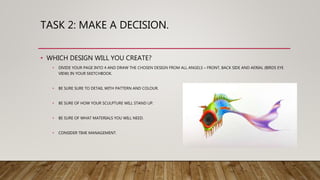
• DIVIDE YOUR PAGE INTO 4 AND DRAW THE CHOSEN DESIGN FROM ALL ANGELS – FRONT, BACK SIDE AND AERIAL (BIRDS EYE
VIEW) IN YOUR SKETCHBOOK.
• BE SURE SURE TO DETAIL WITH PATTERN AND COLOUR.
• BE SURE OF HOW YOUR SCULPTURE WILL STAND UP.
• BE SURE OF WHAT MATERIALS YOU WILL NEED.
• CONSIDER TIME MANAGEMENT.
TASK 3: CREATING THE SCULPTURE
CONSTRUCTION - STEP BY STEP:
• Follow the demonstrations carefully.
• If at first it doesn’t work, try and try again.
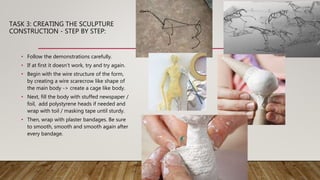
• Begin with the wire structure of the form,
by creating a wire scarecrow like shape of
the main body -> create a cage like body.
• Next, fill the body with stuffed newspaper /
foil, add polystyrene heads if needed and
wrap with toil / masking tape until sturdy.
• Then, wrap with plaster bandages. Be sure
to smooth, smooth and smooth again after
every bandage.
COMPLETING CONSTRUCTION -> PAINTING.
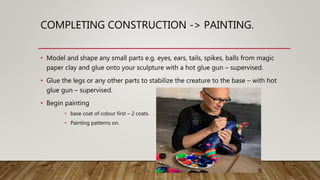
• Model and shape any small parts e.g. eyes, ears, tails, spikes, balls from magic
paper clay and glue onto your sculpture with a hot glue gun – supervised.
• Glue the legs or any other parts to stabilize the creature to the base – with hot
glue gun – supervised.
• Begin painting
• base coat of colour first – 2 coats.
• Painting patterns on.
REFLECTION:
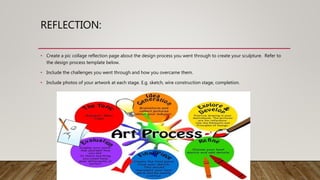
• Create a pic collage reflection page about the design process you went through to create your sculpture. Refer to
the design process template below.
• Include the challenges you went through and how you overcame them.
• Include photos of your artwork at each stage. E.g. sketch, wire construction stage, completion.

Year 5 sculpture power point (1)

  • 1.
    YEAR 5 SCULPTURE INSPIREDBY THE ART OF GUSTAVO ROMEREZ CRUZ AND AUSTRALIAN INDIGENOUS ART
  • 2.
    INQUIRY: 3D ART ANDCONSTRUCTION IS AS IMPORTANT AS 2D ART YET THE SAME DESIGN PROCESS IS FOLLOWED. ARTIST’S USE DIFFERENT MATERIALS, TOOLS AND TECHNIQUES TO CREATE ART WORKS. • Animals influence, inform & inspire Artists Creative Expression • What are the influences which inspire & compel artists to create original responses to natural forms?
  • 3.
    WHO IS GUSTAVORAMIREZ CRUZ? My love for art developed throughout the years in my various studies of graphic design, photography and illustration. For some years, I did illustration for children's books in my native country, Colombia. My first experiences in the technique of paper-mache started in Barcelona, where I moved in year 2000. Throughout the years, I had the opportunity to continuously improve and develop my skills by creating innovative and distinctive pieces. Since 2006, I am residing in Amsterdam and Berlin.
  • 4.
    VIEW THE FOLLOWING IMAGESTHEN…….. LET’S TALK: * WHAT ELEMENTS OF ART DO YOU SEE IN HIS WORK? * WHAT ELEMENTS DO YOU SEE LINKED TO AUSTRALIAN INDIGENOUS ART? * WHAT ASPECTS DO YOU ADMIRE / DISLIKE? WHY?
  • 5.
    A GLIMPSE AT GUSTAVO’SART…. • LATEST WORKS:
  • 6.
  • 7.
    AUSTRALIAN INDIGENOUS ART: THETJANPI DESERT WEAVERS WITH THEIR SCULPTURES.
  • 8.
    AUSTRALIAN INDIGENOUS ART– PATTERNS – TRADITIONAL AND CONTEMPORARY.
  • 9.
    WHAT CAN WELEARN FROM THE FIRST ARTISTS OF THIS NATION? ABORIGINAL AUSTRALIA
  • 10.
    ABORIGINAL ART IS… •Art is based on stories and symbols of the dreamtime, the history of the ancestors • The art is used as a language, just like dance and songs • The stories teach about moral, good and bad • You need permission from the storyteller to use their story • First artworks were made in sand, and on rocks and on bark. They use ocre to make paint. See the stones. • Later artworks were made on canvas and board • Dots in artwork are like a secret language • Aboriginals can earn money and get more respect with their art.
  • 11.
    THE TJANPI DESERTWEAVERS ARE… • Tjanpi Desert Weavers were founded in 1995. It is a group of approximately 400 Aboriginal artists living in remote Central Australia. Weaving is a source of income for them. • They create weaving artworks using grasses, feathers, wool, hair, hessian, raffia, wire, etc. • Tjukurpa is grass which grows near waterholes. Water holes are sacred and so these grasses are sacred too. • The woven sculptures are made of these grasses and are seen as sacred too. They are models of their ancestral spirits. • The make baskets, animals and other objects like cars • They picture things they see in everyday life.
  • 12.
    VIEW THE FOLLOWINGIMAGES OF THE TJANPI SCULPTURES AND AUSTRALIAN INDIGENOUS PAINTINGS THEN, LET’S TALK…..
  • 13.
  • 15.
    POINTS OF DISCUSSION: •* WHAT ELEMENTS OF ART DO YOU SEE IN THE TJANPI SCULPTURES AND AUSTRALIAN INDIGENOUS ART WORKS? * WHAT ELEMENTS DO YOU SEE LINKED TO GUSTAVO’S ART? * WHAT ASPECTS DO YOU ADMIRE / DISLIKE? WHY? • * HOW CAN WE MAKE A CONNECTION BETWEEN THEM ALL FOR OUR ART WORK?
  • 16.
    TASK 1: BRAINSTORMING ,RESEARCHING AND PLANNING… • * REFLECT ON THE IMAGES YOU HAVE SEEN OF GUSTAVO’S ART, THE TJANPI SCULPTURES AND AUSTRALIAN INDIGENOUS PAINTINGS. • * BRAINSTORM YOUR IDEAS WITH A MIND MAP. USE THE TEMPLATE BELOW – YOU MAY DO THIS ON PIC COLLAGE / ART SET / ON PAPER. BE SURE TO EXTEND YOUR THINKING OUT AS FAR AS YOU CAN. • * FROM YOUR MIND MAPPING, COME UP WITH 2 SKETCHES OF POSSIBLE SCULPTURES. BE SURE TO COLOUR – DO THIS IN YOUR SKETCHBOOK.
  • 17.
    TASK 2: MAKEA DECISION. • WHICH DESIGN WILL YOU CREATE? • DIVIDE YOUR PAGE INTO 4 AND DRAW THE CHOSEN DESIGN FROM ALL ANGELS – FRONT, BACK SIDE AND AERIAL (BIRDS EYE VIEW) IN YOUR SKETCHBOOK. • BE SURE SURE TO DETAIL WITH PATTERN AND COLOUR. • BE SURE OF HOW YOUR SCULPTURE WILL STAND UP. • BE SURE OF WHAT MATERIALS YOU WILL NEED. • CONSIDER TIME MANAGEMENT.
  • 18.
    TASK 3: CREATINGTHE SCULPTURE CONSTRUCTION - STEP BY STEP: • Follow the demonstrations carefully. • If at first it doesn’t work, try and try again. • Begin with the wire structure of the form, by creating a wire scarecrow like shape of the main body -> create a cage like body. • Next, fill the body with stuffed newspaper / foil, add polystyrene heads if needed and wrap with toil / masking tape until sturdy. • Then, wrap with plaster bandages. Be sure to smooth, smooth and smooth again after every bandage.
  • 19.
    COMPLETING CONSTRUCTION ->PAINTING. • Model and shape any small parts e.g. eyes, ears, tails, spikes, balls from magic paper clay and glue onto your sculpture with a hot glue gun – supervised. • Glue the legs or any other parts to stabilize the creature to the base – with hot glue gun – supervised. • Begin painting • base coat of colour first – 2 coats. • Painting patterns on.
  • 20.
    REFLECTION: • Create apic collage reflection page about the design process you went through to create your sculpture. Refer to the design process template below. • Include the challenges you went through and how you overcame them. • Include photos of your artwork at each stage. E.g. sketch, wire construction stage, completion.