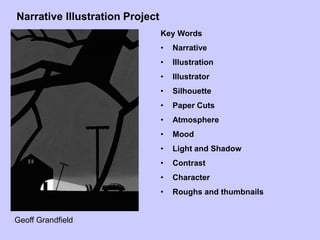
Narrative Illustration Project
Key Words
• Narrative
• Illustration
• Illustrator
• Silhouette
• Paper Cuts
• Atmosphere
• Mood
• Light and Shadow
• Contrast
• Character
• Roughs and thumbnails
Geoff Grandfield
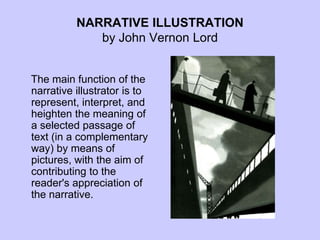
NARRATIVE ILLUSTRATION
by John Vernon Lord
The main function of the
narrative illustrator is to
represent, interpret, and
heighten the meaning of
a selected passage of
text (in a complementary
way) by means of
pictures, with the aim of
contributing to the
reader's appreciation of
the narrative.
Homework
Put a version of your subverted fairy tale in your
sketchbook and highlight three scenes that could be
illustrated.
The Text
• Which individual passages of text shall be selected to
illustrate and how do the pictures relate to each other to
attain a satisfactory sequence?
• What pictorial properties should we consider when we
are illustrating in series?
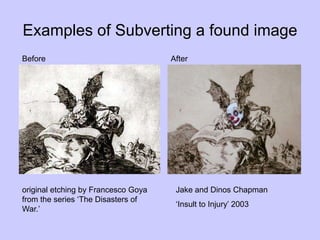
Examples of Subverting a found image
Before After
original etching by Francesco Goya
from the series ‘The Disasters of
War.’
Jake and Dinos Chapman
‘Insult to Injury’ 2003
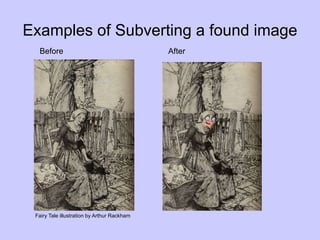
Examples of Subverting a found image
Before After
Fairy Tale illustration by Arthur Rackham
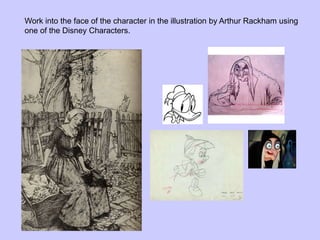
Work into the face of the character in the illustration by Arthur Rackham using
one of the Disney Characters.
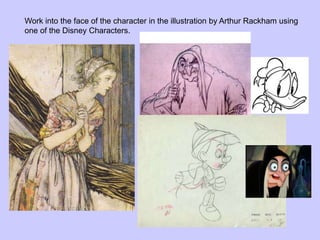
Work into the face of the character in the illustration by Arthur Rackham using
one of the Disney Characters.
Homework
Visual Reference Visual reference has to be gathered as an aid
to creating illustrations -
Complete the following tasks:
1. One drawing from direct observation of an object in your story;
2. One drawing from visual memory and imagination of a place in
your story;
3. Collect a range of images that you will need for reference for your
illustrations for the characters, costumes and background scenery.
Present these as a mood board across two pages in your
sketchbook.
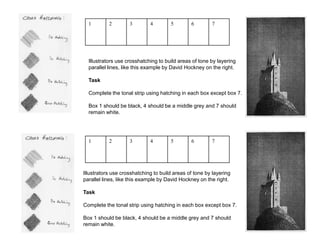
1 2 3 4 5 6 7
Illustrators use crosshatching to build areas of tone by layering
parallel lines, like this example by David Hockney on the right.
Task
Complete the tonal strip using hatching in each box except box 7.
Box 1 should be black, 4 should be a middle grey and 7 should
remain white.
1 2 3 4 5 6 7
Illustrators use crosshatching to build areas of tone by layering
parallel lines, like this example by David Hockney on the right.
Task
Complete the tonal strip using hatching in each box except box 7.
Box 1 should be black, 4 should be a middle grey and 7 should
remain white.
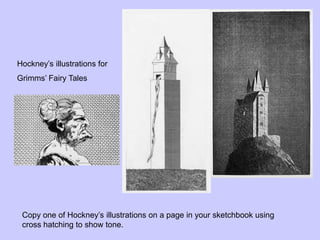
Hockney’s illustrations for
Grimms’ Fairy Tales
Copy one of Hockney’s illustrations on a page in your sketchbook using
cross hatching to show tone.
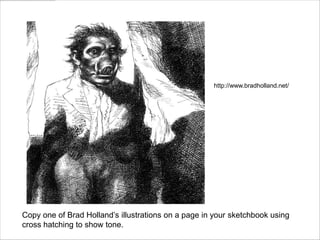
Copy one of Brad Holland’s illustrations on a page in your sketchbook using
cross hatching to show tone.
http://www.bradholland.net/
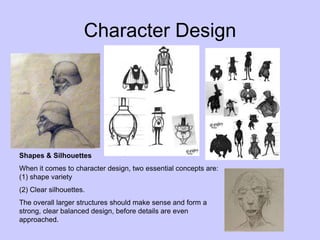
Character Design
Shapes & Silhouettes
When it comes to character design, two essential concepts are:
(1) shape variety
(2) Clear silhouettes.
The overall larger structures should make sense and form a
strong, clear balanced design, before details are even
approached.
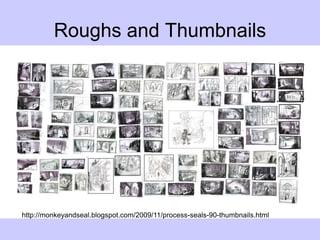
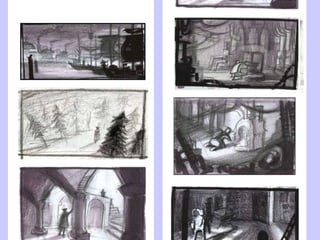
Roughs and Thumbnails
http://monkeyandseal.blogspot.com/2009/11/process-seals-90-thumbnails.html
Scene Setting
The scene setting or location where the action takes place,
has to be thought about. The background setting may be
carried out in such a way as to emphasise mood and
expression as well as our experiencing a sense of
movement in the picture.
View Point
The choice of viewpoint (angle of vision or eye-level) has
to be established for each picture.
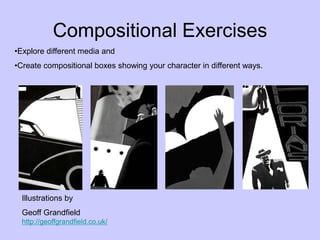
Compositional Exercises
•Explore different media and
•Create compositional boxes showing your character in different ways.
Illustrations by
Geoff Grandfield
http://geoffgrandfield.co.uk/
Composition Here are a few headings to think about:
• Tone and colour contrasts;
• Figure and ground possibilities - dark against light and light against
dark;
• Contrasts of scale and proportional changes;
• Different perspectival views;
• Opposites - near and far;
• Simplicity against complexity;
• Passive and active;
• Vertical, horizontal and diagonal stresses;
• Curved and angular shapes;
• Using constants (ie the grid) as a means of orchestrating
compositional elements;
Ideas
• Ideas in illustration may be generated in several ways:
• ideas are required to solve particular problems;
• ideas are required in selecting and composing the
elements of a picture;
• ideas can come from inventing a new visual language or
by an original use of materials.
• Ideas may take on the form of the visual clarification of
something that cannot be expressed in words or seen in
the normal way.
• Visual ideas may complement words.
• Pictorial ideas may show what the world is like in the
present, what it used to be like in the past, and what it
could, should or might be like in the future.
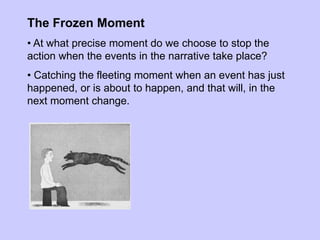
The Frozen Moment
• At what precise moment do we choose to stop the
action when the events in the narrative take place?
• Catching the fleeting moment when an event has just
happened, or is about to happen, and that will, in the
next moment change.
Mood and Atmosphere
We need to consider reflecting the tone of a narrative
by extracting the appropriate sense of mood and
atmosphere from its content. Our intention might be to
create a sense of drama or humour, suspense and
surprise, or joie de vivre etc.
Nature and action of the characters
The nature and action of the characters who are
participating in the narrative have to be considered as
well as registering their physical appearance, (features
of face) and their momentary gesture and expression -
not just what they are doing. Maintaining the likeness
of individual characters throughout a story might be
something that has to be handled.
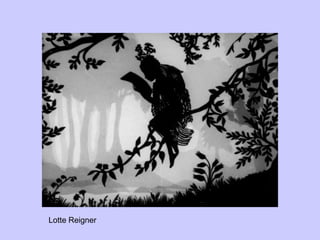
Lotte Reigner
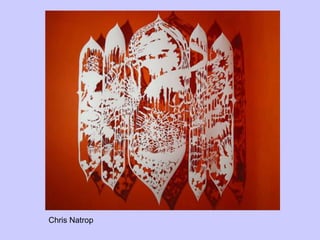
Chris Natrop
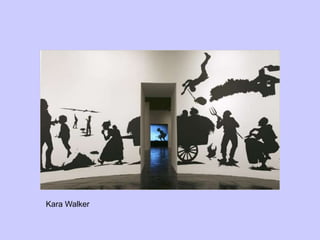
Kara Walker
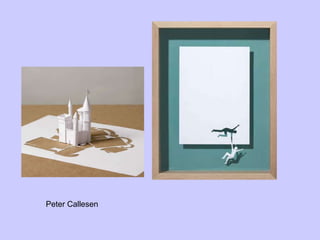
Peter Callesen
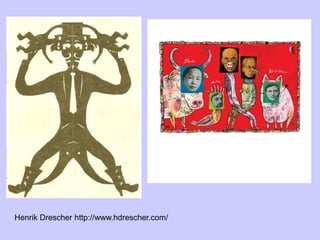
Henrik Drescher http://www.hdrescher.com/
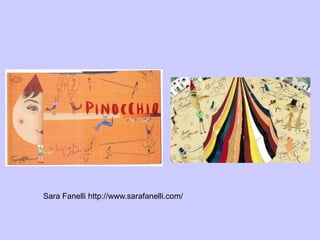
Sara Fanelli http://www.sarafanelli.com/
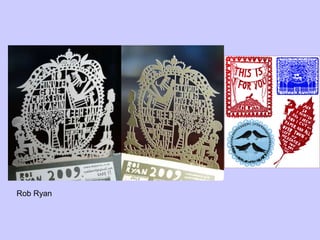
Rob Ryan
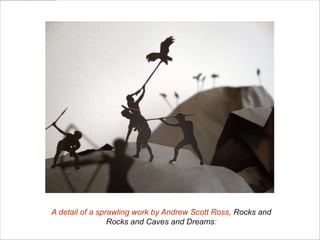
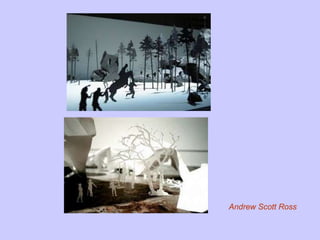
A detail of a sprawling work by Andrew Scott Ross, Rocks and
Rocks and Caves and Dreams:
Andrew Scott Ross

General narrative illustration project (3)

  • 1.
    Narrative Illustration Project KeyWords • Narrative • Illustration • Illustrator • Silhouette • Paper Cuts • Atmosphere • Mood • Light and Shadow • Contrast • Character • Roughs and thumbnails Geoff Grandfield
  • 2.
    NARRATIVE ILLUSTRATION by JohnVernon Lord The main function of the narrative illustrator is to represent, interpret, and heighten the meaning of a selected passage of text (in a complementary way) by means of pictures, with the aim of contributing to the reader's appreciation of the narrative.
  • 3.
    Homework Put a versionof your subverted fairy tale in your sketchbook and highlight three scenes that could be illustrated. The Text • Which individual passages of text shall be selected to illustrate and how do the pictures relate to each other to attain a satisfactory sequence? • What pictorial properties should we consider when we are illustrating in series?
  • 4.
    Examples of Subvertinga found image Before After original etching by Francesco Goya from the series ‘The Disasters of War.’ Jake and Dinos Chapman ‘Insult to Injury’ 2003
  • 5.
    Examples of Subvertinga found image Before After Fairy Tale illustration by Arthur Rackham
  • 6.
    Work into theface of the character in the illustration by Arthur Rackham using one of the Disney Characters.
  • 7.
    Work into theface of the character in the illustration by Arthur Rackham using one of the Disney Characters.
  • 8.
    Homework Visual Reference Visualreference has to be gathered as an aid to creating illustrations - Complete the following tasks: 1. One drawing from direct observation of an object in your story; 2. One drawing from visual memory and imagination of a place in your story; 3. Collect a range of images that you will need for reference for your illustrations for the characters, costumes and background scenery. Present these as a mood board across two pages in your sketchbook.
  • 9.
    1 2 34 5 6 7 Illustrators use crosshatching to build areas of tone by layering parallel lines, like this example by David Hockney on the right. Task Complete the tonal strip using hatching in each box except box 7. Box 1 should be black, 4 should be a middle grey and 7 should remain white. 1 2 3 4 5 6 7 Illustrators use crosshatching to build areas of tone by layering parallel lines, like this example by David Hockney on the right. Task Complete the tonal strip using hatching in each box except box 7. Box 1 should be black, 4 should be a middle grey and 7 should remain white.
  • 10.
    Hockney’s illustrations for Grimms’Fairy Tales Copy one of Hockney’s illustrations on a page in your sketchbook using cross hatching to show tone.
  • 11.
    Copy one ofBrad Holland’s illustrations on a page in your sketchbook using cross hatching to show tone. http://www.bradholland.net/
  • 12.
    Character Design Shapes &Silhouettes When it comes to character design, two essential concepts are: (1) shape variety (2) Clear silhouettes. The overall larger structures should make sense and form a strong, clear balanced design, before details are even approached.
  • 13.
  • 14.
    Scene Setting The scenesetting or location where the action takes place, has to be thought about. The background setting may be carried out in such a way as to emphasise mood and expression as well as our experiencing a sense of movement in the picture. View Point The choice of viewpoint (angle of vision or eye-level) has to be established for each picture.
  • 16.
    Compositional Exercises •Explore differentmedia and •Create compositional boxes showing your character in different ways. Illustrations by Geoff Grandfield http://geoffgrandfield.co.uk/
  • 17.
    Composition Here area few headings to think about: • Tone and colour contrasts; • Figure and ground possibilities - dark against light and light against dark; • Contrasts of scale and proportional changes; • Different perspectival views; • Opposites - near and far; • Simplicity against complexity; • Passive and active; • Vertical, horizontal and diagonal stresses; • Curved and angular shapes; • Using constants (ie the grid) as a means of orchestrating compositional elements;
  • 18.
    Ideas • Ideas inillustration may be generated in several ways: • ideas are required to solve particular problems; • ideas are required in selecting and composing the elements of a picture; • ideas can come from inventing a new visual language or by an original use of materials. • Ideas may take on the form of the visual clarification of something that cannot be expressed in words or seen in the normal way. • Visual ideas may complement words. • Pictorial ideas may show what the world is like in the present, what it used to be like in the past, and what it could, should or might be like in the future.
  • 19.
    The Frozen Moment •At what precise moment do we choose to stop the action when the events in the narrative take place? • Catching the fleeting moment when an event has just happened, or is about to happen, and that will, in the next moment change.
  • 20.
    Mood and Atmosphere Weneed to consider reflecting the tone of a narrative by extracting the appropriate sense of mood and atmosphere from its content. Our intention might be to create a sense of drama or humour, suspense and surprise, or joie de vivre etc. Nature and action of the characters The nature and action of the characters who are participating in the narrative have to be considered as well as registering their physical appearance, (features of face) and their momentary gesture and expression - not just what they are doing. Maintaining the likeness of individual characters throughout a story might be something that has to be handled.
  • 21.
  • 22.
  • 23.
  • 24.
  • 25.
  • 26.
  • 27.
  • 28.
    A detail ofa sprawling work by Andrew Scott Ross, Rocks and Rocks and Caves and Dreams:
  • 29.