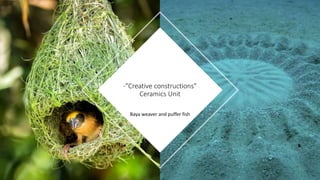
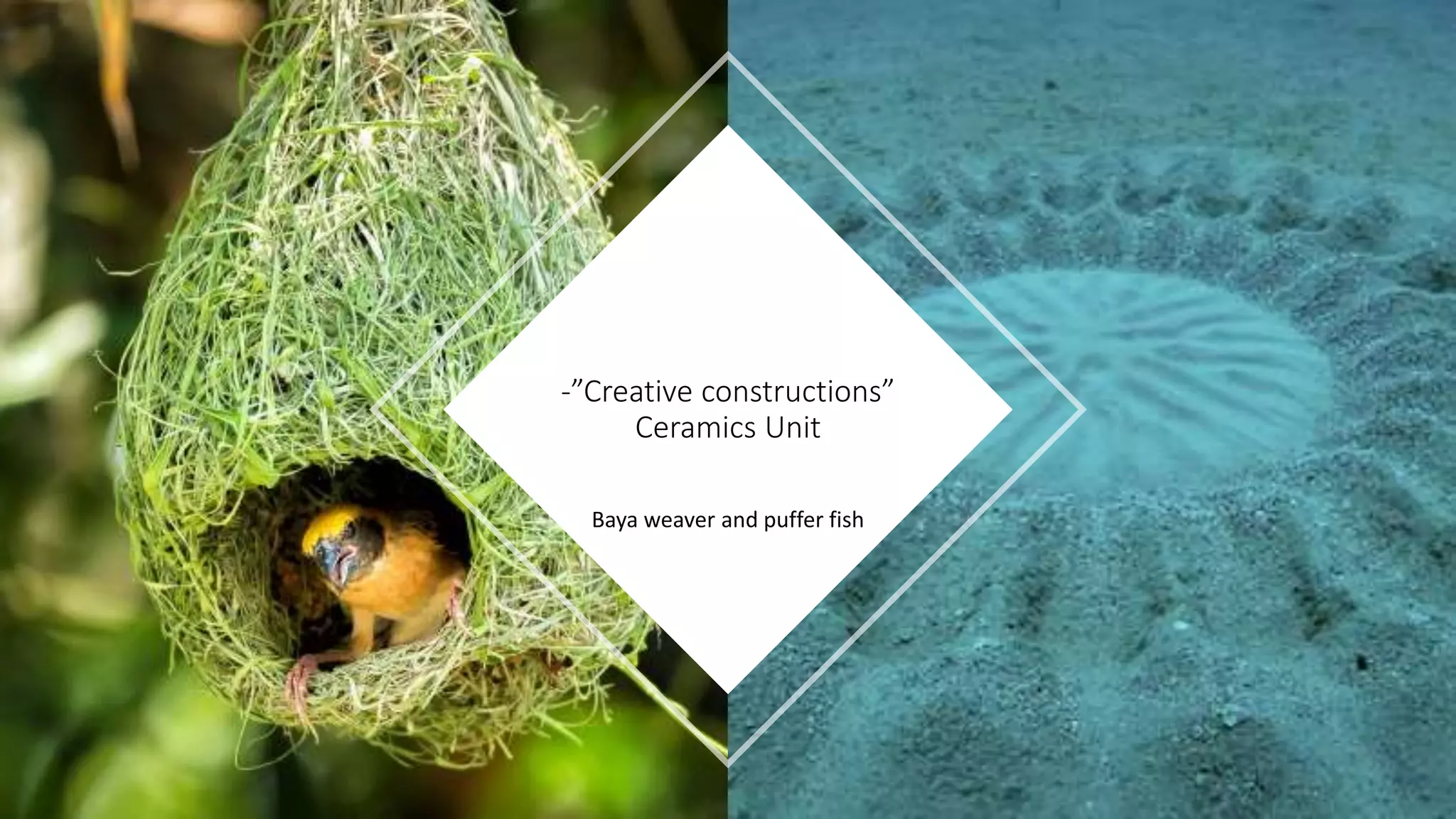
Baya weaver and puffer fish
-”Creative constructions”
Ceramics Unit
Statement of Inquiry:
“The changing environment animals live in;
influences how they live and seek shelter”.
• Starting point of our inquiry will be: “what is a habitat”?
• How do animals live and adapt in different
environments?
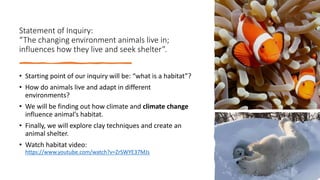
• We will be finding out how climate and climate change
influence animal’s habitat.
• Finally, we will explore clay techniques and create an
animal shelter.
• Watch habitat video:
https://www.youtube.com/watch?v=ZrSWYE37MJs
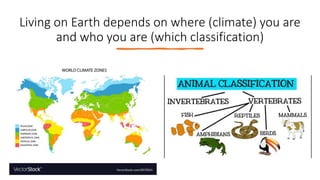
Living on Earth depends on where (climate) you are
and who you are (which classification)
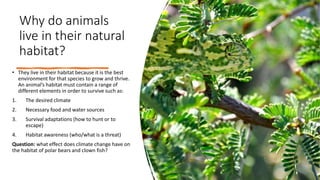
Why do animals
live in their natural
habitat?
• They live in their habitat because it is the best
environment for that species to grow and thrive.
An animal’s habitat must contain a range of
different elements in order to survive such as:
1. The desired climate
2. Necessary food and water sources
3. Survival adaptations (how to hunt or to
escape)
4. Habitat awareness (who/what is a threat)
Question: what effect does climate change have on
the habitat of polar bears and clown fish?
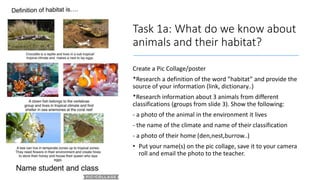
Task 1a: What do we know about
animals and their habitat?
Create a Pic Collage/poster
*Research a definition of the word ”habitat” and provide the
source of your information (link, dictionary..)
*Research information about 3 animals from different
classifications (groups from slide 3). Show the following:
- a photo of the animal in the environment it lives
- the name of the climate and name of their classification
- a photo of their home (den,nest,burrow..)
• Put your name(s) on the pic collage, save it to your camera
roll and email the photo to the teacher.
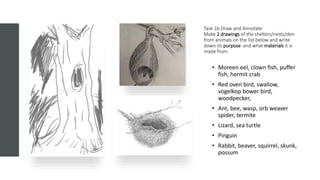
Task 1b Draw and Annotate
Make 2 drawings of the shelters/nests/den
from animals on the list below and write
down its purpose and what materials it is
made from.
• Moreen eel, clown fish, puffer
fish, hermit crab
• Red oven bird, swallow,
vogelkop bower bird,
woodpecker,
• Ant, bee, wasp, orb weaver
spider, termite
• Lizard, sea turtle
• Pinguin
• Rabbit, beaver, squirrel, skunk,
possum
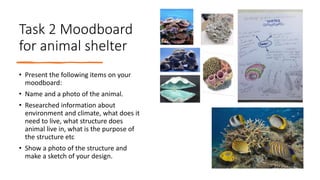
Task 2 Moodboard
for animal shelter
• Present the following items on your
moodboard:
• Name and a photo of the animal.
• Researched information about
environment and climate, what does it
need to live, what structure does
animal live in, what is the purpose of
the structure etc
• Show a photo of the structure and
make a sketch of your design.
Moodboard continued:
Thinking, sketching and
annotating
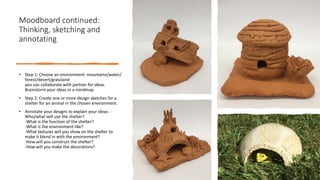
• Step 1: Choose an environment: mountains/water/
forest/desert/grassland
you can collaborate with partner for ideas.
Brainstorm your ideas in a mindmap
• Step 2: Create one or more design sketches for a
shelter for an animal in the chosen environment.
• Annotate your designs to explain your ideas: -
Who/what will use the shelter?
-What is the function of the shelter?
-What is the environment like?
-What textures will you show on the shelter to
make it blend in with the environment?
-How will you construct the shelter?
-How will you make the decorations?
Task 3:Discover clay and
record techniques
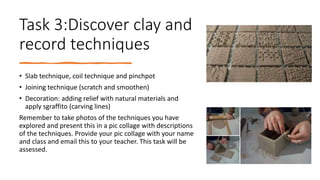
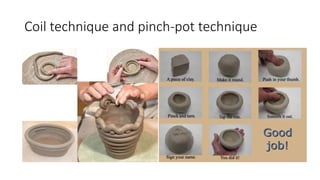
• Slab technique, coil technique and pinchpot
• Joining technique (scratch and smoothen)
• Decoration: adding relief with natural materials and
apply sgraffito (carving lines)
Remember to take photos of the techniques you have
explored and present this in a pic collage with descriptions
of the techniques. Provide your pic collage with your name
and class and email this to your teacher. This task will be
assessed.
Coil technique and pinch-pot technique
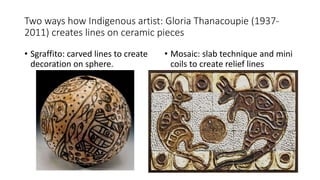
Two ways how Indigenous artist: Gloria Thanacoupie (1937-
2011) creates lines on ceramic pieces
• Sgraffito: carved lines to create
decoration on sphere.
• Mosaic: slab technique and mini
coils to create relief lines
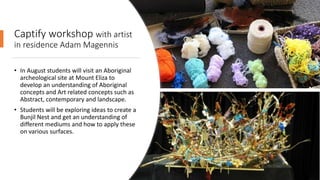
Captify workshop with artist
in residence Adam Magennis
• In August students will visit an Aboriginal
archeological site at Mount Eliza to
develop an understanding of Aboriginal
concepts and Art related concepts such as
Abstract, contemporary and landscape.
• Students will be exploring ideas to create a
Bunjil Nest and get an understanding of
different mediums and how to apply these
on various surfaces.
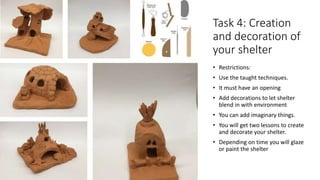
Task 4: Creation
and decoration of
your shelter
• Restrictions:
• Use the taught techniques.
• It must have an opening
• Add decorations to let shelter
blend in with environment
• You can add imaginary things.
• You will get two lessons to create
and decorate your shelter.
• Depending on time you will glaze
or paint the shelter
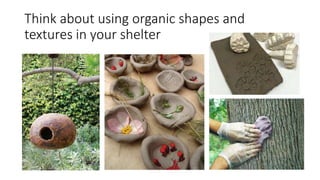
Think about using organic shapes and
textures in your shelter
Task 5:
Reflection
One thing I have learned about animals and their habitat
is……..
I have explored clay and discovered how to (explain new
skills you have learned)……
The workshop (visiting country – school project) made me
realise that……
(About the final shelter) I am most happy with ……….
I would like to improve ………… by doing/changing/adding
Make a line drawing from your final ceramic piece and
decide what colours you want to glaze/paint it. Colour the
drawing and add names of the colours/glazes.

Y6 creative constructions version 2

  • 1.
    Baya weaver andpuffer fish -”Creative constructions” Ceramics Unit
  • 2.
    Statement of Inquiry: “Thechanging environment animals live in; influences how they live and seek shelter”. • Starting point of our inquiry will be: “what is a habitat”? • How do animals live and adapt in different environments? • We will be finding out how climate and climate change influence animal’s habitat. • Finally, we will explore clay techniques and create an animal shelter. • Watch habitat video: https://www.youtube.com/watch?v=ZrSWYE37MJs
  • 3.
    Living on Earthdepends on where (climate) you are and who you are (which classification)
  • 4.
    Why do animals livein their natural habitat? • They live in their habitat because it is the best environment for that species to grow and thrive. An animal’s habitat must contain a range of different elements in order to survive such as: 1. The desired climate 2. Necessary food and water sources 3. Survival adaptations (how to hunt or to escape) 4. Habitat awareness (who/what is a threat) Question: what effect does climate change have on the habitat of polar bears and clown fish?
  • 5.
    Task 1a: Whatdo we know about animals and their habitat? Create a Pic Collage/poster *Research a definition of the word ”habitat” and provide the source of your information (link, dictionary..) *Research information about 3 animals from different classifications (groups from slide 3). Show the following: - a photo of the animal in the environment it lives - the name of the climate and name of their classification - a photo of their home (den,nest,burrow..) • Put your name(s) on the pic collage, save it to your camera roll and email the photo to the teacher.
  • 6.
    Task 1b Drawand Annotate Make 2 drawings of the shelters/nests/den from animals on the list below and write down its purpose and what materials it is made from. • Moreen eel, clown fish, puffer fish, hermit crab • Red oven bird, swallow, vogelkop bower bird, woodpecker, • Ant, bee, wasp, orb weaver spider, termite • Lizard, sea turtle • Pinguin • Rabbit, beaver, squirrel, skunk, possum
  • 7.
    Task 2 Moodboard foranimal shelter • Present the following items on your moodboard: • Name and a photo of the animal. • Researched information about environment and climate, what does it need to live, what structure does animal live in, what is the purpose of the structure etc • Show a photo of the structure and make a sketch of your design.
  • 8.
    Moodboard continued: Thinking, sketchingand annotating • Step 1: Choose an environment: mountains/water/ forest/desert/grassland you can collaborate with partner for ideas. Brainstorm your ideas in a mindmap • Step 2: Create one or more design sketches for a shelter for an animal in the chosen environment. • Annotate your designs to explain your ideas: - Who/what will use the shelter? -What is the function of the shelter? -What is the environment like? -What textures will you show on the shelter to make it blend in with the environment? -How will you construct the shelter? -How will you make the decorations?
  • 9.
    Task 3:Discover clayand record techniques • Slab technique, coil technique and pinchpot • Joining technique (scratch and smoothen) • Decoration: adding relief with natural materials and apply sgraffito (carving lines) Remember to take photos of the techniques you have explored and present this in a pic collage with descriptions of the techniques. Provide your pic collage with your name and class and email this to your teacher. This task will be assessed.
  • 10.
    Coil technique andpinch-pot technique
  • 11.
    Two ways howIndigenous artist: Gloria Thanacoupie (1937- 2011) creates lines on ceramic pieces • Sgraffito: carved lines to create decoration on sphere. • Mosaic: slab technique and mini coils to create relief lines
  • 12.
    Captify workshop withartist in residence Adam Magennis • In August students will visit an Aboriginal archeological site at Mount Eliza to develop an understanding of Aboriginal concepts and Art related concepts such as Abstract, contemporary and landscape. • Students will be exploring ideas to create a Bunjil Nest and get an understanding of different mediums and how to apply these on various surfaces.
  • 13.
    Task 4: Creation anddecoration of your shelter • Restrictions: • Use the taught techniques. • It must have an opening • Add decorations to let shelter blend in with environment • You can add imaginary things. • You will get two lessons to create and decorate your shelter. • Depending on time you will glaze or paint the shelter
  • 14.
    Think about usingorganic shapes and textures in your shelter
  • 15.
    Task 5: Reflection One thingI have learned about animals and their habitat is…….. I have explored clay and discovered how to (explain new skills you have learned)…… The workshop (visiting country – school project) made me realise that…… (About the final shelter) I am most happy with ………. I would like to improve ………… by doing/changing/adding Make a line drawing from your final ceramic piece and decide what colours you want to glaze/paint it. Colour the drawing and add names of the colours/glazes.