A brief introduction to the uses of drawing.
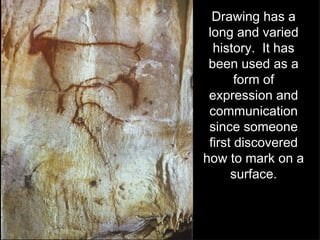
Drawing has a long and varied history.  It has been used as a form of expression and communication since someone first discovered how to mark on a surface.
Children begin drawing at a very young age and their drawings express thoughts and ideas in incredible ways. This is one of my first drawings.
Practice drawings are helpful starting points for future paintings or sculptures.
 
 
Every culture has it’s own history of image making and drawing is somehow tied into all these traditions.
 
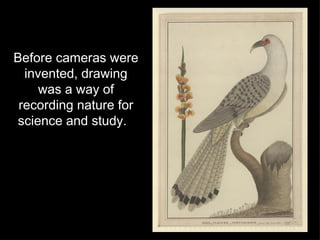
Before cameras were invented, drawing was a way of recording nature for science and study.
It is also a means for political satire and humor.
This Picasso drawing was used for to express a political viewpoint.
This artist has used small drawings to create large, calligraphic letters.
Technical drawings help to map out how something works.
Drawings are used to propose projects for city planning-- this one is a proposal for public transportation.
Of course, we are all familiar with children’s book illustrations which are another great outlet for artists who draw.
Comic strips are often beautiful, expressive drawings.
 
In book illustrations, a drawing needs to show information that moves the story forward.
 
We are all familiar with Andy Warhol’s paintings and prints, but did you know he made a living drawing before he was a famous artist?
Drawing from observation will be the main focus of this class.  If you can learn to draw accurately from life, you can successfully work from your imagination later on.
This drawing is from the imagination, but it is based on very basic principals of observational drawing.
This drawing is also from the imagination, but it uses rules of perspective, composition, and value.
Though filled with action, this piece uses perspective, composition, and figure drawing rules.
Aubry Beardsley made his stunning drawings from his imagination, though he was well-versed in observational drawing.
When you have mastered observational skills occasionally you can master abstraction as well.
 
Drawings can often be simple and offer immense detail at the same time. Every day this artist draws what she buys.
Some artists use humor and shock value in their drawings.  This piece also draws on a popular cartoon icon.
Throughout history, occasionally an artist would be called upon to draw something from description only.  This lion was not drawn from life, but most of the characteristics still make sense.
Some artists who make large art work will also make drawings to plan what the finished piece will look like.  These drawings can also be sold when a large installation piece may be temporary.


This artist, Matthew Buchinger, was born in 1674 with no legs and short, stubby arms.  However, he drew this self portrait.  It is in such great detail that the Lord’s Prayer is actually written in the curls of his hair.


Text Many artists use sketchbooks to record their ideas and practice techniques.


For this class you are not required to keep a sketchbook, but you can attempt the Moleskine Challenge for extra credit. Go on MyCR to read about this extra credit opportunity.

Drawing day one

  • 1.
    A brief introductionto the uses of drawing.
  • 2.
    Drawing has along and varied history. It has been used as a form of expression and communication since someone first discovered how to mark on a surface.
  • 3.
    Children begin drawingat a very young age and their drawings express thoughts and ideas in incredible ways. This is one of my first drawings.
  • 4.
    Practice drawings arehelpful starting points for future paintings or sculptures.
  • 5.
  • 6.
  • 7.
    Every culture hasit’s own history of image making and drawing is somehow tied into all these traditions.
  • 8.
  • 9.
    Before cameras wereinvented, drawing was a way of recording nature for science and study.
  • 10.
    It is alsoa means for political satire and humor.
  • 11.
    This Picasso drawingwas used for to express a political viewpoint.
  • 12.
    This artist hasused small drawings to create large, calligraphic letters.
  • 13.
    Technical drawings helpto map out how something works.
  • 14.
    Drawings are usedto propose projects for city planning-- this one is a proposal for public transportation.
  • 15.
    Of course, weare all familiar with children’s book illustrations which are another great outlet for artists who draw.
  • 16.
    Comic strips areoften beautiful, expressive drawings.
  • 17.
  • 18.
    In book illustrations,a drawing needs to show information that moves the story forward.
  • 19.
  • 20.
    We are allfamiliar with Andy Warhol’s paintings and prints, but did you know he made a living drawing before he was a famous artist?
  • 21.
    Drawing from observationwill be the main focus of this class. If you can learn to draw accurately from life, you can successfully work from your imagination later on.
  • 22.
    This drawing isfrom the imagination, but it is based on very basic principals of observational drawing.
  • 23.
    This drawing isalso from the imagination, but it uses rules of perspective, composition, and value.
  • 24.
    Though filled withaction, this piece uses perspective, composition, and figure drawing rules.
  • 25.
    Aubry Beardsley madehis stunning drawings from his imagination, though he was well-versed in observational drawing.
  • 26.
    When you havemastered observational skills occasionally you can master abstraction as well.
  • 27.
  • 28.
    Drawings can oftenbe simple and offer immense detail at the same time. Every day this artist draws what she buys.
  • 29.
    Some artists usehumor and shock value in their drawings. This piece also draws on a popular cartoon icon.
  • 30.
    Throughout history, occasionallyan artist would be called upon to draw something from description only. This lion was not drawn from life, but most of the characteristics still make sense.
  • 31.
    Some artists whomake large art work will also make drawings to plan what the finished piece will look like. These drawings can also be sold when a large installation piece may be temporary.
  • 32.
  • 33.
  • 34.
  • 35.
    This artist, MatthewBuchinger, was born in 1674 with no legs and short, stubby arms. However, he drew this self portrait. It is in such great detail that the Lord’s Prayer is actually written in the curls of his hair.
  • 36.
  • 37.
  • 38.
  • 39.
    Text Many artistsuse sketchbooks to record their ideas and practice techniques.
  • 40.
  • 41.
  • 42.
  • 43.
  • 44.
  • 45.
  • 46.
  • 47.
  • 48.
  • 49.
  • 50.
  • 51.
  • 52.
  • 53.
  • 54.
  • 55.
  • 56.
  • 57.
    For this classyou are not required to keep a sketchbook, but you can attempt the Moleskine Challenge for extra credit. Go on MyCR to read about this extra credit opportunity.