STRATEGIC MANAGEMENT:
           WALMART CASE
Authors:
G. Gimondo
N. McConville
A. O’Dell
S. Smith
O. Vadillo
M. van de Rijt
Table of Contents
• Introduction

• Industry and Firm Analysis

• Competitive Advantages and Sustainability

• Recommendations
Walmart
• World’s largest company
• Discount store and Superstore model
• Net income of $8 billion and sales of $245
  billion in 2003
• Shareholder’s expect growth
  – Domestic
  – International
INDUSTRY AND FIRM ANALYSIS
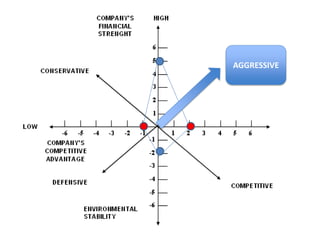
To what extent is WM’s performance attributable to industry attractiveness
              and to what extent to competitive advantage?
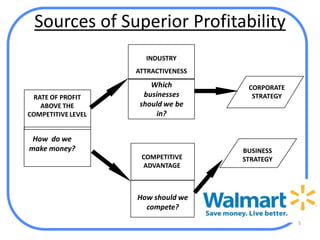
Sources of Superior Profitability
                      INDUSTRY
                    ATTRACTIVENESS
                        Which         CORPORATE
 RATE OF PROFIT       businesses       STRATEGY
   ABOVE THE         should we be
COMPETITIVE LEVEL        in?


 How do we
make money?                          BUSINESS
                     COMPETITIVE     STRATEGY
                     ADVANTAGE


                    How should we
                      compete?
                                                  5
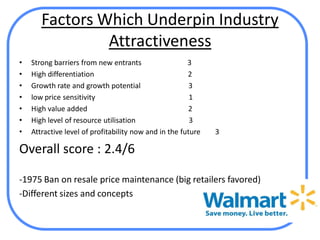
Factors Which Underpin Industry
                Attractiveness
•   Strong barriers from new entrants                  3
•   High differentiation                               2
•   Growth rate and growth potential                    3
•   low price sensitivity                               1
•   High value added                                   2
•   High level of resource utilisation                  3
•   Attractive level of profitability now and in the future   3

Overall score : 2.4/6

-1975 Ban on resale price maintenance (big retailers favored)
-Different sizes and concepts
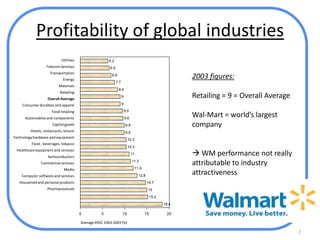
Profitability of global industries
                             Utilities
                              Utilities                  6.2
                    Telecom Services                      6.5
                      Transportation
                      Transportation
                             Energy
                                                           6.9
                                                                                                           2003 figures:
                                                                7.7
                            Materials
                            Materials                            8.4
                            Retailing
                    Overall Average
                                                                      9                                    Retailing = 9 = Overall Average
                    Overall Average
       Consumer durables and apparel                                  9

                       Food retailing                                     9.5
                       Food retailing
        Automobiles and components                                        9.6
                                                                                                           Wal-Mart = world’s largest
                        Capital goods                                     9.9                              company
           Hotels, restaurants, leisure
                        Capital goods                                     9.9
  Technology hardware and equipment
                                                                            10.3
            Food , beverages, tobacco
Technology hardware and equipment                                           10.3

                                                                                                            WM performance not really
    Healthcare equipment and services
                                                                                11
                   Semiconductors
 Healthcare equipment and services
                Commercial services                                             11.3
                                                                                                           attributable to industry
                             Media                                               11.9

       ComputerCommercial services
               software and services                                                 12.8
                                                                                                           attractiveness
     Household and personal products                                                        14.7
                  Pharmaceuticals
    Computer software and services                                                          15
                                                                                             15.2
                    Pharmaceuticals                                                                 18.4

                                          0          5                10                15           20

                                          Average ROIC 1963-2003 (%)

                                                                                                                                             7
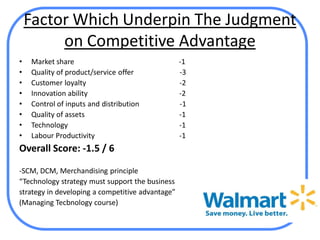
Factor Which Underpin The Judgment
         on Competitive Advantage
•   Market share                                  -1
•   Quality of product/service offer              -3
•   Customer loyalty                              -2
•   Innovation ability                            -2
•   Control of inputs and distribution            -1
•   Quality of assets                             -1
•   Technology                                    -1
•   Labour Productivity                           -1
Overall Score: -1.5 / 6

-SCM, DCM, Merchandising principle
“Technology strategy must support the business
strategy in developing a competitive advantage”
(Managing Tecbnology course)
AGGRESSIVE
KEY COMPETITIVE ADVANTAGES
AND SUSTAINABILITY
Support Activities
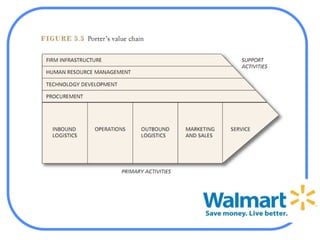
• Firm Infrastructure:
      • High store volume
      • No regional HQ
      • IT support systems for managerial decisions

• Human Resource Management:
      • Introduction of senior manager with background outside retailing
        (IT)
      • Lower wages than competitors
      • Less people employed/store
      • Higher sales volume / employee
      • “Associates”
      • Management Techniques
          – Balanced Scorecard
Support Activities
• Technology Development:
    • Cutting-edge technology always used in order to
      maintain CA
    • Benchmark of competitors successful measure
    • IT
• Procurement:
    • High bargaining power with suppliers
    • Long period for Account Payables
Primary Activities
•   Inbound Logistics
         •   One of first users of EDI to communicate with suppliers
         •   Disintermediation
         •   High bargain power
         •   Example of flags after 9/11 (pp.7)
•   Operations
         • They uniquely operate each store
         • Better in-store execution than competitors
•   Outbound Logistics
         • Wal-Mart Distribution Centres
         • Distribution costs 2-3% compared with 4-5% of competitors
         • Inventory Turns (7.6 compared with 6.1 – 5.4 from competitors)
•   Marketing & Sales
         • Unbeatable prices

•   Services
         • People Greeter
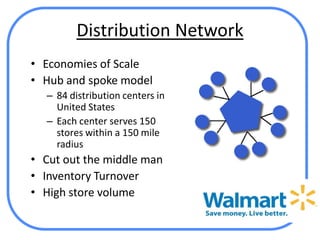
Distribution Network
• Economies of Scale
• Hub and spoke model
  – 84 distribution centers in
    United States
  – Each center serves 150
    stores within a 150 mile
    radius
• Cut out the middle man
• Inventory Turnover
• High store volume
Distribution Network Sustainability
• Sustainable due to size and relationship with
  suppliers
• Some aspects can be replicated by
  competitors
  – Hub and spoke model
  – Buying directly from the manufacturer
• However difficult to replicate due to necessary
  capital and size
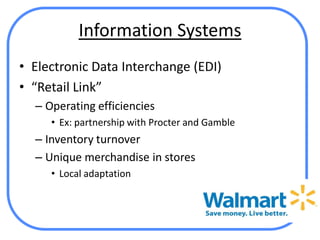
Information Systems
• Electronic Data Interchange (EDI)
• “Retail Link”
  – Operating efficiencies
     • Ex: partnership with Procter and Gamble
  – Inventory turnover
  – Unique merchandise in stores
     • Local adaptation
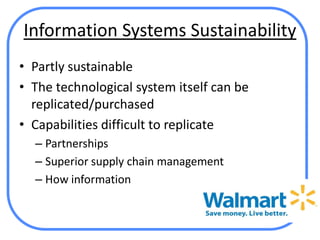
Information Systems Sustainability
• Partly sustainable
• The technological system itself can be
  replicated/purchased
• Capabilities difficult to replicate
  – Partnerships
  – Superior supply chain management
  – How information
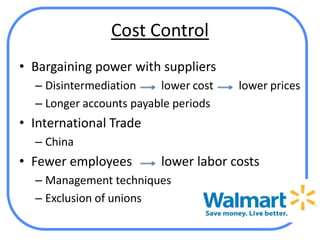
Cost Control
• Bargaining power with suppliers
  – Disintermediation    lower cost   lower prices
  – Longer accounts payable periods
• International Trade
  – China
• Fewer employees        lower labor costs
  – Management techniques
  – Exclusion of unions
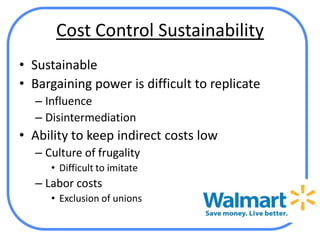
Cost Control Sustainability
• Sustainable
• Bargaining power is difficult to replicate
  – Influence
  – Disintermediation
• Ability to keep indirect costs low
  – Culture of frugality
     • Difficult to imitate
  – Labor costs
     • Exclusion of unions
Resource & Capabilities Analysis
1st Step: Assessment of the main resources and
  capabilities that affect the company and its
  industry

2nd Step: Use the R&C Matrix to show the key
  strengths of the company
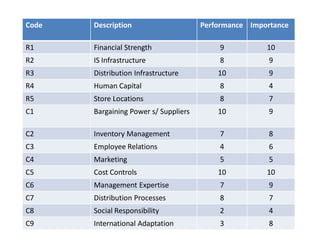
Code   Description                     Performance Importance

R1     Financial Strength                  9           10
R2     IS Infrastructure                   8            9
R3     Distribution Infrastructure         10           9
R4     Human Capital                       8            4
R5     Store Locations                     8            7
C1     Bargaining Power s/ Suppliers       10           9

C2     Inventory Management                7            8
C3     Employee Relations                  4            6
C4     Marketing                           5            5
C5     Cost Controls                       10          10
C6     Management Expertise                7            9
C7     Distribution Processes              8            7
C8     Social Responsibility               2            4
C9     International Adaptation            3            8
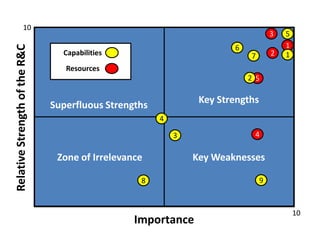
10
                                                                                    3   5
                                                                                        1
Relative Strength of the R&C

                                                                       6
                                 Capabilities                              7        2   1
                                  Resources
                                                                           2 5

                                                                Key Strengths
                               Superfluous Strengths
                                                       4

                                                           3                4

                                Zone of Irrelevance            Key Weaknesses

                                                  8                             9


                                                                                            10
                                                 Importance
RECOMMENDATIONS FOR THE
FUTURE
Future of Walmart
• How can Wal-Mart sustain its recent
  performance and defend against other
  threats?

  “Story of evolution, not revolution”
                           (Bradley et al, 2003)
Recommendations and Challenges

• Four Key Determinants:
  – Distribution Infrastructure
  – Globalisation
  – Competitive Threats
  – Social Issues
• Distribution Infrastructure
  – Building upon existing framework in order to
    sustain competitive advantage


• Globalisation
  – Market expansion
  – Challenges
     • Failure
     • Cultural insensitivity
• Competitive Threats
  – Intense price competition
  – Potential competition or too big to fail?


• Social Issues
  – Sustainability 360
  – Corporate image
     • Negativity associated with
     Walmart regarding HRM issues
Conclusion
• Industry and Firm Analysis

• Competitive Advantages

• Sustainability of each advantage

• Recommendations for the future
References
•   Bradley et al. (2003). Walmart Stores in 2003. Harvard Business Review.

•   Djeddour, M. (2011). Strategic Management Lecture. [Handout], Strategic
    Management Module. Grenoble Graduate School of Business.

Wal-Mart Analysis (Strategic Management)

  • 1.
    STRATEGIC MANAGEMENT: WALMART CASE Authors: G. Gimondo N. McConville A. O’Dell S. Smith O. Vadillo M. van de Rijt
  • 2.
    Table of Contents •Introduction • Industry and Firm Analysis • Competitive Advantages and Sustainability • Recommendations
  • 3.
    Walmart • World’s largestcompany • Discount store and Superstore model • Net income of $8 billion and sales of $245 billion in 2003 • Shareholder’s expect growth – Domestic – International
  • 4.
    INDUSTRY AND FIRMANALYSIS To what extent is WM’s performance attributable to industry attractiveness and to what extent to competitive advantage?
  • 5.
    Sources of SuperiorProfitability INDUSTRY ATTRACTIVENESS Which CORPORATE RATE OF PROFIT businesses STRATEGY ABOVE THE should we be COMPETITIVE LEVEL in? How do we make money? BUSINESS COMPETITIVE STRATEGY ADVANTAGE How should we compete? 5
  • 6.
    Factors Which UnderpinIndustry Attractiveness • Strong barriers from new entrants 3 • High differentiation 2 • Growth rate and growth potential 3 • low price sensitivity 1 • High value added 2 • High level of resource utilisation 3 • Attractive level of profitability now and in the future 3 Overall score : 2.4/6 -1975 Ban on resale price maintenance (big retailers favored) -Different sizes and concepts
  • 7.
    Profitability of globalindustries Utilities Utilities 6.2 Telecom Services 6.5 Transportation Transportation Energy 6.9 2003 figures: 7.7 Materials Materials 8.4 Retailing Overall Average 9 Retailing = 9 = Overall Average Overall Average Consumer durables and apparel 9 Food retailing 9.5 Food retailing Automobiles and components 9.6 Wal-Mart = world’s largest Capital goods 9.9 company Hotels, restaurants, leisure Capital goods 9.9 Technology hardware and equipment 10.3 Food , beverages, tobacco Technology hardware and equipment 10.3  WM performance not really Healthcare equipment and services 11 Semiconductors Healthcare equipment and services Commercial services 11.3 attributable to industry Media 11.9 ComputerCommercial services software and services 12.8 attractiveness Household and personal products 14.7 Pharmaceuticals Computer software and services 15 15.2 Pharmaceuticals 18.4 0 5 10 15 20 Average ROIC 1963-2003 (%) 7
  • 8.
    Factor Which UnderpinThe Judgment on Competitive Advantage • Market share -1 • Quality of product/service offer -3 • Customer loyalty -2 • Innovation ability -2 • Control of inputs and distribution -1 • Quality of assets -1 • Technology -1 • Labour Productivity -1 Overall Score: -1.5 / 6 -SCM, DCM, Merchandising principle “Technology strategy must support the business strategy in developing a competitive advantage” (Managing Tecbnology course)
  • 9.
  • 10.
  • 12.
    Support Activities • FirmInfrastructure: • High store volume • No regional HQ • IT support systems for managerial decisions • Human Resource Management: • Introduction of senior manager with background outside retailing (IT) • Lower wages than competitors • Less people employed/store • Higher sales volume / employee • “Associates” • Management Techniques – Balanced Scorecard
  • 13.
    Support Activities • TechnologyDevelopment: • Cutting-edge technology always used in order to maintain CA • Benchmark of competitors successful measure • IT • Procurement: • High bargaining power with suppliers • Long period for Account Payables
  • 14.
    Primary Activities • Inbound Logistics • One of first users of EDI to communicate with suppliers • Disintermediation • High bargain power • Example of flags after 9/11 (pp.7) • Operations • They uniquely operate each store • Better in-store execution than competitors • Outbound Logistics • Wal-Mart Distribution Centres • Distribution costs 2-3% compared with 4-5% of competitors • Inventory Turns (7.6 compared with 6.1 – 5.4 from competitors) • Marketing & Sales • Unbeatable prices • Services • People Greeter
  • 15.
    Distribution Network • Economiesof Scale • Hub and spoke model – 84 distribution centers in United States – Each center serves 150 stores within a 150 mile radius • Cut out the middle man • Inventory Turnover • High store volume
  • 16.
    Distribution Network Sustainability •Sustainable due to size and relationship with suppliers • Some aspects can be replicated by competitors – Hub and spoke model – Buying directly from the manufacturer • However difficult to replicate due to necessary capital and size
  • 17.
    Information Systems • ElectronicData Interchange (EDI) • “Retail Link” – Operating efficiencies • Ex: partnership with Procter and Gamble – Inventory turnover – Unique merchandise in stores • Local adaptation
  • 18.
    Information Systems Sustainability •Partly sustainable • The technological system itself can be replicated/purchased • Capabilities difficult to replicate – Partnerships – Superior supply chain management – How information
  • 19.
    Cost Control • Bargainingpower with suppliers – Disintermediation lower cost lower prices – Longer accounts payable periods • International Trade – China • Fewer employees lower labor costs – Management techniques – Exclusion of unions
  • 20.
    Cost Control Sustainability •Sustainable • Bargaining power is difficult to replicate – Influence – Disintermediation • Ability to keep indirect costs low – Culture of frugality • Difficult to imitate – Labor costs • Exclusion of unions
  • 21.
    Resource & CapabilitiesAnalysis 1st Step: Assessment of the main resources and capabilities that affect the company and its industry 2nd Step: Use the R&C Matrix to show the key strengths of the company
  • 22.
    Code Description Performance Importance R1 Financial Strength 9 10 R2 IS Infrastructure 8 9 R3 Distribution Infrastructure 10 9 R4 Human Capital 8 4 R5 Store Locations 8 7 C1 Bargaining Power s/ Suppliers 10 9 C2 Inventory Management 7 8 C3 Employee Relations 4 6 C4 Marketing 5 5 C5 Cost Controls 10 10 C6 Management Expertise 7 9 C7 Distribution Processes 8 7 C8 Social Responsibility 2 4 C9 International Adaptation 3 8
  • 23.
    10 3 5 1 Relative Strength of the R&C 6 Capabilities 7 2 1 Resources 2 5 Key Strengths Superfluous Strengths 4 3 4 Zone of Irrelevance Key Weaknesses 8 9 10 Importance
  • 24.
  • 25.
    Future of Walmart •How can Wal-Mart sustain its recent performance and defend against other threats? “Story of evolution, not revolution” (Bradley et al, 2003)
  • 26.
    Recommendations and Challenges •Four Key Determinants: – Distribution Infrastructure – Globalisation – Competitive Threats – Social Issues
  • 27.
    • Distribution Infrastructure – Building upon existing framework in order to sustain competitive advantage • Globalisation – Market expansion – Challenges • Failure • Cultural insensitivity
  • 28.
    • Competitive Threats – Intense price competition – Potential competition or too big to fail? • Social Issues – Sustainability 360 – Corporate image • Negativity associated with Walmart regarding HRM issues
  • 29.
    Conclusion • Industry andFirm Analysis • Competitive Advantages • Sustainability of each advantage • Recommendations for the future
  • 30.
    References • Bradley et al. (2003). Walmart Stores in 2003. Harvard Business Review. • Djeddour, M. (2011). Strategic Management Lecture. [Handout], Strategic Management Module. Grenoble Graduate School of Business.