MC Presentation
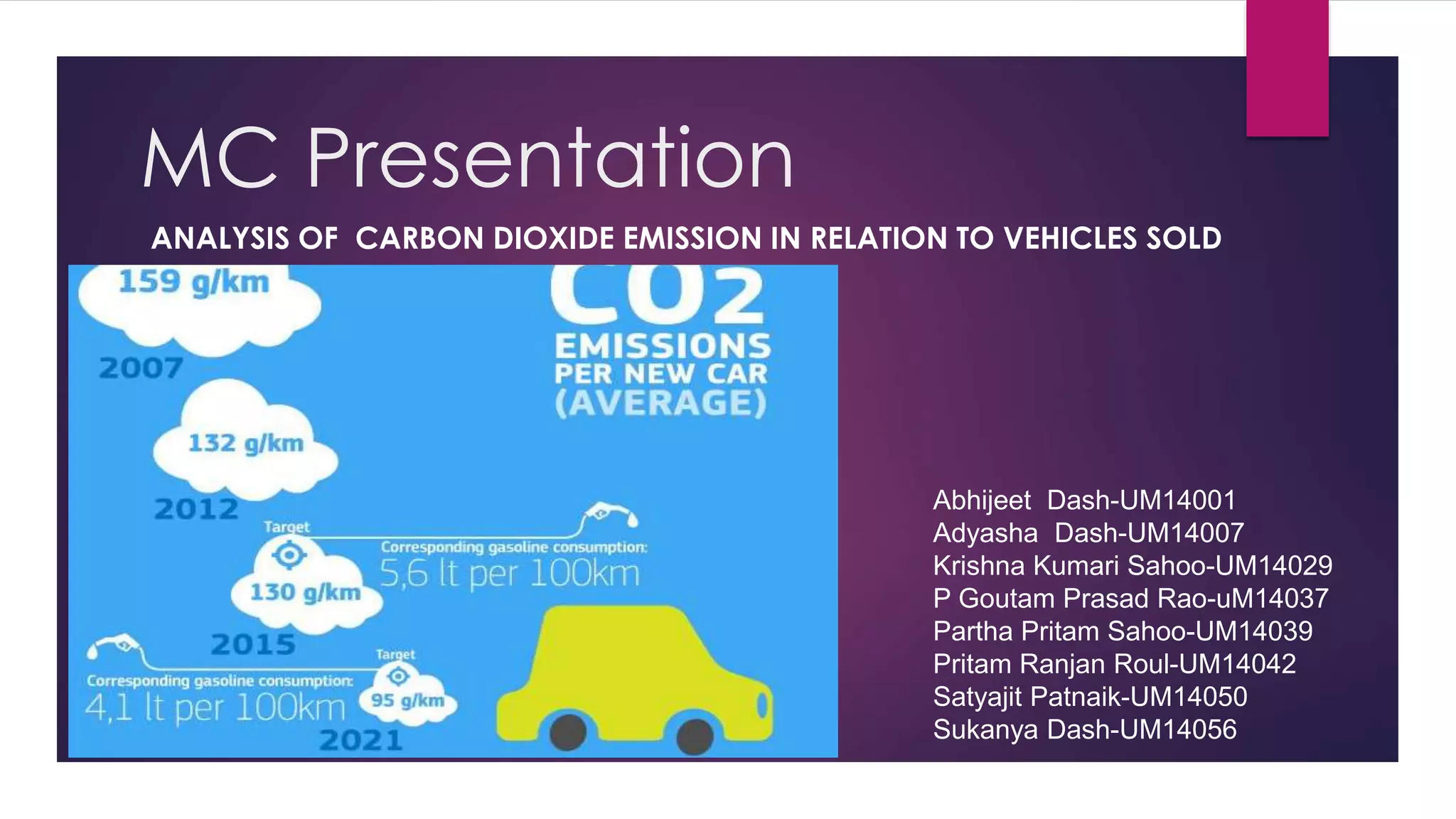
ANALYSIS OF CARBON DIOXIDE EMISSION IN RELATION TO VEHICLES SOLD
Abhijeet Dash-UM14001
Adyasha Dash-UM14007
Krishna Kumari Sahoo-UM14029
P Goutam Prasad Rao-uM14037
Partha Pritam Sahoo-UM14039
Pritam Ranjan Roul-UM14042
Satyajit Patnaik-UM14050
Sukanya Dash-UM14056
Introduction
 Global warming endangers our health, jeopardizes our national security, and
threatens other basic human needs. Some impacts—such as record high
temperatures, rising seas, and severe flooding and droughts—are already
increasingly common.
 Our cars and trucks are a major cause of global warming, emitting around 24 pounds
of carbon dioxide and other global-warming gases for every gallon of gas.
 The transportation sector is the second largest source of anthropogenic carbon
dioxide emissions.
 Transporting goods and people produces 22% of fossil fuel related carbon dioxide
emissions in India.
 Road transport accounts for 72% of this sector's carbon dioxide emissions.
Automobiles, freight and light-duty trucks are the main sources of emissions for the
whole transport sector and emissions from these three have steadily grown
Analysis of yearly Data on Carbon dioxide
emissions based on the number of vehicles
purchased in India.
Problem
Description
 Year -wise Purchase of vehicles.
 Breakup of Vehicle Type purchased
 CO2 emission from transport and as a percentage of
total fuel consumption.
 Analysis of CO2 emission with respect to increase in
number of total vehicles on road.
Scope of
Analysis
MC Concepts Used
 Pie-chart and Scatter Plot (Trend-line)
 Conditional Formatting
 Descriptive Statistics
 Pivot Table
 Correlation
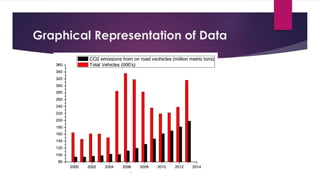
Graphical Representation of Data
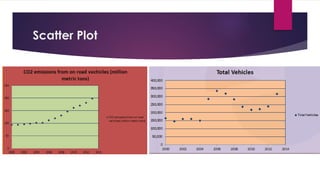
Scatter Plot
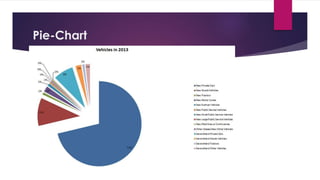
Pie-Chart
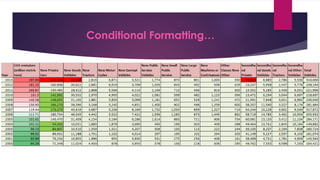
Conditional Formatting
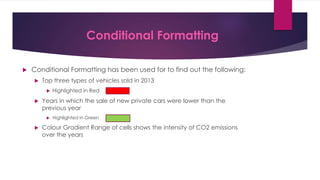
 Conditional Formatting has been used for to find out the following:
 Top three types of vehicles sold in 2013
 Highlighted in Red
 Years in which the sale of new private cars were lower than the
previous year
 Highlighted in Green
 Colour Gradient Range of cells shows the intensity of CO2 emissions
over the years
Conditional Formatting…
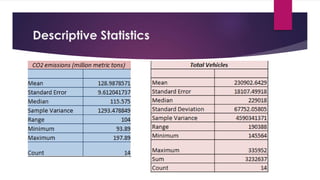
Descriptive Statistics
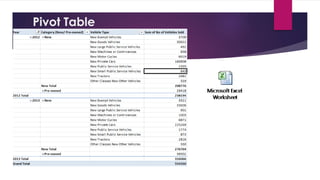
Pivot Table
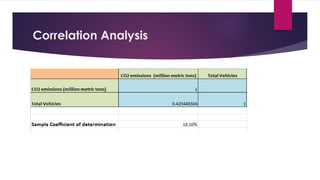
Correlation Analysis
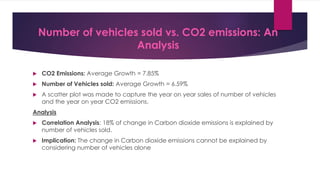
Number of vehicles sold vs. CO2 emissions: An
Analysis
 CO2 Emissions: Average Growth = 7.85%
 Number of Vehicles sold: Average Growth = 6.59%
 A scatter plot was made to capture the year on year sales of number of vehicles
and the year on year CO2 emissions.
Analysis
 Correlation Analysis: 18% of change in Carbon dioxide emissions is explained by
number of vehicles sold.
 Implication: The change in Carbon dioxide emissions cannot be explained by
considering number of vehicles alone
Mc presentation (1)

Mc presentation (1)

  • 1.
    MC Presentation ANALYSIS OFCARBON DIOXIDE EMISSION IN RELATION TO VEHICLES SOLD Abhijeet Dash-UM14001 Adyasha Dash-UM14007 Krishna Kumari Sahoo-UM14029 P Goutam Prasad Rao-uM14037 Partha Pritam Sahoo-UM14039 Pritam Ranjan Roul-UM14042 Satyajit Patnaik-UM14050 Sukanya Dash-UM14056
  • 2.
    Introduction  Global warmingendangers our health, jeopardizes our national security, and threatens other basic human needs. Some impacts—such as record high temperatures, rising seas, and severe flooding and droughts—are already increasingly common.  Our cars and trucks are a major cause of global warming, emitting around 24 pounds of carbon dioxide and other global-warming gases for every gallon of gas.  The transportation sector is the second largest source of anthropogenic carbon dioxide emissions.  Transporting goods and people produces 22% of fossil fuel related carbon dioxide emissions in India.  Road transport accounts for 72% of this sector's carbon dioxide emissions. Automobiles, freight and light-duty trucks are the main sources of emissions for the whole transport sector and emissions from these three have steadily grown
  • 3.
    Analysis of yearlyData on Carbon dioxide emissions based on the number of vehicles purchased in India. Problem Description
  • 4.
     Year -wisePurchase of vehicles.  Breakup of Vehicle Type purchased  CO2 emission from transport and as a percentage of total fuel consumption.  Analysis of CO2 emission with respect to increase in number of total vehicles on road. Scope of Analysis
  • 5.
    MC Concepts Used Pie-chart and Scatter Plot (Trend-line)  Conditional Formatting  Descriptive Statistics  Pivot Table  Correlation
  • 6.
  • 7.
  • 8.
  • 9.
    Conditional Formatting  ConditionalFormatting has been used for to find out the following:  Top three types of vehicles sold in 2013  Highlighted in Red  Years in which the sale of new private cars were lower than the previous year  Highlighted in Green  Colour Gradient Range of cells shows the intensity of CO2 emissions over the years
  • 10.
  • 11.
  • 12.
  • 13.
  • 14.
    Number of vehiclessold vs. CO2 emissions: An Analysis  CO2 Emissions: Average Growth = 7.85%  Number of Vehicles sold: Average Growth = 6.59%  A scatter plot was made to capture the year on year sales of number of vehicles and the year on year CO2 emissions. Analysis  Correlation Analysis: 18% of change in Carbon dioxide emissions is explained by number of vehicles sold.  Implication: The change in Carbon dioxide emissions cannot be explained by considering number of vehicles alone