PRESENTED BY :
        Rewa Pandey – 30
        Rajnandinani Singh - 29
 The WTO’s predecessor, the general agreement
  on traiffs and trade(GATT),was estabilsh after
  world warII in the wake of other multilateral
  institutions dedicated to International economic
  corporation.

 GATT was the only multilateral instruement
  governing international trade from 1948 until the
  WTO was estabilshed on january 1,1995.
The World trade organisation is an organisation that
intends to supervise and liberalise international trade.

WTO was officially commenced on january 1, 1995


WTO was created by uruguay round negotiation (1986-
94).
 There are total 153 member countrries was
  counted in the year 2011.

    Budget 196 million swiss france in the year 2011.

 Currently there are total 629 staff members are
    present in WTO.
WTO reiterates the objectives of GATT, some
of them are as follows:-

 Promote trade flows by encouraging nations
   to adopt nondiscriminatory and predictable
   trade policies.

 Raising standard of living and income.

 Introduce sustainable development.
 Acting as a forum for multilateral trade
   negotiations.

 Seeking to resolve trade disputes.


 Acting as a watchdog of international trade.


 Maintaining trade related database.
 Cooperating with other international
   institutions involved in global economic policy
   making.

 Acting as a management consultant for world
   trade.

 Technical assistance and training for
   developing countries.
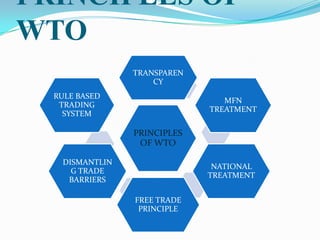
PRINCIPLES OF
WTO
                TRANSPAREN
                    CY
  RULE BASED
                                MFN
   TRADING
                             TREATMENT
    SYSTEM

                PRINCIPLES
                 OF WTO

   DISMANTLIN
                              NATIONAL
     G TRADE
                             TREATMENT
    BARRIERS

                FREE TRADE
                 PRINCIPLE
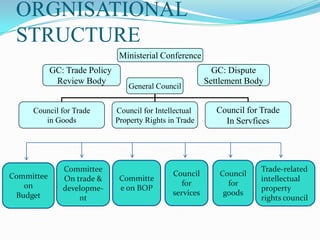
ORGNISATIONAL
 STRUCTURE
                                Ministerial Conference
            GC: Trade Policy                                 GC: Dispute
             Review Body                                   Settlement Body
                                   General Council


     Council for Trade         Council for Intellectual       Council for Trade
        in Goods               Property Rights in Trade         In Servfices


               Committee                                                  Trade-related
Committee                                       Council        Council
               On trade &       Committe                                  intellectual
   on                                              for           for
               developme-       e on BOP                                  property
 Budget                                         services        goods
                   nt                                                     rights council
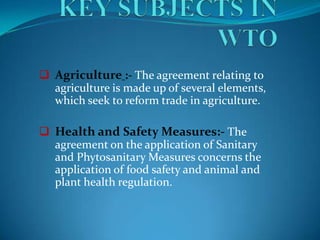
 Agriculture :- The agreement relating to
  agriculture is made up of several elements,
  which seek to reform trade in agriculture.

 Health and Safety Measures:- The
  agreement on the application of Sanitary
  and Phytosanitary Measures concerns the
  application of food safety and animal and
  plant health regulation.
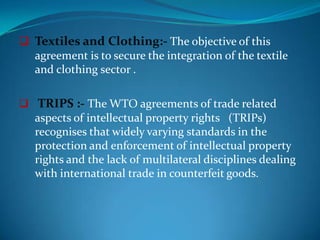
 Textiles and Clothing:- The objective of this
  agreement is to secure the integration of the textile
  and clothing sector .

 TRIPS :- The WTO agreements of trade related
   aspects of intellectual property rights (TRIPs)
   recognises that widely varying standards in the
   protection and enforcement of intellectual property
   rights and the lack of multilateral disciplines dealing
   with international trade in counterfeit goods.
 TRIMS:- Trade related Investement
  Measures (TRIMs) are those restrictions a
  nation places on foreign investment that
  adversely affect trade in goods and services

 Disputes Settlement:- The Dispute
  Settlement Understanding(DSU) is the legal
  text that spells out the rules and procedures for
  disputes between member countries.
Wto presentation

Wto presentation

  • 1.
    PRESENTED BY : Rewa Pandey – 30 Rajnandinani Singh - 29
  • 2.
     The WTO’spredecessor, the general agreement on traiffs and trade(GATT),was estabilsh after world warII in the wake of other multilateral institutions dedicated to International economic corporation.  GATT was the only multilateral instruement governing international trade from 1948 until the WTO was estabilshed on january 1,1995.
  • 3.
    The World tradeorganisation is an organisation that intends to supervise and liberalise international trade. WTO was officially commenced on january 1, 1995 WTO was created by uruguay round negotiation (1986- 94).
  • 4.
     There aretotal 153 member countrries was counted in the year 2011.  Budget 196 million swiss france in the year 2011.  Currently there are total 629 staff members are present in WTO.
  • 5.
    WTO reiterates theobjectives of GATT, some of them are as follows:-  Promote trade flows by encouraging nations to adopt nondiscriminatory and predictable trade policies.  Raising standard of living and income.  Introduce sustainable development.
  • 6.
     Acting asa forum for multilateral trade negotiations.  Seeking to resolve trade disputes.  Acting as a watchdog of international trade.  Maintaining trade related database.
  • 7.
     Cooperating withother international institutions involved in global economic policy making.  Acting as a management consultant for world trade.  Technical assistance and training for developing countries.
  • 8.
    PRINCIPLES OF WTO TRANSPAREN CY RULE BASED MFN TRADING TREATMENT SYSTEM PRINCIPLES OF WTO DISMANTLIN NATIONAL G TRADE TREATMENT BARRIERS FREE TRADE PRINCIPLE
  • 9.
    ORGNISATIONAL STRUCTURE Ministerial Conference GC: Trade Policy GC: Dispute Review Body Settlement Body General Council Council for Trade Council for Intellectual Council for Trade in Goods Property Rights in Trade In Servfices Committee Trade-related Committee Council Council On trade & Committe intellectual on for for developme- e on BOP property Budget services goods nt rights council
  • 10.
     Agriculture :-The agreement relating to agriculture is made up of several elements, which seek to reform trade in agriculture.  Health and Safety Measures:- The agreement on the application of Sanitary and Phytosanitary Measures concerns the application of food safety and animal and plant health regulation.
  • 11.
     Textiles andClothing:- The objective of this agreement is to secure the integration of the textile and clothing sector .  TRIPS :- The WTO agreements of trade related aspects of intellectual property rights (TRIPs) recognises that widely varying standards in the protection and enforcement of intellectual property rights and the lack of multilateral disciplines dealing with international trade in counterfeit goods.
  • 12.
     TRIMS:- Traderelated Investement Measures (TRIMs) are those restrictions a nation places on foreign investment that adversely affect trade in goods and services  Disputes Settlement:- The Dispute Settlement Understanding(DSU) is the legal text that spells out the rules and procedures for disputes between member countries.