Presented By-
            Jitamitra Debnath
                Gaourab Shaw
                Koushik Shaw
      Kaustav Roy Chowdhary
                Ayan Banerjee
                Subhajit Baski
               Suvanjan Dutta
What Is the WTO?

   The World Trade Organization (WTO) is the
    only global international organization dealing
    with the rules of trade between nations.
   WTO agreements are negotiated and signed by
    the trading nations and ratified in their
    parliaments.
   The goal is to help producers of goods and
    services, exporters, and importers conduct and
    grow their business.
The Goal
     Toimprove the
     welfare of the
     peoples of the
     member countries.
Past, Present, Future
The WTO came into being in 1995.

The WTO is the successor to the General
Agreement on Tariffs and Trade (GATT),
established in the wake of the Second World War.
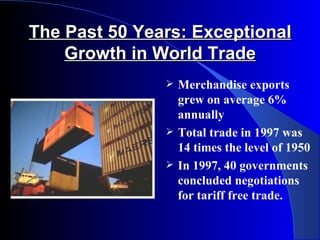
The Past 50 Years: Exceptional
    Growth in World Trade
                  Merchandise exports
                   grew on average 6%
                   annually
                  Total trade in 1997 was
                   14 times the level of 1950
                  In 1997, 40 governments
                   concluded negotiations
                   for tariff free trade.
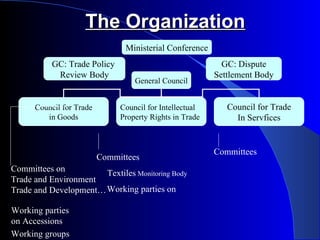
The Organization
                                Ministerial Conference
           GC: Trade Policy                                 GC: Dispute
            Review Body                                   Settlement Body
                                   General Council


      Council for Trade        Council for Intellectual      Council for Trade
         in Goods              Property Rights in Trade        In Servfices


                                                          Committees
                          Committees
Committees on          Textiles Monitoring Body
Trade and Environment
Trade and Development… Working parties on

Working parties
on Accessions
Working groups
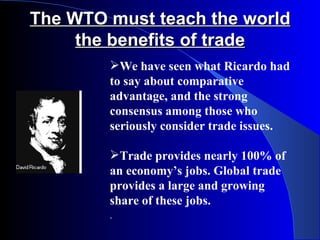
The WTO must teach the world
     the benefits of trade
        We have seen what Ricardo had
        to say about comparative
        advantage, and the strong
        consensus among those who
        seriously consider trade issues.

        Trade provides nearly 100% of
        an economy’s jobs. Global trade
        provides a large and growing
        share of these jobs.
        .
Major WTO Functions
   Administering WTO
    trade agreements

   Forum for trade
    negotiations

   Handling trade
    disputes

   Monitoring national
    trade policies
Major WTO Functions

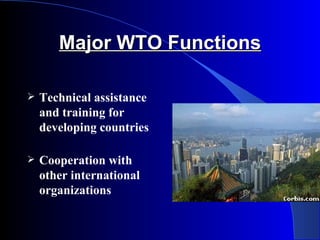
   Technical assistance
    and training for
    developing countries

   Cooperation with
    other international
    organizations
The Quad
Some of the most
difficult           Canada, Europea
negotiations have   n union, Japan,
needed an initial   United States
breakthrough in
talks among the
four largest
members
How to Join the WTO: the
     Accession Process

 First,“tell us about yourself”.
 Second, “work out with us individually
  what you have to offer.” (Country to
  country negotiations bilaterally.)
 Third, “let’s draft membership terms.”
 Finally, “the decision.”
Criticisms of the WTO
 Itundermines representative democracy
 Member nations are prevented from
  protecting the environment
 The WTO is controlled by the larger nations
 The WTO represents the interests of large
  corporations and wealthy citizens
 Some protesters have arguments fully
  worthy of consideration. They deserve a
  better venue for hearing than the streets.
 Anarchists usually capture the legal protest,
  along with

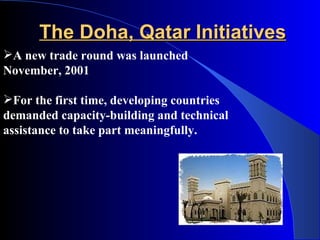
The Doha, Qatar Initiatives
A new trade round was launched
November, 2001

For the first time, developing countries
demanded capacity-building and technical
assistance to take part meaningfully.
The Doha, Qatar Initiatives

The Pledging Conference was convened in
accordance with the December 2001
decision of the WTO General Council.

In that decision, the General Council set a
target for core funding of CHF 15 million
plus support in kind, including training
courses for trade officials.
Thank You

Wto

  • 1.
    Presented By- Jitamitra Debnath Gaourab Shaw Koushik Shaw Kaustav Roy Chowdhary Ayan Banerjee Subhajit Baski Suvanjan Dutta
  • 2.
    What Is theWTO?  The World Trade Organization (WTO) is the only global international organization dealing with the rules of trade between nations.  WTO agreements are negotiated and signed by the trading nations and ratified in their parliaments.  The goal is to help producers of goods and services, exporters, and importers conduct and grow their business.
  • 3.
    The Goal  Toimprove the welfare of the peoples of the member countries.
  • 4.
    Past, Present, Future TheWTO came into being in 1995. The WTO is the successor to the General Agreement on Tariffs and Trade (GATT), established in the wake of the Second World War.
  • 5.
    The Past 50Years: Exceptional Growth in World Trade  Merchandise exports grew on average 6% annually  Total trade in 1997 was 14 times the level of 1950  In 1997, 40 governments concluded negotiations for tariff free trade.
  • 6.
    The Organization Ministerial Conference GC: Trade Policy GC: Dispute Review Body Settlement Body General Council Council for Trade Council for Intellectual Council for Trade in Goods Property Rights in Trade In Servfices Committees Committees Committees on Textiles Monitoring Body Trade and Environment Trade and Development… Working parties on Working parties on Accessions Working groups
  • 7.
    The WTO mustteach the world the benefits of trade We have seen what Ricardo had to say about comparative advantage, and the strong consensus among those who seriously consider trade issues. Trade provides nearly 100% of an economy’s jobs. Global trade provides a large and growing share of these jobs. .
  • 8.
    Major WTO Functions  Administering WTO trade agreements  Forum for trade negotiations  Handling trade disputes  Monitoring national trade policies
  • 9.
    Major WTO Functions  Technical assistance and training for developing countries  Cooperation with other international organizations
  • 10.
    The Quad Some ofthe most difficult Canada, Europea negotiations have n union, Japan, needed an initial United States breakthrough in talks among the four largest members
  • 11.
    How to Jointhe WTO: the Accession Process  First,“tell us about yourself”.  Second, “work out with us individually what you have to offer.” (Country to country negotiations bilaterally.)  Third, “let’s draft membership terms.”  Finally, “the decision.”
  • 12.
    Criticisms of theWTO  Itundermines representative democracy  Member nations are prevented from protecting the environment  The WTO is controlled by the larger nations  The WTO represents the interests of large corporations and wealthy citizens  Some protesters have arguments fully worthy of consideration. They deserve a better venue for hearing than the streets.  Anarchists usually capture the legal protest, along with 
  • 13.
    The Doha, QatarInitiatives A new trade round was launched November, 2001 For the first time, developing countries demanded capacity-building and technical assistance to take part meaningfully.
  • 14.
    The Doha, QatarInitiatives The Pledging Conference was convened in accordance with the December 2001 decision of the WTO General Council. In that decision, the General Council set a target for core funding of CHF 15 million plus support in kind, including training courses for trade officials.
  • 15.