




Leadership
Washington State University
gsharratt@wsu.edu
“Leadership Matters!”
It matters a great deal in
leading a learning culture
where staff and students
improve in practice and
performance.
Adult behavior changes when . . .
If you want to change people’s
behavior, “You need to create a
community around them, where these
new beliefs could be practiced,
expressed and nurtured” (p. 173).
Fullan (2005)
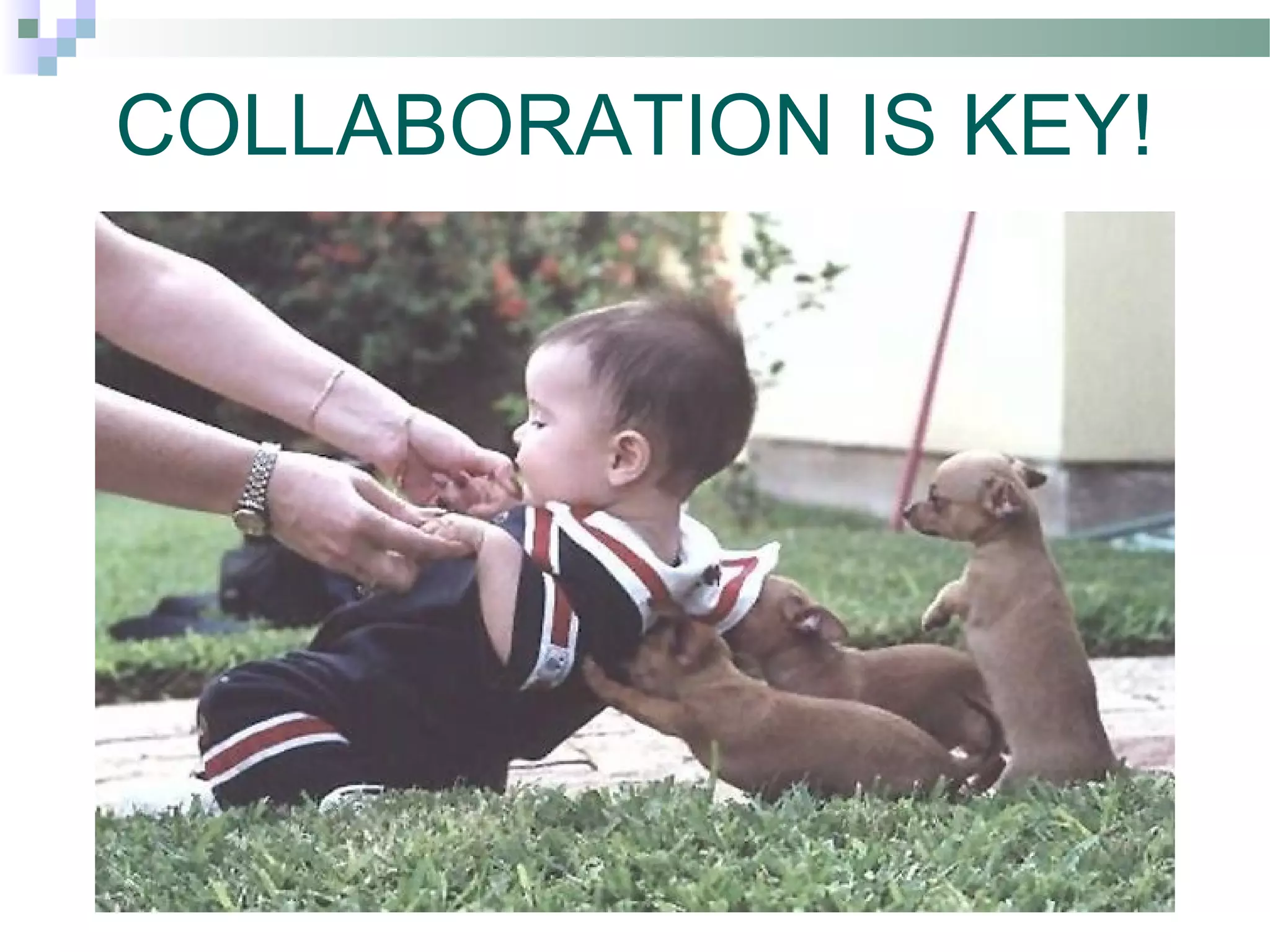
COLLABORATION IS KEY!
Leadership
What is it?
“It’s just one darn
thing after
another!”
“The role of leader is
to “mobilize people to
tackle tough
problems.”
Heifetz (1994)
Every leader is
telling a story about
what he or she
values.
What do you
value?
We must adjust to
changing times,
but cling to unchanging
principles
Unchanging Principles
With a partner, please identify some
“unchanging principles” that “leaders”
demonstrate in the performance of their
practice?
What are some of the “big rocks” (leadership
characteristics) you want to be sure you
put into your jar (performance) each day?
Unchanging Principles
 Integrity
 Respect
 Accountability
 Service
 Responsibility
 Trust
 Gratitude
 Hope
 A focus on results
 Lifelong learner
 Role model
 Authentic listener
EDWARD R. MURROW -
This I Believe . . .
Leadership Priorities
Please select one or two leadership phrases
or comments that most align with your
view of leadership and reflect the culture
of where you work, or would like to work.
Share with a colleague or at your table why
you selected the phrase of comment.
Leadership . . .
 Good leaders change organizations.
 Great leaders change people.
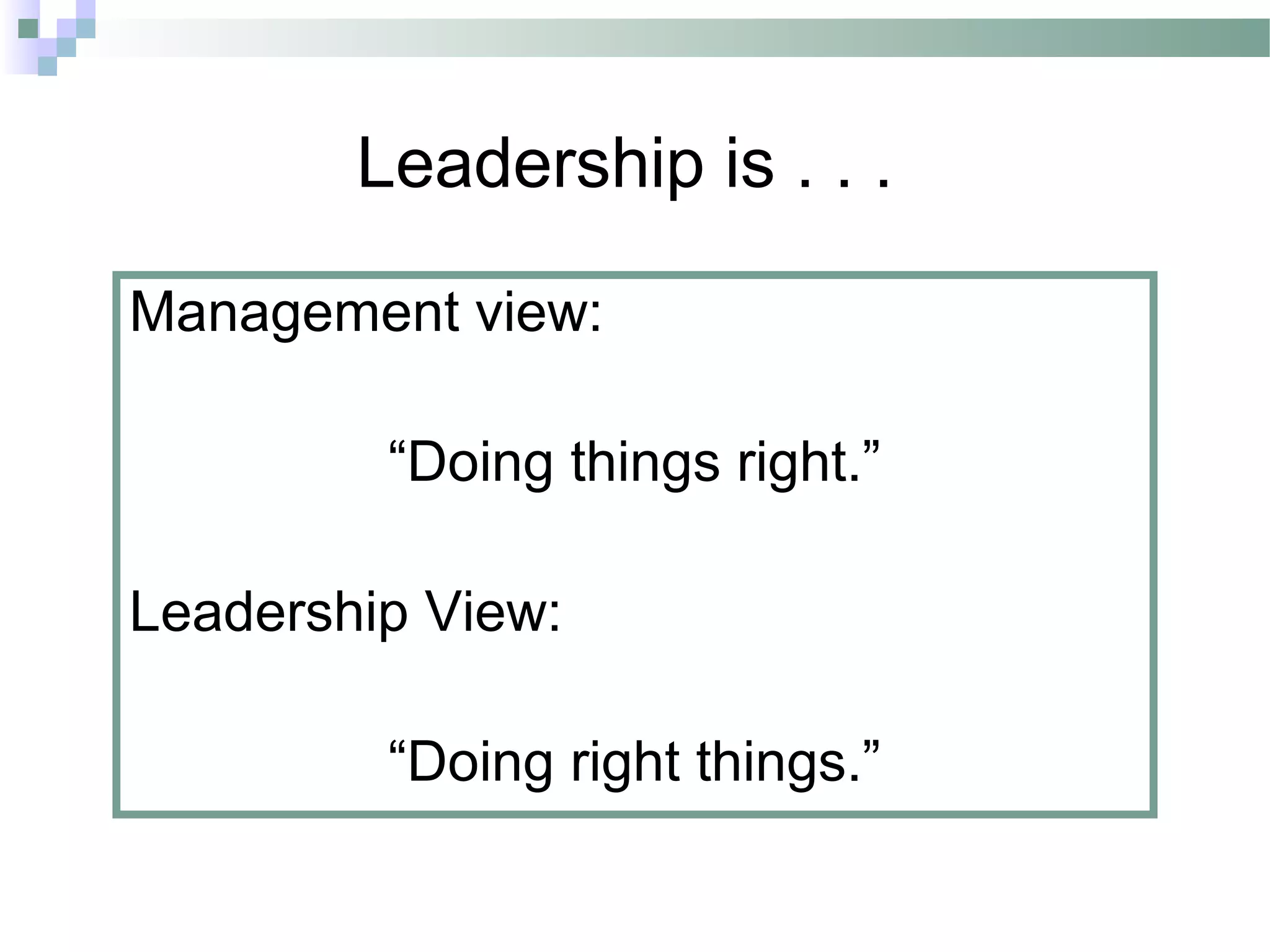
Leadership is . . .
Management view:
“Doing things right.”
Leadership View:
“Doing right things.”
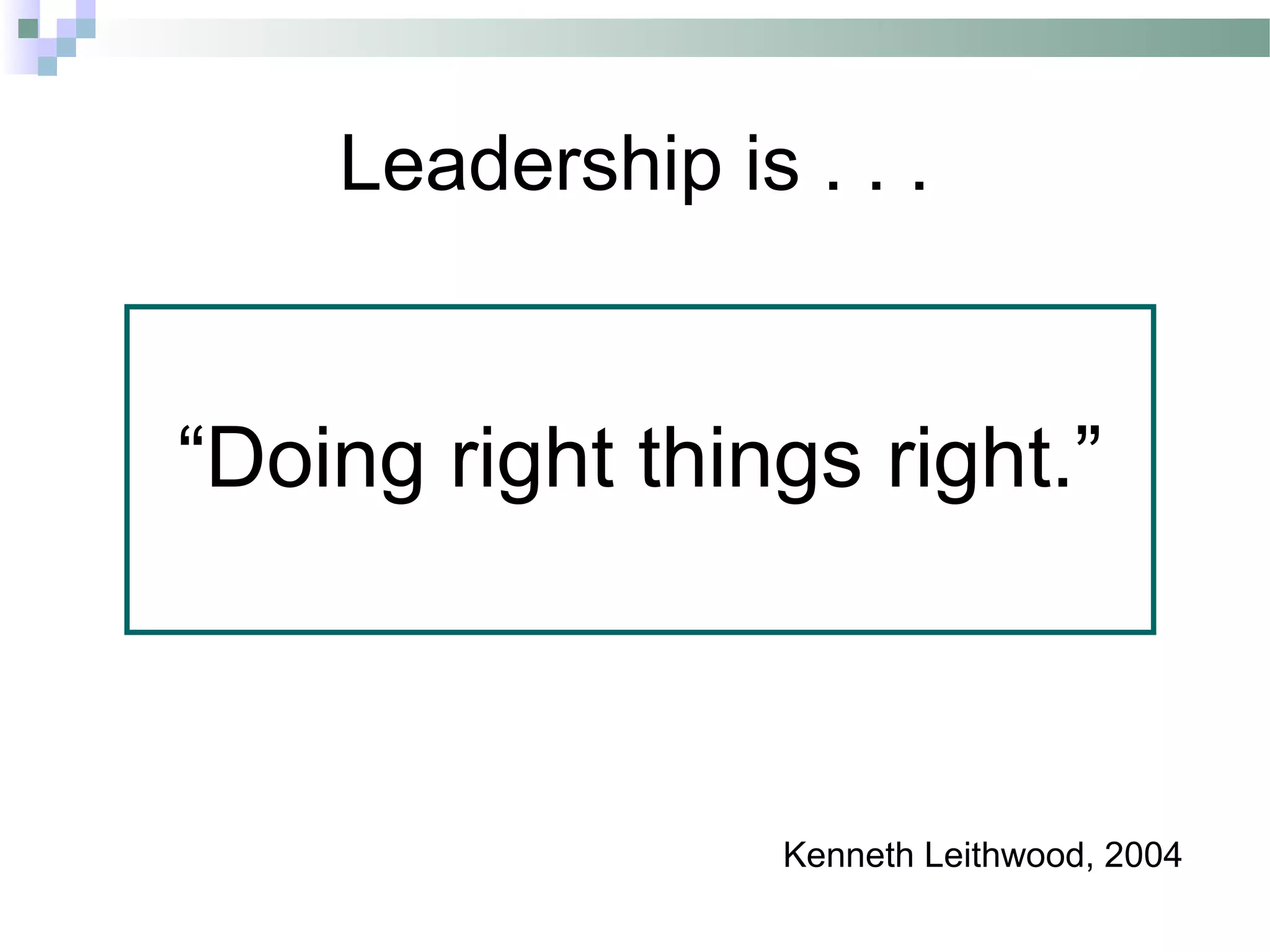
Leadership is . . .
“Doing right things right.”
Kenneth Leithwood, 2004
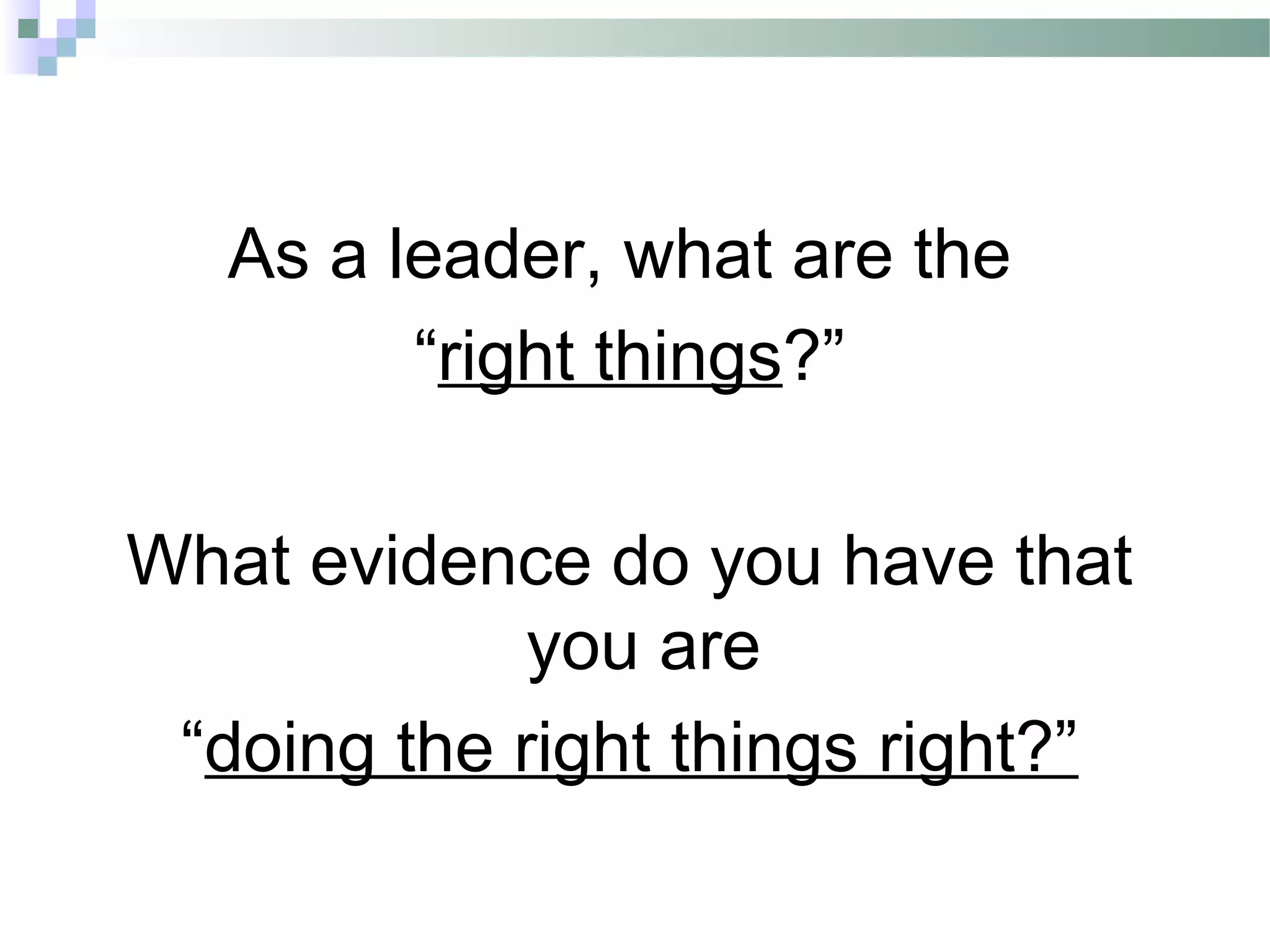
As a leader, what are the
“right things?”
What evidence do you have that
you are
“doing the right things right?”
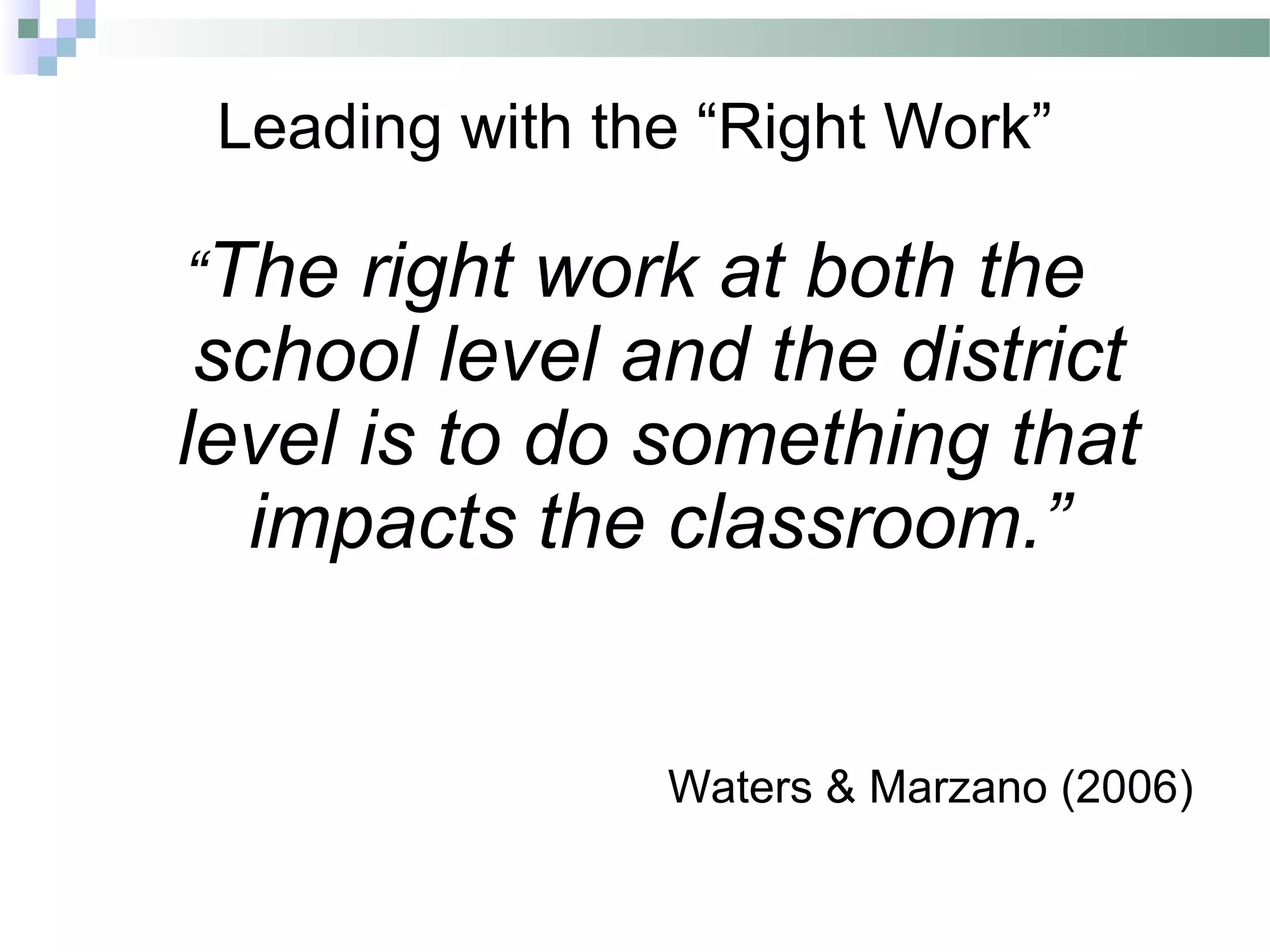
Leading with the “Right Work”
“The right work at both the
school level and the district
level is to do something that
impacts the classroom.”
Waters & Marzano (2006)
Leadership
What is the purpose of
educational leadership?
“The purpose of leadership is the
improvement of instructional
practice, regardless of one’s role.”
Richard Elmore (2006)
Leadership
How do leaders influence the
improvement of instructional
practice and performance?
June 26, 2002 Seattle P.I.
Germany ends South Korea’s dream
Three-time champs will face
Brazil or Turkey in final
BY JERE LONGMAN
The New York Times
“South Korea was playing out a fantasy,
while Germany is one of the world’s powers.
Victory is a relentless expectation, not a
delirious wish. While South Korea had a
nation’s support, it could not match
Germany’s skill and conviction.”
Great Schools Consist of . . .
Great teachers doing
great teaching.
McKinsey & Company (2007)
Great teaching consists of . . .
 Teachers’ knowledge and skill,
 Students’ engagement in their own learning, and
 Challenging and meaningful content.
PELP Coherence Framework (2006)
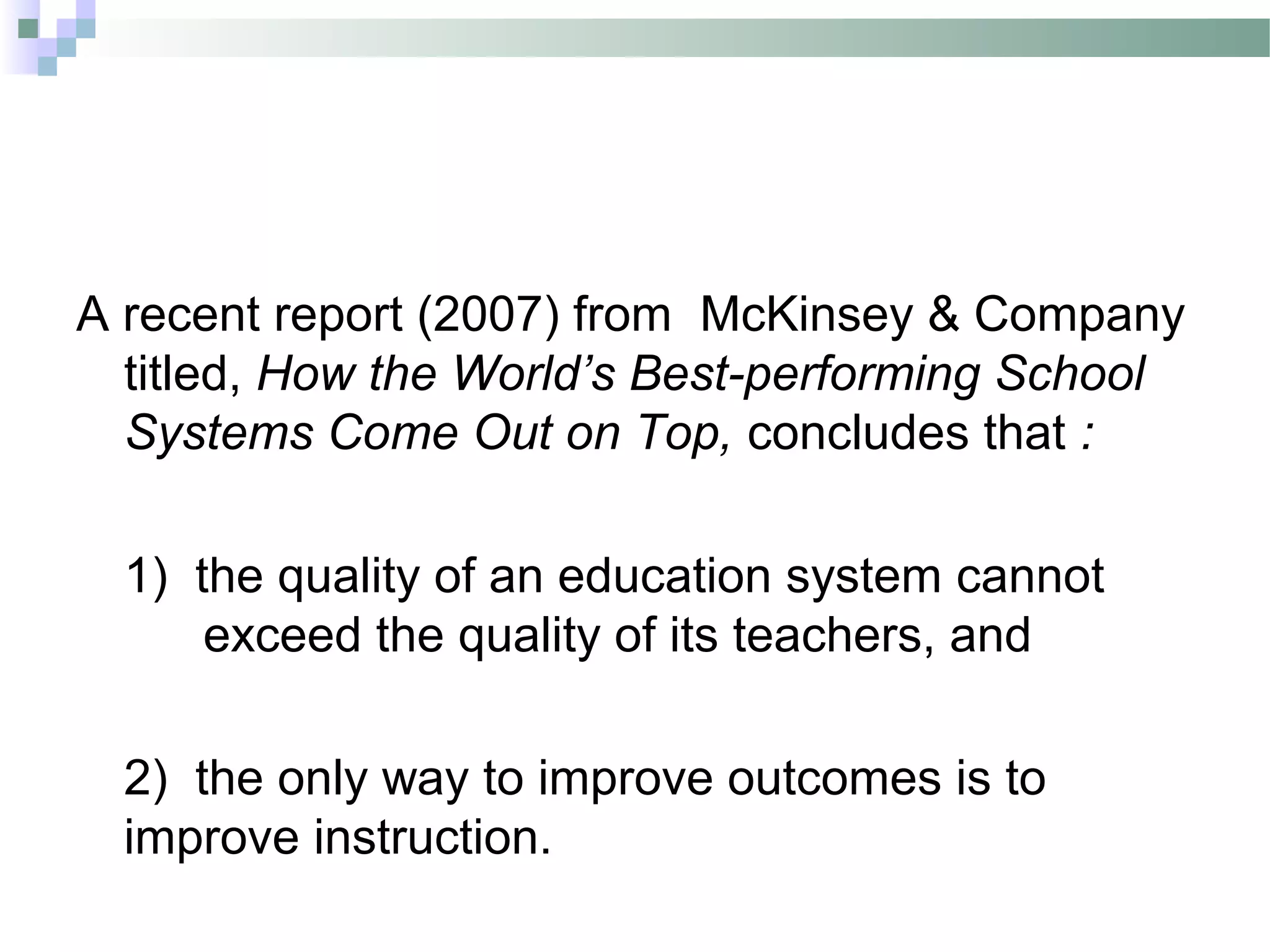
A recent report (2007) from McKinsey & Company
titled, How the World’s Best-performing School
Systems Come Out on Top, concludes that :
1) the quality of an education system cannot
exceed the quality of its teachers, and
2) the only way to improve outcomes is to
improve instruction.
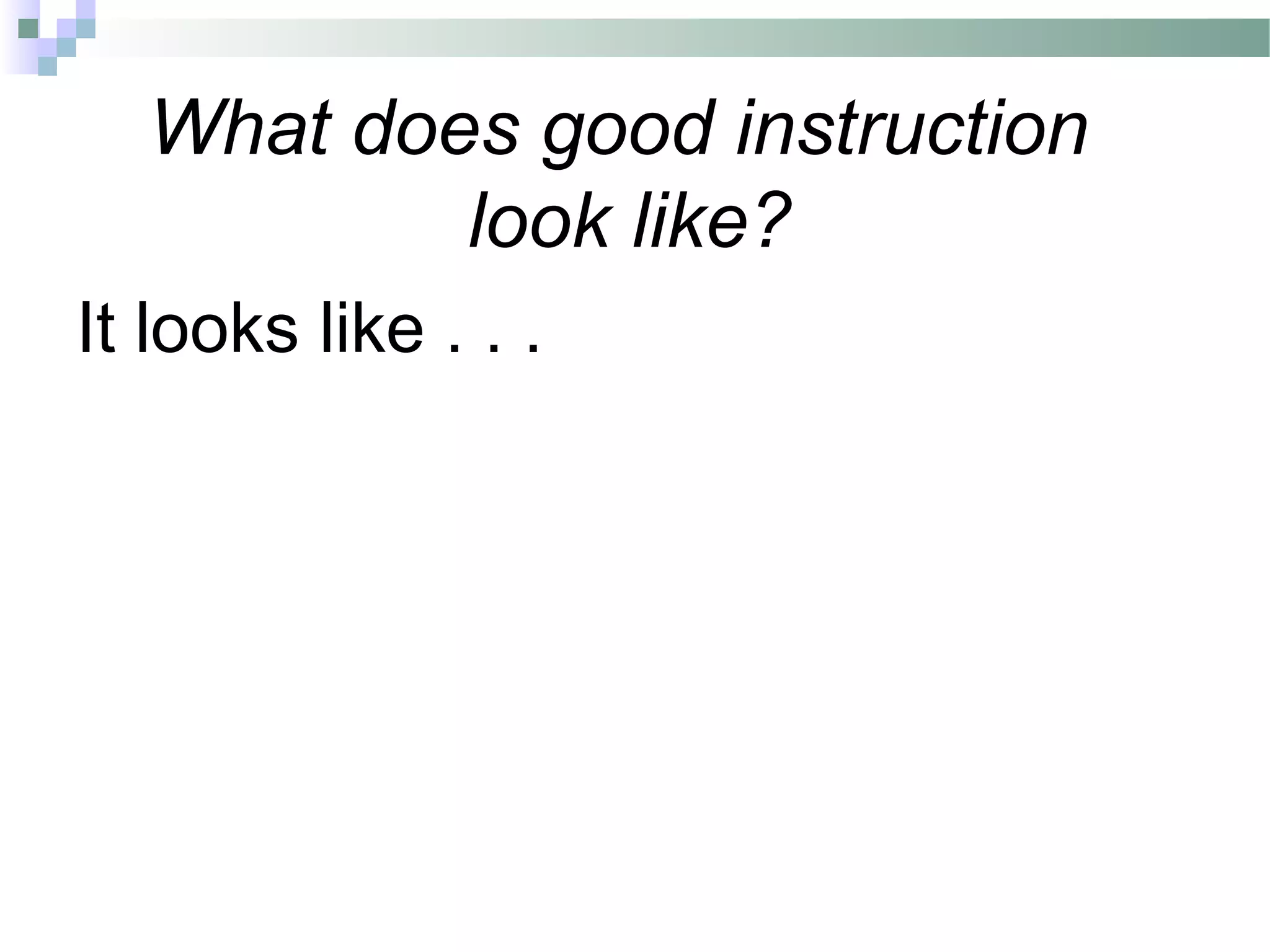
What does good instruction
look like?
It looks like . . .
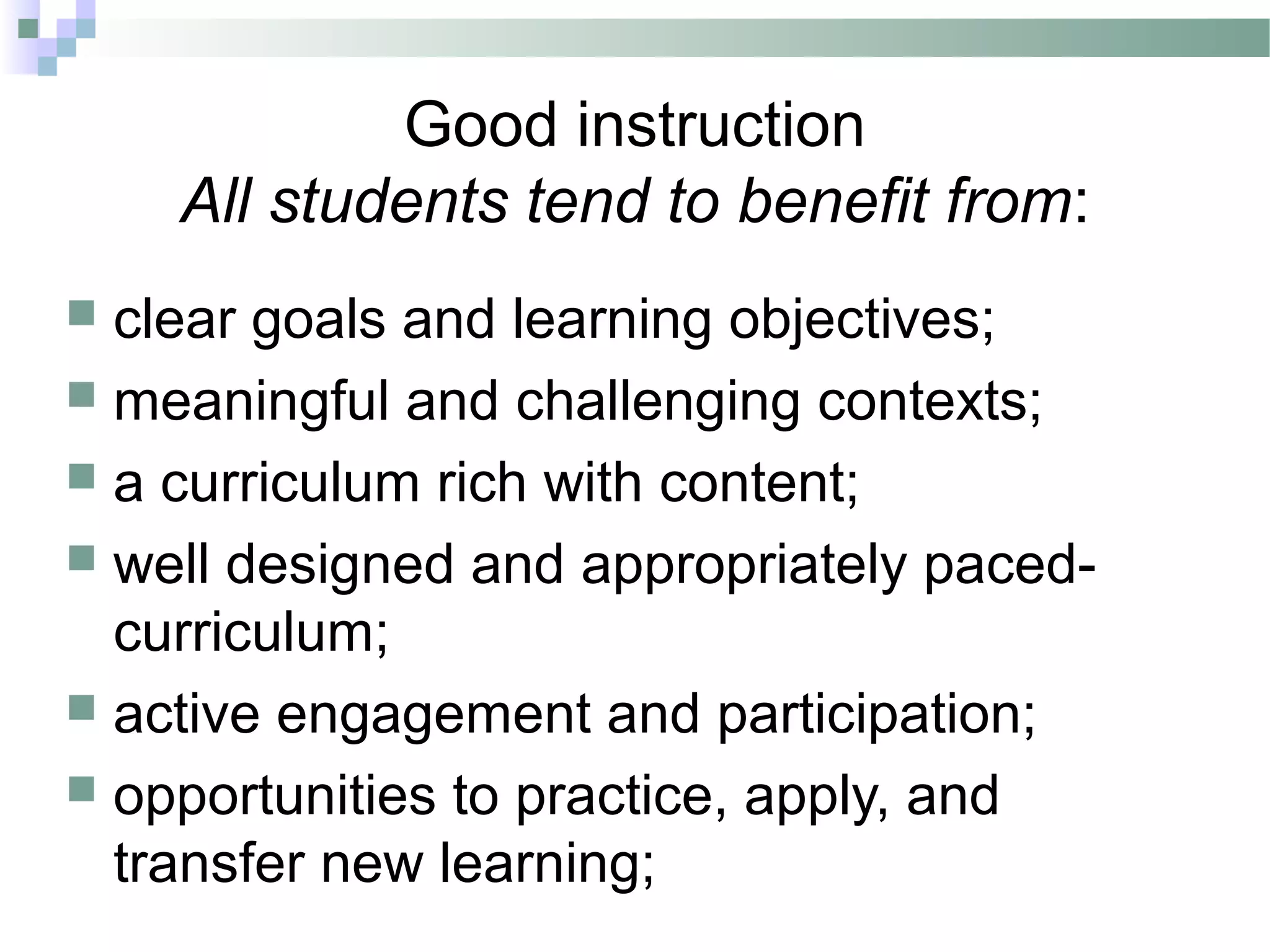
Good instruction
All students tend to benefit from:
 clear goals and learning objectives;
 meaningful and challenging contexts;
 a curriculum rich with content;
 well designed and appropriately paced-
curriculum;
 active engagement and participation;
 opportunities to practice, apply, and
transfer new learning;
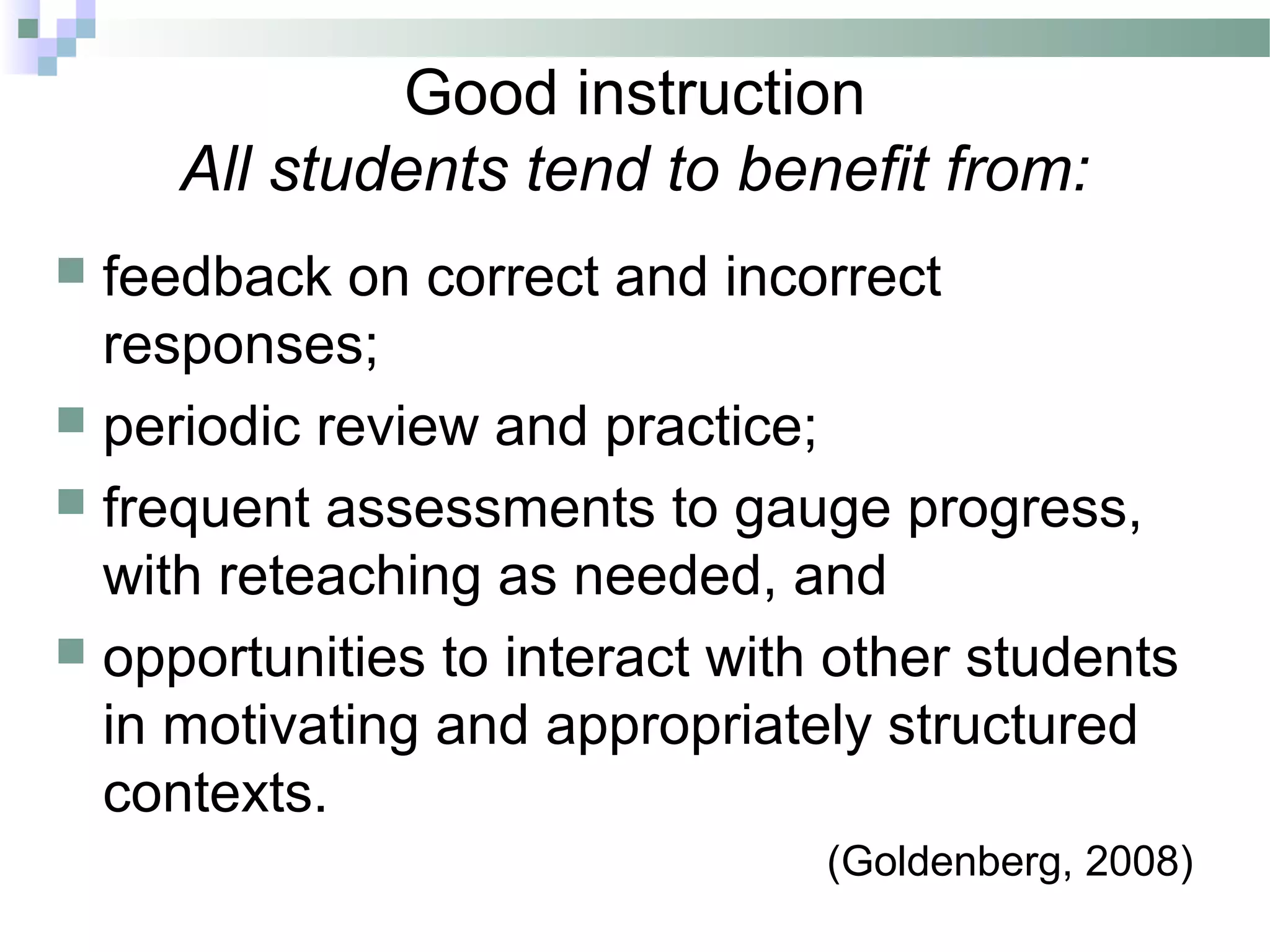
Good instruction
All students tend to benefit from:
 feedback on correct and incorrect
responses;
 periodic review and practice;
 frequent assessments to gauge progress,
with reteaching as needed, and
 opportunities to interact with other students
in motivating and appropriately structured
contexts.
(Goldenberg, 2008)
Students achieve when:
 there is a culture of high expectations,
 teachers know how and when learning
occurs, and
 schools identify and support struggling
students.
Urquhart, 2008
McREL, Changing Schools
McKinsey & Company’s 2007 Report Findings . . .
 Get the right people to teach,
 Support their growth of their knowledge
and skills, and
 Ensure that every student performs to his
or her potential focused around common
(agreed upon) learning beliefs.
The Role of Leadership in Highly
Effective Schools
 Hire well
 Develop people
 Intervene early and often
 Create a “high reliability” system
(failure is not an option for any student)
McKinsey & Company ( 2007)

Wsu leadership is . . ..part 1 and 2

  • 1.
  • 2.
    “Leadership Matters!” It mattersa great deal in leading a learning culture where staff and students improve in practice and performance.
  • 3.
    Adult behavior changeswhen . . . If you want to change people’s behavior, “You need to create a community around them, where these new beliefs could be practiced, expressed and nurtured” (p. 173). Fullan (2005)
  • 4.
  • 5.
  • 6.
    “It’s just onedarn thing after another!”
  • 7.
    “The role ofleader is to “mobilize people to tackle tough problems.” Heifetz (1994)
  • 8.
    Every leader is tellinga story about what he or she values.
  • 9.
  • 10.
    We must adjustto changing times, but cling to unchanging principles
  • 11.
    Unchanging Principles With apartner, please identify some “unchanging principles” that “leaders” demonstrate in the performance of their practice? What are some of the “big rocks” (leadership characteristics) you want to be sure you put into your jar (performance) each day?
  • 12.
    Unchanging Principles  Integrity Respect  Accountability  Service  Responsibility  Trust  Gratitude  Hope  A focus on results  Lifelong learner  Role model  Authentic listener
  • 13.
    EDWARD R. MURROW- This I Believe . . .
  • 14.
    Leadership Priorities Please selectone or two leadership phrases or comments that most align with your view of leadership and reflect the culture of where you work, or would like to work. Share with a colleague or at your table why you selected the phrase of comment.
  • 15.
    Leadership . ..  Good leaders change organizations.  Great leaders change people.
  • 16.
    Leadership is .. . Management view: “Doing things right.” Leadership View: “Doing right things.”
  • 17.
    Leadership is .. . “Doing right things right.” Kenneth Leithwood, 2004
  • 18.
    As a leader,what are the “right things?” What evidence do you have that you are “doing the right things right?”
  • 19.
    Leading with the“Right Work” “The right work at both the school level and the district level is to do something that impacts the classroom.” Waters & Marzano (2006)
  • 20.
    Leadership What is thepurpose of educational leadership?
  • 21.
    “The purpose ofleadership is the improvement of instructional practice, regardless of one’s role.” Richard Elmore (2006)
  • 22.
    Leadership How do leadersinfluence the improvement of instructional practice and performance?
  • 23.
    June 26, 2002Seattle P.I. Germany ends South Korea’s dream Three-time champs will face Brazil or Turkey in final BY JERE LONGMAN The New York Times “South Korea was playing out a fantasy, while Germany is one of the world’s powers. Victory is a relentless expectation, not a delirious wish. While South Korea had a nation’s support, it could not match Germany’s skill and conviction.”
  • 24.
    Great Schools Consistof . . . Great teachers doing great teaching. McKinsey & Company (2007)
  • 25.
    Great teaching consistsof . . .  Teachers’ knowledge and skill,  Students’ engagement in their own learning, and  Challenging and meaningful content. PELP Coherence Framework (2006)
  • 26.
    A recent report(2007) from McKinsey & Company titled, How the World’s Best-performing School Systems Come Out on Top, concludes that : 1) the quality of an education system cannot exceed the quality of its teachers, and 2) the only way to improve outcomes is to improve instruction.
  • 27.
    What does goodinstruction look like? It looks like . . .
  • 28.
    Good instruction All studentstend to benefit from:  clear goals and learning objectives;  meaningful and challenging contexts;  a curriculum rich with content;  well designed and appropriately paced- curriculum;  active engagement and participation;  opportunities to practice, apply, and transfer new learning;
  • 29.
    Good instruction All studentstend to benefit from:  feedback on correct and incorrect responses;  periodic review and practice;  frequent assessments to gauge progress, with reteaching as needed, and  opportunities to interact with other students in motivating and appropriately structured contexts. (Goldenberg, 2008)
  • 30.
    Students achieve when: there is a culture of high expectations,  teachers know how and when learning occurs, and  schools identify and support struggling students. Urquhart, 2008 McREL, Changing Schools
  • 31.
    McKinsey & Company’s2007 Report Findings . . .  Get the right people to teach,  Support their growth of their knowledge and skills, and  Ensure that every student performs to his or her potential focused around common (agreed upon) learning beliefs.
  • 32.
    The Role ofLeadership in Highly Effective Schools  Hire well  Develop people  Intervene early and often  Create a “high reliability” system (failure is not an option for any student) McKinsey & Company ( 2007)