Leading In A Culture of Change
Michael Fullan
Leadership
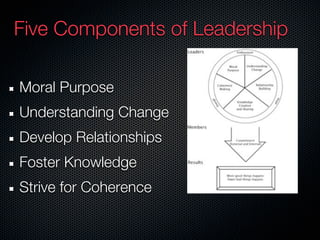
Five Components of Leadership

Moral Purpose
Understanding Change
Develop Relationships
Foster Knowledge
Strive for Coherence
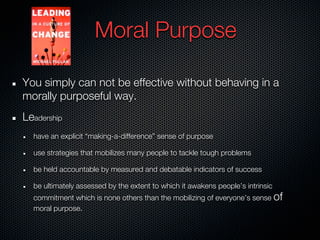
Moral Purpose

You simply can not be effective without behaving in a
morally purposeful way.
Leadership
  have an explicit “making-a-difference” sense of purpose

  use strategies that mobilizes many people to tackle tough problems

  be held accountable by measured and debatable indicators of success

  be ultimately assessed by the extent to which it awakens people’s intrinsic
  commitment which is none others than the mobilizing of everyone’s sense of
  moral purpose.
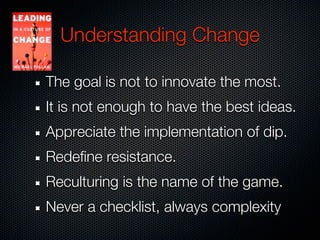
Understanding Change

The goal is not to innovate the most.
It is not enough to have the best ideas.
Appreciate the implementation of dip.
Redefine resistance.
Reculturing is the name of the game.
Never a checklist, always complexity
Application of Understanding Change
            to School Life


Teamwork is best
Don’t try to have the best ideas
Small and steady
Be prepared for set backs
Be sensitive to the implementation of new
curriculum, schedules, expectations, etc.
Relationships
Setting clear standards
Expecting the best
Paying attention
Personalizing recognition
Celebration together
Set the examples
Effective leaders... combine intellectual brilliance with
emotional intelligence
Application of Relationships
                to School Life

Building relationships using team building activities
Professional learning communities
Sharing leadership roles by rotating
Using staff to share about best practices
Survey staff on areas that need focus
Thank you notes
Developing a strong community support group
Attentive listening
Knowledge Building
When we are learning in context that knowledge
becomes specific and usable.
Effective leaders understand the value and role of
knowledge creation, they make it a priority and set
about establishing and reinforcing habits of
knowledge exchange among organizational members.
To do this they must create many mechanisms for
people to engage in this new behavior and to learn to
value it.
Application of Knowledge
           Building in School Life

Professional learning communities
Intervisitations with peers in other schools
Principal monthly support groups/conferences
Grade level conferencing and lesson development
Video sharing and skype
Principal peer coaching
Coherence Making
In order to create linear ideas, path etc.: chaos needs to
appear
Self organization and strange attractors
When the situation is complex, effective leaders sometimes
tweak the status quo even when clear solutions are not
evident.
Requires a mind set that serves as a guide to day-to-day
organization development and performance.
Application of Coherence
         Making in School Life


Supervisory walkthroughs
District institutes
Principal study groups
Individualized coaching
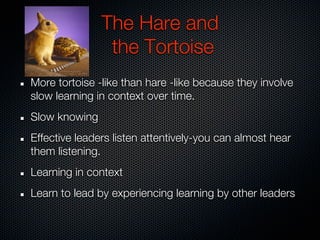
The Hare and
                the Tortoise
More tortoise -like than hare -like because they involve
slow learning in context over time.
Slow knowing
Effective leaders listen attentively-you can almost hear
them listening.
Learning in context
Learn to lead by experiencing learning by other leaders
Other considerations...

 Are we shaping the future as leaders or
 preparing for a future?
 How do we mobilize the collective
 capacity to challenge difficult
 circumstances?
 What leadership can I produce in others?

Leading in a culture

  • 1.
    Leading In ACulture of Change Michael Fullan
  • 2.
  • 3.
    Five Components ofLeadership Moral Purpose Understanding Change Develop Relationships Foster Knowledge Strive for Coherence
  • 4.
    Moral Purpose You simplycan not be effective without behaving in a morally purposeful way. Leadership have an explicit “making-a-difference” sense of purpose use strategies that mobilizes many people to tackle tough problems be held accountable by measured and debatable indicators of success be ultimately assessed by the extent to which it awakens people’s intrinsic commitment which is none others than the mobilizing of everyone’s sense of moral purpose.
  • 5.
    Understanding Change The goalis not to innovate the most. It is not enough to have the best ideas. Appreciate the implementation of dip. Redefine resistance. Reculturing is the name of the game. Never a checklist, always complexity
  • 6.
    Application of UnderstandingChange to School Life Teamwork is best Don’t try to have the best ideas Small and steady Be prepared for set backs Be sensitive to the implementation of new curriculum, schedules, expectations, etc.
  • 7.
    Relationships Setting clear standards Expectingthe best Paying attention Personalizing recognition Celebration together Set the examples Effective leaders... combine intellectual brilliance with emotional intelligence
  • 8.
    Application of Relationships to School Life Building relationships using team building activities Professional learning communities Sharing leadership roles by rotating Using staff to share about best practices Survey staff on areas that need focus Thank you notes Developing a strong community support group Attentive listening
  • 9.
    Knowledge Building When weare learning in context that knowledge becomes specific and usable. Effective leaders understand the value and role of knowledge creation, they make it a priority and set about establishing and reinforcing habits of knowledge exchange among organizational members. To do this they must create many mechanisms for people to engage in this new behavior and to learn to value it.
  • 10.
    Application of Knowledge Building in School Life Professional learning communities Intervisitations with peers in other schools Principal monthly support groups/conferences Grade level conferencing and lesson development Video sharing and skype Principal peer coaching
  • 11.
    Coherence Making In orderto create linear ideas, path etc.: chaos needs to appear Self organization and strange attractors When the situation is complex, effective leaders sometimes tweak the status quo even when clear solutions are not evident. Requires a mind set that serves as a guide to day-to-day organization development and performance.
  • 12.
    Application of Coherence Making in School Life Supervisory walkthroughs District institutes Principal study groups Individualized coaching
  • 13.
    The Hare and the Tortoise More tortoise -like than hare -like because they involve slow learning in context over time. Slow knowing Effective leaders listen attentively-you can almost hear them listening. Learning in context Learn to lead by experiencing learning by other leaders
  • 14.
    Other considerations... Arewe shaping the future as leaders or preparing for a future? How do we mobilize the collective capacity to challenge difficult circumstances? What leadership can I produce in others?

Editor's Notes