









Washington StateTeacher and Principal EvaluationProjectUpdate
??????
What the hell kind of call was that!?!
??????
The BasicsWhat are the details of the TPEP process?
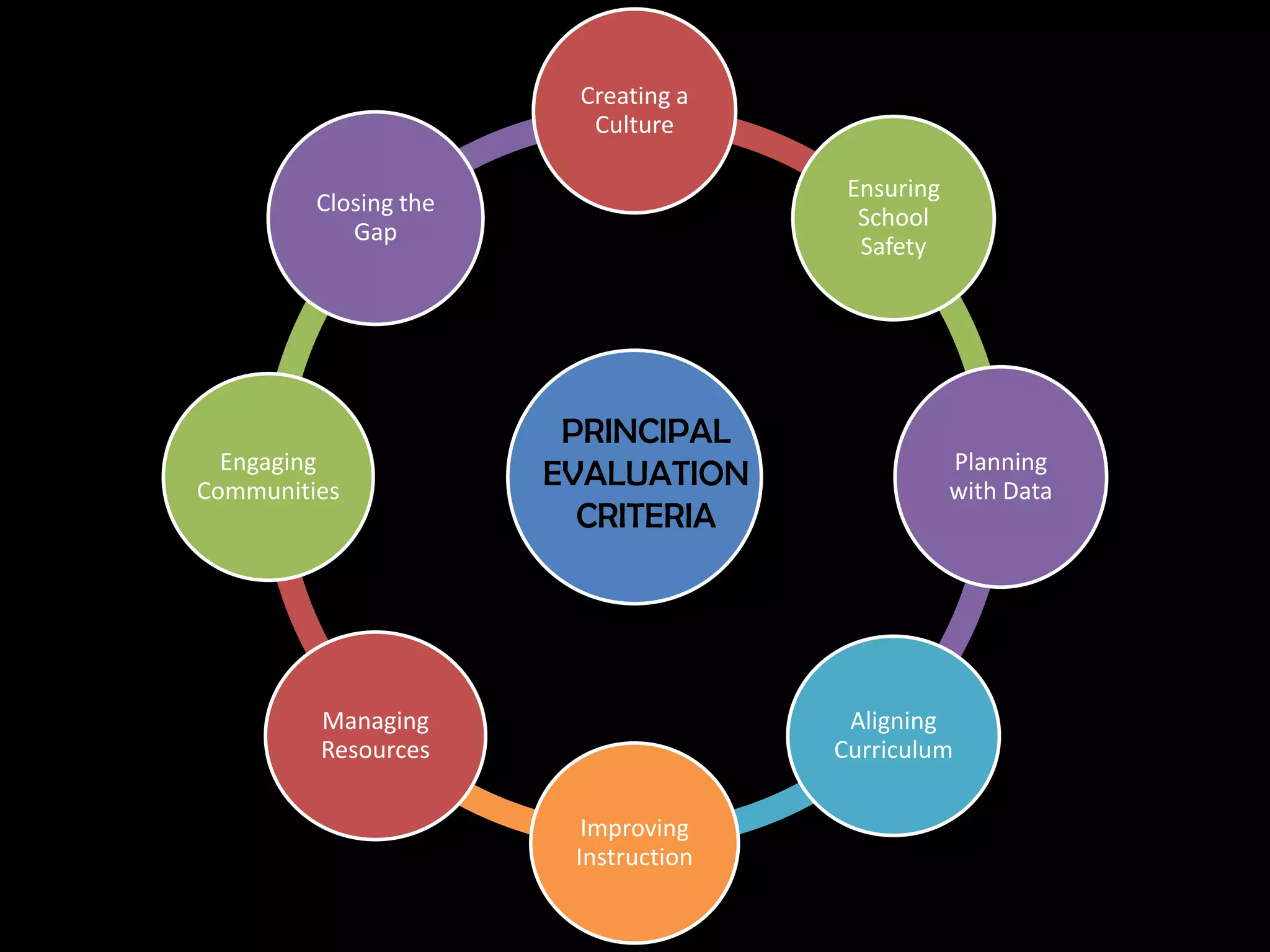
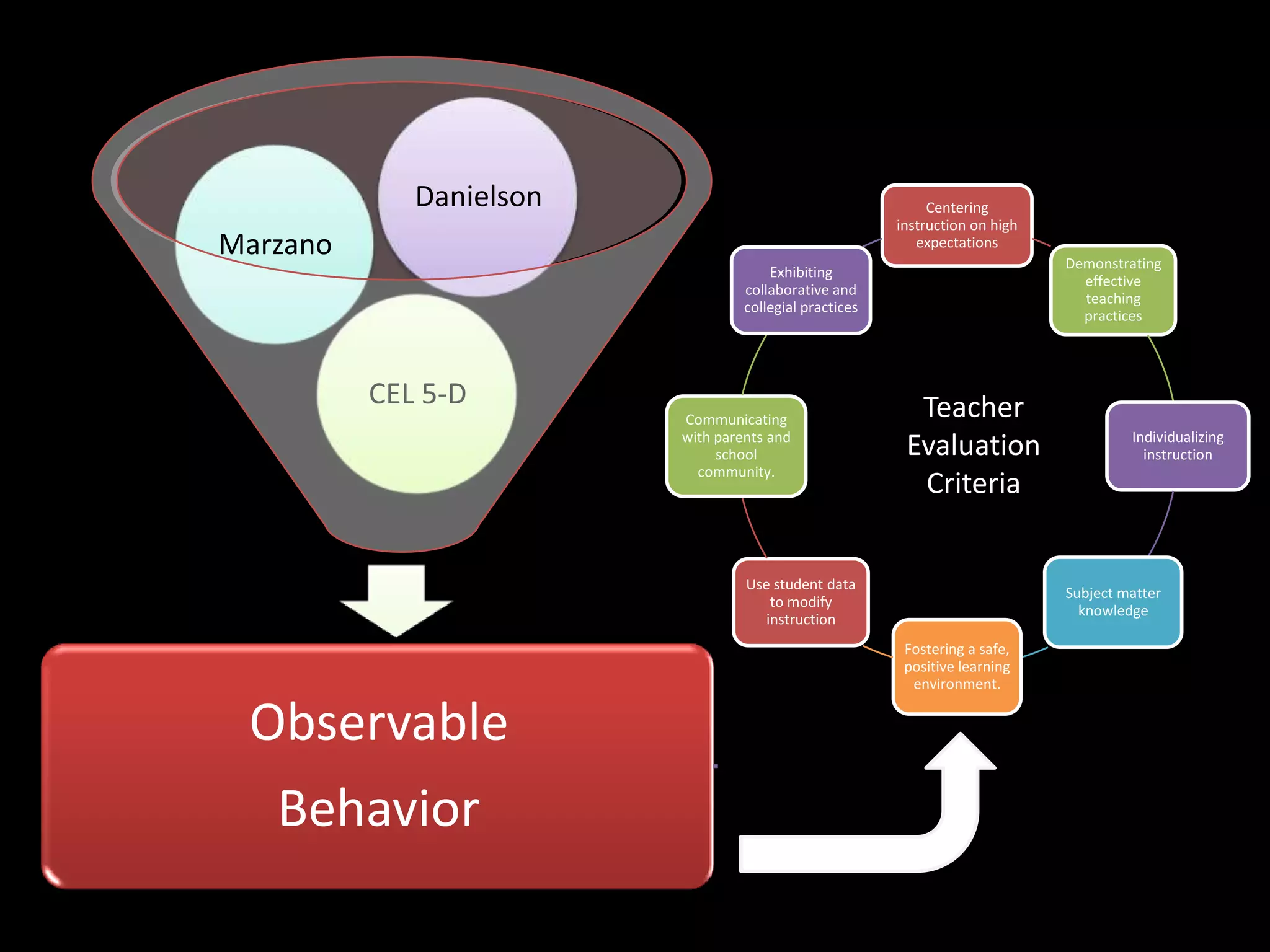
The CriteriaHow do the newteacher and principal criteria relate to each other?
A 4-Tiered SystemHow does using a four-tier system change people’s thinking?
Next StepsIn the end, what should be taken into account in the evaluation?
The BasicsWhat are the details of the TPEP process?
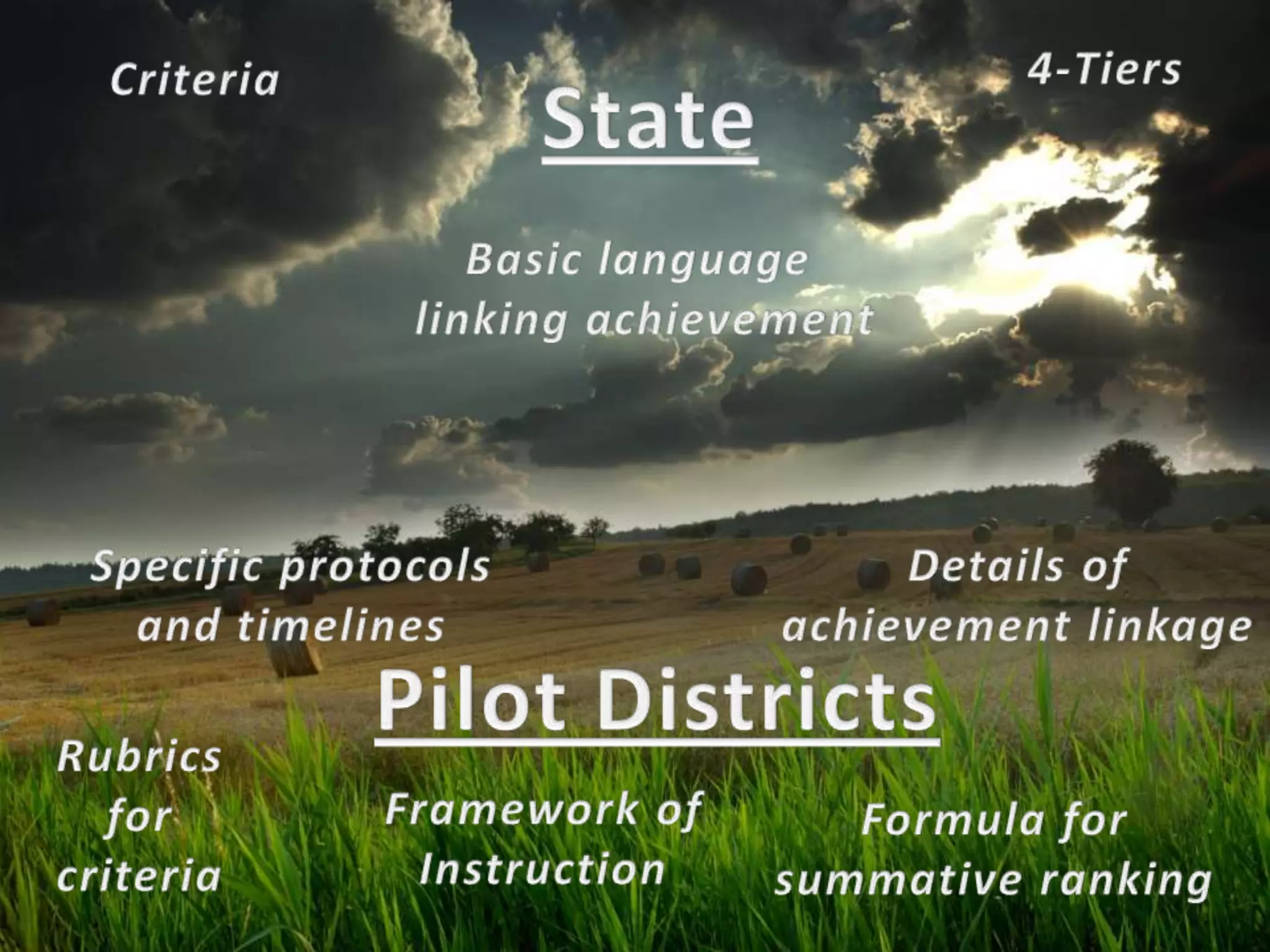
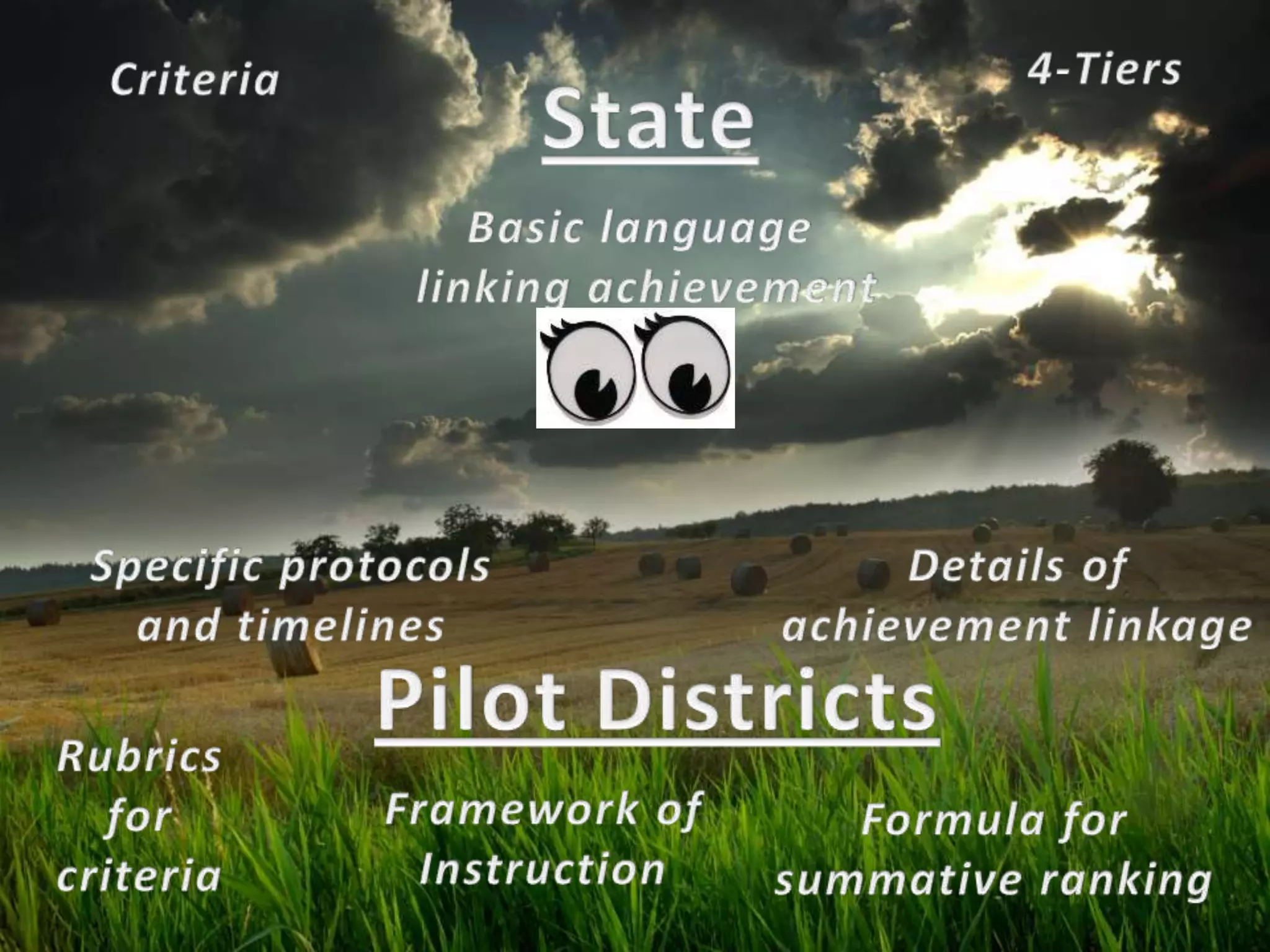
4-TiersCriteriaStateBasiclanguagelinking achievementDetails ofachievement linkageSpecific protocolsand timelinesPilot DistrictsRubricsforcriteriaFramework ofInstructionFormula forsummative ranking
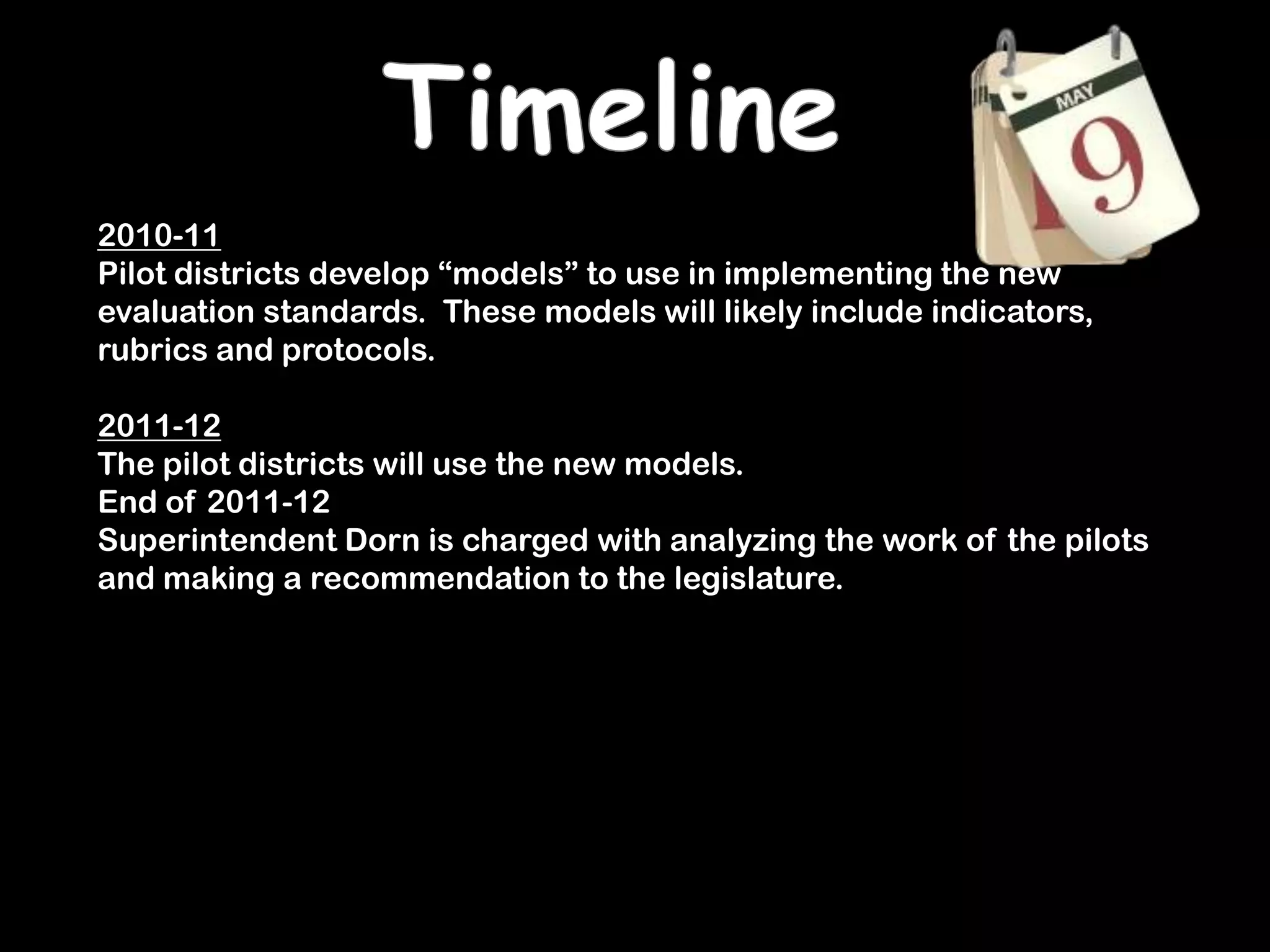
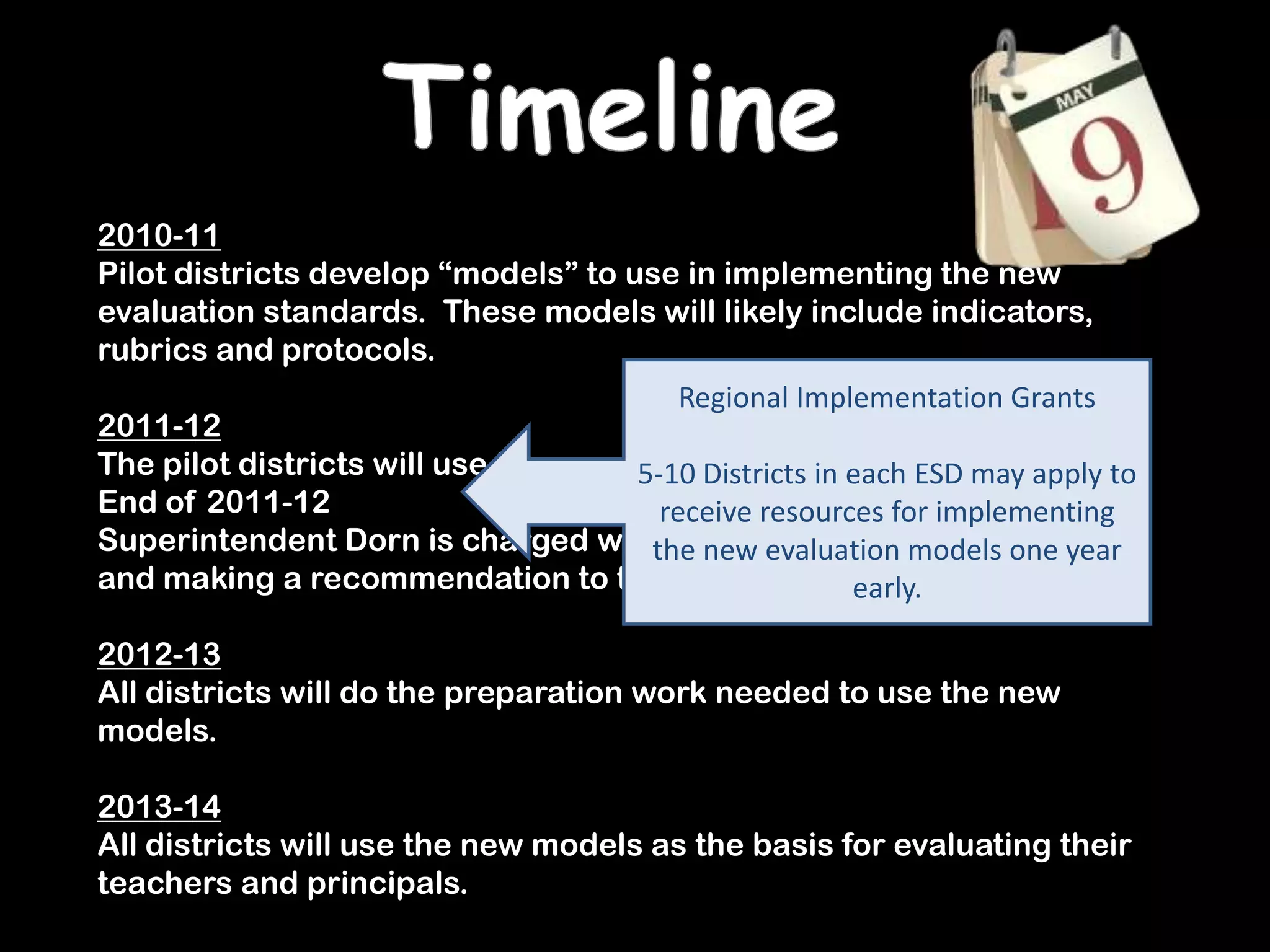
Timeline2010-11Pilot districts develop “models” to use in implementing the new evaluation standards.  These models will likely include indicators, rubrics and protocols.2011-12The pilot districts will use the new models.End of 2011-12Superintendent Dorn is charged with analyzing the work of the pilots and making a recommendation to the legislature.
4-TiersCriteriaStateBasiclanguagelinking achievementDetails ofachievement linkageSpecific protocolsand timelinesPilot DistrictsRubricsforcriteriaFramework ofInstructionFormula forsummative ranking
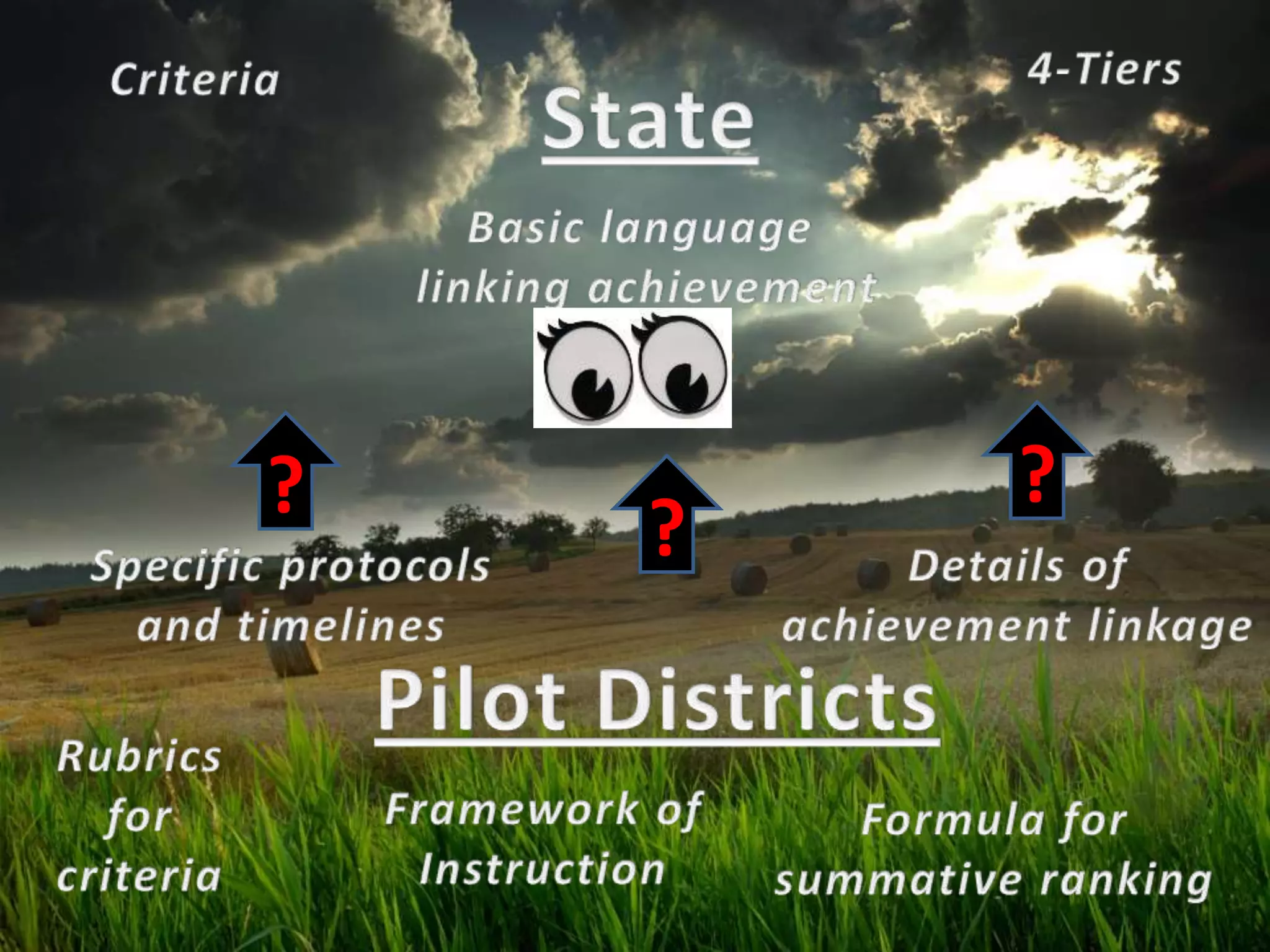
4-TiersCriteriaStateBasiclanguagelinking achievement???Details ofachievement linkageSpecific protocolsand timelinesPilot DistrictsRubricsforcriteriaFramework ofInstructionFormula forsummative ranking
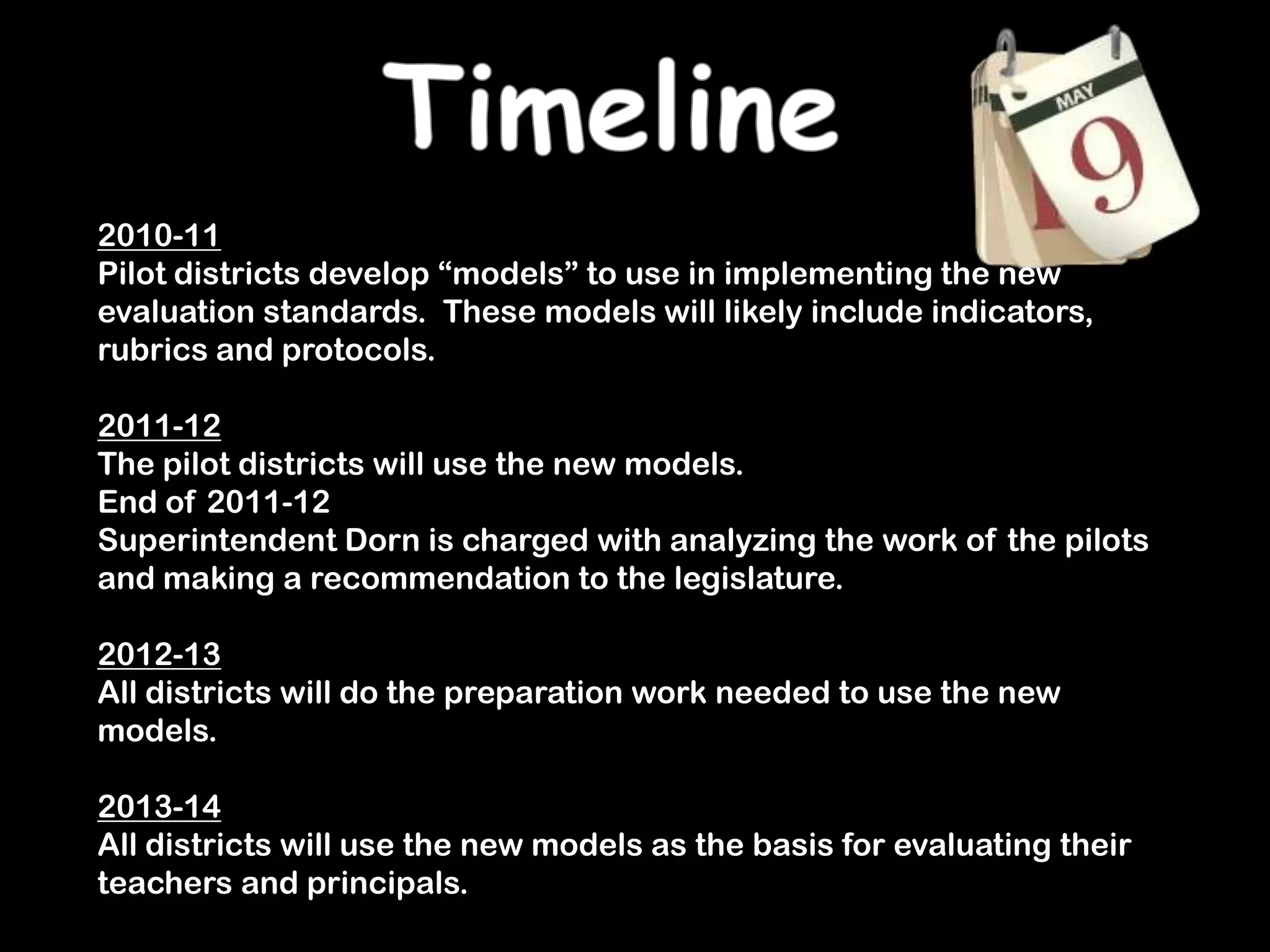
Timeline2010-11Pilot districts develop “models” to use in implementing the new evaluation standards.  These models will likely include indicators, rubrics and protocols.2011-12The pilot districts will use the new models.End of 2011-12Superintendent Dorn is charged with analyzing the work of the pilots and making a recommendation to the legislature.2012-13All districts will do the preparation work needed to use the new models.2013-14All districts will use the new models as the basis for evaluating their teachers and principals.
Timeline2010-11Pilot districts develop “models” to use in implementing the new evaluation standards.  These models will likely include indicators, rubrics and protocols.2011-12The pilot districts will use the new models.End of 2011-12Superintendent Dorn is charged with analyzing the work of the pilots and making a recommendation to the legislature.2012-13All districts will do the preparation work needed to use the new models.2013-14All districts will use the new models as the basis for evaluating their teachers and principals.Regional Implementation Grants5-10 Districts in each ESD may apply to receive resources for implementing the new evaluation models one year early.
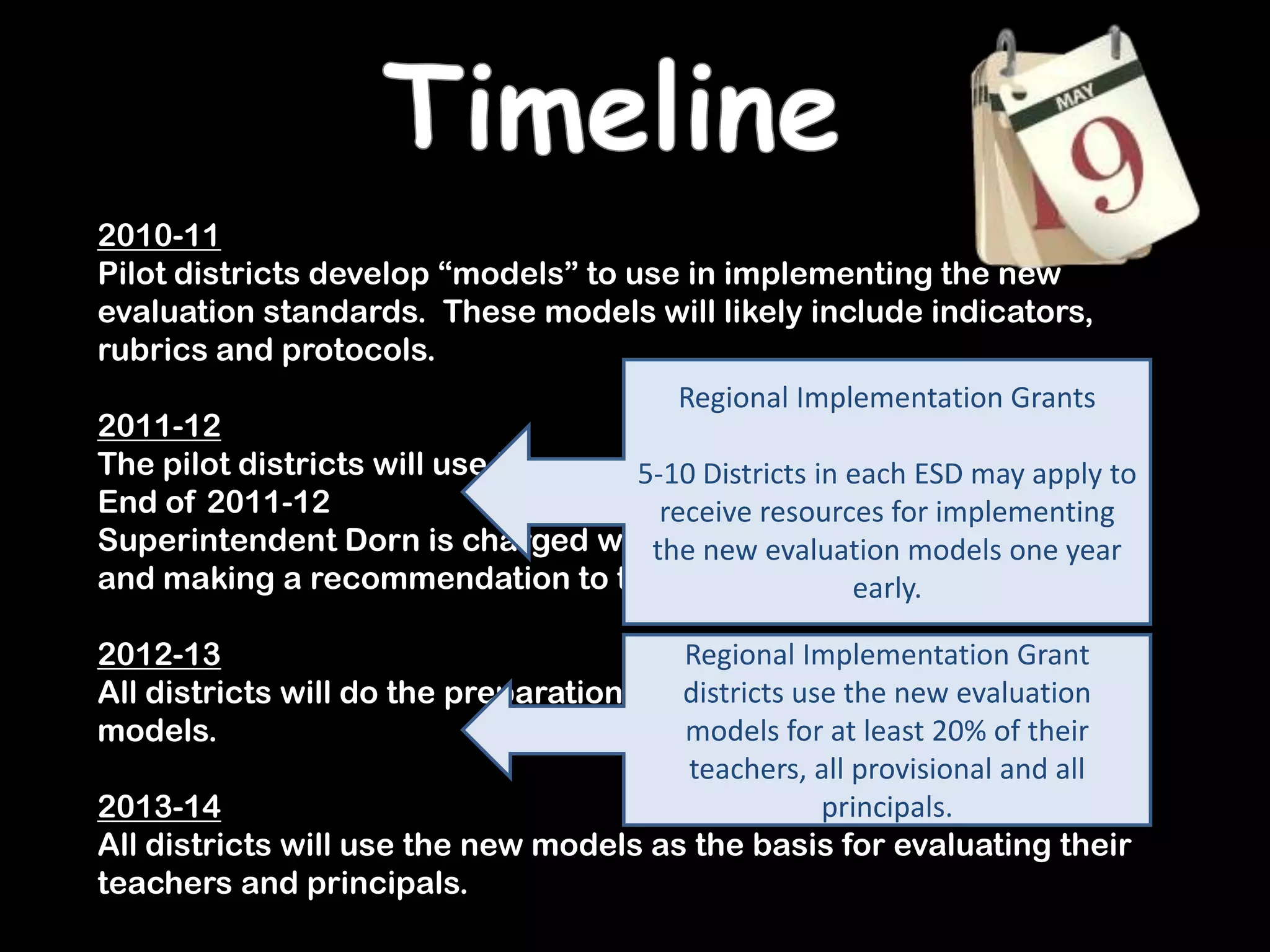
Timeline2010-11Pilot districts develop “models” to use in implementing the new evaluation standards.  These models will likely include indicators, rubrics and protocols.2011-12The pilot districts will use the new models.End of 2011-12Superintendent Dorn is charged with analyzing the work of the pilots and making a recommendation to the legislature.2012-13All districts will do the preparation work needed to use the new models.2013-14All districts will use the new models as the basis for evaluating their teachers and principals.Regional Implementation Grants5-10 Districts in each ESD may apply to receive resources for implementing the new evaluation models one year early.Regional Implementation Grant districts use the new evaluation models for at least 20% of their teachers, all provisional and all principals.
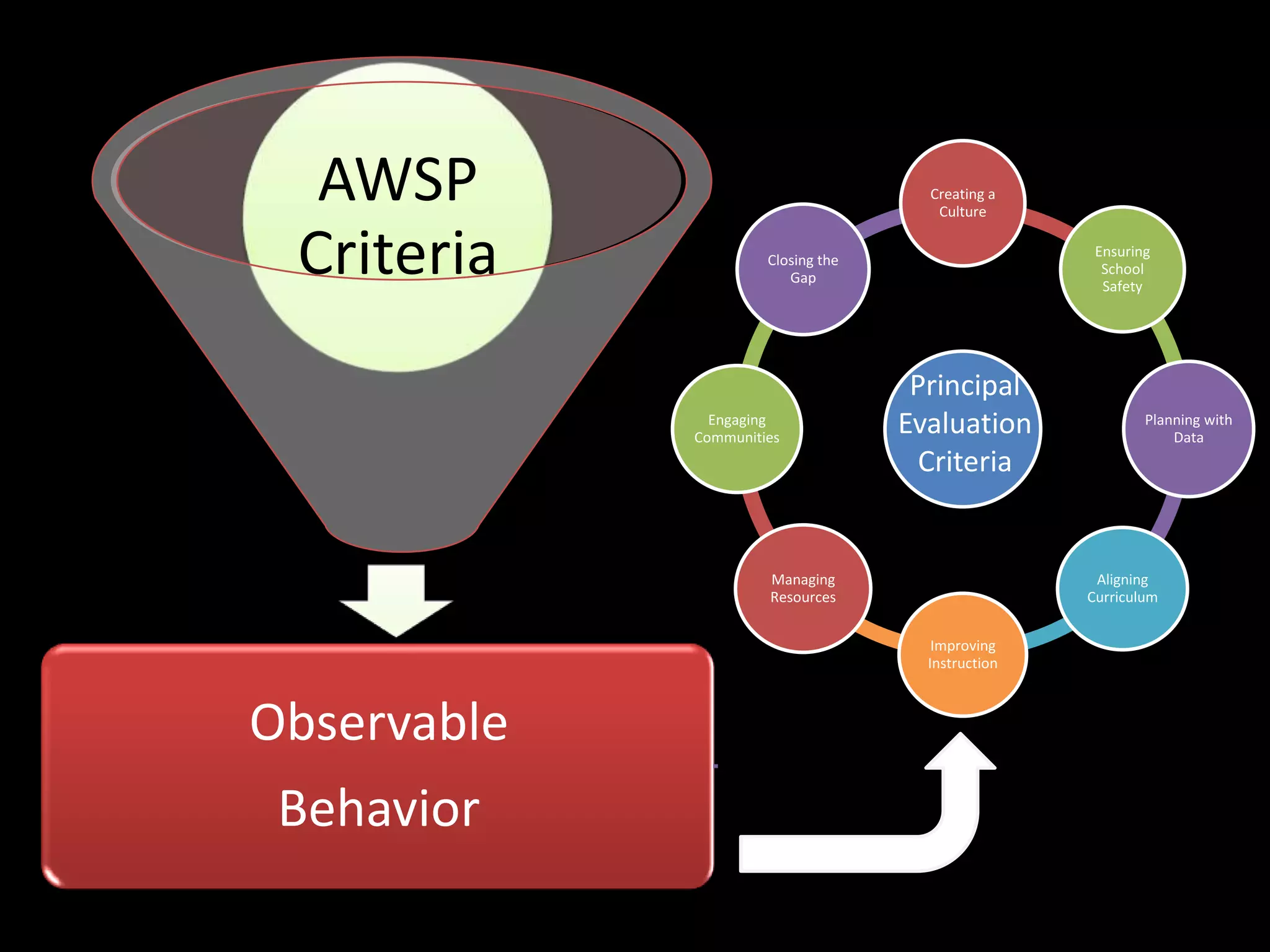
The CriteriaHow do the newteacher and principal criteria relate to each other?
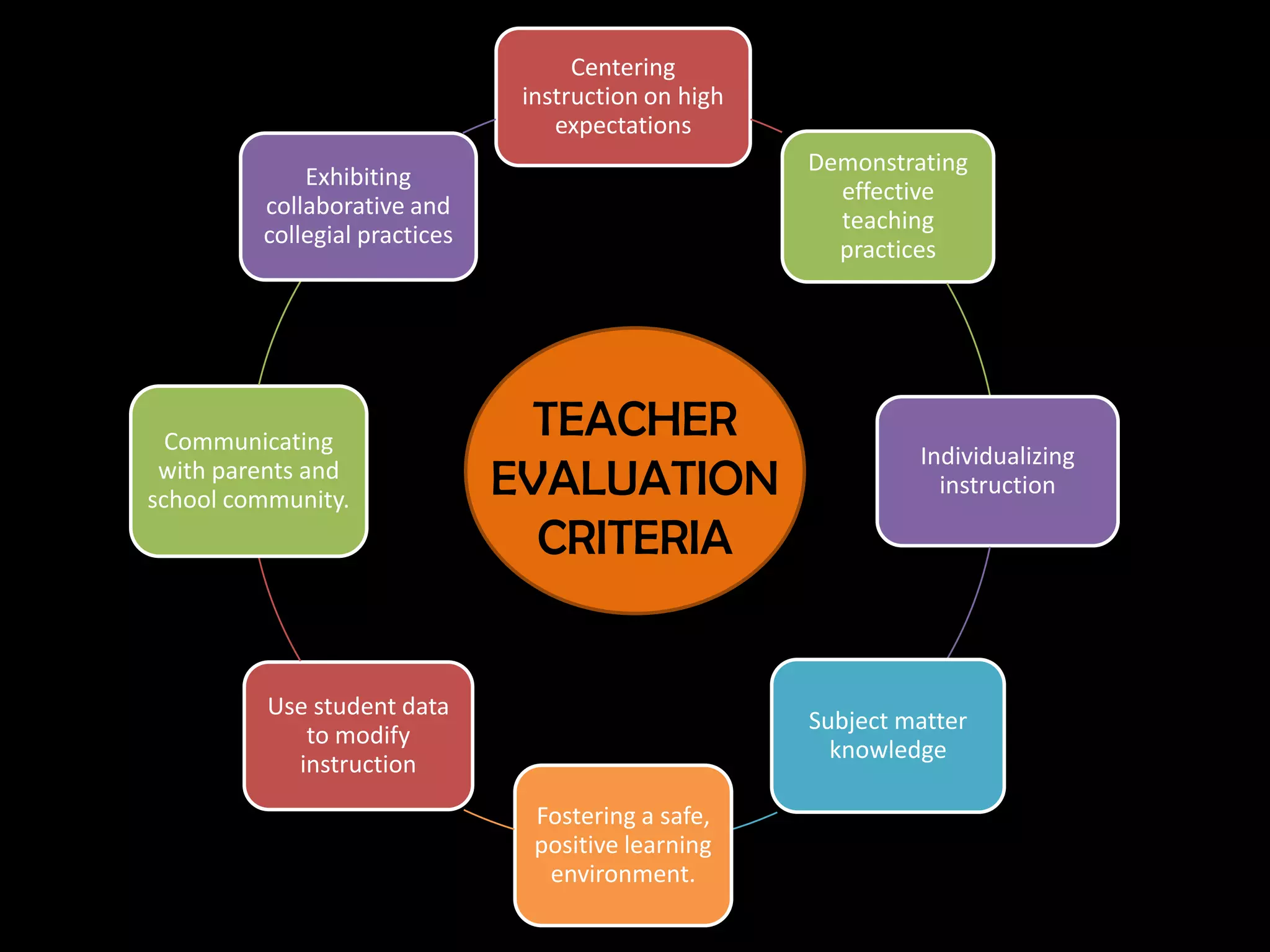
TEACHEREVALUATIONCRITERIA
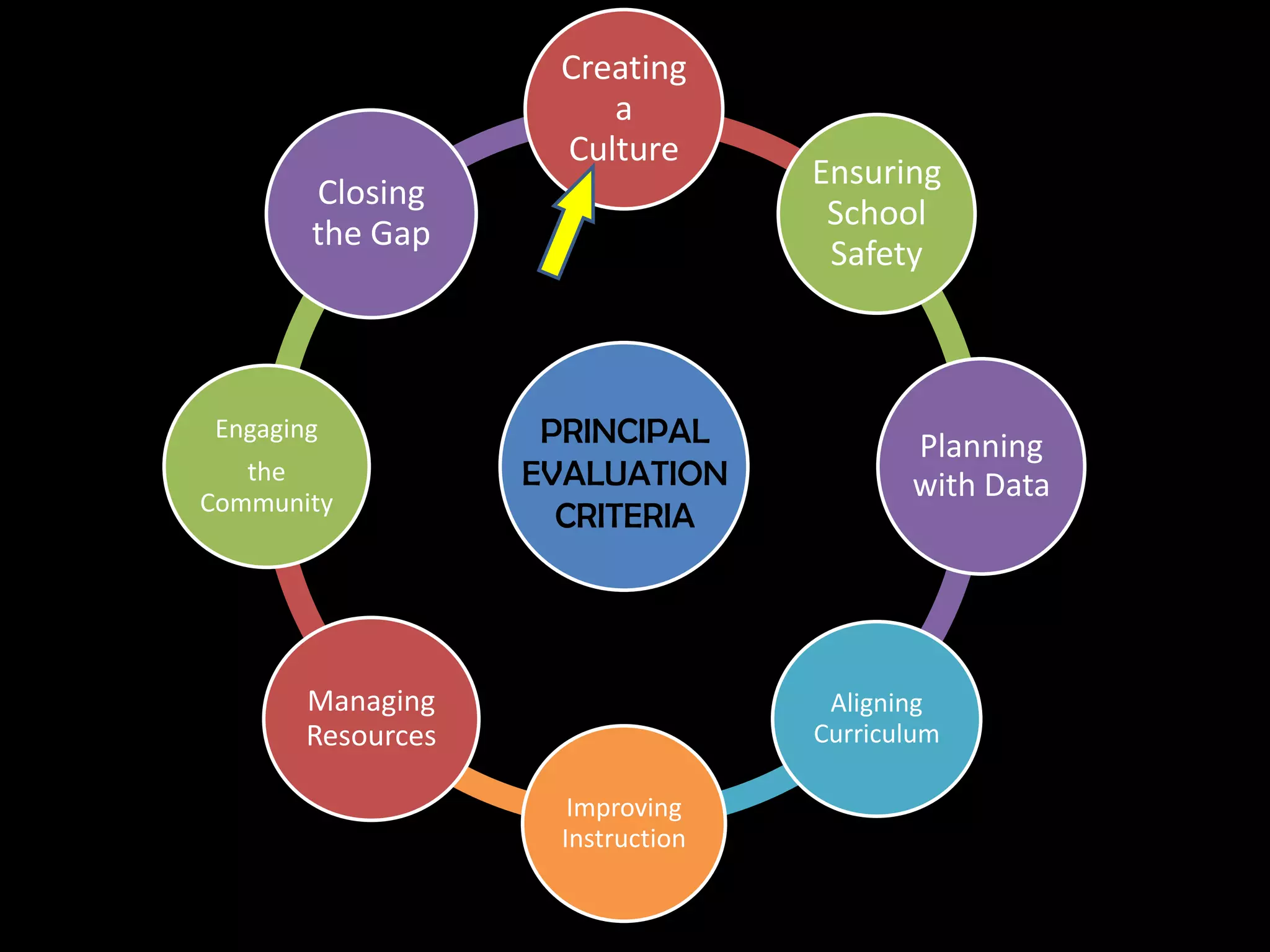
PRINCIPALEVALUATIONCRITERIA
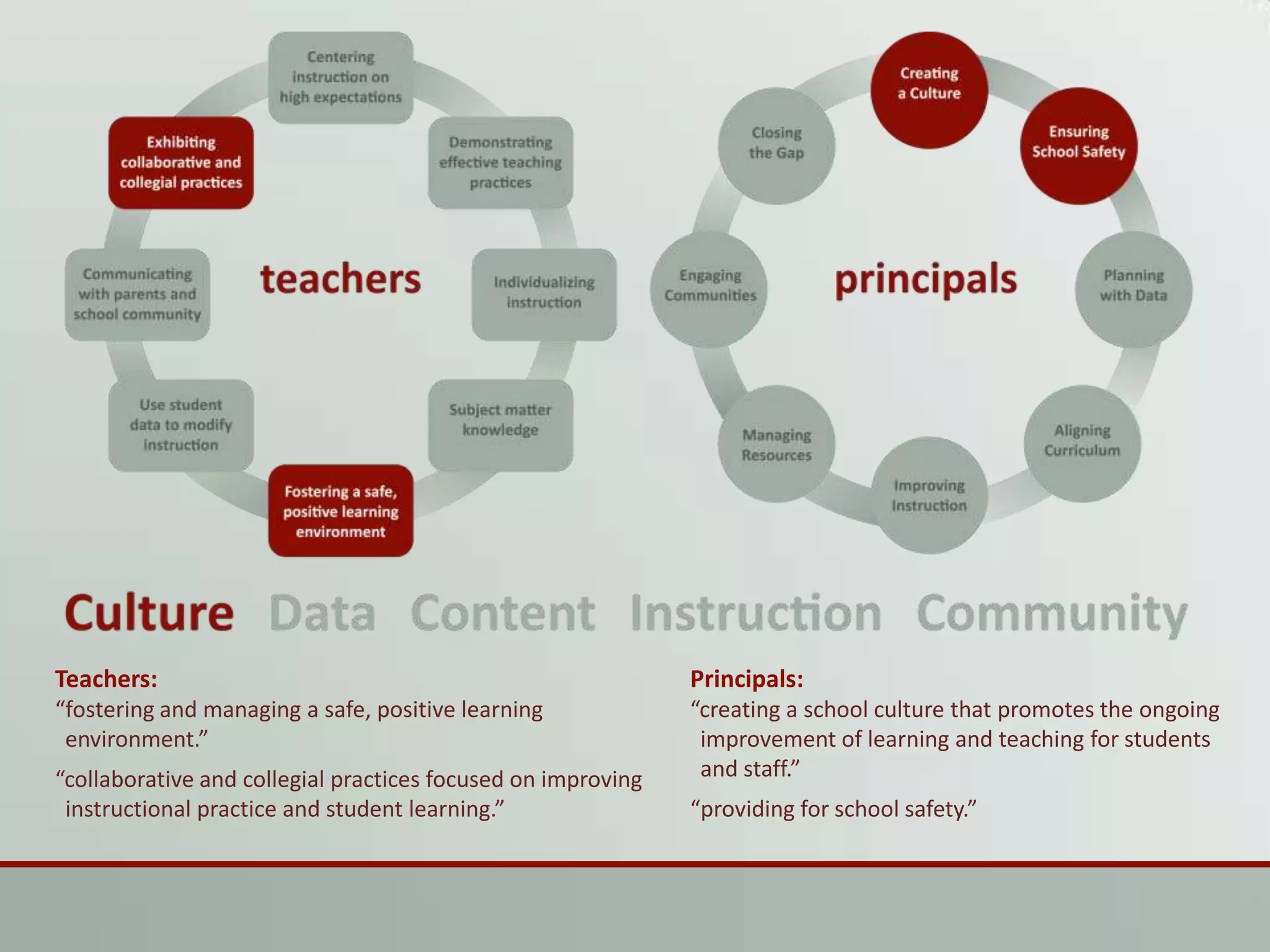
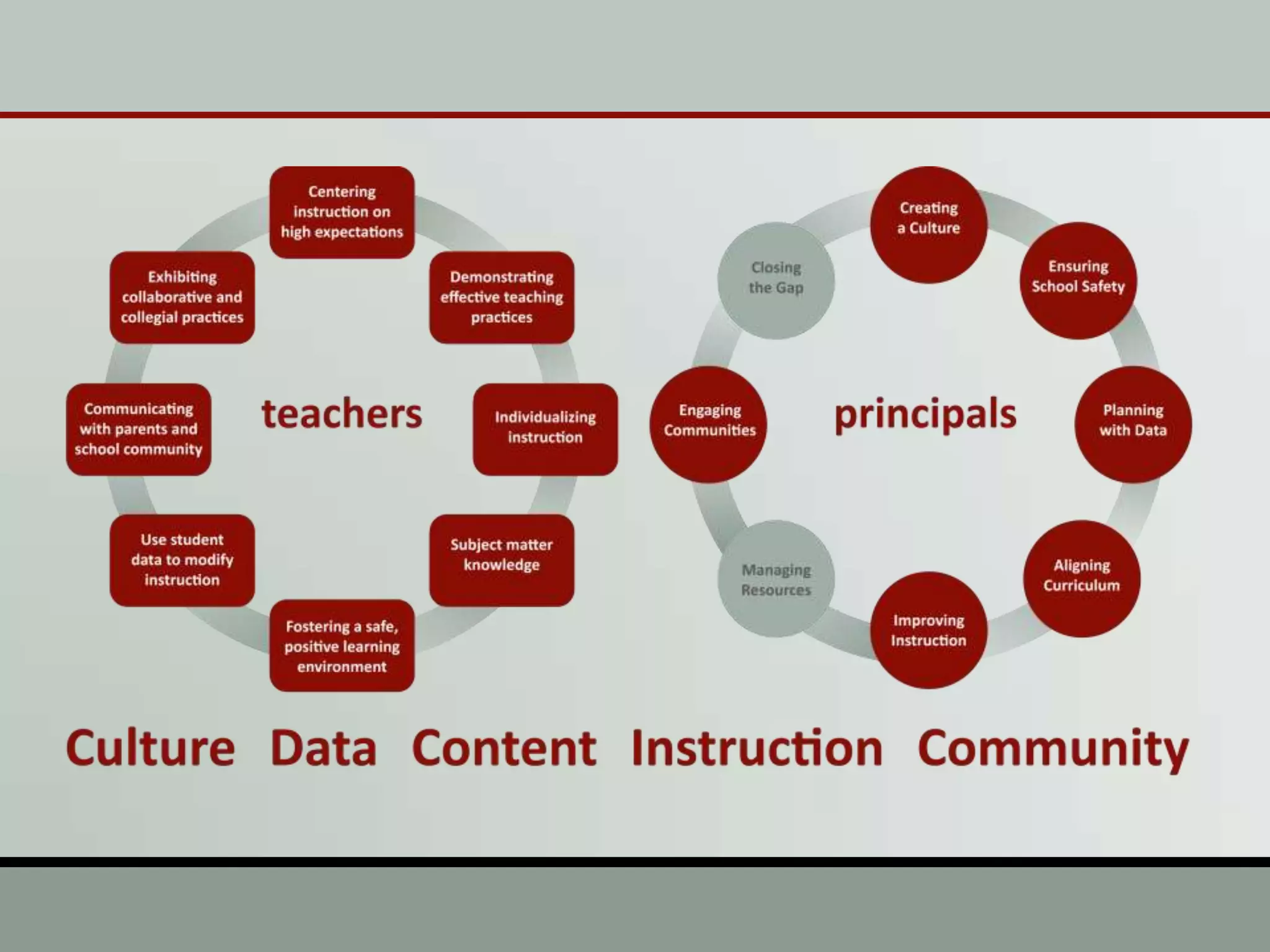
Teachers:“fostering and managing a safe, positive learning 	environment.”“collaborative and collegial practices focused on improving 	instructional practice and student learning.”Principals:“creating a school culture that promotes the ongoing 	improvement of learning and teaching for students 	and staff.”“providing for school safety.”
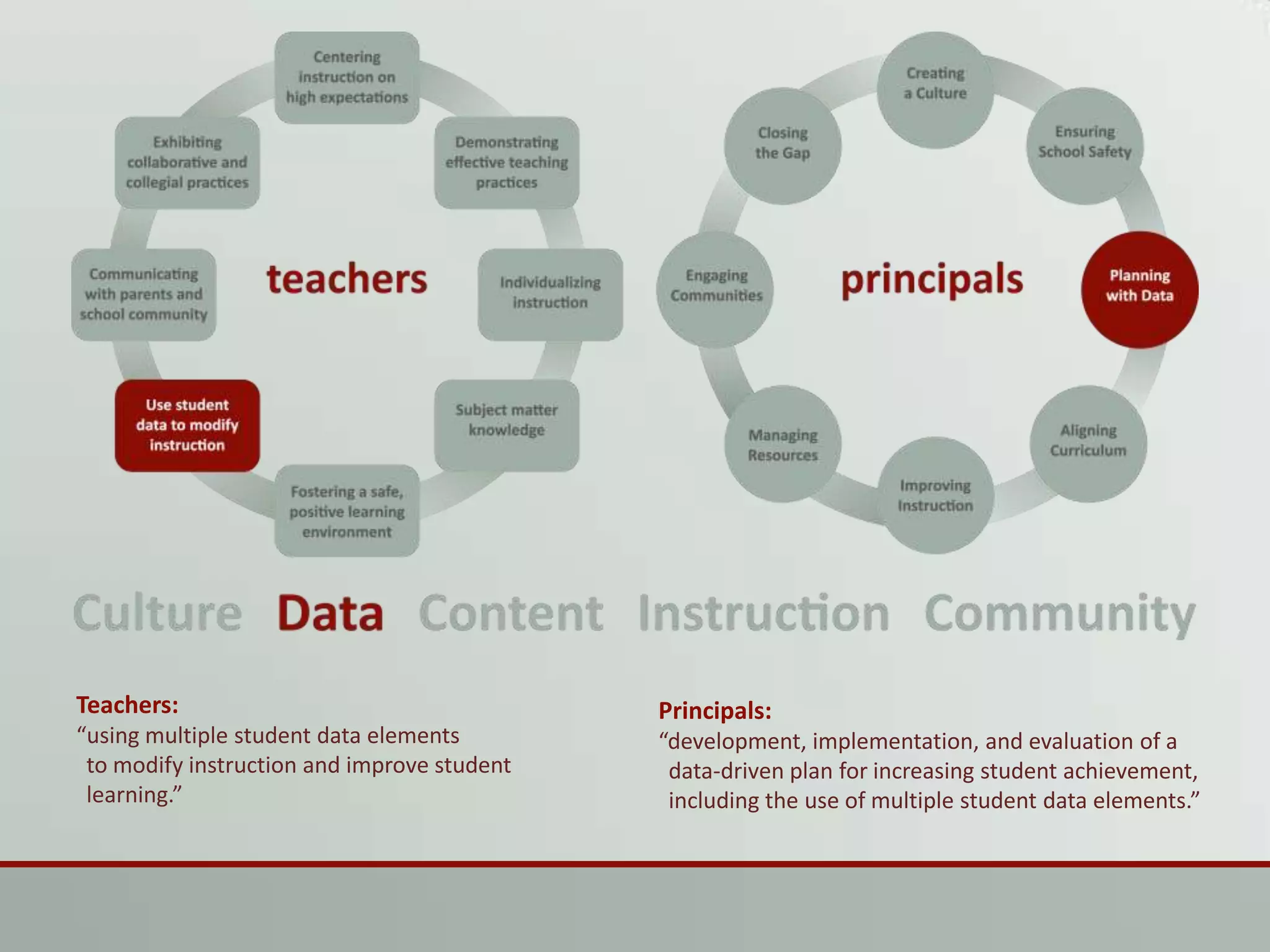
Teachers:“using multiple student data elements 	to modify instruction and improve student     	learning.”Principals:“development, implementation, and evaluation of a 	data-driven plan for increasing student achievement, 	including the use of multiple student data elements.”
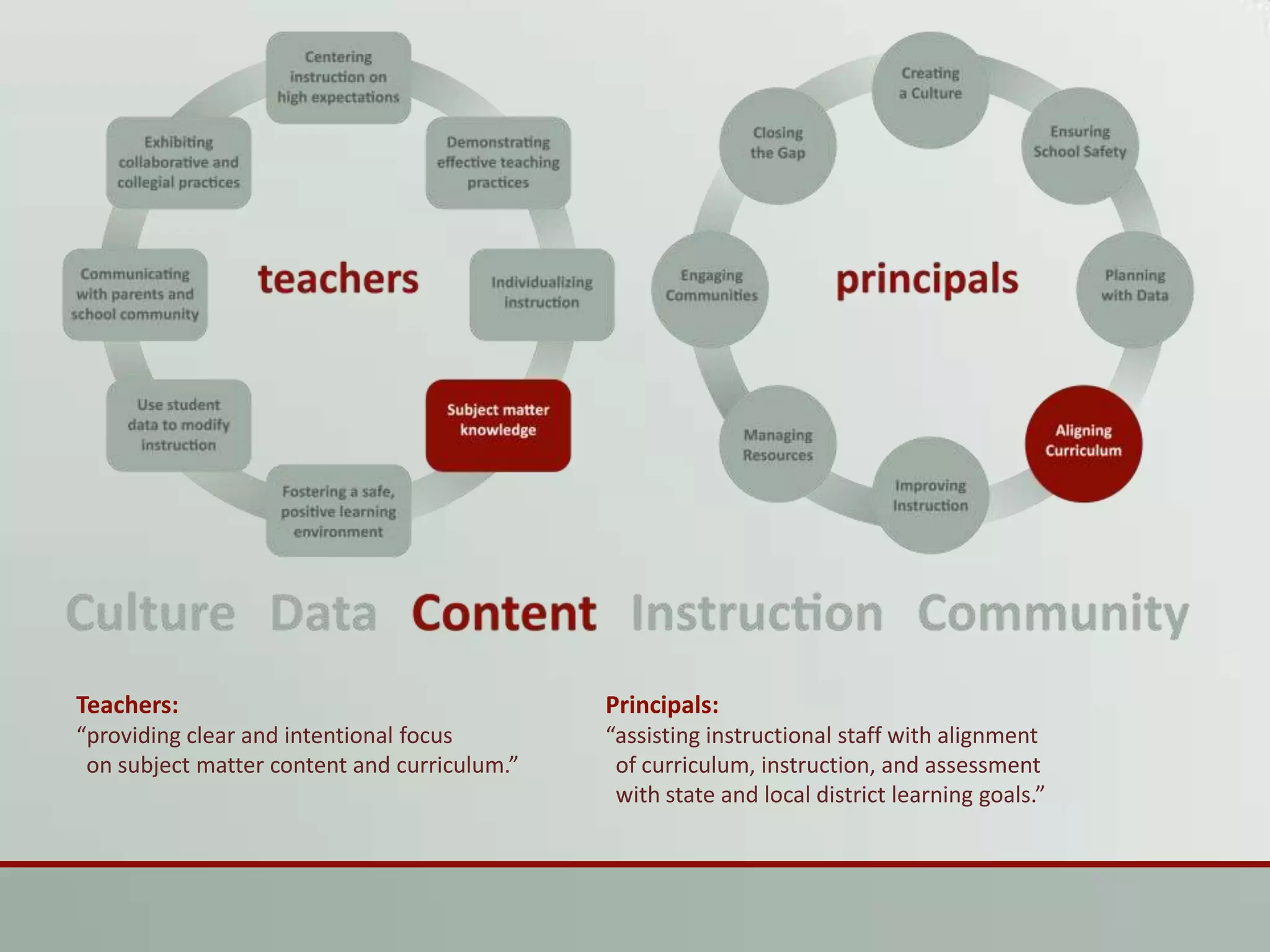
Teachers:“providing clear and intentional focus 	on subject matter content and curriculum.”Principals:“assisting instructional staff with alignment 	of curriculum, instruction, and assessment 	with state and local district learning goals.”
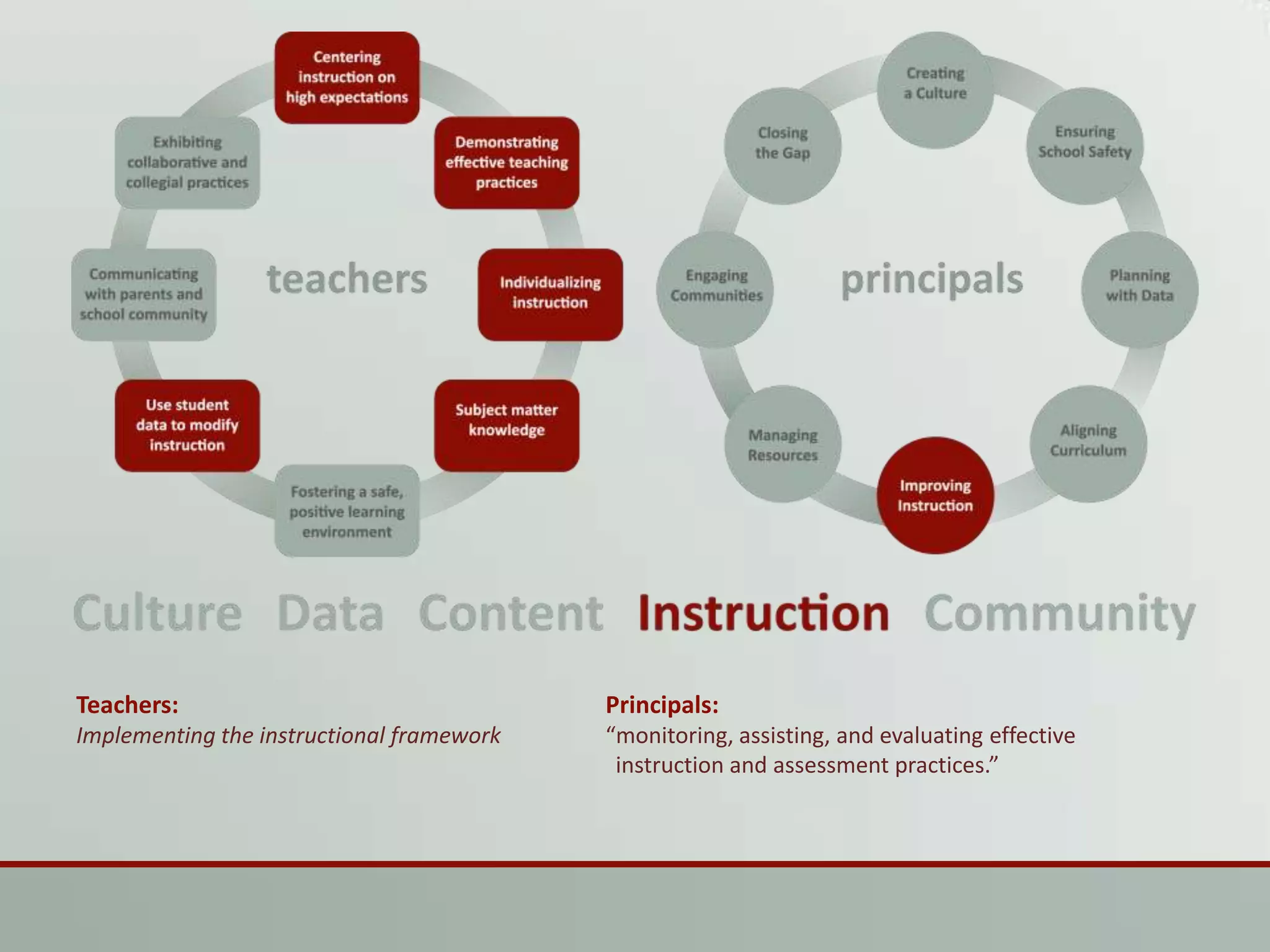
Teachers:Implementing the instructional frameworkPrincipals:“monitoring, assisting, and evaluating effective 	instruction and assessment practices.”
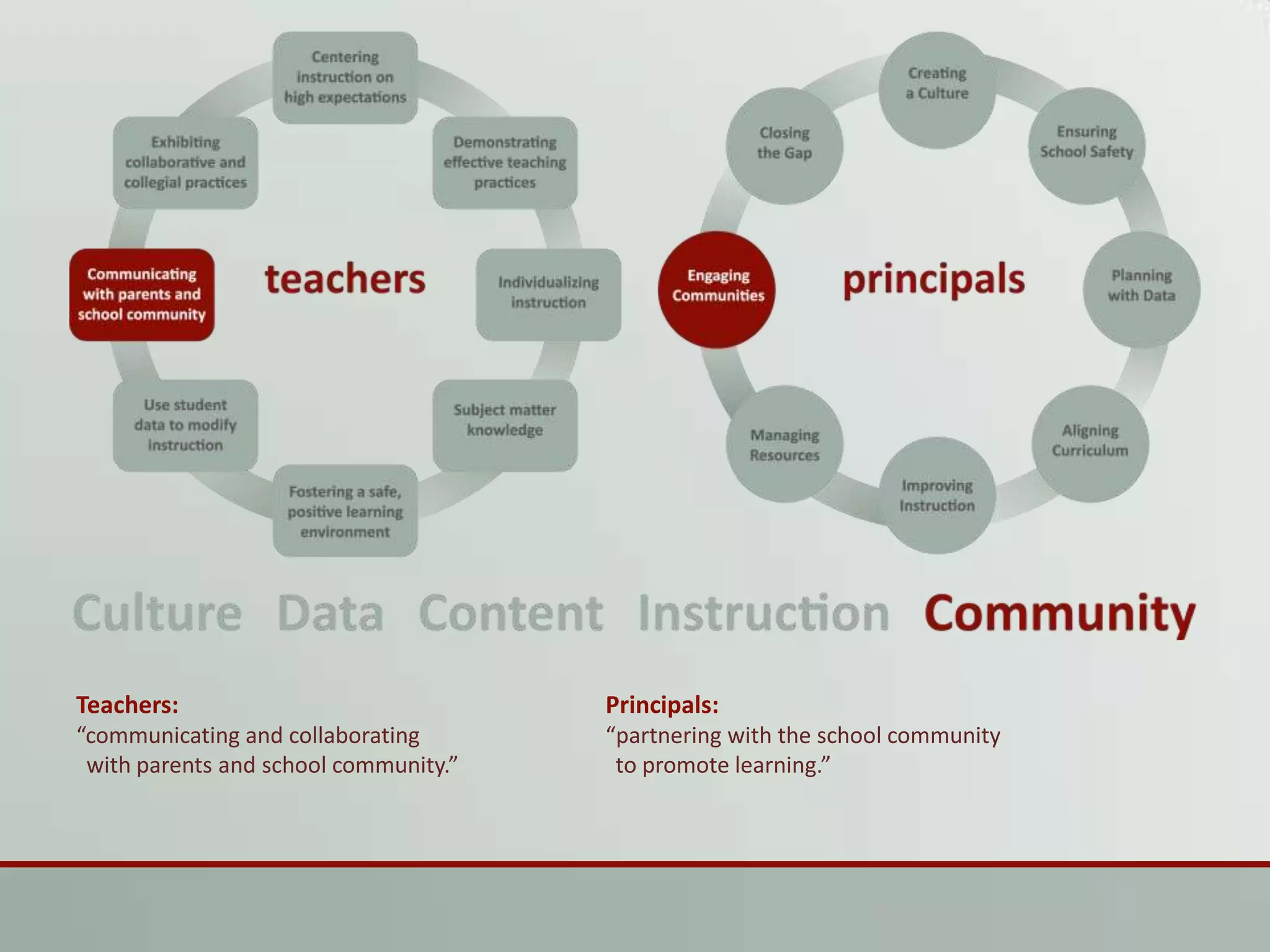
Teachers:“communicating and collaborating	with parents and school community.”Principals:“partnering with the school community 	to promote learning.”
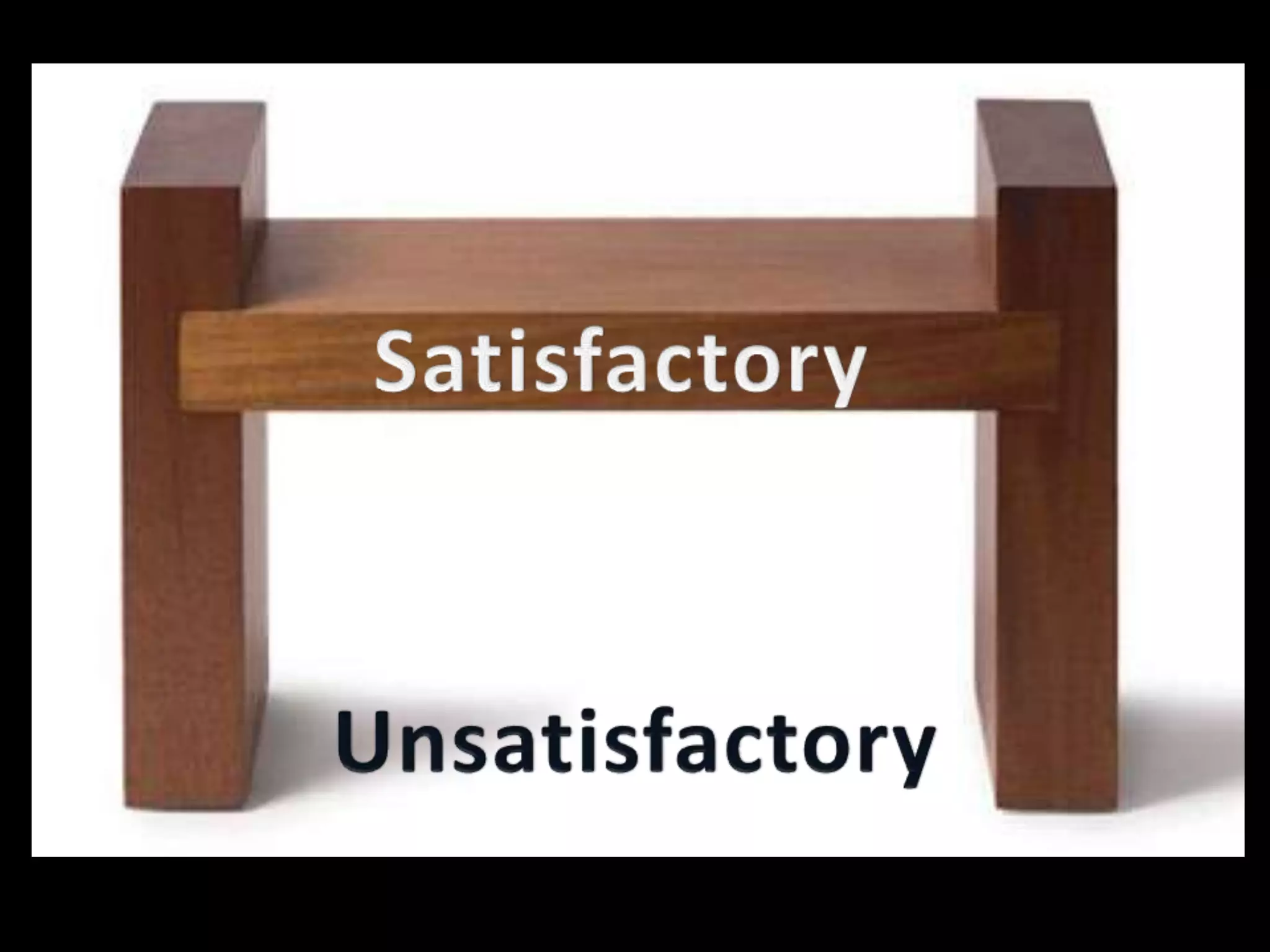
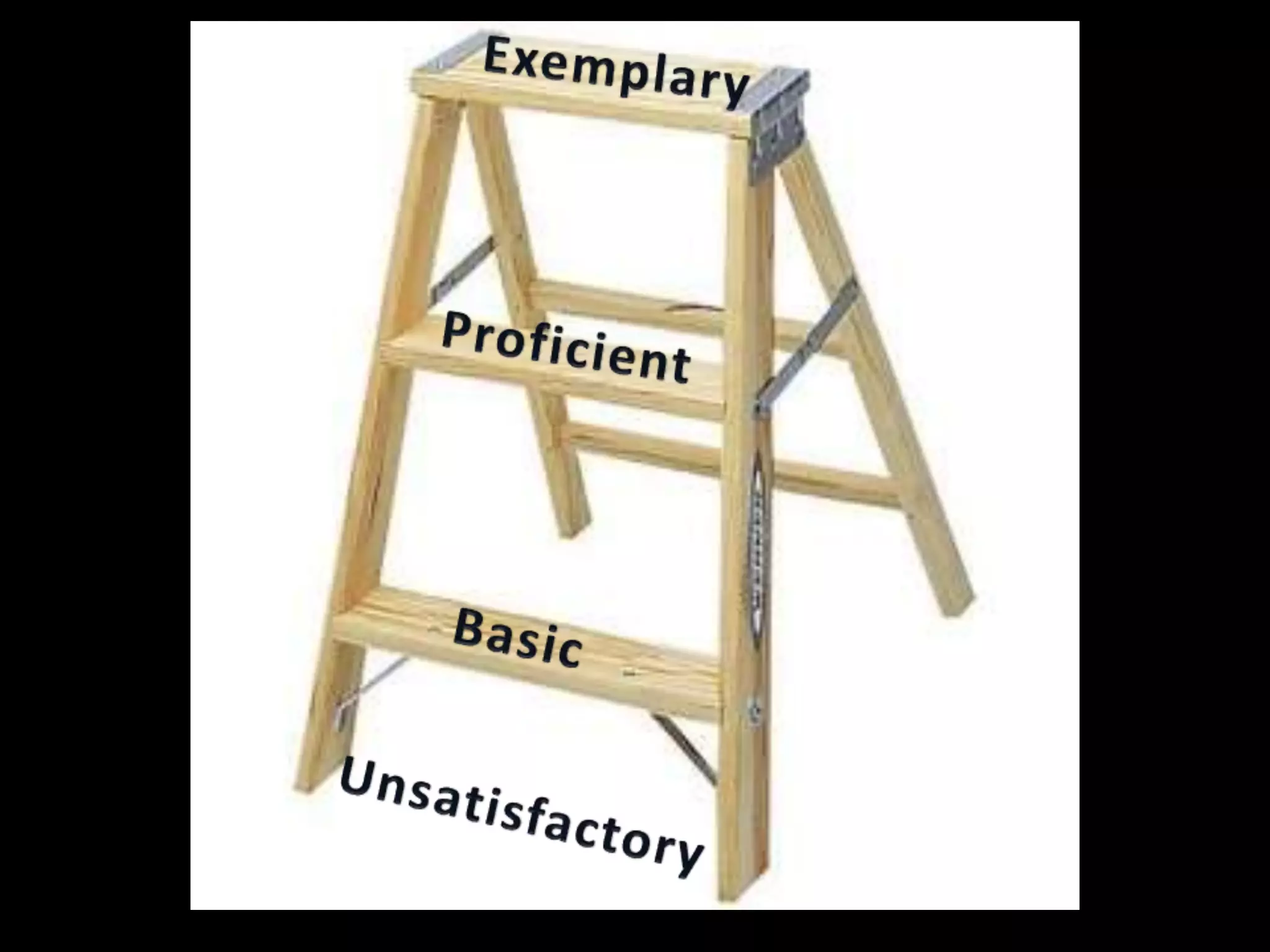
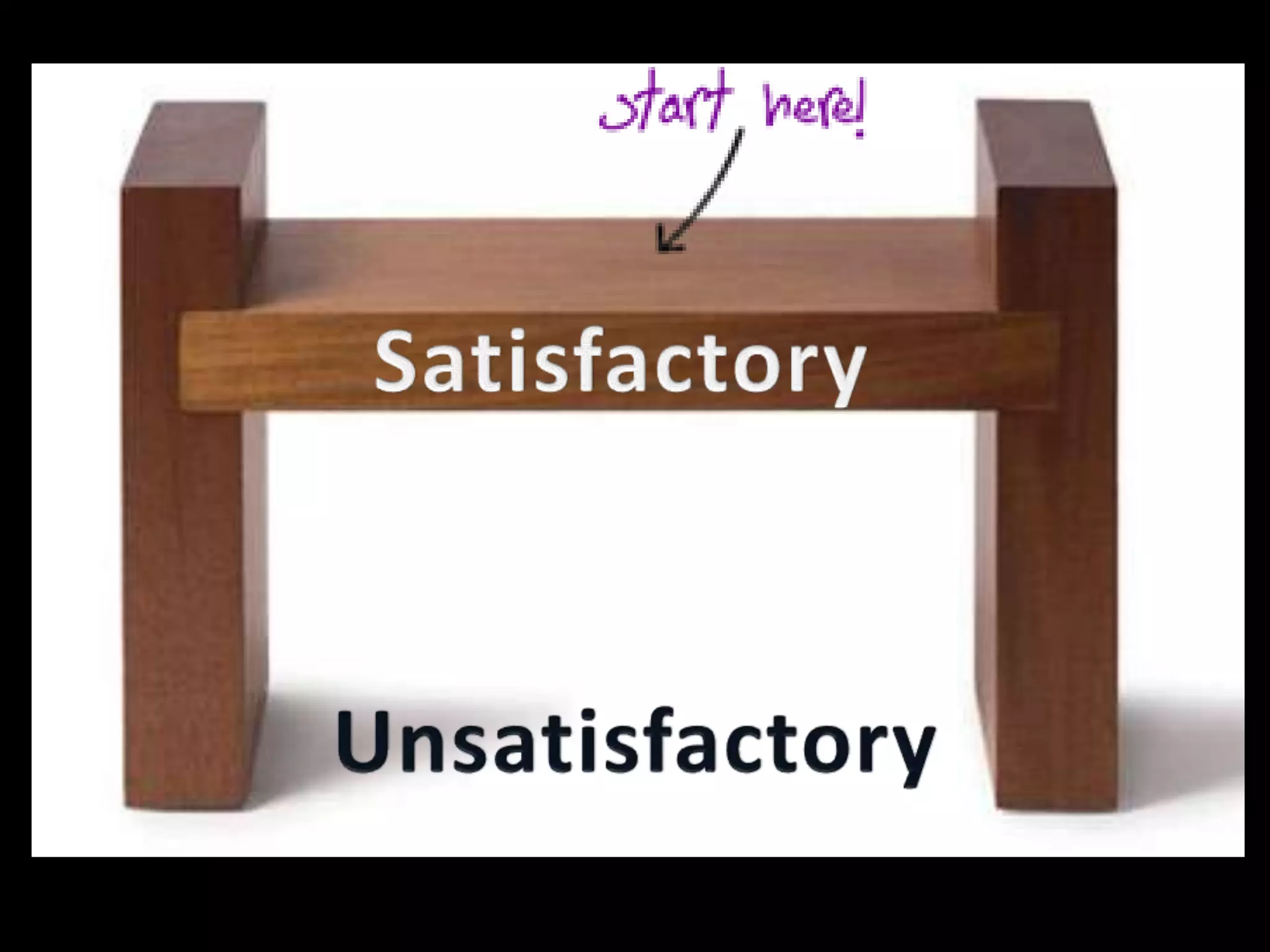
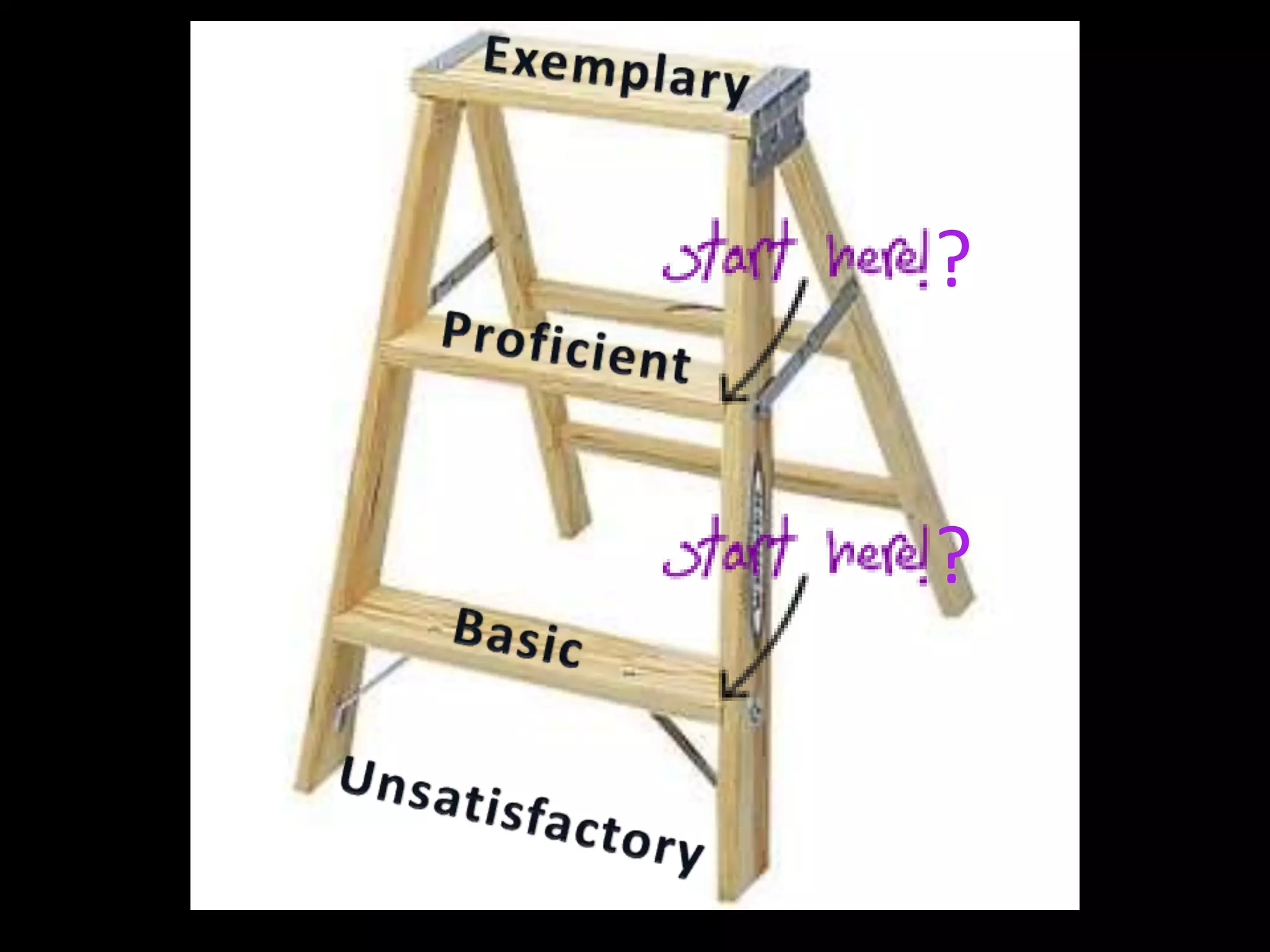
A 4-Tiered SystemHow does using a four-tier system change people’s thinking?
SatisfactoryUnsatisfactory
ExemplaryProficientBasicUnsatisfactory
SatisfactoryUnsatisfactory
Exemplary?Proficient?BasicUnsatisfactory
Under what circumstances might teachers and principals consider evidence gathering  as a positive thing in their evaluations?
Wary/Welcome ActivityWhy might teachers and principals be wary of a 4-tier evaluation system?Why might they welcome it?
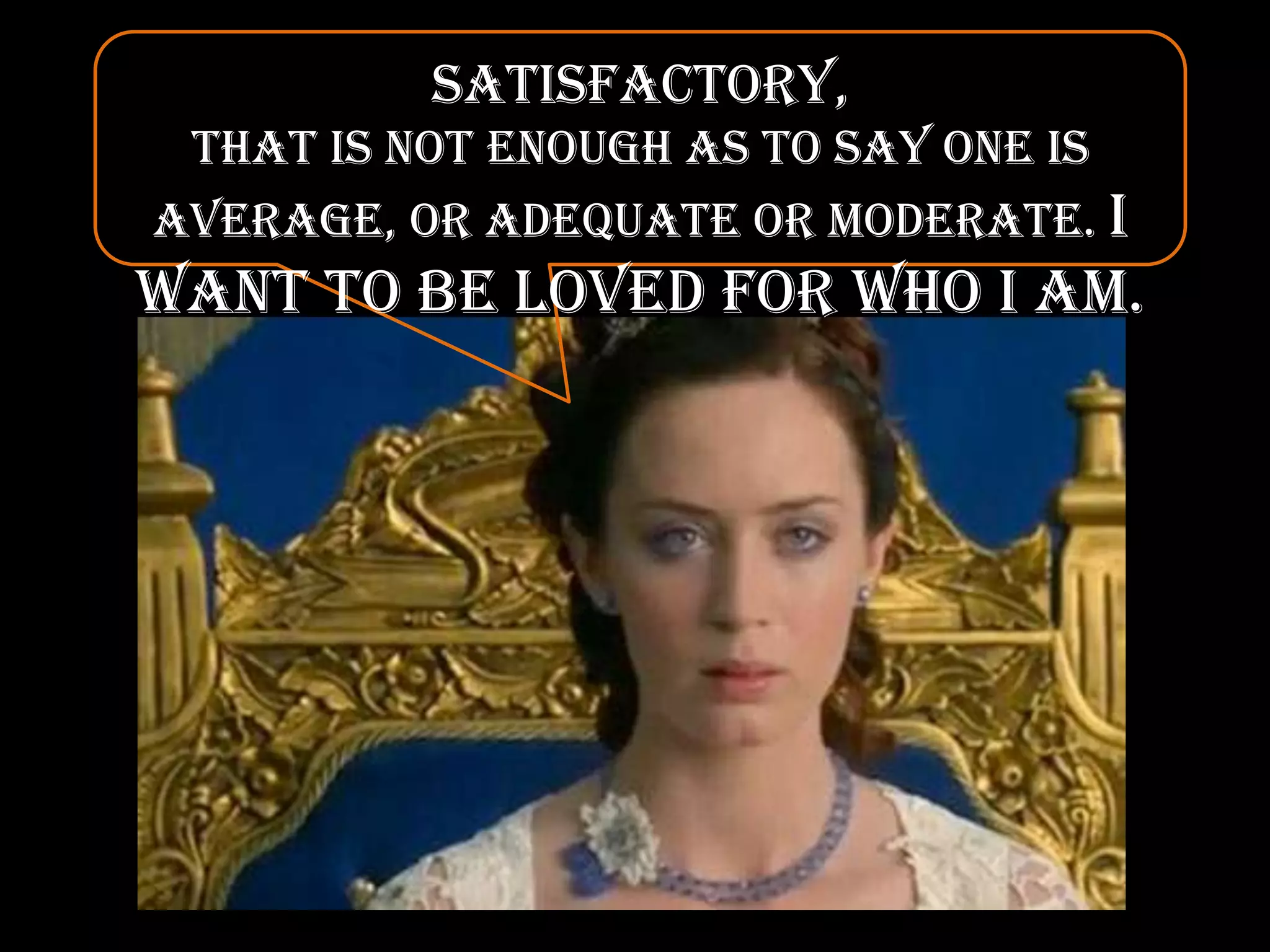
Satisfactory,That is not enough as to say one is average, or adequate or moderate. I want to be loved for who I am.
Next StepsIn the end, what should be taken into account in the evaluation?
TeacherEvaluationCriteria
PrincipalEvaluationCriteria
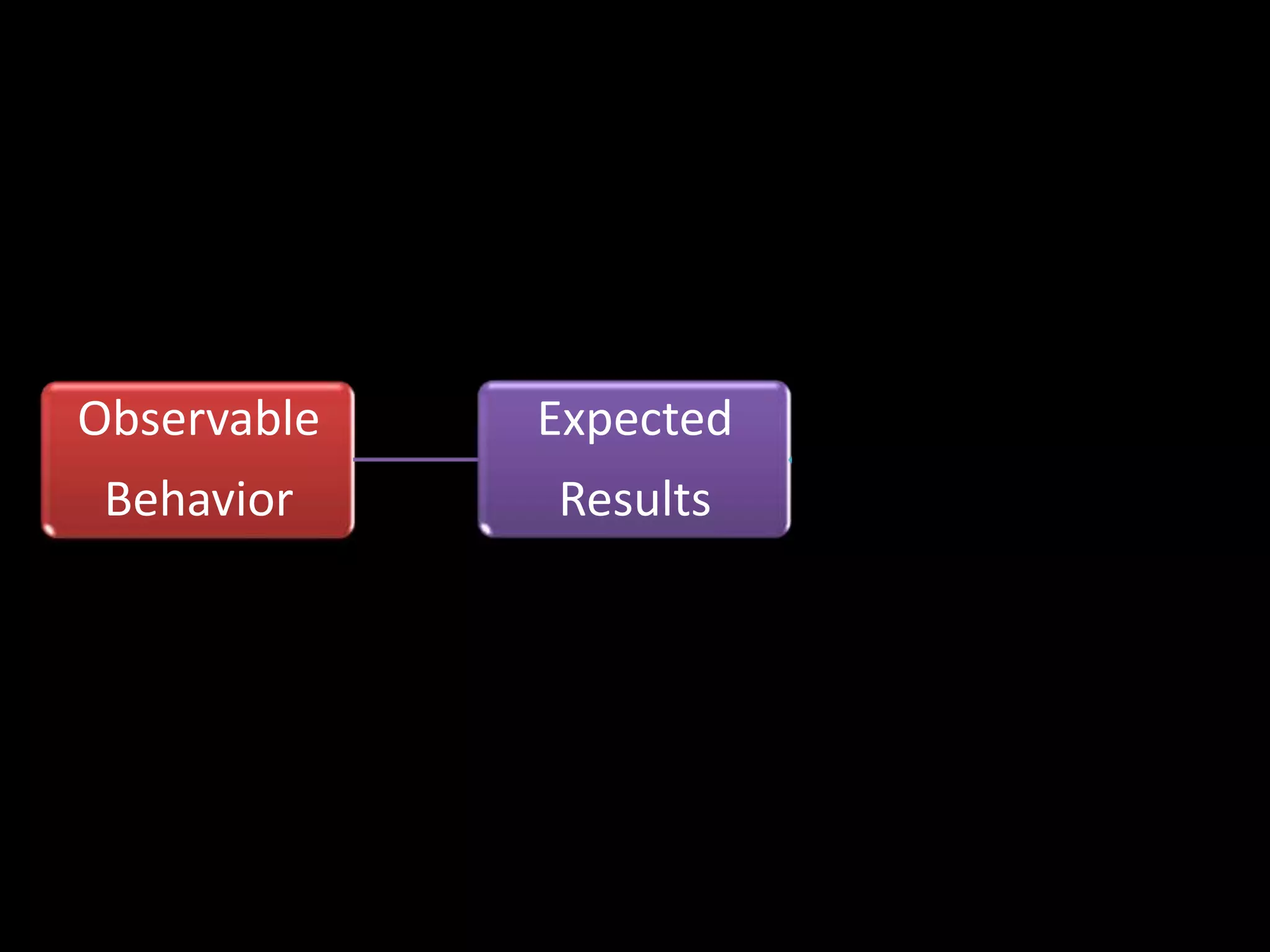
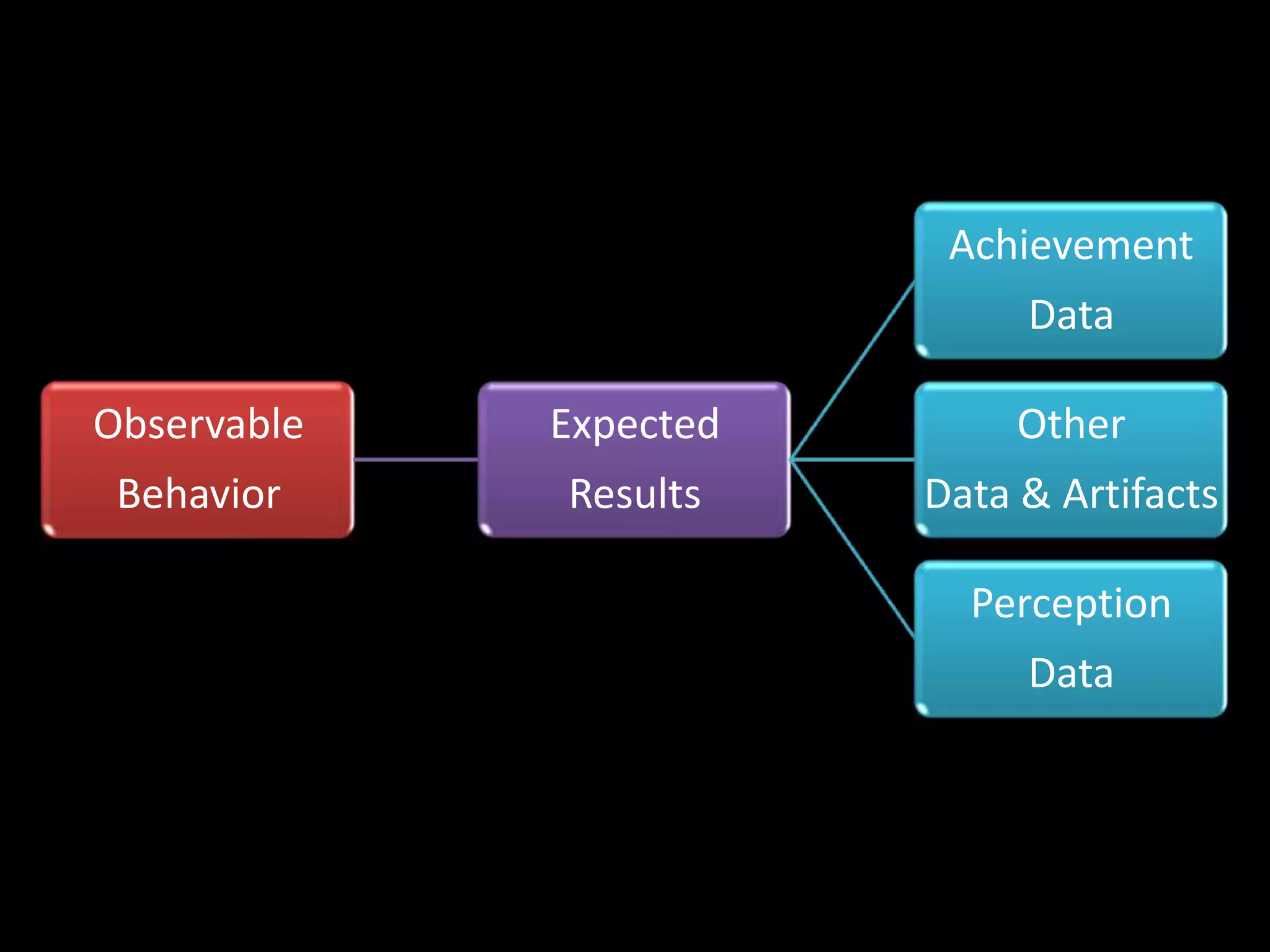
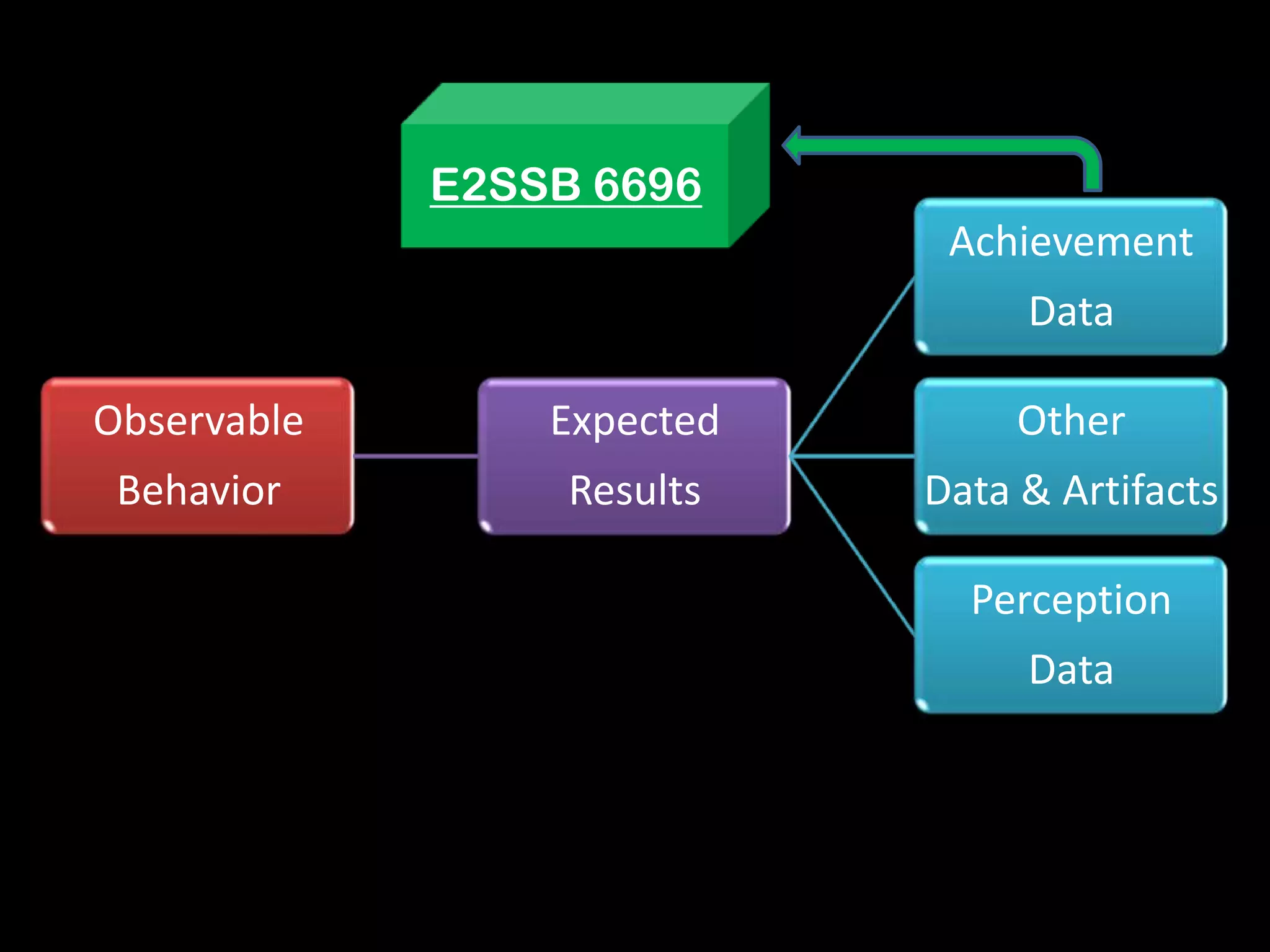
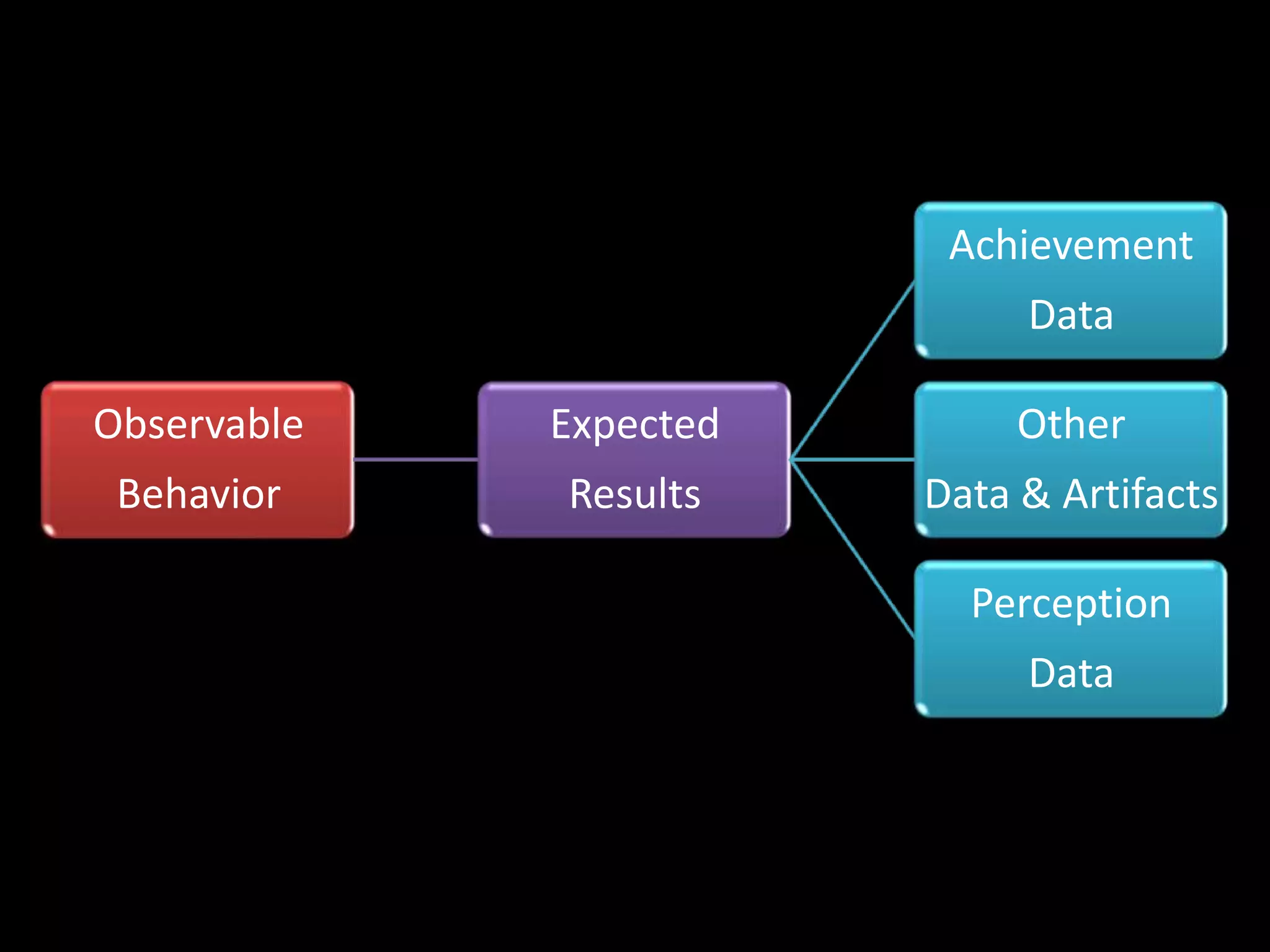
E2SSB 6696When available, student growth data that is referenced in the evaluation process must be based on multiple measures that can include classroom-based, school-based, district-based, and state-based tools.  As used in this subsection, “student growth” means the change in student achievement between two points in time.SIG (MERIT)Implement rigorous, transparent and equitable evaluation systems for teachers and principals which are developed with staff and use student growth as significant factor.  Identify and reward school leaders and teachers who have increased student achievement and graduation rates; identify and remove those who, after ample opportunities to improve professional practice, have not done so.Implement such strategies as financial incentives and career ladders for recruiting, placing and retaining effective teachers
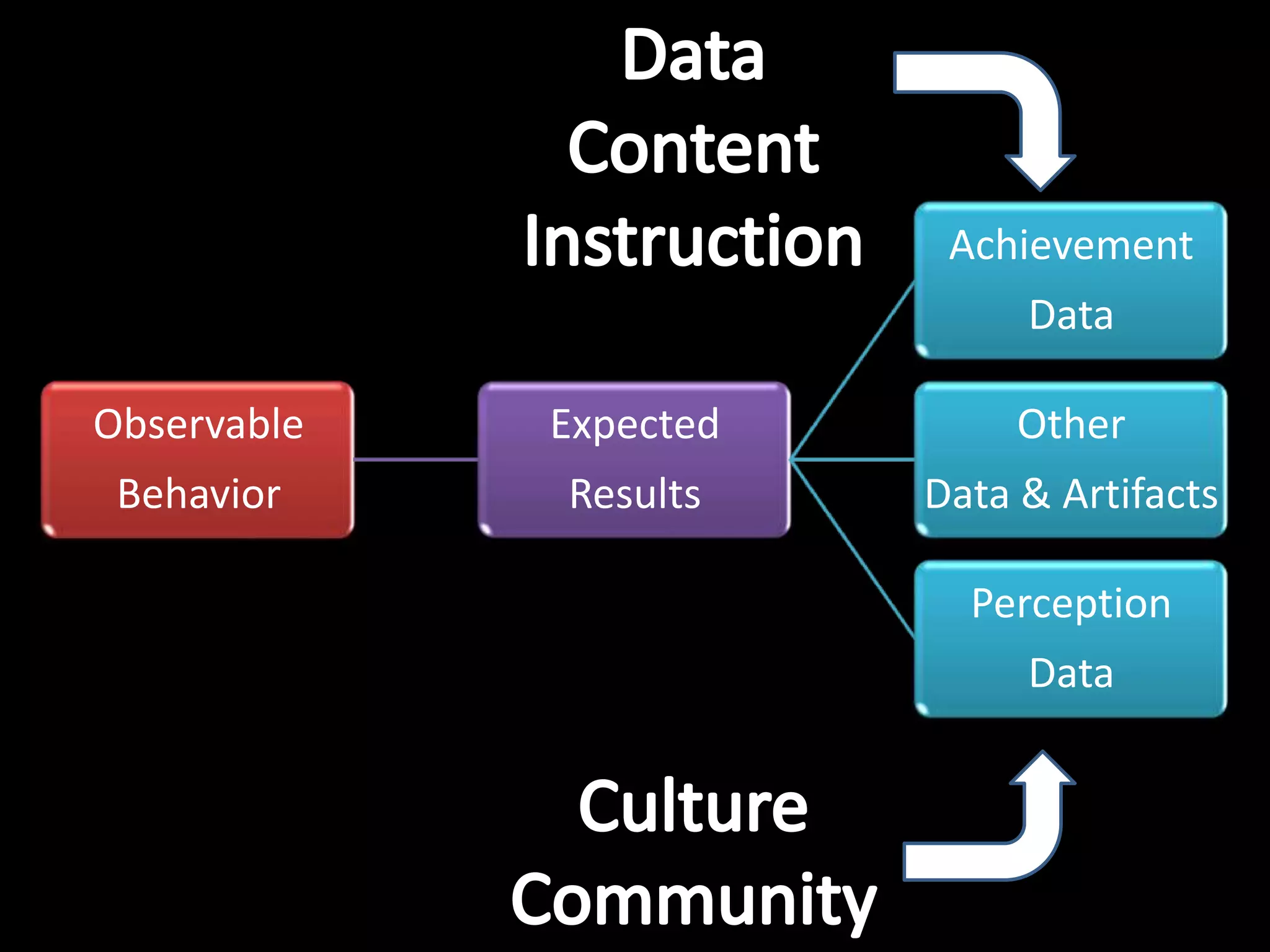
DataContentInstructionCultureCommunity
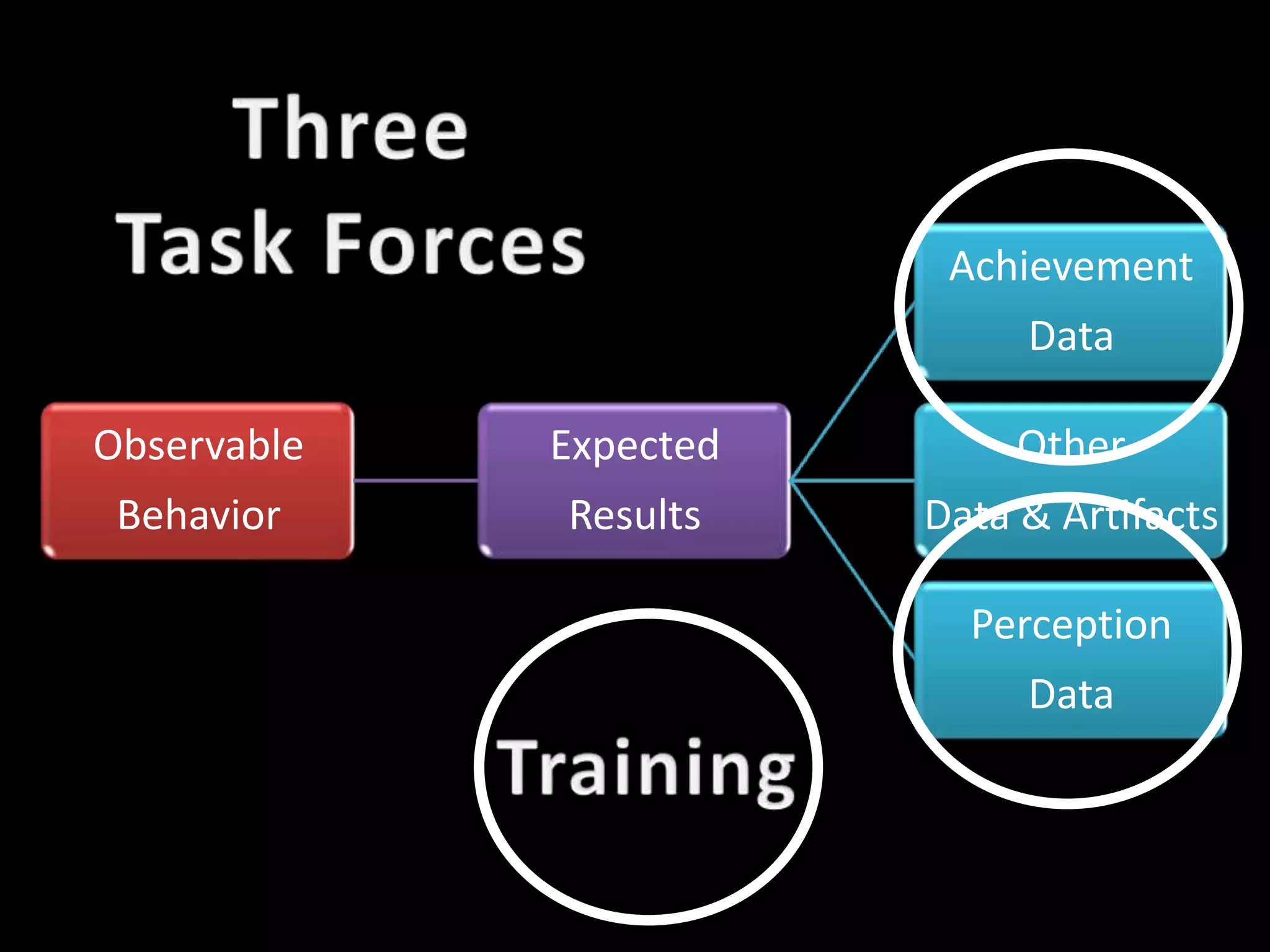
ThreeTask ForcesTraining
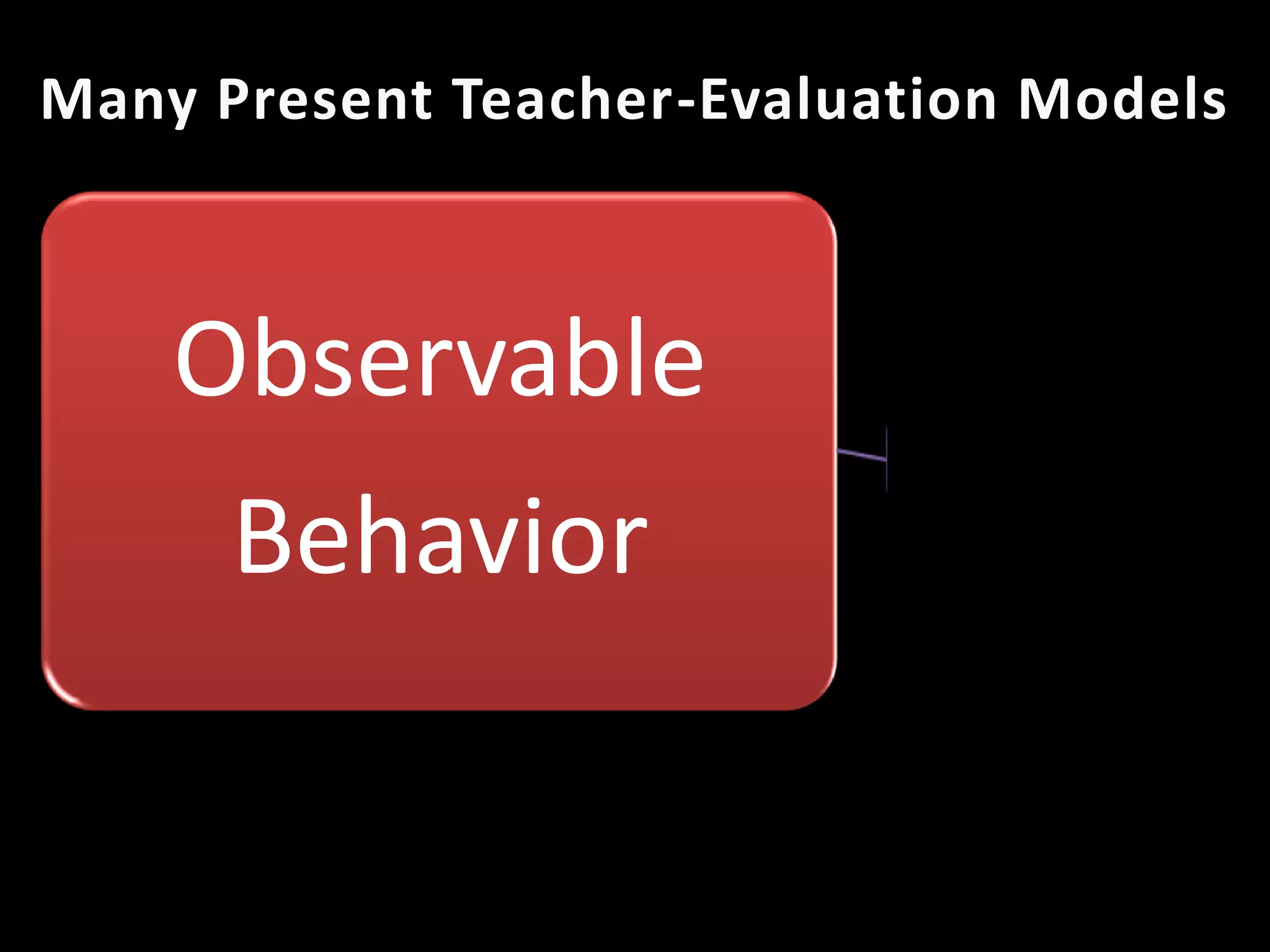
Many Present Teacher-Evaluation Models
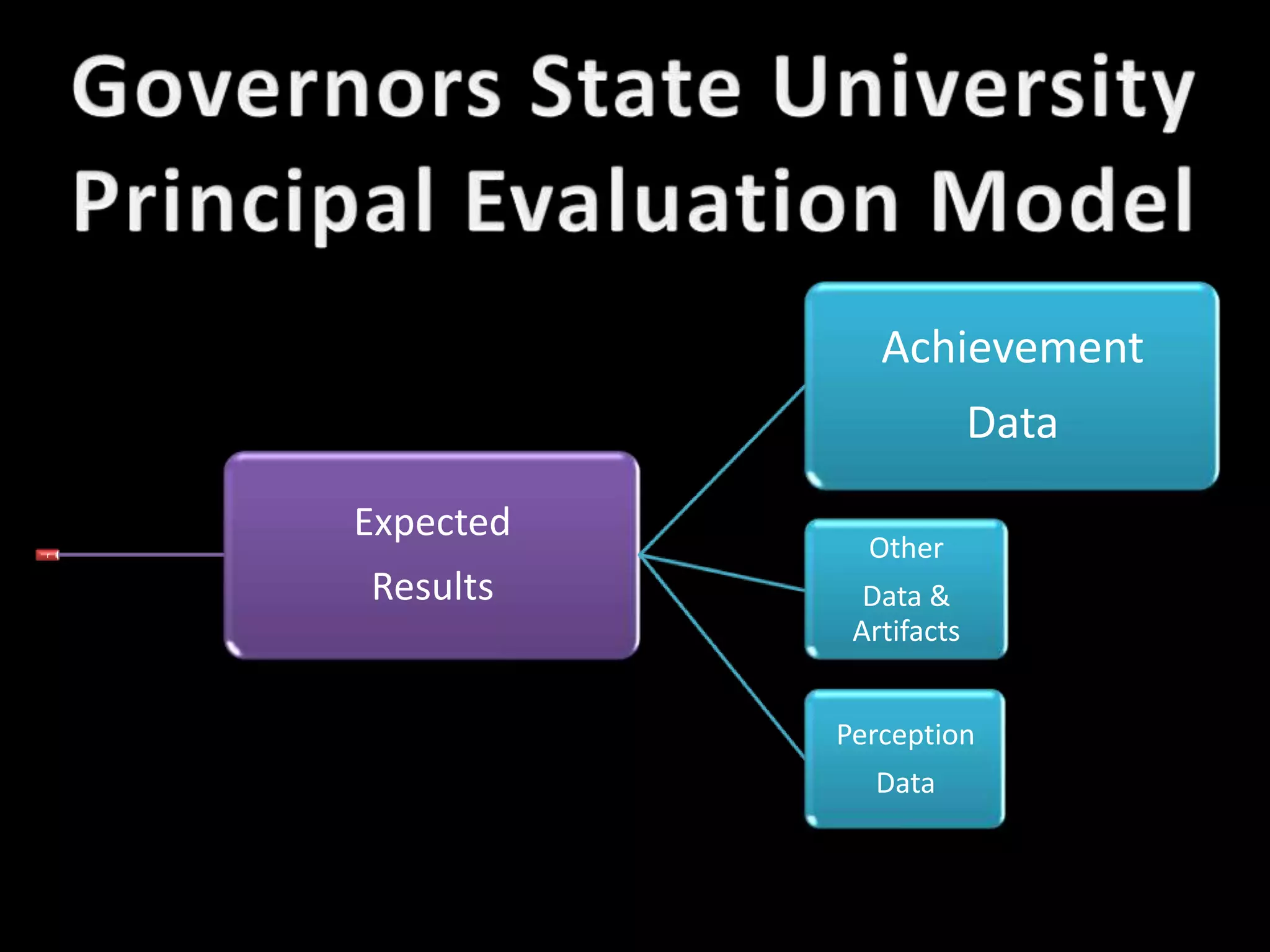
Governors State UniversityPrincipal Evaluation Model
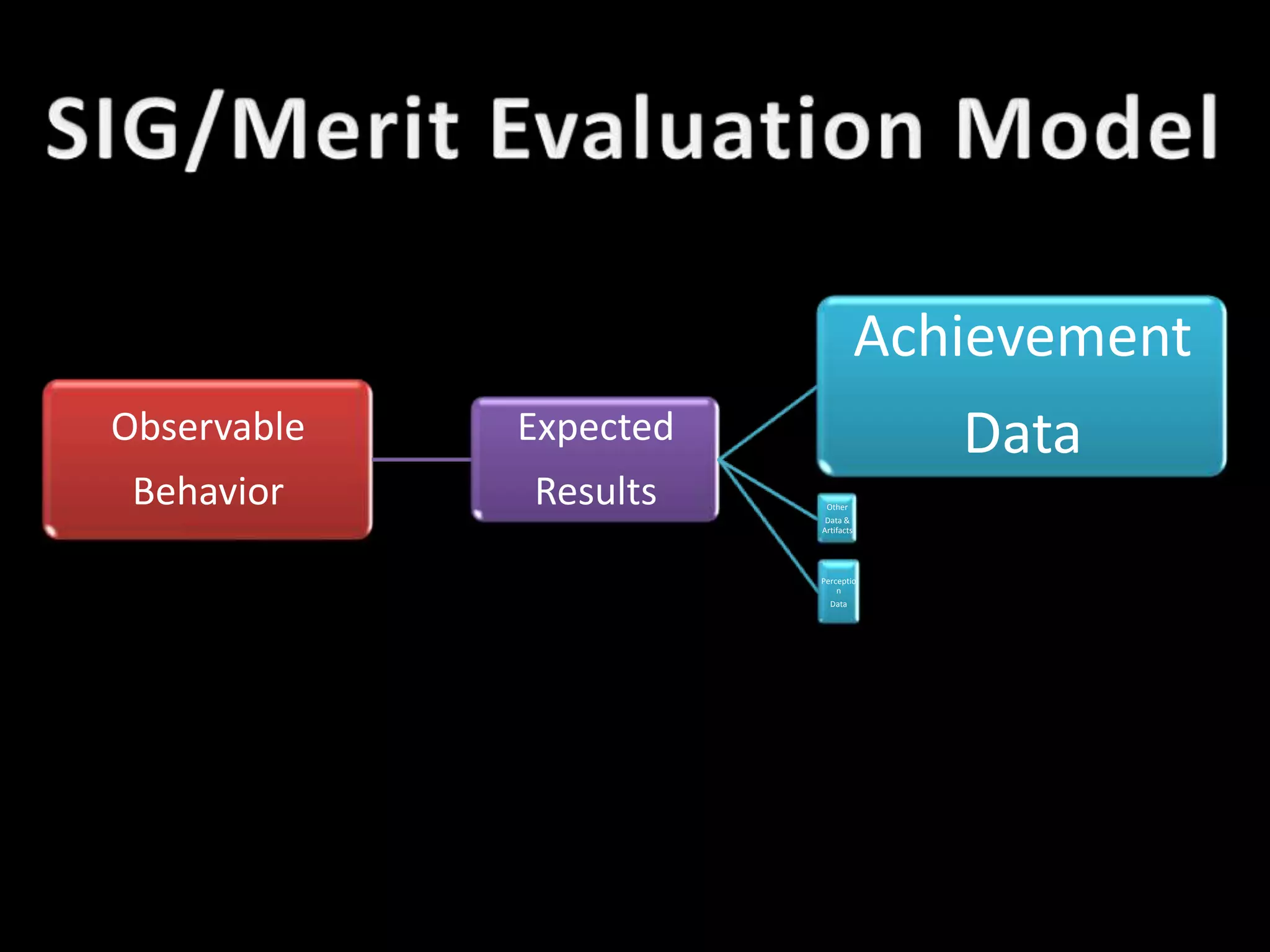
SIG/Merit Evaluation Model
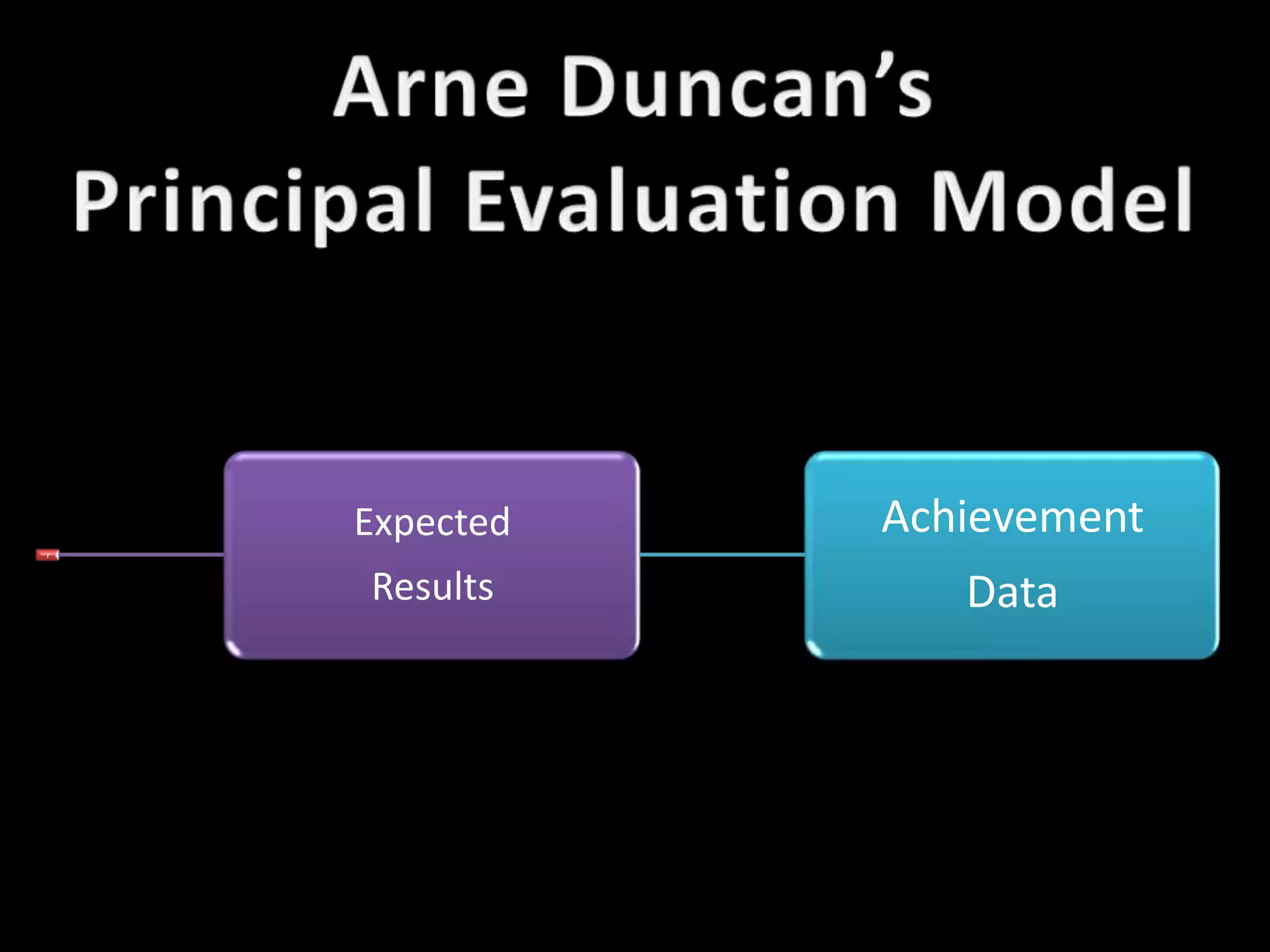
Arne Duncan’sPrincipal Evaluation Model
Resources
Gallupstudentpoll.comTrack your students’ engagement, hope and well being
Success at the Corehttp://successatthecore.comVideos and facilitators’ guides designed to develop schools’ leadership teams and individual teachers’ skills in the classroom.
AWSP’s Online GPS(Great Principals’ Strategies)
PRINCIPALEVALUATIONCRITERIA
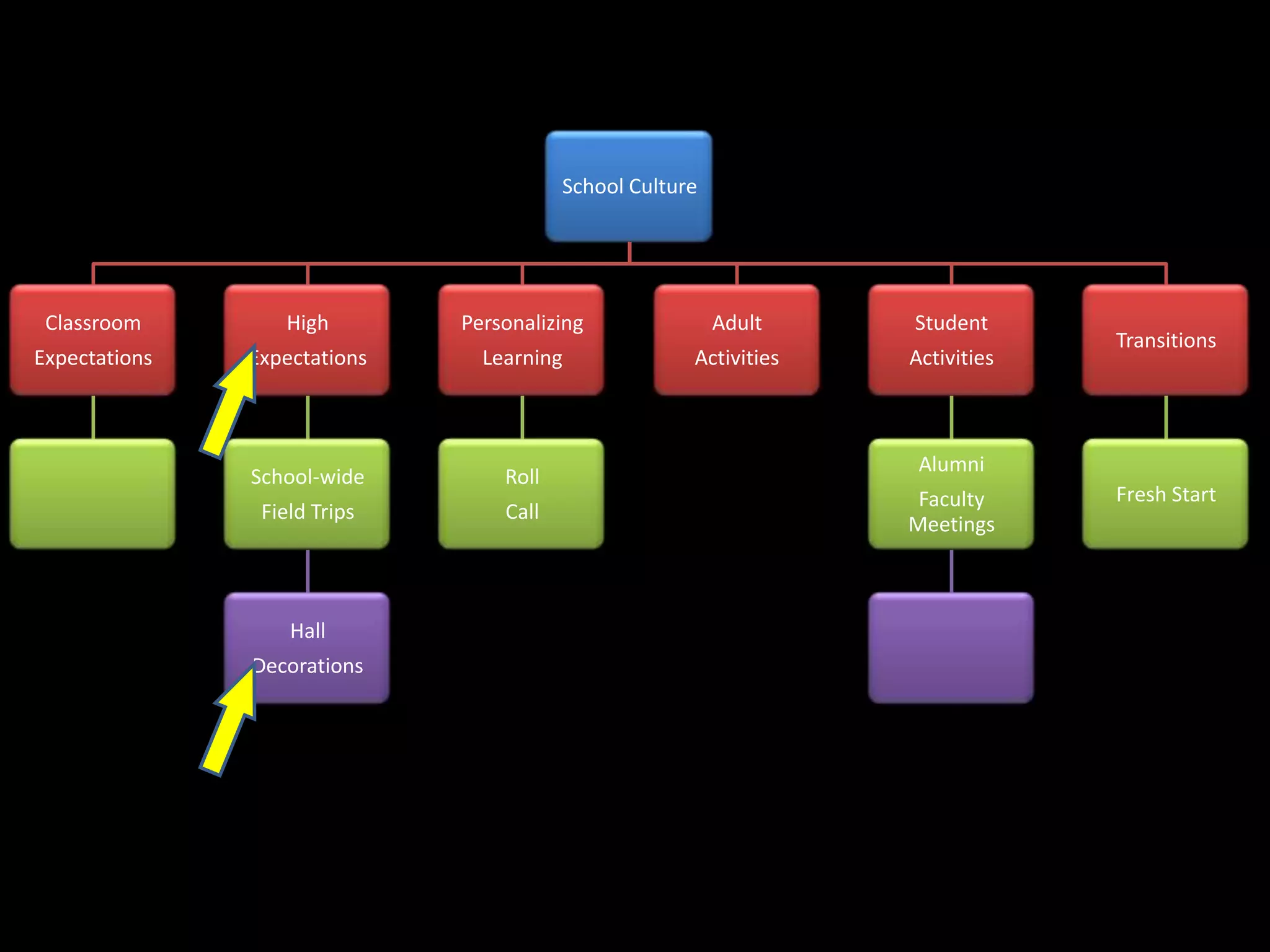
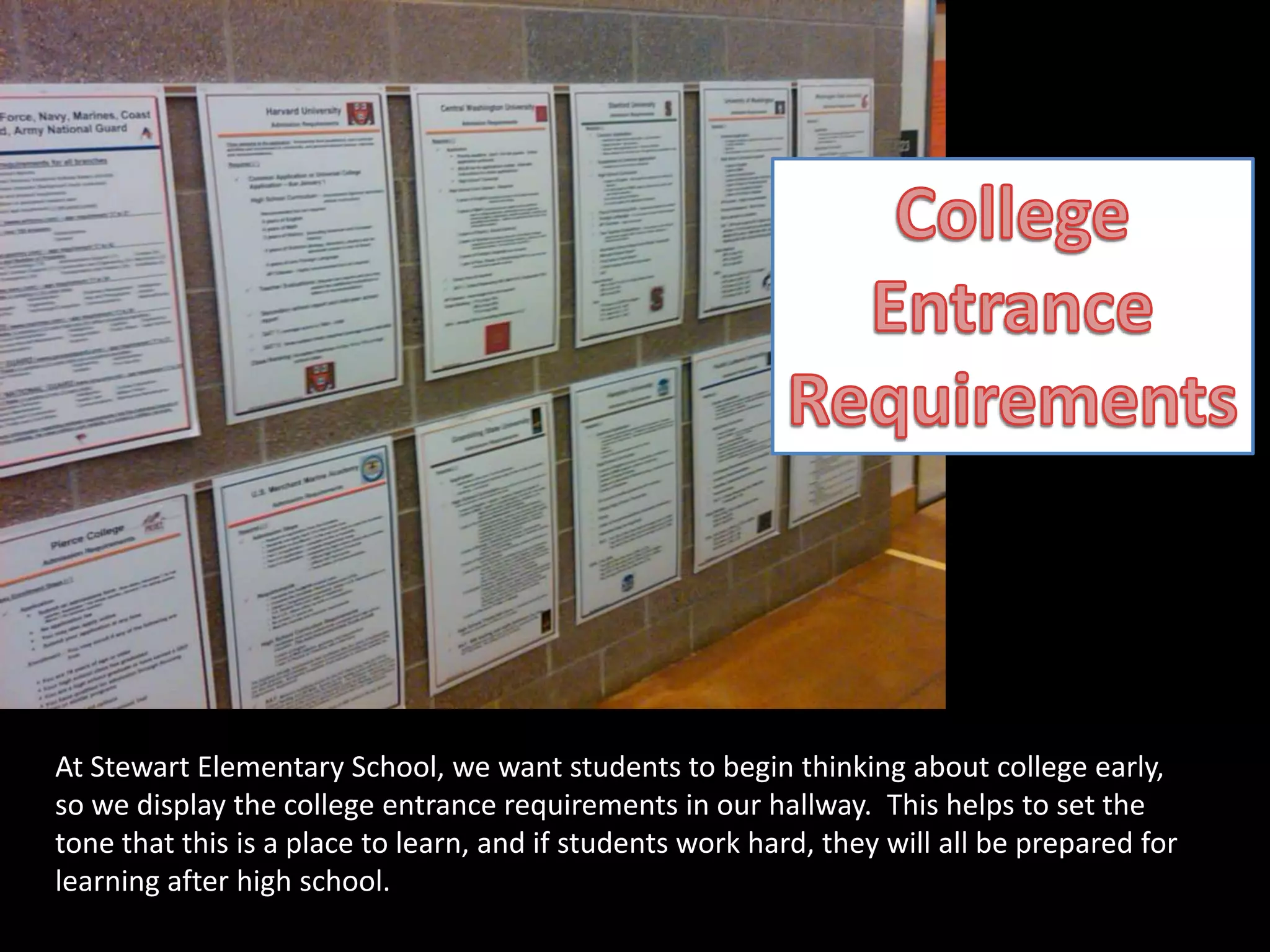
CollegeEntranceRequirementsAt Stewart Elementary School, we want students to begin thinking about college early, so we display the college entrance requirements in our hallway.  This helps to set the tone that this is a place to learn, and if students work hard, they will all be prepared for learning after high school.
TPEP WSU October 2011

TPEP WSU October 2011

  • 1.
    Washington StateTeacher andPrincipal EvaluationProjectUpdate
  • 3.
  • 4.
    What the hellkind of call was that!?!
  • 5.
  • 6.
    The BasicsWhat arethe details of the TPEP process?
  • 7.
    The CriteriaHow dothe newteacher and principal criteria relate to each other?
  • 8.
    A 4-Tiered SystemHowdoes using a four-tier system change people’s thinking?
  • 9.
    Next StepsIn theend, what should be taken into account in the evaluation?
  • 10.
    The BasicsWhat arethe details of the TPEP process?
  • 11.
    4-TiersCriteriaStateBasiclanguagelinking achievementDetails ofachievementlinkageSpecific protocolsand timelinesPilot DistrictsRubricsforcriteriaFramework ofInstructionFormula forsummative ranking
  • 12.
    Timeline2010-11Pilot districts develop“models” to use in implementing the new evaluation standards. These models will likely include indicators, rubrics and protocols.2011-12The pilot districts will use the new models.End of 2011-12Superintendent Dorn is charged with analyzing the work of the pilots and making a recommendation to the legislature.
  • 13.
    4-TiersCriteriaStateBasiclanguagelinking achievementDetails ofachievementlinkageSpecific protocolsand timelinesPilot DistrictsRubricsforcriteriaFramework ofInstructionFormula forsummative ranking
  • 14.
    4-TiersCriteriaStateBasiclanguagelinking achievement???Details ofachievementlinkageSpecific protocolsand timelinesPilot DistrictsRubricsforcriteriaFramework ofInstructionFormula forsummative ranking
  • 15.
    Timeline2010-11Pilot districts develop“models” to use in implementing the new evaluation standards. These models will likely include indicators, rubrics and protocols.2011-12The pilot districts will use the new models.End of 2011-12Superintendent Dorn is charged with analyzing the work of the pilots and making a recommendation to the legislature.2012-13All districts will do the preparation work needed to use the new models.2013-14All districts will use the new models as the basis for evaluating their teachers and principals.
  • 16.
    Timeline2010-11Pilot districts develop“models” to use in implementing the new evaluation standards. These models will likely include indicators, rubrics and protocols.2011-12The pilot districts will use the new models.End of 2011-12Superintendent Dorn is charged with analyzing the work of the pilots and making a recommendation to the legislature.2012-13All districts will do the preparation work needed to use the new models.2013-14All districts will use the new models as the basis for evaluating their teachers and principals.Regional Implementation Grants5-10 Districts in each ESD may apply to receive resources for implementing the new evaluation models one year early.
  • 17.
    Timeline2010-11Pilot districts develop“models” to use in implementing the new evaluation standards. These models will likely include indicators, rubrics and protocols.2011-12The pilot districts will use the new models.End of 2011-12Superintendent Dorn is charged with analyzing the work of the pilots and making a recommendation to the legislature.2012-13All districts will do the preparation work needed to use the new models.2013-14All districts will use the new models as the basis for evaluating their teachers and principals.Regional Implementation Grants5-10 Districts in each ESD may apply to receive resources for implementing the new evaluation models one year early.Regional Implementation Grant districts use the new evaluation models for at least 20% of their teachers, all provisional and all principals.
  • 18.
    The CriteriaHow dothe newteacher and principal criteria relate to each other?
  • 19.
  • 20.
  • 21.
    Teachers:“fostering and managinga safe, positive learning environment.”“collaborative and collegial practices focused on improving instructional practice and student learning.”Principals:“creating a school culture that promotes the ongoing improvement of learning and teaching for students and staff.”“providing for school safety.”
  • 22.
    Teachers:“using multiple studentdata elements to modify instruction and improve student learning.”Principals:“development, implementation, and evaluation of a data-driven plan for increasing student achievement, including the use of multiple student data elements.”
  • 23.
    Teachers:“providing clear andintentional focus on subject matter content and curriculum.”Principals:“assisting instructional staff with alignment of curriculum, instruction, and assessment with state and local district learning goals.”
  • 24.
    Teachers:Implementing the instructionalframeworkPrincipals:“monitoring, assisting, and evaluating effective instruction and assessment practices.”
  • 25.
    Teachers:“communicating and collaborating withparents and school community.”Principals:“partnering with the school community to promote learning.”
  • 27.
    A 4-Tiered SystemHowdoes using a four-tier system change people’s thinking?
  • 28.
  • 29.
  • 30.
  • 32.
  • 33.
    Under what circumstancesmight teachers and principals consider evidence gathering as a positive thing in their evaluations?
  • 34.
    Wary/Welcome ActivityWhy mightteachers and principals be wary of a 4-tier evaluation system?Why might they welcome it?
  • 36.
    Satisfactory,That is notenough as to say one is average, or adequate or moderate. I want to be loved for who I am.
  • 37.
    Next StepsIn theend, what should be taken into account in the evaluation?
  • 39.
  • 40.
  • 44.
    E2SSB 6696When available,student growth data that is referenced in the evaluation process must be based on multiple measures that can include classroom-based, school-based, district-based, and state-based tools. As used in this subsection, “student growth” means the change in student achievement between two points in time.SIG (MERIT)Implement rigorous, transparent and equitable evaluation systems for teachers and principals which are developed with staff and use student growth as significant factor. Identify and reward school leaders and teachers who have increased student achievement and graduation rates; identify and remove those who, after ample opportunities to improve professional practice, have not done so.Implement such strategies as financial incentives and career ladders for recruiting, placing and retaining effective teachers
  • 47.
  • 48.
  • 51.
  • 52.
  • 53.
  • 54.
  • 55.
  • 57.
    Gallupstudentpoll.comTrack your students’engagement, hope and well being
  • 58.
    Success at theCorehttp://successatthecore.comVideos and facilitators’ guides designed to develop schools’ leadership teams and individual teachers’ skills in the classroom.
  • 59.
    AWSP’s Online GPS(GreatPrincipals’ Strategies)
  • 60.
  • 62.
    CollegeEntranceRequirementsAt Stewart ElementarySchool, we want students to begin thinking about college early, so we display the college entrance requirements in our hallway. This helps to set the tone that this is a place to learn, and if students work hard, they will all be prepared for learning after high school.

Editor's Notes

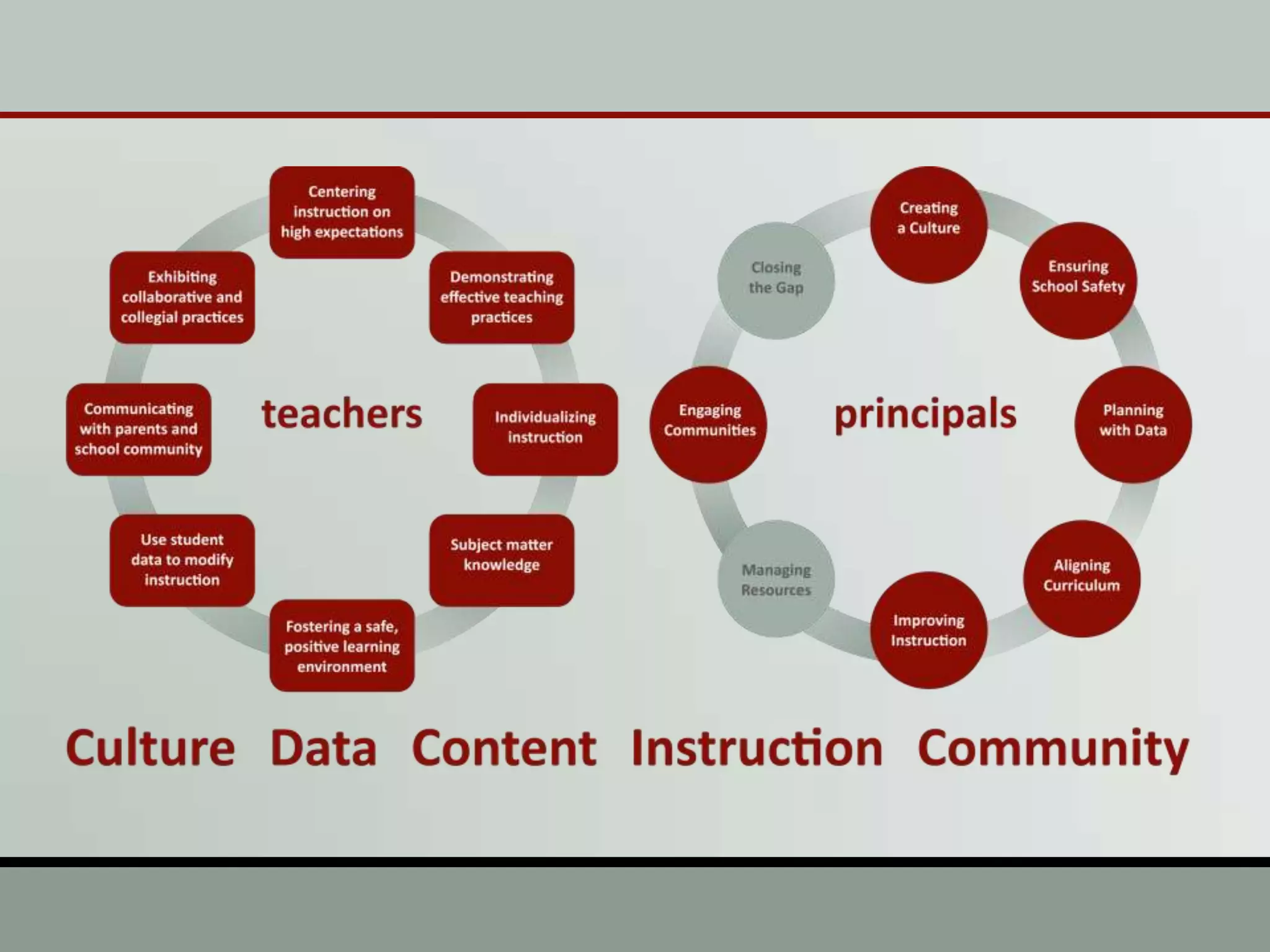
  • #22 Correlations here – teachers are fostering a safe and positive environment and principals are creating a school culture that makes that possibleTeachers are sharing professional practices and working together to improve teaching and learning and principals are creating a school culture that makes that possibleMaterials: laminated posters. These should have been posted around the room during set up. Process: Say – “In module 1 we learned about 6696 and the changes occurring in teacher and principal evaluation. In module 2 we’ll explore those changes, and what they mean for teachers and principals in greater detail. To begin this discussion, lets take a look at the connections between teacher and principal evaluation in the new system.”Direct attention to the “Teacher/Principal” connection posters around the room. Divide participants into equal groups at each poster. Have each group identify Teacher role? Principal role? How are they connected?Give the participants 5-7 minutes to brainstorm and then have each group report out. Close the activity with slide 10.
  • #27 Teachers and principals are mutually responsible for most elements of the work of teaching and learning. Principals are alone in being charged with closing the achievement gap and managing resources.
  • #47 Teachers and principals are mutually responsible for most elements of the work of teaching and learning. Principals are alone in being charged with closing the achievement gap and managing resources.