Writing Learning
Outcome Statements
Assessment Fellows Training
November 3, 2011
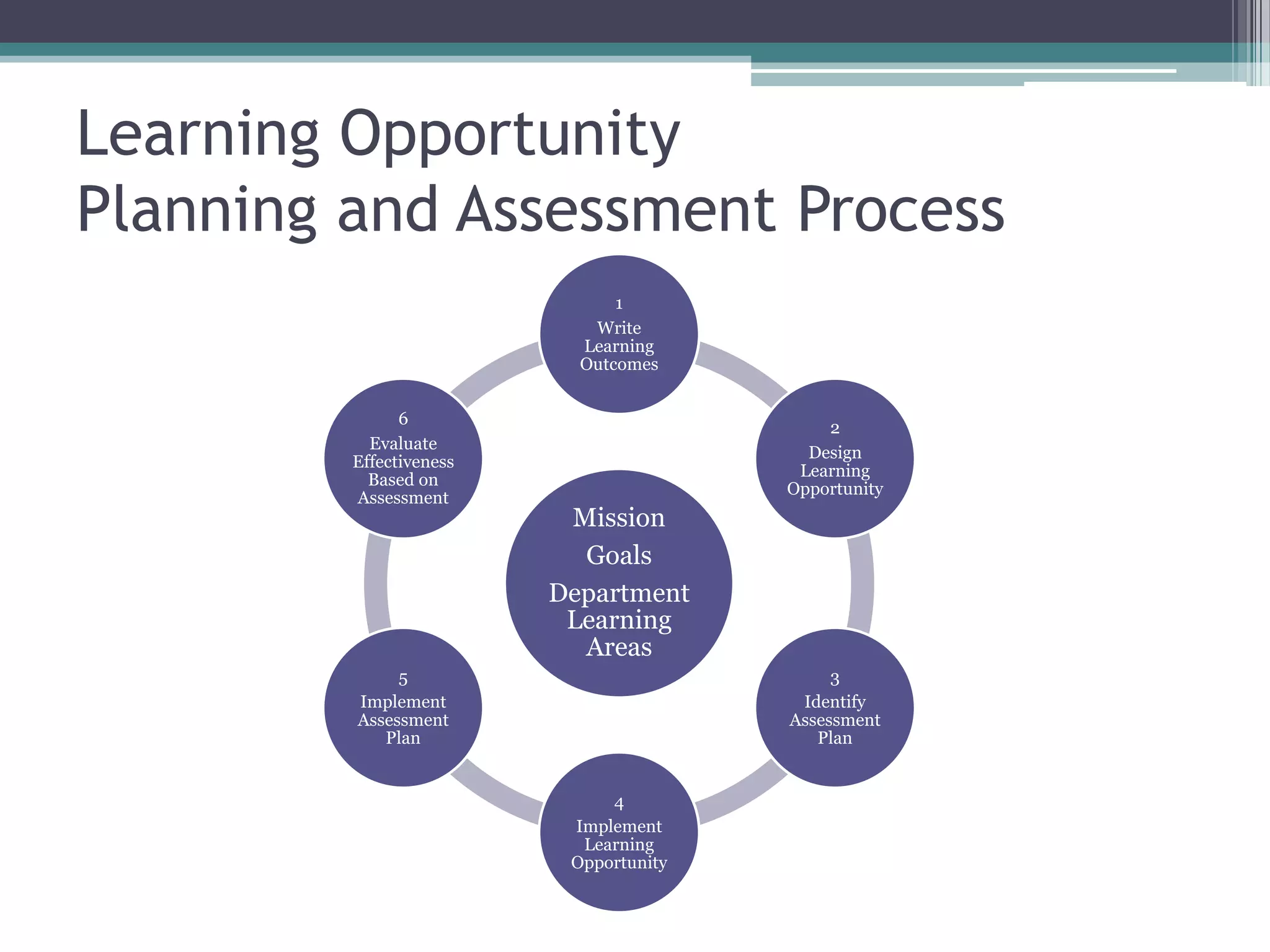
Learning Opportunity
Planning and Assessment Process
                               1
                            Write
                           Learning
                           Outcomes


               6
                                            2
           Evaluate
                                          Design
         Effectiveness
                                         Learning
           Based on
                                        Opportunity
         Assessment
                          Mission
                           Goals
                         Department
                          Learning
                           Areas
              5                              3
         Implement                       Identify
         Assessment                     Assessment
            Plan                           Plan


                              4
                          Implement
                           Learning
                          Opportunity
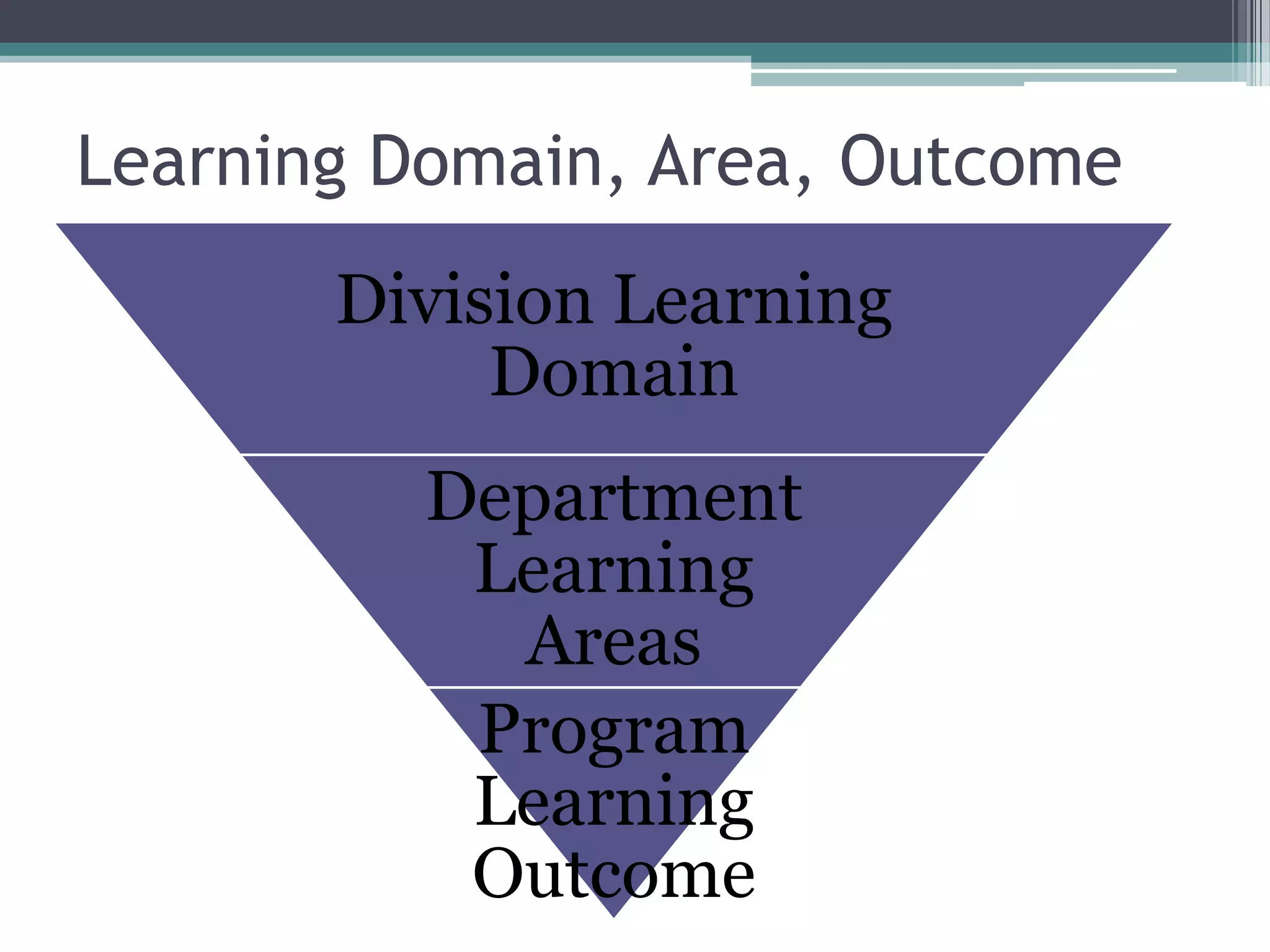
Learning Domain, Area, Outcome
       Division Learning
            Domain
         Department
          Learning
           Areas
          Program
          Learning
          Outcome
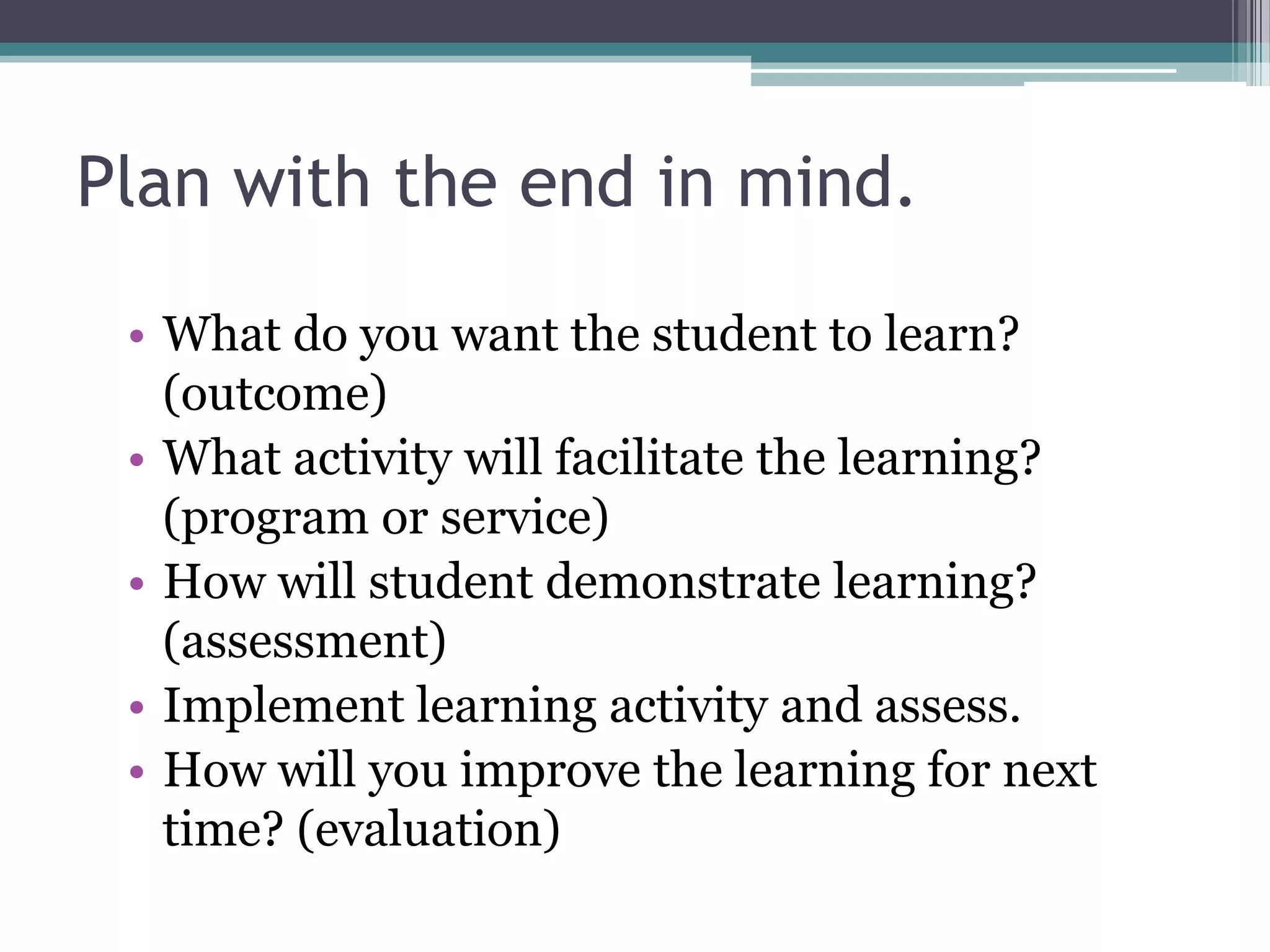
Plan with the end in mind.

 • What do you want the student to learn?
   (outcome)
 • What activity will facilitate the learning?
   (program or service)
 • How will student demonstrate learning?
   (assessment)
 • Implement learning activity and assess.
 • How will you improve the learning for next
   time? (evaluation)
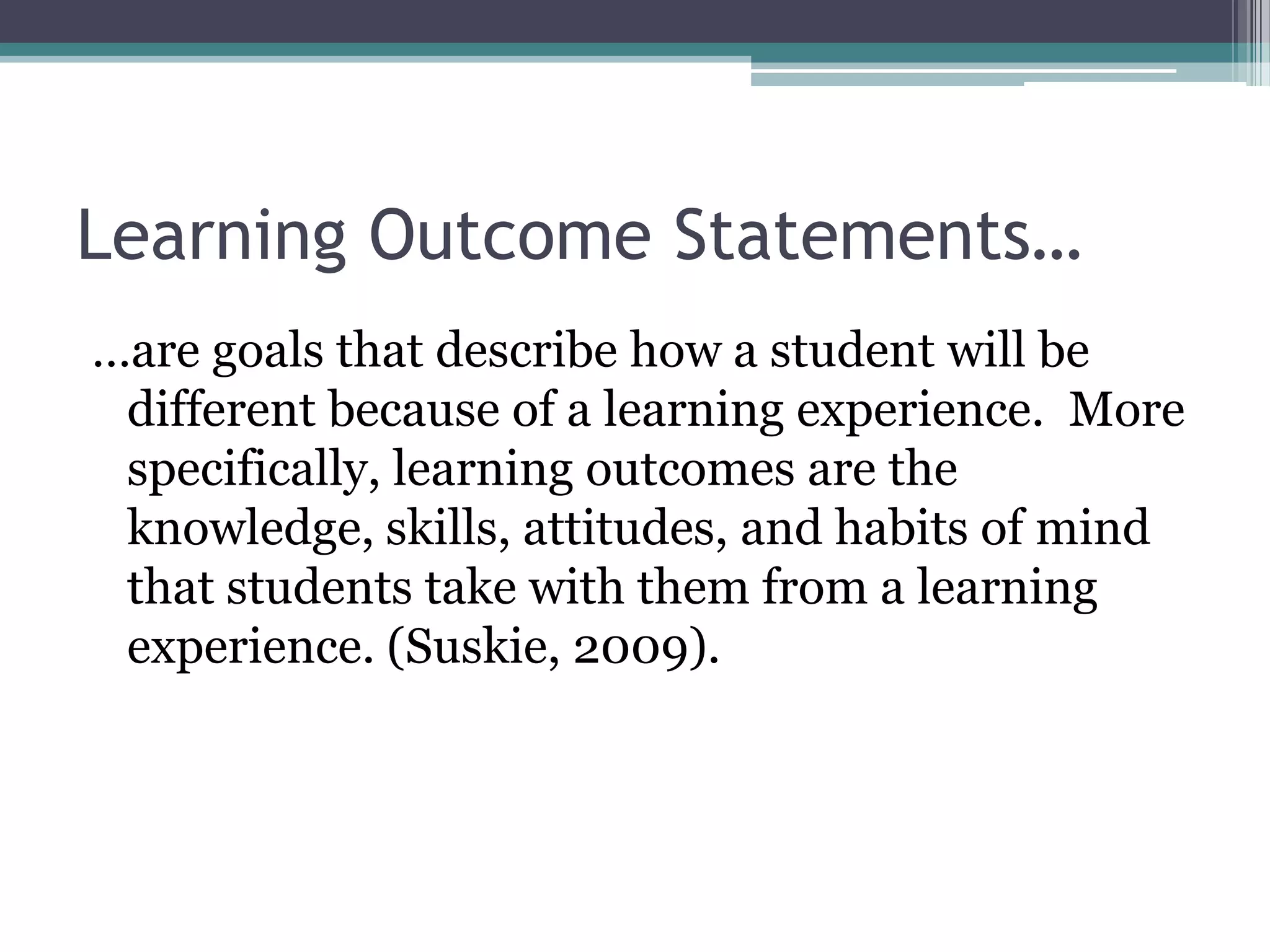
Learning Outcome Statements…
…are goals that describe how a student will be
 different because of a learning experience. More
 specifically, learning outcomes are the
 knowledge, skills, attitudes, and habits of mind
 that students take with them from a learning
 experience. (Suskie, 2009).
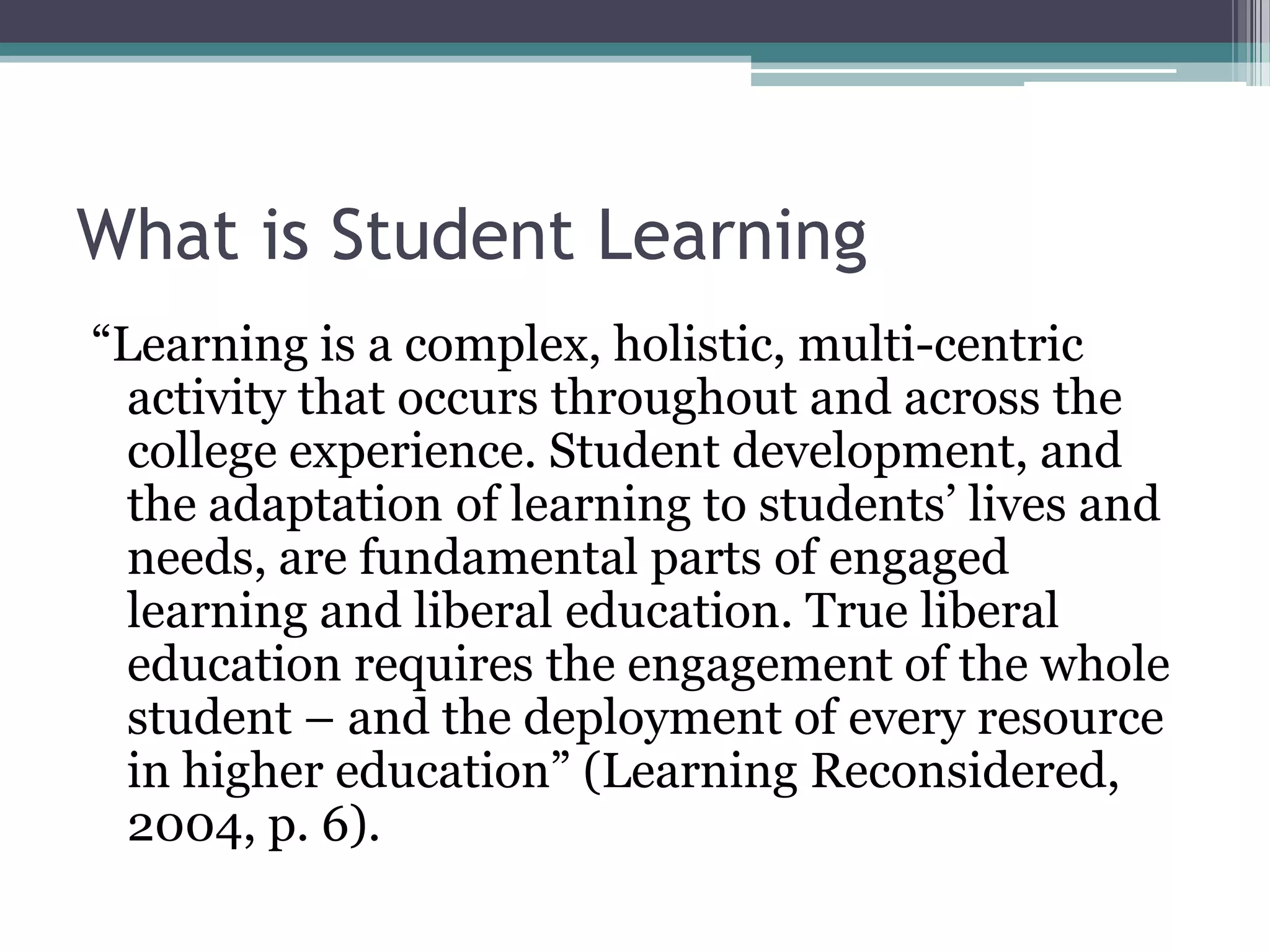
What is Student Learning
“Learning is a complex, holistic, multi-centric
  activity that occurs throughout and across the
  college experience. Student development, and
  the adaptation of learning to students’ lives and
  needs, are fundamental parts of engaged
  learning and liberal education. True liberal
  education requires the engagement of the whole
  student – and the deployment of every resource
  in higher education” (Learning Reconsidered,
  2004, p. 6).
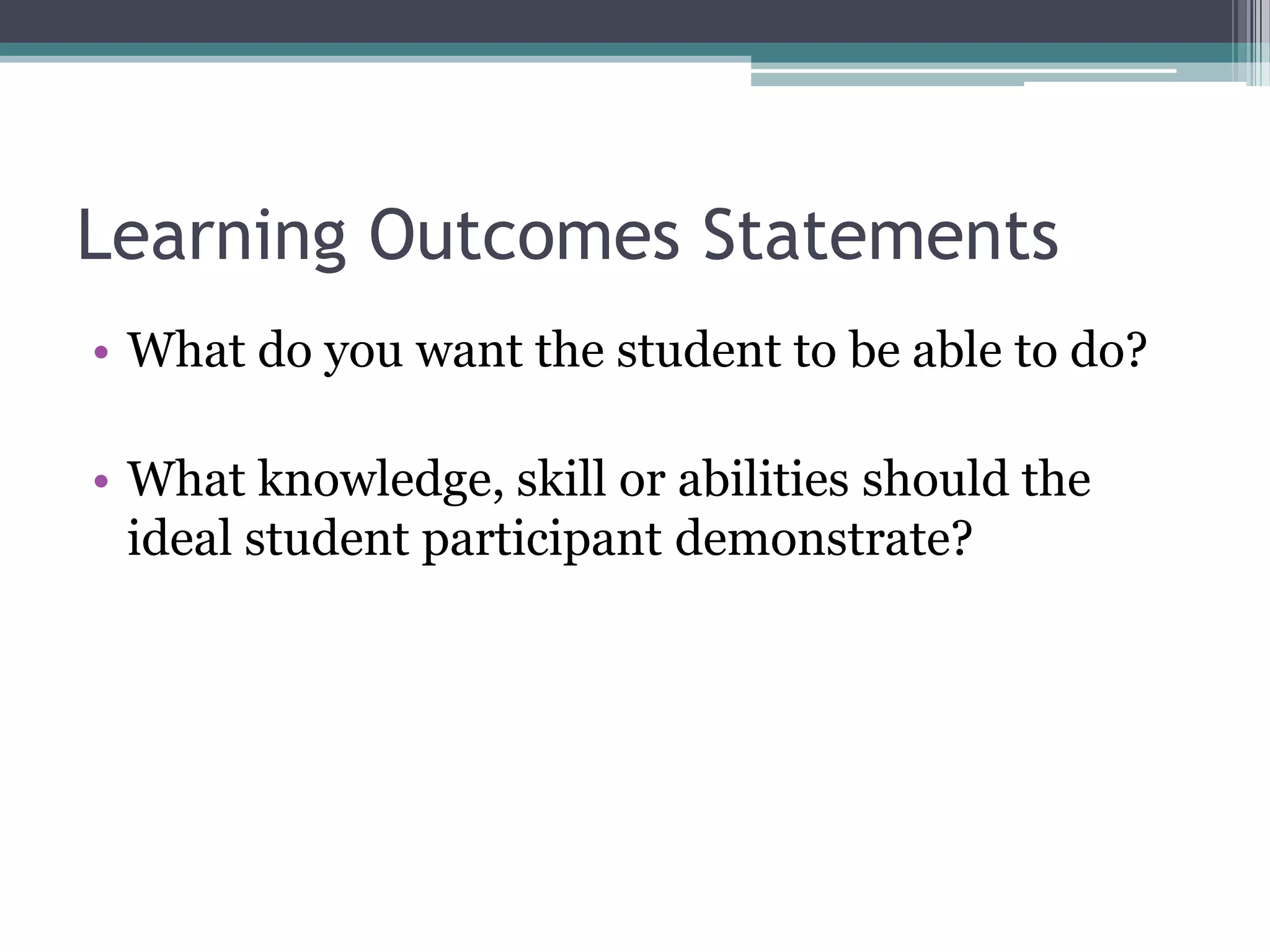
Learning Outcomes Statements
• What do you want the student to be able to do?

• What knowledge, skill or abilities should the
  ideal student participant demonstrate?
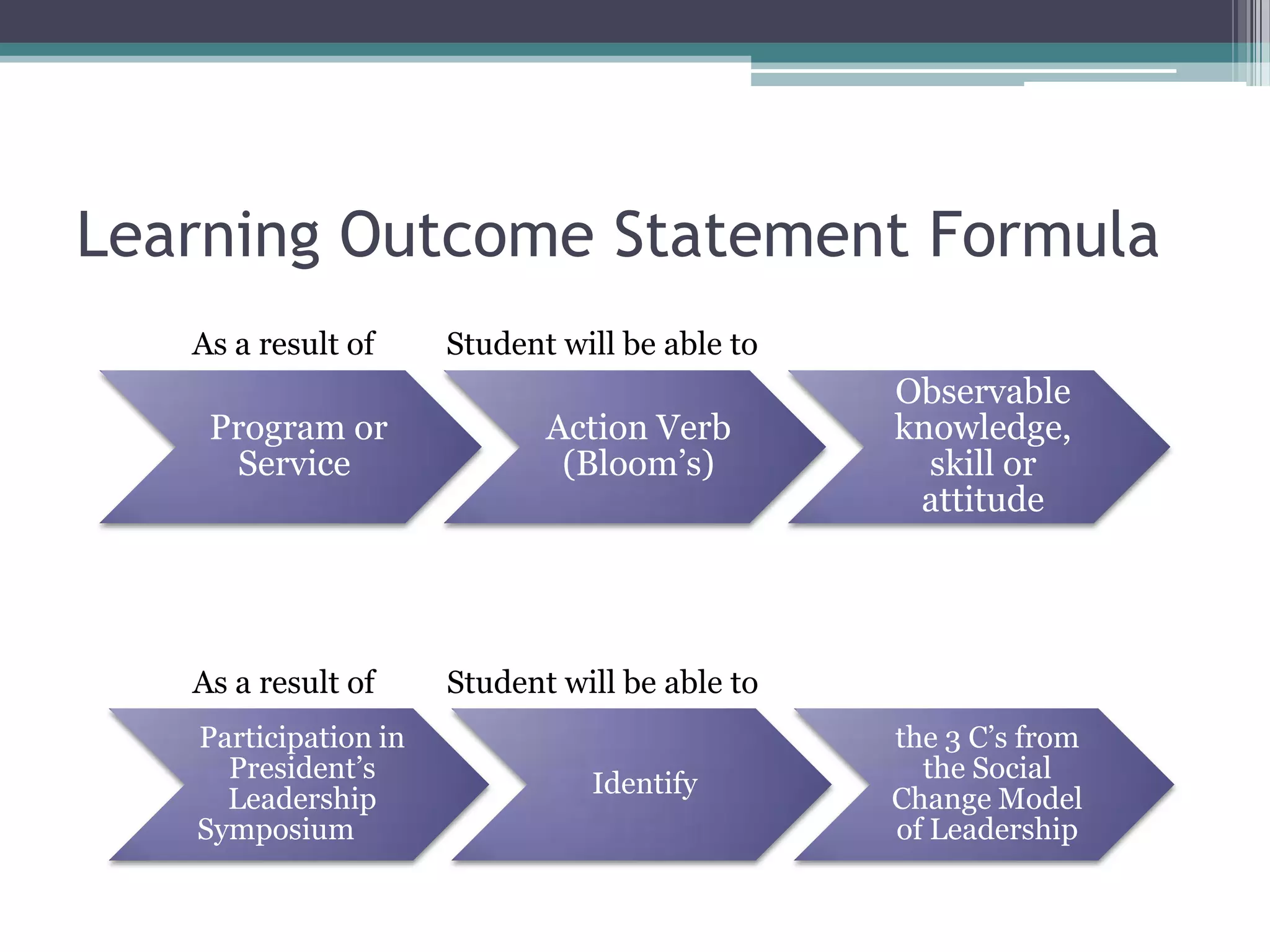
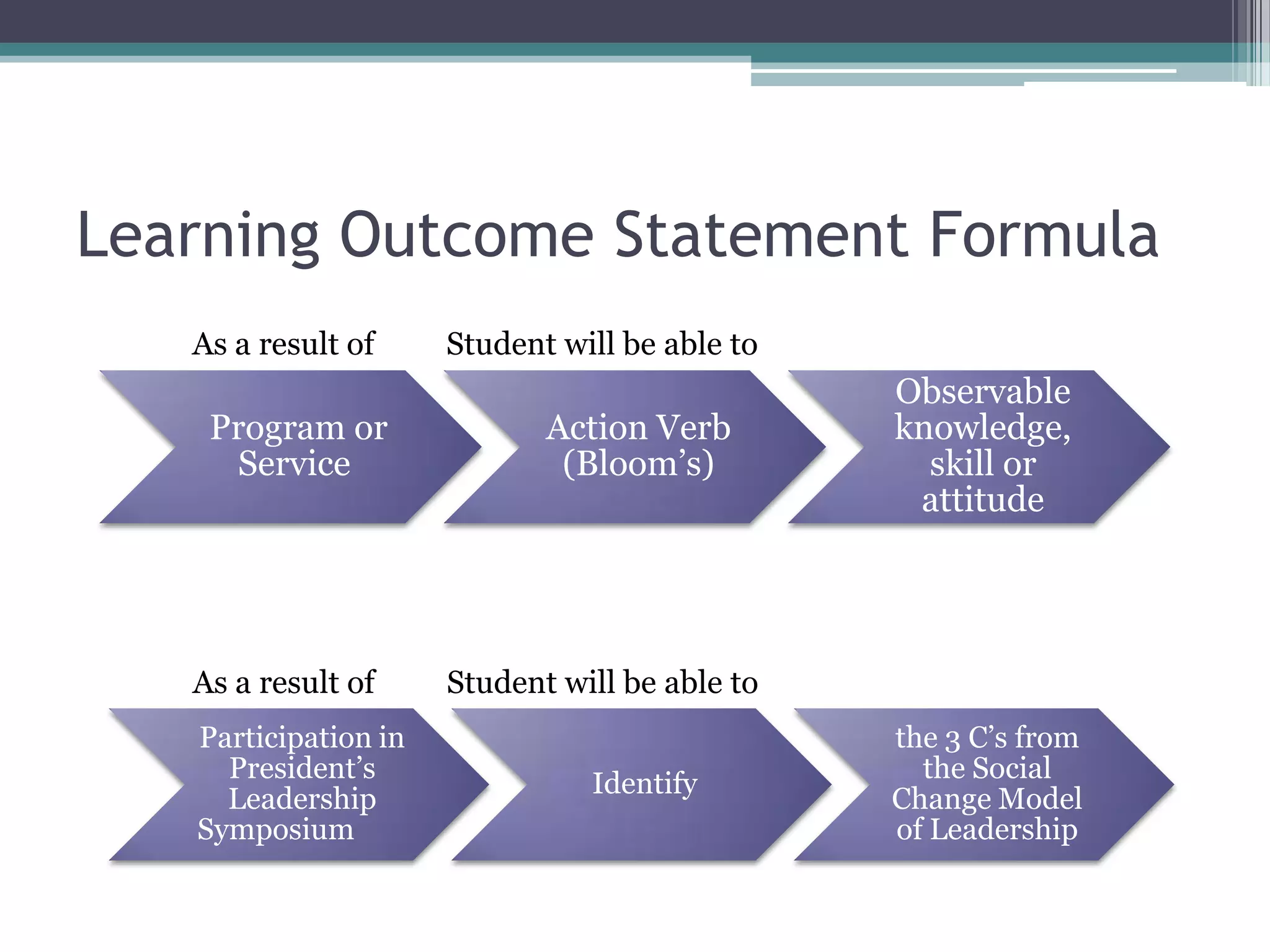
Learning Outcome Statement Formula
   As a result of     Student will be able to
                                                Observable
    Program or               Action Verb        knowledge,
     Service                  (Bloom’s)           skill or
                                                 attitude


   As a result of     Student will be able to
   Participation in                             the 3 C’s from
     President’s                                  the Social
                                Identify
     Leadership                                 Change Model
   Symposium                                    of Leadership
Bloom’s Taxonomy of Cognitive Skills

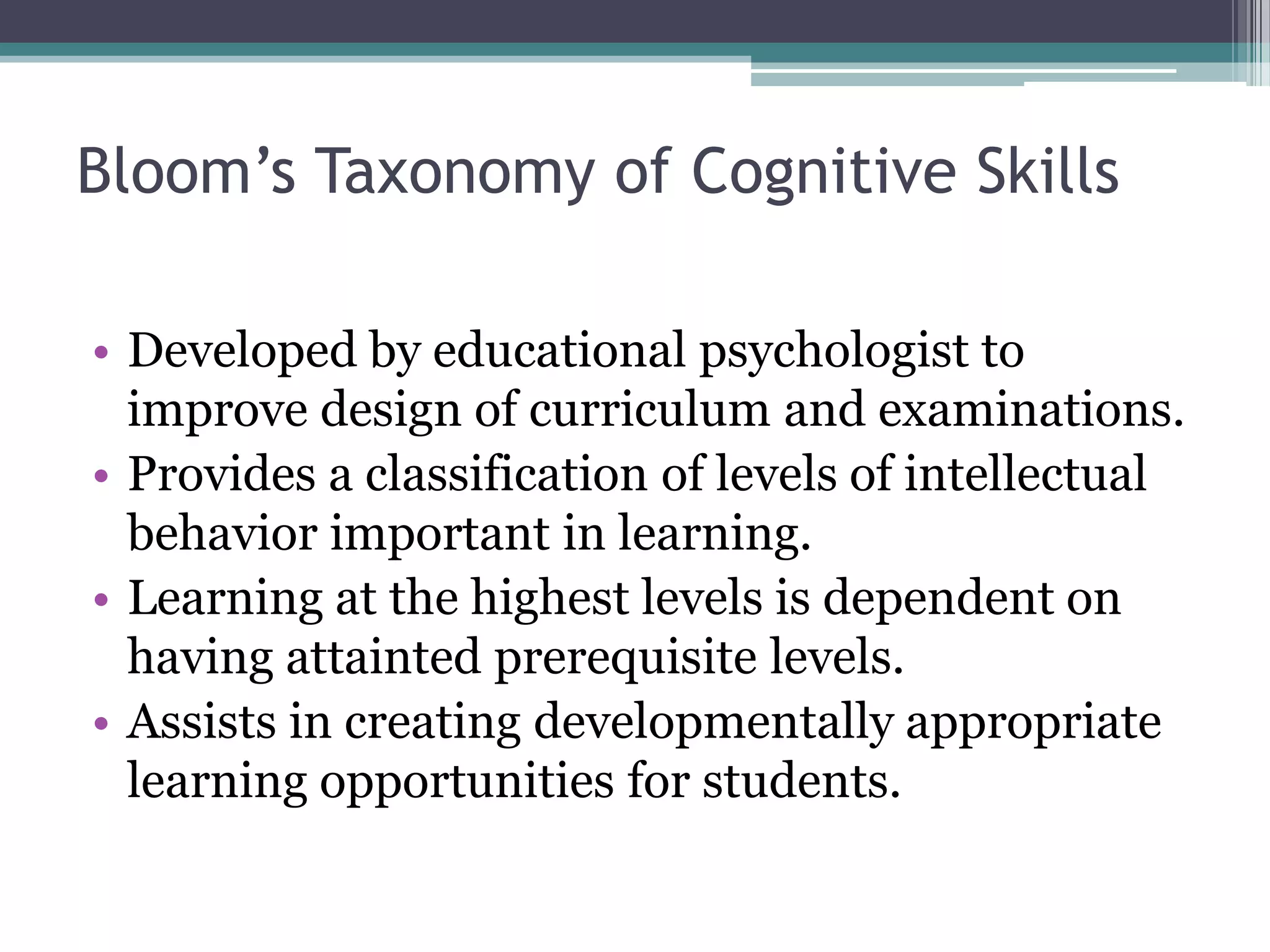
• Developed by educational psychologist to
  improve design of curriculum and examinations.
• Provides a classification of levels of intellectual
  behavior important in learning.
• Learning at the highest levels is dependent on
  having attainted prerequisite levels.
• Assists in creating developmentally appropriate
  learning opportunities for students.
Teaching in Bloom’s
• Document created to assist in writing outcome
  statements and designing learning opportunities
  to meet the desired outcome.
• Can be accessed on the SA Assessment Website
Learning Outcome Statement Formula
   As a result of     Student will be able to
                                                Observable
    Program or               Action Verb        knowledge,
     Service                  (Bloom’s)           skill or
                                                 attitude


   As a result of     Student will be able to
   Participation in                             the 3 C’s from
     President’s                                  the Social
                                Identify
     Leadership                                 Change Model
   Symposium                                    of Leadership
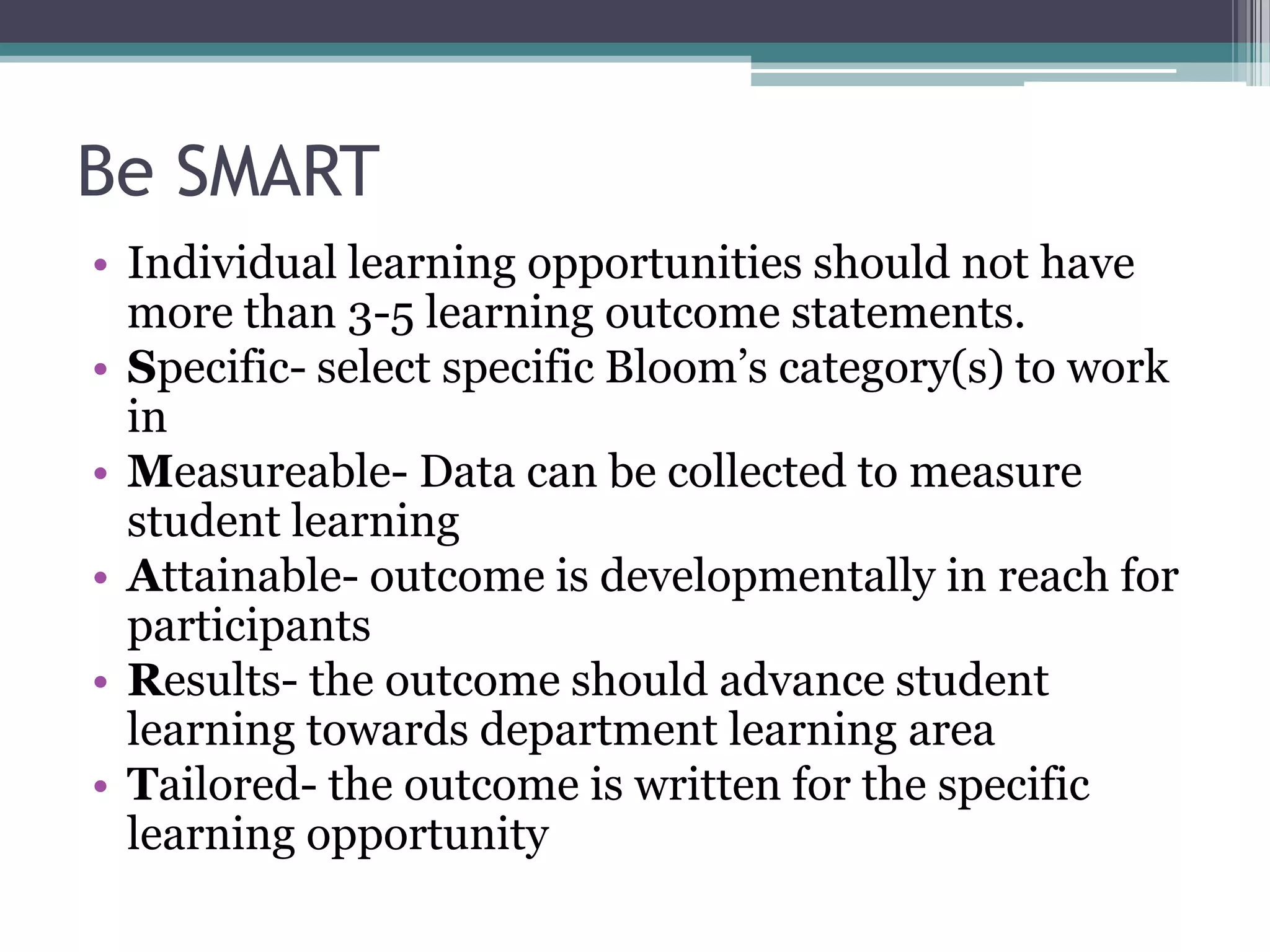
Be SMART
• Individual learning opportunities should not have
  more than 3-5 learning outcome statements.
• Specific- select specific Bloom’s category(s) to work
  in
• Measureable- Data can be collected to measure
  student learning
• Attainable- outcome is developmentally in reach for
  participants
• Results- the outcome should advance student
  learning towards department learning area
• Tailored- the outcome is written for the specific
  learning opportunity
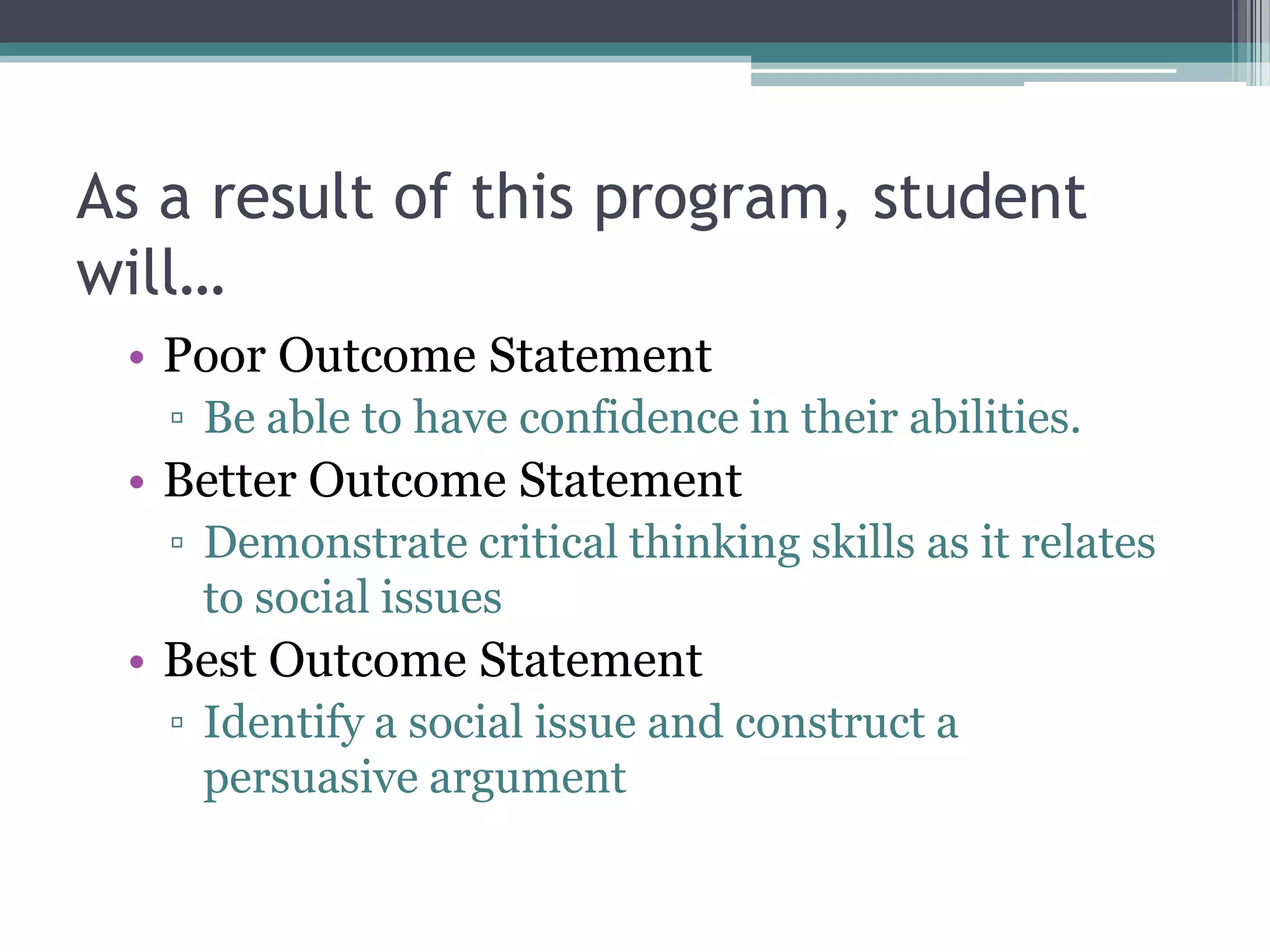
As a result of this program, student
will…
 • Poor Outcome Statement
   ▫ Be able to have confidence in their abilities.
 • Better Outcome Statement
   ▫ Demonstrate critical thinking skills as it relates
     to social issues
 • Best Outcome Statement
   ▫ Identify a social issue and construct a
     persuasive argument
Practice
Complete worksheet on writing
learning outcome statements.
Coaching Task
• What type of reflective practice is needed to
  construct learning outcome statements?
• What barriers do you perceive to coaching on
  writing learning outcome statements?
• What processes or outreach do you need to do
  with colleagues so you can provide coaching on
  writing learning outcome statements?
• What resources can you identify to assist you?

Writing learning outcome statements

  • 1.
    Writing Learning Outcome Statements AssessmentFellows Training November 3, 2011
  • 2.
    Learning Opportunity Planning andAssessment Process 1 Write Learning Outcomes 6 2 Evaluate Design Effectiveness Learning Based on Opportunity Assessment Mission Goals Department Learning Areas 5 3 Implement Identify Assessment Assessment Plan Plan 4 Implement Learning Opportunity
  • 3.
    Learning Domain, Area,Outcome Division Learning Domain Department Learning Areas Program Learning Outcome
  • 4.
    Plan with theend in mind. • What do you want the student to learn? (outcome) • What activity will facilitate the learning? (program or service) • How will student demonstrate learning? (assessment) • Implement learning activity and assess. • How will you improve the learning for next time? (evaluation)
  • 5.
    Learning Outcome Statements… …aregoals that describe how a student will be different because of a learning experience. More specifically, learning outcomes are the knowledge, skills, attitudes, and habits of mind that students take with them from a learning experience. (Suskie, 2009).
  • 6.
    What is StudentLearning “Learning is a complex, holistic, multi-centric activity that occurs throughout and across the college experience. Student development, and the adaptation of learning to students’ lives and needs, are fundamental parts of engaged learning and liberal education. True liberal education requires the engagement of the whole student – and the deployment of every resource in higher education” (Learning Reconsidered, 2004, p. 6).
  • 7.
    Learning Outcomes Statements •What do you want the student to be able to do? • What knowledge, skill or abilities should the ideal student participant demonstrate?
  • 8.
    Learning Outcome StatementFormula As a result of Student will be able to Observable Program or Action Verb knowledge, Service (Bloom’s) skill or attitude As a result of Student will be able to Participation in the 3 C’s from President’s the Social Identify Leadership Change Model Symposium of Leadership
  • 9.
    Bloom’s Taxonomy ofCognitive Skills • Developed by educational psychologist to improve design of curriculum and examinations. • Provides a classification of levels of intellectual behavior important in learning. • Learning at the highest levels is dependent on having attainted prerequisite levels. • Assists in creating developmentally appropriate learning opportunities for students.
  • 10.
    Teaching in Bloom’s •Document created to assist in writing outcome statements and designing learning opportunities to meet the desired outcome. • Can be accessed on the SA Assessment Website
  • 11.
    Learning Outcome StatementFormula As a result of Student will be able to Observable Program or Action Verb knowledge, Service (Bloom’s) skill or attitude As a result of Student will be able to Participation in the 3 C’s from President’s the Social Identify Leadership Change Model Symposium of Leadership
  • 12.
    Be SMART • Individuallearning opportunities should not have more than 3-5 learning outcome statements. • Specific- select specific Bloom’s category(s) to work in • Measureable- Data can be collected to measure student learning • Attainable- outcome is developmentally in reach for participants • Results- the outcome should advance student learning towards department learning area • Tailored- the outcome is written for the specific learning opportunity
  • 13.
    As a resultof this program, student will… • Poor Outcome Statement ▫ Be able to have confidence in their abilities. • Better Outcome Statement ▫ Demonstrate critical thinking skills as it relates to social issues • Best Outcome Statement ▫ Identify a social issue and construct a persuasive argument
  • 14.
    Practice Complete worksheet onwriting learning outcome statements.
  • 15.
    Coaching Task • Whattype of reflective practice is needed to construct learning outcome statements? • What barriers do you perceive to coaching on writing learning outcome statements? • What processes or outreach do you need to do with colleagues so you can provide coaching on writing learning outcome statements? • What resources can you identify to assist you?