

Writing Development Through 
Literature 
According to the National Council of Teachers 
of English (1983) 
Students should learn; 
 to write clearly and honestly; 
 to recognize that writing is a way to learn 
and develop personally to communicate 
with others; 
 to find ways to generate ideas from 
others; 
 to evaluate and revise what have written;
 to adapt expression to various 
audiences; 
 to master techniques; 
 to develop their talents for creative 
and imaginative expression; 
 and to recognize that precision in 
punctuation, capitalization, spelling 
and other elements.
Rich Environment is necessary 
for the development of the 
writing skills of the learner. 
A key factor in the environment 
is a TEACHER.
Environment (According to Murray 1973), an 
educational environment that fosters creativity 
allows children to progress. 
1. First, children need to develop an awareness of life. This 
means developing sensitivity in the environment through 
activities in which they experience visual stimulation, 
sounds, smells, tastes, movements, and feelings. 
2. Second, the environment should encourage children to care 
about others. 
3. Third, the environment should allow time for children to 
consider new awareness. Some children may need much 
longer time before he/ she write a piece that demonstrates 
feeling and originality. 
4. Fourth, the environment should allow children to make their 
own discoveries. They need opportunities to ask questions 
and find answers.
5. Fifth, the environment should stimulate writers to create 
meaning with words. The teacher must provide many 
opportunities to try various types of writing in all content areas 
and provide guidelines for writing. 
6. Sixth, the environment should allow for the development of 
detachment, so the authors can involve themselves in the 
evaluation process through reexamination and rewriting of the 
creations until they most effectively portray the feelings and 
meanings. 
7. Finally, the environment should allow writers opportunities to 
test the effectiveness of their communication. Something 
wonderful happens when a child’s finished product expresses the 
child’s feelings effectively and meets with awe and pleasure from 
an audience.
Stages of Writing 
Development
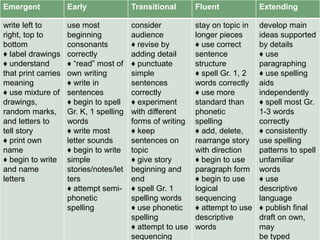
Emergent Early Transitional Fluent Extending 
write left to 
right, top to 
bottom 
♦ label drawings 
♦ understand 
that print carries 
meaning 
♦ use mixture of 
drawings, 
random marks, 
and letters to 
tell story 
♦ print own 
name 
♦ begin to write 
and name 
letters 
use most 
beginning 
consonants 
correctly 
♦ “read” most of 
own writing 
♦ write in 
sentences 
♦ begin to spell 
Gr. K, 1 spelling 
words 
♦ write most 
letter sounds 
♦ begin to write 
simple 
stories/notes/let 
ters 
♦ attempt semi-phonetic 
spelling 
consider 
audience 
♦ revise by 
adding detail 
♦ punctuate 
simple 
sentences 
correctly 
♦ experiment 
with different 
forms of writing 
♦ keep 
sentences on 
topic 
♦ give story 
beginning and 
end 
♦ spell Gr. 1 
spelling words 
♦ use phonetic 
spelling 
♦ attempt to use 
sequencing 
stay on topic in 
longer pieces 
♦ use correct 
sentence 
structure 
♦ spell Gr. 1, 2 
words correctly 
♦ use more 
standard than 
phonetic 
spelling 
♦ add, delete, 
rearrange story 
with direction 
♦ begin to use 
paragraph form 
♦ begin to use 
logical 
sequencing 
♦ attempt to use 
descriptive 
words 
develop main 
ideas supported 
by details 
♦ use 
paragraphing 
♦ use spelling 
aids 
independently 
♦ spell most Gr. 
1-3 words 
correctly 
♦ consistently 
use spelling 
patterns to spell 
unfamiliar 
words 
♦ use 
descriptive 
language 
♦ publish final 
draft on own, 
may 
be typed
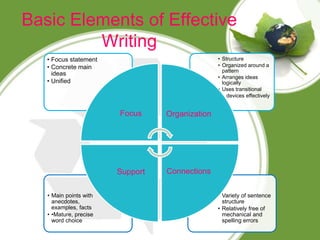
Basic Elements of Effective 
Writing 
• Variety of sentence 
structure 
• Relatively free of 
mechanical and 
spelling errors 
• Main points with 
anecdotes, 
examples, facts 
• •Mature, precise 
word choice 
• Structure 
• Organized around a 
pattern 
• Arranges ideas 
logically 
• Uses transitional 
• devices effectively 
• Focus statement 
• Concrete main 
ideas 
• Unified 
Focus Organization 
Support Connections
Three Models of 
Writing Development in 
Literature
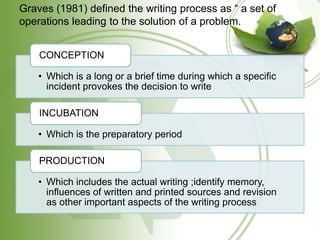
Graves (1981) defined the writing process as “ a set of 
operations leading to the solution of a problem. 
CONCEPTION 
• Which is a long or a brief time during which a specific 
incident provokes the decision to write 
INCUBATION 
• Which is the preparatory period 
PRODUCTION 
• Which includes the actual writing ;identify memory, 
influences of written and printed sources and revision 
as other important aspects of the writing process
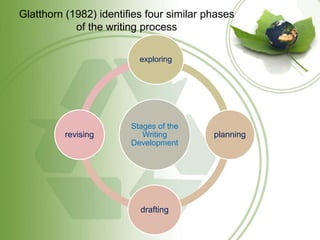
Glatthorn (1982) identifies four similar phases 
of the writing process 
exploring 
Stages of the 
Writing 
Development 
planning 
drafting 
revising
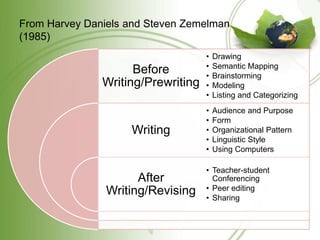
From Harvey Daniels and Steven Zemelman 
(1985) 
Before 
Writing/Prewriting 
Writing 
After 
Writing/Revising 
• Drawing 
• Semantic Mapping 
• Brainstorming 
• Modeling 
• Listing and Categorizing 
• Audience and Purpose 
• Form 
• Organizational Pattern 
• Linguistic Style 
• Using Computers 
• Teacher-student 
Conferencing 
• Peer editing 
• Sharing
THANK YOU FOR LISTENING. 
REPORTER: 
FELICIDAD R. ADAN
Template Provided By 
www.animationfactory.com 
500,000 Downloadable PowerPoint Templates, 
Animated Clip Art, Backgrounds and Videos

Writing development through literature : Stages and Elements of

  • 1.
    Writing Development Through Literature According to the National Council of Teachers of English (1983) Students should learn;  to write clearly and honestly;  to recognize that writing is a way to learn and develop personally to communicate with others;  to find ways to generate ideas from others;  to evaluate and revise what have written;
  • 2.
     to adaptexpression to various audiences;  to master techniques;  to develop their talents for creative and imaginative expression;  and to recognize that precision in punctuation, capitalization, spelling and other elements.
  • 3.
    Rich Environment isnecessary for the development of the writing skills of the learner. A key factor in the environment is a TEACHER.
  • 4.
    Environment (According toMurray 1973), an educational environment that fosters creativity allows children to progress. 1. First, children need to develop an awareness of life. This means developing sensitivity in the environment through activities in which they experience visual stimulation, sounds, smells, tastes, movements, and feelings. 2. Second, the environment should encourage children to care about others. 3. Third, the environment should allow time for children to consider new awareness. Some children may need much longer time before he/ she write a piece that demonstrates feeling and originality. 4. Fourth, the environment should allow children to make their own discoveries. They need opportunities to ask questions and find answers.
  • 5.
    5. Fifth, theenvironment should stimulate writers to create meaning with words. The teacher must provide many opportunities to try various types of writing in all content areas and provide guidelines for writing. 6. Sixth, the environment should allow for the development of detachment, so the authors can involve themselves in the evaluation process through reexamination and rewriting of the creations until they most effectively portray the feelings and meanings. 7. Finally, the environment should allow writers opportunities to test the effectiveness of their communication. Something wonderful happens when a child’s finished product expresses the child’s feelings effectively and meets with awe and pleasure from an audience.
  • 6.
    Stages of Writing Development
  • 7.
    Emergent Early TransitionalFluent Extending write left to right, top to bottom ♦ label drawings ♦ understand that print carries meaning ♦ use mixture of drawings, random marks, and letters to tell story ♦ print own name ♦ begin to write and name letters use most beginning consonants correctly ♦ “read” most of own writing ♦ write in sentences ♦ begin to spell Gr. K, 1 spelling words ♦ write most letter sounds ♦ begin to write simple stories/notes/let ters ♦ attempt semi-phonetic spelling consider audience ♦ revise by adding detail ♦ punctuate simple sentences correctly ♦ experiment with different forms of writing ♦ keep sentences on topic ♦ give story beginning and end ♦ spell Gr. 1 spelling words ♦ use phonetic spelling ♦ attempt to use sequencing stay on topic in longer pieces ♦ use correct sentence structure ♦ spell Gr. 1, 2 words correctly ♦ use more standard than phonetic spelling ♦ add, delete, rearrange story with direction ♦ begin to use paragraph form ♦ begin to use logical sequencing ♦ attempt to use descriptive words develop main ideas supported by details ♦ use paragraphing ♦ use spelling aids independently ♦ spell most Gr. 1-3 words correctly ♦ consistently use spelling patterns to spell unfamiliar words ♦ use descriptive language ♦ publish final draft on own, may be typed
  • 8.
    Basic Elements ofEffective Writing • Variety of sentence structure • Relatively free of mechanical and spelling errors • Main points with anecdotes, examples, facts • •Mature, precise word choice • Structure • Organized around a pattern • Arranges ideas logically • Uses transitional • devices effectively • Focus statement • Concrete main ideas • Unified Focus Organization Support Connections
  • 9.
    Three Models of Writing Development in Literature
  • 10.
    Graves (1981) definedthe writing process as “ a set of operations leading to the solution of a problem. CONCEPTION • Which is a long or a brief time during which a specific incident provokes the decision to write INCUBATION • Which is the preparatory period PRODUCTION • Which includes the actual writing ;identify memory, influences of written and printed sources and revision as other important aspects of the writing process
  • 11.
    Glatthorn (1982) identifiesfour similar phases of the writing process exploring Stages of the Writing Development planning drafting revising
  • 12.
    From Harvey Danielsand Steven Zemelman (1985) Before Writing/Prewriting Writing After Writing/Revising • Drawing • Semantic Mapping • Brainstorming • Modeling • Listing and Categorizing • Audience and Purpose • Form • Organizational Pattern • Linguistic Style • Using Computers • Teacher-student Conferencing • Peer editing • Sharing
  • 13.
    THANK YOU FORLISTENING. REPORTER: FELICIDAD R. ADAN
  • 14.
    Template Provided By www.animationfactory.com 500,000 Downloadable PowerPoint Templates, Animated Clip Art, Backgrounds and Videos