BY: SRUSHTI.S
SBR PU
WHAT IS POPULATION?
Population is all the organism belonging to same
group or specie, in a particular geographical area.
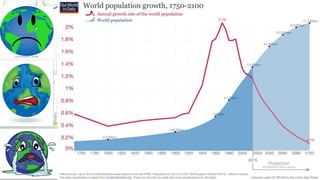
Human population growth is subject for major concern
as it is affecting economic, environmental and social
issues of the world. As human population is growing
rapidly, urgent steps should be taken in order to
prevent the foreseen problems including food scarcity.
Even though, various technologies have been made in
order to meet the need of this large population, this
would not suit in a long run.
July 11 every year is celebrated as
world population day. This day is
celebrated in order to raise
awareness among the people about
global population issues.
This event was started
on public interest in year 1989, as
the population had reached 5 billion
two years earlier. The U.N program
started this day to warn us the evil
effects of overpopulation. The
primary concern for observing this
day was to
find the solution for ever growing
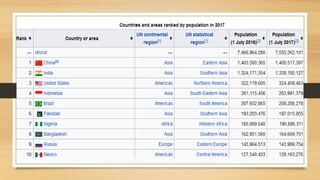
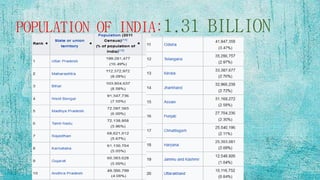
POPULATION OF INDIA:1.31 BILLION
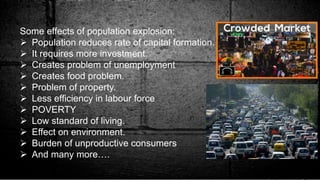
Some effects of population explosion:
 Population reduces rate of capital formation.
 It requires more investment.
 Creates problem of unemployment
 Creates food problem.
 Problem of property.
 Less efficiency in labour force
 POVERTY
 Low standard of living.
 Effect on environment.
 Burden of unproductive consumers
 And many more….
HISTORY:
• India, in fact, was the first country to have a population
policy, which was introduced in 1952, and is now known
as the ‘First Five Year Plan’. This plan was introduced as
a response to decreasing mortality rates subsequent
population boom. The 1950′s method was known as the
‘clinical approach’. Family planning clinics were built in
hopes that people would utilize them, however this plan
failed as parents had no incentives to attend these
clinics.
• In the 1970’s, a more focused effort was being directed
by the government to decrease population growth. The
Medical Termination of Pregnancy Act of 1971 allowed
for abortions performed by a medical practitioner within
the first three months of pregnancy, except in the states
of Jammu and Kashmir, which are majority Muslim.
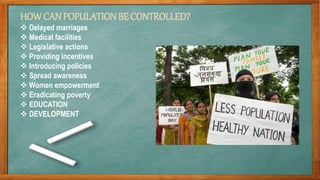
HOWCAN POPULATIONBE CONTROLLED?
 Delayed marriages
 Medical facilities
 Legislative actions
 Providing incentives
 Introducing policies
 Spread awareness
 Women empowerment
 Eradicating poverty
 EDUCATION
 DEVELOPMENT
Measures taken by various countries to control
population
 China’s one child policy.
 India: states have made having more than two
children a disqualification from holding
public office.
 Uzbekistan :In order to control population, the
government has instituted a policy of forced
sterilizations of women after their second
child.
 Pakistan: Authorities are promoting child
spacing by encouraging 3 years between
babies
THANK YOU.

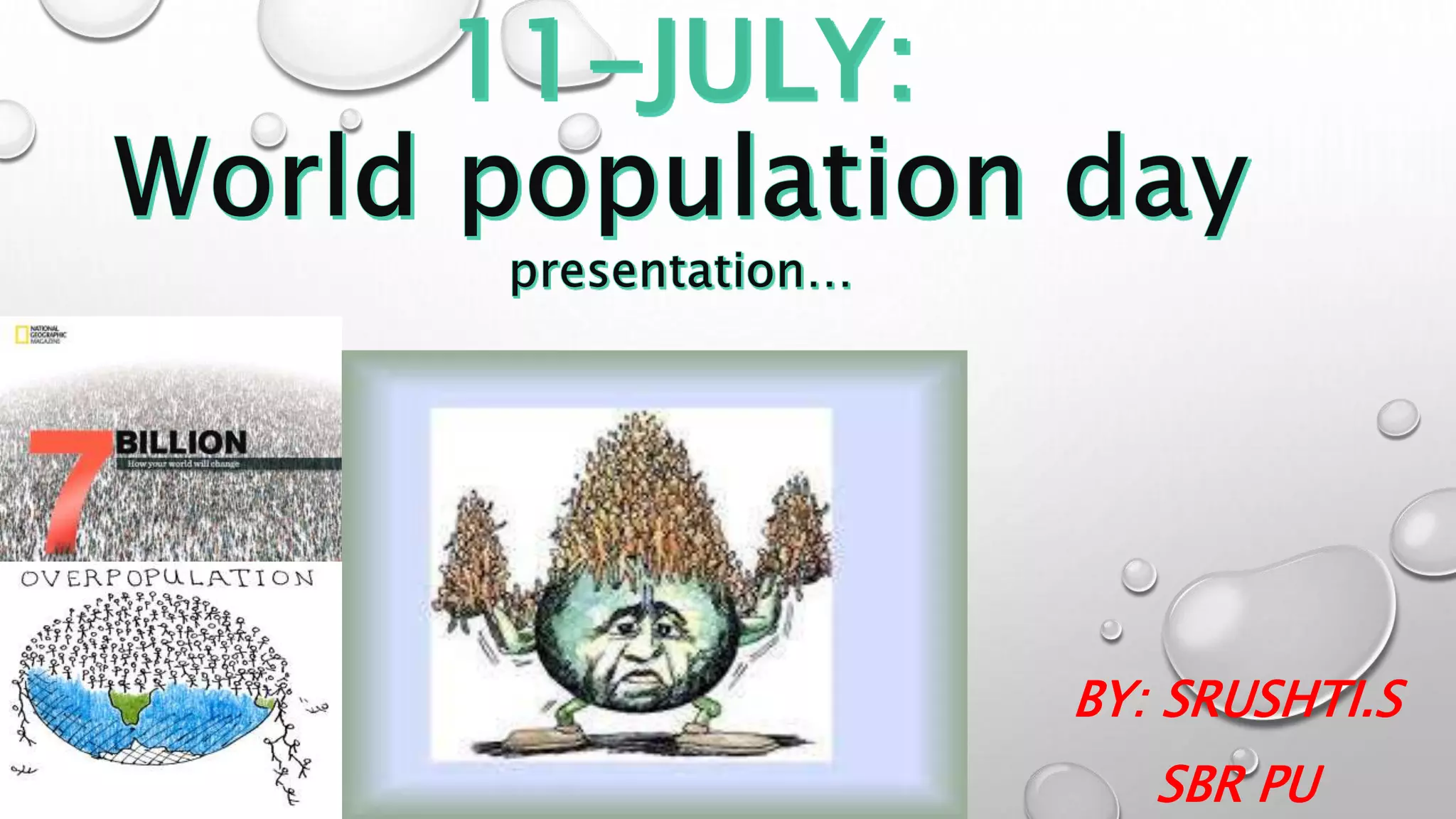
world population day

  • 1.
  • 2.
    WHAT IS POPULATION? Populationis all the organism belonging to same group or specie, in a particular geographical area. Human population growth is subject for major concern as it is affecting economic, environmental and social issues of the world. As human population is growing rapidly, urgent steps should be taken in order to prevent the foreseen problems including food scarcity. Even though, various technologies have been made in order to meet the need of this large population, this would not suit in a long run.
  • 3.
    July 11 everyyear is celebrated as world population day. This day is celebrated in order to raise awareness among the people about global population issues. This event was started on public interest in year 1989, as the population had reached 5 billion two years earlier. The U.N program started this day to warn us the evil effects of overpopulation. The primary concern for observing this day was to find the solution for ever growing
  • 5.
  • 6.
    Some effects ofpopulation explosion:  Population reduces rate of capital formation.  It requires more investment.  Creates problem of unemployment  Creates food problem.  Problem of property.  Less efficiency in labour force  POVERTY  Low standard of living.  Effect on environment.  Burden of unproductive consumers  And many more….
  • 7.
    HISTORY: • India, infact, was the first country to have a population policy, which was introduced in 1952, and is now known as the ‘First Five Year Plan’. This plan was introduced as a response to decreasing mortality rates subsequent population boom. The 1950′s method was known as the ‘clinical approach’. Family planning clinics were built in hopes that people would utilize them, however this plan failed as parents had no incentives to attend these clinics. • In the 1970’s, a more focused effort was being directed by the government to decrease population growth. The Medical Termination of Pregnancy Act of 1971 allowed for abortions performed by a medical practitioner within the first three months of pregnancy, except in the states of Jammu and Kashmir, which are majority Muslim.
  • 9.
    HOWCAN POPULATIONBE CONTROLLED? Delayed marriages  Medical facilities  Legislative actions  Providing incentives  Introducing policies  Spread awareness  Women empowerment  Eradicating poverty  EDUCATION  DEVELOPMENT
  • 10.
    Measures taken byvarious countries to control population  China’s one child policy.  India: states have made having more than two children a disqualification from holding public office.  Uzbekistan :In order to control population, the government has instituted a policy of forced sterilizations of women after their second child.  Pakistan: Authorities are promoting child spacing by encouraging 3 years between babies
  • 11.