Presenter: Muhammad Saeed Anwar
Class: BCS(2A)
Reference No. :BCS203227
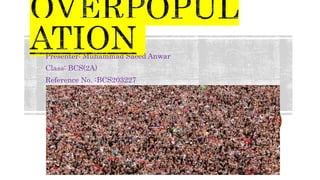
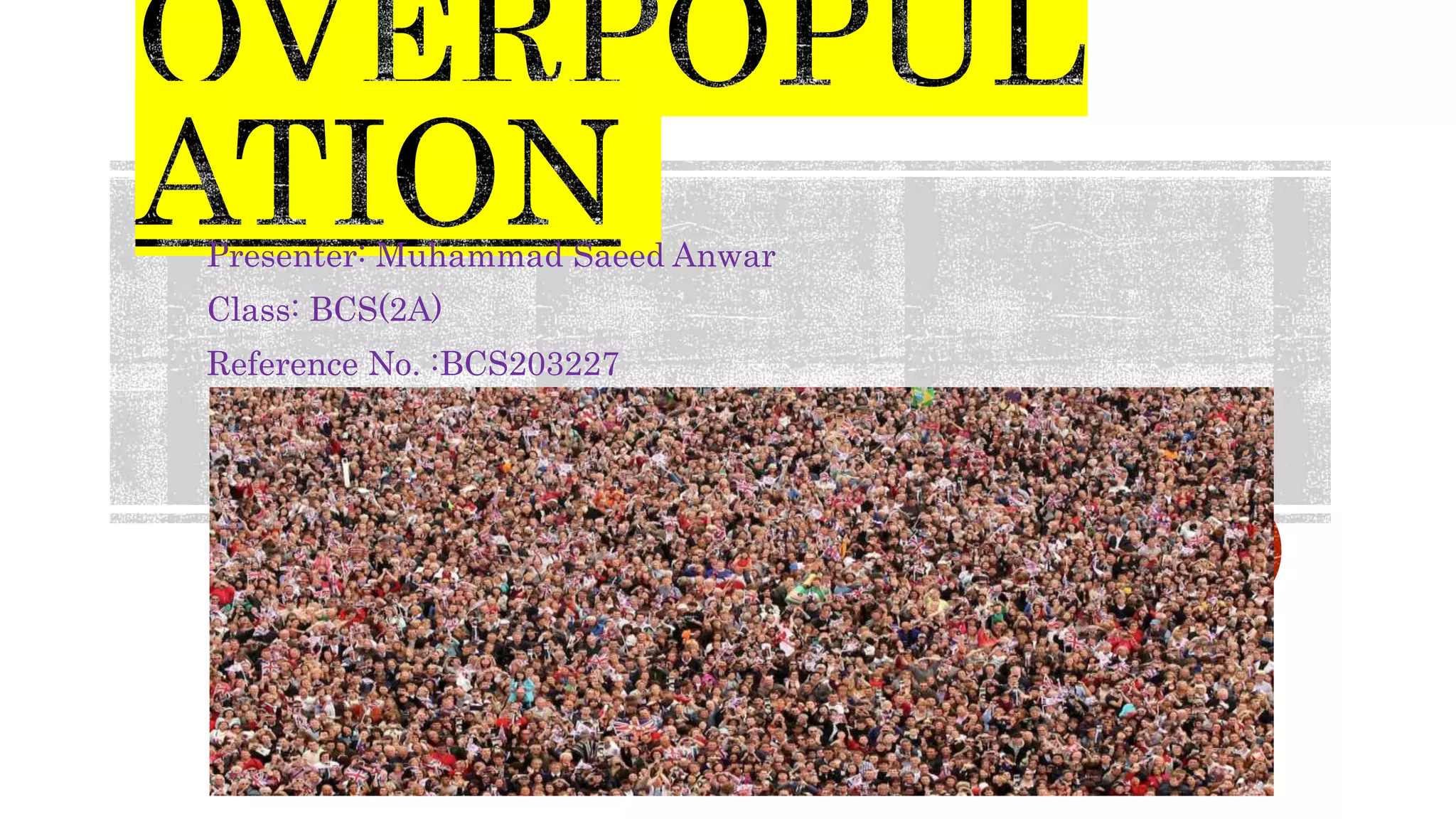
OVERPOPULATION
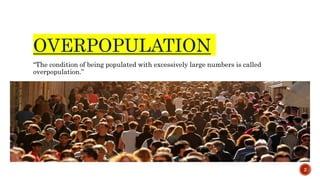
“The condition of being populated with excessively large numbers is called
overpopulation.”
2
Human population will reach 9.2 billion by the year 2050.
Overpopulation places competitive stress on the basic life sustaining resources,
leading to a diminished quality of life.
Overpopulation is directly related to maintaining the health of the human population is
water supply and it is one of the resources that experience the biggest strain.
3
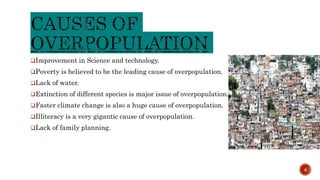
Improvement in Science and technology.
Poverty is believed to be the leading cause of overpopulation.
Lack of water.
Extinction of different species is major issue of overpopulation.
Faster climate change is also a huge cause of overpopulation.
Illiteracy is a very gigantic cause of overpopulation.
Lack of family planning.
4
SOME IMPORTANT STATISTICS
RELATED TO POPULATION IN
PAKISTAN:
Total population of Pakistan according to census of 2017 is 207.8 million.
Pakistan is the 5th largest country by population in the world and 2nd largest country
in the Muslim world.
The birth is 27.7 per 1000 people, and the death is 7.228 per 1000 people in Pakistan.
Pakistan’s population is equivalent to 2.83% of the total world population and it is
smallest
by area in top 10 populated countries.
The median age in Pakistan is 22.8 years.
The percentage of male population in Pakistan is 51% and while 48.76% are female.
5
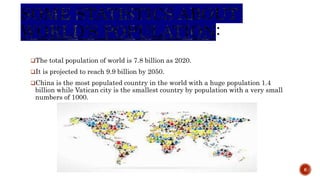
The total population of world is 7.8 billion as 2020.
It is projected to reach 9.9 billion by 2050.
China is the most populated country in the world with a huge population 1.4
billion while Vatican city is the smallest country by population with a very small
numbers of 1000.
6
CONSEQUENCES OF
OVERPOPULATION:
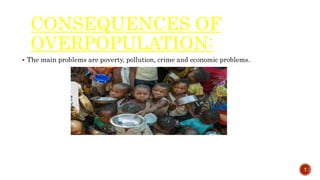
 The main problems are poverty, pollution, crime and economic problems.
7
DEALING WITH THE
CONSEQUENCES OF
OVERPOPULATION:
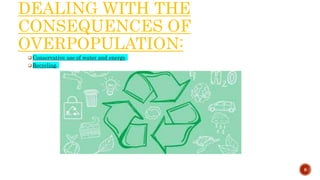
 Conservative use of water and energy.
 Recycling.
8
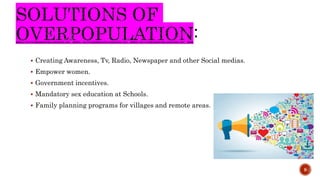
 Creating Awareness, Tv, Radio, Newspaper and other Social medias.
 Empower women.
 Government incentives.
 Mandatory sex education at Schools.
 Family planning programs for villages and remote areas.
9
10
11

Overpopulation

  • 1.
    Presenter: Muhammad SaeedAnwar Class: BCS(2A) Reference No. :BCS203227
  • 2.
    OVERPOPULATION “The condition ofbeing populated with excessively large numbers is called overpopulation.” 2
  • 3.
    Human population willreach 9.2 billion by the year 2050. Overpopulation places competitive stress on the basic life sustaining resources, leading to a diminished quality of life. Overpopulation is directly related to maintaining the health of the human population is water supply and it is one of the resources that experience the biggest strain. 3
  • 4.
    Improvement in Scienceand technology. Poverty is believed to be the leading cause of overpopulation. Lack of water. Extinction of different species is major issue of overpopulation. Faster climate change is also a huge cause of overpopulation. Illiteracy is a very gigantic cause of overpopulation. Lack of family planning. 4
  • 5.
    SOME IMPORTANT STATISTICS RELATEDTO POPULATION IN PAKISTAN: Total population of Pakistan according to census of 2017 is 207.8 million. Pakistan is the 5th largest country by population in the world and 2nd largest country in the Muslim world. The birth is 27.7 per 1000 people, and the death is 7.228 per 1000 people in Pakistan. Pakistan’s population is equivalent to 2.83% of the total world population and it is smallest by area in top 10 populated countries. The median age in Pakistan is 22.8 years. The percentage of male population in Pakistan is 51% and while 48.76% are female. 5
  • 6.
    The total populationof world is 7.8 billion as 2020. It is projected to reach 9.9 billion by 2050. China is the most populated country in the world with a huge population 1.4 billion while Vatican city is the smallest country by population with a very small numbers of 1000. 6
  • 7.
    CONSEQUENCES OF OVERPOPULATION:  Themain problems are poverty, pollution, crime and economic problems. 7
  • 8.
    DEALING WITH THE CONSEQUENCESOF OVERPOPULATION:  Conservative use of water and energy.  Recycling. 8
  • 9.
     Creating Awareness,Tv, Radio, Newspaper and other Social medias.  Empower women.  Government incentives.  Mandatory sex education at Schools.  Family planning programs for villages and remote areas. 9
  • 10.
  • 11.