Learning Analytics – What Data Could Tell
If We Were Willing to Share Information
Dai Griffiths, University of Bolton, UK
Tore Hoel,Oslo and Akershus University College, Norway
Sally Reynolds, ATiT, Belgium
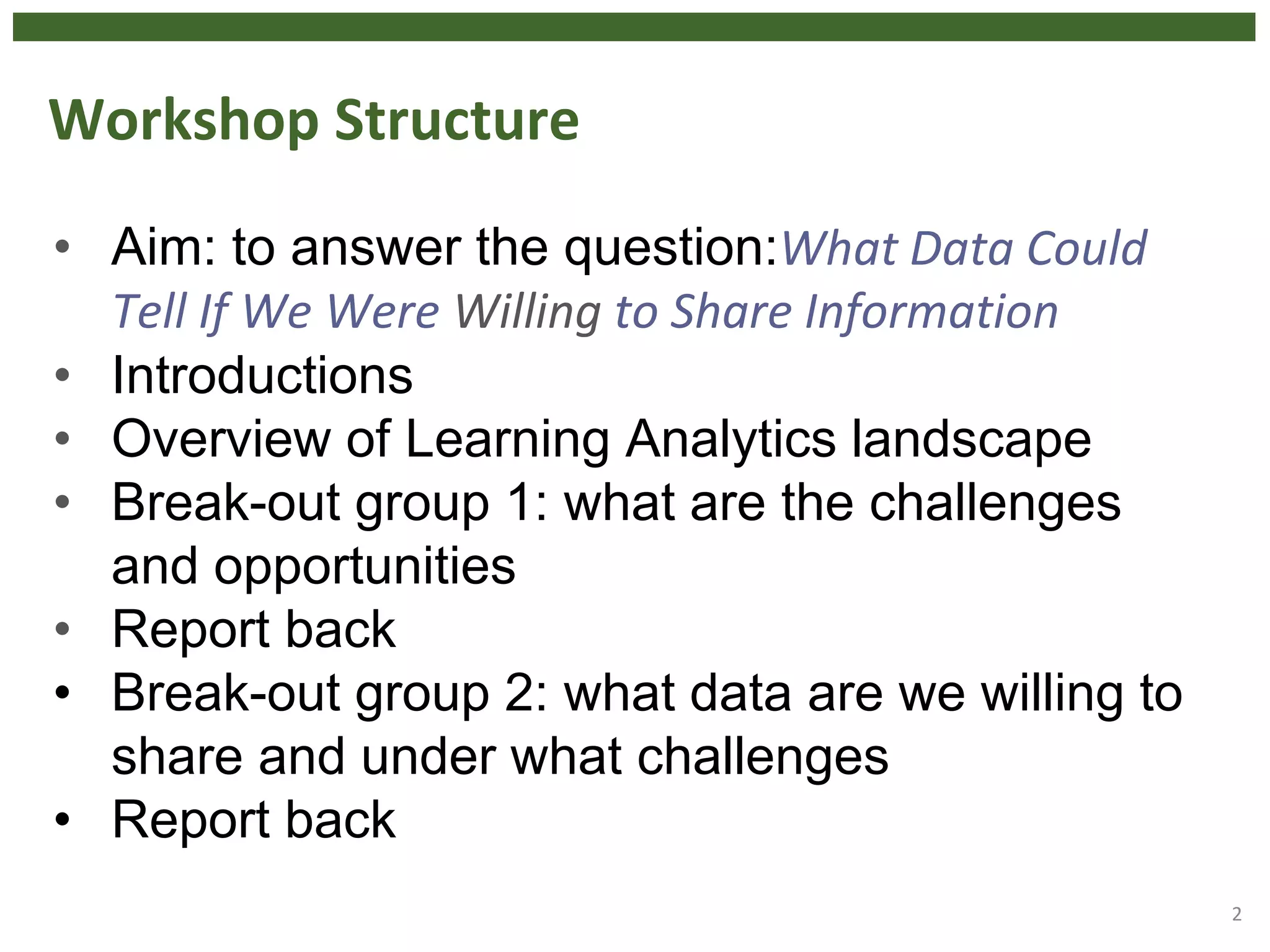
Workshop Structure
• Aim: to answer the question:What Data Could
Tell If We Were Willing to Share Information
• Introductions
• Overview of Learning Analytics landscape
• Break-out group 1: what are the challenges
and opportunities
• Report back
• Break-out group 2: what data are we willing to
share and under what challenges
• Report back
2
Learning Analytics – What Data Could Tell
If We Were Willing to Share Information
Scoping the discussion
Dai Griffiths, University of Bolton
d.e.griffiths@bolton.ac.uk
Learning Analytics…
It’s all true, but what is missing here?
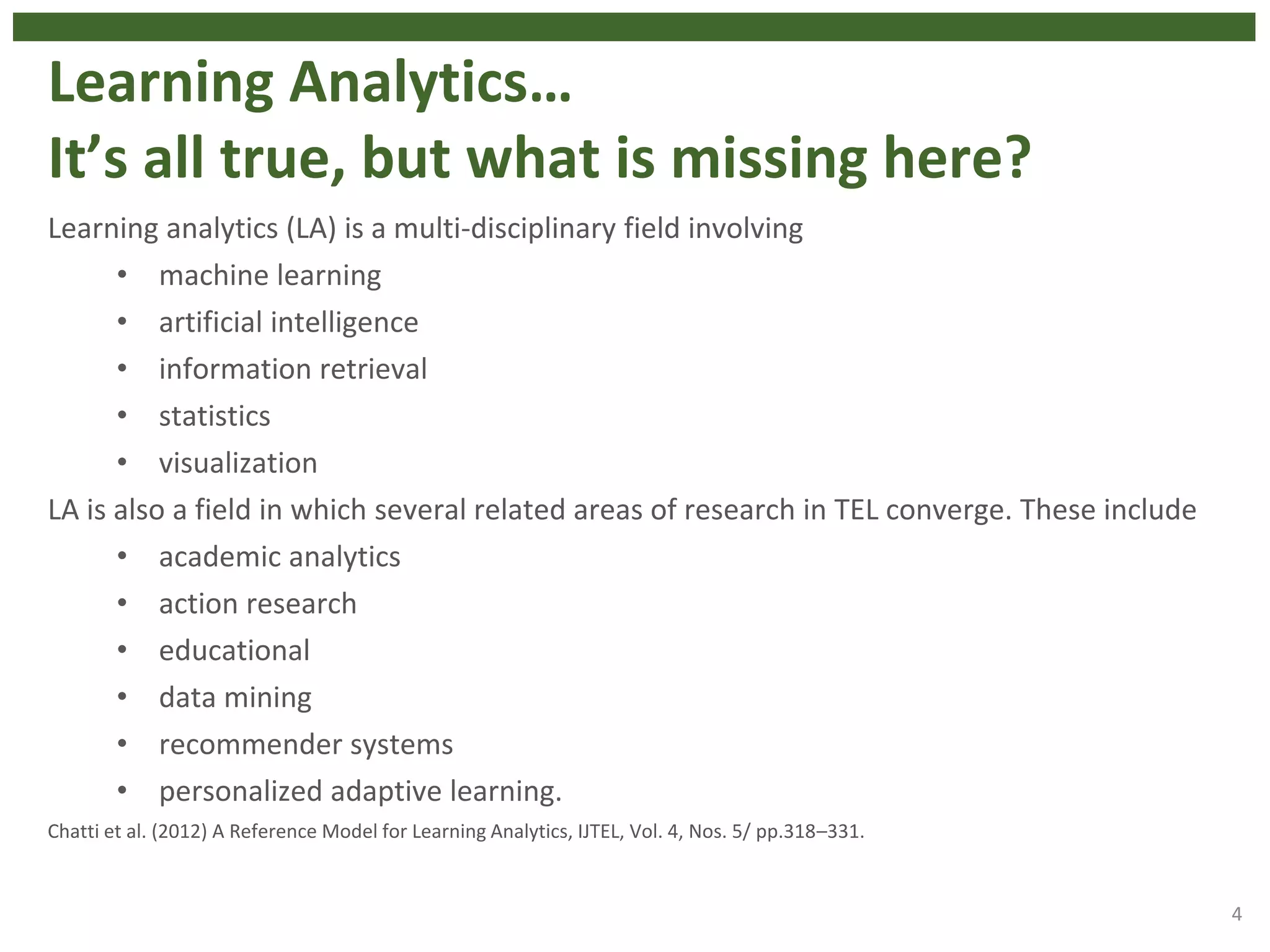
Learning analytics (LA) is a multi-disciplinary field involving
• machine learning
• artificial intelligence
• information retrieval
• statistics
• visualization
LA is also a field in which several related areas of research in TEL converge. These include
• academic analytics
• action research
• educational
• data mining
• recommender systems
• personalized adaptive learning.
Chatti et al. (2012) A Reference Model for Learning Analytics, IJTEL, Vol. 4, Nos. 5/ pp.318–331.
4
This is a Normal Slide
• Your main slides would go here.
• Note that the slides shown previously and after this slide may be
used across a number of slide shows during the event for
example the Welcome slides may include those shown before
this one and the Conclusions session may include the following
slides.
5
Learning Analytics – What Data Could Tell...
three approaches
1) Institutional management and reporting
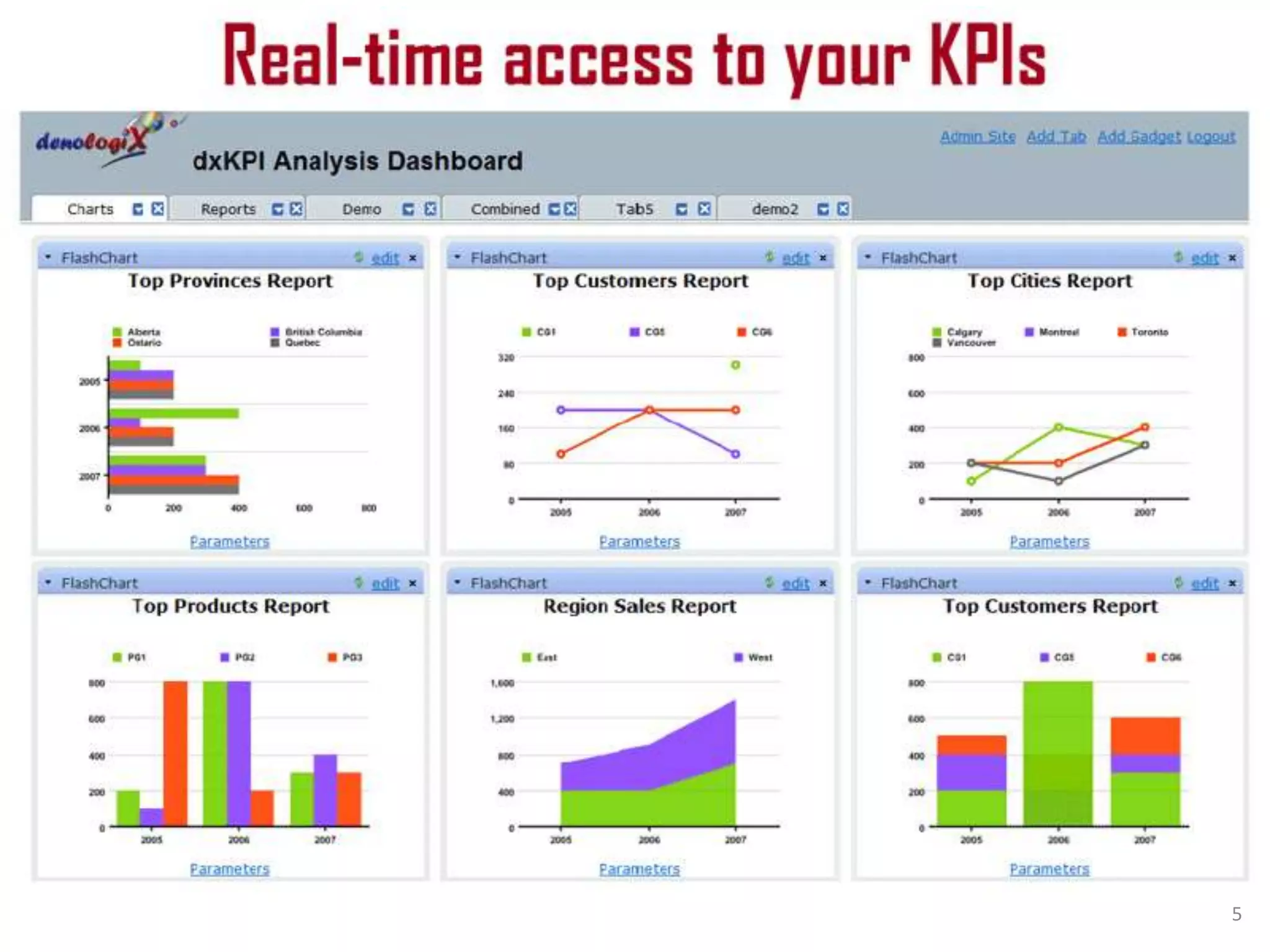
–Builds on business intelligence and customer relationship managment.
–Educational Management Analytics? Easy to do, but usually depends on
KPI’s being a good reflection of learning and effective education.
2) Reflective learner/teacher
–Builds on ‘reflective practitioner’, communities of practice, social network
analysis,
–Study/teaching analytics? The most interesting, but policy and politics can
be problematic.
3) Improve our understanding of learning, to enhance or automate
teaching
–Builds on the methods mentioned in the earlier slide.
–Yes, Learning Analytics. Exciting research, but hard to achieve.
We should be clear which we are talking about. Does the word ‘learning’ fog the
issue?
6
Learning Analytics – What Data Could Tell If
We Were Willing to Share Information
Who does the data belong to?
Sandy Pentland has been promoting a ‘New Deal on Data’, under
which “People would have the same rights they now have over their
physical bodies and money”.
Harvard Business Review, November 2014.
• Is he plain stupid? (clue: he is the Toshiba Professor at MIT and
on the boards of Telefonica, Motorola Mobile, and Nissan)
• Is it more reasonable to let anyone grab what they can?
• What would this mean for education?
• Societies, institutions and individuals need to take a position on
this, and think what it means for Learning Analytics
7
What would make us willing?
• What are we being offered? We should remember that
– Learning Analytics is often concerned with matters other than
learning.
– LA often uses methods which derive from management rather
than from teaching.
•These are not bad characteristics, but
– what kind of analytics we are talking about at any time?
– Increasing managerialism is part of a wider socio-economic
and political shift. It is contested. Our ‘willingness’ will be tied
up with these themes.
•What is the deal?
– Who are the beneficiaries?
– Who is trading what, and what is offered in exchange? 8
“Learning Analytics – What Data Could Tell If We Were Willing to
Share Information: scoping the discussion” by Dai Griffiths was
presented at EDEN 2015.
d.e.griffiths@bolton.ac.uk
This work was undertaken as part of the LACE Project, supported by the European Commission Seventh
Framework Programme, grant 619424.
These slides are provided under the Creative Commons Attribution Licence:
http://creativecommons.org/licenses/by/4.0/. Some images used may have different licence terms.
www.laceproject.eu
@laceproject
9
Discussion 1: Please identify
• Main source of data
• Benefits of different kinds of data
• Drawbacks to getting access to such data
10
Discussion 2: Please agree
What data are you willing to share, with
whom and under what conditions?
11
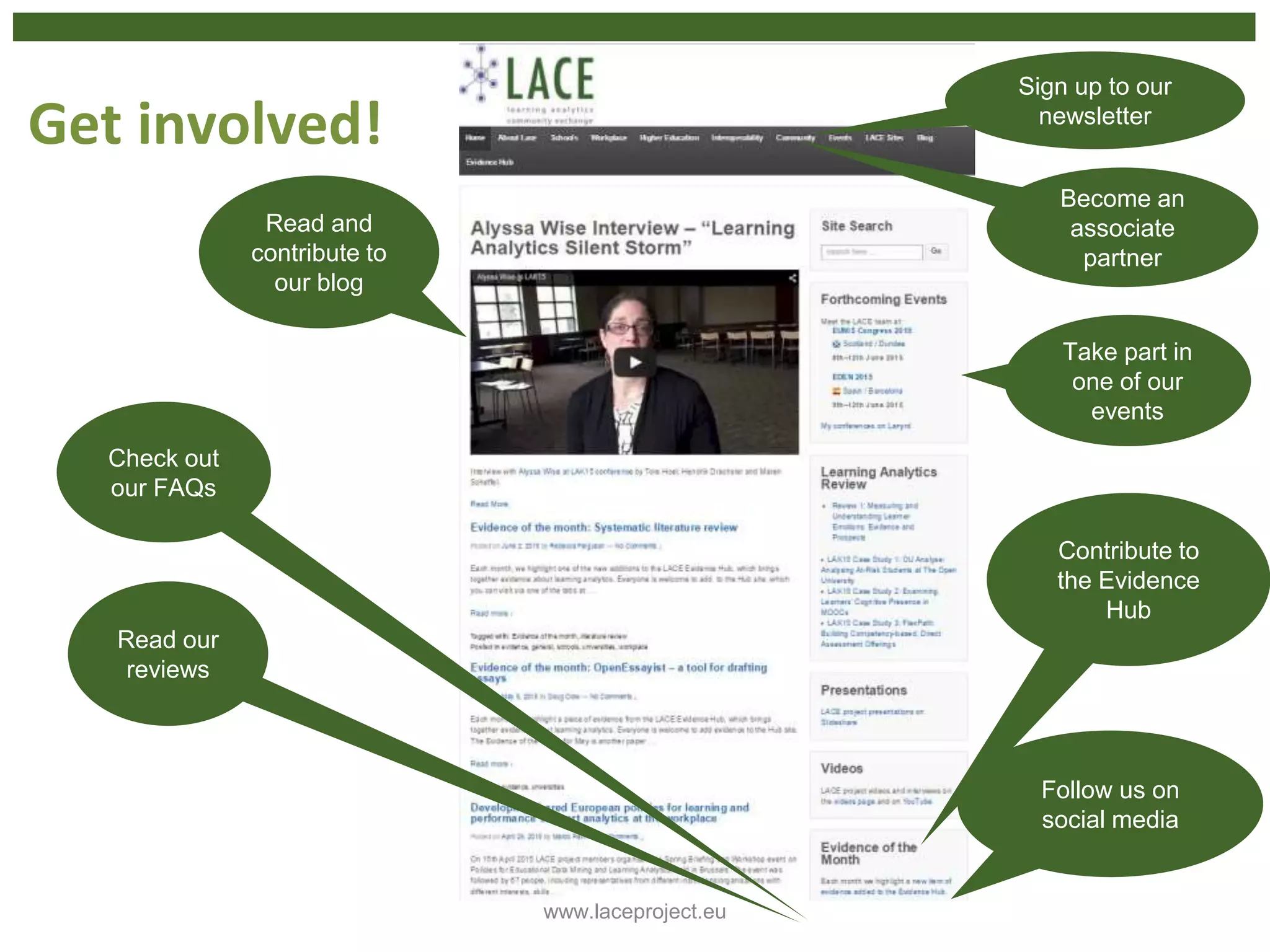
Get involved!
www.laceproject.eu
Read and
contribute to
our blog
Become an
associate
partner
Take part in
one of our
events
Read our
reviews
Contribute to
the Evidence
Hub
Sign up to our
newsletter
Follow us on
social media
Check out
our FAQs

Workshop on Learning Analytics @ EDEN15 in Barcelona - June 2015

  • 1.
    Learning Analytics –What Data Could Tell If We Were Willing to Share Information Dai Griffiths, University of Bolton, UK Tore Hoel,Oslo and Akershus University College, Norway Sally Reynolds, ATiT, Belgium
  • 2.
    Workshop Structure • Aim:to answer the question:What Data Could Tell If We Were Willing to Share Information • Introductions • Overview of Learning Analytics landscape • Break-out group 1: what are the challenges and opportunities • Report back • Break-out group 2: what data are we willing to share and under what challenges • Report back 2
  • 3.
    Learning Analytics –What Data Could Tell If We Were Willing to Share Information Scoping the discussion Dai Griffiths, University of Bolton d.e.griffiths@bolton.ac.uk
  • 4.
    Learning Analytics… It’s alltrue, but what is missing here? Learning analytics (LA) is a multi-disciplinary field involving • machine learning • artificial intelligence • information retrieval • statistics • visualization LA is also a field in which several related areas of research in TEL converge. These include • academic analytics • action research • educational • data mining • recommender systems • personalized adaptive learning. Chatti et al. (2012) A Reference Model for Learning Analytics, IJTEL, Vol. 4, Nos. 5/ pp.318–331. 4
  • 5.
    This is aNormal Slide • Your main slides would go here. • Note that the slides shown previously and after this slide may be used across a number of slide shows during the event for example the Welcome slides may include those shown before this one and the Conclusions session may include the following slides. 5
  • 6.
    Learning Analytics –What Data Could Tell... three approaches 1) Institutional management and reporting –Builds on business intelligence and customer relationship managment. –Educational Management Analytics? Easy to do, but usually depends on KPI’s being a good reflection of learning and effective education. 2) Reflective learner/teacher –Builds on ‘reflective practitioner’, communities of practice, social network analysis, –Study/teaching analytics? The most interesting, but policy and politics can be problematic. 3) Improve our understanding of learning, to enhance or automate teaching –Builds on the methods mentioned in the earlier slide. –Yes, Learning Analytics. Exciting research, but hard to achieve. We should be clear which we are talking about. Does the word ‘learning’ fog the issue? 6
  • 7.
    Learning Analytics –What Data Could Tell If We Were Willing to Share Information Who does the data belong to? Sandy Pentland has been promoting a ‘New Deal on Data’, under which “People would have the same rights they now have over their physical bodies and money”. Harvard Business Review, November 2014. • Is he plain stupid? (clue: he is the Toshiba Professor at MIT and on the boards of Telefonica, Motorola Mobile, and Nissan) • Is it more reasonable to let anyone grab what they can? • What would this mean for education? • Societies, institutions and individuals need to take a position on this, and think what it means for Learning Analytics 7
  • 8.
    What would makeus willing? • What are we being offered? We should remember that – Learning Analytics is often concerned with matters other than learning. – LA often uses methods which derive from management rather than from teaching. •These are not bad characteristics, but – what kind of analytics we are talking about at any time? – Increasing managerialism is part of a wider socio-economic and political shift. It is contested. Our ‘willingness’ will be tied up with these themes. •What is the deal? – Who are the beneficiaries? – Who is trading what, and what is offered in exchange? 8
  • 9.
    “Learning Analytics –What Data Could Tell If We Were Willing to Share Information: scoping the discussion” by Dai Griffiths was presented at EDEN 2015. d.e.griffiths@bolton.ac.uk This work was undertaken as part of the LACE Project, supported by the European Commission Seventh Framework Programme, grant 619424. These slides are provided under the Creative Commons Attribution Licence: http://creativecommons.org/licenses/by/4.0/. Some images used may have different licence terms. www.laceproject.eu @laceproject 9
  • 10.
    Discussion 1: Pleaseidentify • Main source of data • Benefits of different kinds of data • Drawbacks to getting access to such data 10
  • 11.
    Discussion 2: Pleaseagree What data are you willing to share, with whom and under what conditions? 11
  • 12.
    Get involved! www.laceproject.eu Read and contributeto our blog Become an associate partner Take part in one of our events Read our reviews Contribute to the Evidence Hub Sign up to our newsletter Follow us on social media Check out our FAQs

Editor's Notes

  • #2 This is a simple version of a title slide for a LACE presentation.
  • #4 This is a simple version of a title slide for a LACE presentation.
  • #10 This is the default concluding slide, with information about the speaker(s) and rights for the slide (if a Creative Commons licence has been granted)