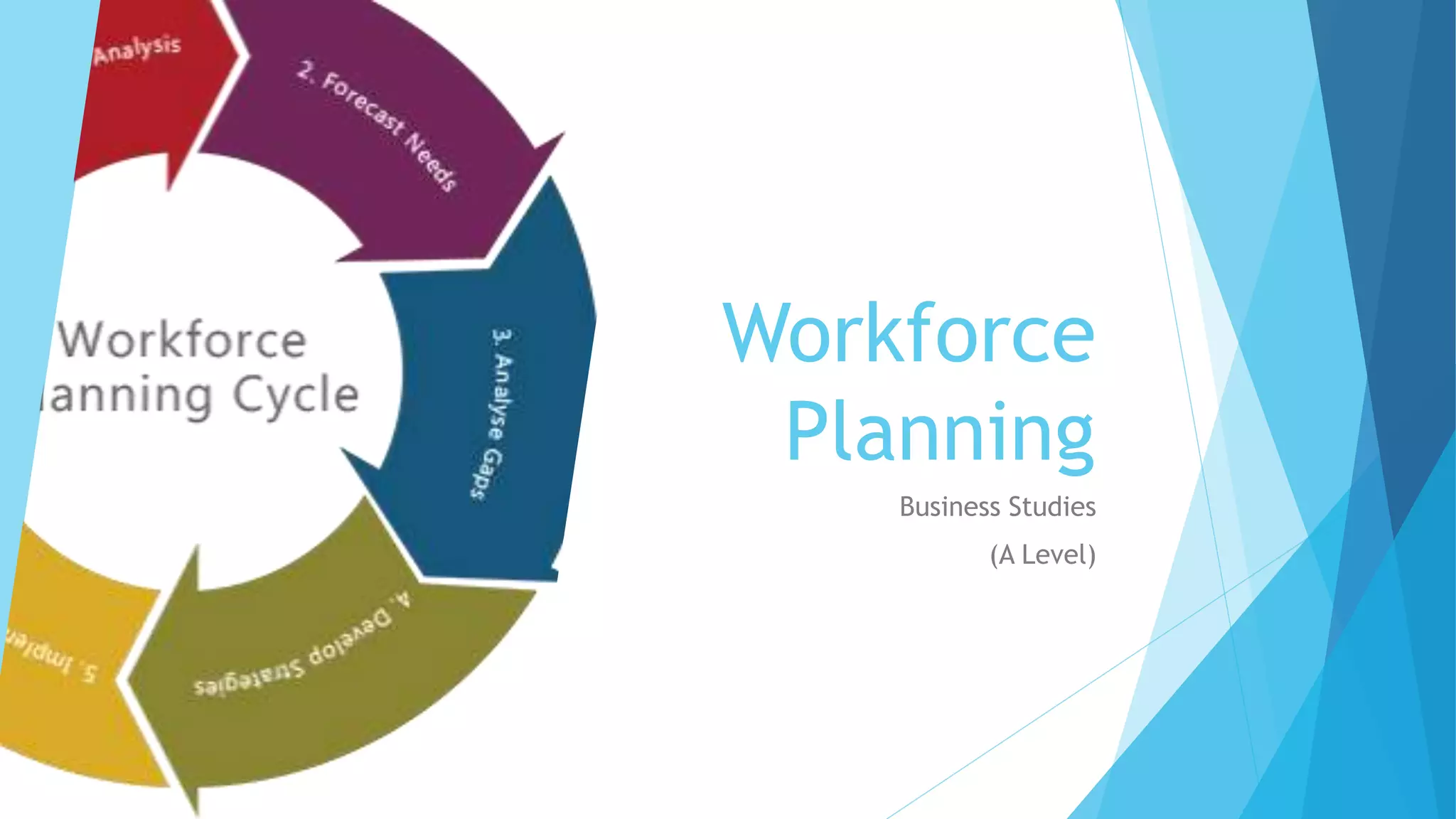
Workforce
Planning
Business Studies
(A Level)
Workforce planning is about
deciding how many and what
types of workers are required
(Definition)
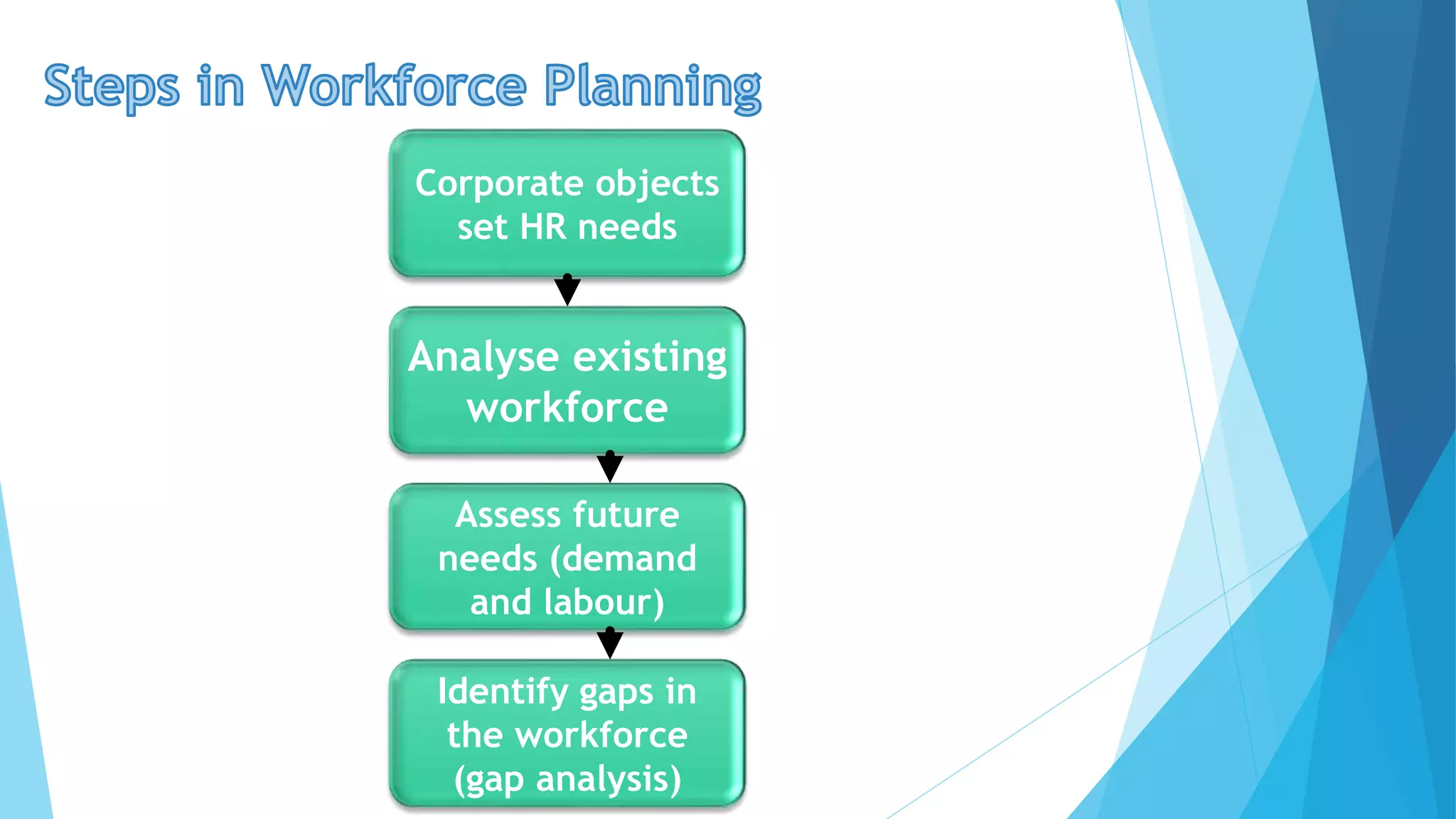
Corporate objects
set HR needs
Analyse existing
workforce
Assess future
needs (demand
and labour)
Identify gaps in
the workforce
(gap analysis)
• It sets the agenda for the workforce plan
• Indicates likely demand for labour (e.g.
sales targets, units, locations, costs)
E.G. a strategy of retrenchment will indicate significant will
indicate significant reduction in demand for labour
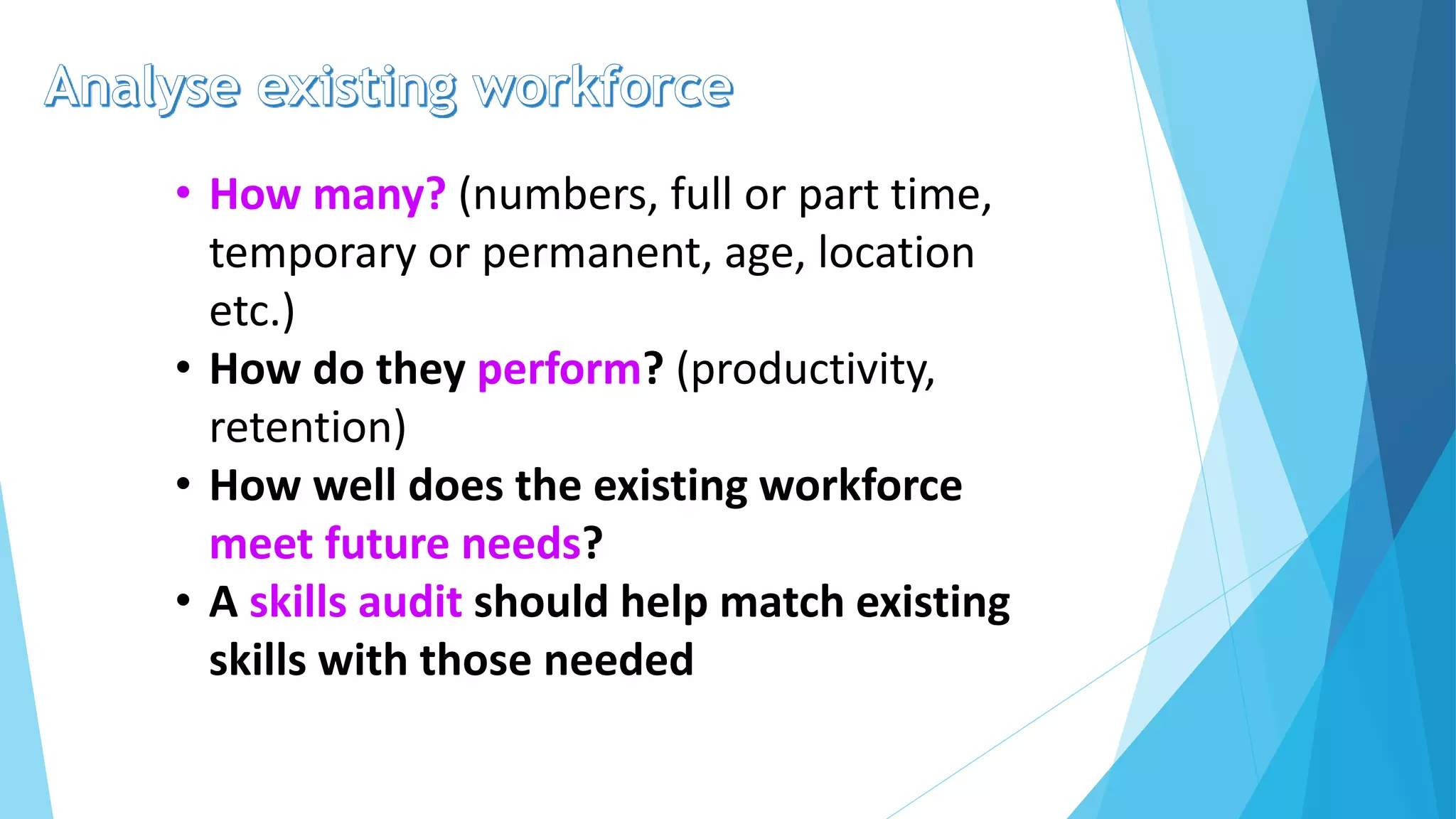
• How many? (numbers, full or part time,
temporary or permanent, age, location
etc.)
• How do they perform? (productivity,
retention)
• How well does the existing workforce
meet future needs?
• A skills audit should help match existing
skills with those needed
• Shaped by plans for markets, products and
targets for efficiency and costs
• Impact of changes in technology
• Consider changing economic, social and
political environment
• Series of assumptions need to be made
(realistic and based on reliable data)
• Arise if the business doesn’t have the
right staff with the right skills for
future needs, or enough staff in total
to meet demand
• Identify a strategy of closing the gap
(recruitment, promotion, training and
an estimate of likely cost)
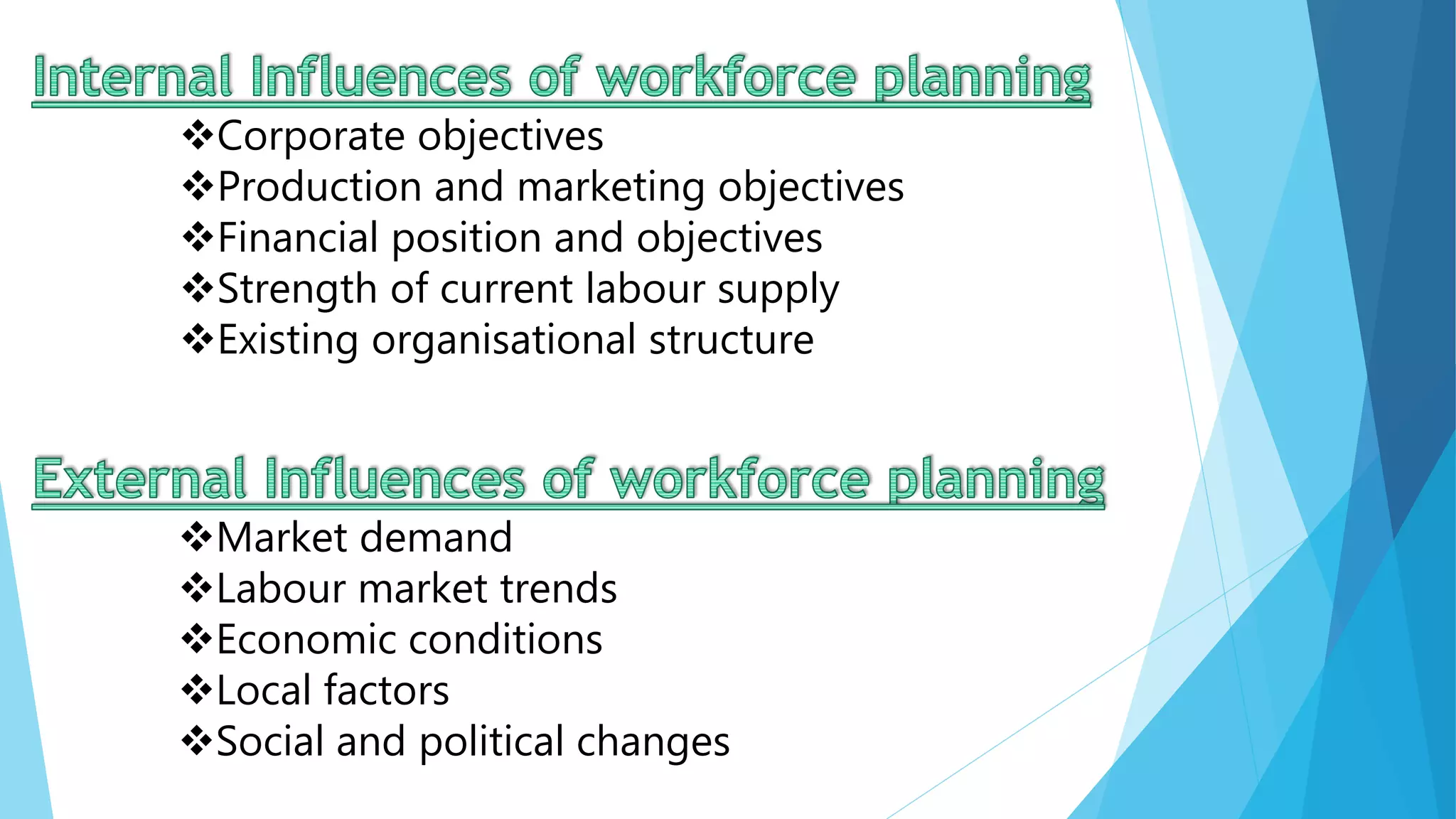
Corporate objectives
Production and marketing objectives
Financial position and objectives
Strength of current labour supply
Existing organisational structure
Market demand
Labour market trends
Economic conditions
Local factors
Social and political changes
When a business does not
have enough labour to be able
to meet production demand.
(Definition)
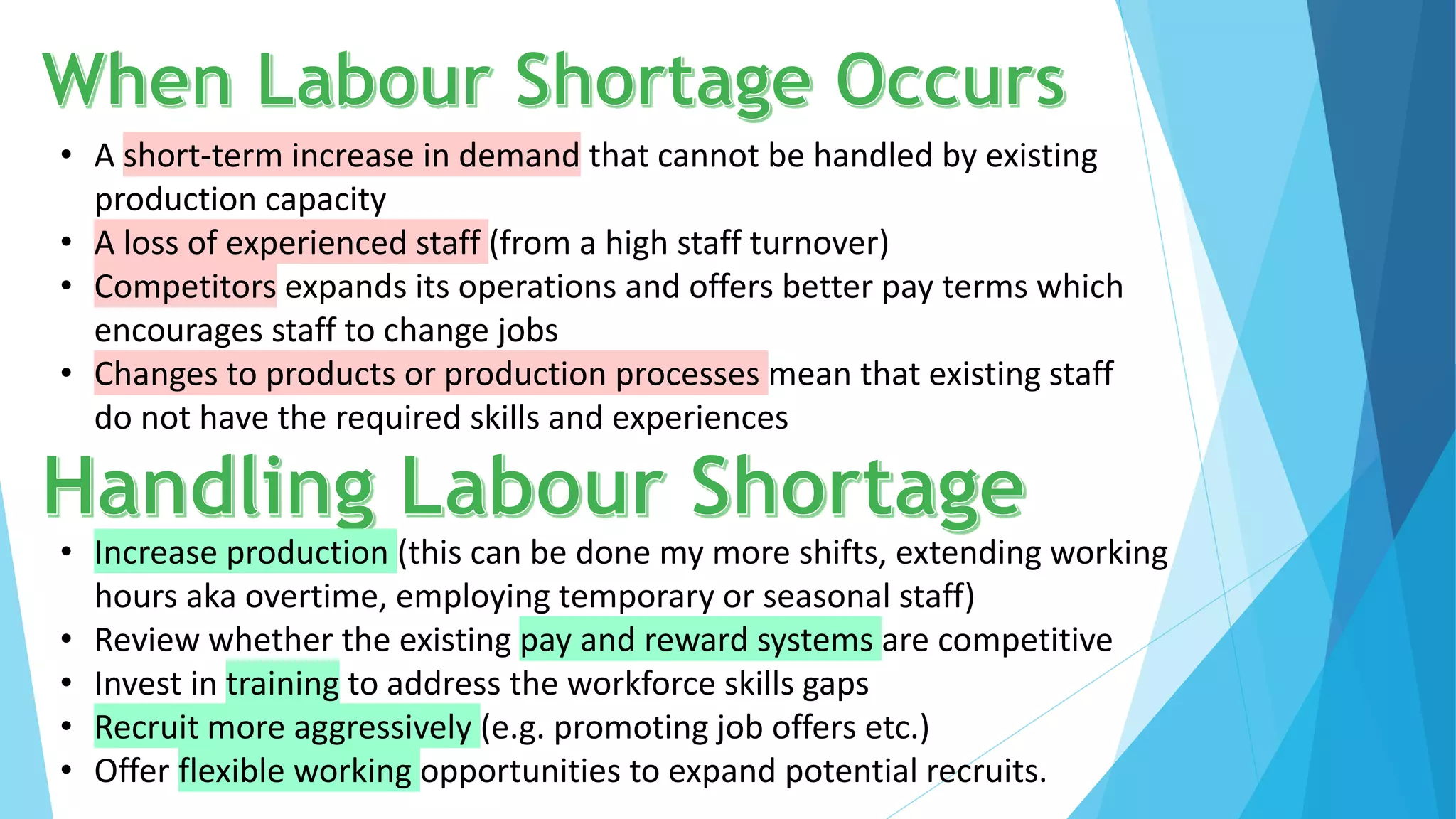
• A short-term increase in demand that cannot be handled by existing
production capacity
• A loss of experienced staff (from a high staff turnover)
• Competitors expands its operations and offers better pay terms which
encourages staff to change jobs
• Changes to products or production processes mean that existing staff
do not have the required skills and experiences
• Increase production (this can be done my more shifts, extending working
hours aka overtime, employing temporary or seasonal staff)
• Review whether the existing pay and reward systems are competitive
• Invest in training to address the workforce skills gaps
• Recruit more aggressively (e.g. promoting job offers etc.)
• Offer flexible working opportunities to expand potential recruits.
When a business has too
many employees for its needs
(Definition)
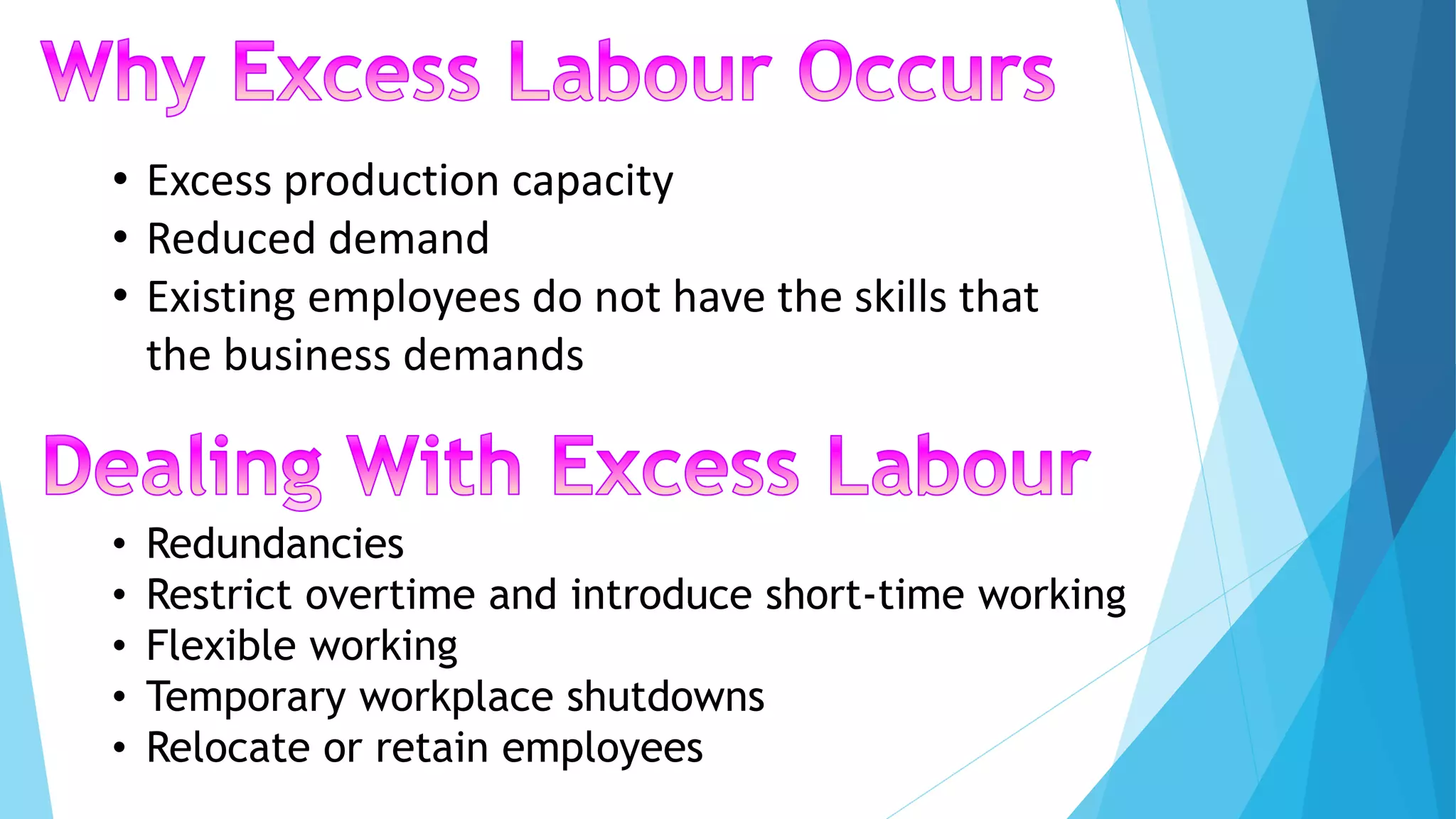
• Excess production capacity
• Reduced demand
• Existing employees do not have the skills that
the business demands
• Redundancies
• Restrict overtime and introduce short-time working
• Flexible working
• Temporary workplace shutdowns
• Relocate or retain employees
• Helps a business achieve its corporate objectives
• Encourages managers to prepare and plan for future
changes (strategic decision making)
• Be able to handle workforce implications
• Improved communications
• Cost
• Employer/employee relationships
• Training
• Business image

Workforce Planning (Process, Labour Shortage, Excess Labour)

  • 1.
  • 2.
    Workforce planning isabout deciding how many and what types of workers are required (Definition)
  • 3.
    Corporate objects set HRneeds Analyse existing workforce Assess future needs (demand and labour) Identify gaps in the workforce (gap analysis)
  • 4.
    • It setsthe agenda for the workforce plan • Indicates likely demand for labour (e.g. sales targets, units, locations, costs) E.G. a strategy of retrenchment will indicate significant will indicate significant reduction in demand for labour
  • 5.
    • How many?(numbers, full or part time, temporary or permanent, age, location etc.) • How do they perform? (productivity, retention) • How well does the existing workforce meet future needs? • A skills audit should help match existing skills with those needed
  • 6.
    • Shaped byplans for markets, products and targets for efficiency and costs • Impact of changes in technology • Consider changing economic, social and political environment • Series of assumptions need to be made (realistic and based on reliable data)
  • 7.
    • Arise ifthe business doesn’t have the right staff with the right skills for future needs, or enough staff in total to meet demand • Identify a strategy of closing the gap (recruitment, promotion, training and an estimate of likely cost)
  • 8.
    Corporate objectives Production andmarketing objectives Financial position and objectives Strength of current labour supply Existing organisational structure Market demand Labour market trends Economic conditions Local factors Social and political changes
  • 9.
    When a businessdoes not have enough labour to be able to meet production demand. (Definition)
  • 10.
    • A short-termincrease in demand that cannot be handled by existing production capacity • A loss of experienced staff (from a high staff turnover) • Competitors expands its operations and offers better pay terms which encourages staff to change jobs • Changes to products or production processes mean that existing staff do not have the required skills and experiences • Increase production (this can be done my more shifts, extending working hours aka overtime, employing temporary or seasonal staff) • Review whether the existing pay and reward systems are competitive • Invest in training to address the workforce skills gaps • Recruit more aggressively (e.g. promoting job offers etc.) • Offer flexible working opportunities to expand potential recruits.
  • 11.
    When a businesshas too many employees for its needs (Definition)
  • 12.
    • Excess productioncapacity • Reduced demand • Existing employees do not have the skills that the business demands • Redundancies • Restrict overtime and introduce short-time working • Flexible working • Temporary workplace shutdowns • Relocate or retain employees
  • 13.
    • Helps abusiness achieve its corporate objectives • Encourages managers to prepare and plan for future changes (strategic decision making) • Be able to handle workforce implications • Improved communications • Cost • Employer/employee relationships • Training • Business image