INTRODUCTION
Succession planning is a systematic
approach to:
• Building a leadership pipeline/talent pool to
ensure leadership continuity
• Developing potential successors in ways
that best fit their strengths
• Identifying the best candidates for
categories of positions
• Concentrating resources on the talent
development process yielding a greater
return on investment.
Succession planning recognizes that
some jobs are the lifeblood of the
organization and too critical to be
left vacant or filled by any but the
best qualified persons.
Effectively done, succession
planning is critical to mission
success and creates an effective
process for recognizing, developing,
and retaining top leaders.
FACTOR
There are several factors typically found in successful succession
planning initiatives. For example
 Senior leaders are personally involved.
 Senior leaders hold themselves accountable for growing leaders.
 Employees are committed to their own self-development.
 Success is based on a business case for long-term needs.
 Succession is linked to strategic planning and investment in the
future.
 Work force data and analysis inform the process.
 Leadership competencies are identified and used for selection
and development.
 A pool of talent is identified and developed early for long-term
need
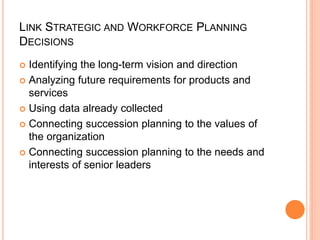
LINK STRATEGIC AND WORKFORCE PLANNING
DECISIONS
 Identifying the long-term vision and direction
 Analyzing future requirements for products and
services
 Using data already collected
 Connecting succession planning to the values of
the organization
 Connecting succession planning to the needs and
interests of senior leaders
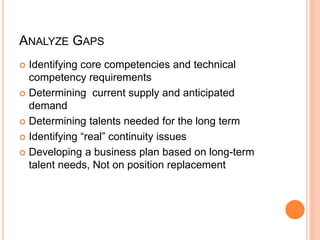
ANALYZE GAPS
 Identifying core competencies and technical
competency requirements
 Determining current supply and anticipated
demand
 Determining talents needed for the long term
 Identifying “real” continuity issues
 Developing a business plan based on long-term
talent needs, Not on position replacement
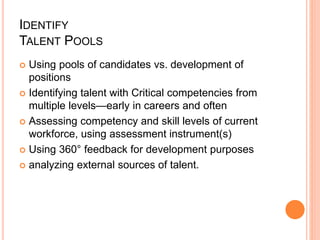
IDENTIFY
TALENT POOLS
 Using pools of candidates vs. development of
positions
 Identifying talent with Critical competencies from
multiple levels—early in careers and often
 Assessing competency and skill levels of current
workforce, using assessment instrument(s)
 Using 360° feedback for development purposes
 analyzing external sources of talent.
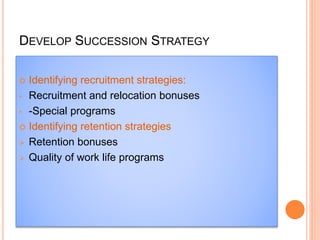
DEVELOP SUCCESSION STRATEGY
 Identifying recruitment strategies:
• Recruitment and relocation bonuses
• -Special programs
 Identifying retention strategies
 Retention bonuses
 Quality of work life programs
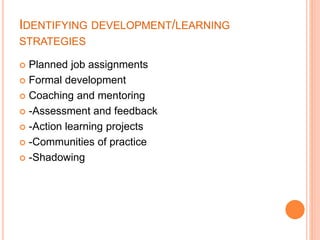
IDENTIFYING DEVELOPMENT/LEARNING
STRATEGIES
 Planned job assignments
 Formal development
 Coaching and mentoring
 -Assessment and feedback
 -Action learning projects
 -Communities of practice
 -Shadowing
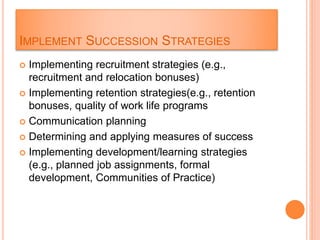
IMPLEMENT SUCCESSION STRATEGIES
 Implementing recruitment strategies (e.g.,
recruitment and relocation bonuses)
 Implementing retention strategies(e.g., retention
bonuses, quality of work life programs
 Communication planning
 Determining and applying measures of success
 Implementing development/learning strategies
(e.g., planned job assignments, formal
development, Communities of Practice)
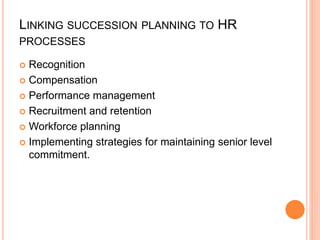
LINKING SUCCESSION PLANNING TO HR
PROCESSES
 Recognition
 Compensation
 Performance management
 Recruitment and retention
 Workforce planning
 Implementing strategies for maintaining senior level
commitment.
MONITOR AND
EVALUATE
 Tracking selections from talent pools
 Listening to leader feedback on success of internal
talent and internal hires
 Analyzing satisfaction surveys from customers,
employees, and stakeholders
 Assessing response to changing requirements and
needs
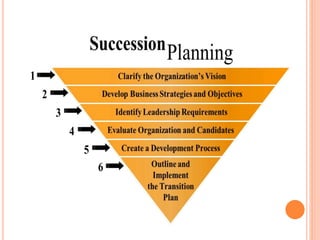
Succession planning process

Succession planning process

  • 2.
    INTRODUCTION Succession planning isa systematic approach to: • Building a leadership pipeline/talent pool to ensure leadership continuity • Developing potential successors in ways that best fit their strengths • Identifying the best candidates for categories of positions • Concentrating resources on the talent development process yielding a greater return on investment.
  • 3.
    Succession planning recognizesthat some jobs are the lifeblood of the organization and too critical to be left vacant or filled by any but the best qualified persons. Effectively done, succession planning is critical to mission success and creates an effective process for recognizing, developing, and retaining top leaders.
  • 4.
    FACTOR There are severalfactors typically found in successful succession planning initiatives. For example  Senior leaders are personally involved.  Senior leaders hold themselves accountable for growing leaders.  Employees are committed to their own self-development.  Success is based on a business case for long-term needs.  Succession is linked to strategic planning and investment in the future.  Work force data and analysis inform the process.  Leadership competencies are identified and used for selection and development.  A pool of talent is identified and developed early for long-term need
  • 6.
    LINK STRATEGIC ANDWORKFORCE PLANNING DECISIONS  Identifying the long-term vision and direction  Analyzing future requirements for products and services  Using data already collected  Connecting succession planning to the values of the organization  Connecting succession planning to the needs and interests of senior leaders
  • 7.
    ANALYZE GAPS  Identifyingcore competencies and technical competency requirements  Determining current supply and anticipated demand  Determining talents needed for the long term  Identifying “real” continuity issues  Developing a business plan based on long-term talent needs, Not on position replacement
  • 8.
    IDENTIFY TALENT POOLS  Usingpools of candidates vs. development of positions  Identifying talent with Critical competencies from multiple levels—early in careers and often  Assessing competency and skill levels of current workforce, using assessment instrument(s)  Using 360° feedback for development purposes  analyzing external sources of talent.
  • 9.
    DEVELOP SUCCESSION STRATEGY Identifying recruitment strategies: • Recruitment and relocation bonuses • -Special programs  Identifying retention strategies  Retention bonuses  Quality of work life programs
  • 10.
    IDENTIFYING DEVELOPMENT/LEARNING STRATEGIES  Plannedjob assignments  Formal development  Coaching and mentoring  -Assessment and feedback  -Action learning projects  -Communities of practice  -Shadowing
  • 11.
    IMPLEMENT SUCCESSION STRATEGIES Implementing recruitment strategies (e.g., recruitment and relocation bonuses)  Implementing retention strategies(e.g., retention bonuses, quality of work life programs  Communication planning  Determining and applying measures of success  Implementing development/learning strategies (e.g., planned job assignments, formal development, Communities of Practice)
  • 12.
    LINKING SUCCESSION PLANNINGTO HR PROCESSES  Recognition  Compensation  Performance management  Recruitment and retention  Workforce planning  Implementing strategies for maintaining senior level commitment.
  • 13.
    MONITOR AND EVALUATE  Trackingselections from talent pools  Listening to leader feedback on success of internal talent and internal hires  Analyzing satisfaction surveys from customers, employees, and stakeholders  Assessing response to changing requirements and needs