Worker’s Participation in Management Decision
making – with special reference to
Manufacturing Industries.
Gurjeet kaur(Assistant Professor, BUEST)
Ashu Saini (MBA student)
Abhishek(MBA student)
 In recent years research and discussions on workers'
participation in decision-making have dominated much of
management literature. In its broadest possible sense, workers'
participation means wider involvement and participation by a
company's employee in the decision making process of that
organization. With the outbreak of the First World War, an
acute industrial unrest was experienced in those countries
where its impact was intense. In countries like England, West
Germany, France and the USA because labour was treated as
“commodity of commerce”
A system of communication and consultation,
either formal or informal ,by which employees
of an organization are kept informed about
the affairs of an undertaking and through
which they express their opinion and
contribute to the management decisions.
Information participation: It insures that
employees are able to receive information
and express their views pertaining to the
matter of general economic importance.
Consultative importance: Here workers are
consulted on the matters of employee welfare
such as work, safety and health. However ,
final decision always rests with the top-level
management, as employees views are only
advisory in nature
Administrative participation: Here, decisions
are already taken by the management come
to employees, preferably with alternatives
and employees have to select the best from
those for implementation.
Decisive participation : Highest level of
participation where decision are jointly taken
on the matters relating to production ,
welfare etc.
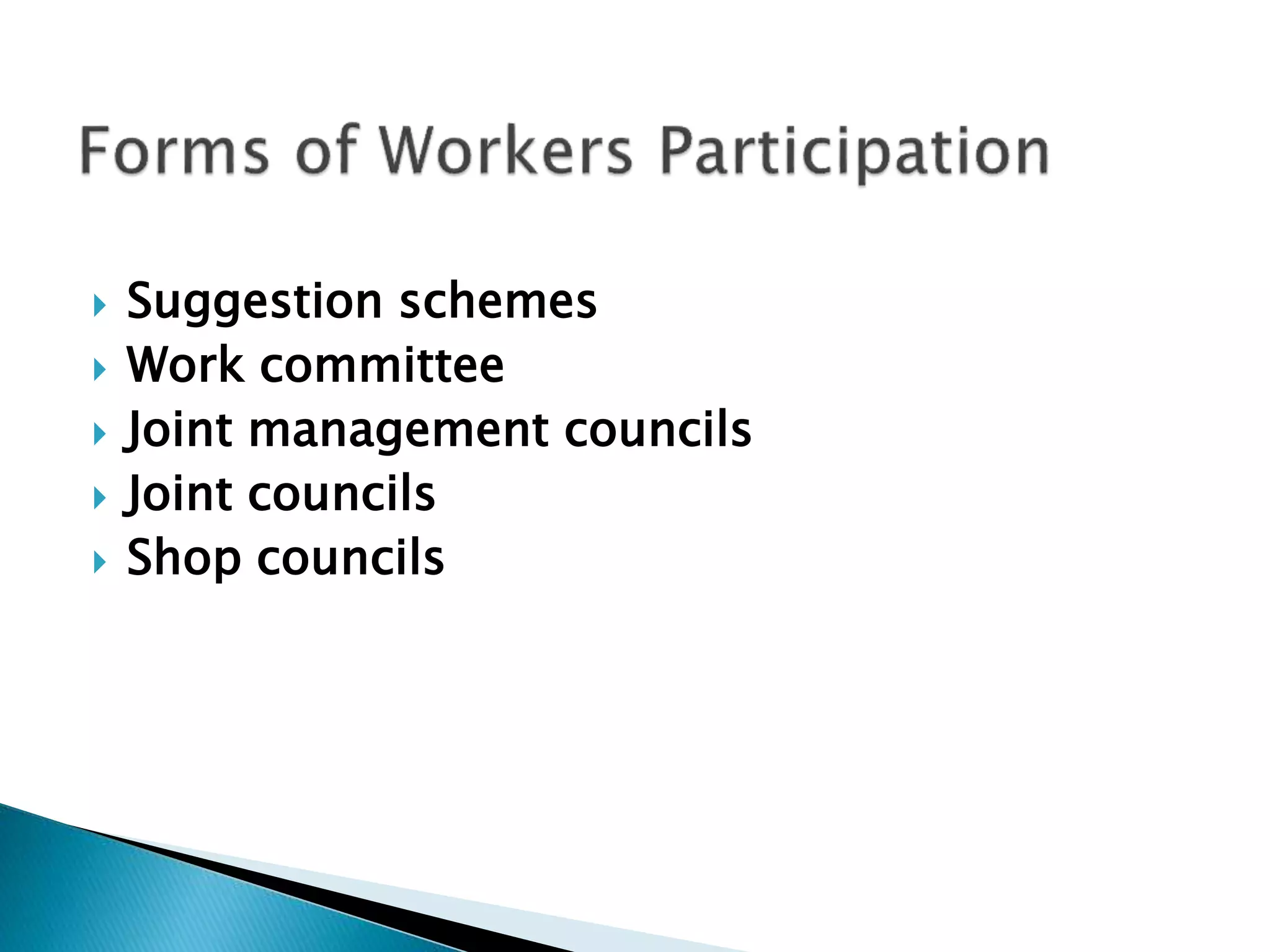
 Suggestion schemes
 Work committee
 Joint management councils
 Joint councils
 Shop councils
 To study the awareness of worker
participation in management.
 To study the working conditions of workers in
manufacturing Industries.
 In order to meet the objectives of the present
study, sampling techniques are used.
 At the first stage with the help of convenient
sampling, two enterprises Drish Shoes
Limited and Borkar Group of Industries are
selected from Manufacturing Industries in
Nalagarh, District- Solan in Himachal
Pradesh.
 At the second stage, while adopting the quota
sampling, a sample of 120 respondents @ 60
workers from each enterprise (60 × 2 = 120)
have been selected. A special care has been
taken that the respondents of different age
groups, education levels and locality are
selected.
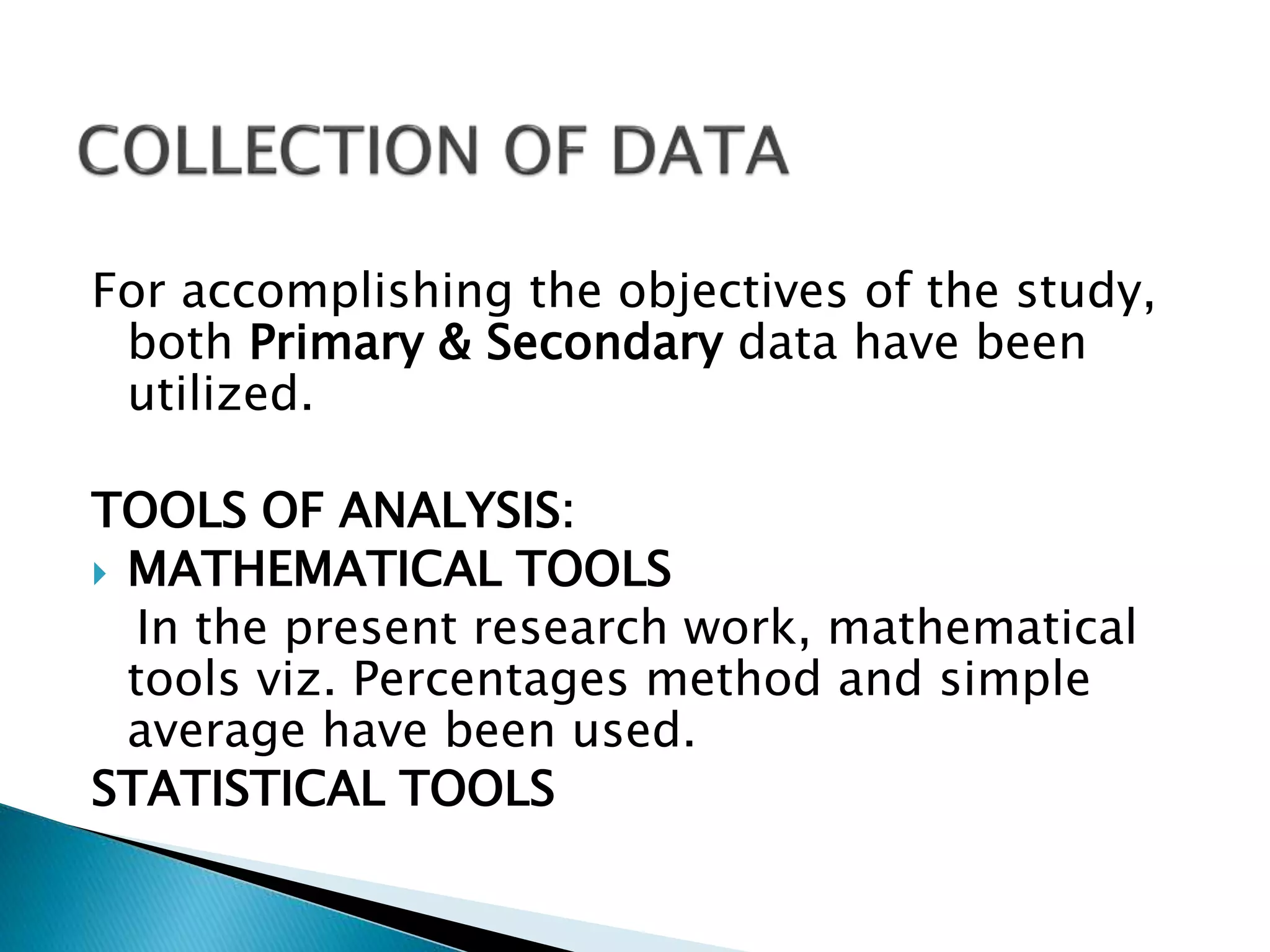
For accomplishing the objectives of the study,
both Primary & Secondary data have been
utilized.
TOOLS OF ANALYSIS:
 MATHEMATICAL TOOLS
In the present research work, mathematical
tools viz. Percentages method and simple
average have been used.
STATISTICAL TOOLS
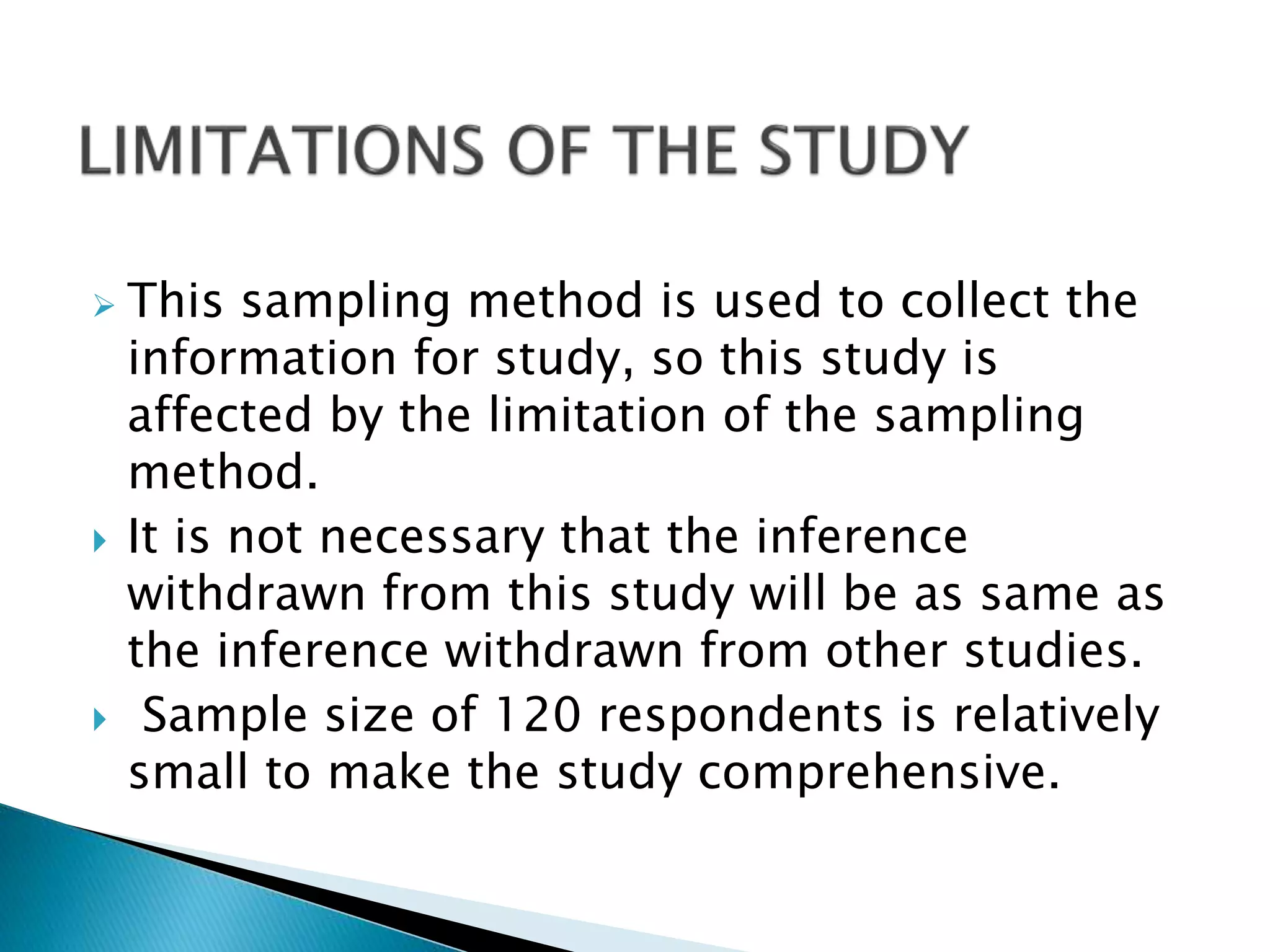
 This sampling method is used to collect the
information for study, so this study is
affected by the limitation of the sampling
method.
 It is not necessary that the inference
withdrawn from this study will be as same as
the inference withdrawn from other studies.
 Sample size of 120 respondents is relatively
small to make the study comprehensive.
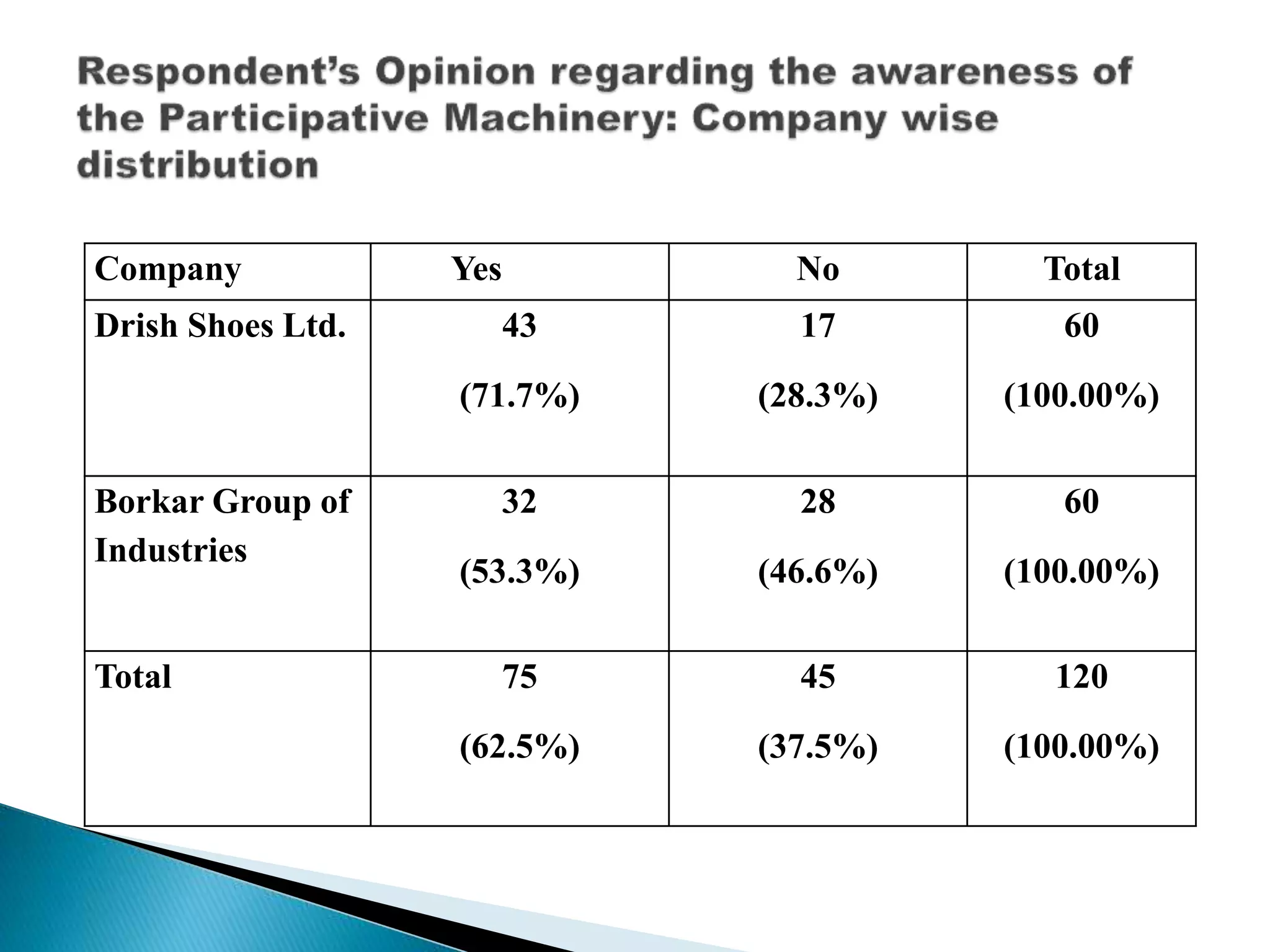
Company Yes No Total
Drish Shoes Ltd. 43
(71.7%)
17
(28.3%)
60
(100.00%)
Borkar Group of
Industries
32
(53.3%)
28
(46.6%)
60
(100.00%)
Total 75
(62.5%)
45
(37.5%)
120
(100.00%)
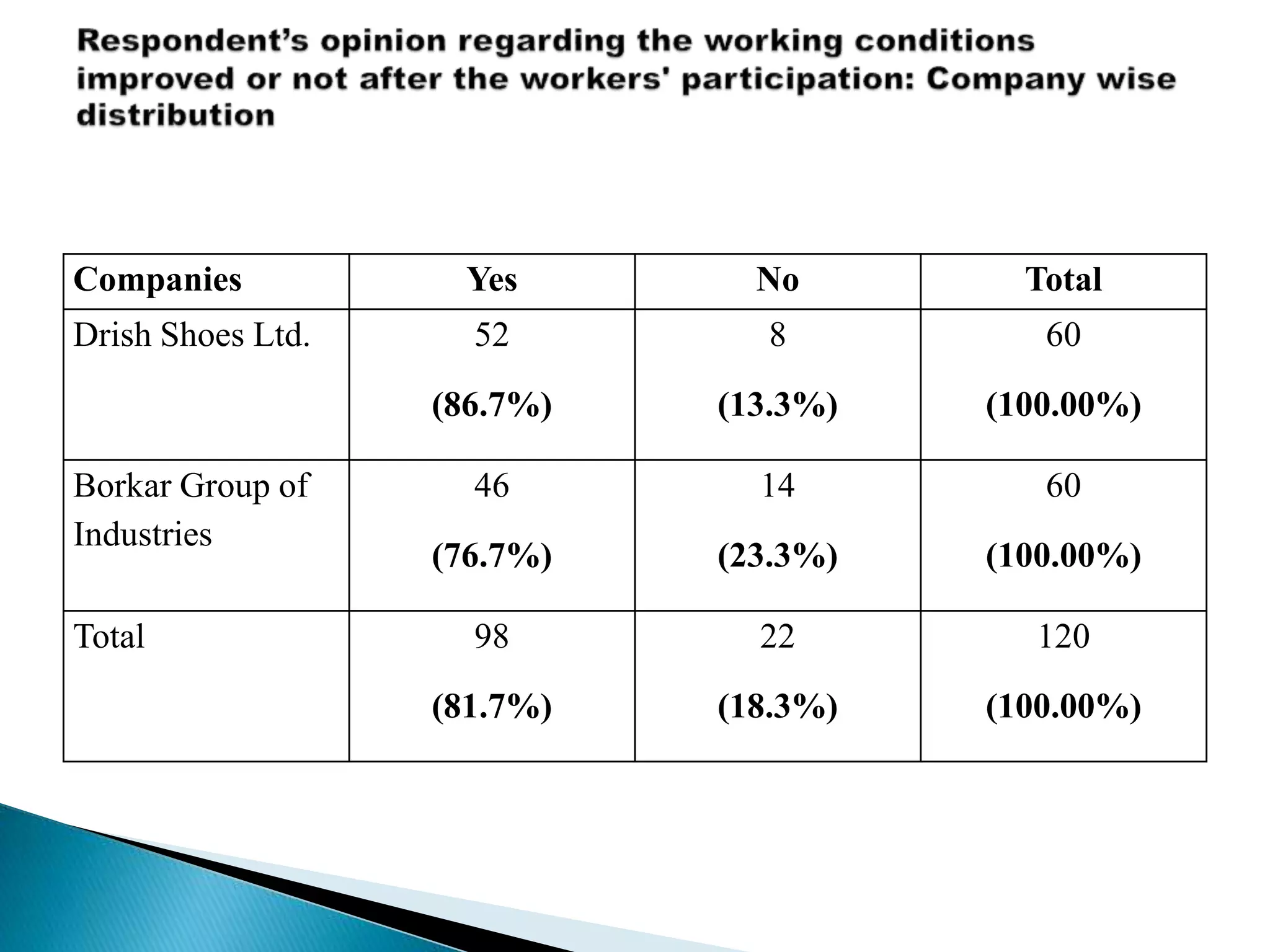
Companies Yes No Total
Drish Shoes Ltd. 52
(86.7%)
8
(13.3%)
60
(100.00%)
Borkar Group of
Industries
46
(76.7%)
14
(23.3%)
60
(100.00%)
Total 98
(81.7%)
22
(18.3%)
120
(100.00%)
 The majority of respondents opined that there
should be voluntary participation in
management.
 Most of workers from both the companies are
aware of the existence of participative machinery
in their organization.
 Out of the respondents who are aware of the
participative machinery in the case of Drish Shoes
Ltd. majority of the respondents opined that
work committees exist in their organization and
respondents’ from Borkar Group of Industries
opined that joint management council exist in
their organization.
 In both the companies the safety and welfare
measures are administered as per need and
requirement not as per provision and as per
insistence of unions.
 Respondents from both the companies
opined that their working conditions has
been improved after the introduction of WPM
scheme
Workers Participation in Management has assumed great
importance these days because it reduces industrial unrest and
helps in dispelling employees misunderstanding about the
outlook of management in industry. In a nutshell, it can be
concluded that workers have different opinion regarding their
participation, forms of WPM and also regarding their
preference. The Majority of workers are found in favour of
WPM. Workers Participation in Management may reduce
alienation or increase personal fulfilment of workers. It also
influences efficiency in various direct and indirect ways.
Careful measurement and calculation are required to assess the
net effect of participation upon efficiency and economic factor.
 From the analysis, it is clear that Workers
Participation in Management is cooperative in
manufacturing industries. Some of the workers
responded that management cooperation is poor,
so it should be improved by free flow of
communication and information with the
workers' management should evolve a system of
sharing the fruits of participation.
 Representatives for participation in management
should be chosen by the election than
nomination by management and union.
 For spreading the WPM scheme, the most
relevant measures are spread of education
and creating consciousness among the labour
for their rights.
 Govt. should also make sincere efforts for
strengthening the WPM scheme.

Worker’s Participation in Management Decision making – with special reference to Manufacturing Industries.

  • 1.
    Worker’s Participation inManagement Decision making – with special reference to Manufacturing Industries. Gurjeet kaur(Assistant Professor, BUEST) Ashu Saini (MBA student) Abhishek(MBA student)
  • 2.
     In recentyears research and discussions on workers' participation in decision-making have dominated much of management literature. In its broadest possible sense, workers' participation means wider involvement and participation by a company's employee in the decision making process of that organization. With the outbreak of the First World War, an acute industrial unrest was experienced in those countries where its impact was intense. In countries like England, West Germany, France and the USA because labour was treated as “commodity of commerce”
  • 3.
    A system ofcommunication and consultation, either formal or informal ,by which employees of an organization are kept informed about the affairs of an undertaking and through which they express their opinion and contribute to the management decisions.
  • 4.
    Information participation: Itinsures that employees are able to receive information and express their views pertaining to the matter of general economic importance. Consultative importance: Here workers are consulted on the matters of employee welfare such as work, safety and health. However , final decision always rests with the top-level management, as employees views are only advisory in nature
  • 5.
    Administrative participation: Here,decisions are already taken by the management come to employees, preferably with alternatives and employees have to select the best from those for implementation. Decisive participation : Highest level of participation where decision are jointly taken on the matters relating to production , welfare etc.
  • 6.
     Suggestion schemes Work committee  Joint management councils  Joint councils  Shop councils
  • 7.
     To studythe awareness of worker participation in management.  To study the working conditions of workers in manufacturing Industries.
  • 8.
     In orderto meet the objectives of the present study, sampling techniques are used.  At the first stage with the help of convenient sampling, two enterprises Drish Shoes Limited and Borkar Group of Industries are selected from Manufacturing Industries in Nalagarh, District- Solan in Himachal Pradesh.
  • 9.
     At thesecond stage, while adopting the quota sampling, a sample of 120 respondents @ 60 workers from each enterprise (60 × 2 = 120) have been selected. A special care has been taken that the respondents of different age groups, education levels and locality are selected.
  • 10.
    For accomplishing theobjectives of the study, both Primary & Secondary data have been utilized. TOOLS OF ANALYSIS:  MATHEMATICAL TOOLS In the present research work, mathematical tools viz. Percentages method and simple average have been used. STATISTICAL TOOLS
  • 11.
     This samplingmethod is used to collect the information for study, so this study is affected by the limitation of the sampling method.  It is not necessary that the inference withdrawn from this study will be as same as the inference withdrawn from other studies.  Sample size of 120 respondents is relatively small to make the study comprehensive.
  • 12.
    Company Yes NoTotal Drish Shoes Ltd. 43 (71.7%) 17 (28.3%) 60 (100.00%) Borkar Group of Industries 32 (53.3%) 28 (46.6%) 60 (100.00%) Total 75 (62.5%) 45 (37.5%) 120 (100.00%)
  • 13.
    Companies Yes NoTotal Drish Shoes Ltd. 52 (86.7%) 8 (13.3%) 60 (100.00%) Borkar Group of Industries 46 (76.7%) 14 (23.3%) 60 (100.00%) Total 98 (81.7%) 22 (18.3%) 120 (100.00%)
  • 14.
     The majorityof respondents opined that there should be voluntary participation in management.  Most of workers from both the companies are aware of the existence of participative machinery in their organization.  Out of the respondents who are aware of the participative machinery in the case of Drish Shoes Ltd. majority of the respondents opined that work committees exist in their organization and respondents’ from Borkar Group of Industries opined that joint management council exist in their organization.
  • 15.
     In boththe companies the safety and welfare measures are administered as per need and requirement not as per provision and as per insistence of unions.  Respondents from both the companies opined that their working conditions has been improved after the introduction of WPM scheme
  • 16.
    Workers Participation inManagement has assumed great importance these days because it reduces industrial unrest and helps in dispelling employees misunderstanding about the outlook of management in industry. In a nutshell, it can be concluded that workers have different opinion regarding their participation, forms of WPM and also regarding their preference. The Majority of workers are found in favour of WPM. Workers Participation in Management may reduce alienation or increase personal fulfilment of workers. It also influences efficiency in various direct and indirect ways. Careful measurement and calculation are required to assess the net effect of participation upon efficiency and economic factor.
  • 17.
     From theanalysis, it is clear that Workers Participation in Management is cooperative in manufacturing industries. Some of the workers responded that management cooperation is poor, so it should be improved by free flow of communication and information with the workers' management should evolve a system of sharing the fruits of participation.  Representatives for participation in management should be chosen by the election than nomination by management and union.
  • 18.
     For spreadingthe WPM scheme, the most relevant measures are spread of education and creating consciousness among the labour for their rights.  Govt. should also make sincere efforts for strengthening the WPM scheme.