By:
Nidhi Kumari
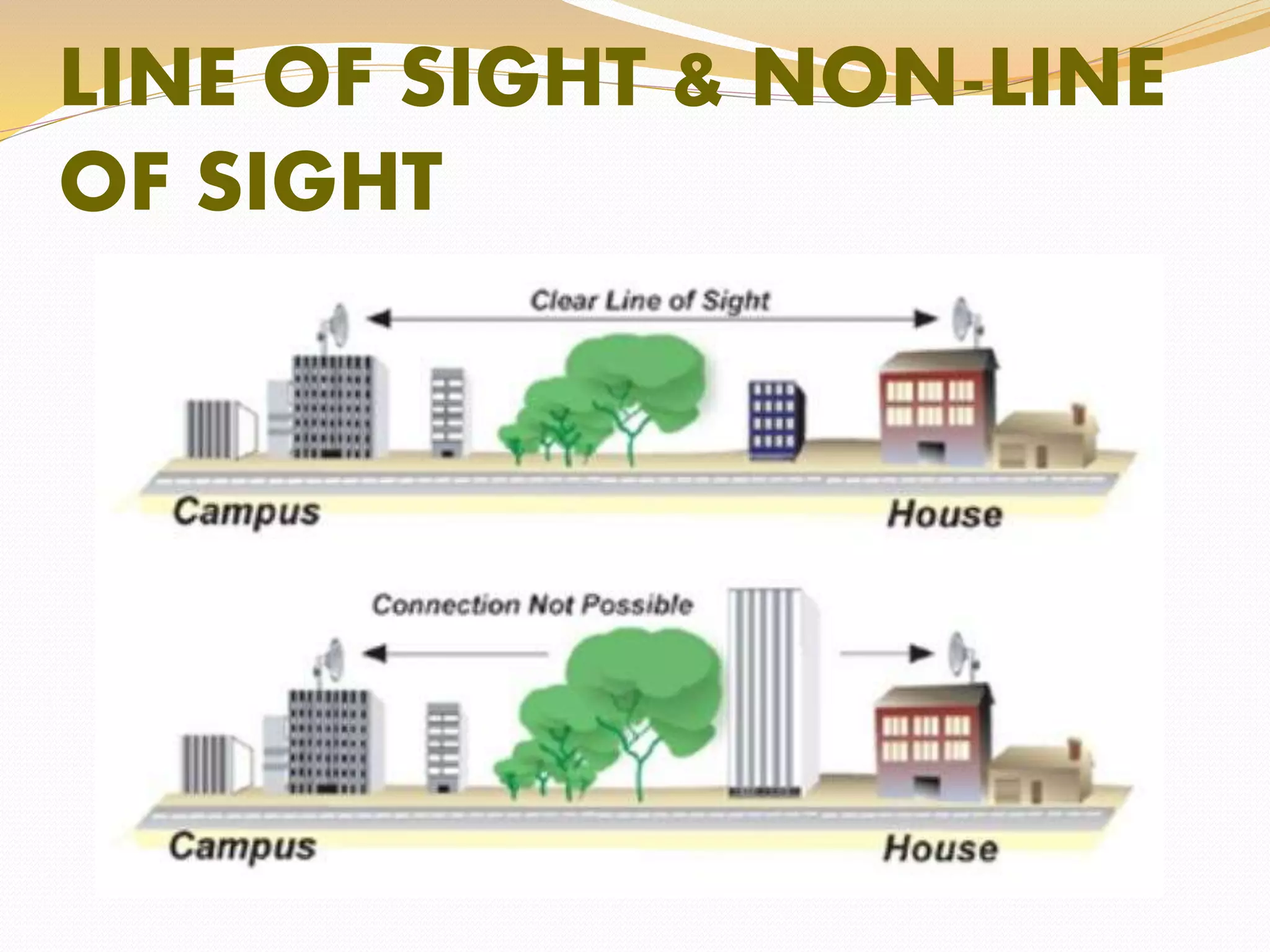
LINE OF SIGHT & NON-LINE
OF SIGHT
IMPORTANCE OF LOS
IDENTIFICATION
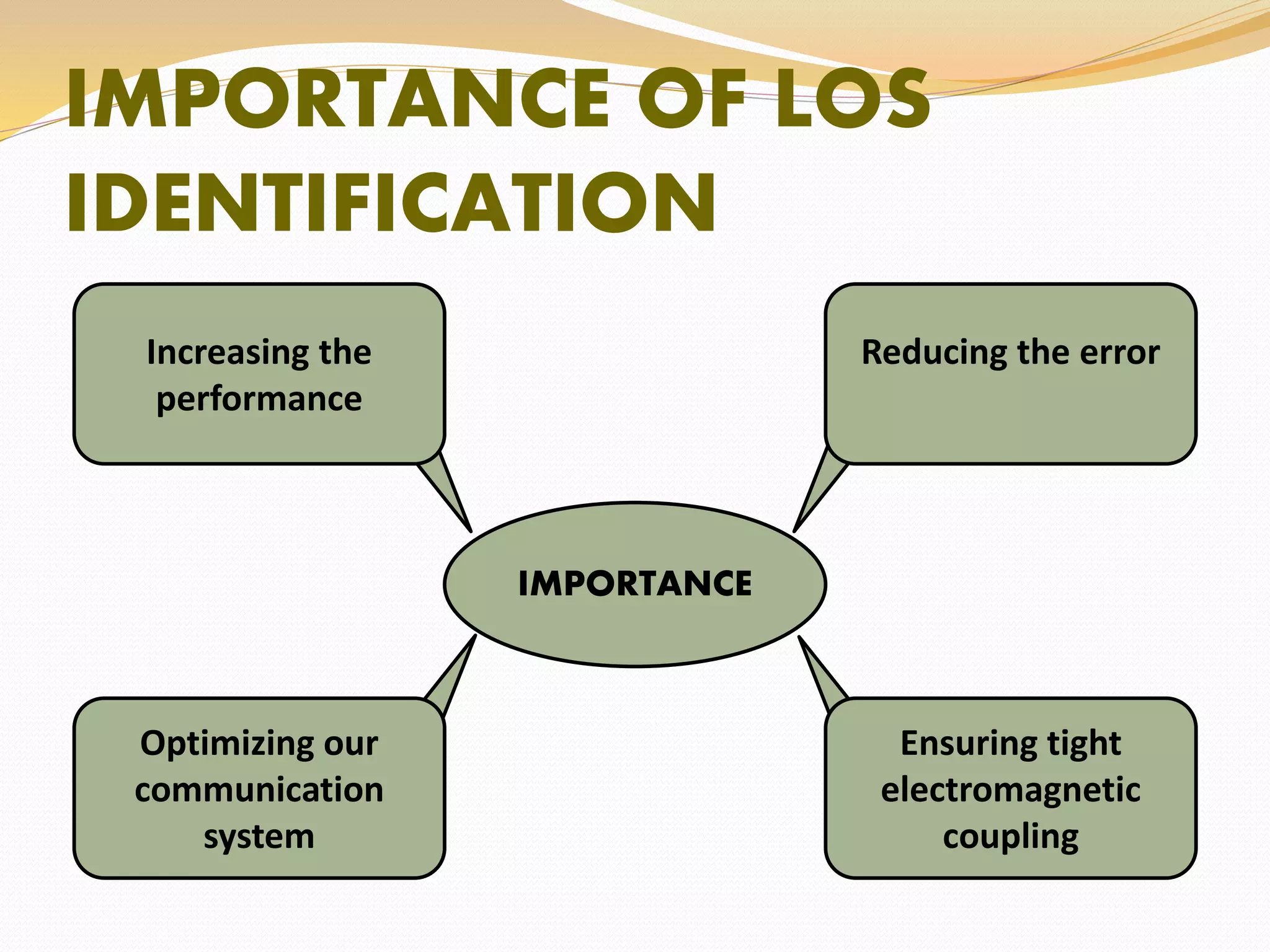
IMPORTANCE
Increasing the
performance
Ensuring tight
electromagnetic
coupling
Reducing the error
Optimizing our
communication
system
CHALLENGES IN LOS
IDENTIFICATION
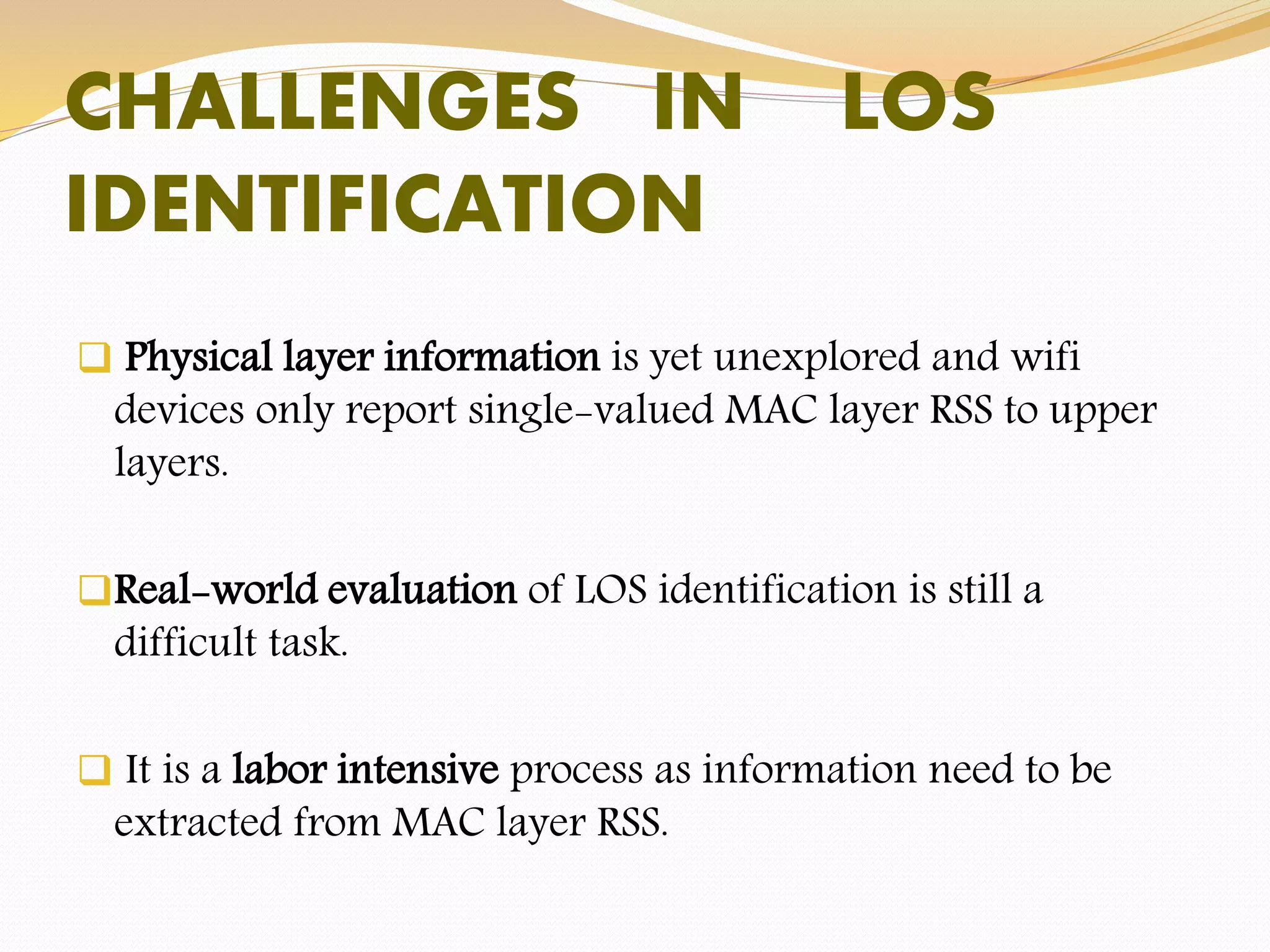
 Physical layer information is yet unexplored and wifi
devices only report single-valued MAC layer RSS to upper
layers.
Real-world evaluation of LOS identification is still a
difficult task.
 It is a labor intensive process as information need to be
extracted from MAC layer RSS.
INTRODUCTION
In this indoor LOS identification technique we exploit
channel state information (CSI) from the PHY layer to
identify the availability of LOS component indoors .
 Use of natural mobility to magnify the distinction
between LOS and NLOS conditions.
 Use of frequency diversity to reveal the spatial
disturbance of NLOS propagation.
MEASUREMENT AND
INFORMATION EXTRACTION
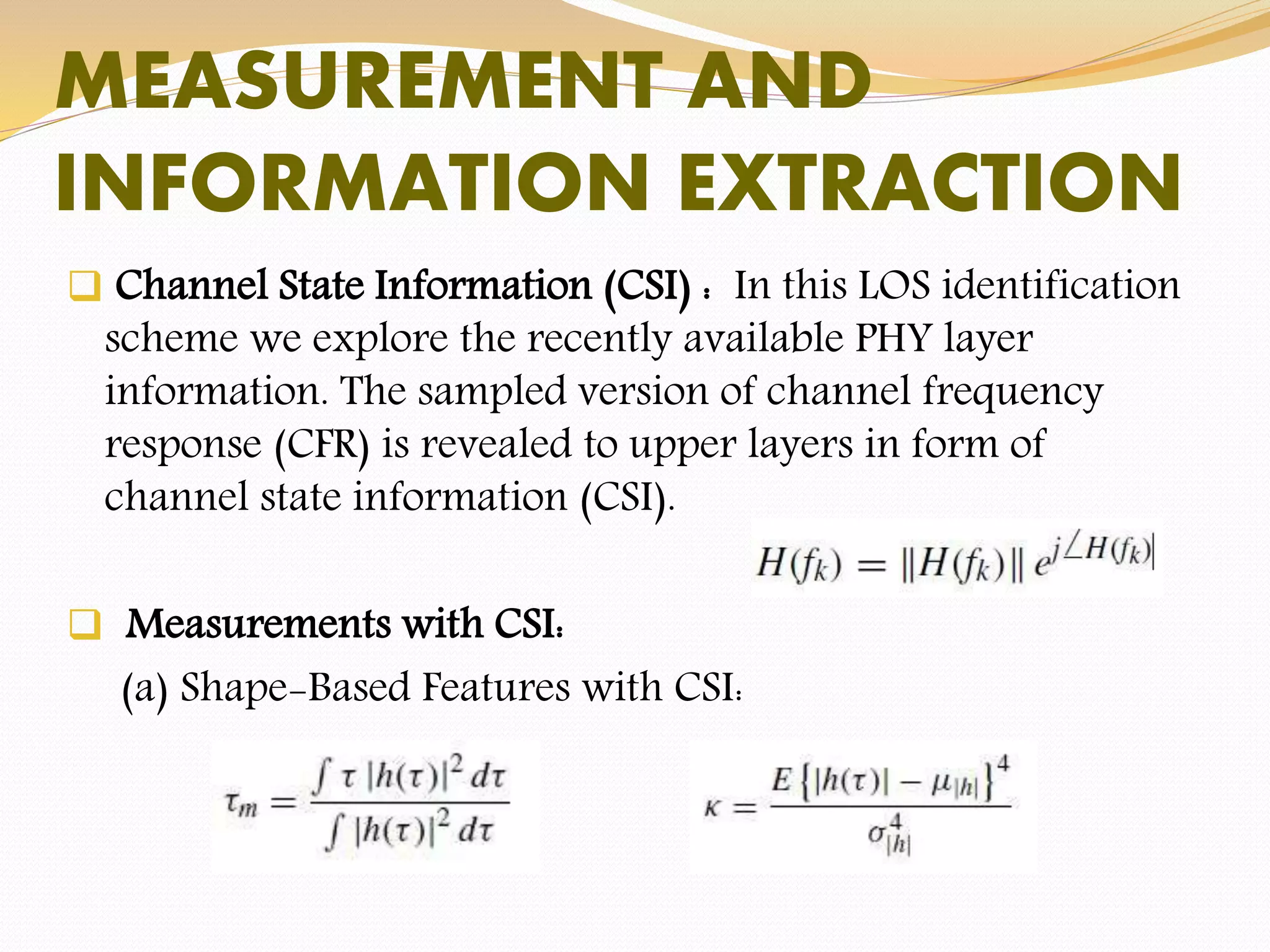
 Channel State Information (CSI) : In this LOS identification
scheme we explore the recently available PHY layer
information. The sampled version of channel frequency
response (CFR) is revealed to upper layers in form of
channel state information (CSI).
 Measurements with CSI:
(a) Shape-Based Features with CSI:
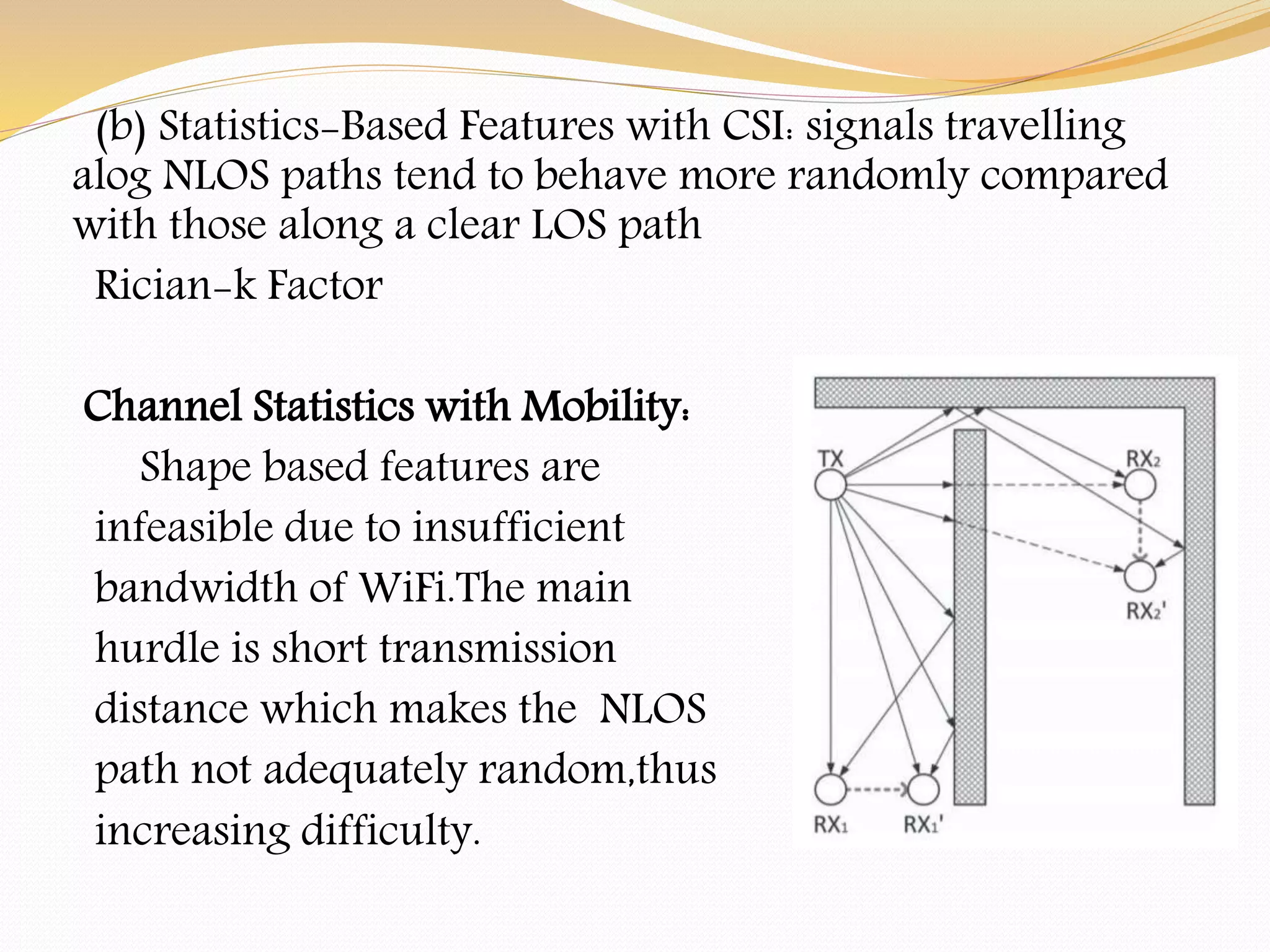
(b) Statistics-Based Features with CSI: signals travelling
alog NLOS paths tend to behave more randomly compared
with those along a clear LOS path
Rician-k Factor
Channel Statistics with Mobility:
Shape based features are
infeasible due to insufficient
bandwidth of WiFi.The main
hurdle is short transmission
distance which makes the NLOS
path not adequately random,thus
increasing difficulty.
LOS IDENTIFICATION
 Preprocessing: Since lack of time and frequency
synchronization induces phase noise when measuring
channel response we revise the phase to reduce error.
 Normalization: To make LOS identification independent
of power attenuation we normalize CIR samples and CSI
amplitudes by dividing them by average amplitude.
 Identification: For a set of normalized CIR and CSI
amplitude from N packets,
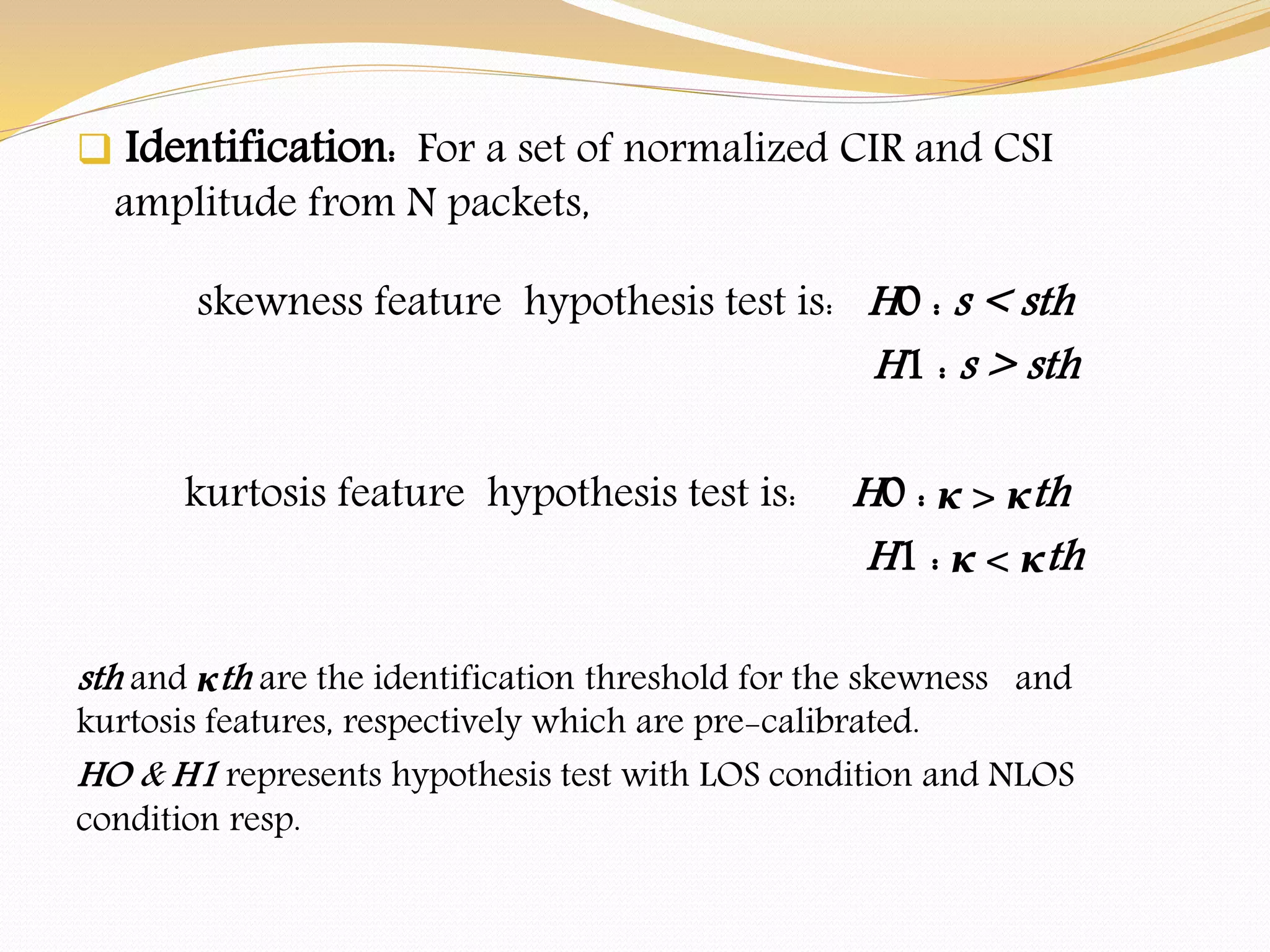
skewness feature hypothesis test is: H0 : s < sth
H1 : s > sth
kurtosis feature hypothesis test is: H0 : κ > κth
H1 : κ < κth
sth and κth are the identification threshold for the skewness and
kurtosis features, respectively which are pre-calibrated.
HO & H1 represents hypothesis test with LOS condition and NLOS
condition resp.
OVERALL PERFORMANCE
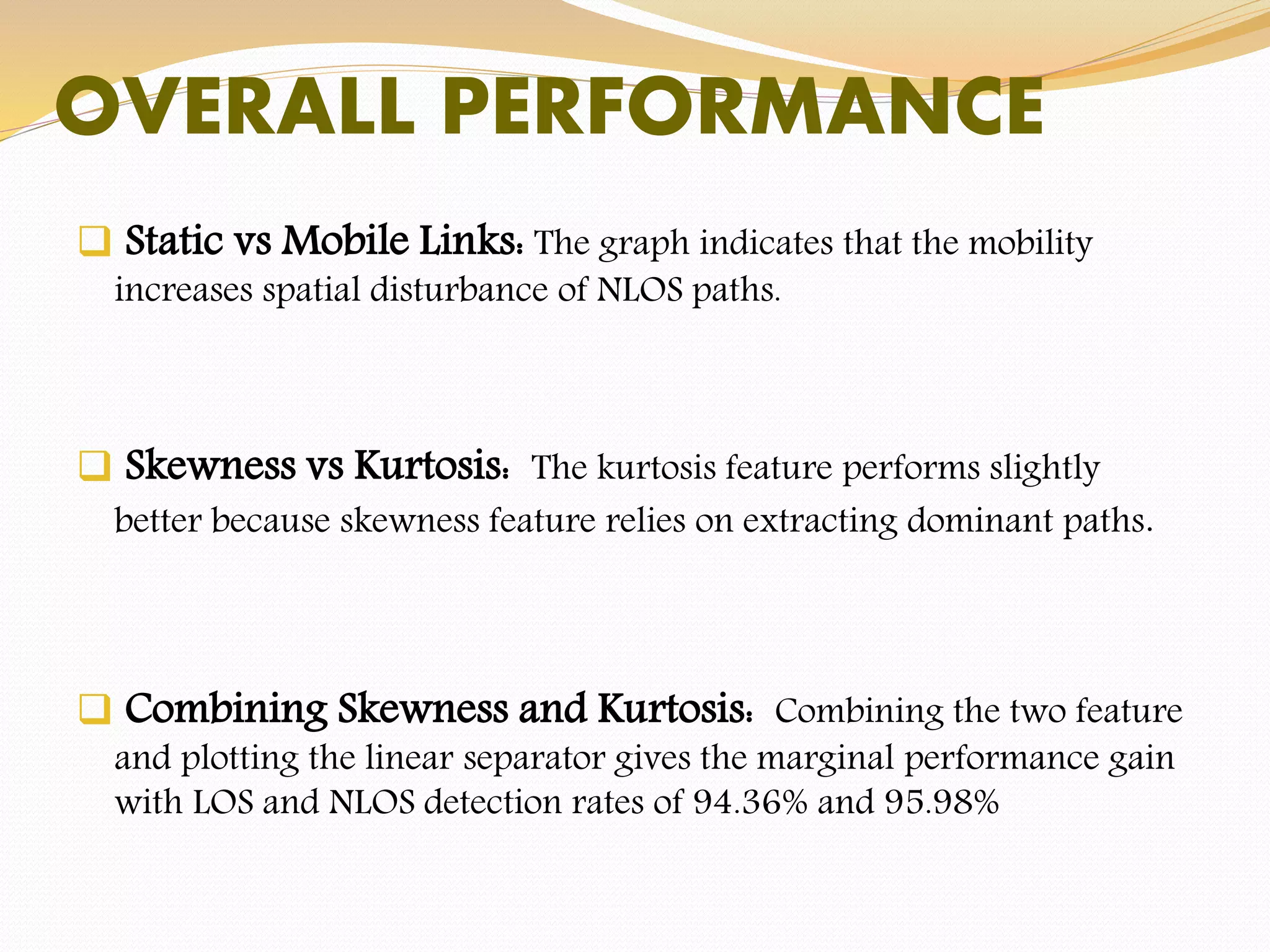
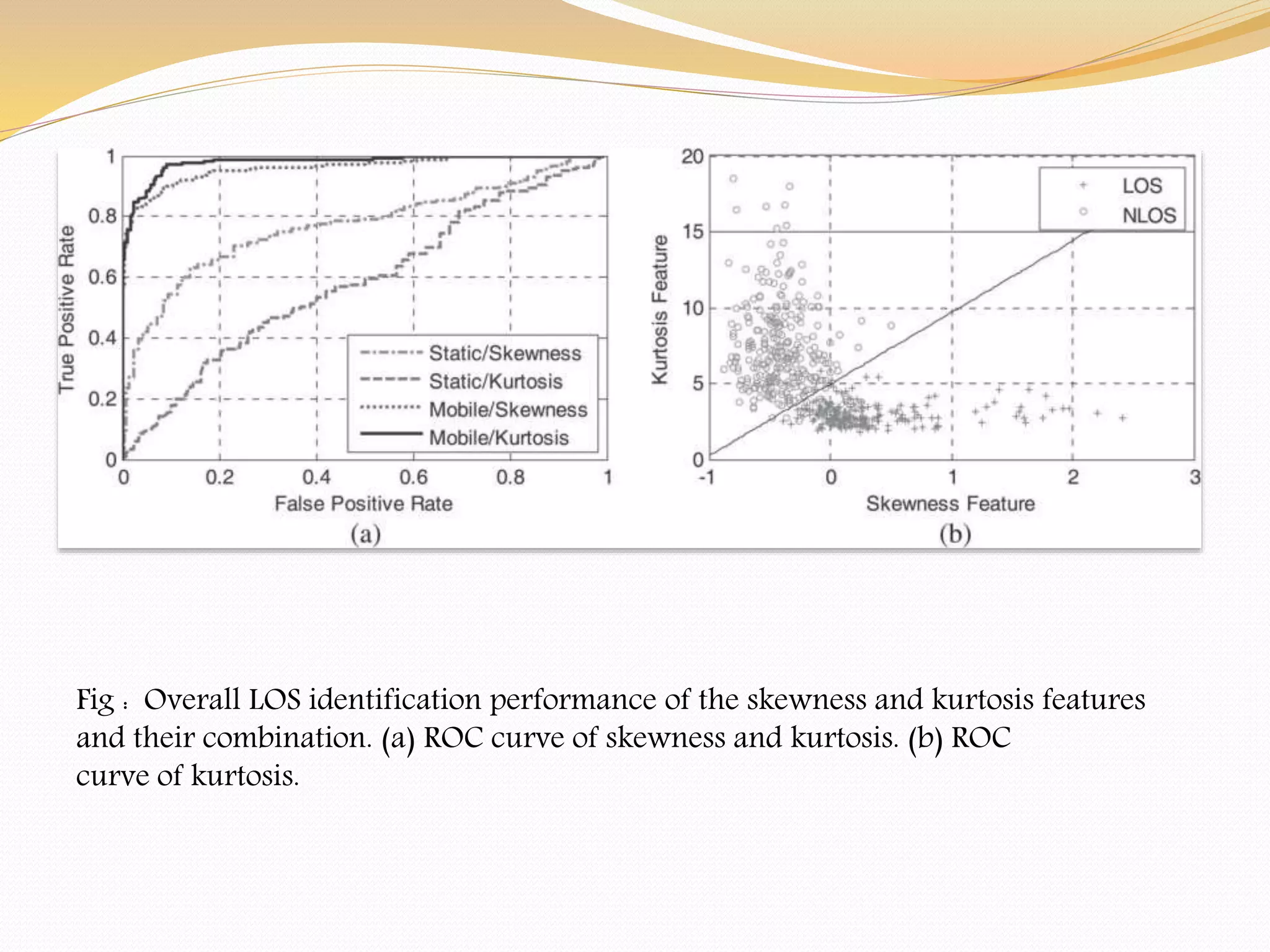
 Static vs Mobile Links: The graph indicates that the mobility
increases spatial disturbance of NLOS paths.
 Skewness vs Kurtosis: The kurtosis feature performs slightly
better because skewness feature relies on extracting dominant paths.
 Combining Skewness and Kurtosis: Combining the two feature
and plotting the linear separator gives the marginal performance gain
with LOS and NLOS detection rates of 94.36% and 95.98%
Fig : Overall LOS identification performance of the skewness and kurtosis features
and their combination. (a) ROC curve of skewness and kurtosis. (b) ROC
curve of kurtosis.
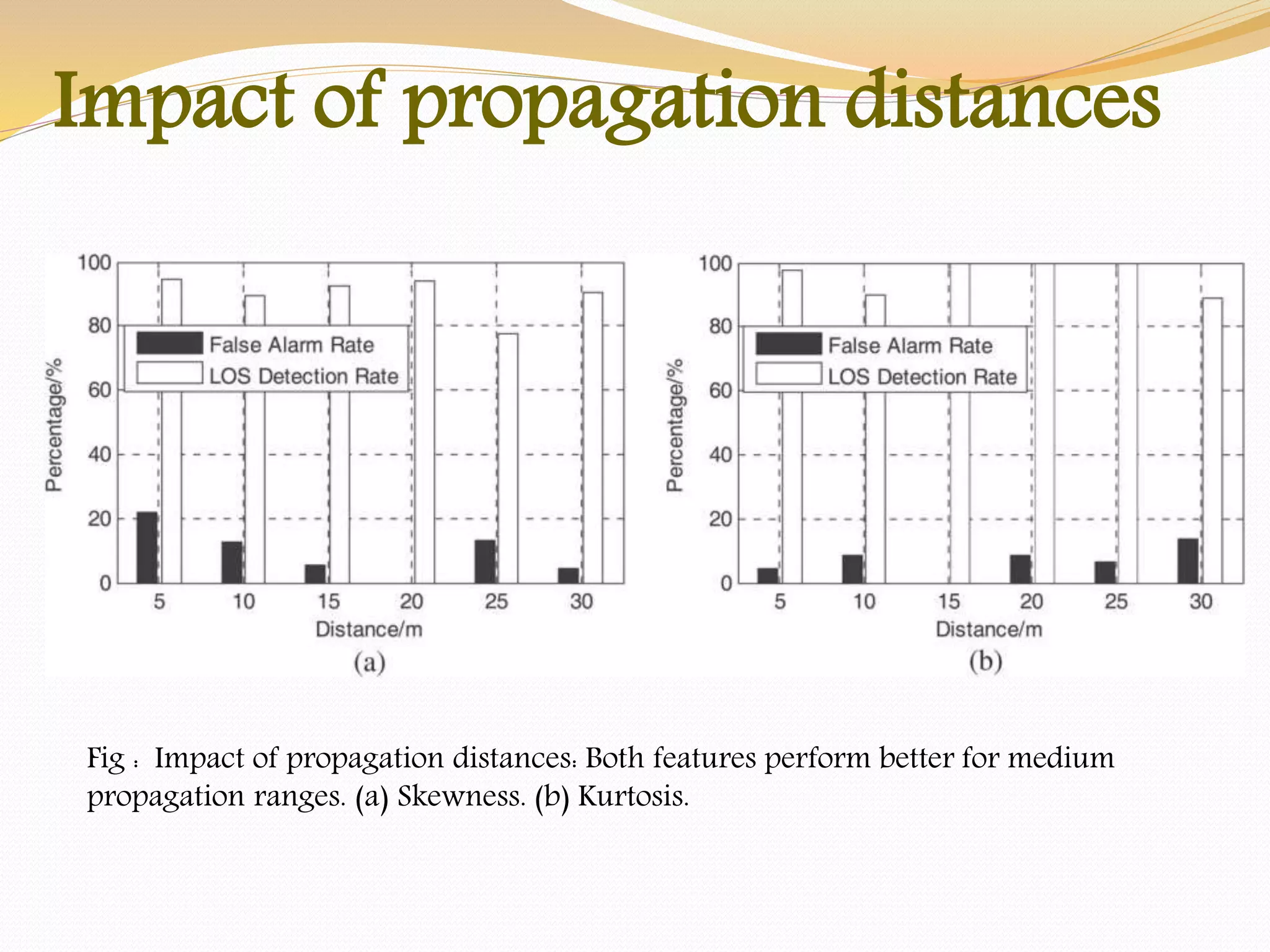
Fig : Impact of propagation distances: Both features perform better for medium
propagation ranges. (a) Skewness. (b) Kurtosis.
Impact of propagation distances
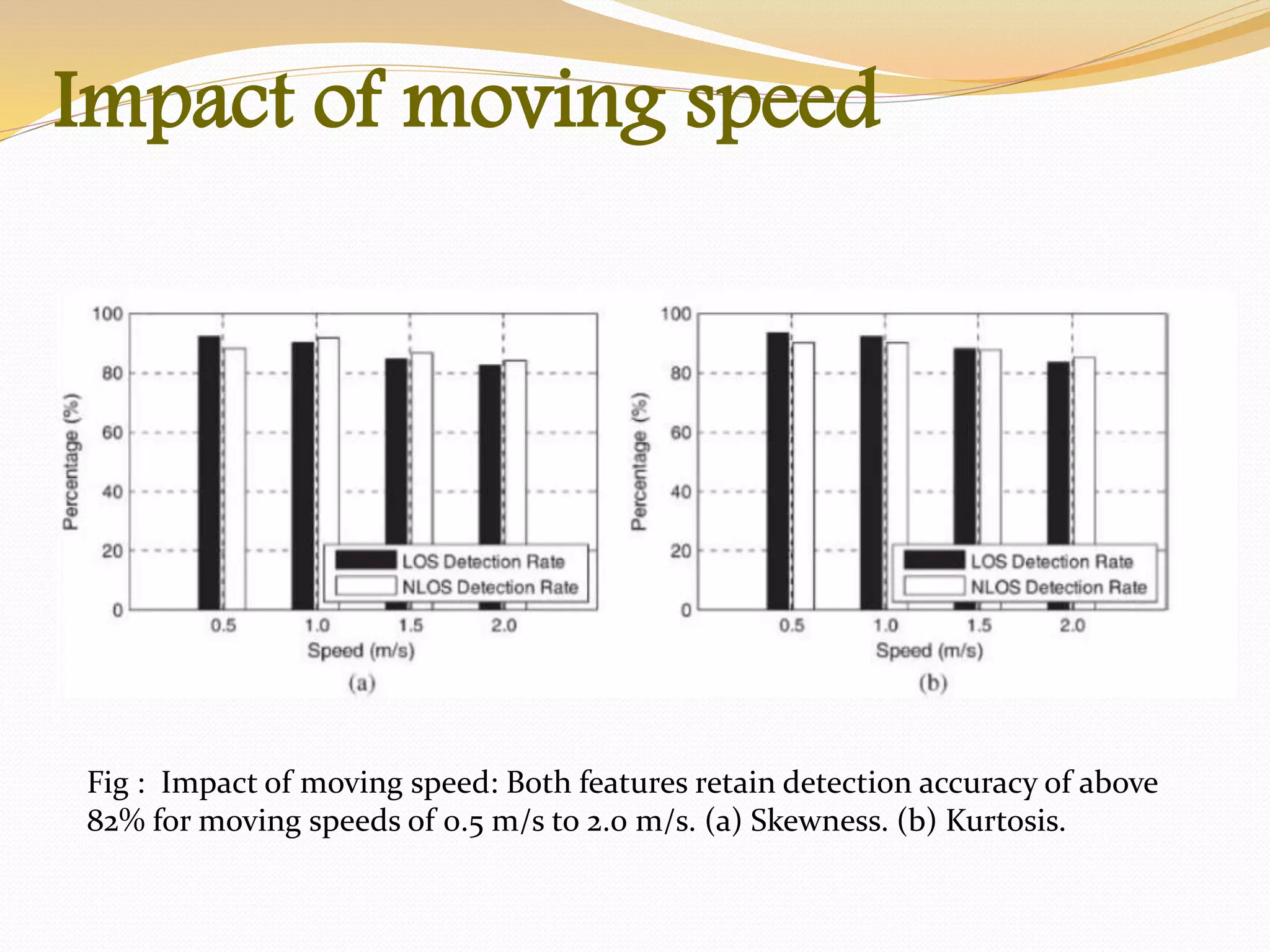
Fig : Impact of moving speed: Both features retain detection accuracy of above
82% for moving speeds of 0.5 m/s to 2.0 m/s. (a) Skewness. (b) Kurtosis.
Impact of moving speed
FUTURE SCOPE
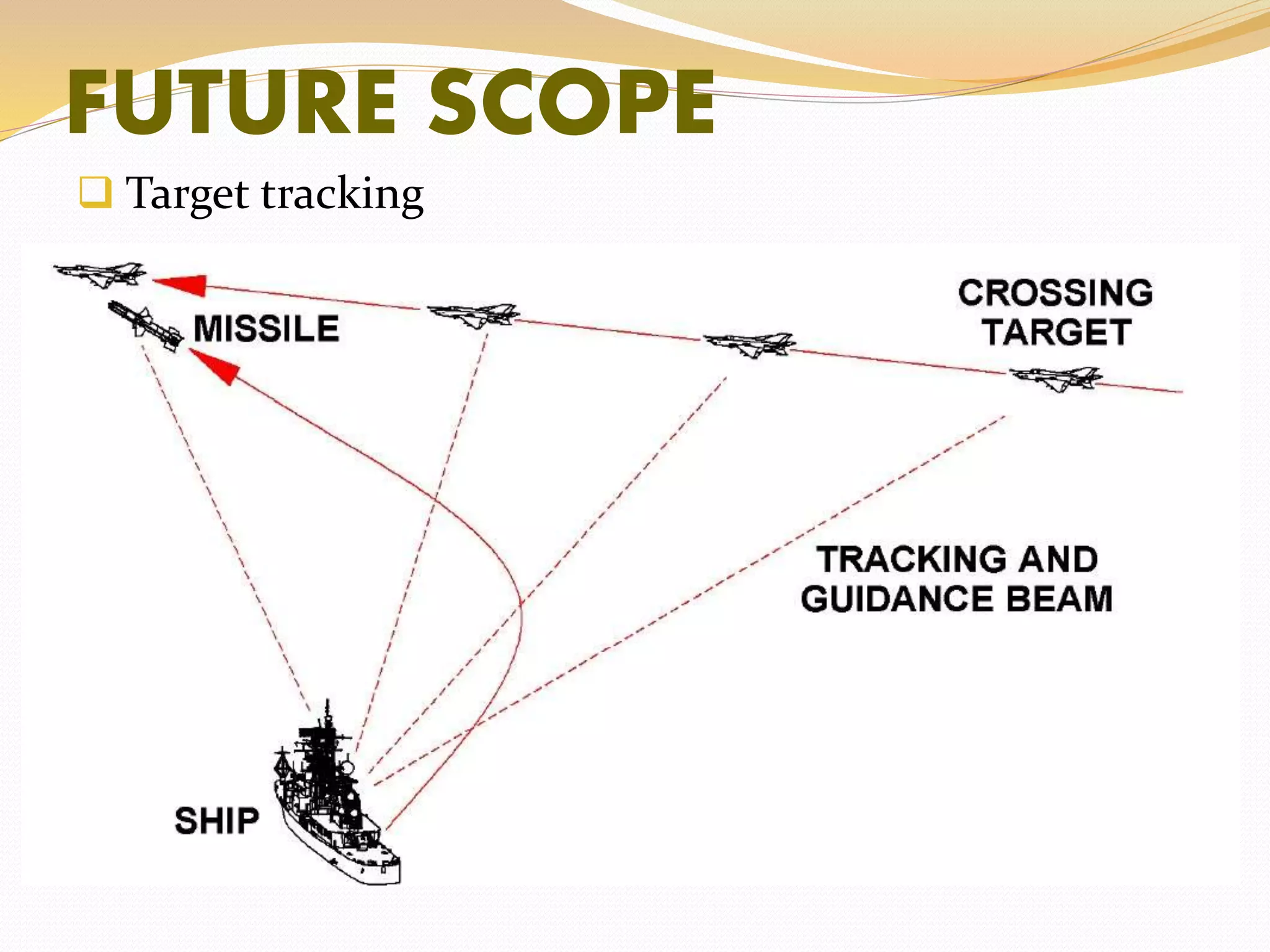
 Target tracking
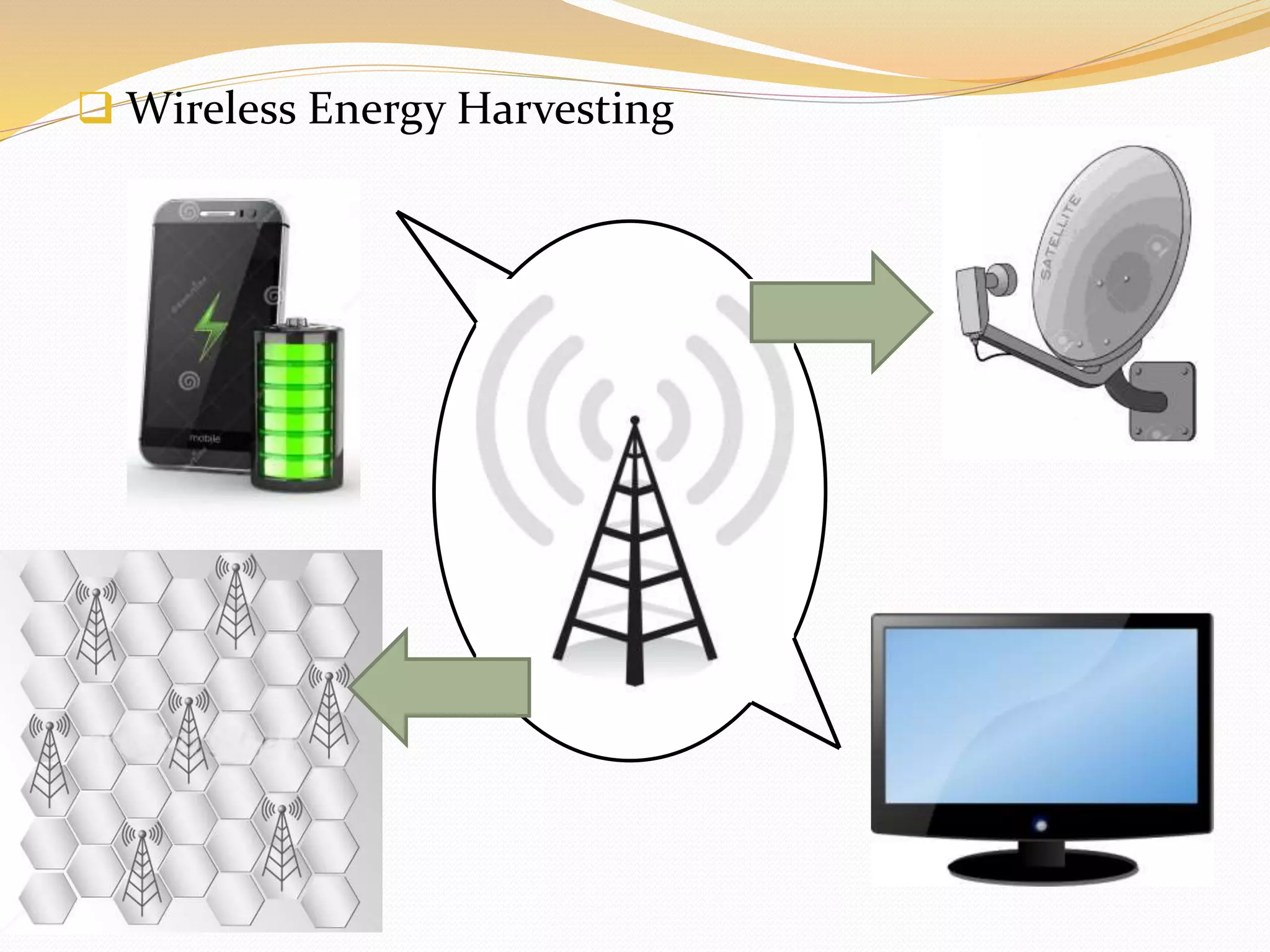
 Wireless Energy Harvesting
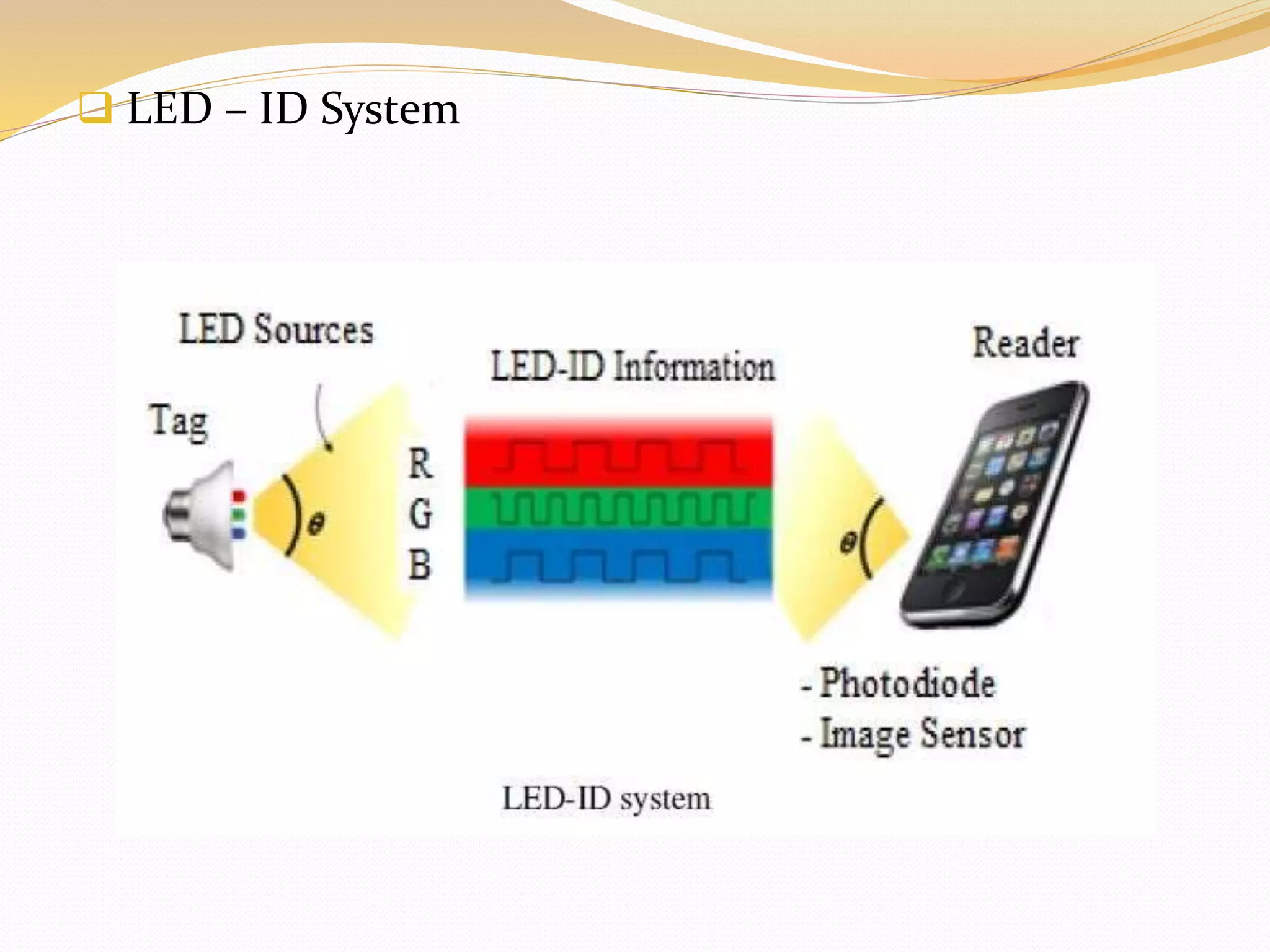
 LED – ID System
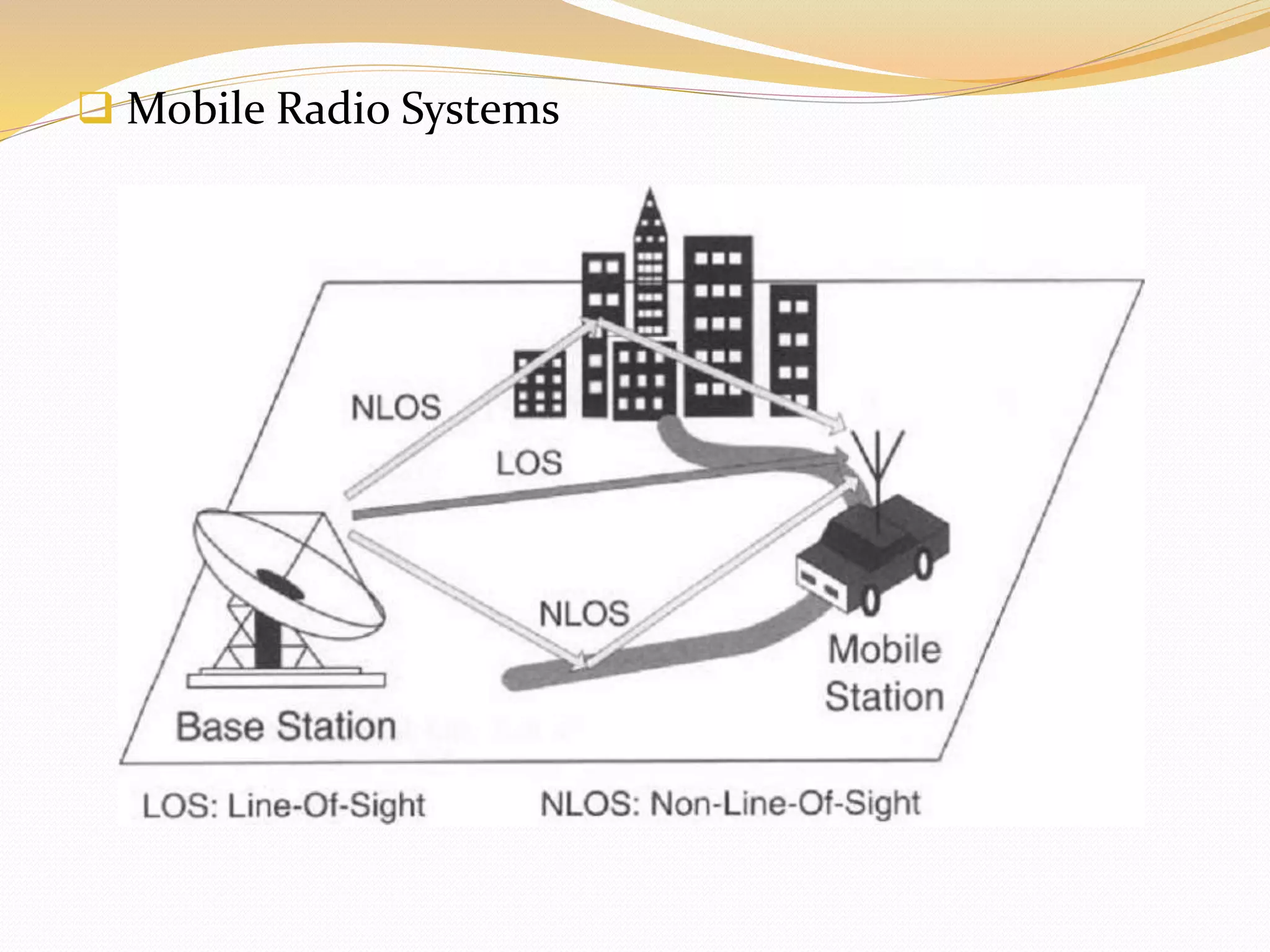
 Mobile Radio Systems
 PHY layer information to identify LOS conditions with
wifi.
 Explore skewness and kurtosis features for LOS
identification.
 Combination of skewness and kurtosis feature gives LOS
and NLOS identification rates around 95%.
CONCLUSION
REFERENCES
 “WiFi-Based Indoor Line-of-Sight Identification” IEEE Journel
published in November 2015 – base paper
J. Borras, P. Hatrack, and N. Mandayam, “Decision theoretic
framework for NLOS identification,” in Proc. IEEE Veh. Technol.
Conf., 1998.
 J. Lin, “Wireless power transfer for mobile applications, and health
effects,” IEEE Antennas Propag. Mag., vol. 55, no. 2.
 https://en.wikipedia.org/wiki/OSI_model
Wifi-based Indoor line-of-sight identification

Wifi-based Indoor line-of-sight identification

  • 1.
  • 2.
    LINE OF SIGHT& NON-LINE OF SIGHT
  • 3.
    IMPORTANCE OF LOS IDENTIFICATION IMPORTANCE Increasingthe performance Ensuring tight electromagnetic coupling Reducing the error Optimizing our communication system
  • 4.
    CHALLENGES IN LOS IDENTIFICATION Physical layer information is yet unexplored and wifi devices only report single-valued MAC layer RSS to upper layers. Real-world evaluation of LOS identification is still a difficult task.  It is a labor intensive process as information need to be extracted from MAC layer RSS.
  • 5.
    INTRODUCTION In this indoorLOS identification technique we exploit channel state information (CSI) from the PHY layer to identify the availability of LOS component indoors .  Use of natural mobility to magnify the distinction between LOS and NLOS conditions.  Use of frequency diversity to reveal the spatial disturbance of NLOS propagation.
  • 6.
    MEASUREMENT AND INFORMATION EXTRACTION Channel State Information (CSI) : In this LOS identification scheme we explore the recently available PHY layer information. The sampled version of channel frequency response (CFR) is revealed to upper layers in form of channel state information (CSI).  Measurements with CSI: (a) Shape-Based Features with CSI:
  • 7.
    (b) Statistics-Based Featureswith CSI: signals travelling alog NLOS paths tend to behave more randomly compared with those along a clear LOS path Rician-k Factor Channel Statistics with Mobility: Shape based features are infeasible due to insufficient bandwidth of WiFi.The main hurdle is short transmission distance which makes the NLOS path not adequately random,thus increasing difficulty.
  • 8.
    LOS IDENTIFICATION  Preprocessing:Since lack of time and frequency synchronization induces phase noise when measuring channel response we revise the phase to reduce error.  Normalization: To make LOS identification independent of power attenuation we normalize CIR samples and CSI amplitudes by dividing them by average amplitude.
  • 9.
     Identification: Fora set of normalized CIR and CSI amplitude from N packets, skewness feature hypothesis test is: H0 : s < sth H1 : s > sth kurtosis feature hypothesis test is: H0 : κ > κth H1 : κ < κth sth and κth are the identification threshold for the skewness and kurtosis features, respectively which are pre-calibrated. HO & H1 represents hypothesis test with LOS condition and NLOS condition resp.
  • 10.
    OVERALL PERFORMANCE  Staticvs Mobile Links: The graph indicates that the mobility increases spatial disturbance of NLOS paths.  Skewness vs Kurtosis: The kurtosis feature performs slightly better because skewness feature relies on extracting dominant paths.  Combining Skewness and Kurtosis: Combining the two feature and plotting the linear separator gives the marginal performance gain with LOS and NLOS detection rates of 94.36% and 95.98%
  • 11.
    Fig : OverallLOS identification performance of the skewness and kurtosis features and their combination. (a) ROC curve of skewness and kurtosis. (b) ROC curve of kurtosis.
  • 12.
    Fig : Impactof propagation distances: Both features perform better for medium propagation ranges. (a) Skewness. (b) Kurtosis. Impact of propagation distances
  • 13.
    Fig : Impactof moving speed: Both features retain detection accuracy of above 82% for moving speeds of 0.5 m/s to 2.0 m/s. (a) Skewness. (b) Kurtosis. Impact of moving speed
  • 14.
  • 15.
  • 16.
     LED –ID System
  • 17.
  • 18.
     PHY layerinformation to identify LOS conditions with wifi.  Explore skewness and kurtosis features for LOS identification.  Combination of skewness and kurtosis feature gives LOS and NLOS identification rates around 95%. CONCLUSION
  • 19.
    REFERENCES  “WiFi-Based IndoorLine-of-Sight Identification” IEEE Journel published in November 2015 – base paper J. Borras, P. Hatrack, and N. Mandayam, “Decision theoretic framework for NLOS identification,” in Proc. IEEE Veh. Technol. Conf., 1998.  J. Lin, “Wireless power transfer for mobile applications, and health effects,” IEEE Antennas Propag. Mag., vol. 55, no. 2.  https://en.wikipedia.org/wiki/OSI_model