Understanding
SJS and TEN
Presented by
Jacynta F Pepin (RN)
Stevens-Johnson Syndrome (SJS) and
Toxic Epidermal Necrolysis (TEN)
 Life-threatening mucocutaneous diseases
 Within the spectrum of SCAR
• Resemble erythema multiforme majus (EMM)
• Mucosal involvement
• Epidermal necrosis
SJS and TEN
• SJS usually less severe
• Etiology, genetic susceptibility and
pathomechanism are same
• Mainly cause by drugs, infection or unknown
• Presents as medical emergency
Signs and Symptoms
Early sign:
• Fever
• Sore throat
• Cough
• Burning eyes
Signs and Symptoms
• Facial swelling
• Tongue swelling
• Hives
• Skin pain
• A red or purple skin rash that spreads within
hours to days
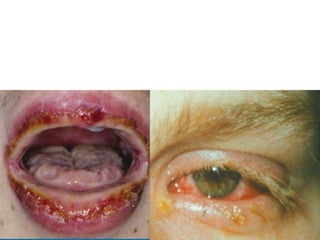
• Blisters on skin and mucous membranes
• Shedding (sloughing) of skin
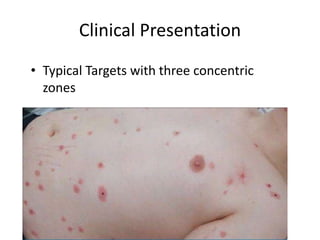
Clinical Presentation
• Typical Targets with three concentric
zones
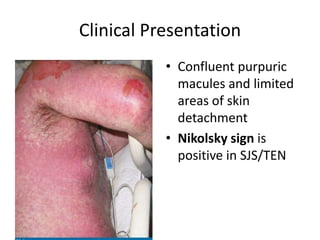
Clinical Presentation
• Confluent purpuric
macules and limited
areas of skin
detachment
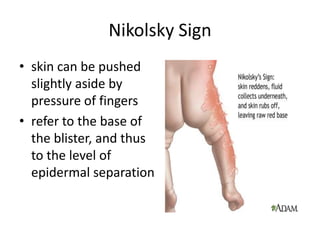
• Nikolsky sign is
positive in SJS/TEN
Nikolsky Sign
• skin can be pushed
slightly aside by
pressure of fingers
• refer to the base of
the blister, and thus
to the level of
epidermal separation
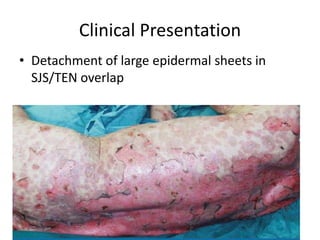
Clinical Presentation
• Detachment of large epidermal sheets in
SJS/TEN overlap
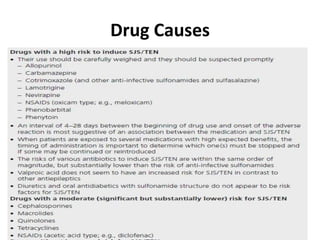
Drug Causes
Infectious causes
• Herpes (herpes simplex or herpes zoster)
• Influenza
• HIV
• Diphtheria
• Typhoid
• Hepatitis
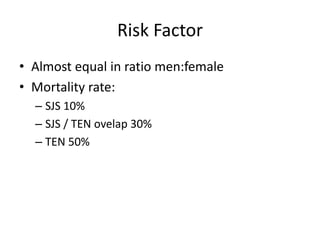
Risk Factor
• Almost equal in ratio men:female
• Mortality rate:
– SJS 10%
– SJS / TEN ovelap 30%
– TEN 50%
Therapeutic Consideration
• Treatment focuses on eliminating the
underlying cause, controlling symptoms and
minimizing complications.
• Recovery can take weeks to months,
depending on the severity of condition.
Topical Treatment
• Blister should be left in place
• Erosion: Chlorhexidine, octenisept,
polyhexanide
• High room temp
• Debride skin under GA and apply allograft
Supportive Treatment
• ICU / Burn Unit
• Fluid replacement 0.7ml/kg/%BSA affected
• Albumin 1ml/kg/%skin detachment
• Nutritional
Medications
• Analgesic
• Antihistamines
• Antibiotics, when needed
• Steroids (topical/oral)
• Intravenous corticosteroids
• Immunoglobulin intravenous (IVIG)
Complication
• Transdermal fluid loss- hypovolumia
• Electrolyte imbalance- katabolic metabolism
• Septicemia – usually induced from CVL
• Multiorgan failure
Summary
• SJS and TEN are considered as one disease
entity of different severity.
• SJS/TEN is mainly caused by drugs, but also by
infections and probably other risk factors not
yet identified.
Summary
• The cytolytic protein granulysin was identified
a marker for the severity of the disease based
on skin detachment.
• No treatment has been identified to be
capable of halting the progression of skin
detachment yet.
Summary
• supportive management is crucial to improve
the patient’s state.
• Despite all therapeutic efforts, mortality is
high and increases with disease severity,
patients’ age and underlying medical
conditions.
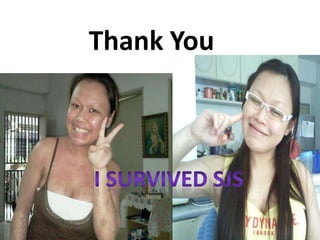
Thank You

What is stevens johnson syndrome?

  • 1.
    Understanding SJS and TEN Presentedby Jacynta F Pepin (RN)
  • 2.
    Stevens-Johnson Syndrome (SJS)and Toxic Epidermal Necrolysis (TEN)  Life-threatening mucocutaneous diseases  Within the spectrum of SCAR • Resemble erythema multiforme majus (EMM) • Mucosal involvement • Epidermal necrosis
  • 3.
    SJS and TEN •SJS usually less severe • Etiology, genetic susceptibility and pathomechanism are same • Mainly cause by drugs, infection or unknown • Presents as medical emergency
  • 4.
    Signs and Symptoms Earlysign: • Fever • Sore throat • Cough • Burning eyes
  • 5.
    Signs and Symptoms •Facial swelling • Tongue swelling • Hives • Skin pain • A red or purple skin rash that spreads within hours to days • Blisters on skin and mucous membranes • Shedding (sloughing) of skin
  • 6.
    Clinical Presentation • TypicalTargets with three concentric zones
  • 7.
    Clinical Presentation • Confluentpurpuric macules and limited areas of skin detachment • Nikolsky sign is positive in SJS/TEN
  • 8.
    Nikolsky Sign • skincan be pushed slightly aside by pressure of fingers • refer to the base of the blister, and thus to the level of epidermal separation
  • 9.
    Clinical Presentation • Detachmentof large epidermal sheets in SJS/TEN overlap
  • 11.
  • 12.
    Infectious causes • Herpes(herpes simplex or herpes zoster) • Influenza • HIV • Diphtheria • Typhoid • Hepatitis
  • 13.
    Risk Factor • Almostequal in ratio men:female • Mortality rate: – SJS 10% – SJS / TEN ovelap 30% – TEN 50%
  • 14.
    Therapeutic Consideration • Treatmentfocuses on eliminating the underlying cause, controlling symptoms and minimizing complications. • Recovery can take weeks to months, depending on the severity of condition.
  • 15.
    Topical Treatment • Blistershould be left in place • Erosion: Chlorhexidine, octenisept, polyhexanide • High room temp • Debride skin under GA and apply allograft
  • 16.
    Supportive Treatment • ICU/ Burn Unit • Fluid replacement 0.7ml/kg/%BSA affected • Albumin 1ml/kg/%skin detachment • Nutritional
  • 17.
    Medications • Analgesic • Antihistamines •Antibiotics, when needed • Steroids (topical/oral) • Intravenous corticosteroids • Immunoglobulin intravenous (IVIG)
  • 18.
    Complication • Transdermal fluidloss- hypovolumia • Electrolyte imbalance- katabolic metabolism • Septicemia – usually induced from CVL • Multiorgan failure
  • 19.
    Summary • SJS andTEN are considered as one disease entity of different severity. • SJS/TEN is mainly caused by drugs, but also by infections and probably other risk factors not yet identified.
  • 20.
    Summary • The cytolyticprotein granulysin was identified a marker for the severity of the disease based on skin detachment. • No treatment has been identified to be capable of halting the progression of skin detachment yet.
  • 21.
    Summary • supportive managementis crucial to improve the patient’s state. • Despite all therapeutic efforts, mortality is high and increases with disease severity, patients’ age and underlying medical conditions.
  • 22.