SEO 101:
The basics of search engine
       optimization
What is search engine
optimization (SEO)?
Search engine optimization or (SEO), is the process of
making your website more visible in search engines;
more specifically, the major search engines such as
Google, Yahoo, and Bing.
The Why and How:

Why does SEO matter, and how can it
         help a business?
Online visibility - As users turn to search engines more and more to find
businesses and their services, it is becoming increasingly important for a
business to be found online. Not only from an online visibility and
conversion standpoint, but for online reputation management purposes as
well.

Online leads and sales - SEO can help increase online leads and conversions
by optimizing a website for targeted, conversion-oriented website traffic
that is most likely to buy from you.

Making business decisions - Engaging in SEO can help you better
understand your customers shopping habits from data, and use that data to
make business decisions, both online and offline.
How do search engines work?
Search engines have four basic functions:

  Crawl websites - Like an explorer on a search
  Build an index – Similar to a library catalog
  Perform calculations – Like a mathematician
  Serve relevant results – Serve the best results
Think of a search engine as one
       BIG filing cabinet
Search engine spiders crawl the web, collecting
information from each website, and stores that
information when it is requested by a search engine
user.

Search engines serve results that it believes are the
most relevant to a search query, and it serves those
results in a ranking order of perceived importance.
SEO continues to evolve as people
change their search and shopping
              habits
Some quick numbers on local business searches


    A report done by Nielsen in 2007, says that 74% of
    respondents use search engines to find a local
    business.
    80% reported researching a product or service online
    before making a purchase, and then making their
    purchase offline from a local business.

                                           -Statistics from SeoMoz
A brief timeline of search
engine changes/updates
What are the main components
of creating an SEO campaign?
Keyword research
   •   Keyword research involves researching and identifying words that people would
       use to find your services or products.

On-page optimization
   •   On page optimization includes adjusting title tags, meta tags, URL’s, and navigation
       structure to reflect your target keywords and overall SEO strategy.

  Off-page optimization
   • Activities such as link building, directory submissions, social media
     optimization

  Analysis and Reporting
   • Analyze and interpret data to maximize results
The basics of search engine friendly design


            A well designed website with flat architecture and
            well designed navigation performs better in the
            search engines, and is better for the user.
Your website visitor should
                                       Homepage
only have to go 3 clicks
from the homepage to find
what they’re looking for.          1

                                   2

                                   3
What did you say?
Breaking down the SEO geek speak
Common SEO terms

Keyword(s)
Ranking
Title Tags/Meta Tags
Link Building
Directory Submissions
Conversions
Bounce rate
Keyword Research
 Keyword research and its importance
Keywords research involves choosing the right keywords that
someone might use to find a business and are the foundation of
every search marketing strategy.


Since keywords are what the strategy is based on, it makes it one of
the most important initial steps to creating a successful campaign.


Keywords are usually categorized as “short-tail” or “long-tail.” Short
tails keywords tend to be broad and have a lot of search traffic,
whereas long tail keywords are more phrase-like, resulting in less
searches, but are more targeted and tend to be more profitable.
Title Tag / Meta Description
                              Title Tag


                           Meta
                         Description
Search Engine Rankings
 How does a search engine rank a website?
Search engines rank websites based on relevancy, in
     order to create a better user experience


  Search engines determine relevancy based on several factors that
  help it to determine what to present to a searcher.

  Some things a search engine evaluates when deciding how to rank the
  results:
       How many links does this website have?
       How good is the website’s content?
       Are any of the keywords searched in the website pages?
       How slow/fast is the speed of this website?
According to search data leaked by AOL in 2007..

        The first ranking position in the search results
        receives 42.25% of all click through traffic
        The second position receives 11.94%, the third
        8.47%, the fourth 6.05%, and all others are under 5%
        The first ten results receive 89.71% of all click
        through traffic, and the second page drops to
        4.37%, the third page – 2.42%, and the fifth – 1.07%.
        All other pages receive less than 1%.
                                                   -Statistics from SeoMoz
Link Building 101
What is link building and how do
           links work?
Your website
Links count as a “vote” to search
engines.
The more links a website has, the
more authority the website has in
the eyes of the search engine.
Links have a significant influence in
a website’s ability to rank high.
The best links to have are industry
related, and from high quality
websites relevant to your business.
Measuring Conversions in an SEO
          campaign
Some examples of conversions:

    •   Filling out a “Contact Us” form
    •   Filling out a “Request for Quote”
    •   “Subscribe to our Newsletter”
    •   Making a purchase on a website
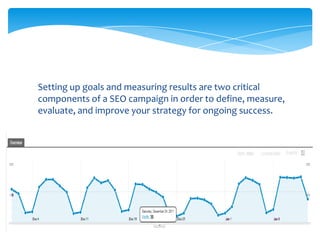
Analyzing and Measuring Results
Setting up goals and measuring results are two critical
components of a SEO campaign in order to define, measure,
evaluate, and improve your strategy for ongoing success.
Questions?

What is seo

  • 1.
    SEO 101: The basicsof search engine optimization
  • 2.
    What is searchengine optimization (SEO)?
  • 3.
    Search engine optimizationor (SEO), is the process of making your website more visible in search engines; more specifically, the major search engines such as Google, Yahoo, and Bing.
  • 4.
    The Why andHow: Why does SEO matter, and how can it help a business?
  • 5.
    Online visibility -As users turn to search engines more and more to find businesses and their services, it is becoming increasingly important for a business to be found online. Not only from an online visibility and conversion standpoint, but for online reputation management purposes as well. Online leads and sales - SEO can help increase online leads and conversions by optimizing a website for targeted, conversion-oriented website traffic that is most likely to buy from you. Making business decisions - Engaging in SEO can help you better understand your customers shopping habits from data, and use that data to make business decisions, both online and offline.
  • 6.
    How do searchengines work?
  • 7.
    Search engines havefour basic functions: Crawl websites - Like an explorer on a search Build an index – Similar to a library catalog Perform calculations – Like a mathematician Serve relevant results – Serve the best results
  • 8.
    Think of asearch engine as one BIG filing cabinet
  • 9.
    Search engine spiderscrawl the web, collecting information from each website, and stores that information when it is requested by a search engine user. Search engines serve results that it believes are the most relevant to a search query, and it serves those results in a ranking order of perceived importance.
  • 10.
    SEO continues toevolve as people change their search and shopping habits
  • 11.
    Some quick numberson local business searches A report done by Nielsen in 2007, says that 74% of respondents use search engines to find a local business. 80% reported researching a product or service online before making a purchase, and then making their purchase offline from a local business. -Statistics from SeoMoz
  • 12.
    A brief timelineof search engine changes/updates
  • 14.
    What are themain components of creating an SEO campaign?
  • 16.
    Keyword research • Keyword research involves researching and identifying words that people would use to find your services or products. On-page optimization • On page optimization includes adjusting title tags, meta tags, URL’s, and navigation structure to reflect your target keywords and overall SEO strategy. Off-page optimization • Activities such as link building, directory submissions, social media optimization Analysis and Reporting • Analyze and interpret data to maximize results
  • 17.
    The basics ofsearch engine friendly design A well designed website with flat architecture and well designed navigation performs better in the search engines, and is better for the user. Your website visitor should Homepage only have to go 3 clicks from the homepage to find what they’re looking for. 1 2 3
  • 18.
    What did yousay? Breaking down the SEO geek speak
  • 19.
    Common SEO terms Keyword(s) Ranking TitleTags/Meta Tags Link Building Directory Submissions Conversions Bounce rate
  • 20.
    Keyword Research Keywordresearch and its importance
  • 21.
    Keywords research involveschoosing the right keywords that someone might use to find a business and are the foundation of every search marketing strategy. Since keywords are what the strategy is based on, it makes it one of the most important initial steps to creating a successful campaign. Keywords are usually categorized as “short-tail” or “long-tail.” Short tails keywords tend to be broad and have a lot of search traffic, whereas long tail keywords are more phrase-like, resulting in less searches, but are more targeted and tend to be more profitable.
  • 22.
    Title Tag /Meta Description Title Tag Meta Description
  • 23.
    Search Engine Rankings How does a search engine rank a website?
  • 24.
    Search engines rankwebsites based on relevancy, in order to create a better user experience Search engines determine relevancy based on several factors that help it to determine what to present to a searcher. Some things a search engine evaluates when deciding how to rank the results: How many links does this website have? How good is the website’s content? Are any of the keywords searched in the website pages? How slow/fast is the speed of this website?
  • 25.
    According to searchdata leaked by AOL in 2007.. The first ranking position in the search results receives 42.25% of all click through traffic The second position receives 11.94%, the third 8.47%, the fourth 6.05%, and all others are under 5% The first ten results receive 89.71% of all click through traffic, and the second page drops to 4.37%, the third page – 2.42%, and the fifth – 1.07%. All other pages receive less than 1%. -Statistics from SeoMoz
  • 26.
    Link Building 101 Whatis link building and how do links work?
  • 27.
    Your website Links countas a “vote” to search engines. The more links a website has, the more authority the website has in the eyes of the search engine. Links have a significant influence in a website’s ability to rank high. The best links to have are industry related, and from high quality websites relevant to your business.
  • 28.
    Measuring Conversions inan SEO campaign
  • 29.
    Some examples ofconversions: • Filling out a “Contact Us” form • Filling out a “Request for Quote” • “Subscribe to our Newsletter” • Making a purchase on a website
  • 30.
  • 31.
    Setting up goalsand measuring results are two critical components of a SEO campaign in order to define, measure, evaluate, and improve your strategy for ongoing success.
  • 32.