4/21/2013 1
Course : MA 103 (Philosophy of
Education)
Reporter : Ligaya Nahial Esgana
Major Topic : The Emerging Philippine
Educational Philosophy
Sub topic : The Philosophy of School -
Based Management (SBM)
NCBTS / TSNA / IPPD
Professor : Dr. Isidro M. Biol, Jr.
4/21/2013 2
What is School-Based
Management (SBM)?
School – Based Management
is the decentralization
of decision-making authority
to schools. At the school level,
4/21/2013 3
school heads, teachers, and
students work together with
community leaders, and local
government officials and other
stakeholders to improve school
performance.
4/21/2013 4
Six Dimensions of
School Based
Management
1. School Leadership
2. Internal Stakeholders
3. External Stakeholders
4/21/2013 5
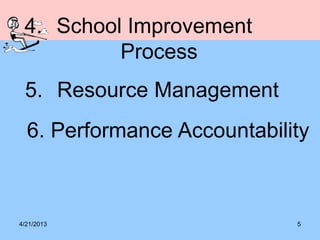
4. School Improvement
Process
5. Resource Management
6. Performance Accountability
4/21/2013 6
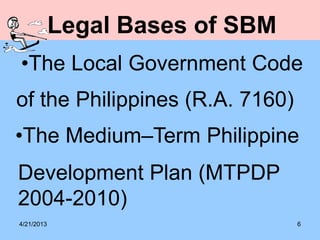
Legal Bases of SBM
•The Local Government Code
of the Philippines (R.A. 7160)
•The Medium–Term Philippine
Development Plan (MTPDP
2004-2010)
4/21/2013 7
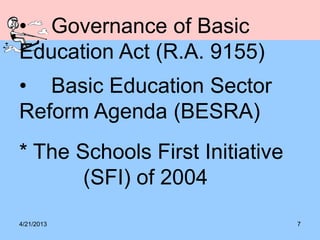
• Governance of Basic
Education Act (R.A. 9155)
• Basic Education Sector
Reform Agenda (BESRA)
* The Schools First Initiative
(SFI) of 2004
4/21/2013 8
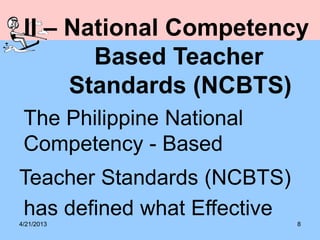
II – National Competency
Based Teacher
Standards (NCBTS)
The Philippine National
Competency - Based
Teacher Standards (NCBTS)
has defined what Effective
4/21/2013 9
TEACHING is. It has clearly
stated the strategic and
indispensable role of the teacher
in the learning process of the
students. Because of this, it is
necessary that teacher
4/21/2013 10
development be continuously
supported and nurtured based
on the NCBTS. Hence, it is
imperative to determine each
individual teacher’s strengths
and weaknesses along the
said competencies.
4/21/2013 11
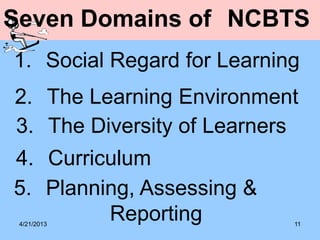
Seven Domains of NCBTS
1. Social Regard for Learning
2. The Learning Environment
3. The Diversity of Learners
4. Curriculum
5. Planning, Assessing &
Reporting
4/21/2013 12
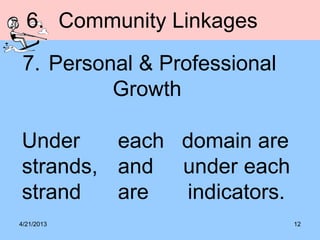
6. Community Linkages
7. Personal & Professional
Growth
Under each domain are
strands, and under each
strand are indicators.
4/21/2013 13
III – Teacher Strengths
and Training Needs
Assessment (TSNA)
The TSNA is formative as a
tool that will encourage teachers
in taking personal responsibility
4/21/2013 14
for their own growth and
professional advancement. The
view in mind is to promote
student learning. This will be
utilized in the formulation of
the teachers Individual
4/21/2013 15
Professional Development
Plan (IPPD) .
Specific Purposes of
TSNA
1. To determine the competency
status profile, strengths
4/21/2013 16
and weaknesses of.
2. To determine Individual
Professional Teacher Index
3. To consolidate the TSNA
results at the school, cluster,
and division levels as reference.
4/21/2013 17
The philosophy of one
century is the common
sense of the next.
Henry Ward Beecher

What is school based management (sbm) report

  • 1.
    4/21/2013 1 Course :MA 103 (Philosophy of Education) Reporter : Ligaya Nahial Esgana Major Topic : The Emerging Philippine Educational Philosophy Sub topic : The Philosophy of School - Based Management (SBM) NCBTS / TSNA / IPPD Professor : Dr. Isidro M. Biol, Jr.
  • 2.
    4/21/2013 2 What isSchool-Based Management (SBM)? School – Based Management is the decentralization of decision-making authority to schools. At the school level,
  • 3.
    4/21/2013 3 school heads,teachers, and students work together with community leaders, and local government officials and other stakeholders to improve school performance.
  • 4.
    4/21/2013 4 Six Dimensionsof School Based Management 1. School Leadership 2. Internal Stakeholders 3. External Stakeholders
  • 5.
    4/21/2013 5 4. SchoolImprovement Process 5. Resource Management 6. Performance Accountability
  • 6.
    4/21/2013 6 Legal Basesof SBM •The Local Government Code of the Philippines (R.A. 7160) •The Medium–Term Philippine Development Plan (MTPDP 2004-2010)
  • 7.
    4/21/2013 7 • Governanceof Basic Education Act (R.A. 9155) • Basic Education Sector Reform Agenda (BESRA) * The Schools First Initiative (SFI) of 2004
  • 8.
    4/21/2013 8 II –National Competency Based Teacher Standards (NCBTS) The Philippine National Competency - Based Teacher Standards (NCBTS) has defined what Effective
  • 9.
    4/21/2013 9 TEACHING is.It has clearly stated the strategic and indispensable role of the teacher in the learning process of the students. Because of this, it is necessary that teacher
  • 10.
    4/21/2013 10 development becontinuously supported and nurtured based on the NCBTS. Hence, it is imperative to determine each individual teacher’s strengths and weaknesses along the said competencies.
  • 11.
    4/21/2013 11 Seven Domainsof NCBTS 1. Social Regard for Learning 2. The Learning Environment 3. The Diversity of Learners 4. Curriculum 5. Planning, Assessing & Reporting
  • 12.
    4/21/2013 12 6. CommunityLinkages 7. Personal & Professional Growth Under each domain are strands, and under each strand are indicators.
  • 13.
    4/21/2013 13 III –Teacher Strengths and Training Needs Assessment (TSNA) The TSNA is formative as a tool that will encourage teachers in taking personal responsibility
  • 14.
    4/21/2013 14 for theirown growth and professional advancement. The view in mind is to promote student learning. This will be utilized in the formulation of the teachers Individual
  • 15.
    4/21/2013 15 Professional Development Plan(IPPD) . Specific Purposes of TSNA 1. To determine the competency status profile, strengths
  • 16.
    4/21/2013 16 and weaknessesof. 2. To determine Individual Professional Teacher Index 3. To consolidate the TSNA results at the school, cluster, and division levels as reference.
  • 17.
    4/21/2013 17 The philosophyof one century is the common sense of the next. Henry Ward Beecher