What is intercultural education?10 Pointers to help us understand and agree what intercultural education can involveImage Source: Flickr Some rights reserved by Philou.cn
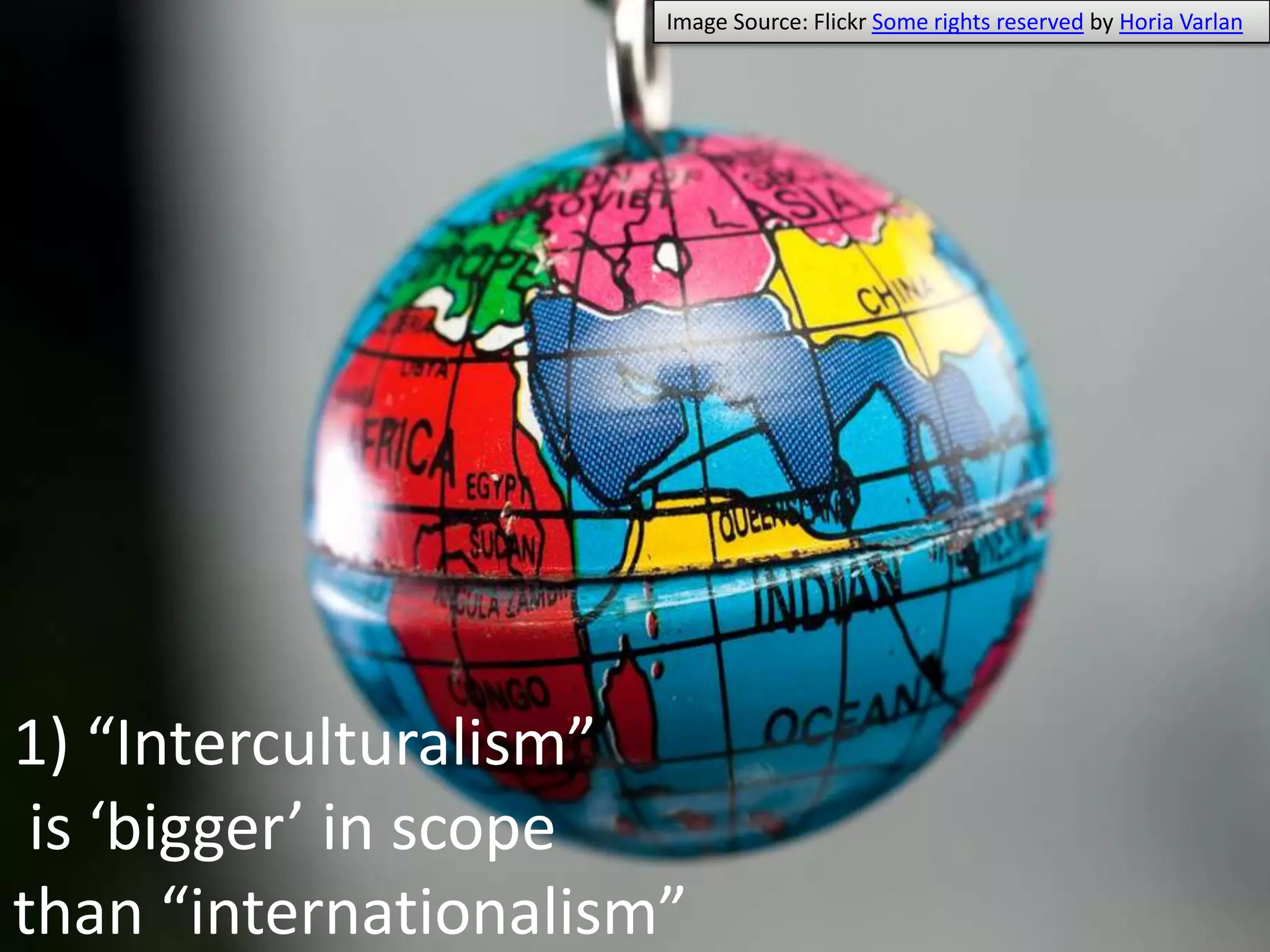
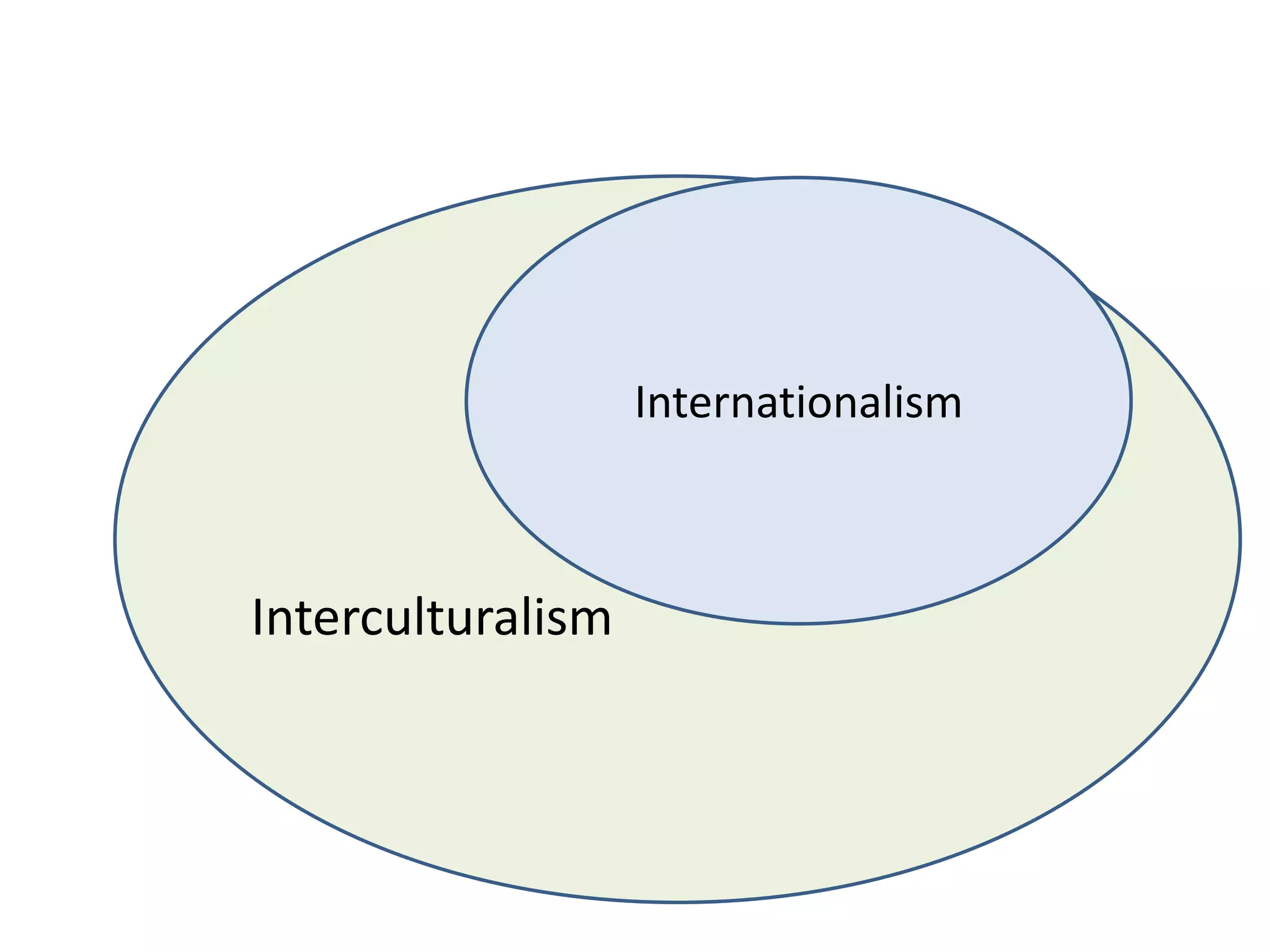
Image Source: Flickr Some rights reserved by HoriaVarlan1) “Interculturalism” is ‘bigger’ in scope than “internationalism”
InternationalismInterculturalism
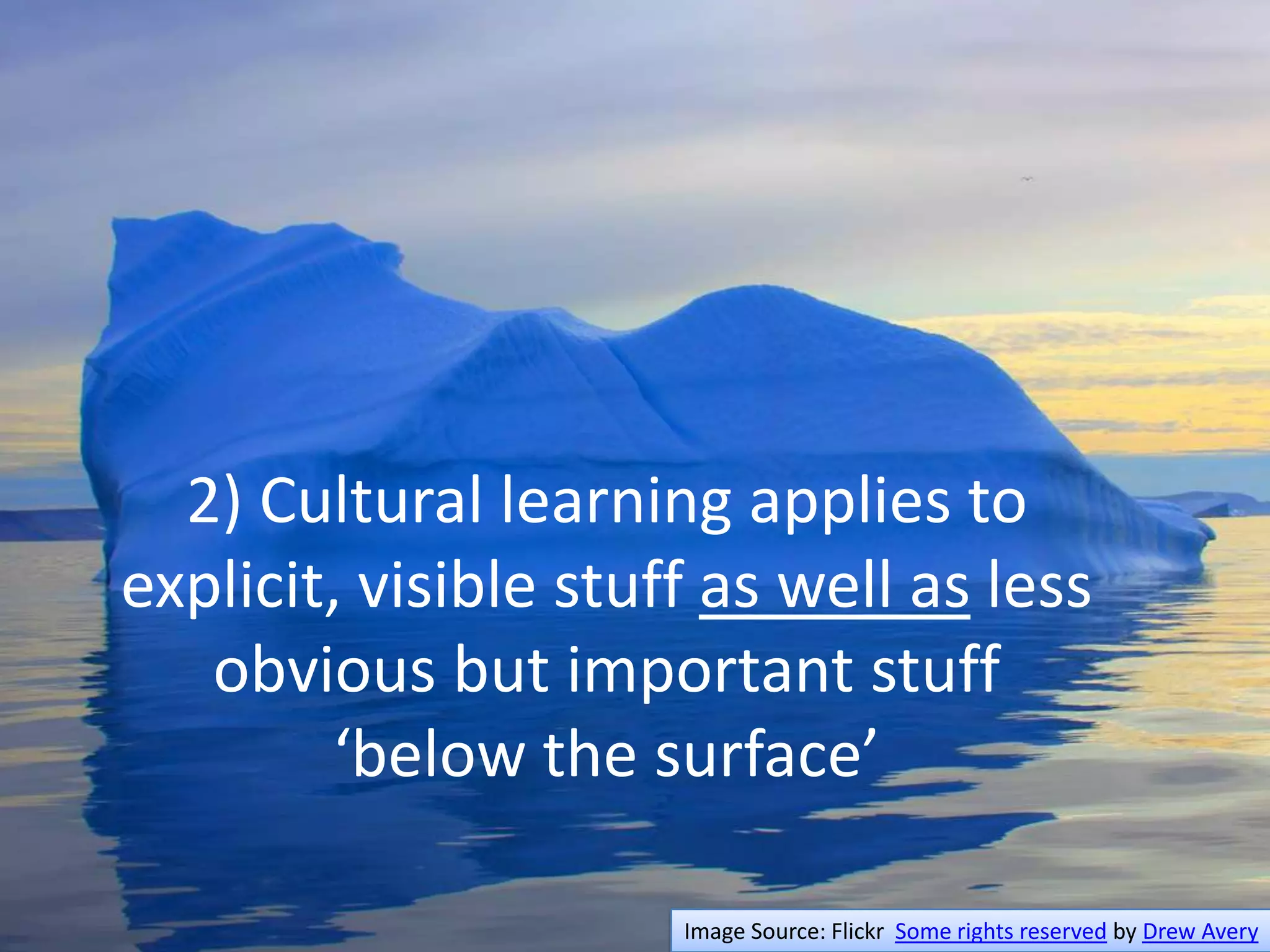
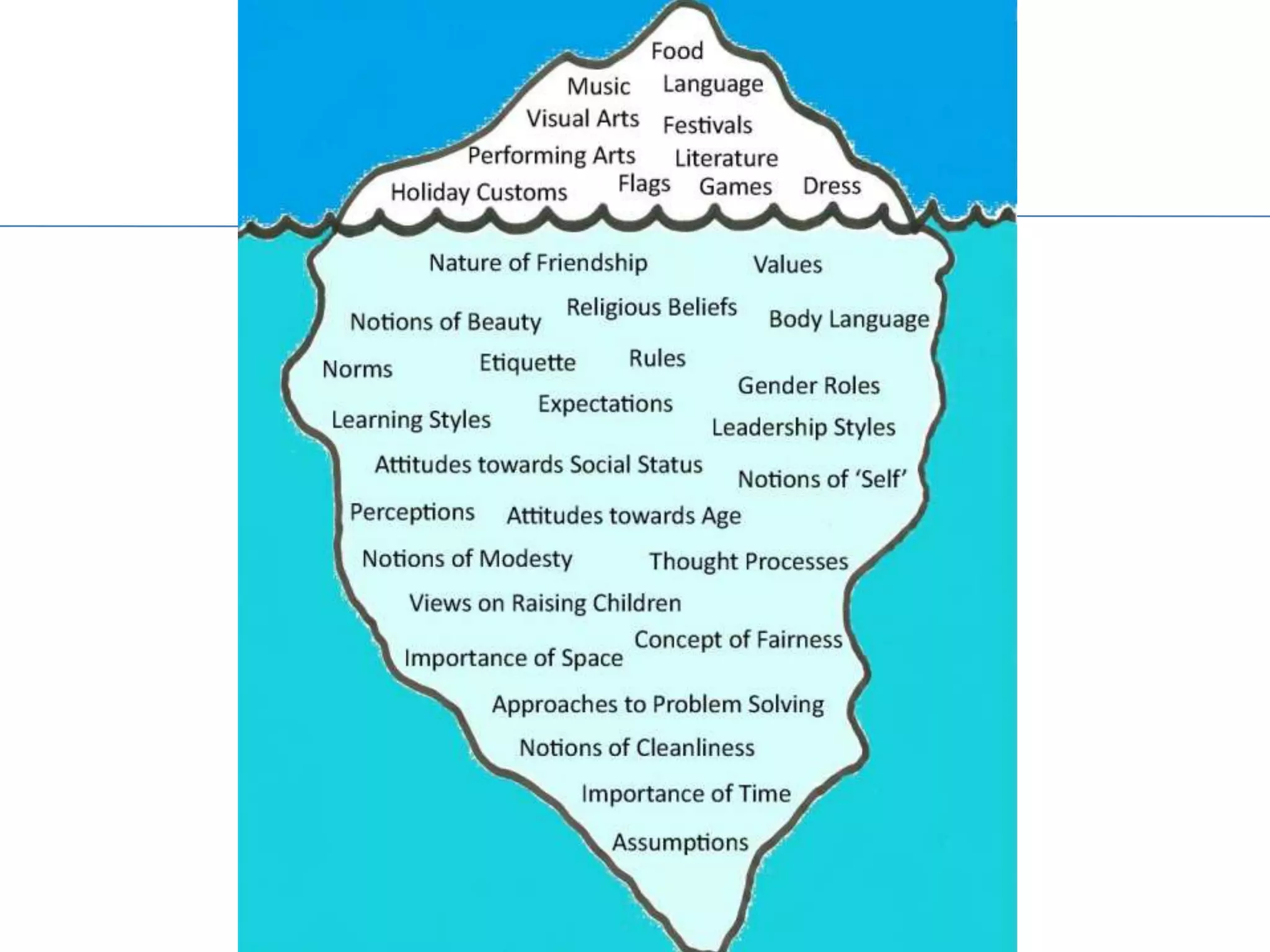
2) Cultural learning applies to explicit, visible stuff as well as less obvious but important stuff ‘below the surface’Image Source: Flickr  Some rights reserved by Drew Avery
BeliefsValuesPerceptionsAssumptionsRulesExpectationsThought ProcessesNormsLearning StylesTime-OrientationStatusGender RolesSpace-OrientationNo-Verbal Communication
Image Source: Flickr  Some rights reserved by spacepleb3) ‘Intercultural competence’: we can develop a set of skills and understandings
4) Developing our own sense of identityImage Source: Flickr  Some rights reserved by eioua
5) Celebrating who students are as individuals can be an ideal‘way in’ to explore, celebrate and understandcultural differenceImage Source: Flickr   Some rights reserved by albertopveiga
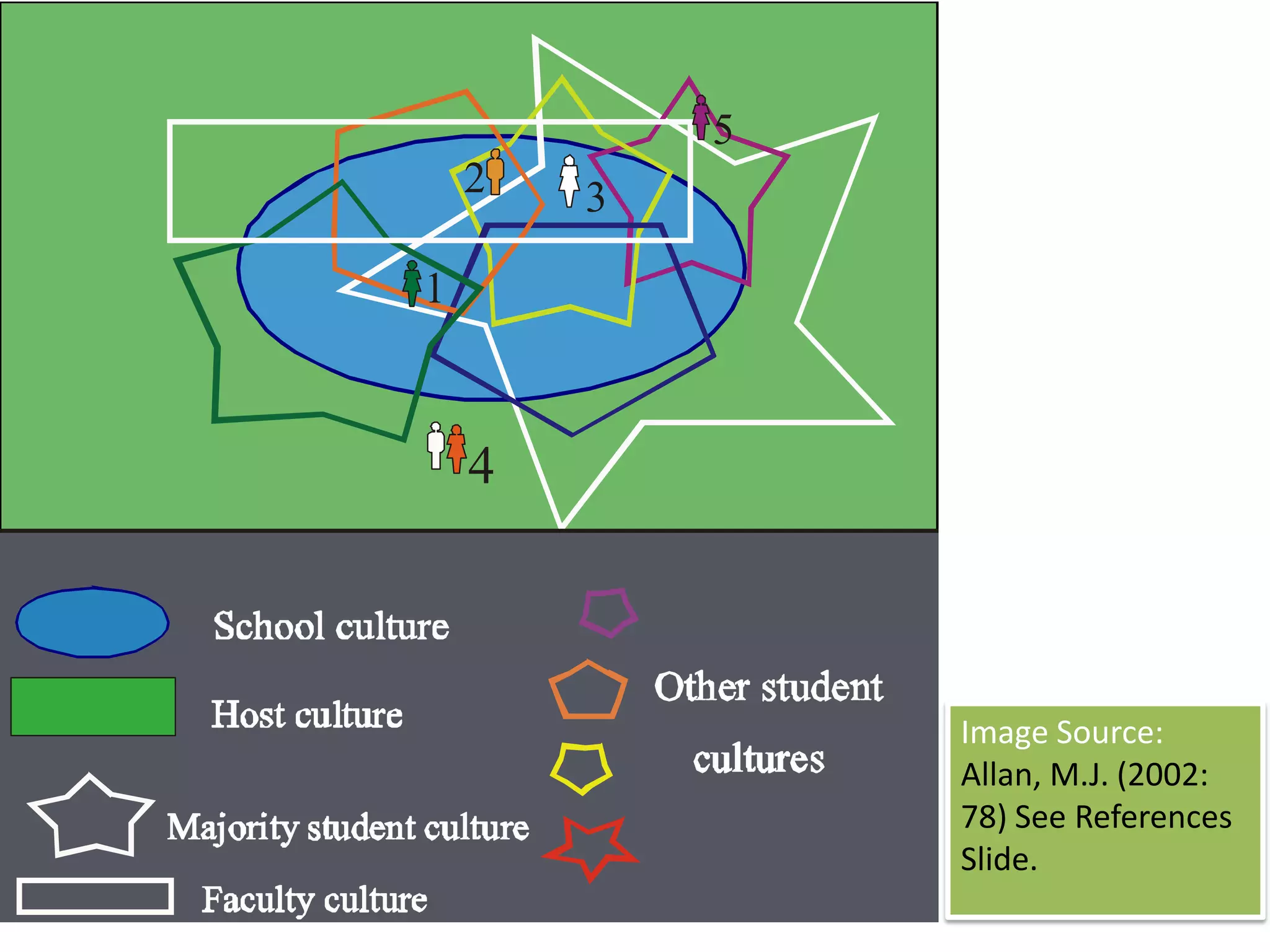
6) We all experience multiple culturesImage Source: Flickr  Some rights reserved by Sarah and Iain
Image Source:Allan, M.J. (2002: 78) See References Slide.
Image Source: Flickr  Some rights reserved by laszlo-photo7) Intercultural educationshould also explore similarity of experiencedespite differences in cultural heritage
8) Intercultural education is continuous, and can not really be achieved through isolated, one-off eventsImage Source: Flickr  Some rights reserved by themonnie
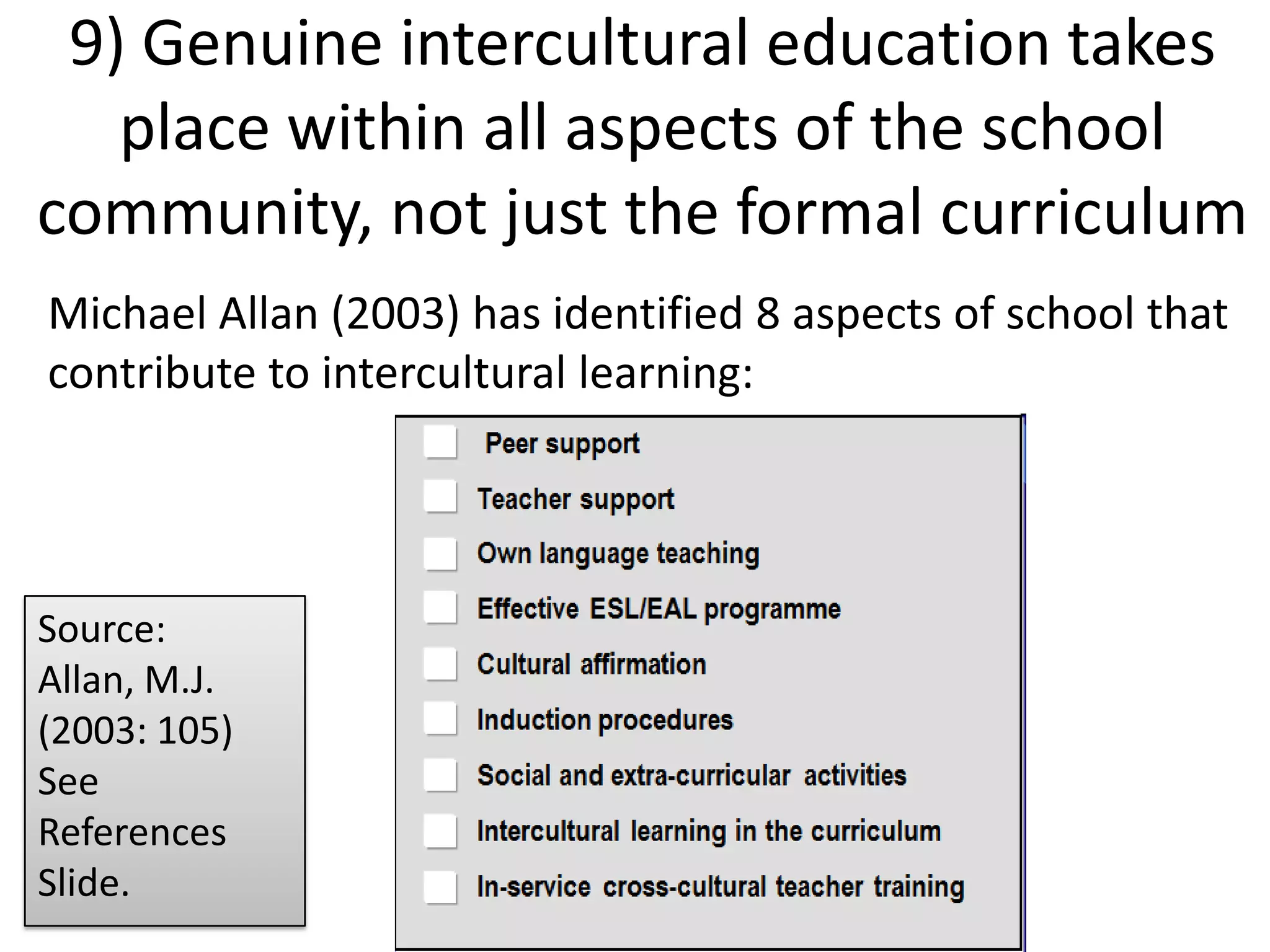
9) Genuine intercultural education takes place within all aspects of the school community, not just the formal curriculumMichael Allan (2003) has identified 8 aspects of school thatcontribute to intercultural learning:Source: Allan, M.J. (2003: 105) See References Slide.
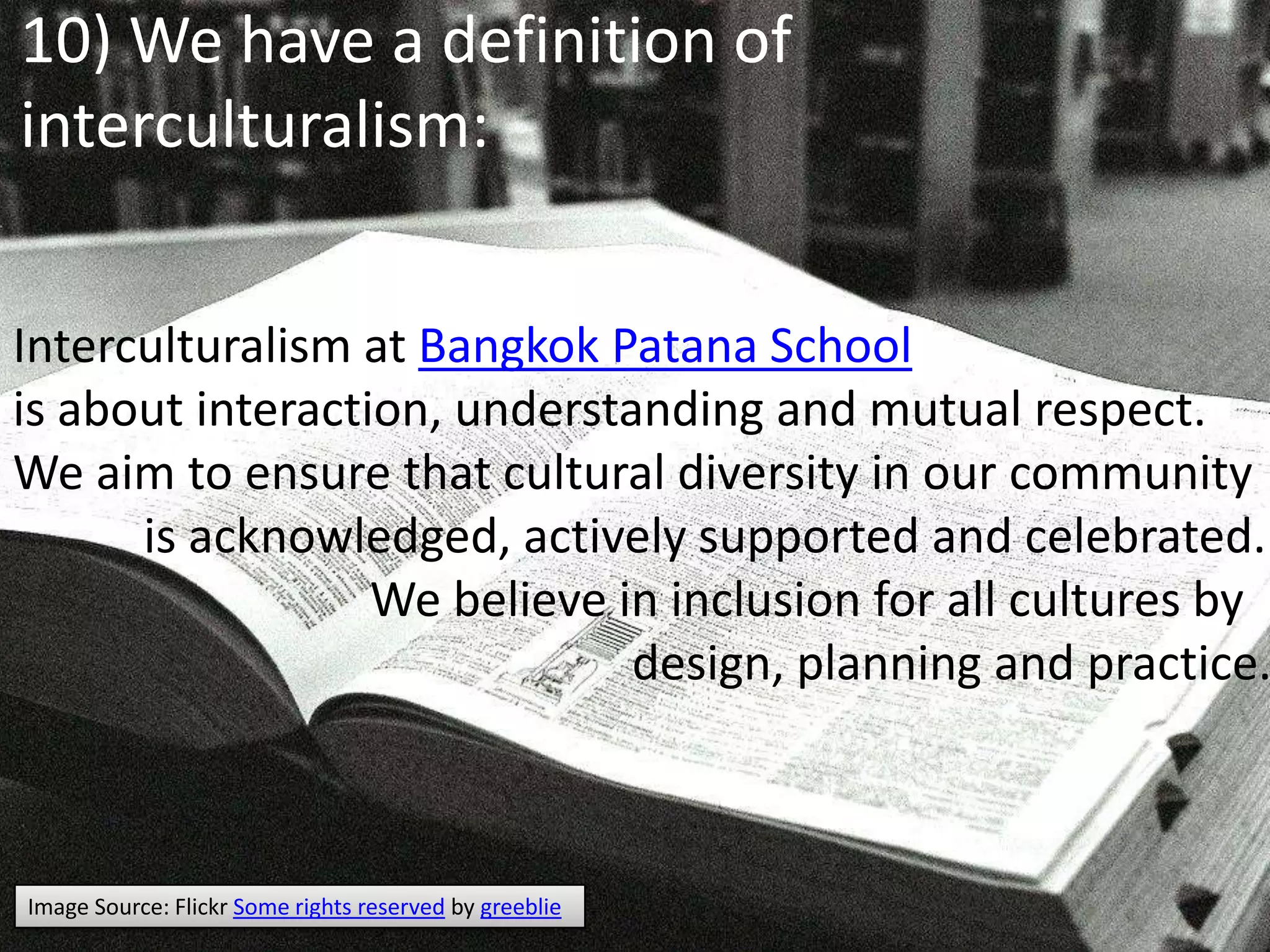
10) We have a definition of interculturalism:Interculturalism at Bangkok PatanaSchoolis about interaction, understanding and mutual respect.We aim to ensure that cultural diversity in our community          is acknowledged, actively supported and celebrated.                             We believe in inclusion for all cultures by                                                    design, planning and practice. Image Source: Flickr Some rights reserved by greeblie
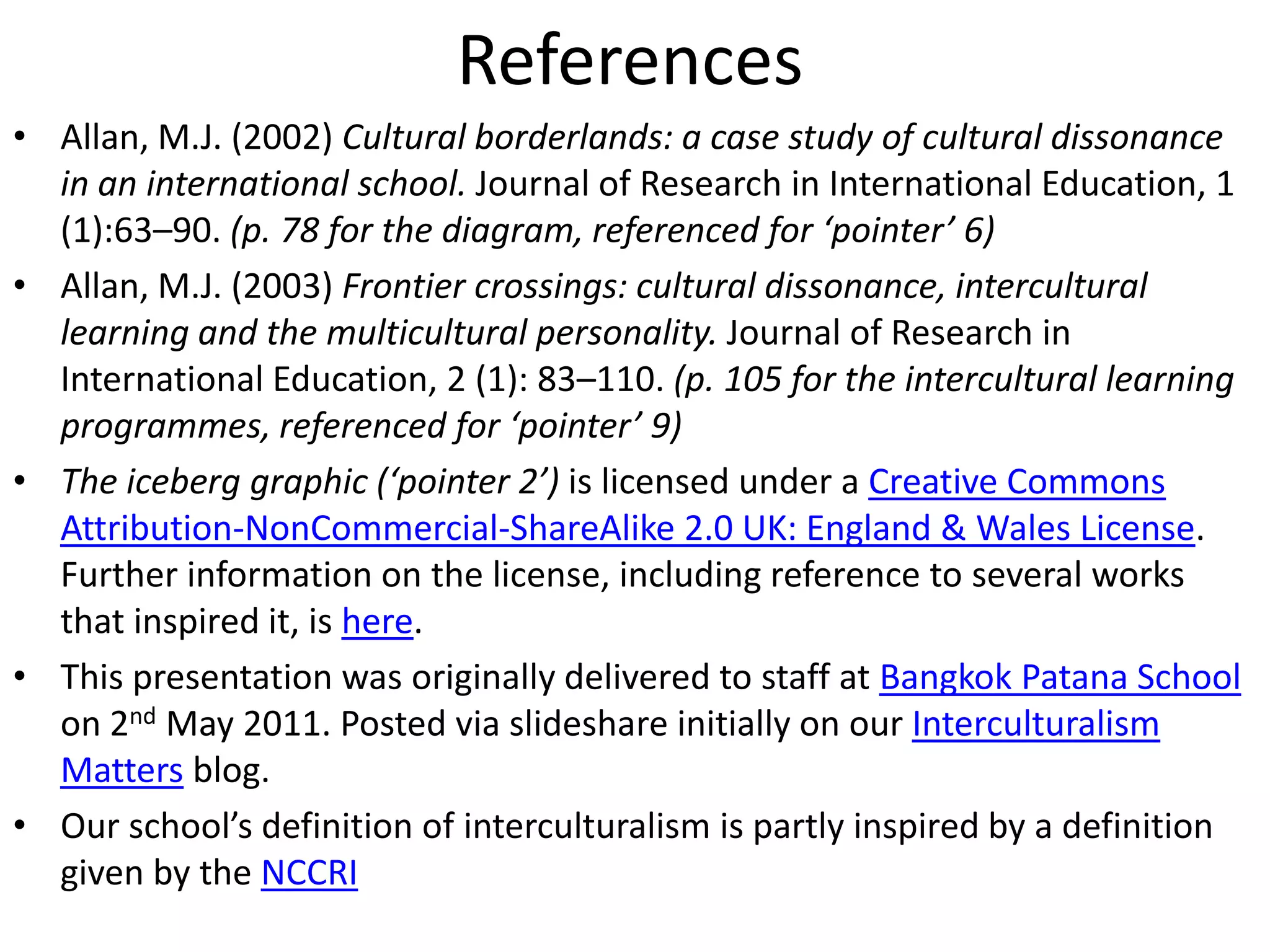
ReferencesAllan, M.J. (2002) Cultural borderlands: a case study of cultural dissonance in an international school. Journal of Research in International Education, 1 (1):63–90. (p. 78 for the diagram, referenced for ‘pointer’ 6)Allan, M.J. (2003) Frontier crossings: cultural dissonance, intercultural learning and the multicultural personality. Journal of Research in International Education, 2 (1): 83–110. (p. 105 for the intercultural learning programmes, referenced for ‘pointer’ 9)The iceberg graphic (‘pointer 2’) is licensed under a Creative Commons Attribution-NonCommercial-ShareAlike 2.0 UK: England & Wales License. Further information on the license, including reference to several works that inspired it, is here.This presentation was originally delivered to staff at Bangkok Patana School on 2nd May 2011. Posted via slideshare initially on our Interculturalism Matters blog.Our school’s definition of interculturalism is partly inspired by a definition given by the NCCRI

What is intercultural education?

  • 1.
    What is interculturaleducation?10 Pointers to help us understand and agree what intercultural education can involveImage Source: Flickr Some rights reserved by Philou.cn
  • 2.
    Image Source: FlickrSome rights reserved by HoriaVarlan1) “Interculturalism” is ‘bigger’ in scope than “internationalism”
  • 3.
  • 4.
    2) Cultural learningapplies to explicit, visible stuff as well as less obvious but important stuff ‘below the surface’Image Source: Flickr  Some rights reserved by Drew Avery
  • 5.
  • 6.
    Image Source: Flickr Some rights reserved by spacepleb3) ‘Intercultural competence’: we can develop a set of skills and understandings
  • 7.
    4) Developing ourown sense of identityImage Source: Flickr  Some rights reserved by eioua
  • 8.
    5) Celebrating whostudents are as individuals can be an ideal‘way in’ to explore, celebrate and understandcultural differenceImage Source: Flickr   Some rights reserved by albertopveiga
  • 9.
    6) We allexperience multiple culturesImage Source: Flickr  Some rights reserved by Sarah and Iain
  • 10.
    Image Source:Allan, M.J.(2002: 78) See References Slide.
  • 11.
    Image Source: Flickr Some rights reserved by laszlo-photo7) Intercultural educationshould also explore similarity of experiencedespite differences in cultural heritage
  • 12.
    8) Intercultural educationis continuous, and can not really be achieved through isolated, one-off eventsImage Source: Flickr  Some rights reserved by themonnie
  • 13.
    9) Genuine interculturaleducation takes place within all aspects of the school community, not just the formal curriculumMichael Allan (2003) has identified 8 aspects of school thatcontribute to intercultural learning:Source: Allan, M.J. (2003: 105) See References Slide.
  • 14.
    10) We havea definition of interculturalism:Interculturalism at Bangkok PatanaSchoolis about interaction, understanding and mutual respect.We aim to ensure that cultural diversity in our community is acknowledged, actively supported and celebrated. We believe in inclusion for all cultures by design, planning and practice. Image Source: Flickr Some rights reserved by greeblie
  • 15.
    ReferencesAllan, M.J. (2002)Cultural borderlands: a case study of cultural dissonance in an international school. Journal of Research in International Education, 1 (1):63–90. (p. 78 for the diagram, referenced for ‘pointer’ 6)Allan, M.J. (2003) Frontier crossings: cultural dissonance, intercultural learning and the multicultural personality. Journal of Research in International Education, 2 (1): 83–110. (p. 105 for the intercultural learning programmes, referenced for ‘pointer’ 9)The iceberg graphic (‘pointer 2’) is licensed under a Creative Commons Attribution-NonCommercial-ShareAlike 2.0 UK: England & Wales License. Further information on the license, including reference to several works that inspired it, is here.This presentation was originally delivered to staff at Bangkok Patana School on 2nd May 2011. Posted via slideshare initially on our Interculturalism Matters blog.Our school’s definition of interculturalism is partly inspired by a definition given by the NCCRI