Education and Diversity
Dr.Hafiz Kosar
Embracing education diversity involves recognizing,
respecting, and valuing these differences to create an
inclusive and equitable learning environment. The aim is to
provide educational opportunities that meet the needs of a
diverse student population, preparing individuals to thrive
in a global and interconnected world. Educational
institutions often implement strategies such as inclusive
curricula, diverse teaching methods, and supportive
policies to foster an environment that celebrates diversity
and promotes equal access to education for all.
Education diversity refers to the variety of backgrounds,
experiences, cultures, perspectives, abilities, and
characteristics that exist among individuals within an
educational setting. This diversity can manifest in various
forms, including but not limited to
Education and Diversity...
Differences in cultural backgrounds,
traditions, and values among students
and educators.
Ethnic Diversity
Varied ethnicities and races represented
within the educational community
Gender Diversity
Variances in gender identity and
expression among students and staff.
Ability Diversity
Differences in physical, cognitive, and
learning abilities
Linguistic
Diversity
Varied languages spoken by students
and their families.
Socioeconomic
Diversity
Differences in economic status,
including factors such as income,
wealth, and social class.
Cultural Diversity
Education and Diversity...
Learning Style
Diversity
Differences in how individuals prefer to
learn and process information.
Religious Diversity
Diverse religious beliefs and practices
among students and staff.
Geographic
Diversity
Variances in the geographic locations
from which students and educators
originate.
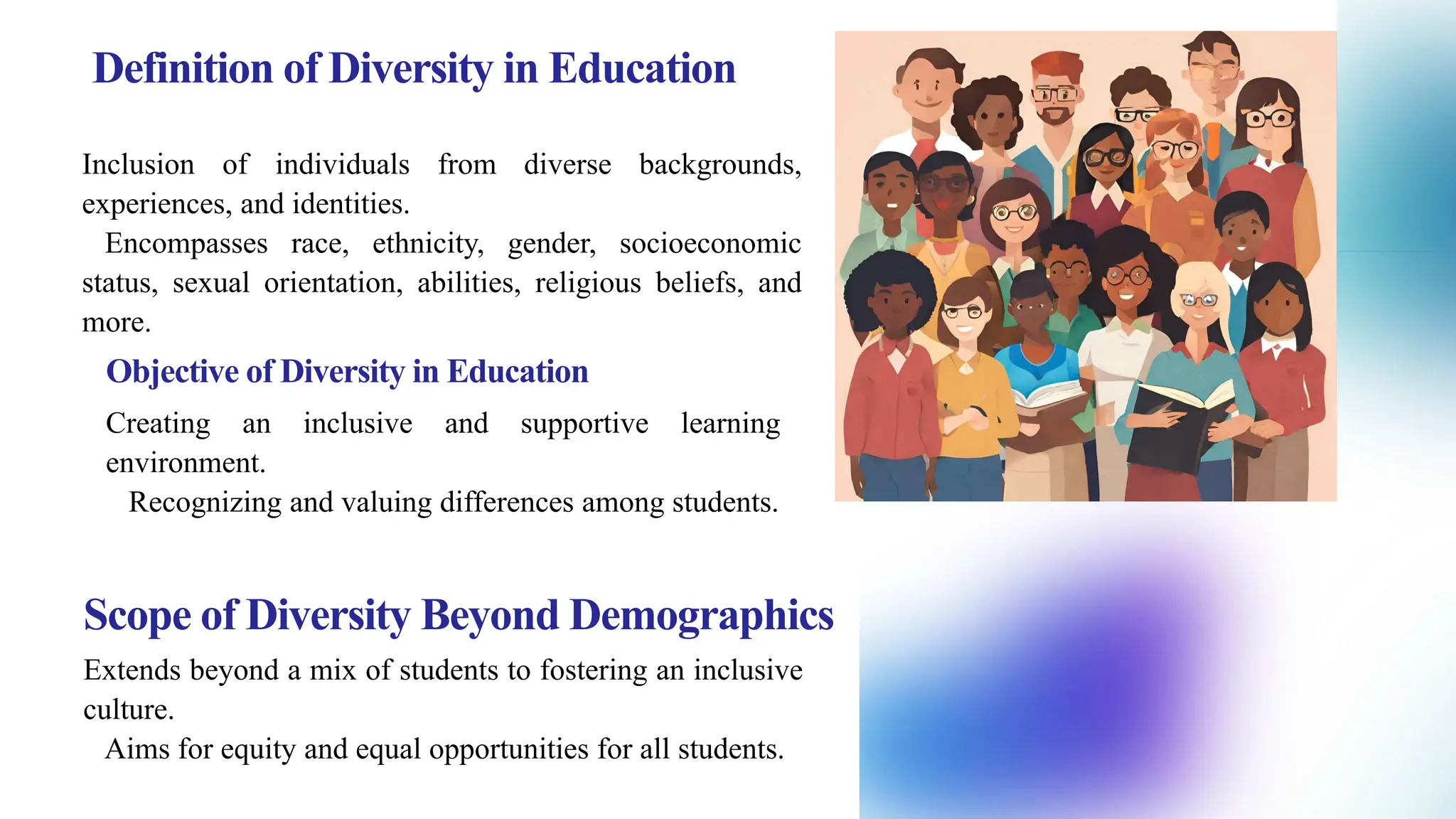
Inclusion of individuals from diverse backgrounds,
experiences, and identities.
Encompasses race, ethnicity, gender, socioeconomic
status, sexual orientation, abilities, religious beliefs, and
more.
Creating an inclusive and supportive learning
environment.
Recognizing and valuing differences among students.
Definition of Diversity in Education
Objective of Diversity in Education
Extends beyond a mix of students to fostering an inclusive
culture.
Aims for equity and equal opportunities for all students.
Scope of Diversity Beyond Demographics
Inclusive curriculum and teaching practices.
Resources and support services addressing diverse
student needs.
Creation of a campus culture valuing and respecting
contributions of all individuals.
Develop an educational environment mirroring broader
society.
Prepare students to engage with and contribute to a
diverse and pluralistic world.
Practical Implementation of Diversity in
Education
Overall Goal
Benefits of Diversity in Education
Critical Thinking and
Problem Solving
Cultural Awareness and
Global Perspective
Exposure to diverse viewpoints
stimulates critical thinking skills as
students are challenged to analyze,
evaluate, and synthesize information
from various sources. Problem
solving abilities are enhanced as
students encounter different
approaches to addressing challenges.
Exposure to diverse
perspectives and cultures
fosters cultural awareness and
a global mindset among
students. Students learn to
appreciate and respect
different traditions, customs,
and ways of thinking,
preparing them to navigate an
interconnected world.
Embracing diversity in education offers numerous benefits that
contribute to a more enriching and effective learning environment.
Here are some key advantages
Benefits of Diversity in Education....
Preparation for a Diverse
Workforce
Enhanced Learning
Environment
In a globalized world,
workplaces are becoming
increasingly diverse.
Educational settings that mirror
this diversity prepare students
for future careers by
developing their ability to
collaborate with people from
various backgrounds.
Diverse classrooms create a
dynamic and stimulating
learning environment where
students can engage in
meaningful discussions, share
experiences, and learn from
each other.
The exchange of ideas and
perspectives leads to a more
vibrant educational
experience.
Benefits of Diversity in Education....
Social and Emotional
Development
Reduction of Stereotypes
and Bias
Interacting with diverse peers
enhances social skills and
emotional intelligence, as
students learn to navigate
relationships with individuals
from different backgrounds.
Exposure to diversity
promotes empathy and
understanding.
Exposure to diversity helps
break down stereotypes and
reduces prejudice as students
interact with individuals who
challenge their preconceived
notions.
This promotes a more
inclusive and accepting
community.
Benefits of Diversity in Education....
Preparation for Citizenship
Innovation and Creativity
Diverse educational
experiences contribute to the
development of informed and
responsible citizens who can
contribute positively to society.
Students learn the
importance of equity, justice,
and social responsibility.
.
Diverse teams tend to be more
innovative and creative, as
individuals bring unique
perspectives and ideas to
problem solving.
Exposure to diverse
viewpoints fosters a culture of
innovation in education.
Benefits of Diversity in Education....
Promotion of Inclusive
Education
Increased Academic
Achievement
A commitment to diversity
promotes inclusivity in
education, ensuring that all
students, regardless of their
background, have equal access
to educational opportunities.
.
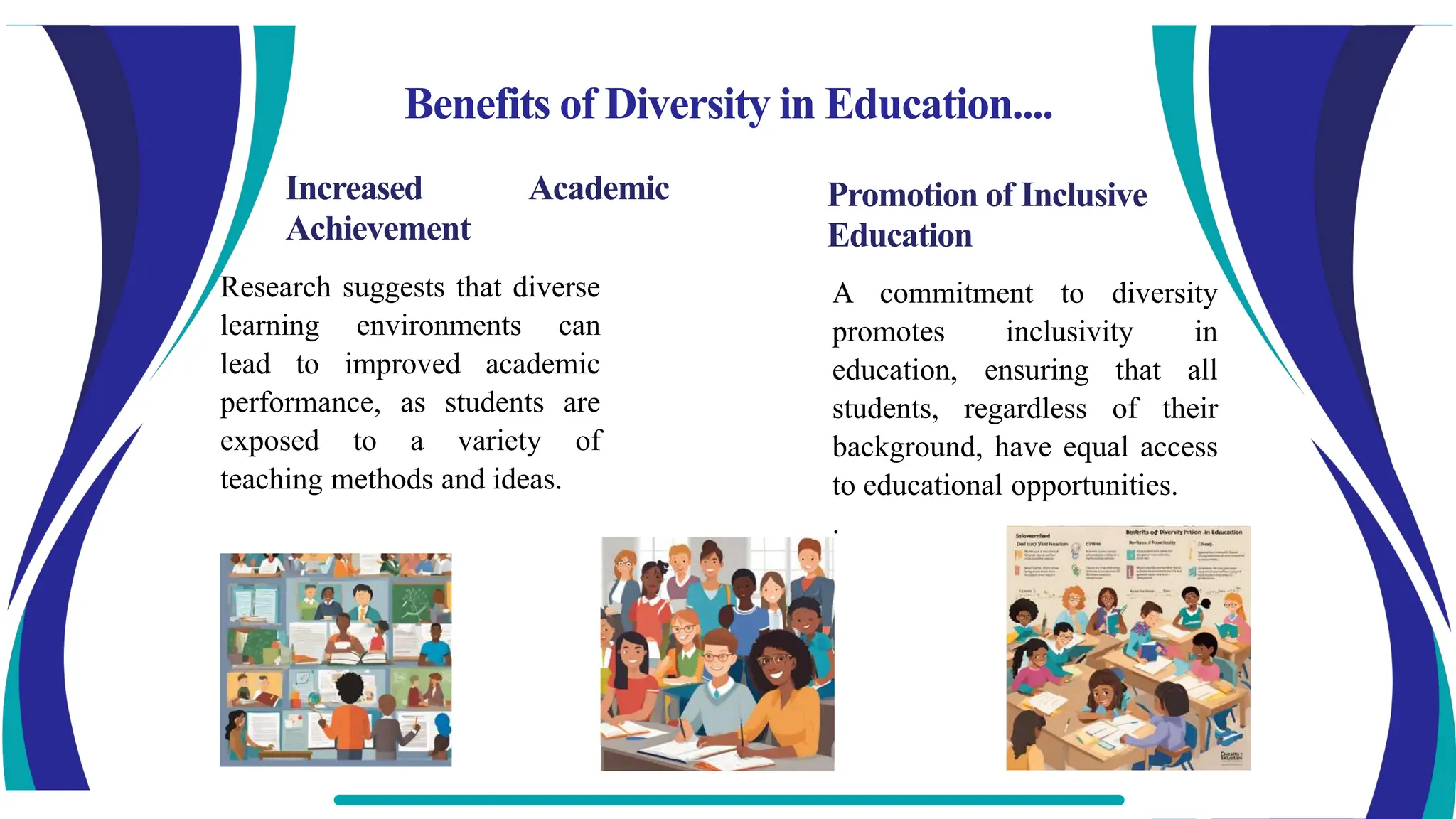
Research suggests that diverse
learning environments can
lead to improved academic
performance, as students are
exposed to a variety of
teaching methods and ideas.
Education and Diversity Issues
Access to Education
Socioeconomic Disparities Economic factors often
create barriers to education. Families with lower
incomes may struggle to provide resources such as
books, technology, and educational support.
Geographic Disparities Rural and urban areas may
have different levels of access to quality educational
resources, including well funded schools, experienced
teachers, and extracurricular activities.
Education and diversity issues are complex and
multifaceted, encompassing a range of
challenges and opportunities related to
ensuring equal access, representation, and
outcomes for individuals from diverse
backgrounds. Here are some key aspects of the
intersection between education and diversity
Education and Diversity Issues...
Cultural Competence
Training teachers in cultural competence helps them
understand and respond to the needs of students from
diverse backgrounds. This includes understanding
cultural differences, being aware of biases, and
fostering an inclusive classroom culture.
Representation
Diverse Curriculum The inclusion of diverse
perspectives in the curriculum is crucial for
fostering understanding and respect among
students. This includes representation of different
cultures, ethnicities, genders, and historical
narratives. Diversity in teaching staff having a
diverse teaching staff can provide role models for
students and contribute to a more inclusive
learning environment.
Education and Diversity Issues...
Equitable Policies
Anti-bias Policies Implementing policies that address
discrimination, bias, and bullying in schools is
essential. Schools should actively promote an
inclusive and respectful atmosphere for all students.
Affirmative Action In higher education, affirmative
action policies aim to increase the representation of
underrepresented groups in colleges and universities.
Language Diversity
Diverse Curriculum The inclusion of diverse
perspectives in the curriculum is crucial for
fostering understanding and respect among
students. This includes representation of different
cultures, ethnicities, genders, and historical
narratives. Diversity in teaching staff having a
diverse teaching staff can provide role models for
students and contribute to a more inclusive
learning environment.
Technology Divide
Digital Inclusion Ensuring that all students have
access to technology and the internet is crucial for
modern education. The digital divide can intensify
existing disparities if not addressed.
Education and Diversity Issues...
6. Inclusive Teaching Practices
Differentiated Instruction Recognizing and
accommodating different learning styles and
abilities helps create an inclusive classroom
where all students can thrive. Universal Design
for Learning (UDL) UDL principles aim to make
educational materials and experiences accessible
to a diverse range of learners, including those
with disabilities.
Intersectionality
Recognizing Intersecting Identities Acknowledging
that individuals may face multiple layers of
discrimination based on factors such as race, gender,
sexual orientation, and socioeconomic status is
essential for developing comprehensive solutions.
Thank You

Education and Diversity.pptx

  • 1.
  • 2.
    Embracing education diversityinvolves recognizing, respecting, and valuing these differences to create an inclusive and equitable learning environment. The aim is to provide educational opportunities that meet the needs of a diverse student population, preparing individuals to thrive in a global and interconnected world. Educational institutions often implement strategies such as inclusive curricula, diverse teaching methods, and supportive policies to foster an environment that celebrates diversity and promotes equal access to education for all. Education diversity refers to the variety of backgrounds, experiences, cultures, perspectives, abilities, and characteristics that exist among individuals within an educational setting. This diversity can manifest in various forms, including but not limited to
  • 3.
    Education and Diversity... Differencesin cultural backgrounds, traditions, and values among students and educators. Ethnic Diversity Varied ethnicities and races represented within the educational community Gender Diversity Variances in gender identity and expression among students and staff. Ability Diversity Differences in physical, cognitive, and learning abilities Linguistic Diversity Varied languages spoken by students and their families. Socioeconomic Diversity Differences in economic status, including factors such as income, wealth, and social class. Cultural Diversity
  • 4.
    Education and Diversity... LearningStyle Diversity Differences in how individuals prefer to learn and process information. Religious Diversity Diverse religious beliefs and practices among students and staff. Geographic Diversity Variances in the geographic locations from which students and educators originate.
  • 5.
    Inclusion of individualsfrom diverse backgrounds, experiences, and identities. Encompasses race, ethnicity, gender, socioeconomic status, sexual orientation, abilities, religious beliefs, and more. Creating an inclusive and supportive learning environment. Recognizing and valuing differences among students. Definition of Diversity in Education Objective of Diversity in Education Extends beyond a mix of students to fostering an inclusive culture. Aims for equity and equal opportunities for all students. Scope of Diversity Beyond Demographics
  • 6.
    Inclusive curriculum andteaching practices. Resources and support services addressing diverse student needs. Creation of a campus culture valuing and respecting contributions of all individuals. Develop an educational environment mirroring broader society. Prepare students to engage with and contribute to a diverse and pluralistic world. Practical Implementation of Diversity in Education Overall Goal
  • 7.
    Benefits of Diversityin Education Critical Thinking and Problem Solving Cultural Awareness and Global Perspective Exposure to diverse viewpoints stimulates critical thinking skills as students are challenged to analyze, evaluate, and synthesize information from various sources. Problem solving abilities are enhanced as students encounter different approaches to addressing challenges. Exposure to diverse perspectives and cultures fosters cultural awareness and a global mindset among students. Students learn to appreciate and respect different traditions, customs, and ways of thinking, preparing them to navigate an interconnected world. Embracing diversity in education offers numerous benefits that contribute to a more enriching and effective learning environment. Here are some key advantages
  • 8.
    Benefits of Diversityin Education.... Preparation for a Diverse Workforce Enhanced Learning Environment In a globalized world, workplaces are becoming increasingly diverse. Educational settings that mirror this diversity prepare students for future careers by developing their ability to collaborate with people from various backgrounds. Diverse classrooms create a dynamic and stimulating learning environment where students can engage in meaningful discussions, share experiences, and learn from each other. The exchange of ideas and perspectives leads to a more vibrant educational experience.
  • 9.
    Benefits of Diversityin Education.... Social and Emotional Development Reduction of Stereotypes and Bias Interacting with diverse peers enhances social skills and emotional intelligence, as students learn to navigate relationships with individuals from different backgrounds. Exposure to diversity promotes empathy and understanding. Exposure to diversity helps break down stereotypes and reduces prejudice as students interact with individuals who challenge their preconceived notions. This promotes a more inclusive and accepting community.
  • 10.
    Benefits of Diversityin Education.... Preparation for Citizenship Innovation and Creativity Diverse educational experiences contribute to the development of informed and responsible citizens who can contribute positively to society. Students learn the importance of equity, justice, and social responsibility. . Diverse teams tend to be more innovative and creative, as individuals bring unique perspectives and ideas to problem solving. Exposure to diverse viewpoints fosters a culture of innovation in education.
  • 11.
    Benefits of Diversityin Education.... Promotion of Inclusive Education Increased Academic Achievement A commitment to diversity promotes inclusivity in education, ensuring that all students, regardless of their background, have equal access to educational opportunities. . Research suggests that diverse learning environments can lead to improved academic performance, as students are exposed to a variety of teaching methods and ideas.
  • 12.
    Education and DiversityIssues Access to Education Socioeconomic Disparities Economic factors often create barriers to education. Families with lower incomes may struggle to provide resources such as books, technology, and educational support. Geographic Disparities Rural and urban areas may have different levels of access to quality educational resources, including well funded schools, experienced teachers, and extracurricular activities. Education and diversity issues are complex and multifaceted, encompassing a range of challenges and opportunities related to ensuring equal access, representation, and outcomes for individuals from diverse backgrounds. Here are some key aspects of the intersection between education and diversity
  • 13.
    Education and DiversityIssues... Cultural Competence Training teachers in cultural competence helps them understand and respond to the needs of students from diverse backgrounds. This includes understanding cultural differences, being aware of biases, and fostering an inclusive classroom culture. Representation Diverse Curriculum The inclusion of diverse perspectives in the curriculum is crucial for fostering understanding and respect among students. This includes representation of different cultures, ethnicities, genders, and historical narratives. Diversity in teaching staff having a diverse teaching staff can provide role models for students and contribute to a more inclusive learning environment.
  • 14.
    Education and DiversityIssues... Equitable Policies Anti-bias Policies Implementing policies that address discrimination, bias, and bullying in schools is essential. Schools should actively promote an inclusive and respectful atmosphere for all students. Affirmative Action In higher education, affirmative action policies aim to increase the representation of underrepresented groups in colleges and universities. Language Diversity Diverse Curriculum The inclusion of diverse perspectives in the curriculum is crucial for fostering understanding and respect among students. This includes representation of different cultures, ethnicities, genders, and historical narratives. Diversity in teaching staff having a diverse teaching staff can provide role models for students and contribute to a more inclusive learning environment.
  • 15.
    Technology Divide Digital InclusionEnsuring that all students have access to technology and the internet is crucial for modern education. The digital divide can intensify existing disparities if not addressed. Education and Diversity Issues... 6. Inclusive Teaching Practices Differentiated Instruction Recognizing and accommodating different learning styles and abilities helps create an inclusive classroom where all students can thrive. Universal Design for Learning (UDL) UDL principles aim to make educational materials and experiences accessible to a diverse range of learners, including those with disabilities. Intersectionality Recognizing Intersecting Identities Acknowledging that individuals may face multiple layers of discrimination based on factors such as race, gender, sexual orientation, and socioeconomic status is essential for developing comprehensive solutions.
  • 16.