What is export packaging?


Exports Packaging, INTERNATIONAL EXPORT PACKAGING

Labelling and packaging your goods for export

What is export packaging?

This page explains how to make sure your export packaging is good enough so that your
goods arrive intact and undamaged with your overseas buyer. Export packaging is also
often referred to as transport packaging, which is one of three main types of packaging
that are likely to be needed for exported goods.

•       Transport or export packaging is the outermost layer of packaging and is
designed to protect your goods during transit. Examples include wooden crates, metal
drums and plastic shrink-wrapping. See the page in this guide on your export packaging
options.

•       Outer packaging is an intermediate layer of packaging, which often also serves a
retail-promotion purpose. An example would be a box containing multiple units that
doubles as a retail display fixture and can be placed directly on a shop shelf, as is
common with many convenience foods.
•        Sales packaging is the immediate layer of packaging around your goods – the
packaging that remains when the goods reach their end-user. Examples include the
bottles in which beverages are contained, or the boxes many electronics items are sold
in. Sales packaging often also serves a marketing purpose by containing prominent
branding images and information.

These three types of packaging work like Russian dolls – each layer of packaging is
complete on its own terms, but contained within a further layer of outer packaging.

This guide is concerned primarily with export or transport packaging, but it makes sense
to consider all your packaging choices together at the outset.

An overview of the three main types of packaging – sales packaging, outer packaging
and export packaging

Export packaging

Packaging,labelling;container,box;carton;crate;sack,net,sling;drum,transit,transport,shi
pping,freight,cargo,bulk,break-bulk,carrier,shipper,airfreight,dock,port,export
documentation, handling instructions, cargo handlers,tri-wall,dangerous
goods,pallet,loading,unloading,dunnage,protection,freight forwarder, packaging
waste,hytosanitary,packaging trade association,

An overview of the three main types of packaging – sales packaging, outer packaging
and export packaging

Labelling and packaging your goods for export

What is export packaging This page explains how to make sure your export packaging is
good enough so that your goods arrive intact and undamaged with your overseas buyer.
Export packaging is also often referred to as transport packaging, which is one of three
main types of packaging that are likely to be needed for exported goods.

Transport or export packaging is the outermost layer of packaging and is designed to
protect your goods during transit. Examples include wooden crates, metal drums and
plastic shrink-wrapping. See the page in this guide

How you can choose to ship your goods – from loose and unpacked to palletized and
containerized our export packaging options

Outer packaging is an intermediate layer of packaging, which often also serves a retail-
promotion purpose. An example would be a box containing multiple units that doubles as
a retail display fixture and can be placed directly on a shop shelf, as is common with
many convenience foods
Sales packaging is the immediate layer of packaging around your goods – the packaging
that remains when the goods reach their end-user. Examples include the bottles in which
beverages are contained, or the boxes many electronics items are sold in. Sales
packaging often also serves a marketing purpose by containing prominent branding
images and information.

These three types of packaging work like Russian dolls – each layer of packaging is
complete on its own terms, but contained within a further layer of outer packaging.

This guide is concerned primarily with export or transport packaging, but it makes sense
to consider all your packaging choices together at the outset.

Packaging Machine Suppliers in Kenya

This section contains Packaging Machine Suppliers that manufacture, import, export
and/or distribute Packaging Machines & Machinery: Blister Packaging Machines,
Capping Machines, Cartoning Machines, Case and Tray Forming Machines,
Checkweighing Machines, Cleaning Machines, Closing Machines, Converting
Machines, Conveying and Accumulating, Drying Machines etc..

Packaging Suppliers, Packaging Suppliers in Kenya

This section contains Packaging Suppliers that manufacture, import, export and/or
distribute Packagings: Adhesive Tapes, Adhesives, Aluminium Bags, Aluminium
Barrels, Aluminium Cups, Ampoules, Bag-in-box Packagings, Bags & Sacks, Barrels,
Big Bags ,Exports Packaging in Kenya,Kenya Export Packaging Box, Kenya Export
Packaging Box ,Kenya Quality Packaging Exports, Kenya Quality Packaging
Exports,Kenya – Packaging machine Suppliers, Companies, Manufacturers .


Contact
TINSEL CARGO & OIL COMPANY
COMMERCE HOUSE
3RD FLOOR, SUITE 311,
MOI AVENUE, NAIROBI.
P.O. BOX 79456-00200 NAIROBI, KENYA
TELE FAX: +254-20-2229781,
Cellphone: +254-722-761587,
+254-734-939308

Website: www.tinselcargo.com
EMAIL: info@tinselcargo.com
Export Packaging Requirements
Packaging, containers, labeling and documentation are the most important components of
shipping a package overseas. Every individual package must be shipped in the proper
carton, equipped with sufficient paperwork to avoid items being damaged, delayed or
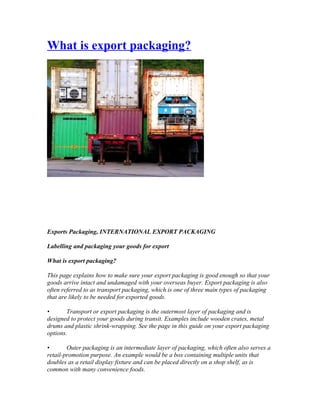
detained. Sometimes companies will ship many items in a bulk-sized 20- or 40-foot
containers, reducing the materials necessary to package and label each one. But even a
large container has to be properly labeled and adequately documented.

   1. Packaging Cartons
          o   Proper packaging helps to ensure the shipped item arrives to its intended
              destination undamaged. Perforation, moisture, breakage and excess weight
              are the four major elements to consider when choosing packaging
              materials.

              An exporter can choose between crates, barrels, heavy duty bags and
              corrugated boxes, as long as the material is durable, puncture-proof and
              moisture-resistant. If an exporter is shipping many items together, it might
              be more feasible to ship the entire lot in a container, as this can help
              minimize the risk of damages.

   2. Bulk Containers
          o   Exporters use 20- or 40-foot containers to ship large quantities of
              unpackaged materials together. When lots of materials are containerized,
              less protection is required because the items are protected by the large
              steel container. Because it is unlikely that the contained items will be
              removed while in transit, the contents should stay protected and intact
              from truck to ship to rail.

              Containerizing a mass-quantity of goods also helps them pass through the
              various frontiers and ports quicker, as border controllers, customs and
              governmental regulatory bodies only need to check one set of labeling and
              documentation.

   3. Labeling
          o   Shipping regulations mandate that all packaging and containers must be
              properly labeled. Labeling helps to ensure the package is properly
              handled, sensitive information, i.e., the shipment's value, is protected, and
              any safety requirements needed in handling the package are apparent.

              The overseas buyer can also specify additional labeling requirements, such
              as the shipper's mark, country of origin, packaging weight and dimensions.
              Some international buyers also request symbolic representation for
              handling and cautionary marks, and sometimes require warnings in the
              languages of origin and destination.
4. Documentation
         o   Documentation is one of the most important components of export
             packaging materials because the paper trail is what authorities use to
             permit the package's entry across the various frontiers.

             Conventional forms of shipping include one or more of the following
             carriers: air, train, truck or ocean freight shipping. For any of these forms
             of transportation, the shipper needs to provide an airway bill or bill of
             lading, which are the contract between the shipper and carrier.

             Other necessary documentation includes the commercial invoice,
             certificate of origin, packing list, exporter's declaration of the goods' value
             and insurance certificate.

             Different countries require additional documentations, such as the
             inspection certificate, dock receipt and warehouse receipt or export
             licensing, depending on the nature of goods being exported. Because each
             country can require different documentation, it is important for the
             exporter to investigate the destination's paperwork requirements.


Contact
TINSEL CARGO & OIL COMPANY
COMMERCE HOUSE
3RD FLOOR, SUITE 311,
MOI AVENUE, NAIROBI.
P.O. BOX 79456-00200 NAIROBI, KENYA
TELE FAX: +254-20-2229781,
Cellphone: +254-722-761587,
+254-734-939308

Website: www.tinselcargo.com
EMAIL: info@tinselcargo.com

What is export packaging ?

  • 1.
    What is exportpackaging? Exports Packaging, INTERNATIONAL EXPORT PACKAGING Labelling and packaging your goods for export What is export packaging? This page explains how to make sure your export packaging is good enough so that your goods arrive intact and undamaged with your overseas buyer. Export packaging is also often referred to as transport packaging, which is one of three main types of packaging that are likely to be needed for exported goods. • Transport or export packaging is the outermost layer of packaging and is designed to protect your goods during transit. Examples include wooden crates, metal drums and plastic shrink-wrapping. See the page in this guide on your export packaging options. • Outer packaging is an intermediate layer of packaging, which often also serves a retail-promotion purpose. An example would be a box containing multiple units that doubles as a retail display fixture and can be placed directly on a shop shelf, as is common with many convenience foods.
  • 2.
    Sales packaging is the immediate layer of packaging around your goods – the packaging that remains when the goods reach their end-user. Examples include the bottles in which beverages are contained, or the boxes many electronics items are sold in. Sales packaging often also serves a marketing purpose by containing prominent branding images and information. These three types of packaging work like Russian dolls – each layer of packaging is complete on its own terms, but contained within a further layer of outer packaging. This guide is concerned primarily with export or transport packaging, but it makes sense to consider all your packaging choices together at the outset. An overview of the three main types of packaging – sales packaging, outer packaging and export packaging Export packaging Packaging,labelling;container,box;carton;crate;sack,net,sling;drum,transit,transport,shi pping,freight,cargo,bulk,break-bulk,carrier,shipper,airfreight,dock,port,export documentation, handling instructions, cargo handlers,tri-wall,dangerous goods,pallet,loading,unloading,dunnage,protection,freight forwarder, packaging waste,hytosanitary,packaging trade association, An overview of the three main types of packaging – sales packaging, outer packaging and export packaging Labelling and packaging your goods for export What is export packaging This page explains how to make sure your export packaging is good enough so that your goods arrive intact and undamaged with your overseas buyer. Export packaging is also often referred to as transport packaging, which is one of three main types of packaging that are likely to be needed for exported goods. Transport or export packaging is the outermost layer of packaging and is designed to protect your goods during transit. Examples include wooden crates, metal drums and plastic shrink-wrapping. See the page in this guide How you can choose to ship your goods – from loose and unpacked to palletized and containerized our export packaging options Outer packaging is an intermediate layer of packaging, which often also serves a retail- promotion purpose. An example would be a box containing multiple units that doubles as a retail display fixture and can be placed directly on a shop shelf, as is common with many convenience foods
  • 3.
    Sales packaging isthe immediate layer of packaging around your goods – the packaging that remains when the goods reach their end-user. Examples include the bottles in which beverages are contained, or the boxes many electronics items are sold in. Sales packaging often also serves a marketing purpose by containing prominent branding images and information. These three types of packaging work like Russian dolls – each layer of packaging is complete on its own terms, but contained within a further layer of outer packaging. This guide is concerned primarily with export or transport packaging, but it makes sense to consider all your packaging choices together at the outset. Packaging Machine Suppliers in Kenya This section contains Packaging Machine Suppliers that manufacture, import, export and/or distribute Packaging Machines & Machinery: Blister Packaging Machines, Capping Machines, Cartoning Machines, Case and Tray Forming Machines, Checkweighing Machines, Cleaning Machines, Closing Machines, Converting Machines, Conveying and Accumulating, Drying Machines etc.. Packaging Suppliers, Packaging Suppliers in Kenya This section contains Packaging Suppliers that manufacture, import, export and/or distribute Packagings: Adhesive Tapes, Adhesives, Aluminium Bags, Aluminium Barrels, Aluminium Cups, Ampoules, Bag-in-box Packagings, Bags & Sacks, Barrels, Big Bags ,Exports Packaging in Kenya,Kenya Export Packaging Box, Kenya Export Packaging Box ,Kenya Quality Packaging Exports, Kenya Quality Packaging Exports,Kenya – Packaging machine Suppliers, Companies, Manufacturers . Contact TINSEL CARGO & OIL COMPANY COMMERCE HOUSE 3RD FLOOR, SUITE 311, MOI AVENUE, NAIROBI. P.O. BOX 79456-00200 NAIROBI, KENYA TELE FAX: +254-20-2229781, Cellphone: +254-722-761587, +254-734-939308 Website: www.tinselcargo.com EMAIL: info@tinselcargo.com
  • 4.
    Export Packaging Requirements Packaging,containers, labeling and documentation are the most important components of shipping a package overseas. Every individual package must be shipped in the proper carton, equipped with sufficient paperwork to avoid items being damaged, delayed or detained. Sometimes companies will ship many items in a bulk-sized 20- or 40-foot containers, reducing the materials necessary to package and label each one. But even a large container has to be properly labeled and adequately documented. 1. Packaging Cartons o Proper packaging helps to ensure the shipped item arrives to its intended destination undamaged. Perforation, moisture, breakage and excess weight are the four major elements to consider when choosing packaging materials. An exporter can choose between crates, barrels, heavy duty bags and corrugated boxes, as long as the material is durable, puncture-proof and moisture-resistant. If an exporter is shipping many items together, it might be more feasible to ship the entire lot in a container, as this can help minimize the risk of damages. 2. Bulk Containers o Exporters use 20- or 40-foot containers to ship large quantities of unpackaged materials together. When lots of materials are containerized, less protection is required because the items are protected by the large steel container. Because it is unlikely that the contained items will be removed while in transit, the contents should stay protected and intact from truck to ship to rail. Containerizing a mass-quantity of goods also helps them pass through the various frontiers and ports quicker, as border controllers, customs and governmental regulatory bodies only need to check one set of labeling and documentation. 3. Labeling o Shipping regulations mandate that all packaging and containers must be properly labeled. Labeling helps to ensure the package is properly handled, sensitive information, i.e., the shipment's value, is protected, and any safety requirements needed in handling the package are apparent. The overseas buyer can also specify additional labeling requirements, such as the shipper's mark, country of origin, packaging weight and dimensions. Some international buyers also request symbolic representation for handling and cautionary marks, and sometimes require warnings in the languages of origin and destination.
  • 5.
    4. Documentation o Documentation is one of the most important components of export packaging materials because the paper trail is what authorities use to permit the package's entry across the various frontiers. Conventional forms of shipping include one or more of the following carriers: air, train, truck or ocean freight shipping. For any of these forms of transportation, the shipper needs to provide an airway bill or bill of lading, which are the contract between the shipper and carrier. Other necessary documentation includes the commercial invoice, certificate of origin, packing list, exporter's declaration of the goods' value and insurance certificate. Different countries require additional documentations, such as the inspection certificate, dock receipt and warehouse receipt or export licensing, depending on the nature of goods being exported. Because each country can require different documentation, it is important for the exporter to investigate the destination's paperwork requirements. Contact TINSEL CARGO & OIL COMPANY COMMERCE HOUSE 3RD FLOOR, SUITE 311, MOI AVENUE, NAIROBI. P.O. BOX 79456-00200 NAIROBI, KENYA TELE FAX: +254-20-2229781, Cellphone: +254-722-761587, +254-734-939308 Website: www.tinselcargo.com EMAIL: info@tinselcargo.com