What is an HMI?
(Human Machine Interface)
https://www.justengg.com
❖ A user interface or dashboard that connects a human to a
machine, system, or device is known as a Human-Machine
Interface (HMI). Although HMI can technically refer to any screen
that allows a user to interact with a device, it is most usually
associated with industrial processes.
❖ Although Human-Machine Interface (HMI) is the most frequent
name for this technology, it is also known as Man-Machine
Interface (MMI), Operator Interface Terminal (OIT), Local
Operator Interface (LOI), or Operator Terminal (OT). HMI and
Graphical User Interface (GUI) are related but not the same thing:
HMIs frequently use graphical user interfaces (GUIs) to provide
visualization capabilities.
https://www.justengg.com
❖ HMIs can be utilized in a variety of ways in
the workplace, including:
1. Visualize data
2. Keep track of production times, trends, and tags.
3. Monitor KPIs
4. Keep track of the machine's inputs and outputs.
5. And much more
❖ A plant-floor operator might use an HMI to check and
regulate the temperature of an industrial water tank, or to
see if a specific pump in the facility is currently working,
similar to how you might interact with your air-
conditioning system to check and adjust the temperature
in your home.
https://www.justengg.com
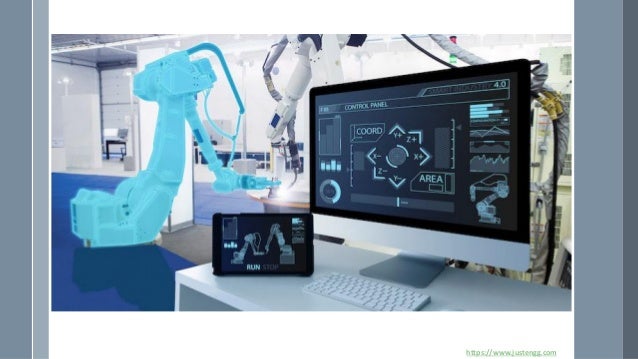
❖ HMIs come in a variety of formats, from built-in
screens on machines to computer monitors to tablets,
but their goal remains the same regardless of the
format or term used to refer to them: to provide
insight into mechanical performance and progress.
https://www.justengg.com
Who Uses HMI?
❖HMI technology is utilized by almost all industrial organizations, as well
as a wide range of other businesses, to interface with their machines and
enhance their industrial processes.
❖Industries using HMI include:
1. Energy
2. Food and beverage
3. Manufacturing
4. Oil and gas
5. Power
6. Recycling
7. Transportation
8. Water and waste water
9. And many more
https://www.justengg.com
❖ Operators, system integrators, and engineers, particularly
control system engineers, are the most common positions that
interact with HMIs. For these specialists, HMIs are critical
tools for reviewing and monitoring processes, diagnosing
problems, and visualizing data.
https://www.justengg.com
Developing Trends in HMI Technology-
❖ Changing operational and corporate needs have prompted
interesting improvements in HMI technology during the last decade.
Along with more classic models, advanced kinds of HMI such as high-
performance HMIs, touch screens, and mobile devices are becoming
more popular. More chances for equipment interaction and analysis
are being created by these upgraded interfaces.
https://www.justengg.com
1. High performance HMI –
High-performance HMI, a type of HMI design that helps in fast, effective interaction, is becoming
increasingly popular among operators and users. This design strategy helps the viewer in seeing
and responding to problems more effectively, as well as make better-informed judgments, by only
drawing attention to the most necessary or critical indicators on the interface. High-performance
HMI indicators are basic, clean, and purposefully devoid of any unnecessary images or controls.
Colour, size, and placement, among other design components, are utilized sparingly to improve
the user experience.
2. Touch Screens and Mobile Devices –
Touch displays and mobile HMI are two examples of technology advancements made possible by
smartphones. Instead of buttons and switches, modern HMIs allow operators to access controls by
pressing or touching the physical screen. Touch displays are especially significant when it comes
to mobile HMI, which can be delivered via web-based HMI/SCADA or an app. Users benefit from
mobile HMI for a variety of reasons, including rapid access to HMI data and remote monitoring.
https://www.justengg.com
3. Remote monitoring –
Operators and managers benefit from mobile-friendly remote monitoring since it gives them
more flexibility and access. An offsite control system engineer, for example, can utilize this
capability to confirm the temperature of a warehouse on a portable device, removing the
requirement for onsite supervision after business hours. Checking in on a process on your
factory floor while thousands of kilometres away will soon become routine.
4. Edge-of-Network and Cloud HMIs –
Operators want edge-of-network HMIs because they give them access to data and
visualization from field devices. Additionally, sending data from local HMIs to the cloud,
where it can be accessed and analysed remotely while maintaining control capabilities local, is
becoming more prevalent.
https://www.justengg.com
5. Peering into the future of HMI –
Leading engineers are even looking into ways to use Augmented Reality (AR)
and Virtual Reality (VR) to visualize industrial functions in the future. The
future of HMI appears to be bright since data plays an increasingly important
role in production. This technology has come a long way, but it still has a lot
of potential for improvement.
https://www.justengg.com
Common uses of HMI -
❖ To get and display information for users, HMIs interface with Programmable Logic Controllers
(PLCs) and input/output sensors. Depending on how they are implemented, HMI screens can
be used for a single purpose, such as monitoring and tracking, or for more complex actions,
such as shutting machines off or raising production speed.
❖ HMIs are used to improve an industrial process by automating and coordinating data for a
viewer. Operators can monitor important data in graphs, charts, or digital dashboards, view
and handle alarms, and interface with SCADA and MES systems all from a single console using
HMI.
❖ Previously, operators had to walk the floor regularly to check on mechanical progress and
record it on paper or a whiteboard. HMI technology eliminates the need for this outdated
practice by allowing PLCs to convey real-time data directly to an HMI display, reducing
numerous costly problems caused by a lack of knowledge or human error.
https://www.justengg.com
Thanks, You’re halfwaY here
To connect with us, Visit:
https://www.justengg.com/
Mail us:
training@justengg.com

What is an HMI.pdf

  • 1.
    What is anHMI? (Human Machine Interface) https://www.justengg.com
  • 2.
    ❖ A userinterface or dashboard that connects a human to a machine, system, or device is known as a Human-Machine Interface (HMI). Although HMI can technically refer to any screen that allows a user to interact with a device, it is most usually associated with industrial processes. ❖ Although Human-Machine Interface (HMI) is the most frequent name for this technology, it is also known as Man-Machine Interface (MMI), Operator Interface Terminal (OIT), Local Operator Interface (LOI), or Operator Terminal (OT). HMI and Graphical User Interface (GUI) are related but not the same thing: HMIs frequently use graphical user interfaces (GUIs) to provide visualization capabilities. https://www.justengg.com
  • 3.
  • 4.
    ❖ HMIs canbe utilized in a variety of ways in the workplace, including: 1. Visualize data 2. Keep track of production times, trends, and tags. 3. Monitor KPIs 4. Keep track of the machine's inputs and outputs. 5. And much more ❖ A plant-floor operator might use an HMI to check and regulate the temperature of an industrial water tank, or to see if a specific pump in the facility is currently working, similar to how you might interact with your air- conditioning system to check and adjust the temperature in your home. https://www.justengg.com
  • 5.
    ❖ HMIs comein a variety of formats, from built-in screens on machines to computer monitors to tablets, but their goal remains the same regardless of the format or term used to refer to them: to provide insight into mechanical performance and progress. https://www.justengg.com
  • 6.
    Who Uses HMI? ❖HMItechnology is utilized by almost all industrial organizations, as well as a wide range of other businesses, to interface with their machines and enhance their industrial processes. ❖Industries using HMI include: 1. Energy 2. Food and beverage 3. Manufacturing 4. Oil and gas 5. Power 6. Recycling 7. Transportation 8. Water and waste water 9. And many more https://www.justengg.com
  • 7.
    ❖ Operators, systemintegrators, and engineers, particularly control system engineers, are the most common positions that interact with HMIs. For these specialists, HMIs are critical tools for reviewing and monitoring processes, diagnosing problems, and visualizing data. https://www.justengg.com
  • 8.
    Developing Trends inHMI Technology- ❖ Changing operational and corporate needs have prompted interesting improvements in HMI technology during the last decade. Along with more classic models, advanced kinds of HMI such as high- performance HMIs, touch screens, and mobile devices are becoming more popular. More chances for equipment interaction and analysis are being created by these upgraded interfaces. https://www.justengg.com
  • 9.
    1. High performanceHMI – High-performance HMI, a type of HMI design that helps in fast, effective interaction, is becoming increasingly popular among operators and users. This design strategy helps the viewer in seeing and responding to problems more effectively, as well as make better-informed judgments, by only drawing attention to the most necessary or critical indicators on the interface. High-performance HMI indicators are basic, clean, and purposefully devoid of any unnecessary images or controls. Colour, size, and placement, among other design components, are utilized sparingly to improve the user experience. 2. Touch Screens and Mobile Devices – Touch displays and mobile HMI are two examples of technology advancements made possible by smartphones. Instead of buttons and switches, modern HMIs allow operators to access controls by pressing or touching the physical screen. Touch displays are especially significant when it comes to mobile HMI, which can be delivered via web-based HMI/SCADA or an app. Users benefit from mobile HMI for a variety of reasons, including rapid access to HMI data and remote monitoring. https://www.justengg.com
  • 10.
    3. Remote monitoring– Operators and managers benefit from mobile-friendly remote monitoring since it gives them more flexibility and access. An offsite control system engineer, for example, can utilize this capability to confirm the temperature of a warehouse on a portable device, removing the requirement for onsite supervision after business hours. Checking in on a process on your factory floor while thousands of kilometres away will soon become routine. 4. Edge-of-Network and Cloud HMIs – Operators want edge-of-network HMIs because they give them access to data and visualization from field devices. Additionally, sending data from local HMIs to the cloud, where it can be accessed and analysed remotely while maintaining control capabilities local, is becoming more prevalent. https://www.justengg.com
  • 11.
    5. Peering intothe future of HMI – Leading engineers are even looking into ways to use Augmented Reality (AR) and Virtual Reality (VR) to visualize industrial functions in the future. The future of HMI appears to be bright since data plays an increasingly important role in production. This technology has come a long way, but it still has a lot of potential for improvement. https://www.justengg.com
  • 12.
    Common uses ofHMI - ❖ To get and display information for users, HMIs interface with Programmable Logic Controllers (PLCs) and input/output sensors. Depending on how they are implemented, HMI screens can be used for a single purpose, such as monitoring and tracking, or for more complex actions, such as shutting machines off or raising production speed. ❖ HMIs are used to improve an industrial process by automating and coordinating data for a viewer. Operators can monitor important data in graphs, charts, or digital dashboards, view and handle alarms, and interface with SCADA and MES systems all from a single console using HMI. ❖ Previously, operators had to walk the floor regularly to check on mechanical progress and record it on paper or a whiteboard. HMI technology eliminates the need for this outdated practice by allowing PLCs to convey real-time data directly to an HMI display, reducing numerous costly problems caused by a lack of knowledge or human error. https://www.justengg.com
  • 13.
    Thanks, You’re halfwaYhere To connect with us, Visit: https://www.justengg.com/ Mail us: training@justengg.com