The Future of Industrial
Automation with HMI
Display Panel
This presentation explores the role of HMI display panels in
modern industrial automation, highlighting their benefits and
future trends.
What is an HMI Display Panel?
User Interface
An HMI display panel is a user interface that allows
operators to communicate with industrial machines.
Key Features
It has a touchscreen or keypad-based display and
presents critical information in a graphical format.
Importance of HMI Display
Panels
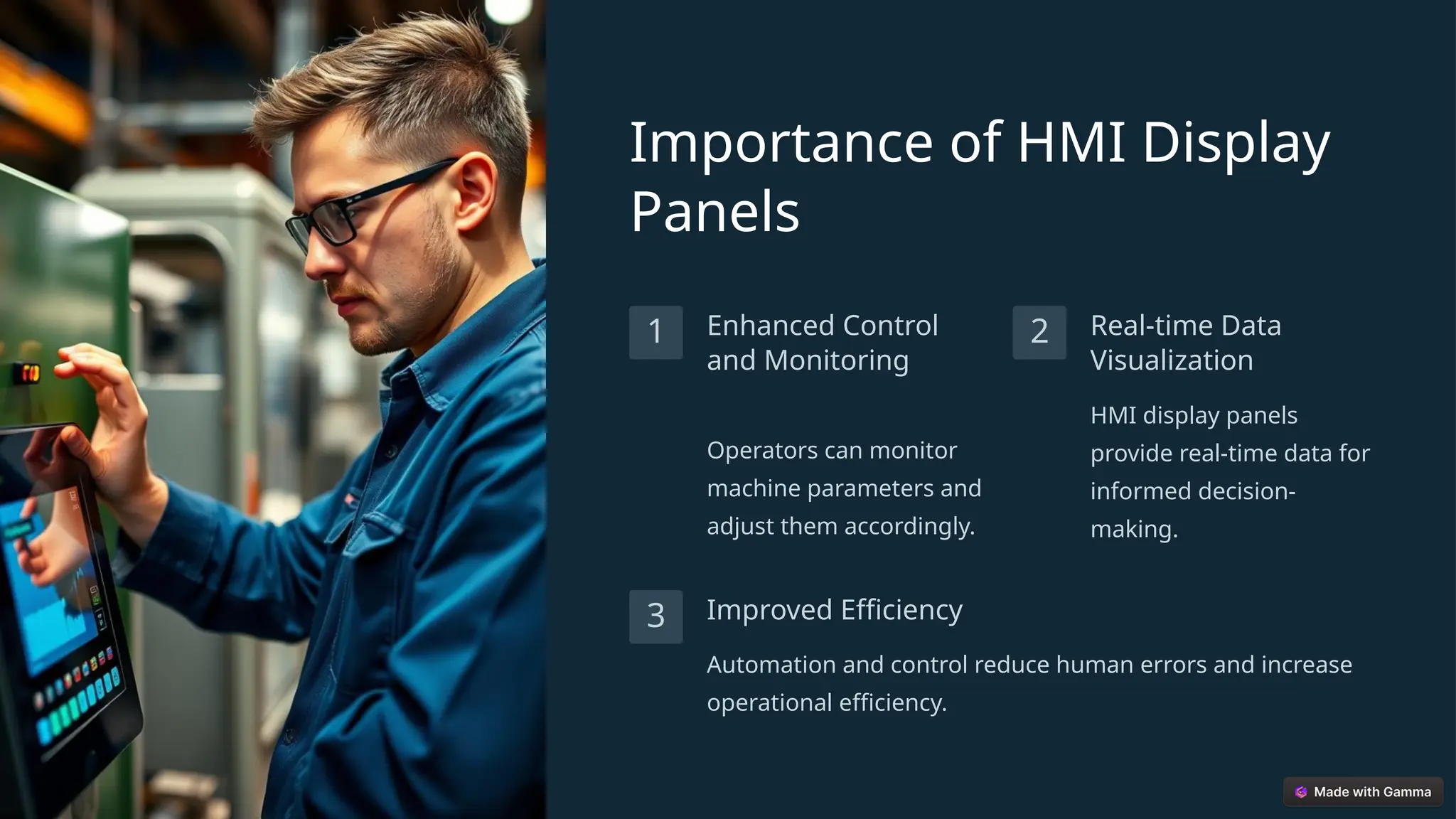
1 Enhanced Control
and Monitoring
Operators can monitor
machine parameters and
adjust them accordingly.
2 Real-time Data
Visualization
HMI display panels
provide real-time data for
informed decision-
making.
3 Improved Efficiency
Automation and control reduce human errors and increase
operational efficiency.
Types of HMI Display Panels
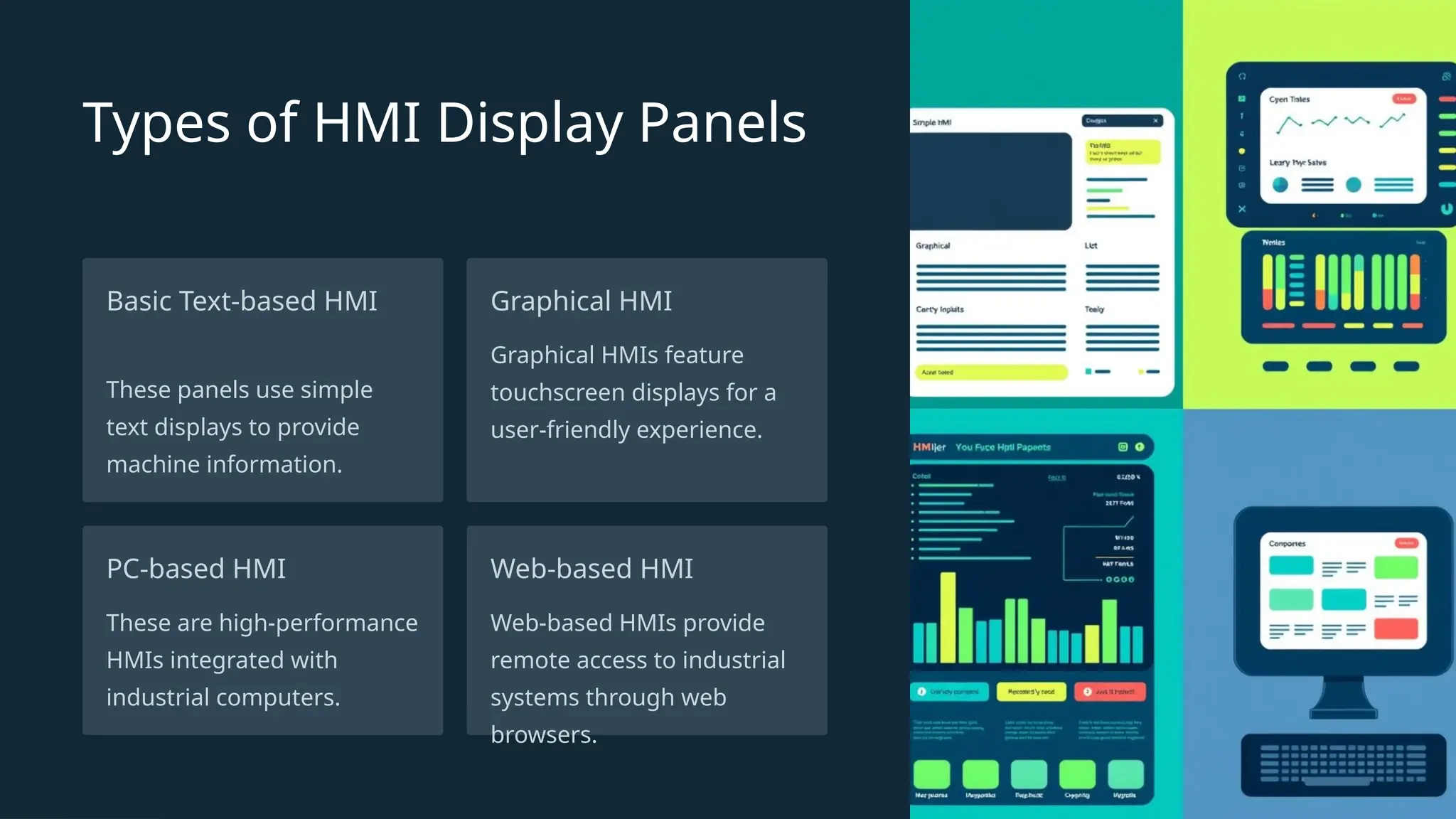
Basic Text-based HMI
These panels use simple
text displays to provide
machine information.
Graphical HMI
Graphical HMIs feature
touchscreen displays for a
user-friendly experience.
PC-based HMI
These are high-performance
HMIs integrated with
industrial computers.
Web-based HMI
Web-based HMIs provide
remote access to industrial
systems through web
browsers.
How HMI Display Panels
Work
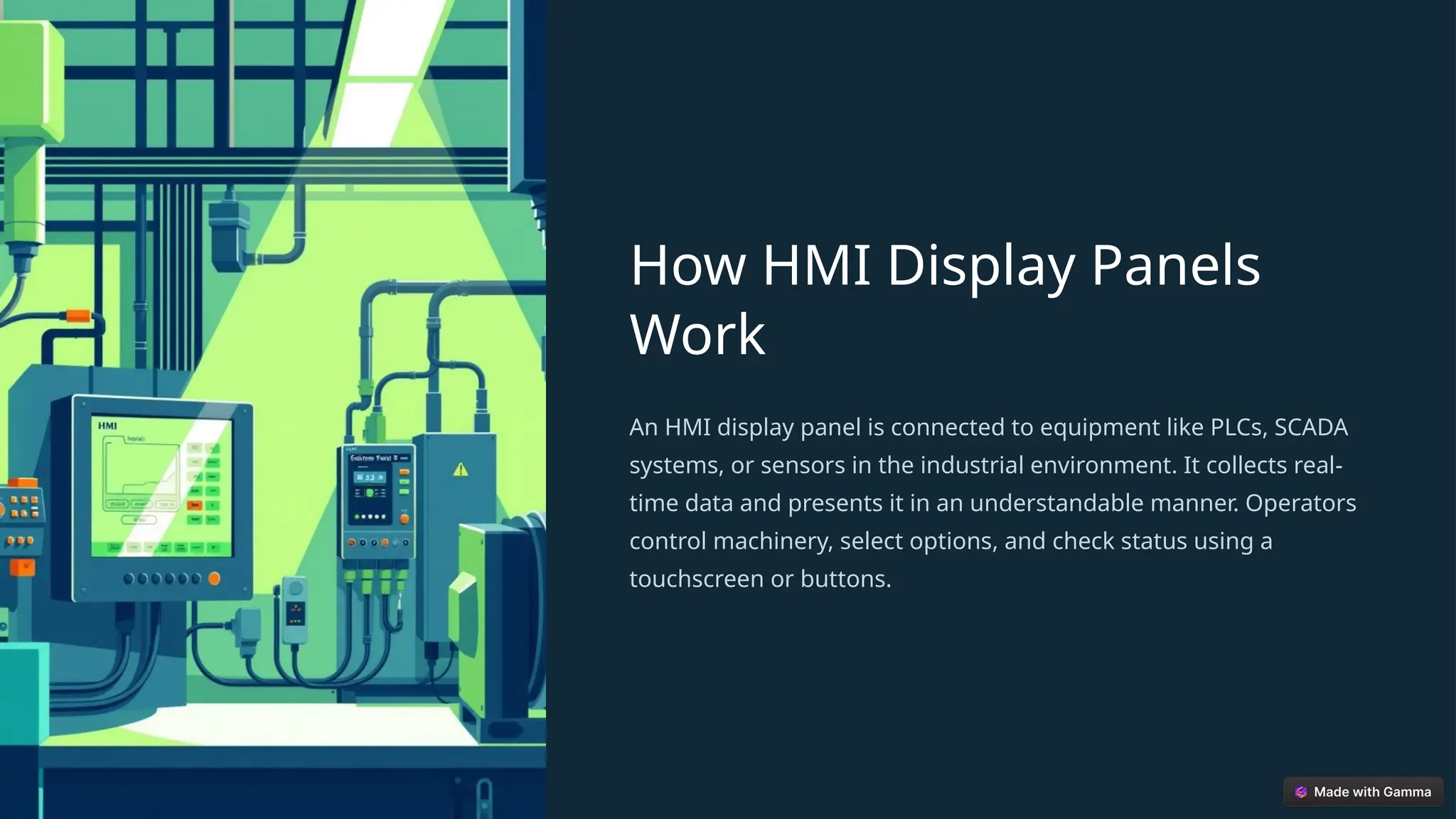
An HMI display panel is connected to equipment like PLCs, SCADA
systems, or sensors in the industrial environment. It collects real-
time data and presents it in an understandable manner. Operators
control machinery, select options, and check status using a
touchscreen or buttons.
Benefits of Using HMI Display
Panels
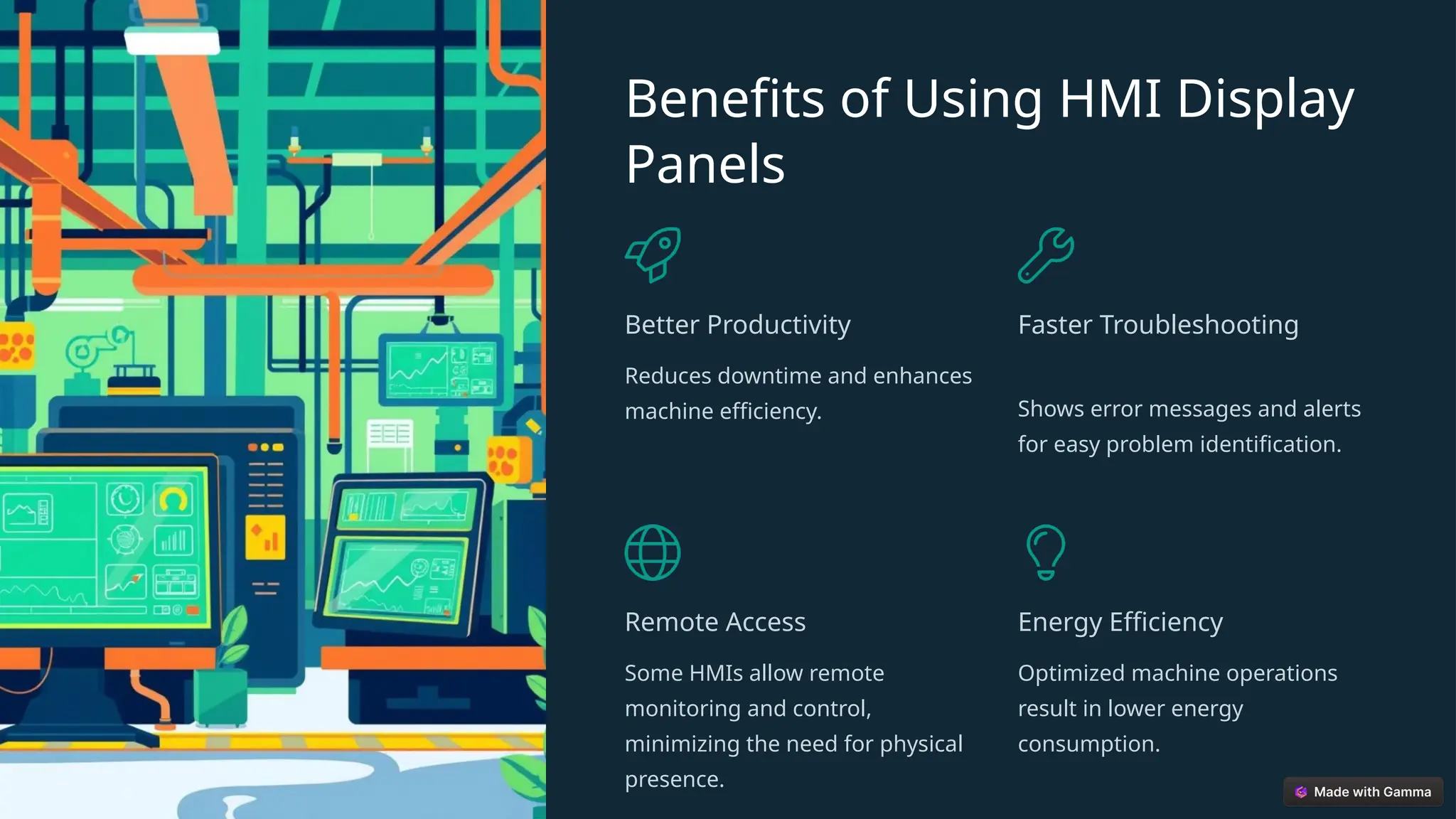
Better Productivity
Reduces downtime and enhances
machine efficiency.
Faster Troubleshooting
Shows error messages and alerts
for easy problem identification.
Remote Access
Some HMIs allow remote
monitoring and control,
minimizing the need for physical
presence.
Energy Efficiency
Optimized machine operations
result in lower energy
consumption.
Industries Using HMI Display Panels
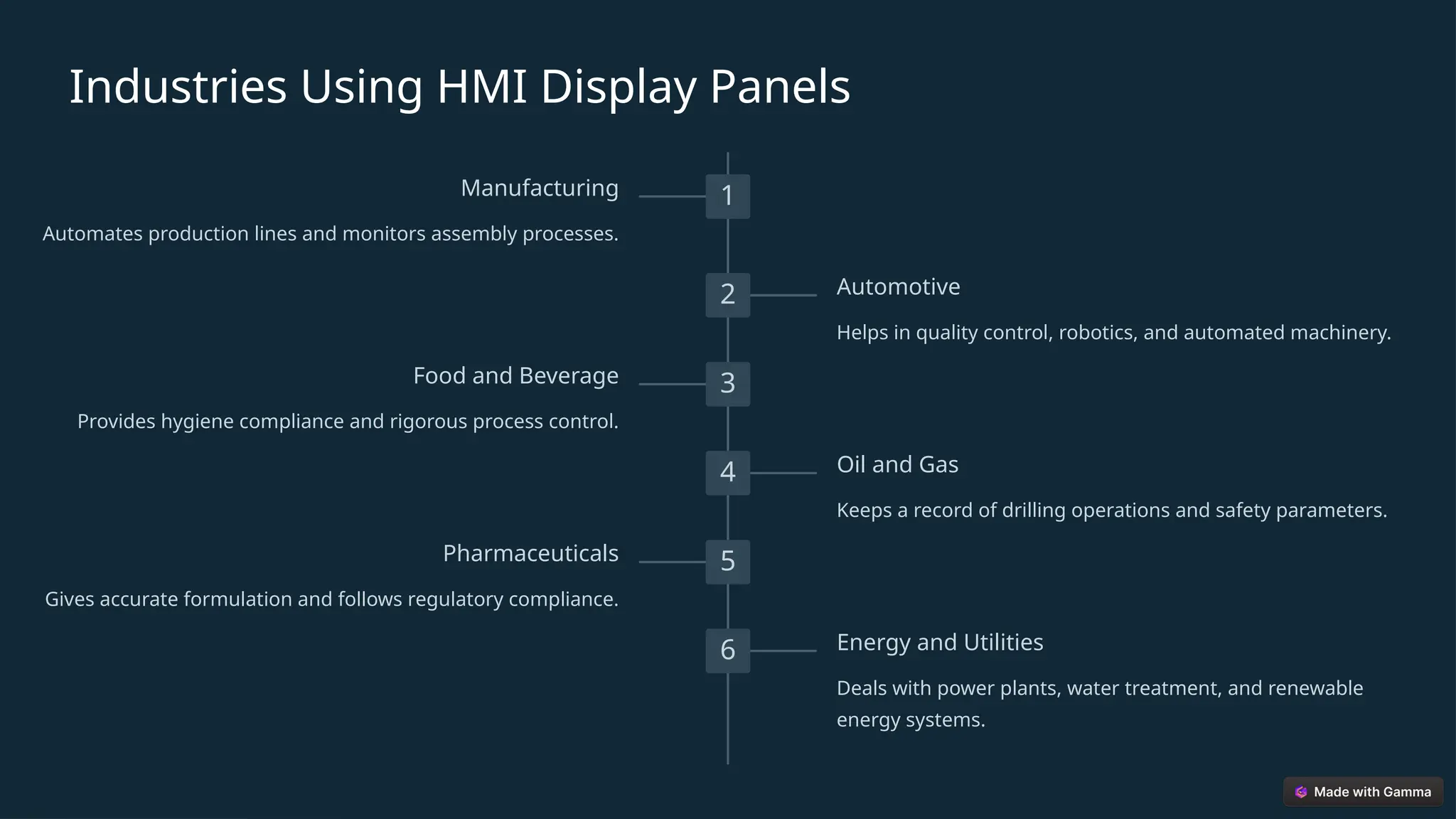
1
Manufacturing
Automates production lines and monitors assembly processes.
2 Automotive
Helps in quality control, robotics, and automated machinery.
3
Food and Beverage
Provides hygiene compliance and rigorous process control.
4 Oil and Gas
Keeps a record of drilling operations and safety parameters.
5
Pharmaceuticals
Gives accurate formulation and follows regulatory compliance.
6 Energy and Utilities
Deals with power plants, water treatment, and renewable
energy systems.
Future of HMI Display Panels
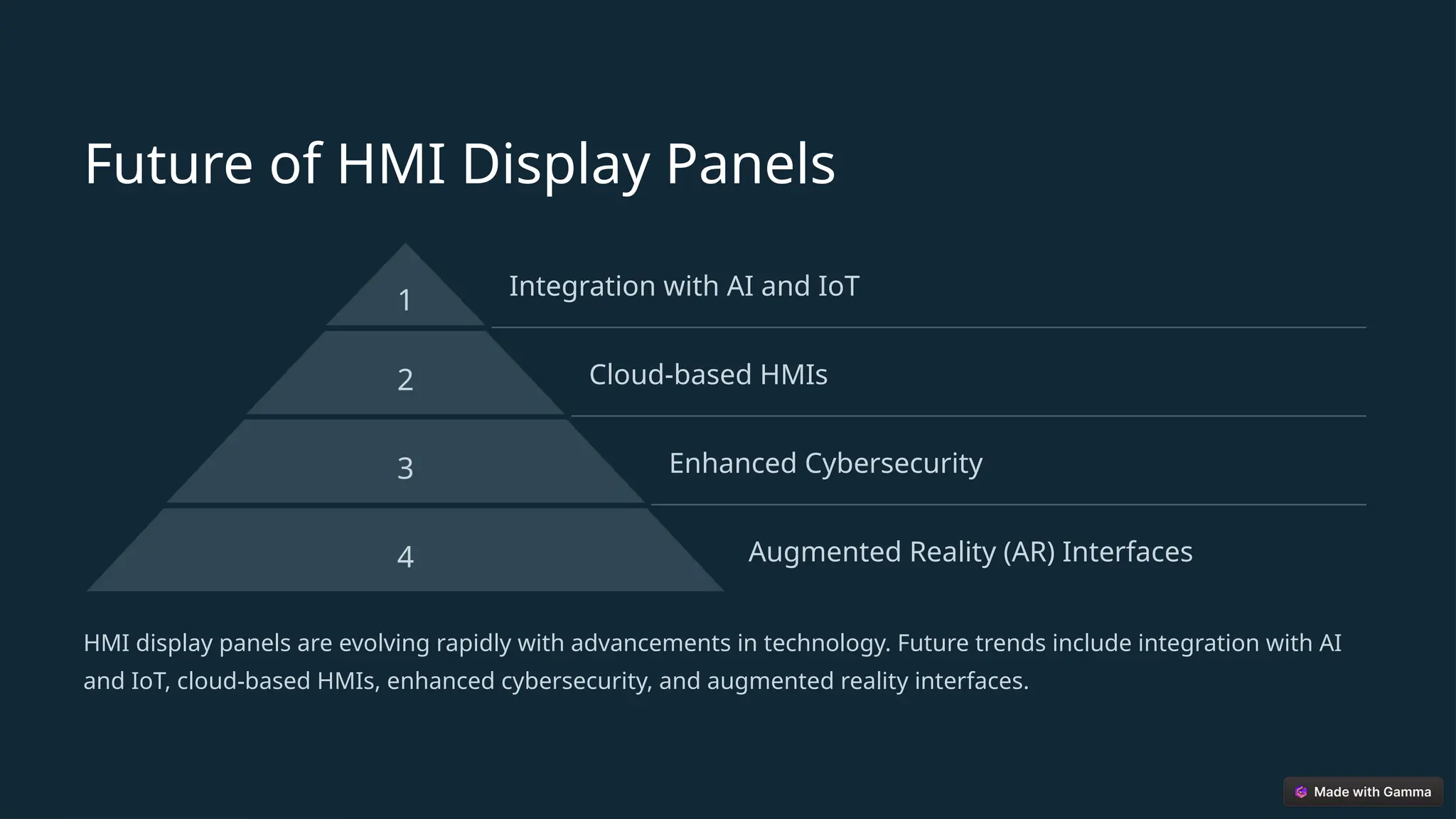
1 Integration with AI and IoT
2 Cloud-based HMIs
3 Enhanced Cybersecurity
4 Augmented Reality (AR) Interfaces
HMI display panels are evolving rapidly with advancements in technology. Future trends include integration with AI
and IoT, cloud-based HMIs, enhanced cybersecurity, and augmented reality interfaces.
Contact us for more information:
Website: www.nmagroup.in
Phone Number: 81469-57697
Address: SCO 21, Sector 7-C, Madhya Marg, Chandigarh - 160019, India

Enhance Control & Automation Efficiency with HMI Display Panel

  • 1.
    The Future ofIndustrial Automation with HMI Display Panel This presentation explores the role of HMI display panels in modern industrial automation, highlighting their benefits and future trends.
  • 2.
    What is anHMI Display Panel? User Interface An HMI display panel is a user interface that allows operators to communicate with industrial machines. Key Features It has a touchscreen or keypad-based display and presents critical information in a graphical format.
  • 3.
    Importance of HMIDisplay Panels 1 Enhanced Control and Monitoring Operators can monitor machine parameters and adjust them accordingly. 2 Real-time Data Visualization HMI display panels provide real-time data for informed decision- making. 3 Improved Efficiency Automation and control reduce human errors and increase operational efficiency.
  • 4.
    Types of HMIDisplay Panels Basic Text-based HMI These panels use simple text displays to provide machine information. Graphical HMI Graphical HMIs feature touchscreen displays for a user-friendly experience. PC-based HMI These are high-performance HMIs integrated with industrial computers. Web-based HMI Web-based HMIs provide remote access to industrial systems through web browsers.
  • 5.
    How HMI DisplayPanels Work An HMI display panel is connected to equipment like PLCs, SCADA systems, or sensors in the industrial environment. It collects real- time data and presents it in an understandable manner. Operators control machinery, select options, and check status using a touchscreen or buttons.
  • 6.
    Benefits of UsingHMI Display Panels Better Productivity Reduces downtime and enhances machine efficiency. Faster Troubleshooting Shows error messages and alerts for easy problem identification. Remote Access Some HMIs allow remote monitoring and control, minimizing the need for physical presence. Energy Efficiency Optimized machine operations result in lower energy consumption.
  • 7.
    Industries Using HMIDisplay Panels 1 Manufacturing Automates production lines and monitors assembly processes. 2 Automotive Helps in quality control, robotics, and automated machinery. 3 Food and Beverage Provides hygiene compliance and rigorous process control. 4 Oil and Gas Keeps a record of drilling operations and safety parameters. 5 Pharmaceuticals Gives accurate formulation and follows regulatory compliance. 6 Energy and Utilities Deals with power plants, water treatment, and renewable energy systems.
  • 8.
    Future of HMIDisplay Panels 1 Integration with AI and IoT 2 Cloud-based HMIs 3 Enhanced Cybersecurity 4 Augmented Reality (AR) Interfaces HMI display panels are evolving rapidly with advancements in technology. Future trends include integration with AI and IoT, cloud-based HMIs, enhanced cybersecurity, and augmented reality interfaces.
  • 9.
    Contact us formore information: Website: www.nmagroup.in Phone Number: 81469-57697 Address: SCO 21, Sector 7-C, Madhya Marg, Chandigarh - 160019, India