What if?
Chapter 13 - Harmer
Members of the group: Schmidt
Candela and Rubio Florencia.
What if students are all at
different levels?
 Use different materials: - Different groups
- Self-study facilities
 Do different tasks with the same
material:
- According to students’ abilities.
Eg. Reading texts (questions at diverse levels)
 Ignore the problem:
- Let students find their own level.
- The danger  boredom and frustration.
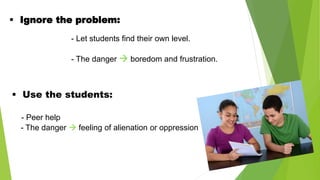
 Use the students:
- Peer help
- The danger  feeling of alienation or oppression
What if the class is very big?
 Use worksheets
 Use pairwork and groupwork:
- To maximise students’ participation.
 Use chorus reaction:
- Class division
- It’s useful at lower levels
 Use group leaders
 Think about vision and acoustic
 Use the size of the group to your
advantage: - Humour
- Drama
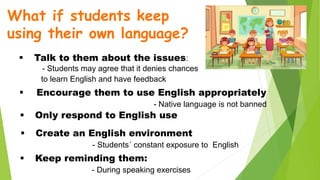
What if students keep
using their own language?
 Talk to them about the issues:
- Students may agree that it denies chances
to learn English and have feedback
 Encourage them to use English appropriately
- Native language is not banned
 Only respond to English use
 Create an English environment
- Students´ constant exposure to English
 Keep reminding them:
- During speaking exercises
What if students are uncooperative?
 Talk to individuals: - Outside the classroom
- Ask for students’ feelings
 Write to individuals: - A confidential letter
 Use activities: - Condition
 Enlist help: - Colleagues
- A friend' observation
 Make a language
learning contract: - Expected behaviour from Students and teacher
What if students don’t want to talk?
 Use pairwork: - Not so much pressure
 Allow them to speak in a controlled way
at first: -Write what students will then read
- Then, allow ask them other questions
 Use acting out and reading aloud
 Use role-play: -Taking a new identity
 Use the tape recorder: - outside the lesson
What if students don’t understand the
listening tape?
 Introduce interview questions: - Predictive power
 Use ‘jigsaw’ listening
 One task only: -Describe the speaker through the voice
 Play a/the first segment only:
-Predict what is coming next
 Use the tapescript: -cut into bits
- put in order as they listen
-with blanks
 Use vocabulary prediction: - “key” vocabulary
What if some students-in-groups finish
before everybody else?
 One group finished: - give a “spare activity”
- extra work on it
 One group doesn’t finish: - stop de activity

What if chapter 13 harmer

  • 1.
    What if? Chapter 13- Harmer Members of the group: Schmidt Candela and Rubio Florencia.
  • 2.
    What if studentsare all at different levels?  Use different materials: - Different groups - Self-study facilities  Do different tasks with the same material: - According to students’ abilities. Eg. Reading texts (questions at diverse levels)
  • 3.
     Ignore theproblem: - Let students find their own level. - The danger  boredom and frustration.  Use the students: - Peer help - The danger  feeling of alienation or oppression
  • 4.
    What if theclass is very big?  Use worksheets  Use pairwork and groupwork: - To maximise students’ participation.  Use chorus reaction: - Class division - It’s useful at lower levels  Use group leaders  Think about vision and acoustic  Use the size of the group to your advantage: - Humour - Drama
  • 5.
    What if studentskeep using their own language?  Talk to them about the issues: - Students may agree that it denies chances to learn English and have feedback  Encourage them to use English appropriately - Native language is not banned  Only respond to English use  Create an English environment - Students´ constant exposure to English  Keep reminding them: - During speaking exercises
  • 6.
    What if studentsare uncooperative?  Talk to individuals: - Outside the classroom - Ask for students’ feelings  Write to individuals: - A confidential letter  Use activities: - Condition  Enlist help: - Colleagues - A friend' observation  Make a language learning contract: - Expected behaviour from Students and teacher
  • 7.
    What if studentsdon’t want to talk?  Use pairwork: - Not so much pressure  Allow them to speak in a controlled way at first: -Write what students will then read - Then, allow ask them other questions  Use acting out and reading aloud  Use role-play: -Taking a new identity  Use the tape recorder: - outside the lesson
  • 8.
    What if studentsdon’t understand the listening tape?  Introduce interview questions: - Predictive power  Use ‘jigsaw’ listening  One task only: -Describe the speaker through the voice  Play a/the first segment only: -Predict what is coming next  Use the tapescript: -cut into bits - put in order as they listen -with blanks  Use vocabulary prediction: - “key” vocabulary
  • 9.
    What if somestudents-in-groups finish before everybody else?  One group finished: - give a “spare activity” - extra work on it  One group doesn’t finish: - stop de activity