What if annotations were
   reusable: a preliminary
          discussion
                 - ICWL 2009 -


Nikos Manouselis, Greek Research & Technology Network
Riina Vuorikari, European Schoolnet
Outline
• Problem statement

• A possible solution: a conceptual model
  and pilot

• Further discussion points
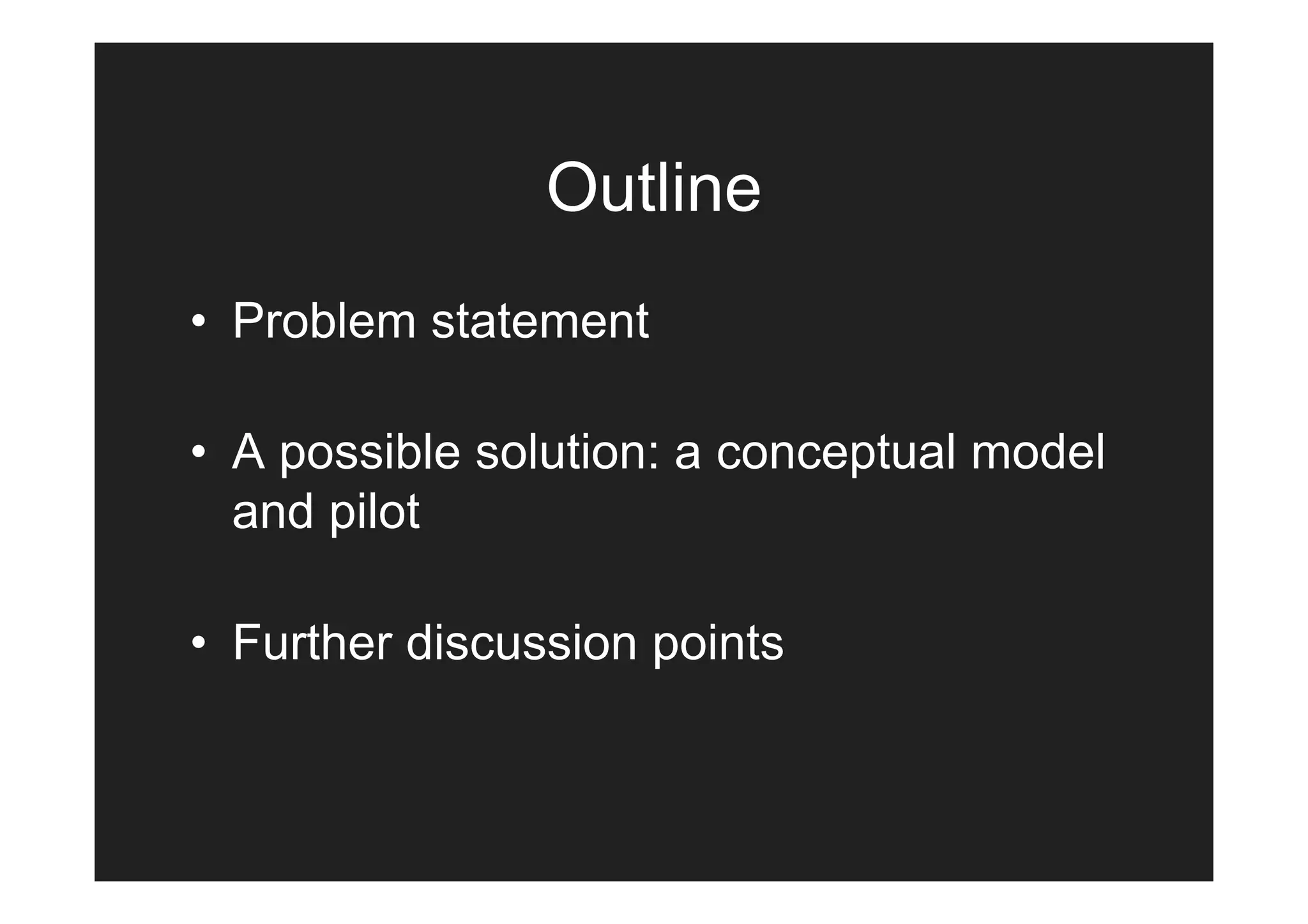
Problem scenario 1


  The same learning resource, that’s
metadata has been federated, is tagged
 on different portals: LeMill, LRE, and
                Koolielu
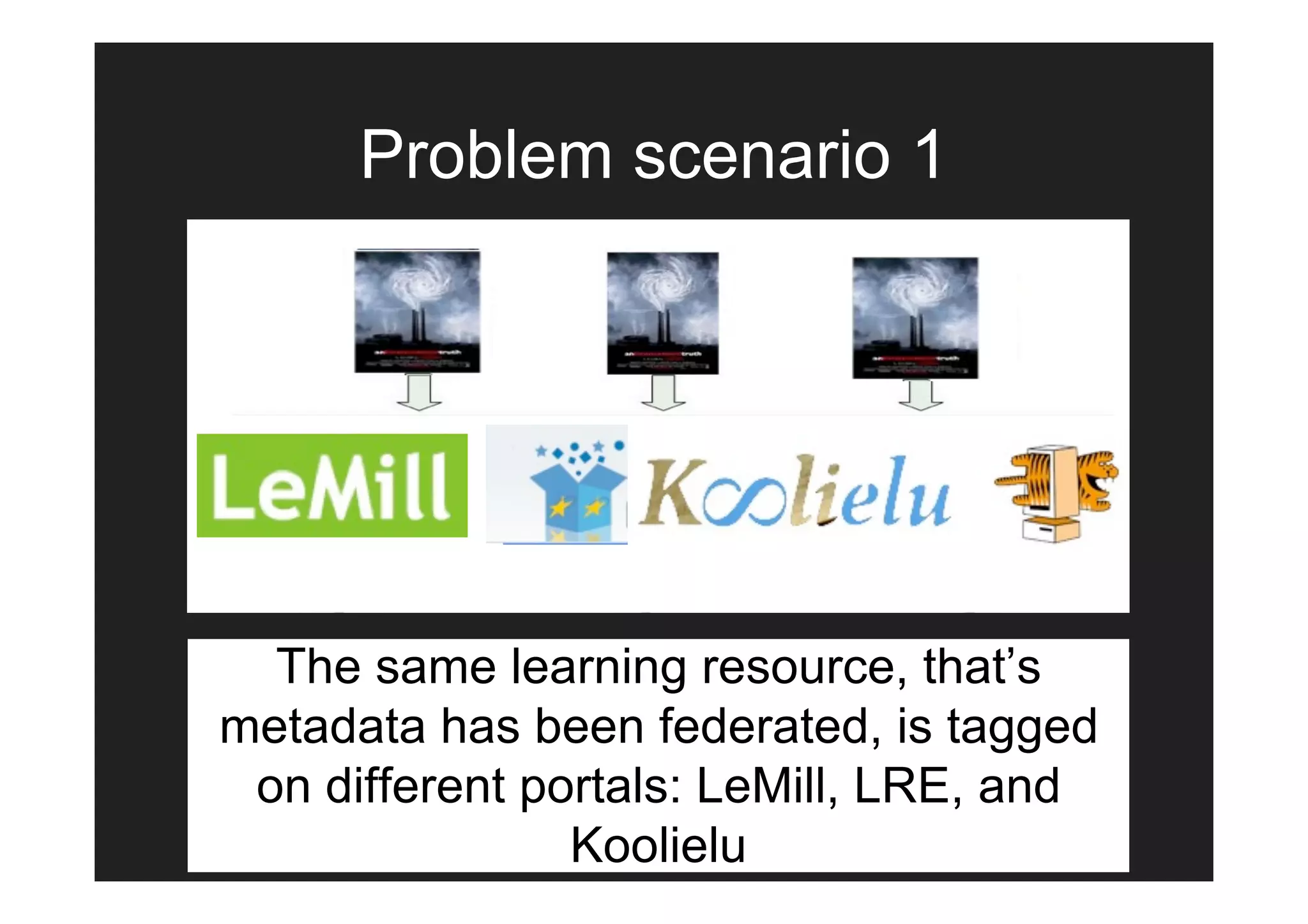
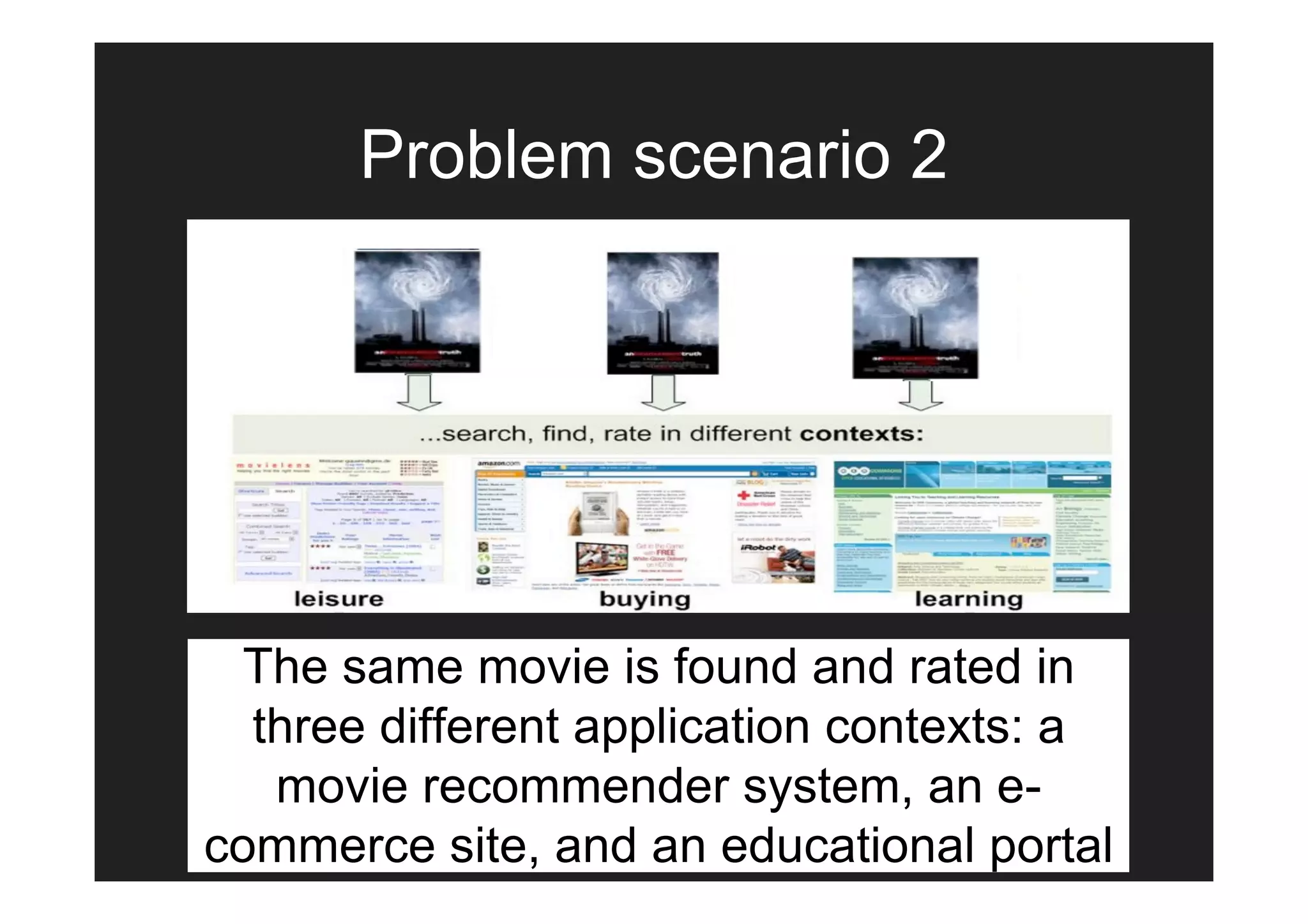
Problem scenario 2
Problem scenario 2


  The same movie is found and rated in
  three different application contexts: a
   movie recommender system, an e-
commerce site, and an educational portal
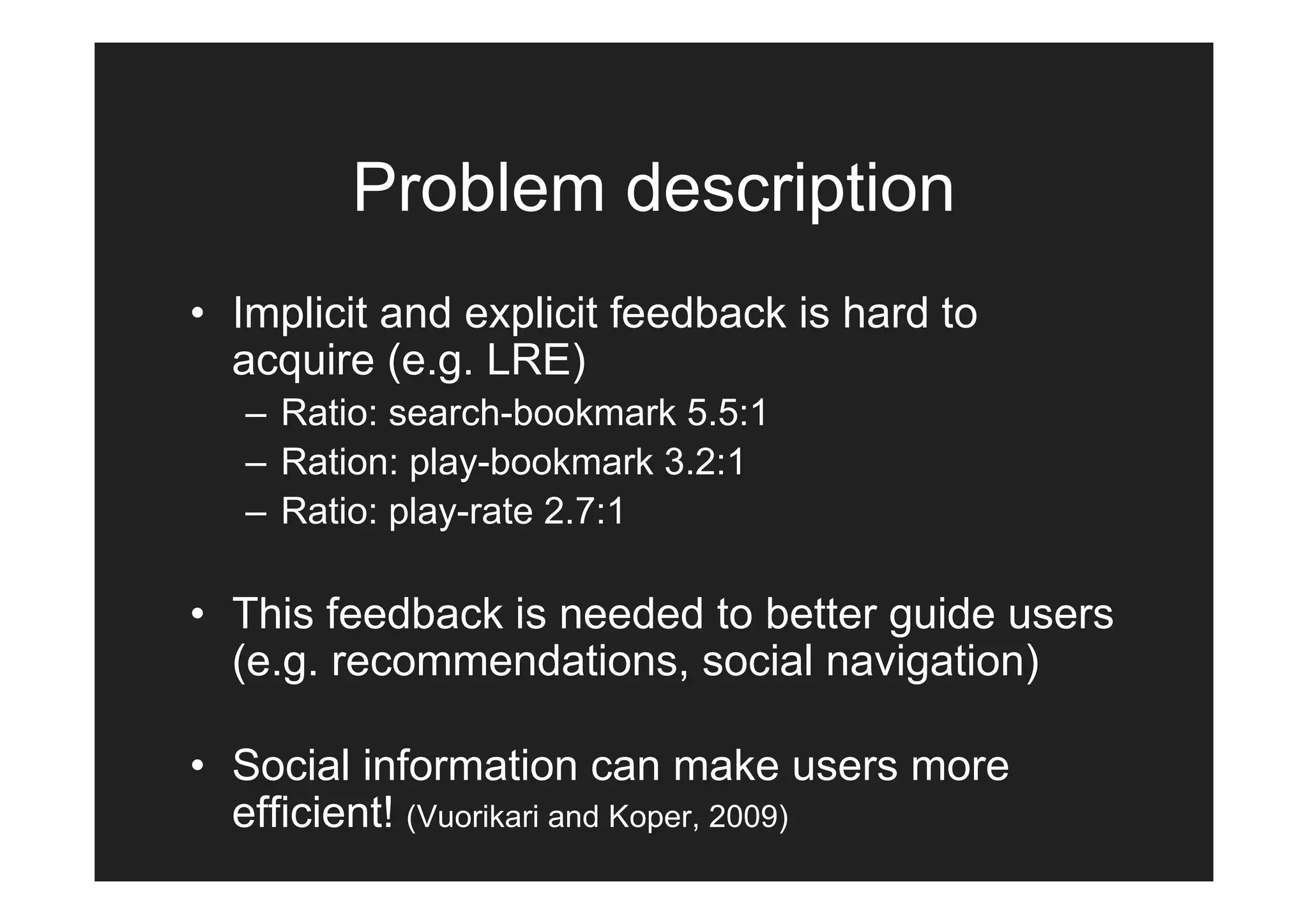
Problem description
• Implicit and explicit feedback is hard to
  acquire (e.g. LRE)
   – Ratio: search-bookmark 5.5:1
   – Ration: play-bookmark 3.2:1
   – Ratio: play-rate 2.7:1

• This feedback is needed to better guide users
  (e.g. recommendations, social navigation)

• Social information can make users more
  efficient! (Vuorikari and Koper, 2009)
An idea!

 A structured way to represent
different types of user feedback
                from
        different contexts
 could prove of particular value.
Hypothetical questions?
• Can we represent and store user
  feedback in a structured, interoperable
  and reusable format?

• Is it safe to assume that the user
  feedback can be used in another
  application domain, e.g. a new
  recommender system in a different
  application context?
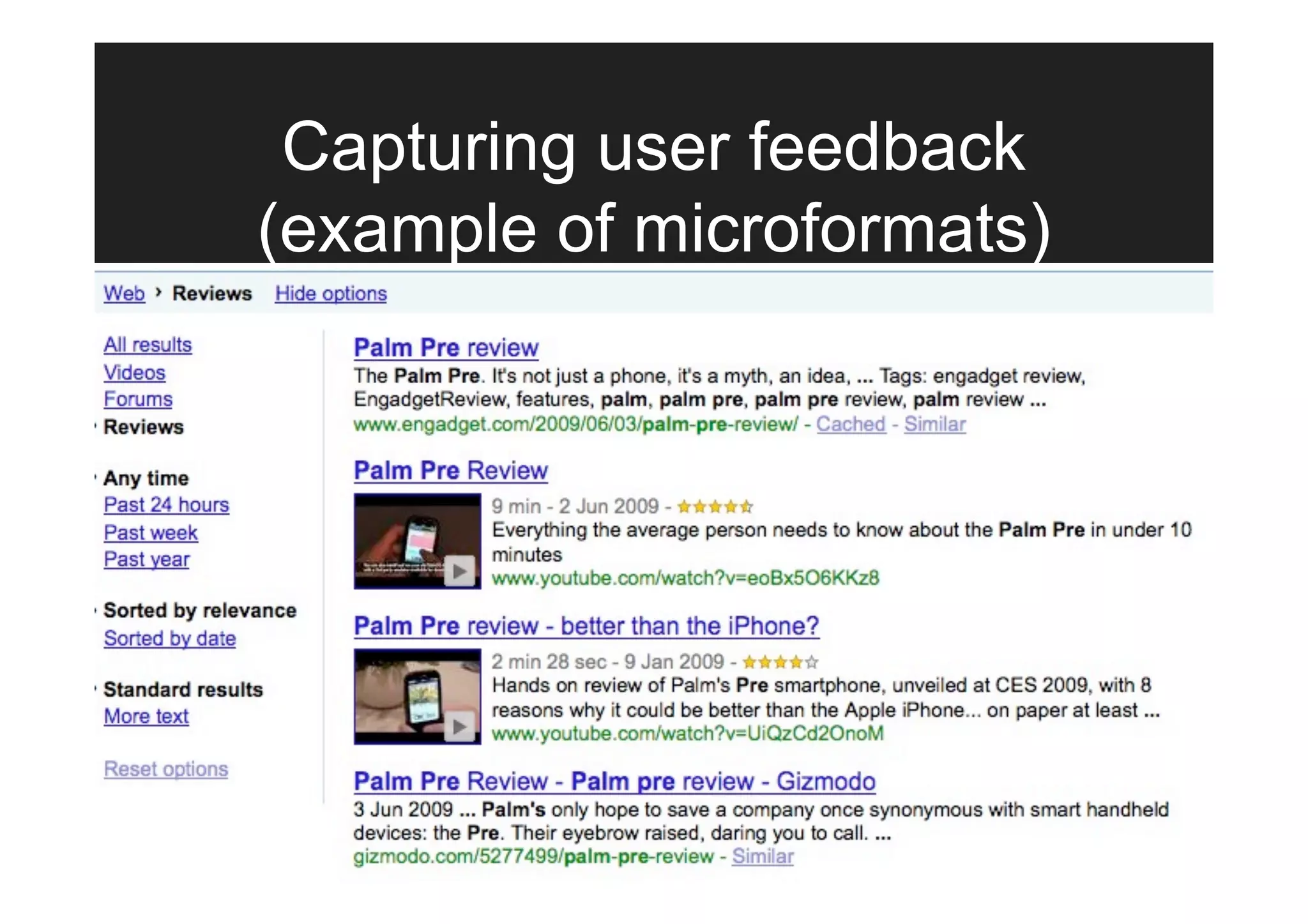
Capturing user feedback
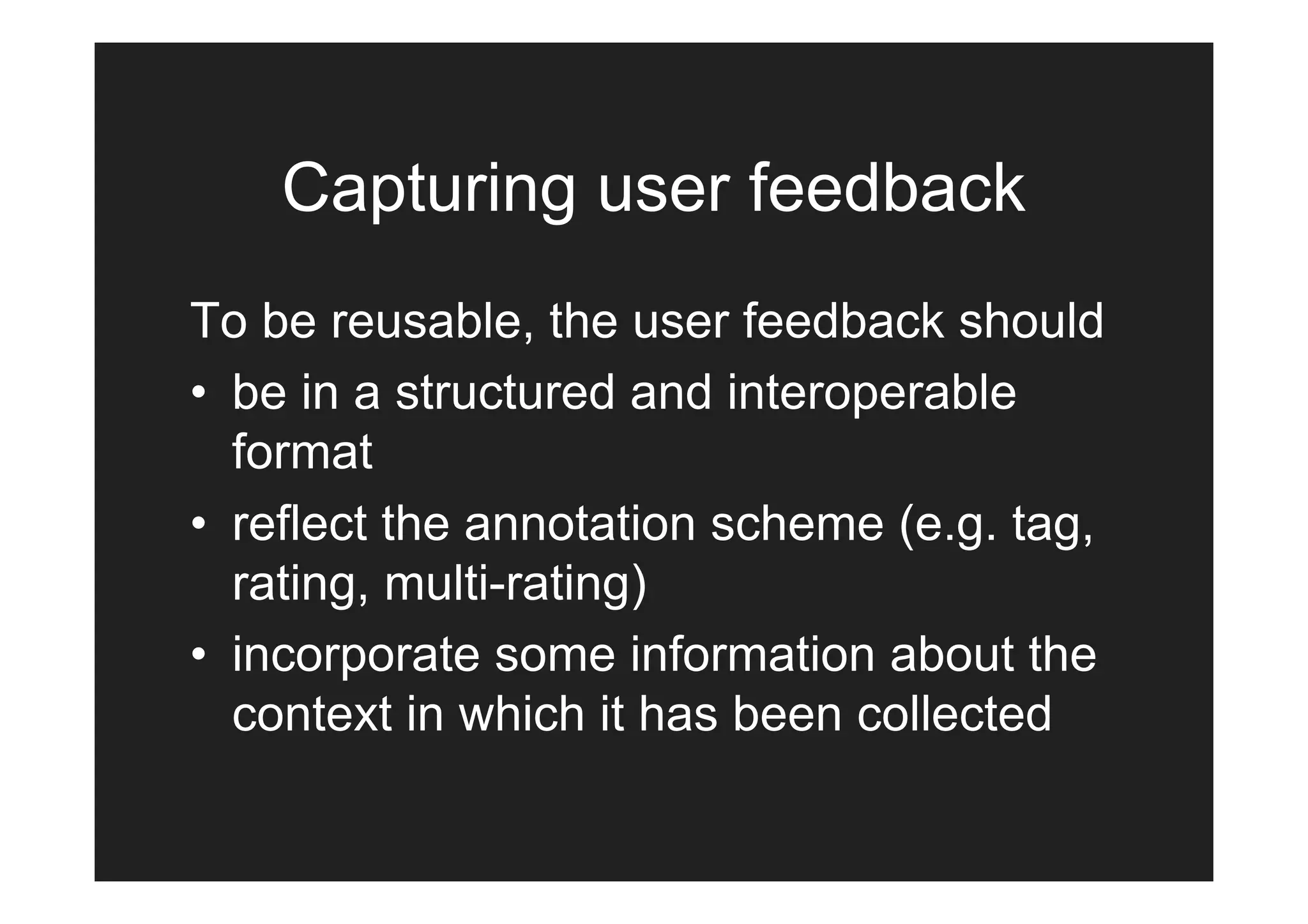
To be reusable, the user feedback should
• be in a structured and interoperable
  format
• reflect the annotation scheme (e.g. tag,
  rating, multi-rating)
• incorporate some information about the
  context in which it has been collected
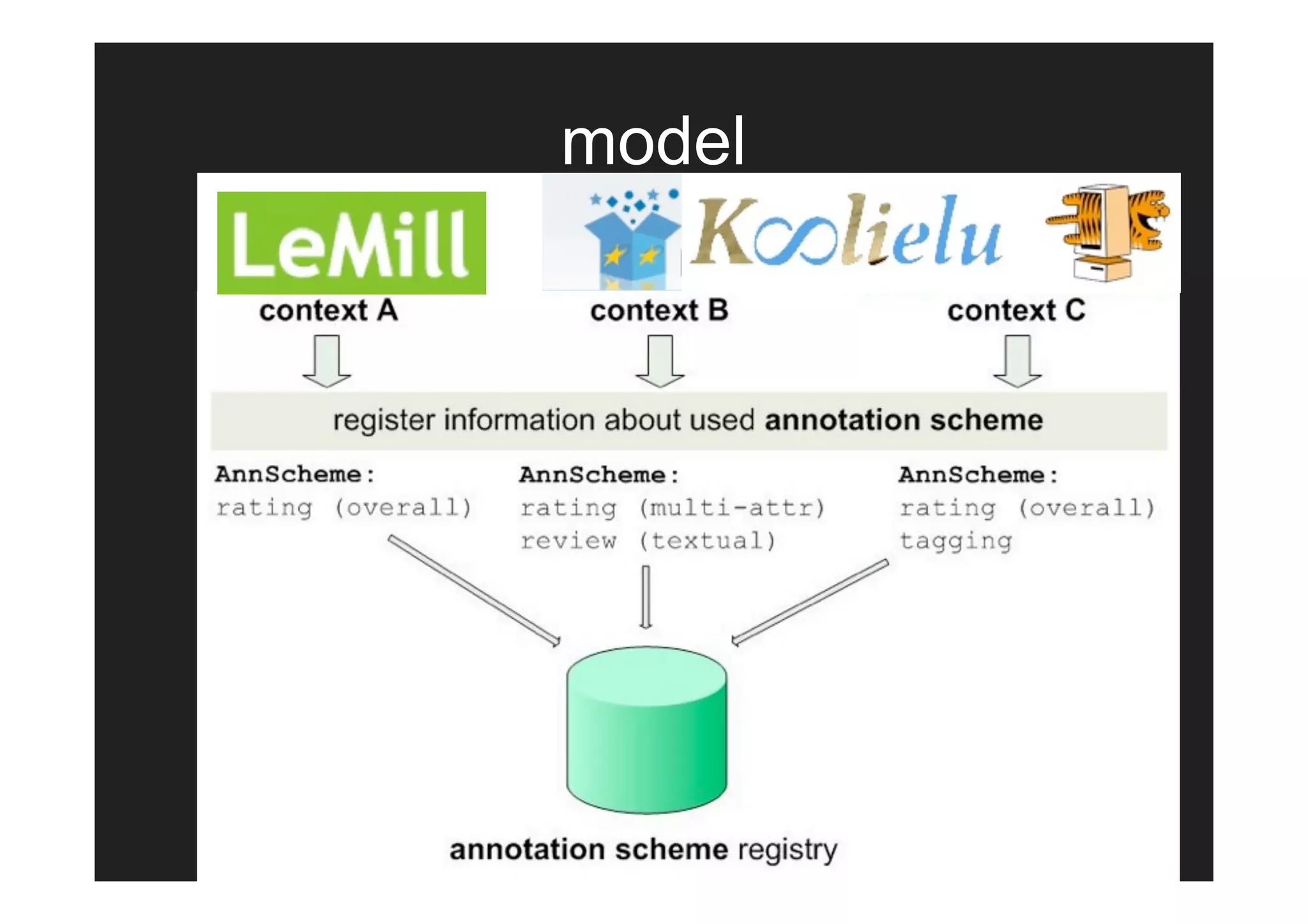
model
Capturing user feedback
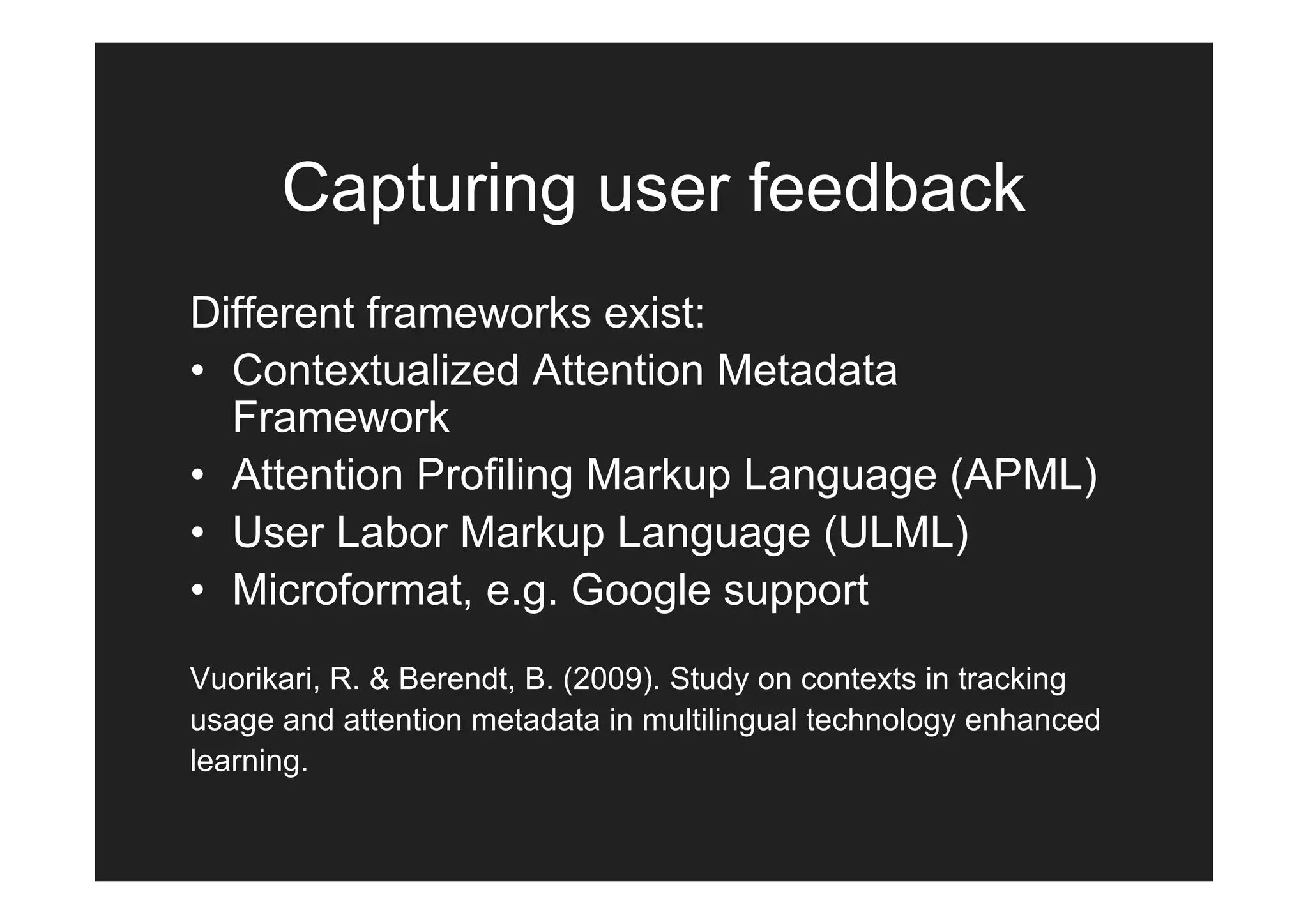
Different frameworks exist:
• Contextualized Attention Metadata
  Framework
• Attention Profiling Markup Language (APML)
• User Labor Markup Language (ULML)
• Microformat, e.g. Google support
Vuorikari, R. & Berendt, B. (2009). Study on contexts in tracking
usage and attention metadata in multilingual technology enhanced
learning.
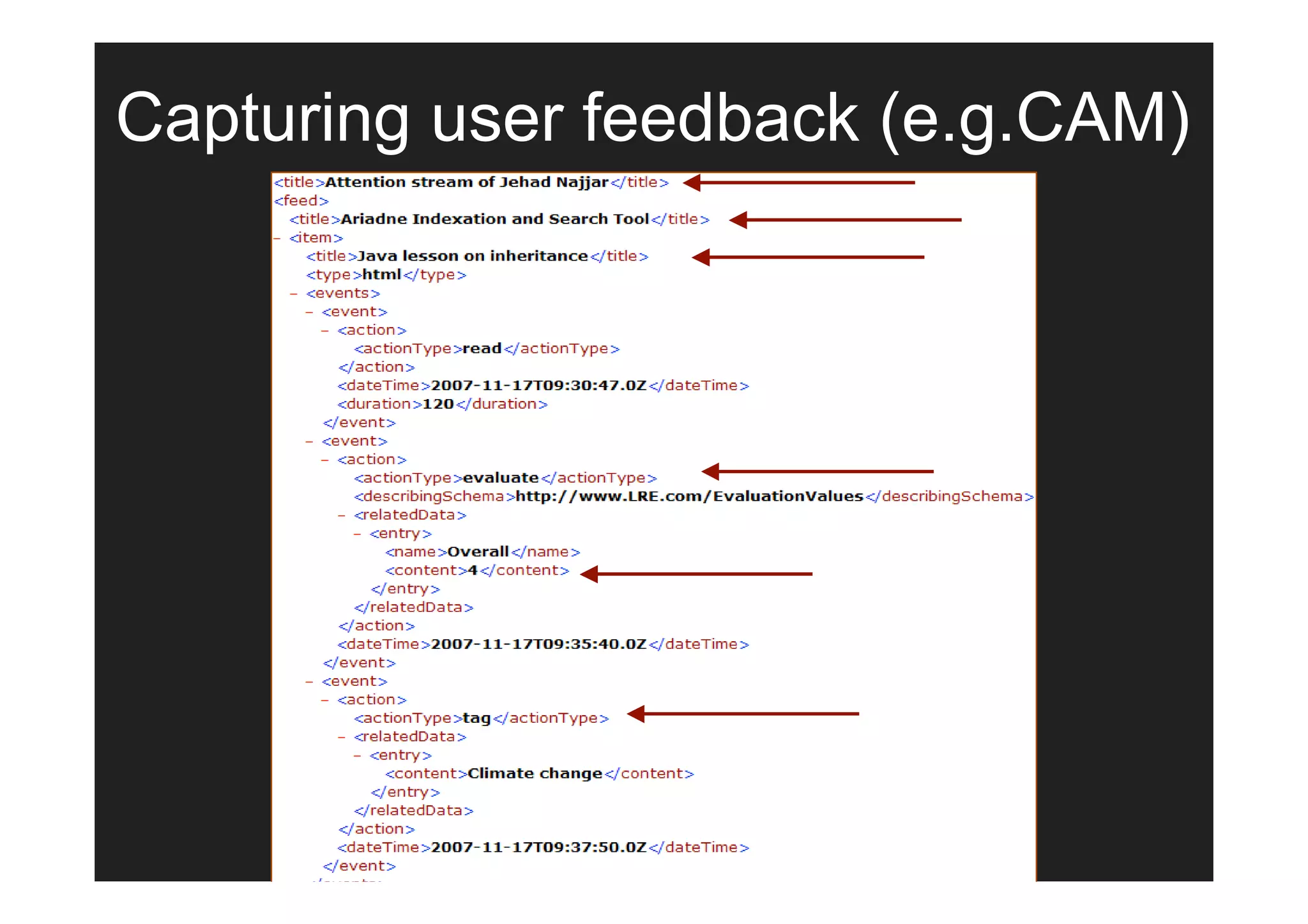
Capturing user feedback (e.g.CAM)
Capturing user feedback
(example of microformats)
Pilot in Organic.Edunet
• A registry of annotation schemes for
  learning resources
• To store annotation schemes, ratings
  and tags from different environments on
  learning resources
• To be used to create better services for
  users (e.g. recommendation, social
  navigation)
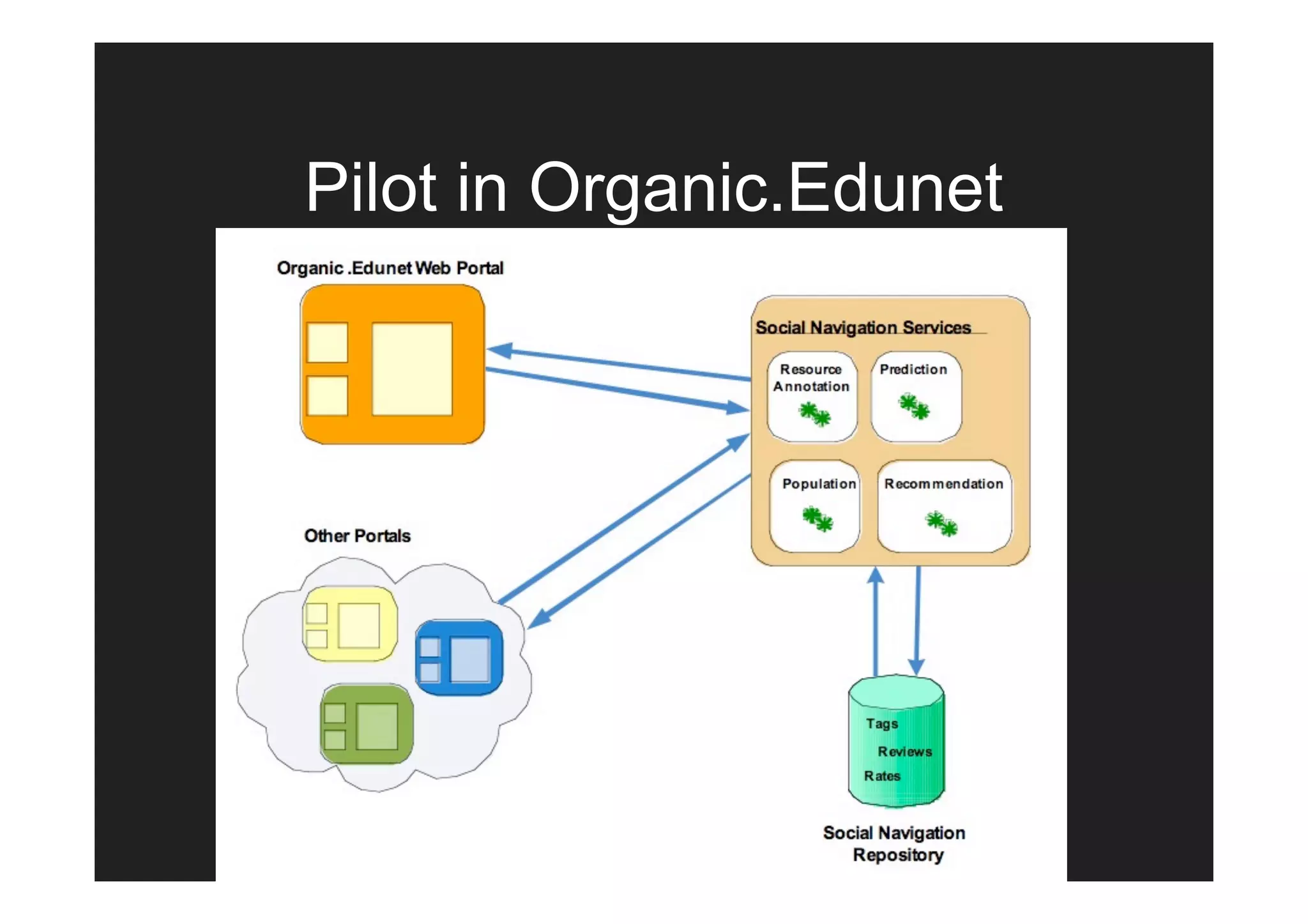
Pilot in Organic.Edunet
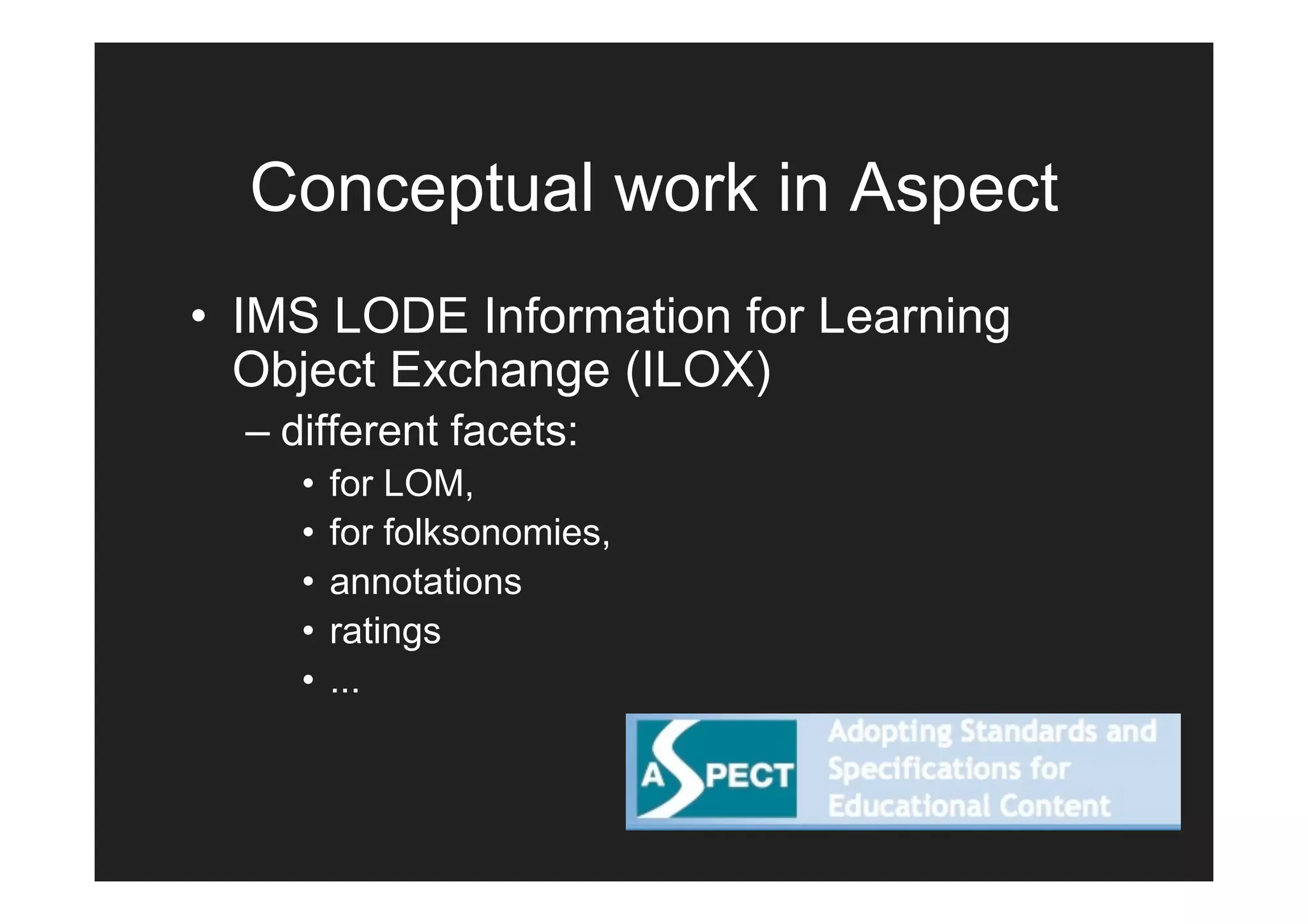
Conceptual work in Aspect
• IMS LODE Information for Learning
  Object Exchange (ILOX)
  – different facets:
     •   for LOM,
     •   for folksonomies,
     •   annotations
     •   ratings
     •   ...
Lots of issues...
• How to identify the same item in many
  different contexts (no persistent IDs)?
• Is it necessary to encode the information
  about the user who annotated?
  – Tags are interesting BECAUSE of (user,item,tag)
    triple
• Do users really find an annotation from
  another context useful?
• ...
thanks! for your attention
      comments?
         questions?

 http://aspect-project.org/
http://lreforschools.eun.org
 www.organic-edunet.eu

What if annotations were reusable: a preliminary discussion

  • 1.
    What if annotationswere reusable: a preliminary discussion - ICWL 2009 - Nikos Manouselis, Greek Research & Technology Network Riina Vuorikari, European Schoolnet
  • 2.
    Outline • Problem statement •A possible solution: a conceptual model and pilot • Further discussion points
  • 3.
    Problem scenario 1 The same learning resource, that’s metadata has been federated, is tagged on different portals: LeMill, LRE, and Koolielu
  • 4.
  • 5.
    Problem scenario 2 The same movie is found and rated in three different application contexts: a movie recommender system, an e- commerce site, and an educational portal
  • 6.
    Problem description • Implicitand explicit feedback is hard to acquire (e.g. LRE) – Ratio: search-bookmark 5.5:1 – Ration: play-bookmark 3.2:1 – Ratio: play-rate 2.7:1 • This feedback is needed to better guide users (e.g. recommendations, social navigation) • Social information can make users more efficient! (Vuorikari and Koper, 2009)
  • 7.
    An idea! Astructured way to represent different types of user feedback from different contexts could prove of particular value.
  • 8.
    Hypothetical questions? • Canwe represent and store user feedback in a structured, interoperable and reusable format? • Is it safe to assume that the user feedback can be used in another application domain, e.g. a new recommender system in a different application context?
  • 9.
    Capturing user feedback Tobe reusable, the user feedback should • be in a structured and interoperable format • reflect the annotation scheme (e.g. tag, rating, multi-rating) • incorporate some information about the context in which it has been collected
  • 10.
  • 11.
    Capturing user feedback Differentframeworks exist: • Contextualized Attention Metadata Framework • Attention Profiling Markup Language (APML) • User Labor Markup Language (ULML) • Microformat, e.g. Google support Vuorikari, R. & Berendt, B. (2009). Study on contexts in tracking usage and attention metadata in multilingual technology enhanced learning.
  • 12.
  • 13.
  • 14.
    Pilot in Organic.Edunet •A registry of annotation schemes for learning resources • To store annotation schemes, ratings and tags from different environments on learning resources • To be used to create better services for users (e.g. recommendation, social navigation)
  • 15.
  • 16.
    Conceptual work inAspect • IMS LODE Information for Learning Object Exchange (ILOX) – different facets: • for LOM, • for folksonomies, • annotations • ratings • ...
  • 17.
    Lots of issues... •How to identify the same item in many different contexts (no persistent IDs)? • Is it necessary to encode the information about the user who annotated? – Tags are interesting BECAUSE of (user,item,tag) triple • Do users really find an annotation from another context useful? • ...
  • 18.
    thanks! for yourattention comments? questions? http://aspect-project.org/ http://lreforschools.eun.org www.organic-edunet.eu