The European Commission’s
scienceand knowledge service
Joint Research Centre
1
DigComp:
The Digital Competence
Framework for Citizens
Expert Group on ICT Household Indicators Forum, ITU
Geneva, 18 October 2018
Dr. Riina Vuorikari
2.
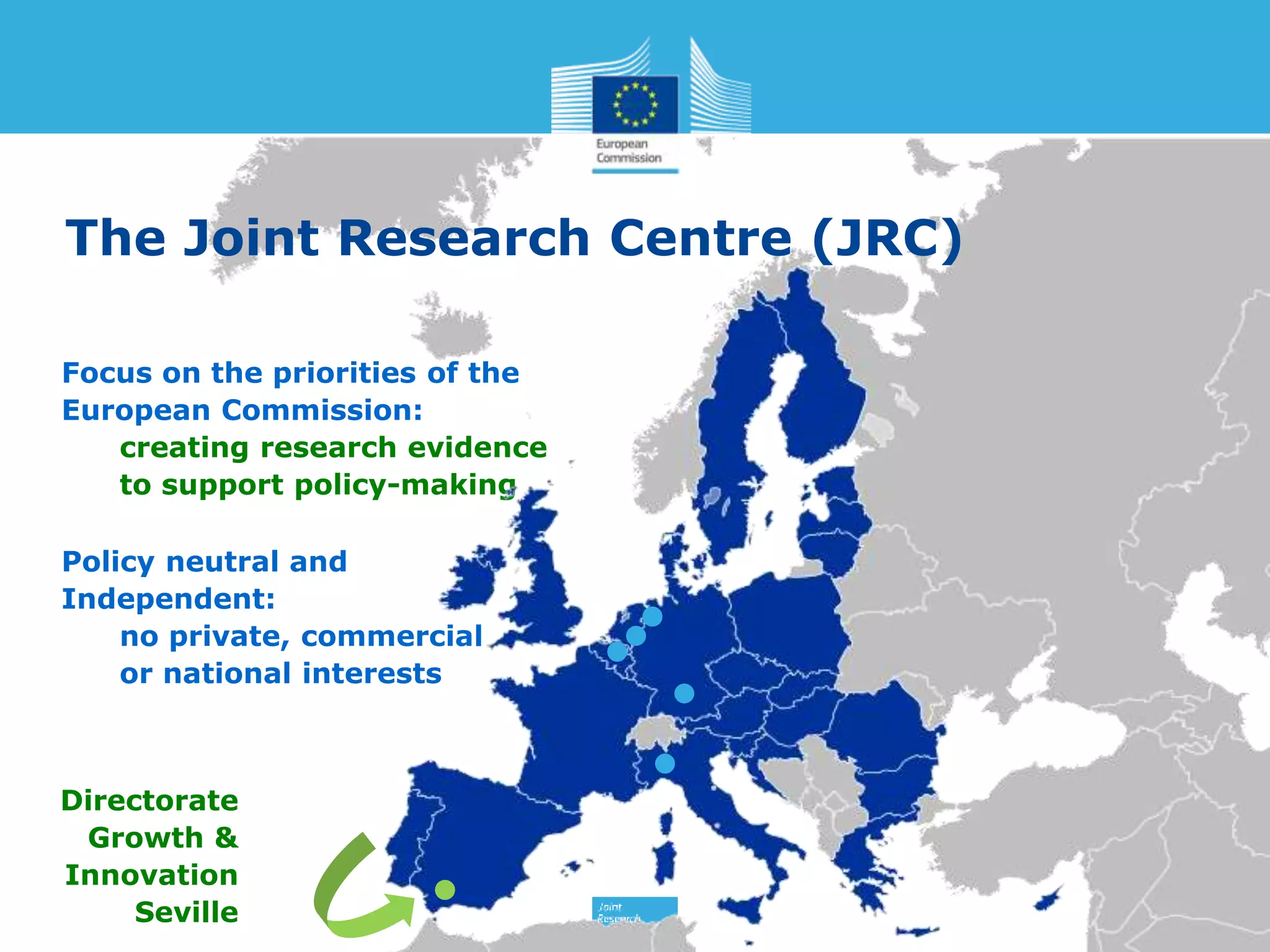
Focus on thepriorities of the
European Commission:
creating research evidence
to support policy-making
Policy neutral and
Independent:
no private, commercial
or national interests
The Joint Research Centre (JRC)
Directorate
Growth &
Innovation
Seville
3.
1. Context
2. TheDigComp Framework
3. Different uses for different purposes
4. Contacts
(Digital) Skills challengeshigh on European agenda:
• 2018 Digital Education Action Plan {COM(2018) 22 final}
• 2018 EC "proposal for Council Recommendation on Key
Competences for Lifelong Learning (revision of 2006
Recommendation) {COM (2018) 24 final}
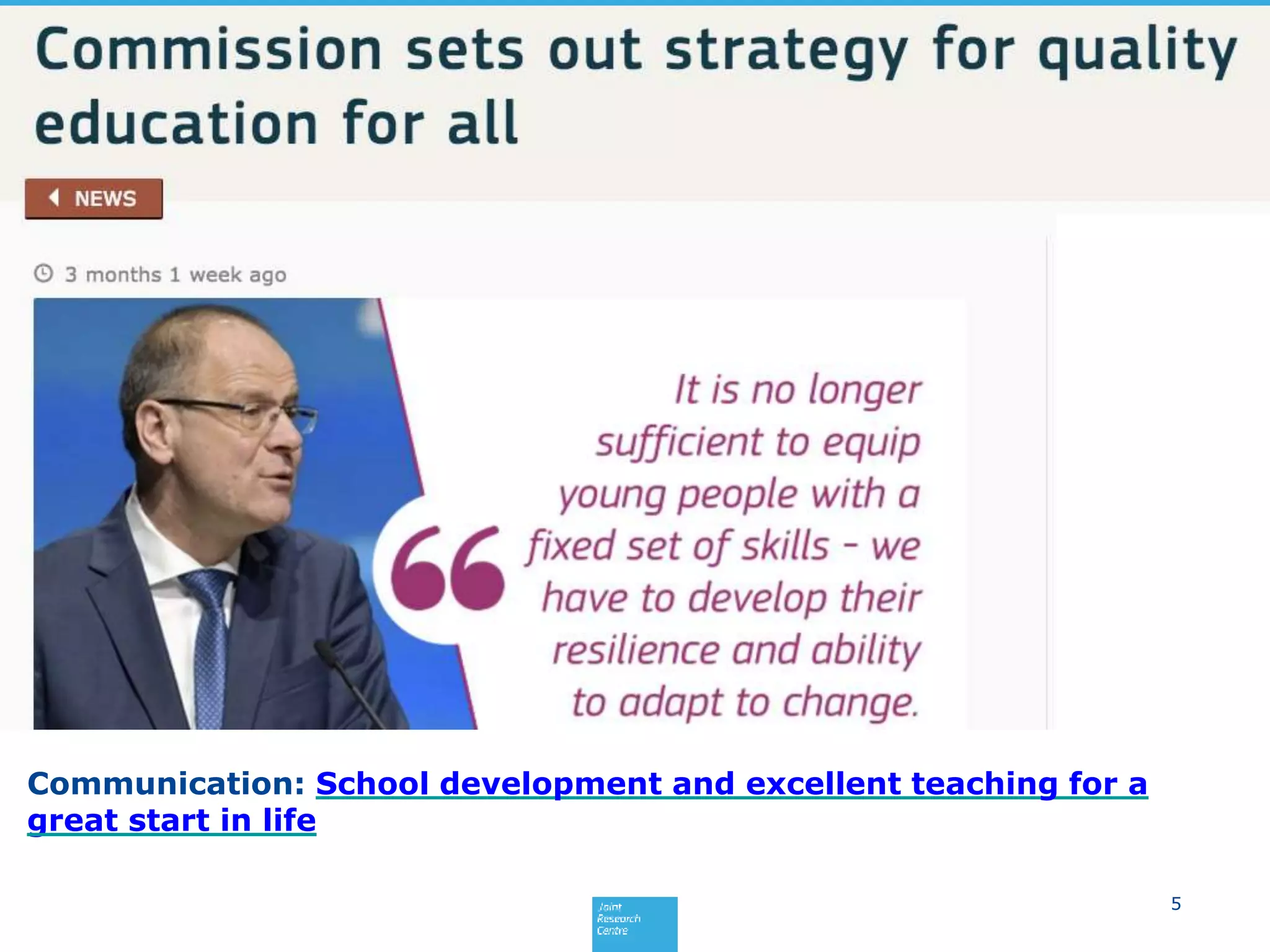
• 2017 COM on school development and excellent teaching for a
great start in life {COM(2017) 248 final}
• 2017 COM on a Renewed European agenda for Higher Education
{COM(2017) 247 final}
• 2016 New Skills Agenda {COM(2016) 381 final}
• Digital Single Market initiative
7.
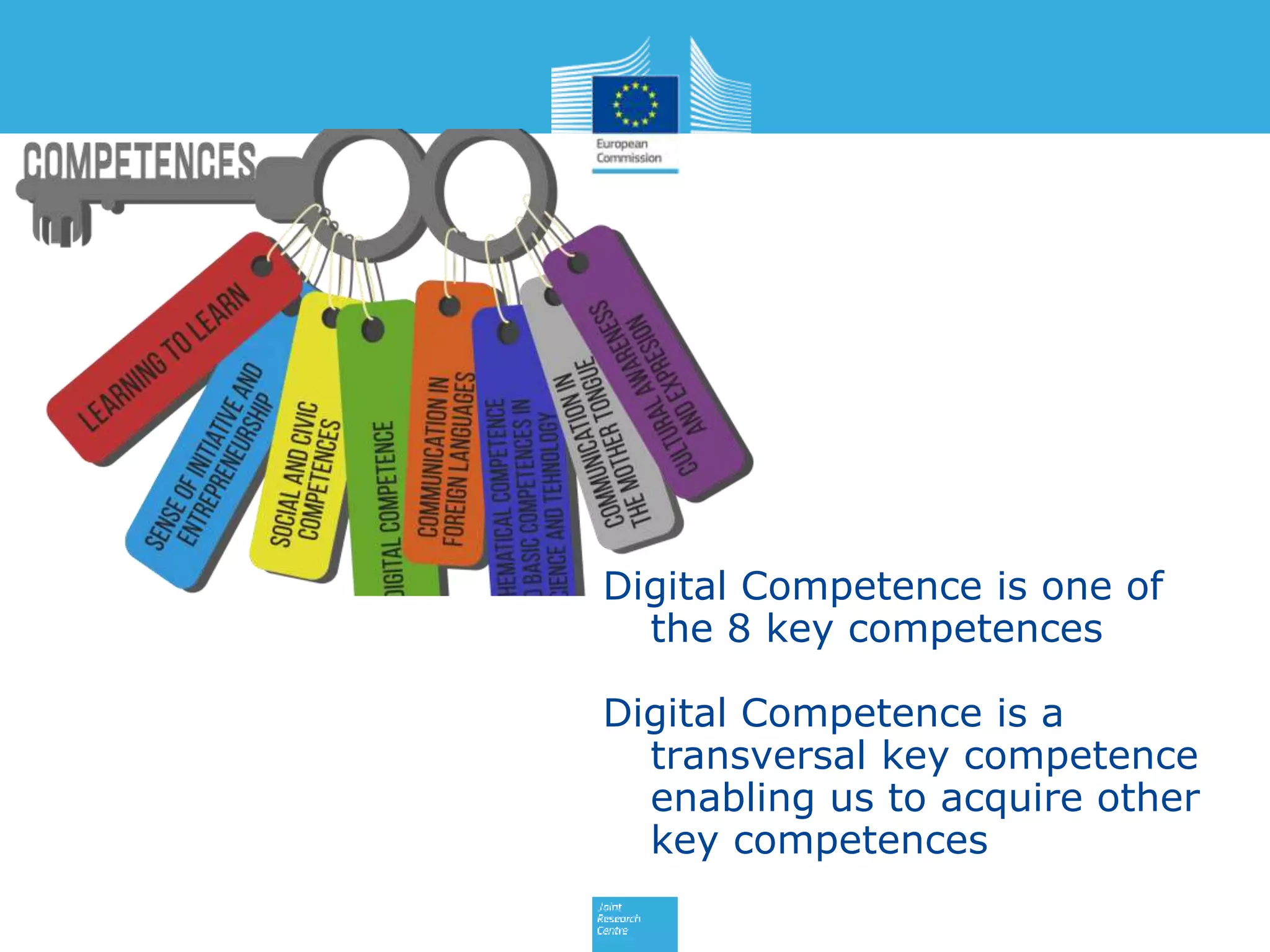
Digital Competence isone of
the 8 key competences
Digital Competence is a
transversal key competence
enabling us to acquire other
key competences
8.
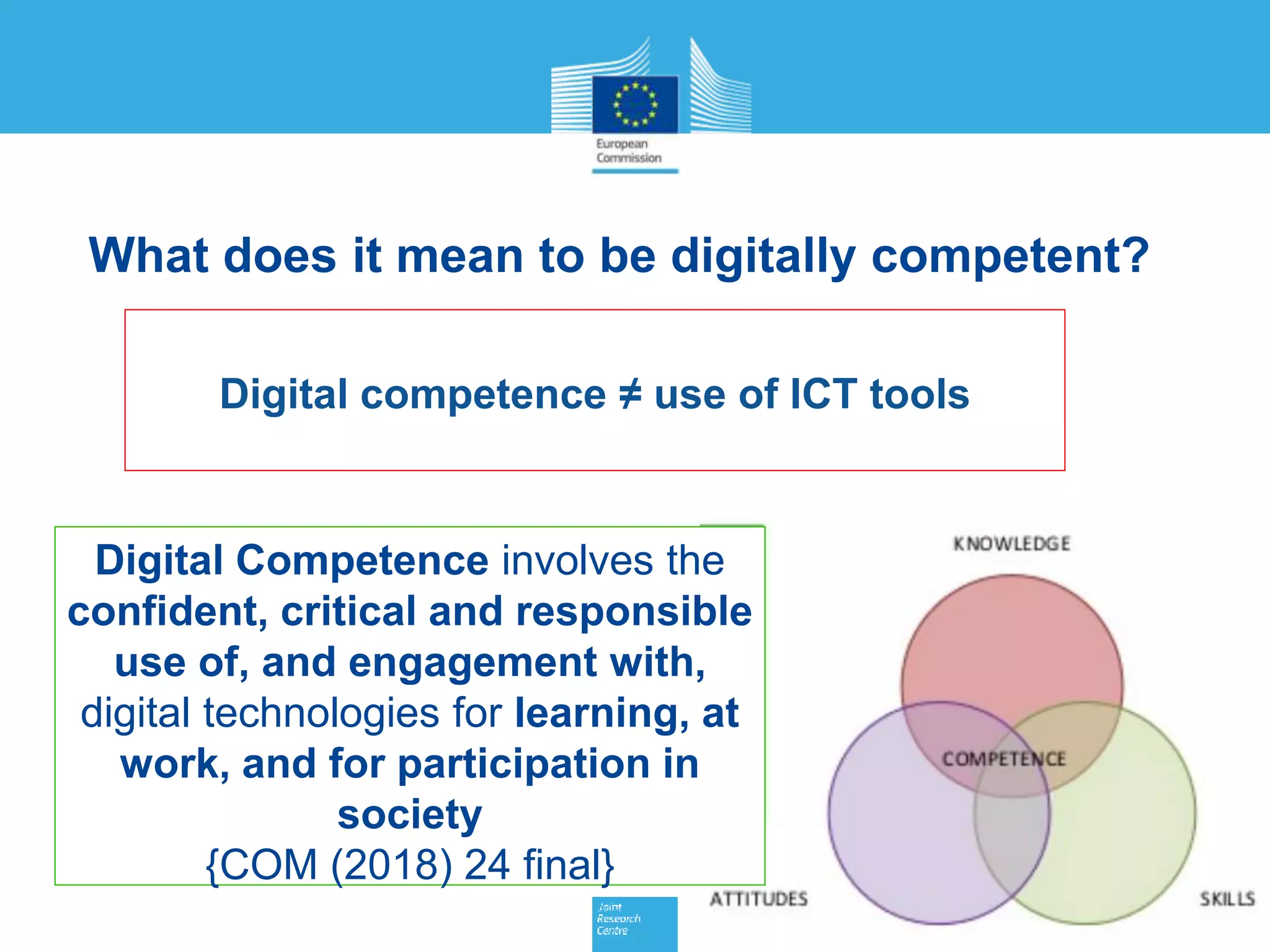
What does itmean to be digitally competent?
Digital competence ≠ use of ICT tools
Digital Competence involves the
confident, critical and responsible
use of, and engagement with,
digital technologies for learning, at
work, and for participation in
society
{COM (2018) 24 final}
Goals:
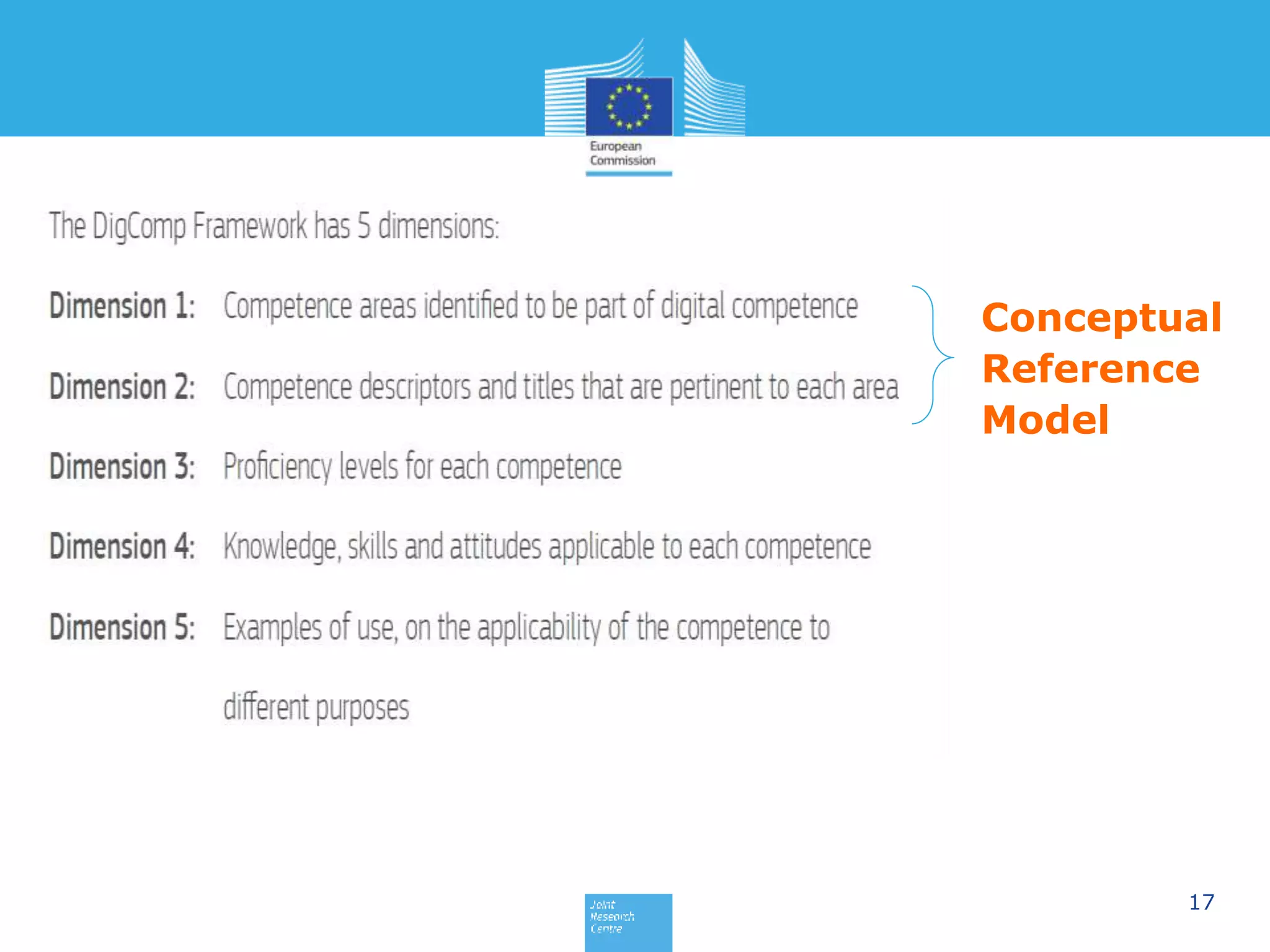
• What: Toidentify and describe key components of Digital
Competence in terms of knowledge, skills and attitudes
• Why: To provide a shared understanding of what is digital
competence
• Aim: To support EC and MS in implementing EU and
national policies, curriculum and training syllabi
• Who: JRC & DG Employment + links with other Directorate
Generals (EAC, GROW, CONNECT)
• How:
• Strong scientific underpinning
• Consensus building with multiple stakeholders
• Updating and revising
Design principals
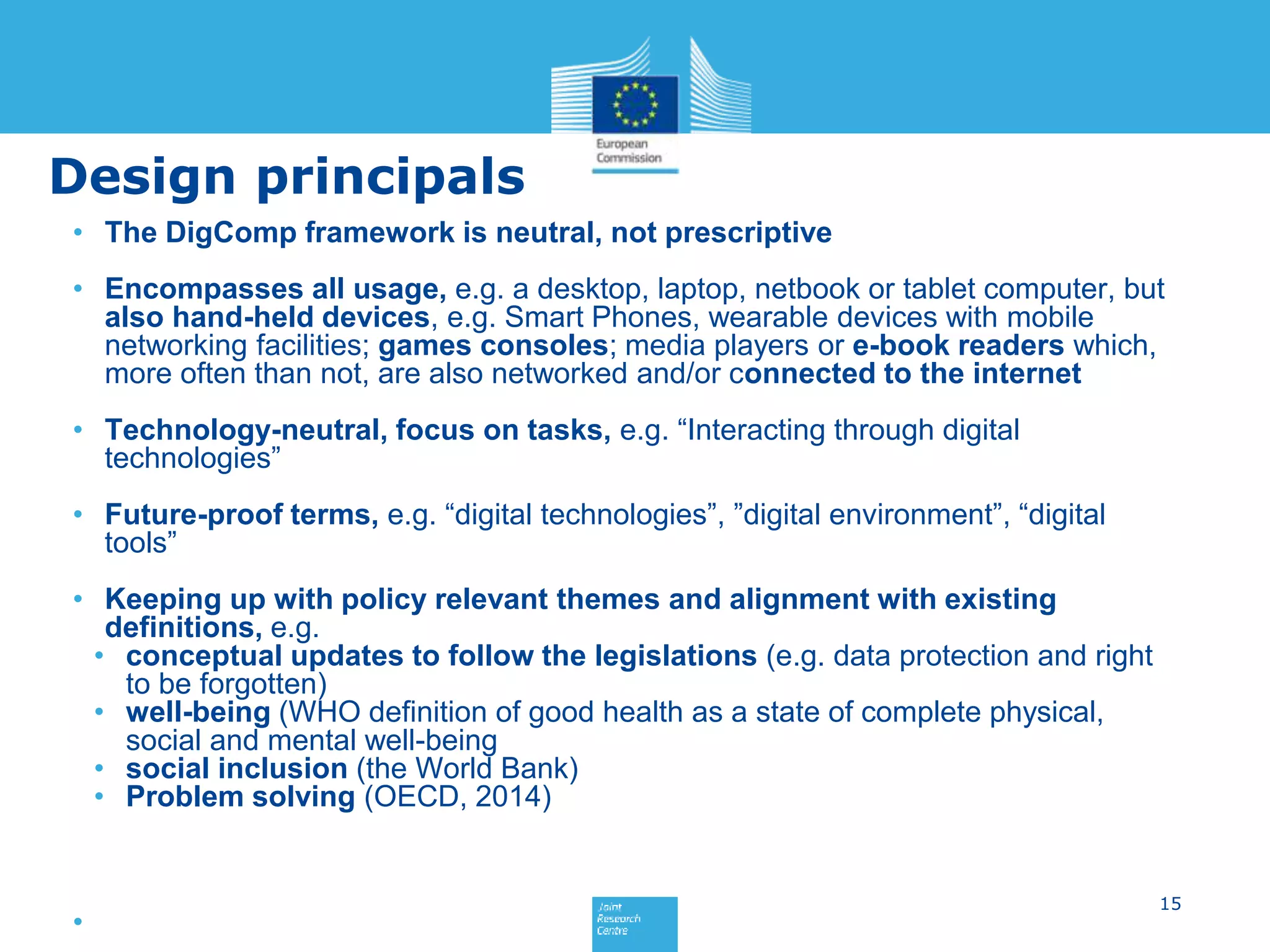
• TheDigComp framework is neutral, not prescriptive
• Encompasses all usage, e.g. a desktop, laptop, netbook or tablet computer, but
also hand-held devices, e.g. Smart Phones, wearable devices with mobile
networking facilities; games consoles; media players or e-book readers which,
more often than not, are also networked and/or connected to the internet
• Technology-neutral, focus on tasks, e.g. “Interacting through digital
technologies”
• Future-proof terms, e.g. “digital technologies”, ”digital environment”, “digital
tools”
• Keeping up with policy relevant themes and alignment with existing
definitions, e.g.
• conceptual updates to follow the legislations (e.g. data protection and right
to be forgotten)
• well-being (WHO definition of good health as a state of complete physical,
social and mental well-being
• social inclusion (the World Bank)
• Problem solving (OECD, 2014)
•
15
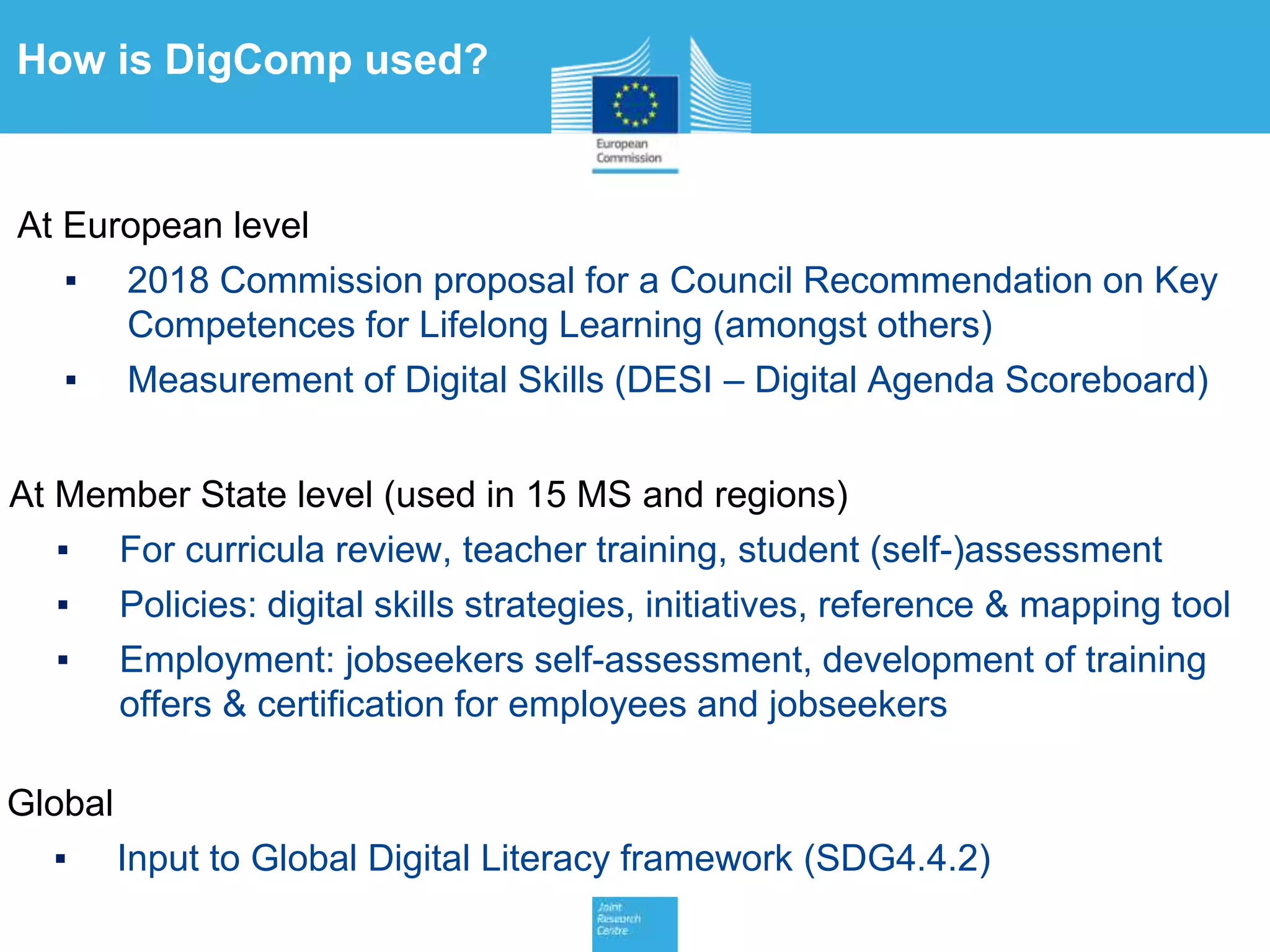
At European level
▪2018 Commission proposal for a Council Recommendation on Key
Competences for Lifelong Learning (amongst others)
▪ Measurement of Digital Skills (DESI – Digital Agenda Scoreboard)
How is DigComp used?
At Member State level (used in 15 MS and regions)
▪ For curricula review, teacher training, student (self-)assessment
▪ Policies: digital skills strategies, initiatives, reference & mapping tool
▪ Employment: jobseekers self-assessment, development of training
offers & certification for employees and jobseekers
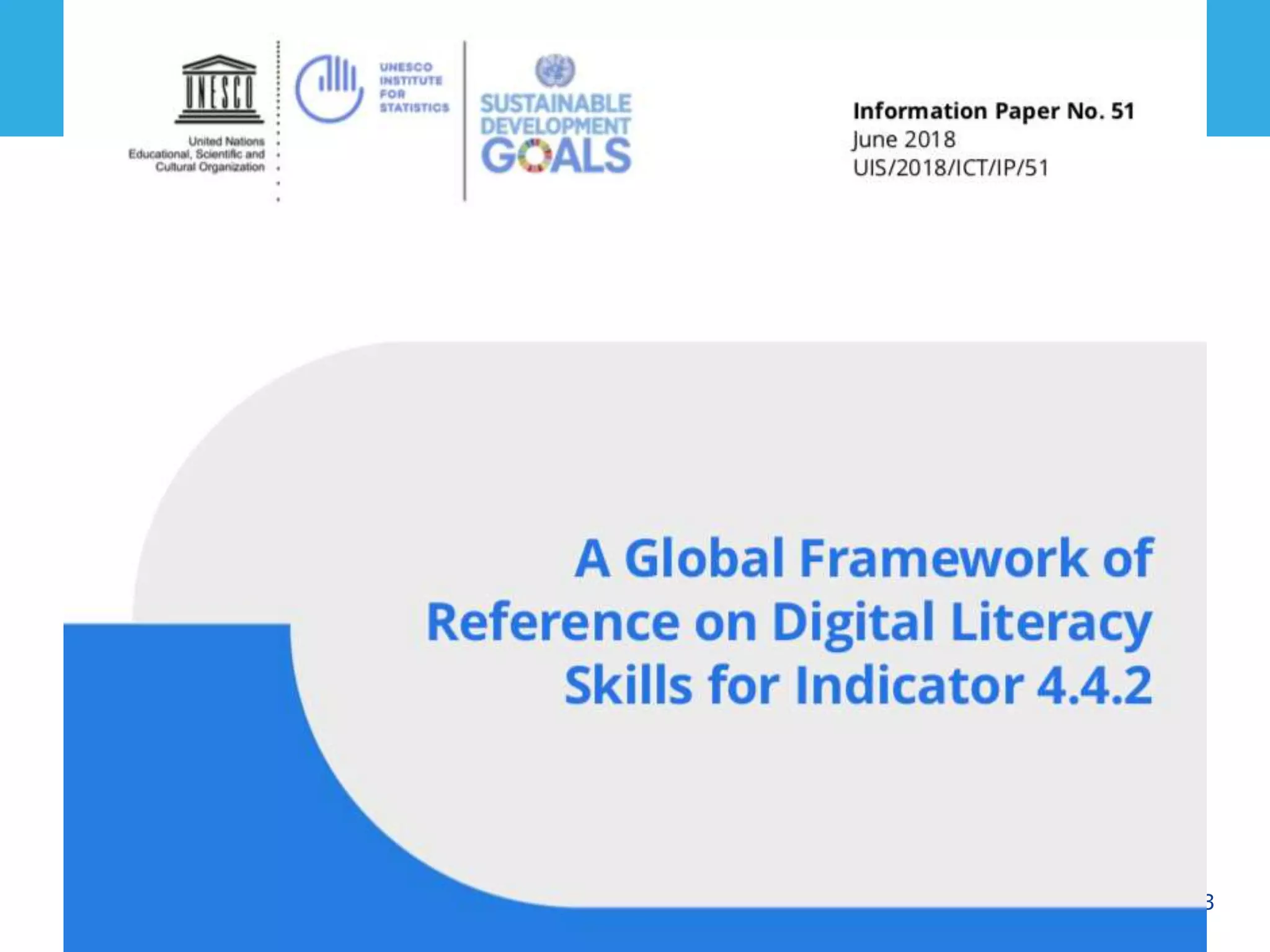
Global
▪ Input to Global Digital Literacy framework (SDG4.4.2)
21
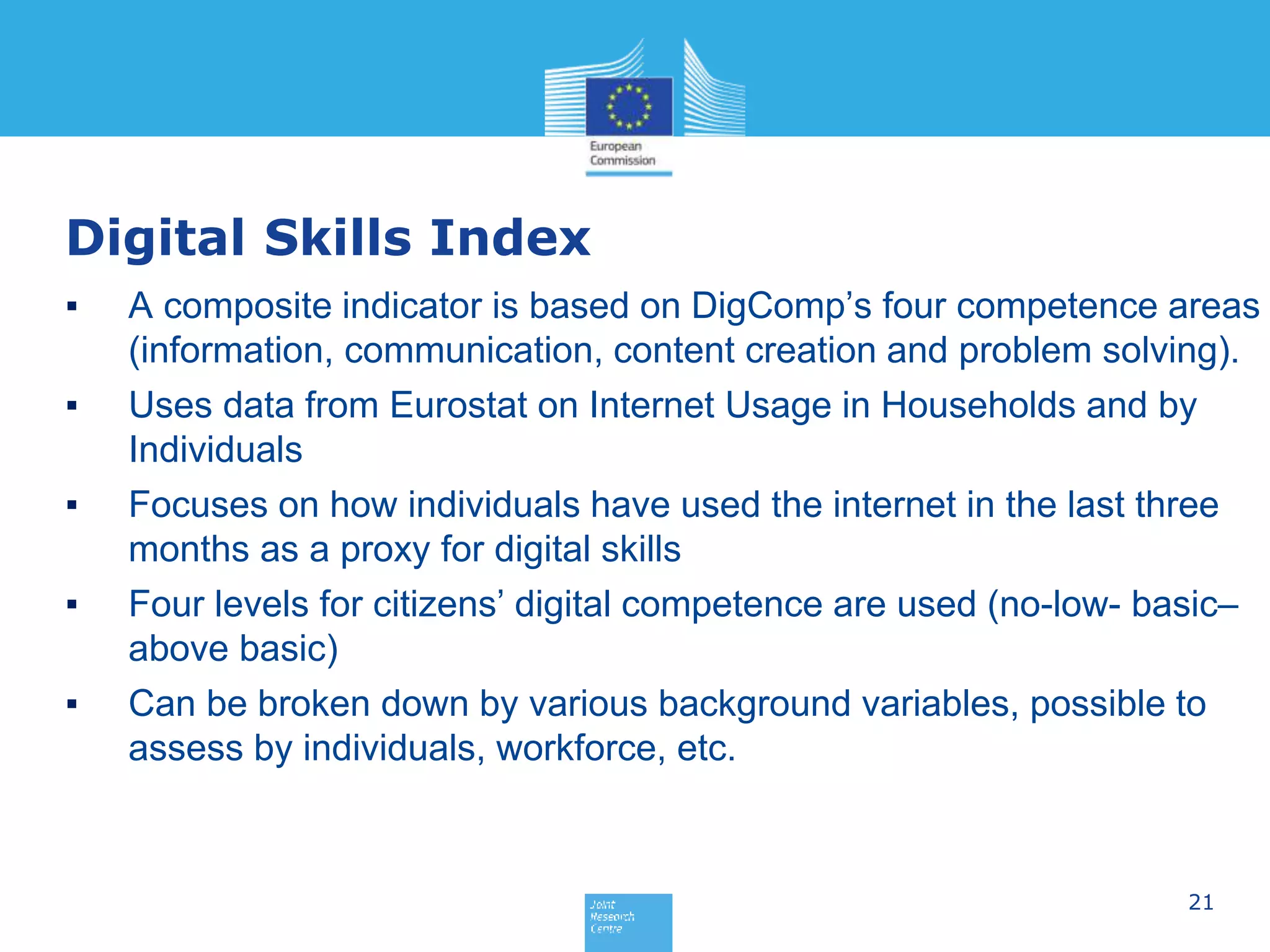
Digital Skills Index
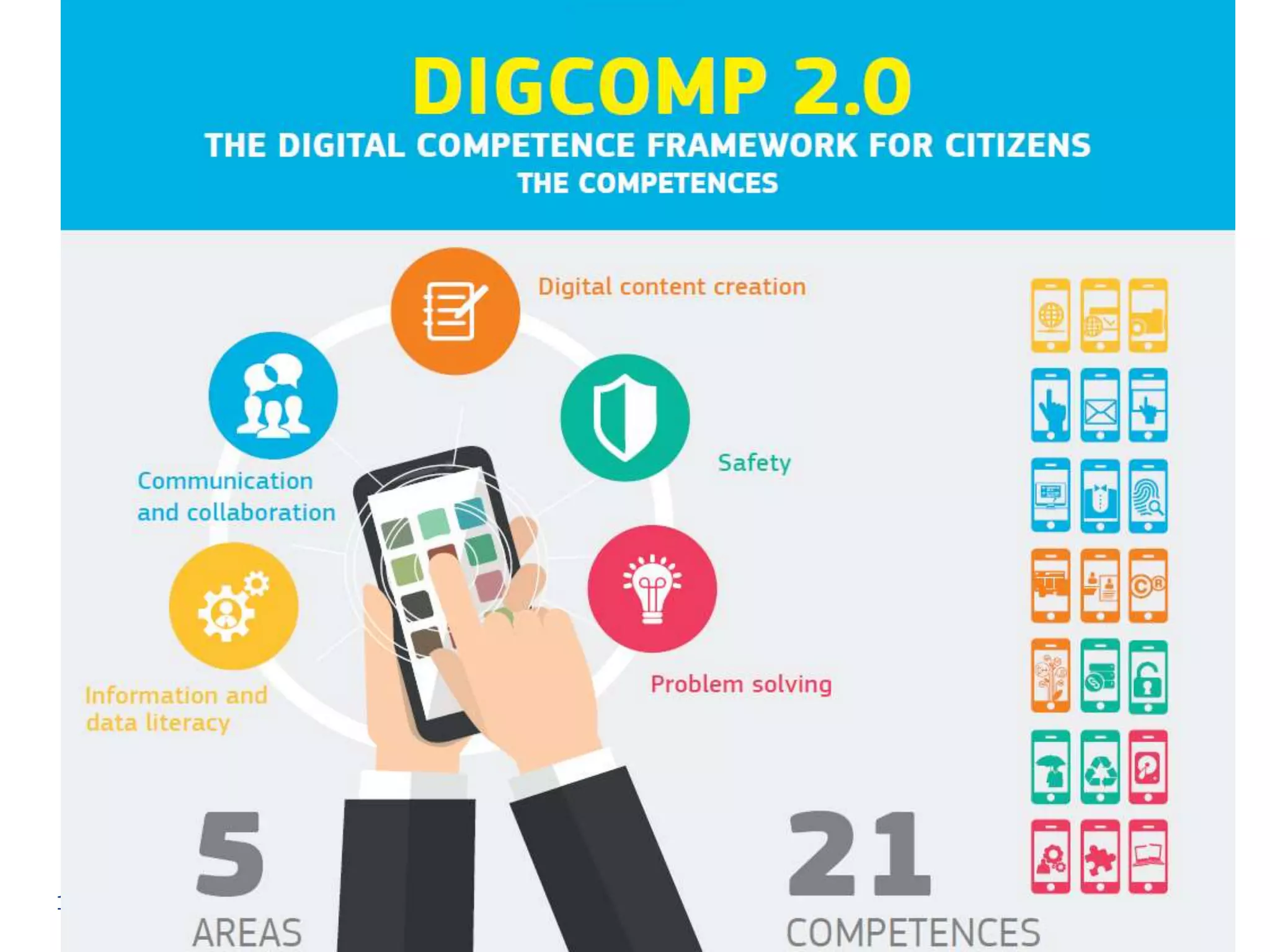
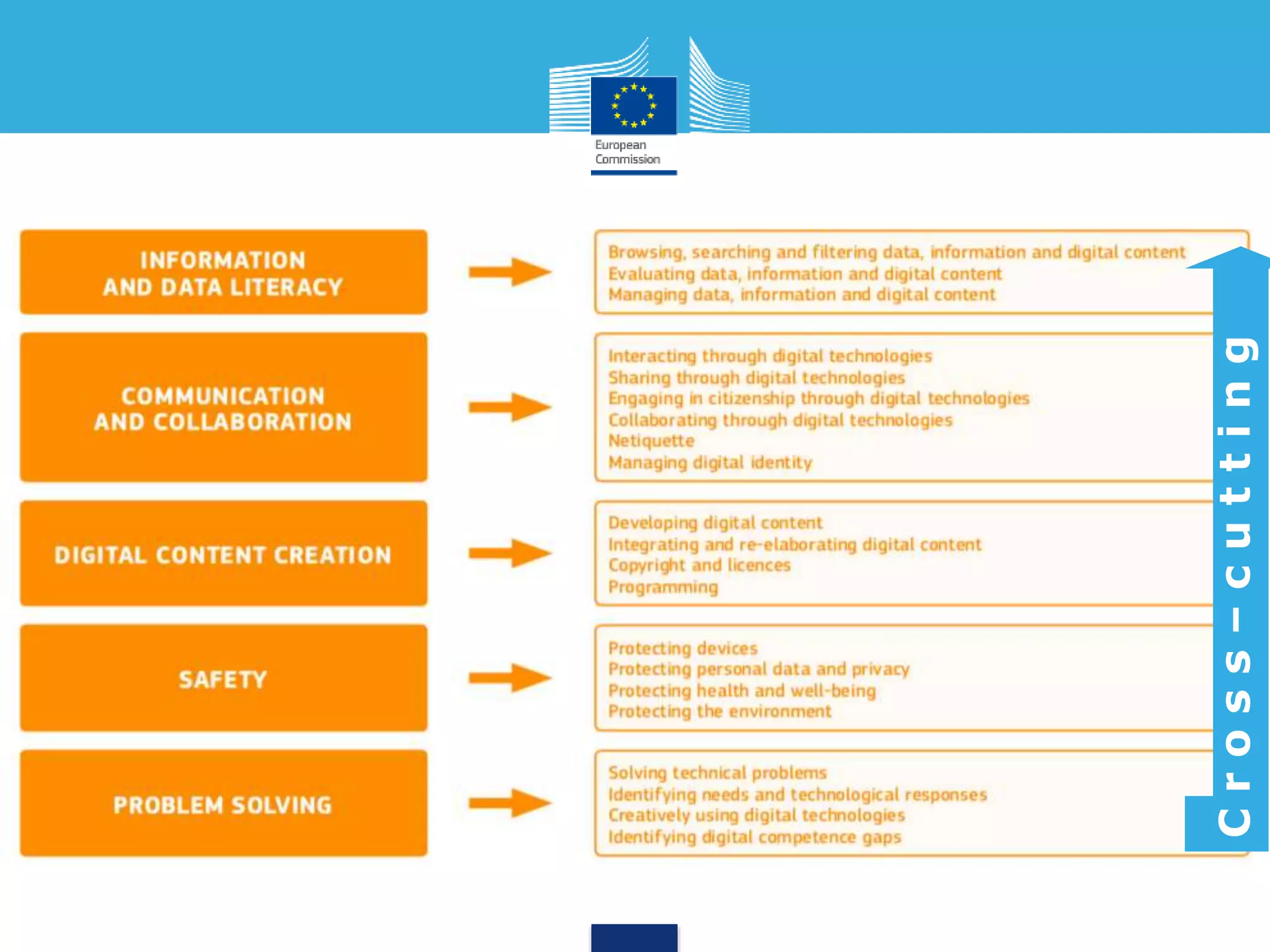
▪A composite indicator is based on DigComp’s four competence areas
(information, communication, content creation and problem solving).
▪ Uses data from Eurostat on Internet Usage in Households and by
Individuals
▪ Focuses on how individuals have used the internet in the last three
months as a proxy for digital skills
▪ Four levels for citizens’ digital competence are used (no-low- basic–
above basic)
▪ Can be broken down by various background variables, possible to
assess by individuals, workforce, etc.
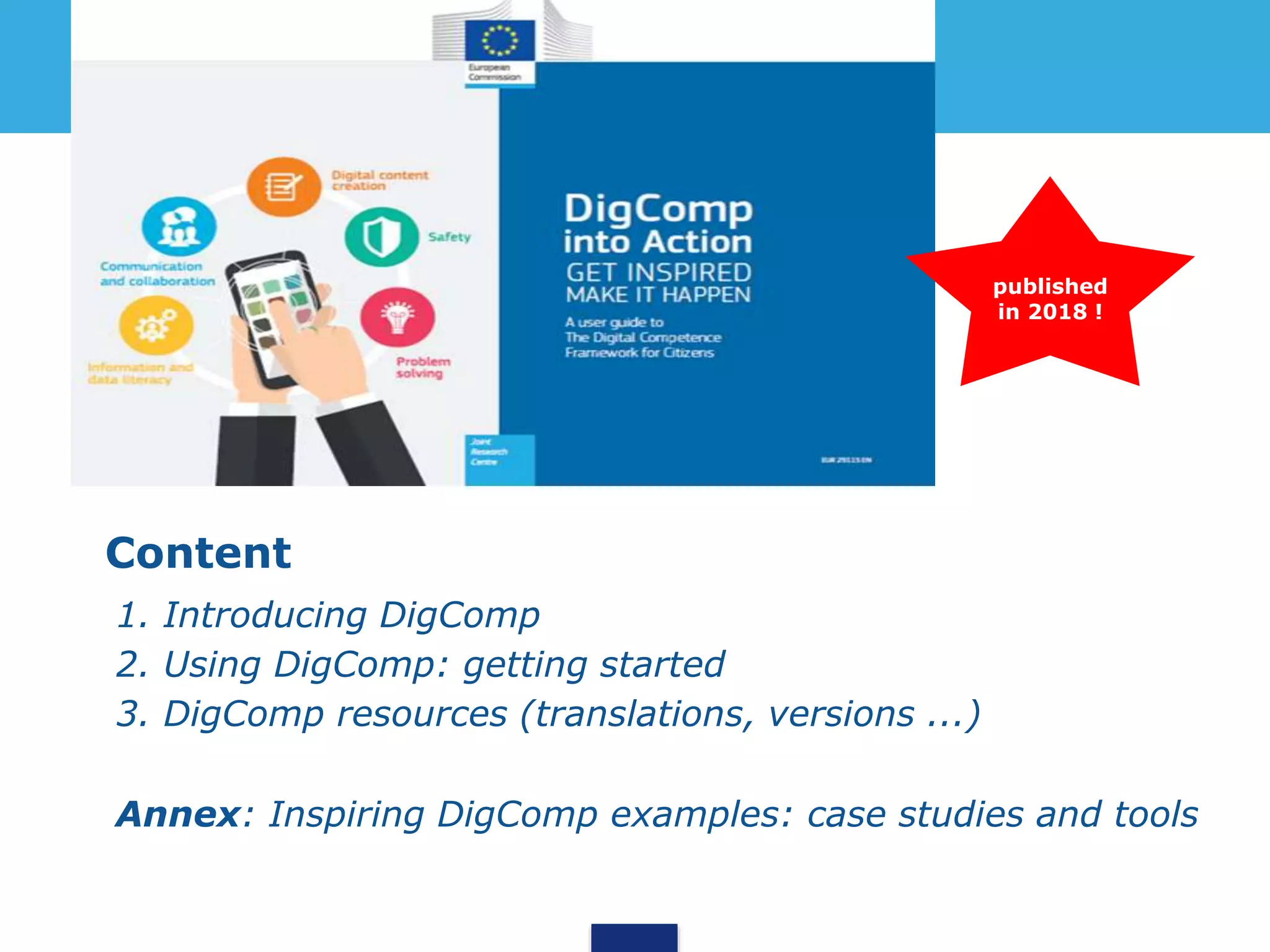
Content
• 1. IntroducingDigComp
• 2. Using DigComp: getting started
• 3. DigComp resources (translations, versions ...)
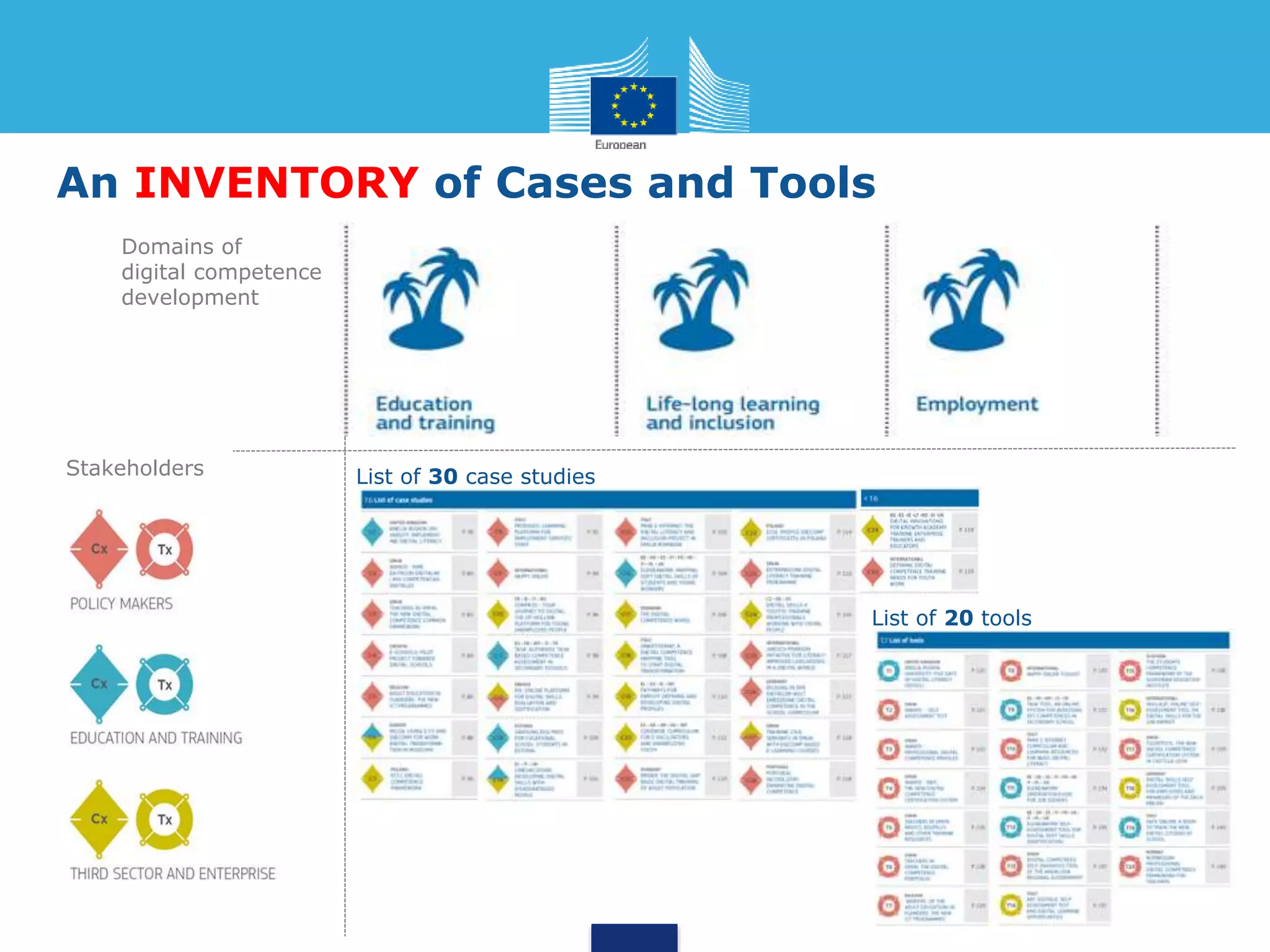
• Annex: Inspiring DigComp examples: case studies and tools
published
in 2018 !
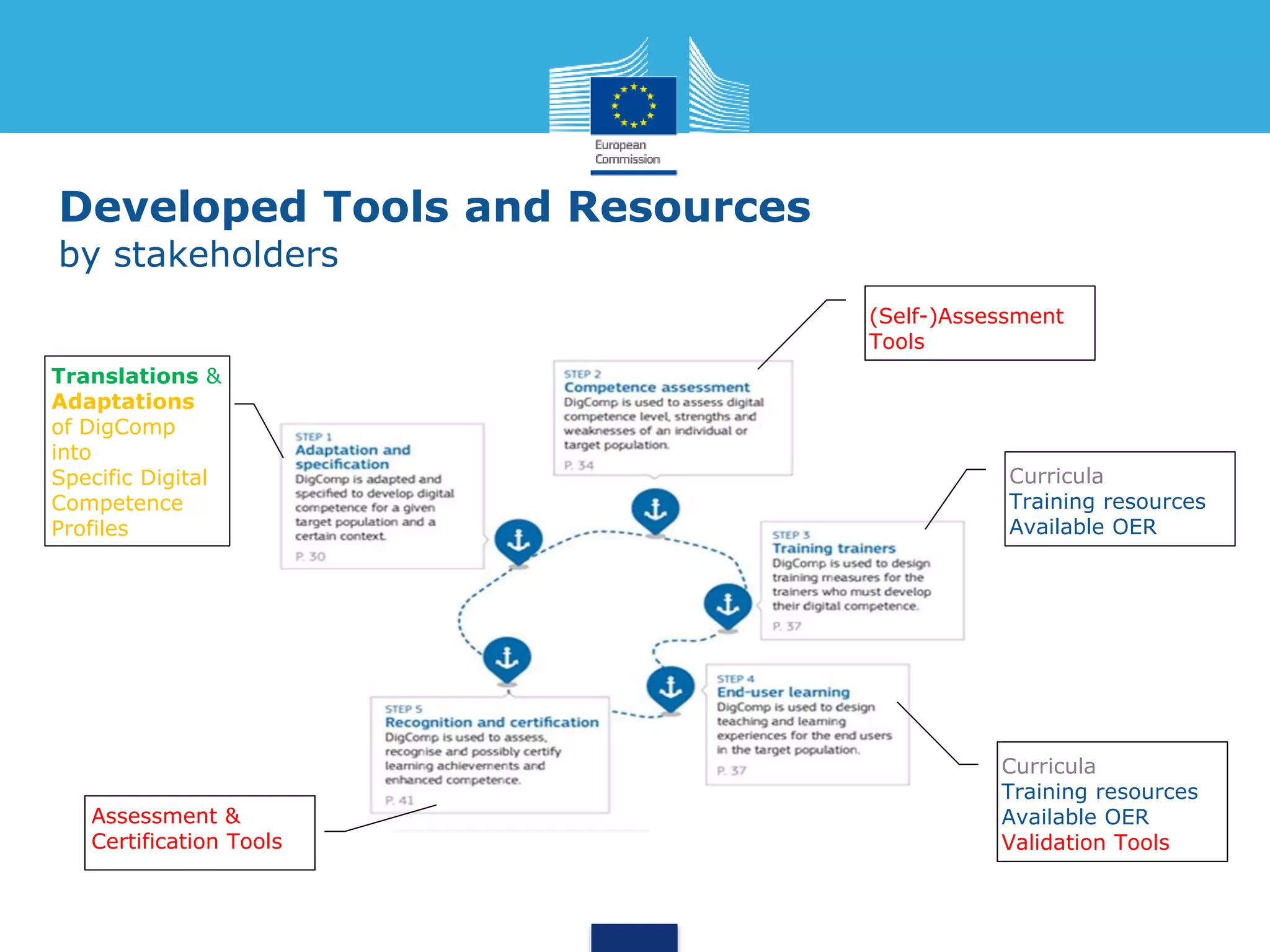
Developed Tools andResources
by stakeholders
(Self-)Assessment
Tools
Curricula
Training resources
Available OER
Curricula
Training resources
Available OER
Validation Tools
Assessment &
Certification Tools
Translations &
Adaptations
of DigComp
into
Specific Digital
Competence
Profiles
All information aboutDigComp:
https://ec.europa.eu/jrc/digcomp
Framework and vocabulary:
https://ec.europa.eu/jrc/en/digcomp/digital-
competence-framework
Contact:
DG JRC – Directorate Innovation and Growth
• yves.punie@ec.europa.eu (Deputy Head of Unit)
• riina.vuorikari@ec.europa.eu (Scientific Officer)
Editor's Notes
#3 JRC-IPTS: One of the key knowledge providers for DG EAC
#9 More than prodecual knowledge of how to perform activities with digital tools (skills). Also includes the idea of declarative knowledge, e.g. factual knowledge about digital technologies and thier use. And, importantly, the attitude!
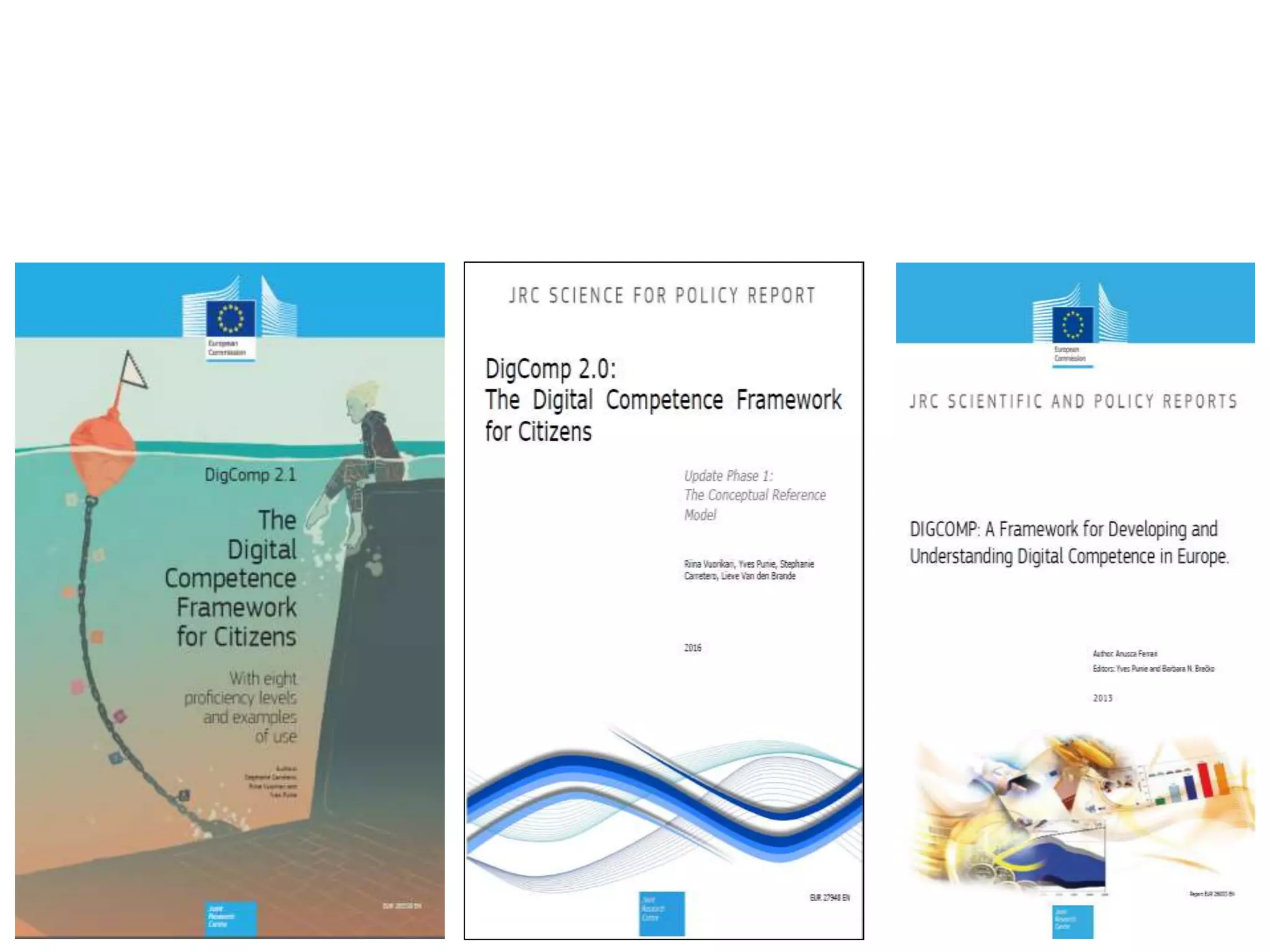
#11 The European Digital Competence Framework for Citizens, also known as DigComp, is a tool to improve citizens’ digital competence.
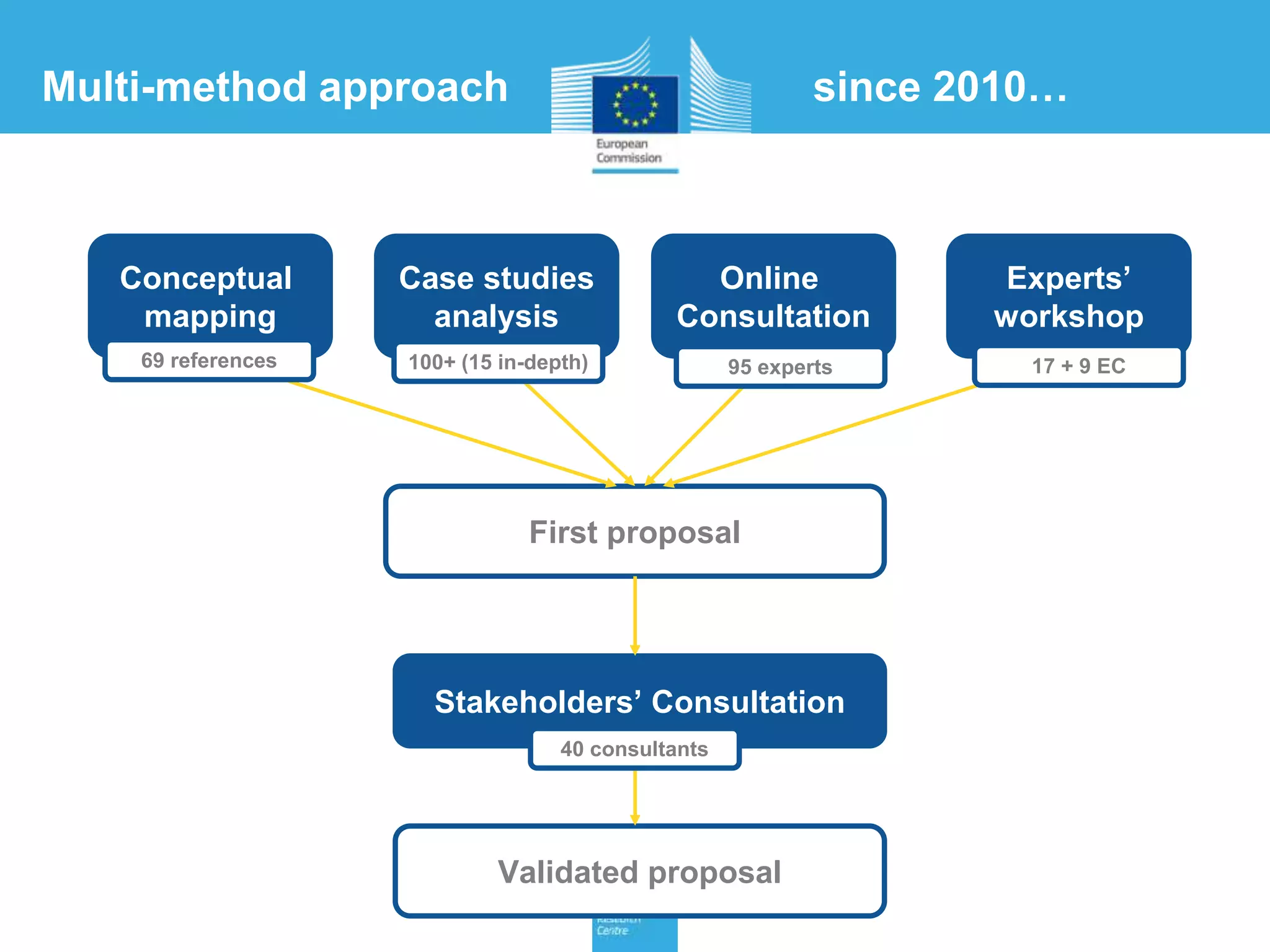
DigComp has been developed by the JRC initially on behalf of DG EAC and, more recently, on behalf of DG EMPL as a scientific project based on solid scientific underpinning and iterative consultations with stakeholders.
First published in 2013, DigComp provides a comprehensive conceptual model of what are the elements that makes us digitally competent based on the following working definition digital competence refers to the confident, safe and critical use of, and engagement with the full range of digital technologies. These can be used for dealing with information and data, for communication and creative expression, collaboration, content creation, and task performance and problem-solving in all aspects of life.
Revised in 2016, to fine tune the vocabulary, the framework has been updated this year to further detail how the this competence develops in different levels of proficiency.