Digital Competence for Citizens
Internetdagarna - Nov 23 2021
Digital kompetens: för individ eller samhälle?
Dr. Riina Vuorikari,
European Commission
DG Joint Research Centre
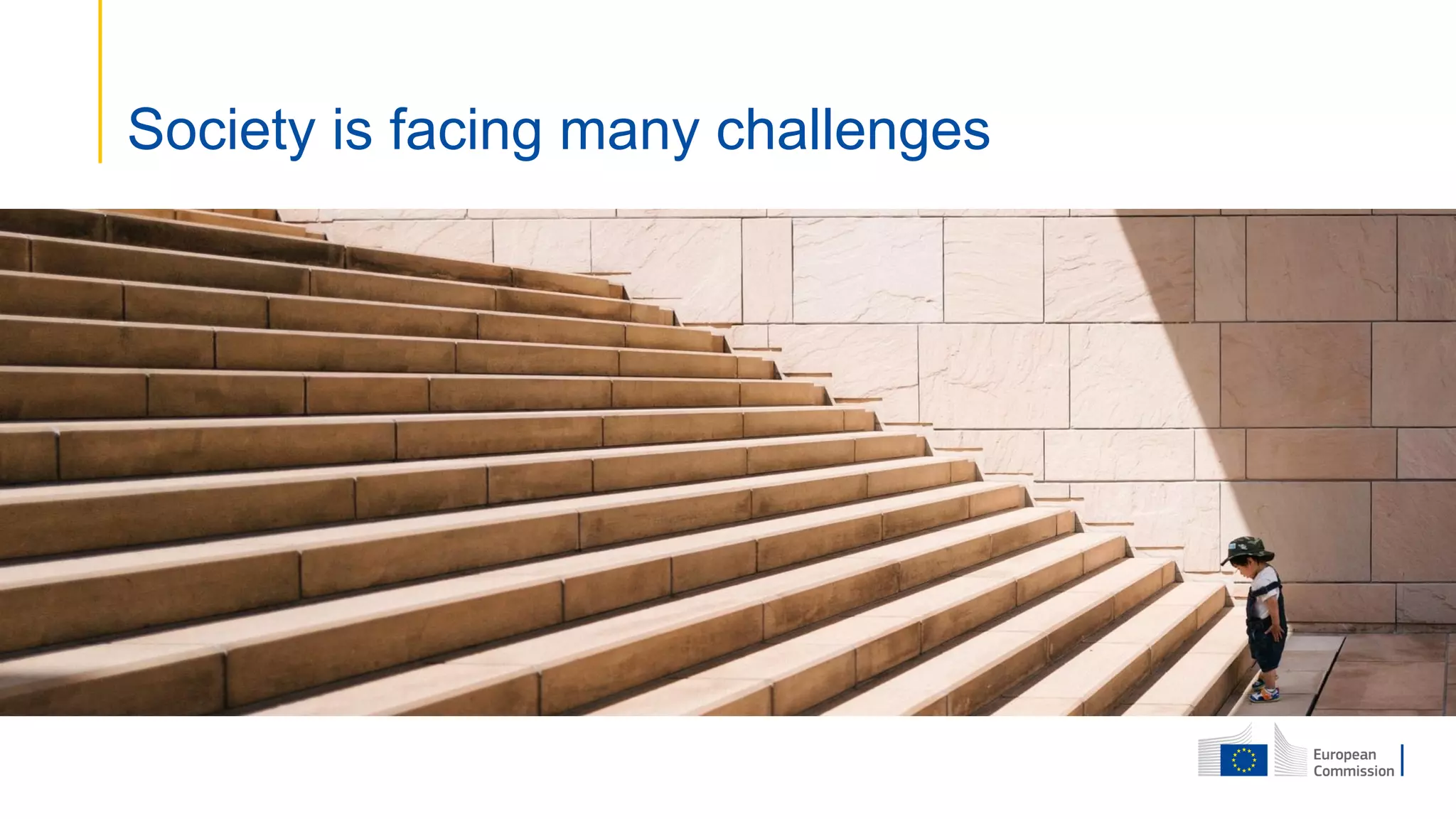
Society is facing many challenges
3
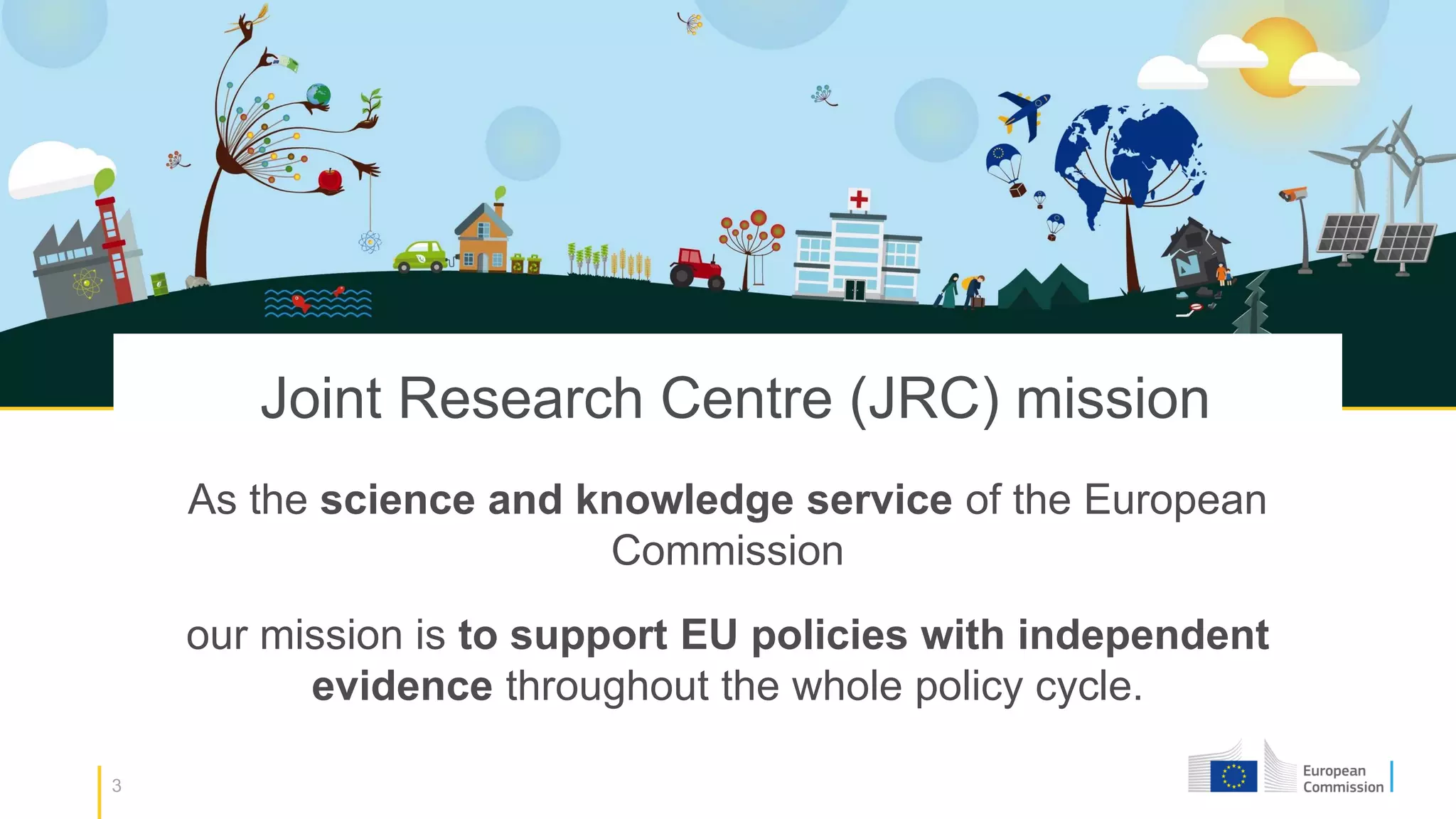
Joint Research Centre (JRC) mission
As the science and knowledge service of the European
Commission
our mission is to support EU policies with independent
evidence throughout the whole policy cycle.
In this talk
1.Scenario (5 min)
2.The DigComp framework (10min)
3.Examples of knowledge, skills and attitudes (10min)
4.Take part in the public validation (5min)
5.Q&A (15 min)
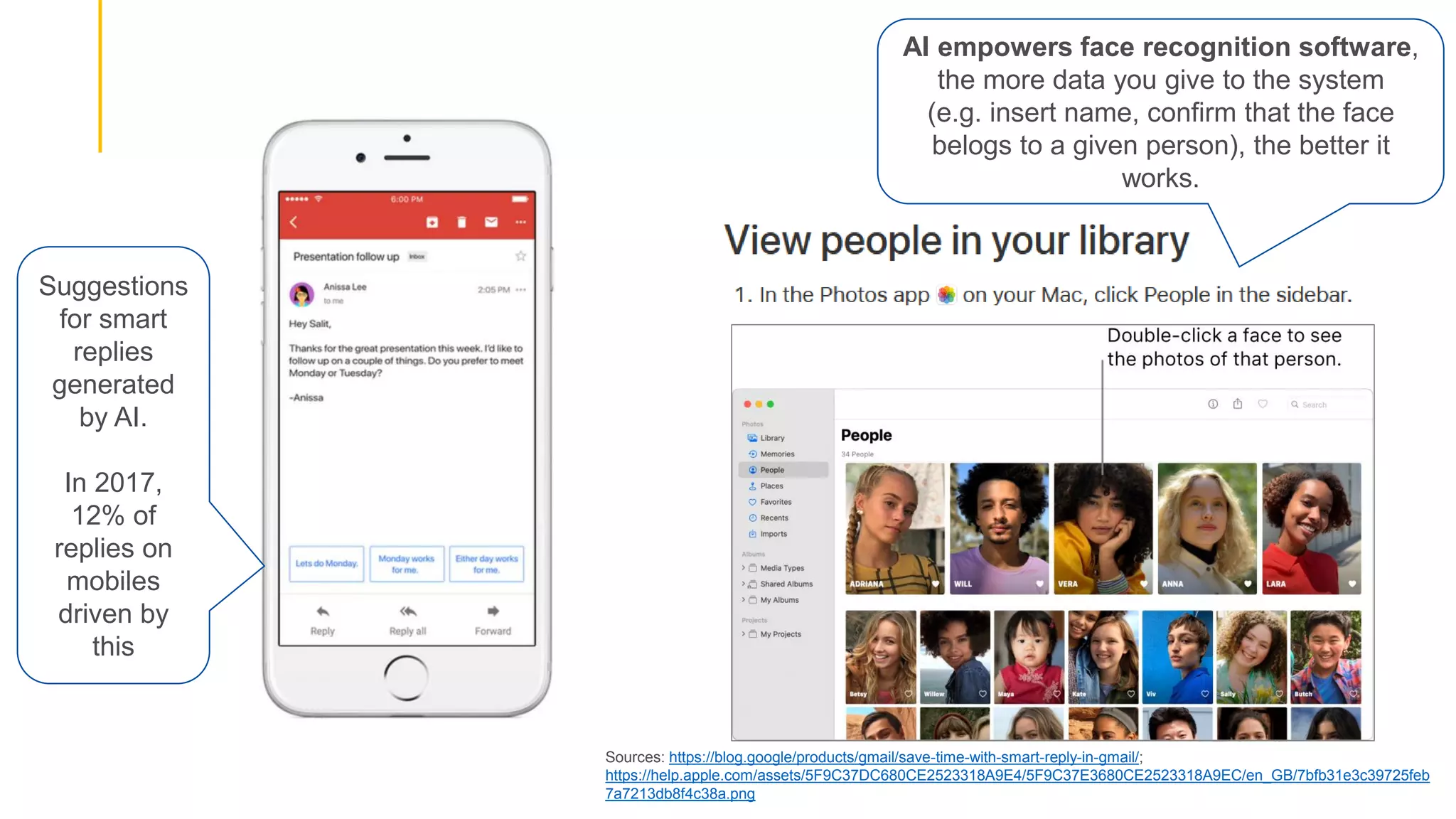
Sources: https://blog.google/products/gmail/save-time-with-smart-reply-in-gmail/;
https://help.apple.com/assets/5F9C37DC680CE2523318A9E4/5F9C37E3680CE2523318A9EC/en_GB/7bfb31e3c39725feb
7a7213db8f4c38a.png
Suggestions
for smart
replies
generated
by AI.
In 2017,
12% of
replies on
mobiles
driven by
this
AI empowers face recognition software,
the more data you give to the system
(e.g. insert name, confirm that the face
belogs to a given person), the better it
works.
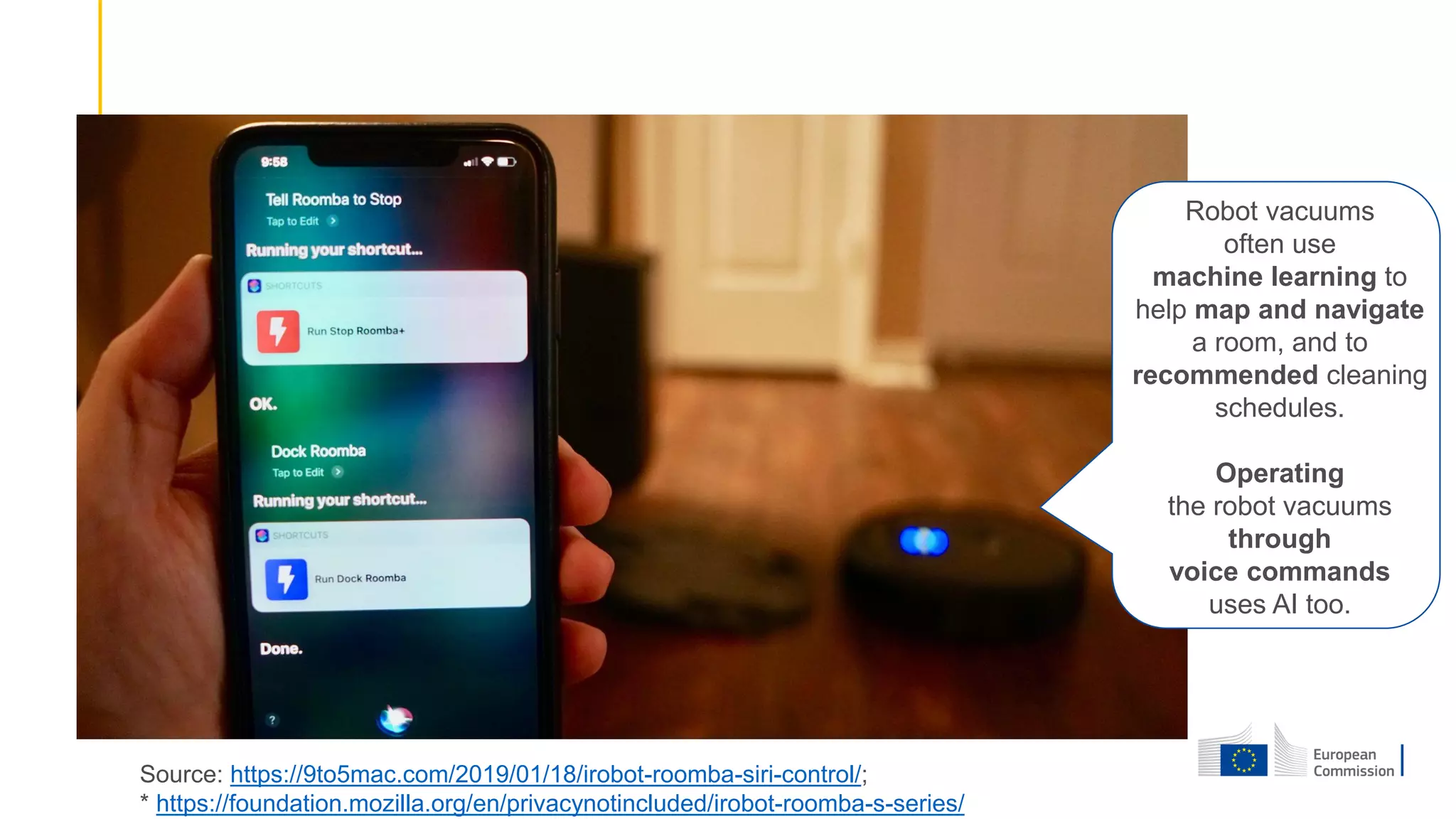
Source: https://9to5mac.com/2019/01/18/irobot-roomba-siri-control/;
* https://foundation.mozilla.org/en/privacynotincluded/irobot-roomba-s-series/
Robot vacuums
often use
machine learning to
help map and navigate
a room, and to
recommended cleaning
schedules.
Operating
the robot vacuums
through
voice commands
uses AI too.
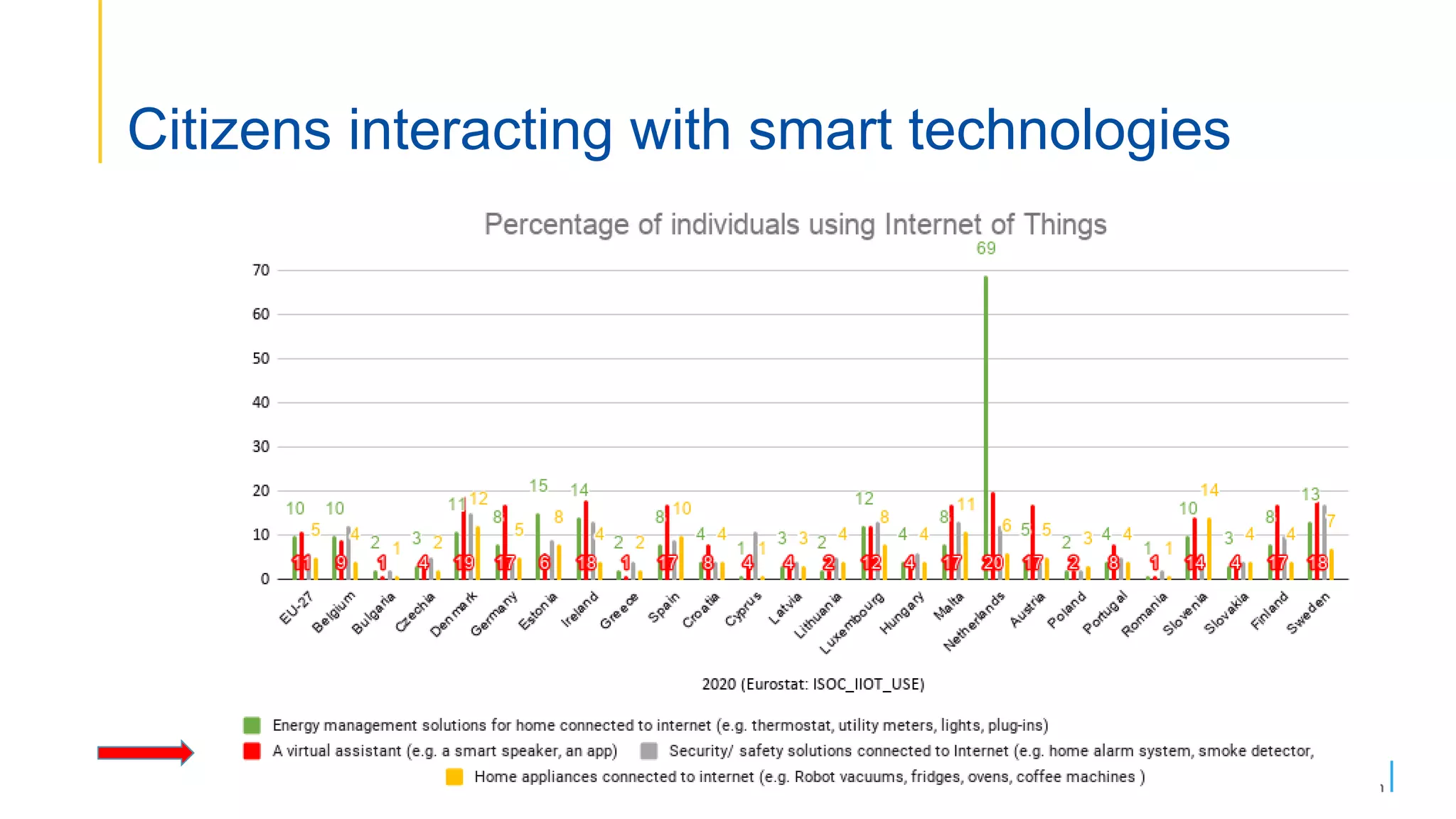
Citizens interacting with smart technologies
In this talk
1.Scenario
2.The Digital Competence framework for citizens (DigComp)
3.Examples of knowledge, skills and attitudes
4.Take part in the public validation
5.Q&A
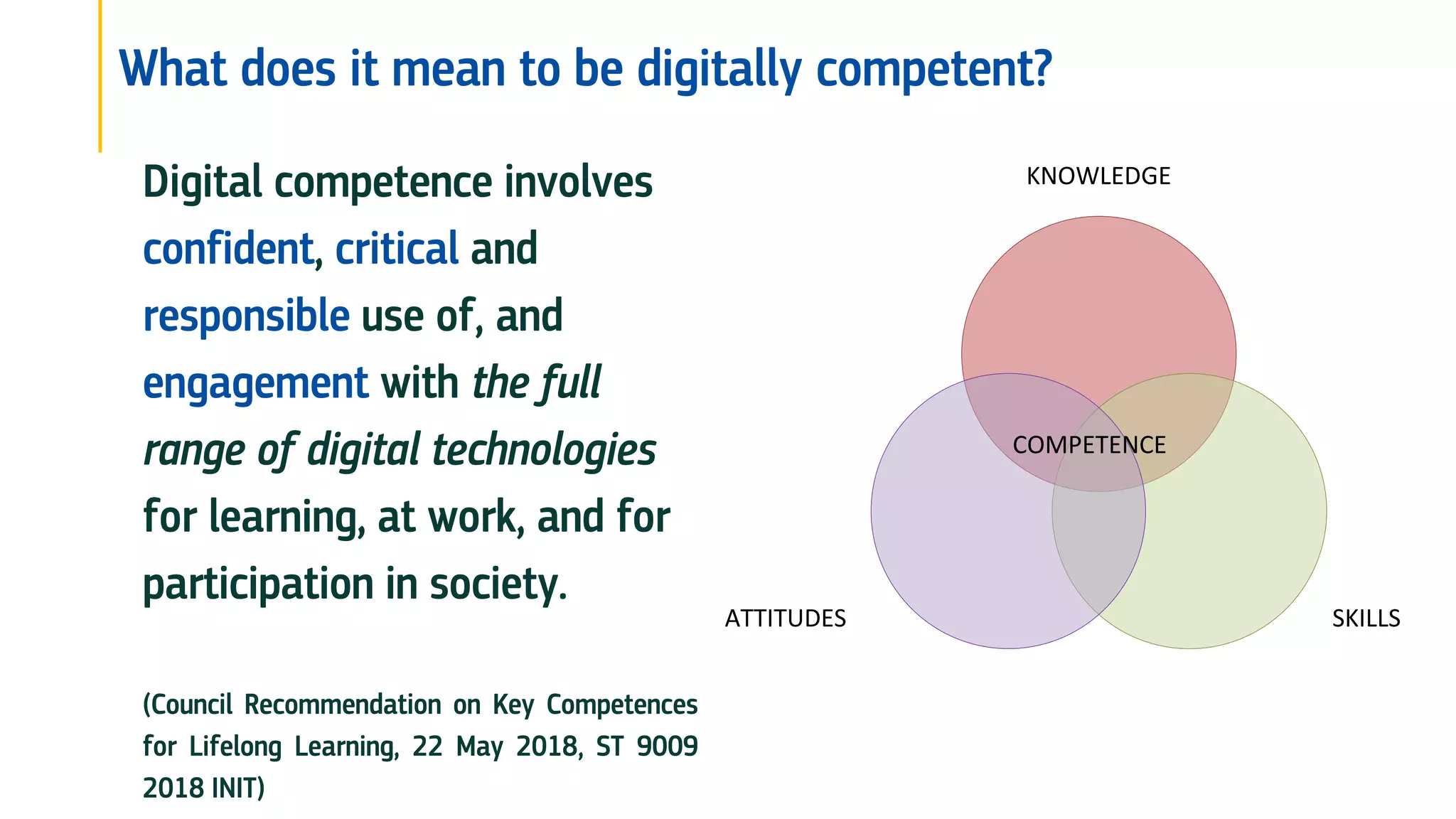
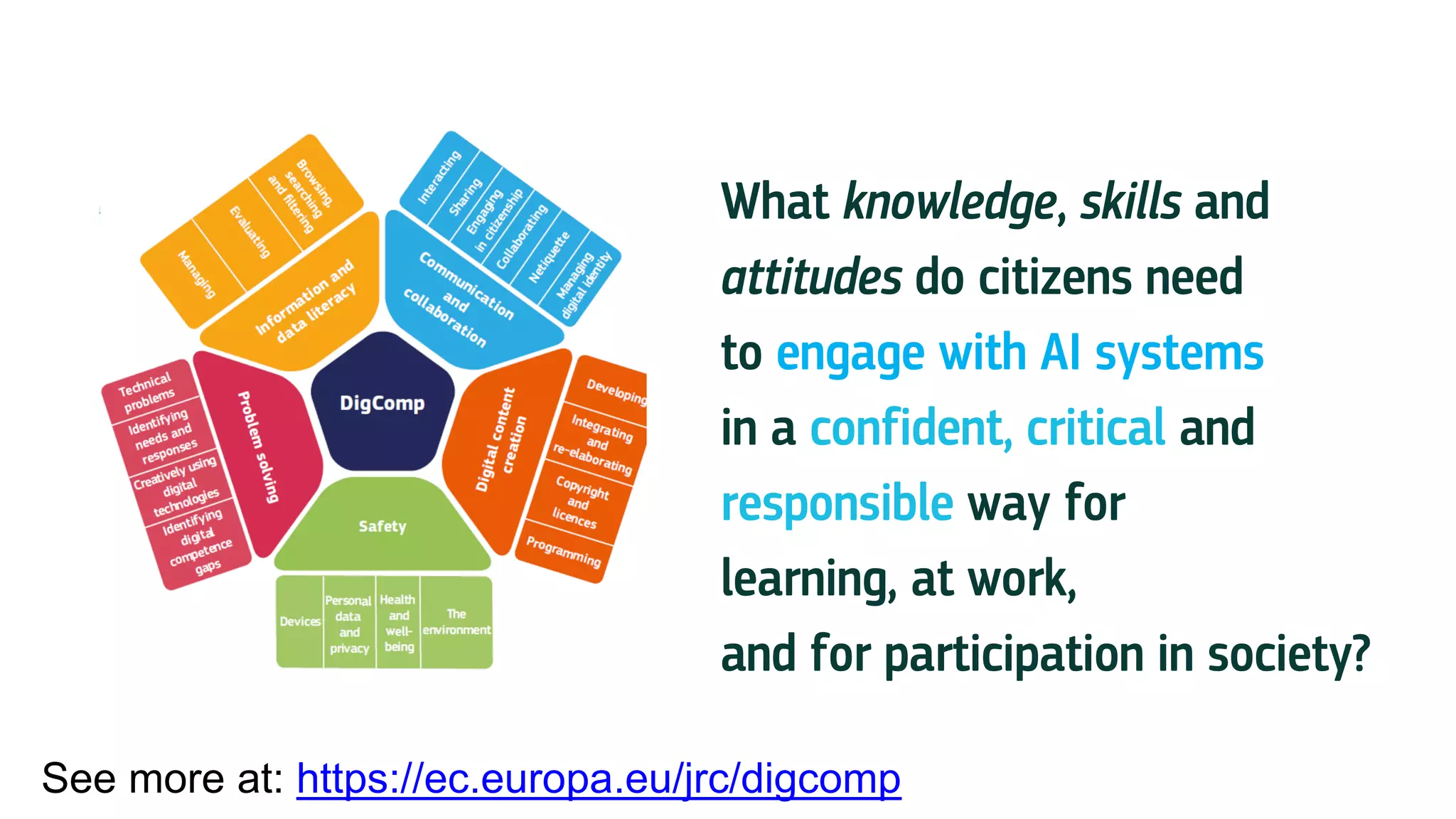
What does it mean to be digitally competent?
Digital competence involves
confident, critical and
responsible use of, and
engagement with the full
range of digital technologies
for learning, at work, and for
participation in society.
(Council Recommendation on Key Competences
for Lifelong Learning, 22 May 2018, ST 9009
2018 INIT)
KNOWLEDGE
SKILLS
ATTITUDES
COMPETENCE
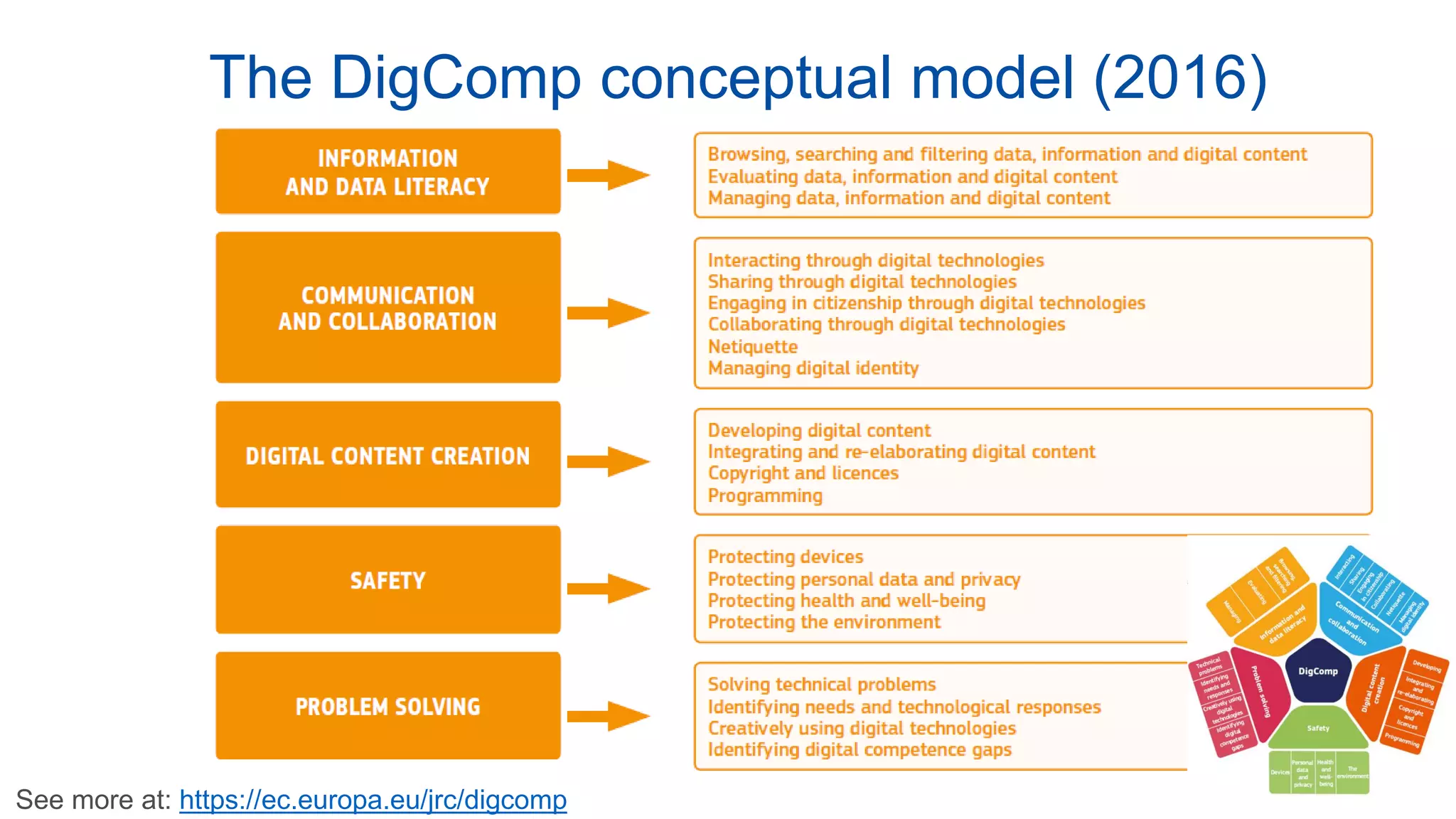
The DigComp conceptual model (2016)
See more at: https://ec.europa.eu/jrc/digcomp
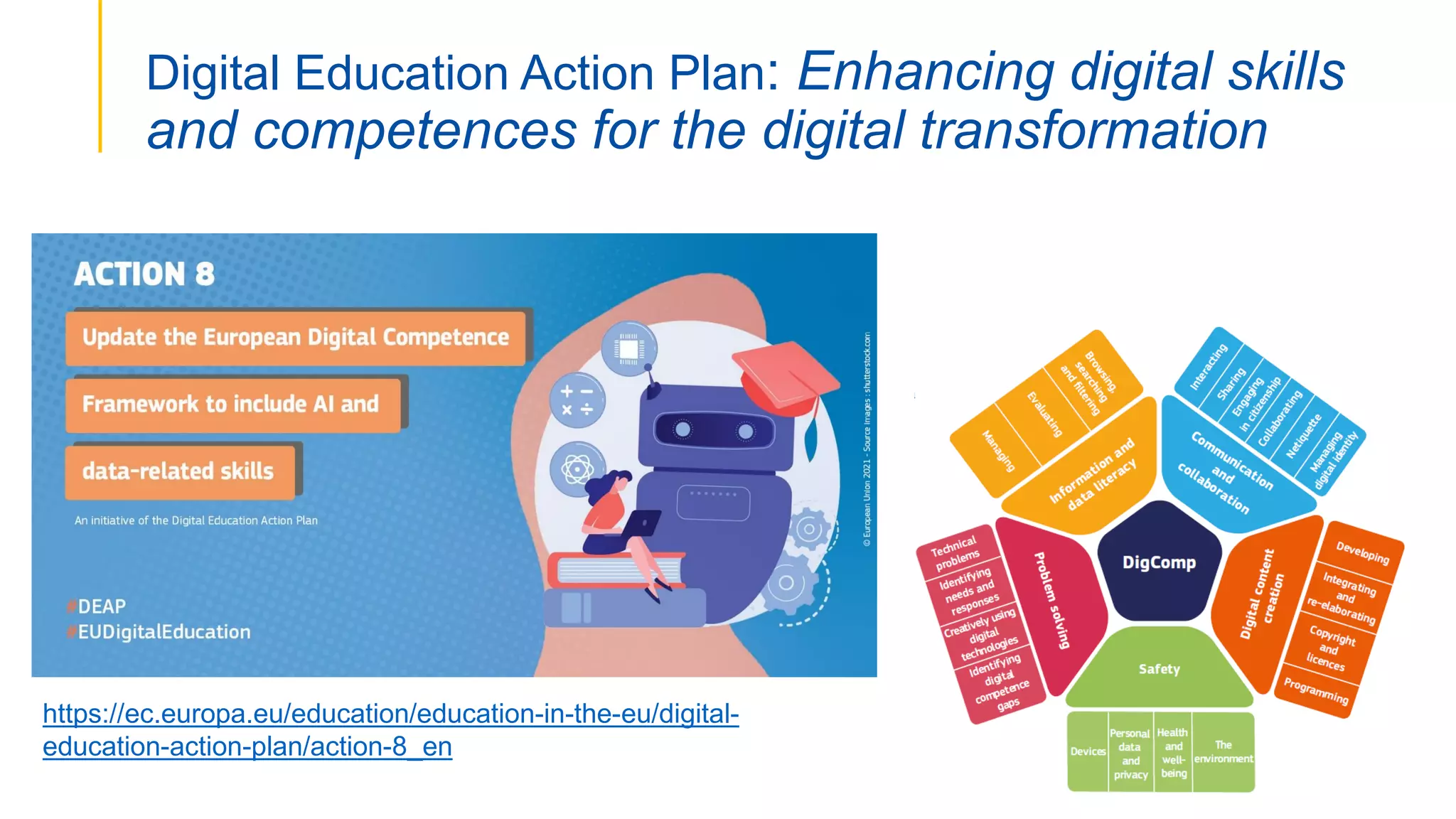
https://ec.europa.eu/education/education-in-the-eu/digital-
education-action-plan/action-8_en
Digital Education Action Plan: Enhancing digital skills
and competences for the digital transformation
In this talk
1.Scenario
2.The Digital Competence framework for citizens (DigComp)
3.Examples of knowledge, skills and attitudes (10min)
4.Take part in the public validation
5.Q&A
What knowledge, skills and
attitudes do citizens need
to engage with AI systems
in a confident, critical and
responsible way for
learning, at work,
and for participation in society?
See more at: https://ec.europa.eu/jrc/digcomp
Requirements for citizens’ use of AI systems
KNOWLEDGE
• To be aware of the
benefits, limitations
and challenges of
AI systems
• To understand what
AI systems do and
what they do not do
SKILLS
• To use, interact and
give feedback to AI
systems as an end-
user
• To configure,
supervise and adapt
AI systems (e.g.
overwrite, tweak)
ATTITUDES
• Human agency and
control
• Critical yet open attitude
• Ethical considerations of
usage
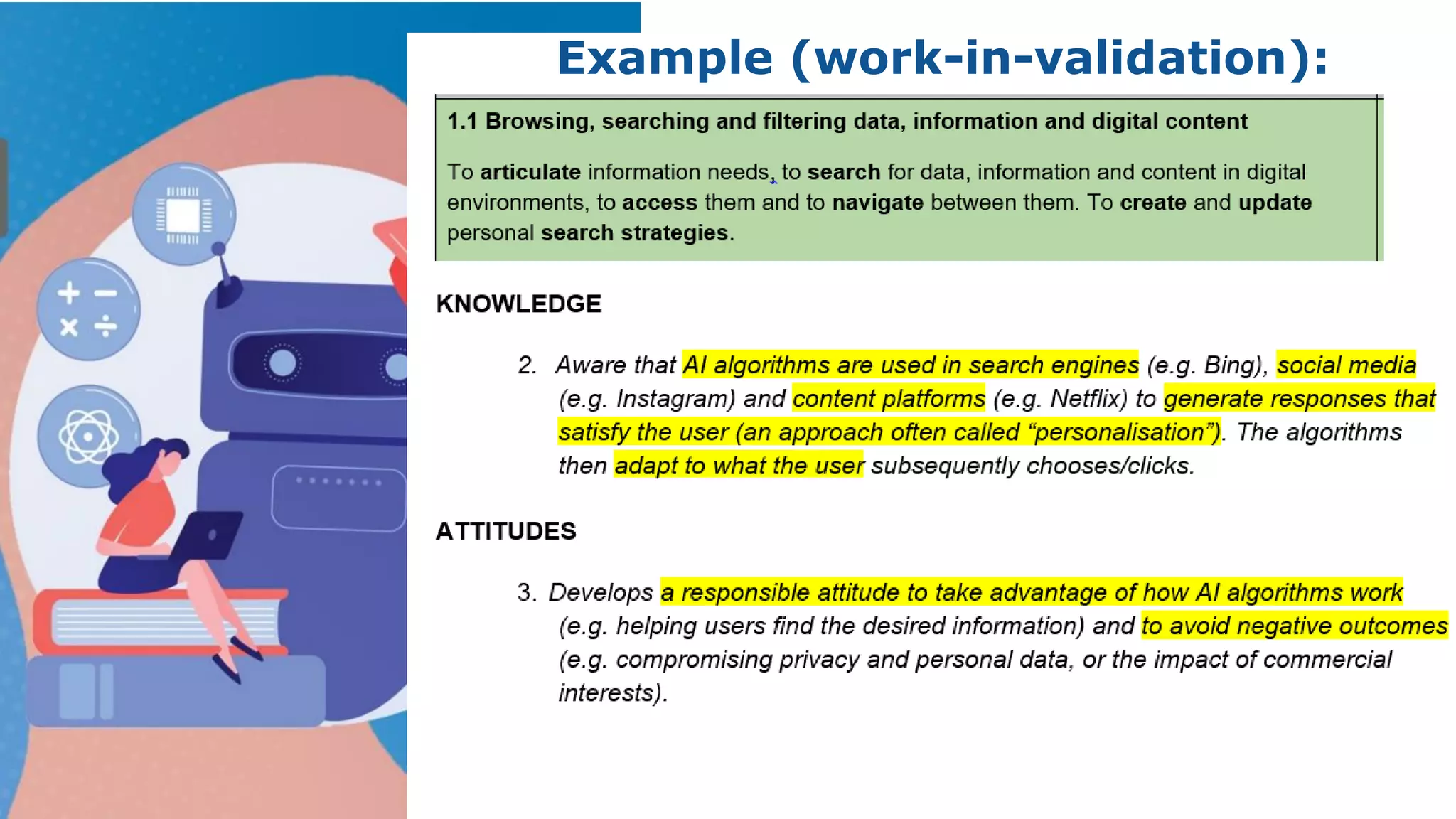
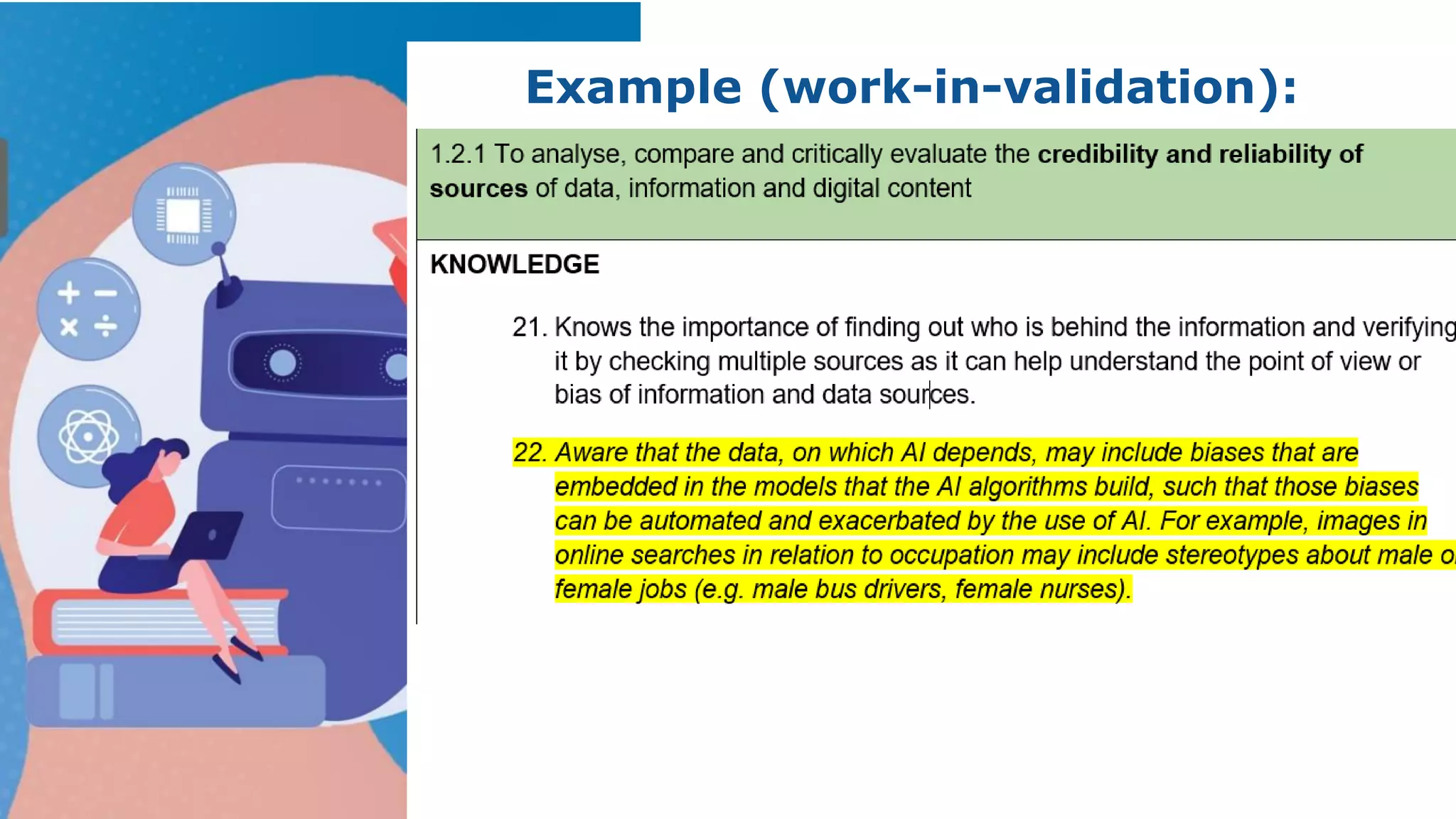
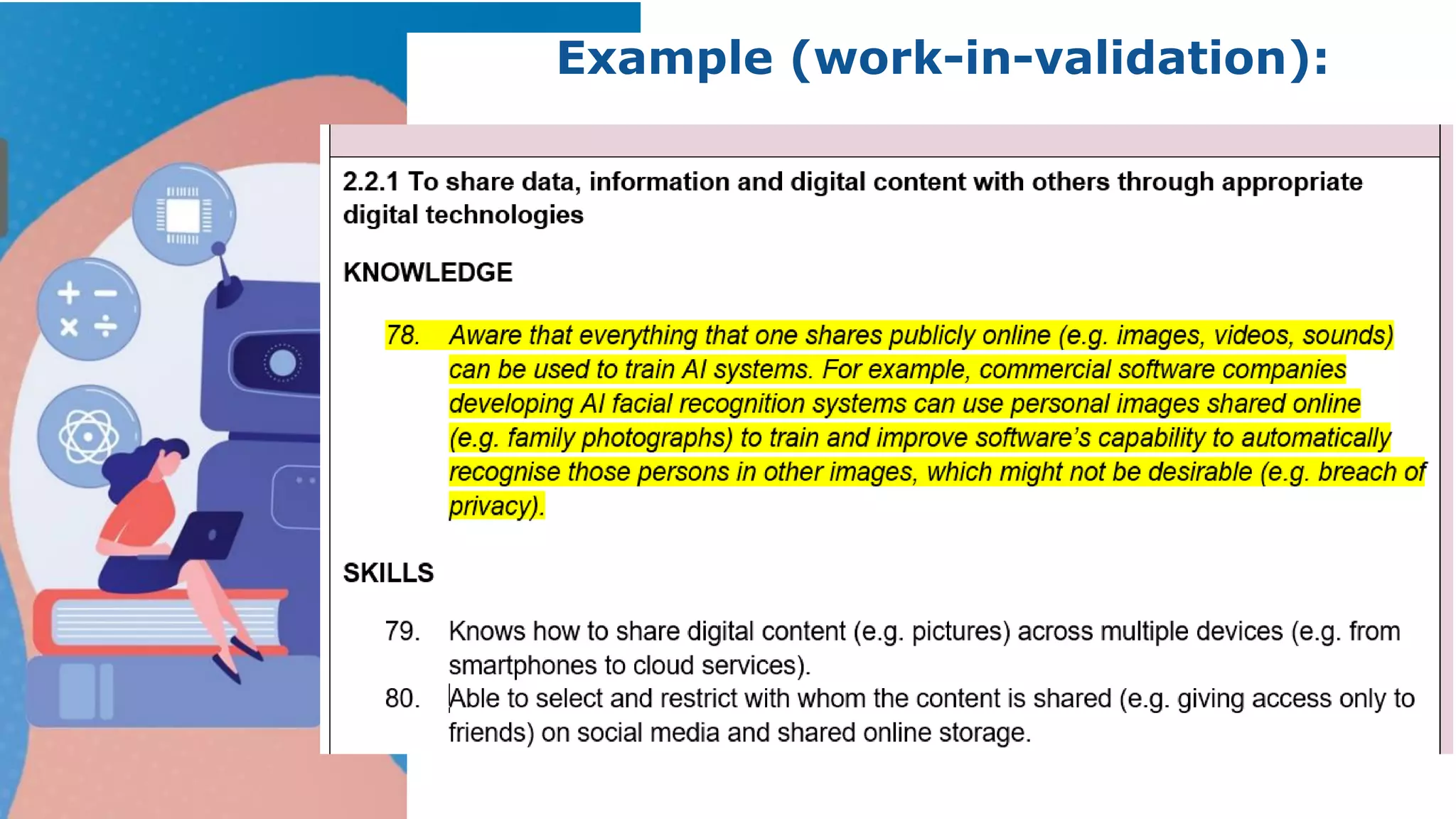
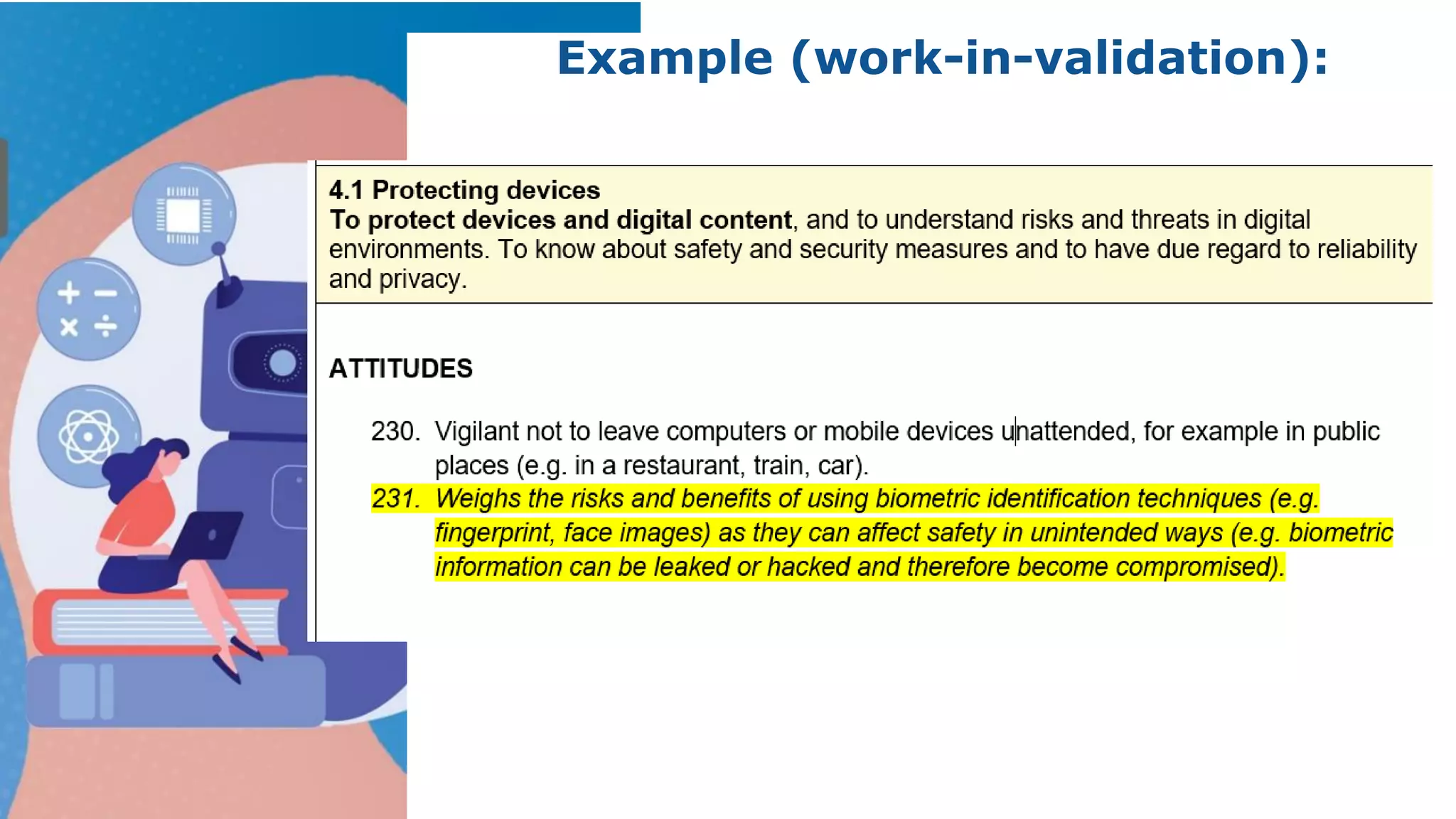
Example (work-in-validation):
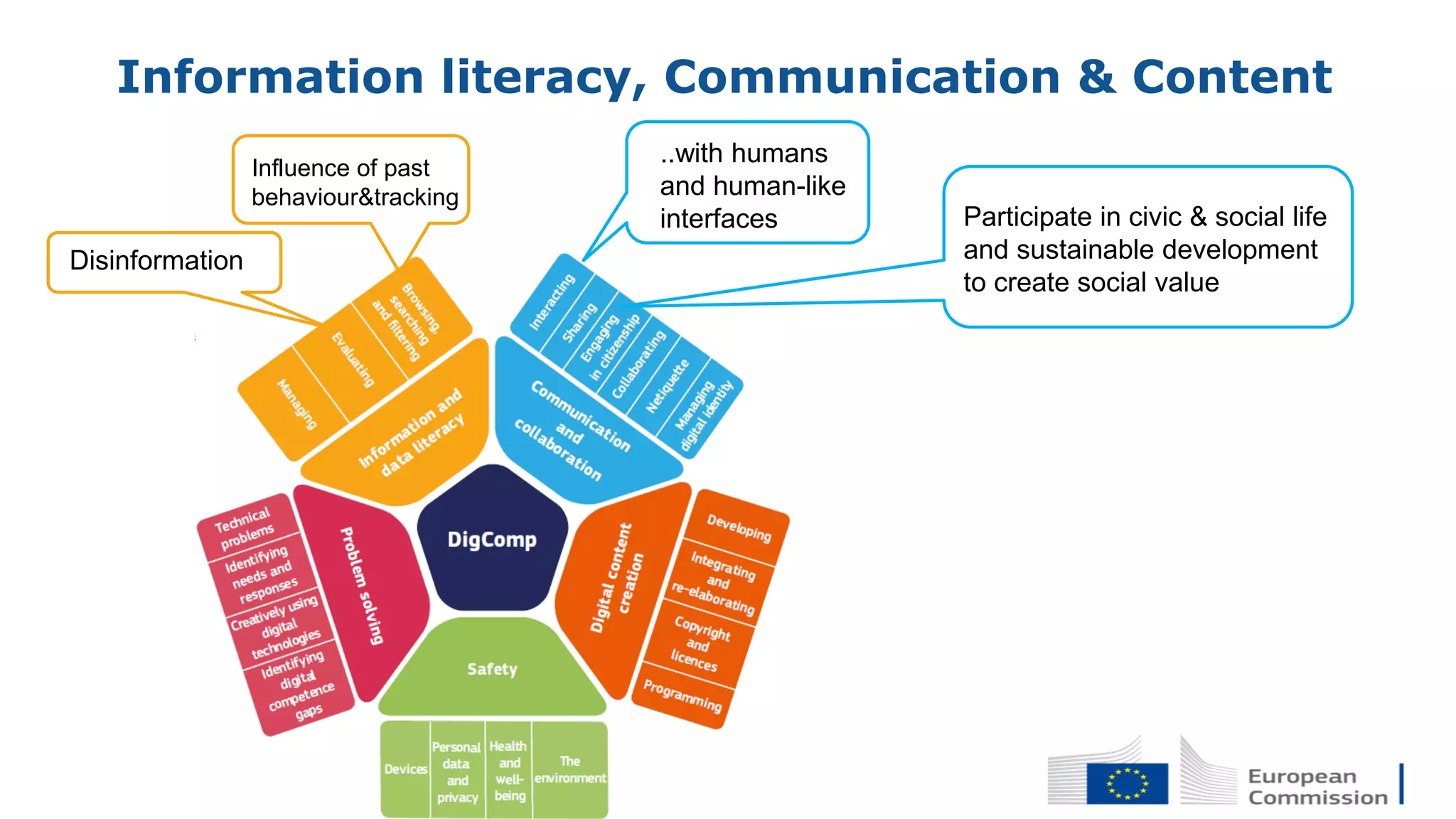
Information literacy, Communication & Content
Disinformation
Influence of past
behaviour&tracking
..with humans
and human-like
interfaces Participate in civic & social life
and sustainable development
to create social value
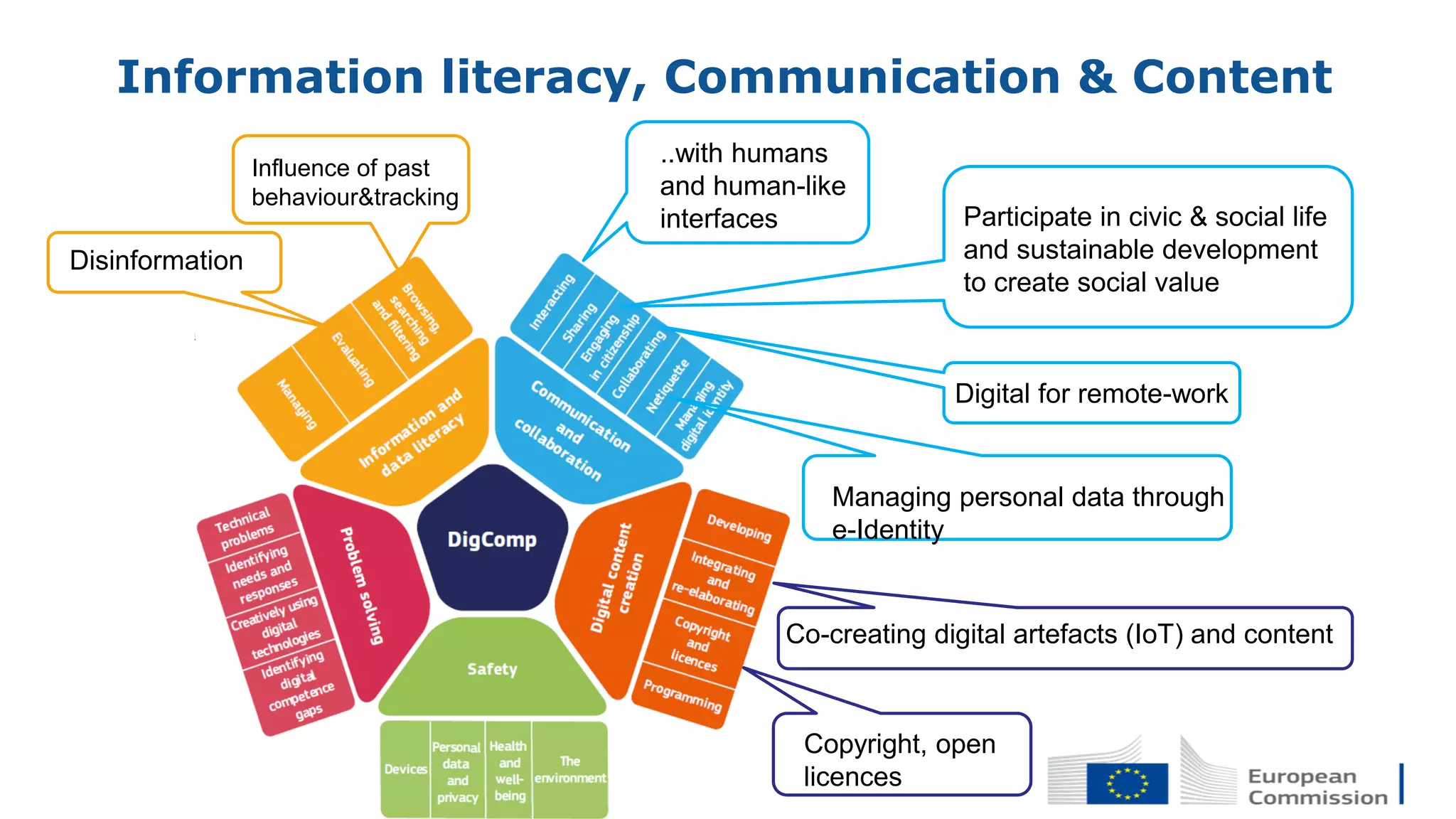
Information literacy, Communication & Content
Disinformation
Influence of past
behaviour&tracking
..with humans
and human-like
interfaces Participate in civic & social life
and sustainable development
to create social value
Digital for remote-work
Managing personal data through
e-Identity
Co-creating digital artefacts (IoT) and content
Copyright, open
licences
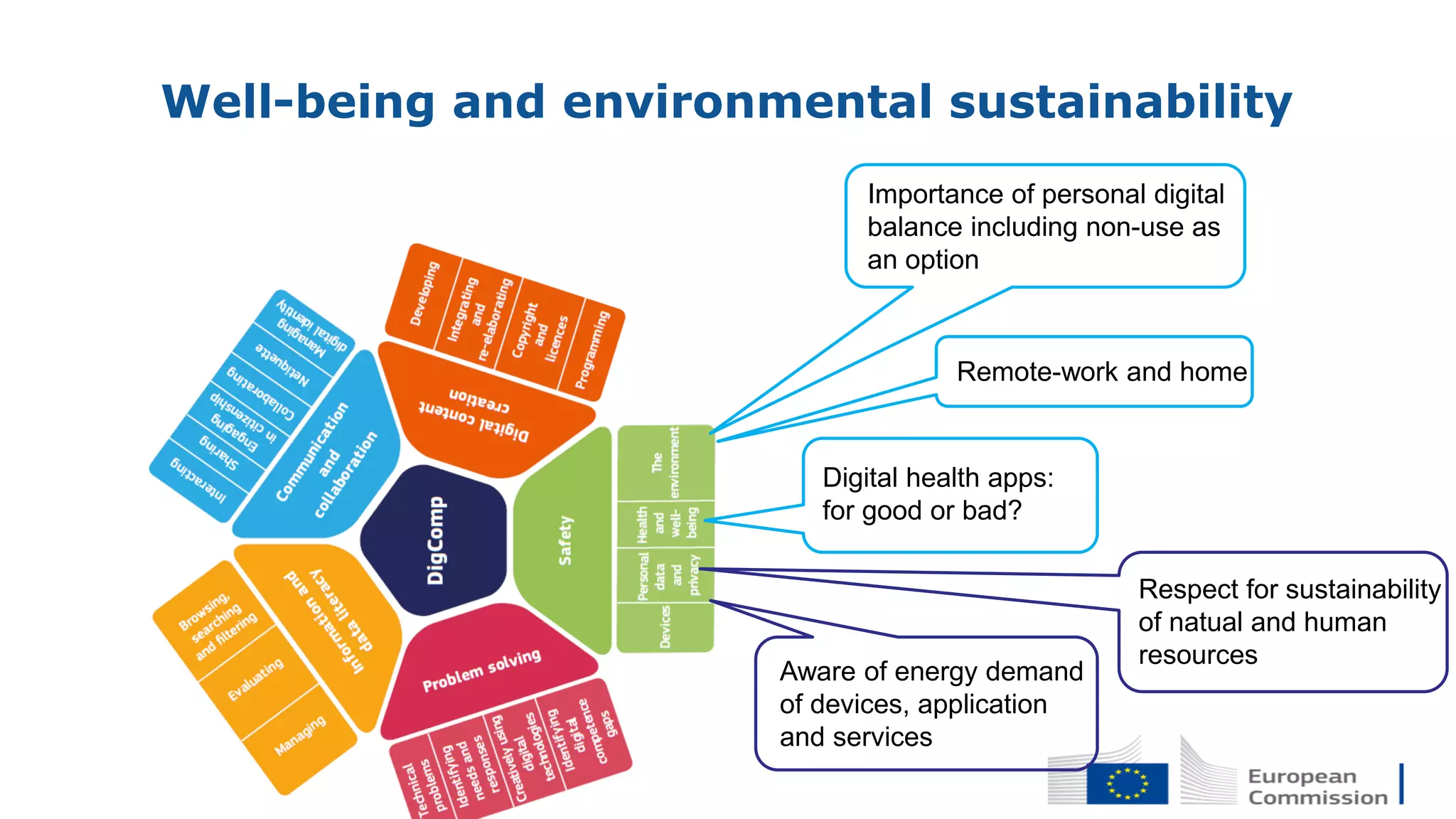
Well-being and environmental sustainability
Importance of personal digital
balance including non-use as
an option
Remote-work and home
Digital health apps:
for good or bad?
Aware of energy demand
of devices, application
and services
Respect for sustainability
of natual and human
resources
In this talk
1.Scenario
2.The Digital Competence framework for citizens (DigComp)
3.Examples of knowledge, skills and attitudes
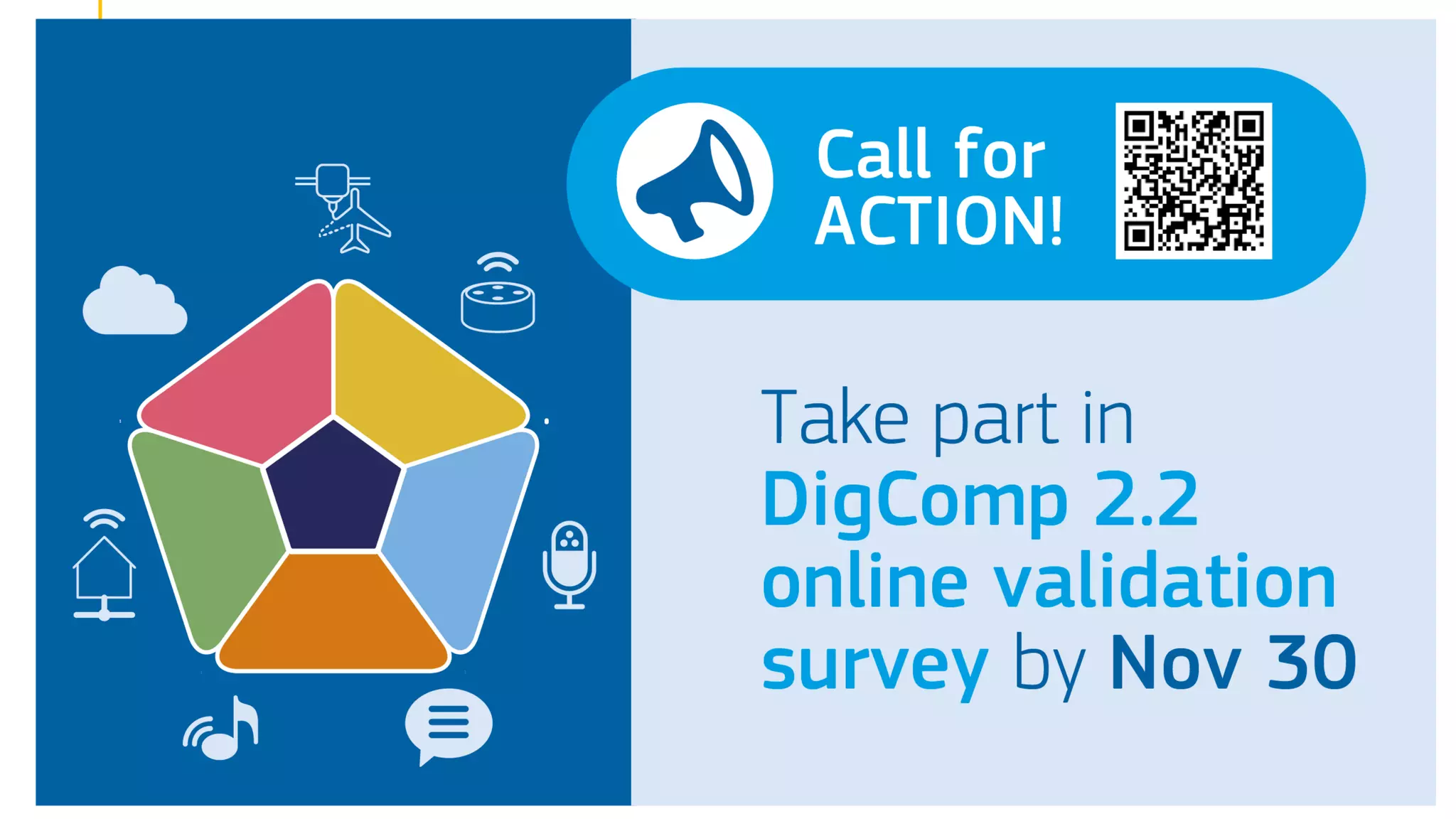
4.Take part in the public validation (5min)
5.Q&A
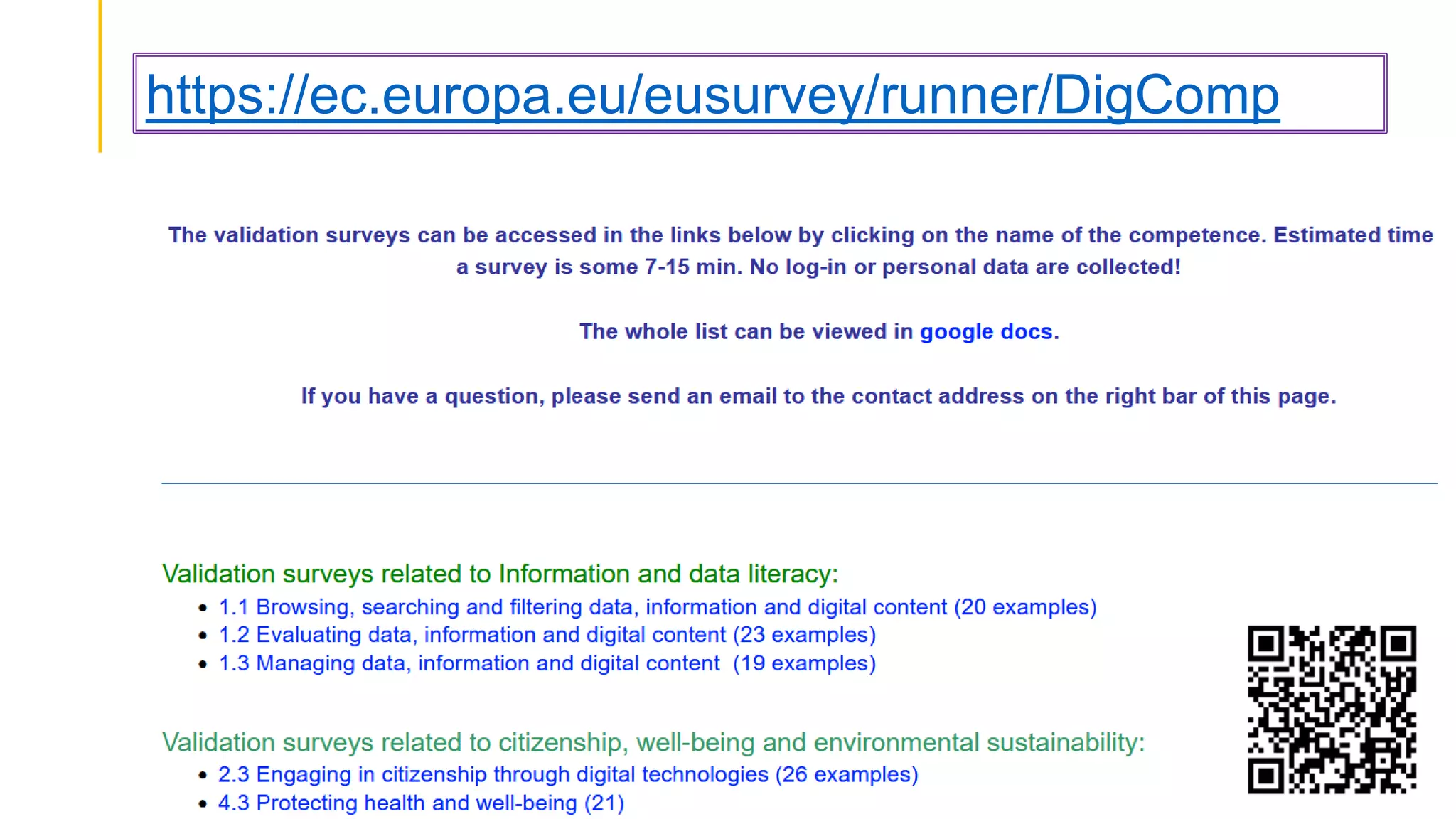
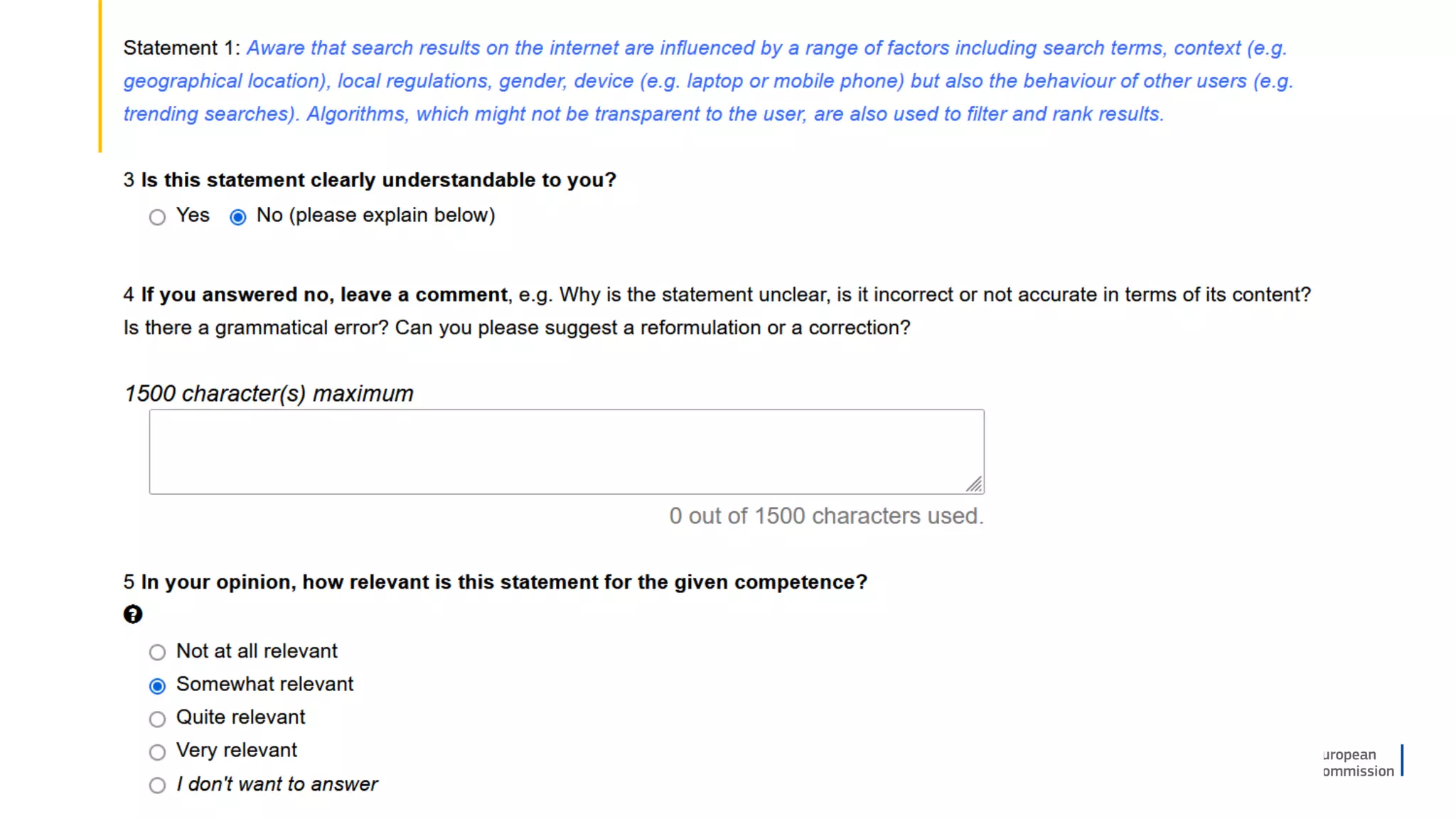
https://ec.europa.eu/eusurvey/runner/DigComp
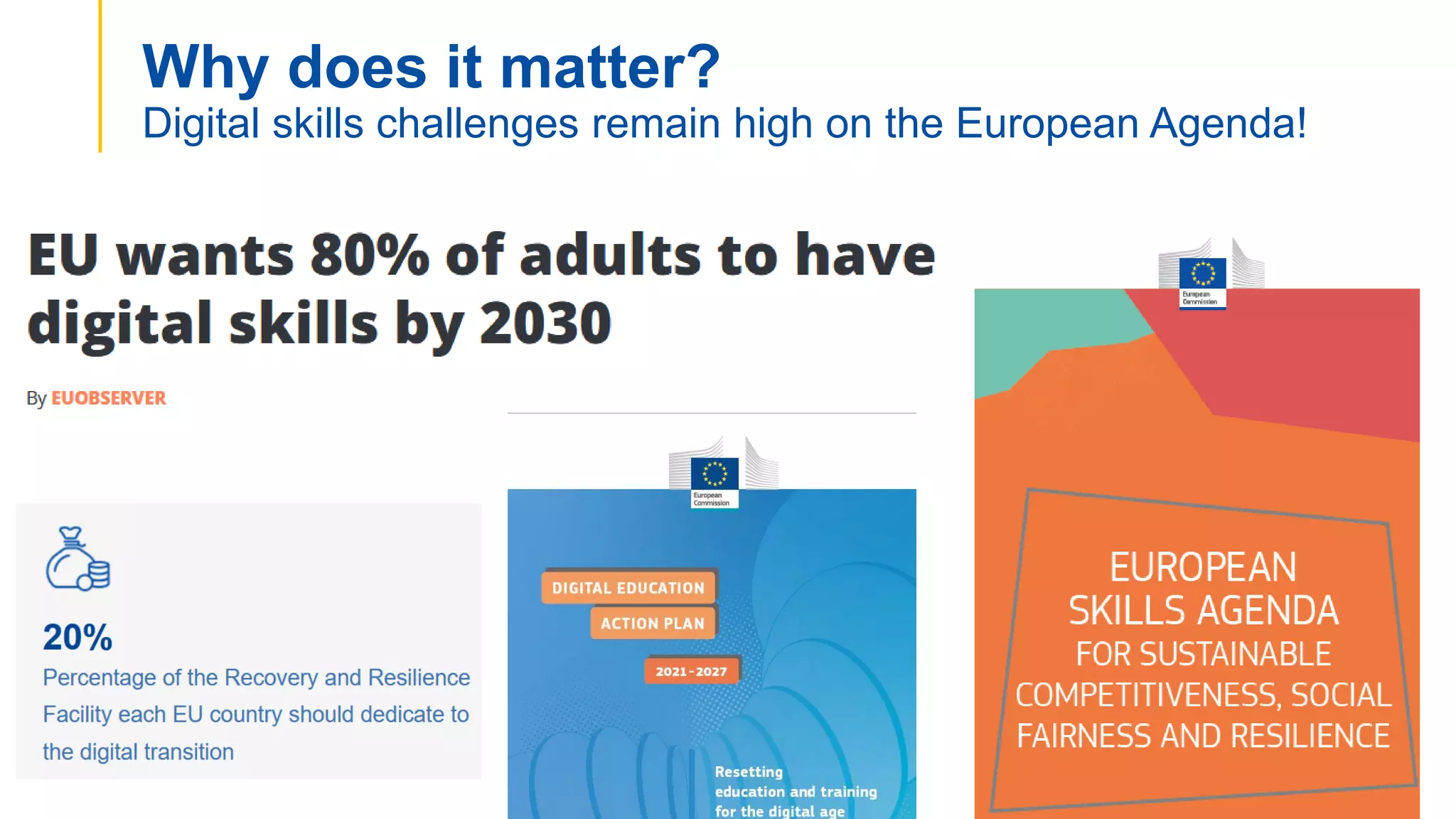
Why does it matter?
Digital skills challenges remain high on the European Agenda!
27
Thank you
© European Union 2021
Unless otherwise noted the reuse of this presentation is authorised
under the CC BY 4.0 license. For any use or reproduction of elements that are not
owned by the EU, permission may need to be sought directly from the
respective right holders.
Contact: Riina.Vuorikari@ec.europa.eu

Internetdagar: DigComp 2.2 update