WHAT CAN COACHING DO FOR
YOUR ORGANIZATION?
The truth
JAYNE WARRILOW
The Changing Context
of Leadership
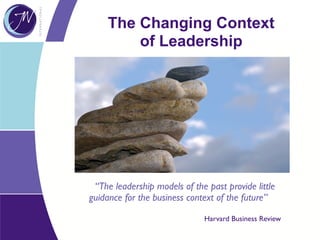
“The leadership models of the past provide little
guidance for the business context of the future”
Harvard Business Review
The Changing Context
of Leadership
Delayering of management structures -
more matrixed leadership roles
Networked markets - power of one voice -
importance of “me+we model”
Globalization - embrace diversity
Less transactional more movements that
foster community and brand identity
Increasing need for collaboration,
inclusiveness, building trust and
relationships
The Changing Context
of Leadership
Changes in theories and practices of
Leadership
Power shift away from autocratic,
authoritative power to shared/collaborative
Leaders use coaching styles
Increased agility to meet the demands of
accelerated technological growth, increasing
workforce diversity, intense competitive
pressures and weakening of geopolitical
boundaries
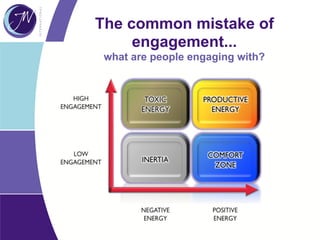
The common mistake of
engagement...
what are people engaging with?
Where is your organization/team?
Discuss implications...
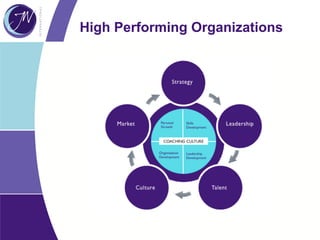
High Performing Organizations
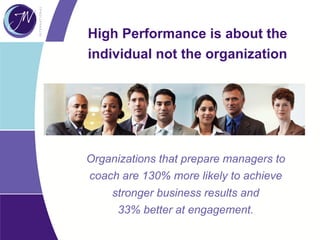
High Performance is about the
individual not the organization
Organizations that prepare managers to
coach are 130% more likely to achieve
stronger business results and
33% better at engagement.
There is only one valid reason for investing in
Executive Coaching for your organization
- to support your business strategy and
objectives
Why invest in coaching?
86% of US Companies invest in
Executive Coaching
Goldman Sachs, IBM, Disney, Apple, Microsoft, GE,
Google, Symantec, VirginUSA, PWC, Unilever...
Combined $1 Billion investment
Average return of 500 - 700%
Who uses coaching?
1. Executive leadership development - offers a safe and
efficient environment for leaders at all levels within the organization to explore
and address key development areas
2. Strategic change - supports an increase in employee engagement and
any changes in behavior required to deliver major transformation and change
3. Competitive advantage - increase in performance, implementing
a coaching culture into your organization is reported to bring an average return of
investment equal to six times the cost of coaching.
4. Succession planning - equips key talent for internal promotion and
delivers a strong bench for leadership/managerial positions
Coaching Solutions for Business
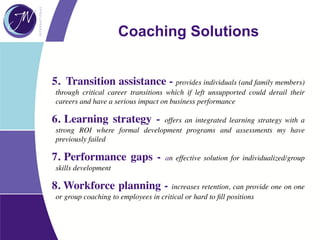
5. Transition assistance - provides individuals (and family members)
through critical career transitions which if left unsupported could derail their
careers and have a serious impact on business performance
6. Learning strategy - offers an integrated learning strategy with a
strong ROI where formal development programs and assessments my have
previously failed
7. Performance gaps - an effective solution for individualized/group
skills development
8. Workforce planning - increases retention, can provide one on one
or group coaching to employees in critical or hard to fill positions
Coaching Solutions
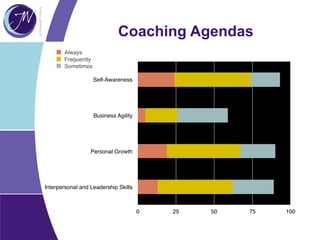
Coaching Agendas
Self-Awareness
Business Agility
Personal Growth
Interpersonal and Leadership Skills
0 25 50 75 100
Always
Frequently
Sometimes
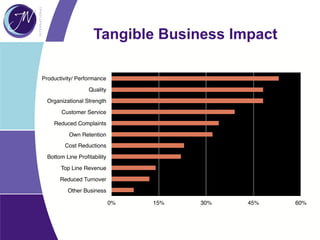
Tangible Business Impact
Productivity/ Performance
Quality
Organizational Strength
Customer Service
Reduced Complaints
Own Retention
Cost Reductions
Bottom Line Profitability
Top Line Revenue
Reduced Turnover
Other Business
0% 15% 30% 45% 60%
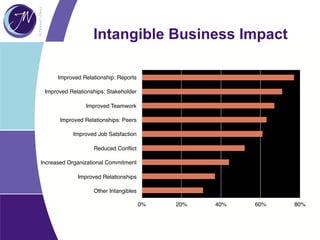
Intangible Business Impact
Improved Relationship: Reports
Improved Relationships: Stakeholder
Improved Teamwork
Improved Relationships: Peers
Improved Job Satsfaction
Reduced Conflict
Increased Organizational Commitment
Improved Relationships
Other Intangibles
0% 20% 40% 60% 80%
Common challenges to the effective
implementation of coaching...
Unclear business benefits & ROI
Challenge of global
Senor Leadership buy in
Lack of time and resources
Accountability
Not perceived in positive light
Is coaching right for your
organization?
500% - 700%
or average
6X return on
the cost of
coaching
investment
Some things to consider BEFORE
you introduce coaching
1.Get clear in your organizational strategy
for Executive Coaching
2.Internal versus external coaches?
3.Make sure to select professionally
accredited coaches
4.Allow coaching clients to select their own
coach
5.Make sure each coaching engagement is
based on clear coaching objectives
Some things to consider BEFORE
you introduce coaching
6. Ensure coaching is formally structured
7. Evaluation structures to support individual and
organizational goals
8. Clearly defined code of ethics
9. Involve stakeholders
10. Integrate coaching into ongoing development
and evaluation systems
Some resources...
Guidelines and Ideas for Clients:
1. Making the Case for Executive
Coaching: the most effective
development process for creating a
“high performance” culture
2. Creating a Coaching Culture: the
most potent organizational change
process for creating a “high
performance” culture
If you would like a copy of these documents
please leave your business card...
www.JayneWarrilow.com
Questions...?

What can coaching do for your organization?

  • 1.
    WHAT CAN COACHINGDO FOR YOUR ORGANIZATION? The truth JAYNE WARRILOW
  • 2.
    The Changing Context ofLeadership “The leadership models of the past provide little guidance for the business context of the future” Harvard Business Review
  • 3.
    The Changing Context ofLeadership Delayering of management structures - more matrixed leadership roles Networked markets - power of one voice - importance of “me+we model” Globalization - embrace diversity Less transactional more movements that foster community and brand identity Increasing need for collaboration, inclusiveness, building trust and relationships
  • 4.
    The Changing Context ofLeadership Changes in theories and practices of Leadership Power shift away from autocratic, authoritative power to shared/collaborative Leaders use coaching styles Increased agility to meet the demands of accelerated technological growth, increasing workforce diversity, intense competitive pressures and weakening of geopolitical boundaries
  • 5.
    The common mistakeof engagement... what are people engaging with?
  • 6.
    Where is yourorganization/team? Discuss implications...
  • 7.
  • 8.
    High Performance isabout the individual not the organization Organizations that prepare managers to coach are 130% more likely to achieve stronger business results and 33% better at engagement.
  • 9.
    There is onlyone valid reason for investing in Executive Coaching for your organization - to support your business strategy and objectives Why invest in coaching?
  • 10.
    86% of USCompanies invest in Executive Coaching Goldman Sachs, IBM, Disney, Apple, Microsoft, GE, Google, Symantec, VirginUSA, PWC, Unilever... Combined $1 Billion investment Average return of 500 - 700% Who uses coaching?
  • 11.
    1. Executive leadershipdevelopment - offers a safe and efficient environment for leaders at all levels within the organization to explore and address key development areas 2. Strategic change - supports an increase in employee engagement and any changes in behavior required to deliver major transformation and change 3. Competitive advantage - increase in performance, implementing a coaching culture into your organization is reported to bring an average return of investment equal to six times the cost of coaching. 4. Succession planning - equips key talent for internal promotion and delivers a strong bench for leadership/managerial positions Coaching Solutions for Business
  • 12.
    5. Transition assistance- provides individuals (and family members) through critical career transitions which if left unsupported could derail their careers and have a serious impact on business performance 6. Learning strategy - offers an integrated learning strategy with a strong ROI where formal development programs and assessments my have previously failed 7. Performance gaps - an effective solution for individualized/group skills development 8. Workforce planning - increases retention, can provide one on one or group coaching to employees in critical or hard to fill positions Coaching Solutions
  • 13.
    Coaching Agendas Self-Awareness Business Agility PersonalGrowth Interpersonal and Leadership Skills 0 25 50 75 100 Always Frequently Sometimes
  • 14.
    Tangible Business Impact Productivity/Performance Quality Organizational Strength Customer Service Reduced Complaints Own Retention Cost Reductions Bottom Line Profitability Top Line Revenue Reduced Turnover Other Business 0% 15% 30% 45% 60%
  • 15.
    Intangible Business Impact ImprovedRelationship: Reports Improved Relationships: Stakeholder Improved Teamwork Improved Relationships: Peers Improved Job Satsfaction Reduced Conflict Increased Organizational Commitment Improved Relationships Other Intangibles 0% 20% 40% 60% 80%
  • 16.
    Common challenges tothe effective implementation of coaching... Unclear business benefits & ROI Challenge of global Senor Leadership buy in Lack of time and resources Accountability Not perceived in positive light
  • 17.
    Is coaching rightfor your organization? 500% - 700% or average 6X return on the cost of coaching investment
  • 18.
    Some things toconsider BEFORE you introduce coaching 1.Get clear in your organizational strategy for Executive Coaching 2.Internal versus external coaches? 3.Make sure to select professionally accredited coaches 4.Allow coaching clients to select their own coach 5.Make sure each coaching engagement is based on clear coaching objectives
  • 19.
    Some things toconsider BEFORE you introduce coaching 6. Ensure coaching is formally structured 7. Evaluation structures to support individual and organizational goals 8. Clearly defined code of ethics 9. Involve stakeholders 10. Integrate coaching into ongoing development and evaluation systems
  • 20.
    Some resources... Guidelines andIdeas for Clients: 1. Making the Case for Executive Coaching: the most effective development process for creating a “high performance” culture 2. Creating a Coaching Culture: the most potent organizational change process for creating a “high performance” culture If you would like a copy of these documents please leave your business card... www.JayneWarrilow.com
  • 21.