MEDIA AND INFORMATION
LITERACY (MIL)
Media and Information Source
EVALUATING INFORMATION
Learning Competencies
Learners will be able to…
identify and explain basic criteria for evaluating
information;
discuss the importance of being able to evaluate
information from the internet; and
 interview an elder from the community regarding
indigenous media and information resource
(MIL11/12MIS-IIIe-14)
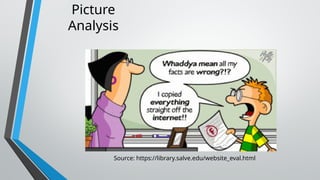
Picture
Analysis
Source: https://library.salve.edu/website_eval.html
Introduction
 Once you have found information or read
something from the internet, you should
analyze or evaluate these information
sources.
WHY?
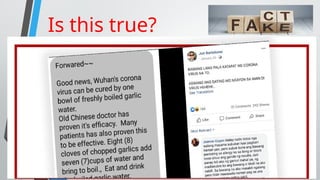
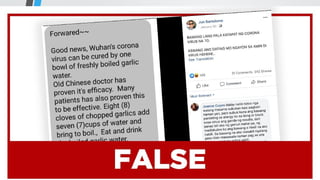
Is this true?
Is this
true?
Why Evaluating Information is
IMPORTANT?
•Evaluating Information encourages you to
think critically about the reliability, validity,
accuracy, authority, timeliness, point of view or
bias of information sources.
•Evaluation is closely associated with critical
thinking. Beyer (1985) argued that evaluation
is equated with critical thinking.
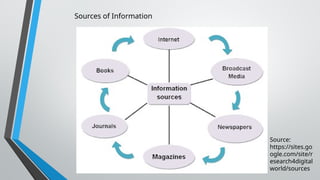
Sources of Information
Source:
https://sites.go
ogle.com/site/r
esearch4digital
world/sources
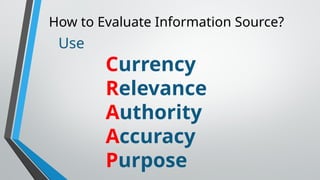
How to Evaluate Information Source?
Use
Currency
Relevance
Authority
Accuracy
Purpose
CURRENCY
 The timeliness of the information
When the information published or posted?
Has the information recently been revised
or updated?
Is the information current?
RELEVANCE
 The IMPORTANCE of the information
for you needs
Does the information related to your topic?
Who is the intended audience?
Is the information at an appropriate level?
Is the information compatible for academe
research paper?
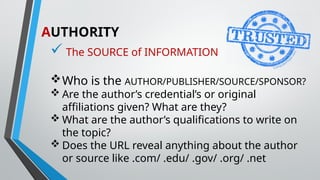
AUTHORITY
 The SOURCE of INFORMATION
Who is the AUTHOR/PUBLISHER/SOURCE/SPONSOR?
 Are the author’s credential’s or original
affiliations given? What are they?
 What are the author’s qualifications to write on
the topic?
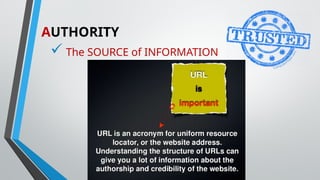
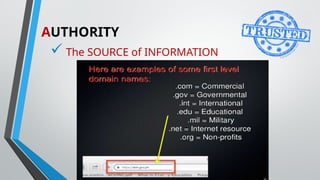
 Does the URL reveal anything about the author
or source like .com/ .edu/ .gov/ .org/ .net
AUTHORITY
 The SOURCE of INFORMATION
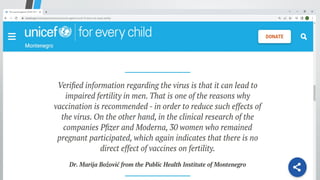
AUTHORITY
 The SOURCE of INFORMATION
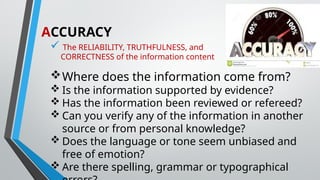
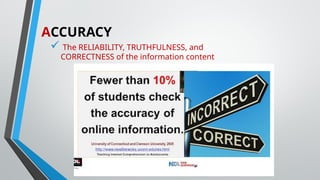
ACCURACY
 The RELIABILITY, TRUTHFULNESS, and
CORRECTNESS of the information content
Where does the information come from?
 Is the information supported by evidence?
 Has the information been reviewed or refereed?
 Can you verify any of the information in another
source or from personal knowledge?
 Does the language or tone seem unbiased and
free of emotion?
 Are there spelling, grammar or typographical
ACCURACY
 The RELIABILITY, TRUTHFULNESS, and
CORRECTNESS of the information content
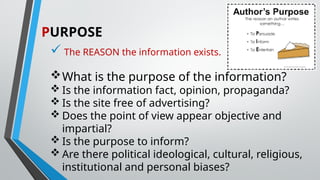
PURPOSE
 The REASON the information exists.
What is the purpose of the information?
 Is the information fact, opinion, propaganda?
 Is the site free of advertising?
 Does the point of view appear objective and
impartial?
 Is the purpose to inform?
 Are there political ideological, cultural, religious,
institutional and personal biases?
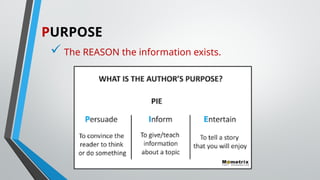
PURPOSE
 The REASON the information exists.
Questions and Clarifications….

Week 6 MIL Evaluating Information and Importance.pptx

  • 1.
    MEDIA AND INFORMATION LITERACY(MIL) Media and Information Source EVALUATING INFORMATION
  • 2.
    Learning Competencies Learners willbe able to… identify and explain basic criteria for evaluating information; discuss the importance of being able to evaluate information from the internet; and  interview an elder from the community regarding indigenous media and information resource (MIL11/12MIS-IIIe-14)
  • 3.
  • 4.
    Introduction  Once youhave found information or read something from the internet, you should analyze or evaluate these information sources. WHY?
  • 5.
  • 7.
  • 9.
    Why Evaluating Informationis IMPORTANT? •Evaluating Information encourages you to think critically about the reliability, validity, accuracy, authority, timeliness, point of view or bias of information sources. •Evaluation is closely associated with critical thinking. Beyer (1985) argued that evaluation is equated with critical thinking.
  • 10.
  • 11.
    How to EvaluateInformation Source? Use Currency Relevance Authority Accuracy Purpose
  • 12.
    CURRENCY  The timelinessof the information When the information published or posted? Has the information recently been revised or updated? Is the information current?
  • 13.
    RELEVANCE  The IMPORTANCEof the information for you needs Does the information related to your topic? Who is the intended audience? Is the information at an appropriate level? Is the information compatible for academe research paper?
  • 14.
    AUTHORITY  The SOURCEof INFORMATION Who is the AUTHOR/PUBLISHER/SOURCE/SPONSOR?  Are the author’s credential’s or original affiliations given? What are they?  What are the author’s qualifications to write on the topic?  Does the URL reveal anything about the author or source like .com/ .edu/ .gov/ .org/ .net
  • 15.
  • 16.
  • 17.
    ACCURACY  The RELIABILITY,TRUTHFULNESS, and CORRECTNESS of the information content Where does the information come from?  Is the information supported by evidence?  Has the information been reviewed or refereed?  Can you verify any of the information in another source or from personal knowledge?  Does the language or tone seem unbiased and free of emotion?  Are there spelling, grammar or typographical
  • 18.
    ACCURACY  The RELIABILITY,TRUTHFULNESS, and CORRECTNESS of the information content
  • 19.
    PURPOSE  The REASONthe information exists. What is the purpose of the information?  Is the information fact, opinion, propaganda?  Is the site free of advertising?  Does the point of view appear objective and impartial?  Is the purpose to inform?  Are there political ideological, cultural, religious, institutional and personal biases?
  • 20.
    PURPOSE  The REASONthe information exists.
  • 21.