is the relatively enduring pattern of the
thoughts, feelings, and behaviours that
distinguish individuals from one another.
 Imagine yourself looking into a mirror. What do you
see? Do you see your ideal self or actual self?
 Your ideal self is the self that you aspire to
be. It is the one that you hope will possess
characteristics similar to that of a mentor or
some other worldly figure.
 Your actual self, however, is the one that you
actually see. It is the self that has
characteristics that you were nurtured or, in
some cases, born to have.
 The actual self and the ideal self are two
broad categories of self-concept. Self
concept refers to your awareness of yourself.
It is the construct that negotiates these two
selves. In other words, it connotes first the
identification of the ideal self as separate
from others, and second, it encompasses all
the behaviors evaluated in the actual self that
you engage in to reach the ideal self.
 The actual self is built on self-knowledge.
Self knowledge is derived from social
interactions that provide insight into how
others react to you.
 The actual self is who we actually are. It is
how we think, how we feel, look and act. The
actual self can be seen by others, but because
we have no way of truly knowing how others
view us, the actual self is our self-image.
 The ideal self, on the other hand, is how we
want to be. It is an idealized image that we
have developed over time, based on what we
have learned and experienced.
 The ideal self could include components of
what our parents have taught us, what we
admire in others what our society promotes,
and what we think is in our best interest.
There is negotiation that exists between the
two selves which is complex because there are
numerous exchanges between the ideal and
actual self. These exchanges are exemplified in
social roles that are adjusted and re-adjusted,
and are derived from outcomes of social
interactions from infant to adult development.
 Alignment is important. If the way that I am
(the actual self) is aligned with the way that I
want to be (the ideal self), then I will feel a
sense of mental well-being or peace of mind.
 If the way that I am is not aligned with how I
want to be, the incongruence, or lack of
alignment, will result in mental distress or
anxiety. The greater the level of incongruence
between the ideal self and real self, the
greater the level of resulting distress.
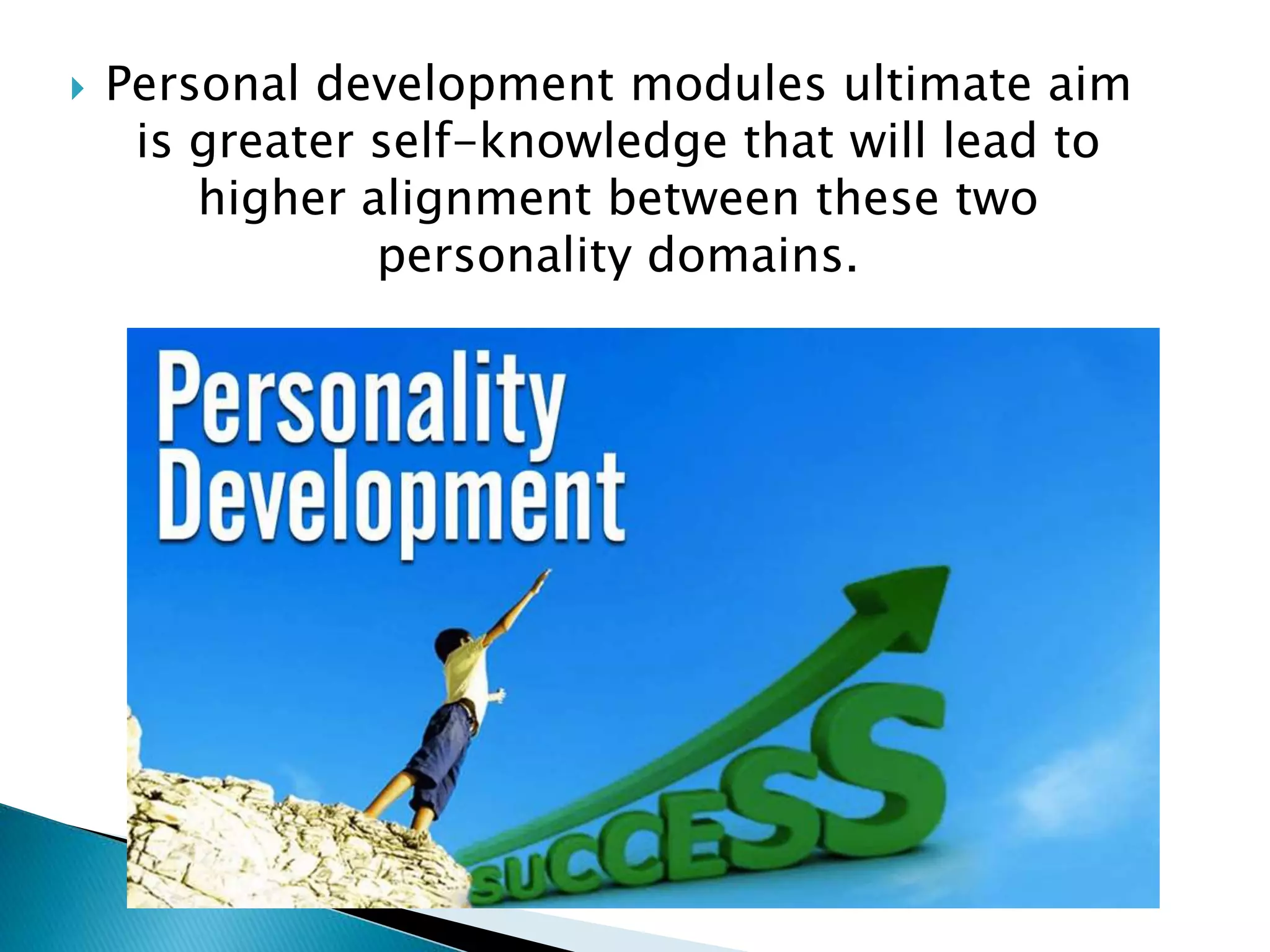
 Personal development modules ultimate aim
is greater self-knowledge that will lead to
higher alignment between these two
personality domains.
PERSONALITY DEVELOPMENT.pptx

PERSONALITY DEVELOPMENT.pptx

  • 1.
    is the relativelyenduring pattern of the thoughts, feelings, and behaviours that distinguish individuals from one another.
  • 3.
     Imagine yourselflooking into a mirror. What do you see? Do you see your ideal self or actual self?
  • 4.
     Your idealself is the self that you aspire to be. It is the one that you hope will possess characteristics similar to that of a mentor or some other worldly figure.  Your actual self, however, is the one that you actually see. It is the self that has characteristics that you were nurtured or, in some cases, born to have.
  • 6.
     The actualself and the ideal self are two broad categories of self-concept. Self concept refers to your awareness of yourself. It is the construct that negotiates these two selves. In other words, it connotes first the identification of the ideal self as separate from others, and second, it encompasses all the behaviors evaluated in the actual self that you engage in to reach the ideal self.
  • 8.
     The actualself is built on self-knowledge. Self knowledge is derived from social interactions that provide insight into how others react to you.  The actual self is who we actually are. It is how we think, how we feel, look and act. The actual self can be seen by others, but because we have no way of truly knowing how others view us, the actual self is our self-image.
  • 9.
     The idealself, on the other hand, is how we want to be. It is an idealized image that we have developed over time, based on what we have learned and experienced.  The ideal self could include components of what our parents have taught us, what we admire in others what our society promotes, and what we think is in our best interest.
  • 10.
    There is negotiationthat exists between the two selves which is complex because there are numerous exchanges between the ideal and actual self. These exchanges are exemplified in social roles that are adjusted and re-adjusted, and are derived from outcomes of social interactions from infant to adult development.
  • 11.
     Alignment isimportant. If the way that I am (the actual self) is aligned with the way that I want to be (the ideal self), then I will feel a sense of mental well-being or peace of mind.  If the way that I am is not aligned with how I want to be, the incongruence, or lack of alignment, will result in mental distress or anxiety. The greater the level of incongruence between the ideal self and real self, the greater the level of resulting distress.
  • 12.
     Personal developmentmodules ultimate aim is greater self-knowledge that will lead to higher alignment between these two personality domains.