MEDIA AND
INFORMATION
LANGUAGES
OBJECTIVES
Understands the concepts of codes,
convention, messages, audience,
producers, stakeholders
Analyzes meanings embedded in various
types of media
Language
The method of human communication, either
spoken or written, consisting of the use of words
in a structured and conventional way.
MEDIA LANGUAGES
Codes, conventions, formats, symbols, and
narrative structures that indicate the
meaning of media messages to an
audience.
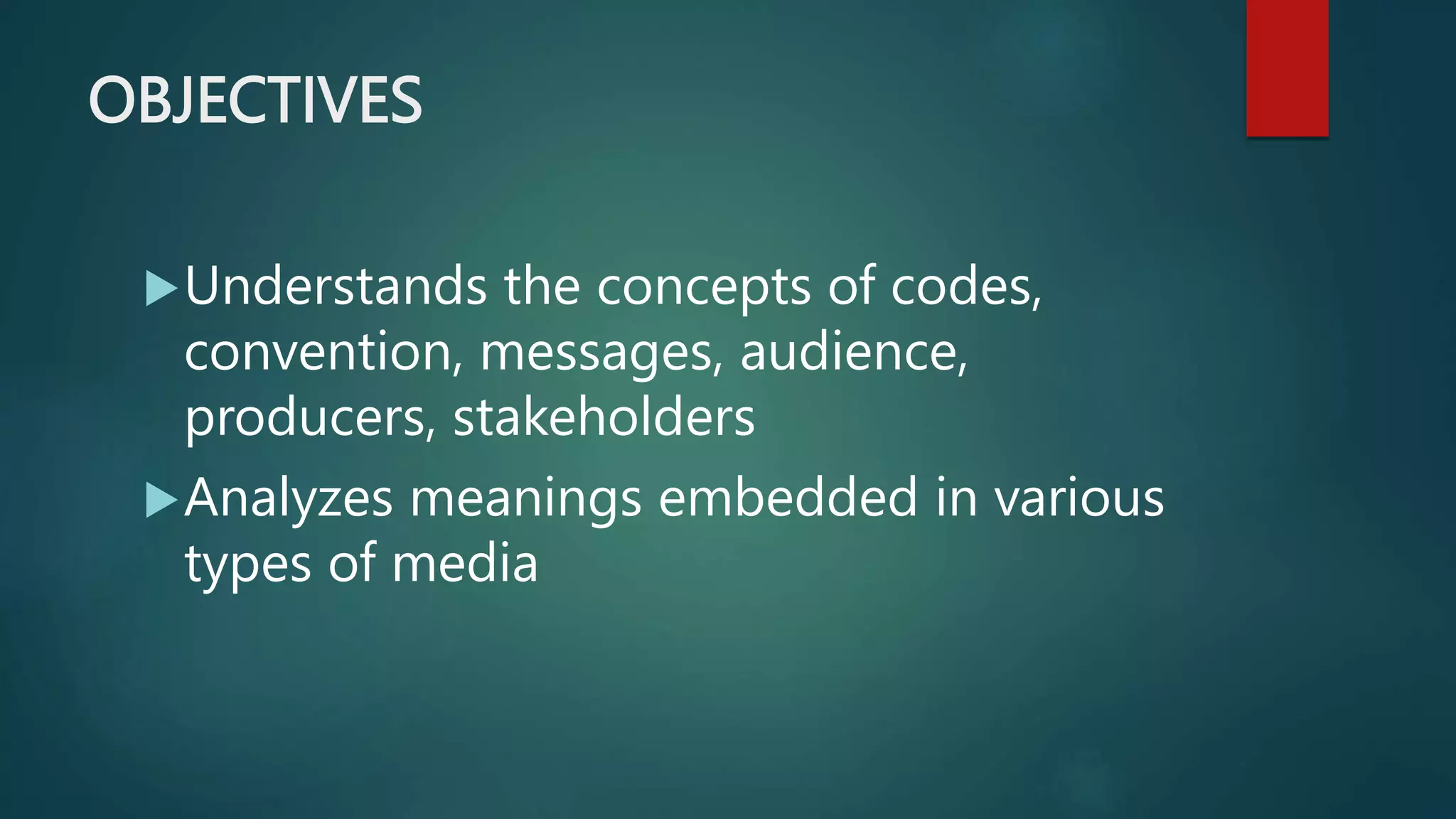
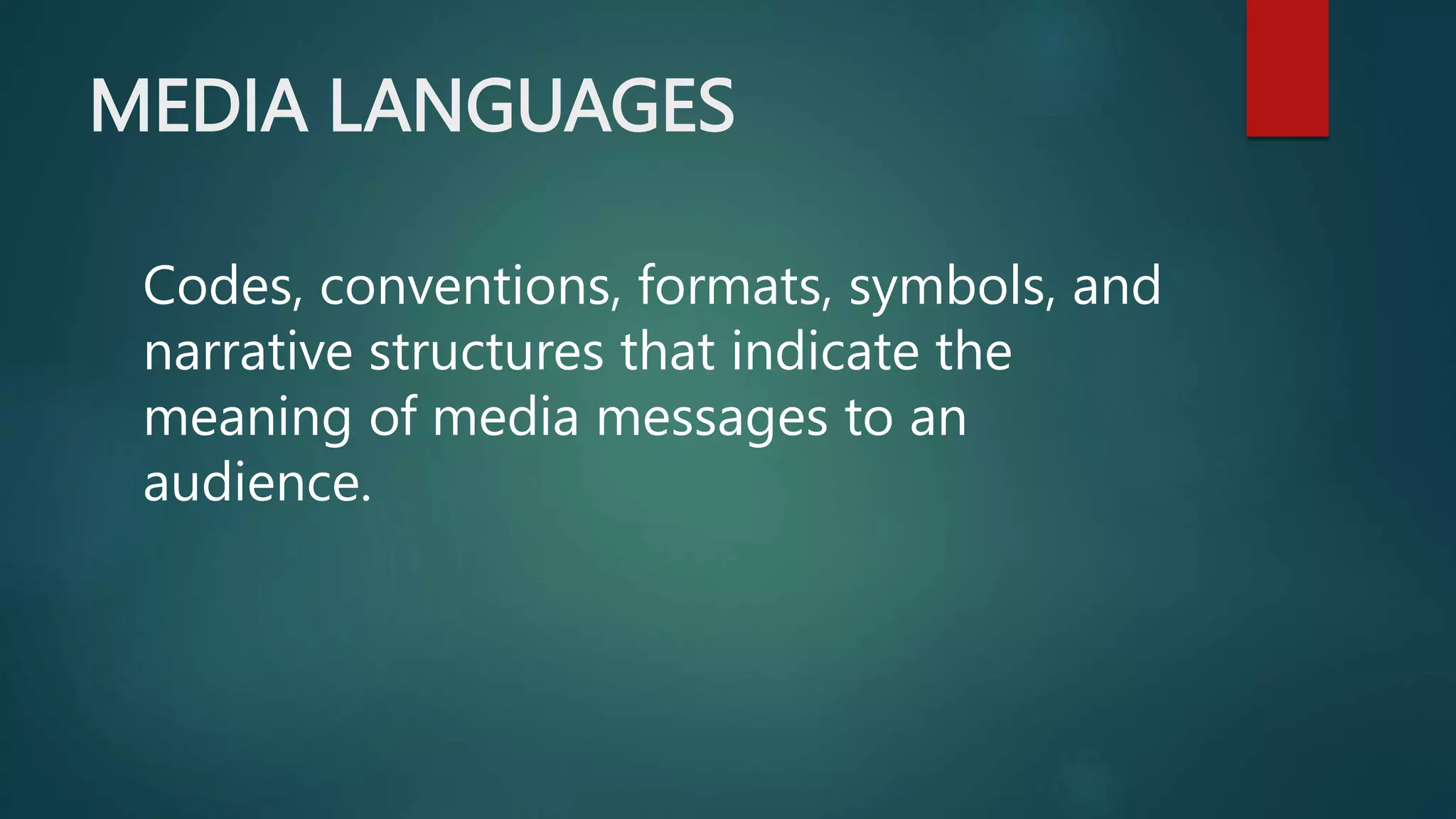
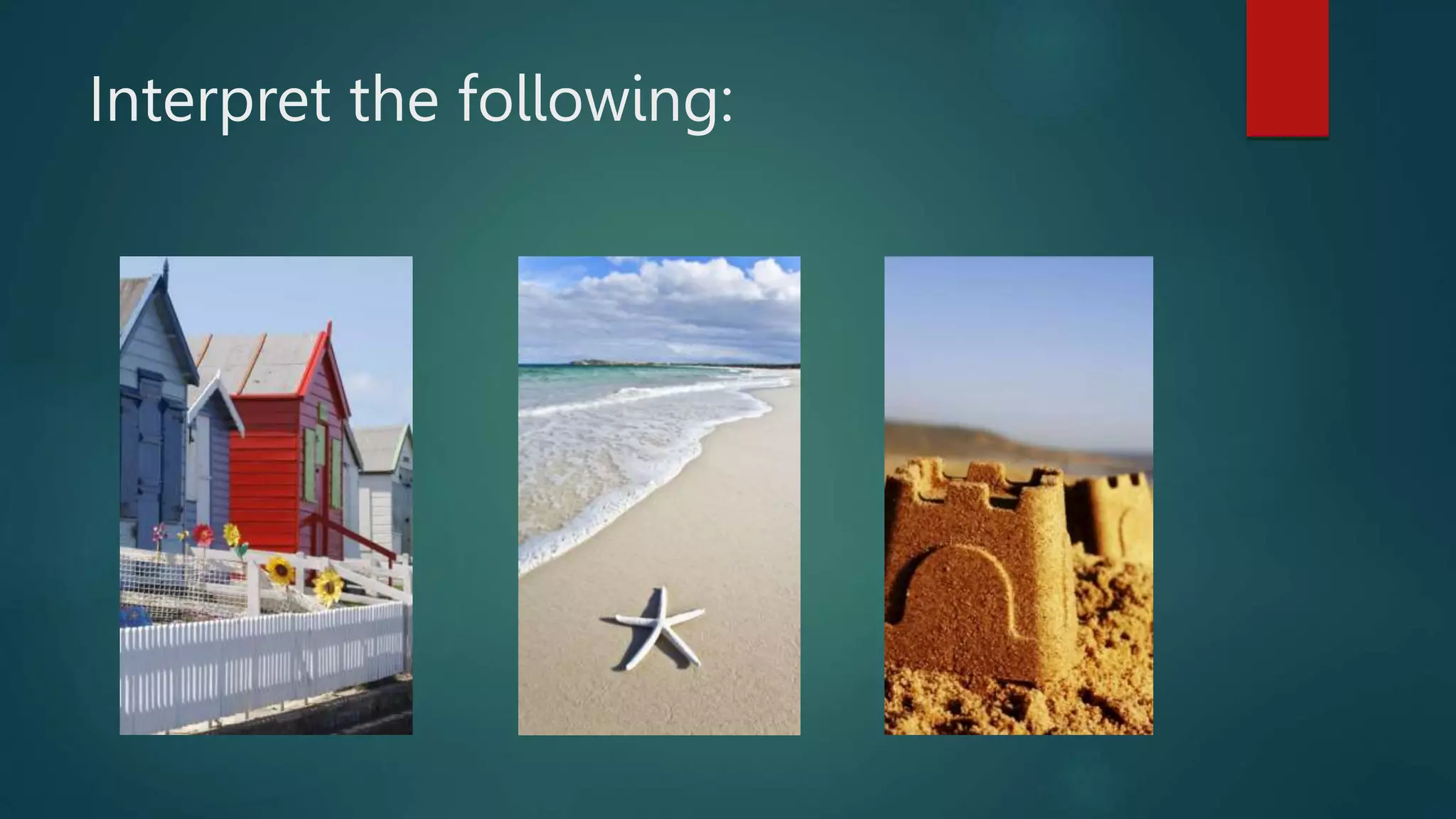
Interpret the following:
Technical codes
Include sound, camera angles, types of
shots and lighting. They may include
ominous music to communicate, danger in
a feature film, or high angle camera shots
to create a feeling of power in a
photograph.
Major-sounding scales - Brighter and
cheerier sound
Minor scales – darker and sadder sound
TYPES OF SHOT
CLOSE-UP or CLOSEUP
Use to highlight details such as eye
movement, mannerisms, and minimal yet
impactful actions.
FULL SHOT or WIDE SHOT or LONG SHOT
Shows the subject fully, from head to toe
MEDIUM SHOT or WAIST SHOT
It frames the subject from the waist up. It is
commonly used for interviews or newscasting
because it directs the viewers to the subject
EXTREME LONG SHOT
It covers a wide area including a vast amount
of its surroundings.
HIGH-ANGLE SHOT
It makes the subject look weak or
vulnerable while;
LOW-ANGLE SHOT
Empowers your subject.
CAMERA MOVEMENTS
PANNING – use to follow subject’s movements or in
establishing the setting of the scene
TILTING – similar to panning but the camera moves up
and down
DOLLY or TRACKING – is usually used for emphasis or
to show an extra movement
POINT-OF-VIEW SHOT or HANDHELD SHOT – makes
the footage more engaging because the audience takes
a character’s view
Symbolic codes
Includes the language, dress or actions of
characters, or iconic symbols that are easily
understood.
EXAMPLE: A red rose may be used symbolically
to convey romance.
COLOR SYMBOLISM
DENOTATION – literal or obvious meaning
CONNOTATION – potential or suggested
meaning
CONVENTION
In the media context, refers to a standard or
norm that acts as a rule governing behavior.
Example: color yellow in the Philippines means
democracy
MESSAGES
Are the information sent from a source to a
receiver.
AUDIENCE & PRODUCERS
AUDIENCE – the group of consumers for whom
a media message was constructed as well as
anyone else who is exposed to the message.
PRODUCERS – People engaged in the process of
creating and putting together media content to
make a media product.
MEDIA AND INFORMATION LANGUAGES.pptx

MEDIA AND INFORMATION LANGUAGES.pptx

  • 1.
  • 2.
    OBJECTIVES Understands the conceptsof codes, convention, messages, audience, producers, stakeholders Analyzes meanings embedded in various types of media
  • 3.
    Language The method ofhuman communication, either spoken or written, consisting of the use of words in a structured and conventional way.
  • 4.
    MEDIA LANGUAGES Codes, conventions,formats, symbols, and narrative structures that indicate the meaning of media messages to an audience.
  • 5.
  • 10.
    Technical codes Include sound,camera angles, types of shots and lighting. They may include ominous music to communicate, danger in a feature film, or high angle camera shots to create a feeling of power in a photograph.
  • 11.
    Major-sounding scales -Brighter and cheerier sound Minor scales – darker and sadder sound
  • 12.
    TYPES OF SHOT CLOSE-UPor CLOSEUP Use to highlight details such as eye movement, mannerisms, and minimal yet impactful actions.
  • 13.
    FULL SHOT orWIDE SHOT or LONG SHOT Shows the subject fully, from head to toe
  • 14.
    MEDIUM SHOT orWAIST SHOT It frames the subject from the waist up. It is commonly used for interviews or newscasting because it directs the viewers to the subject
  • 15.
    EXTREME LONG SHOT Itcovers a wide area including a vast amount of its surroundings.
  • 16.
    HIGH-ANGLE SHOT It makesthe subject look weak or vulnerable while; LOW-ANGLE SHOT Empowers your subject.
  • 17.
    CAMERA MOVEMENTS PANNING –use to follow subject’s movements or in establishing the setting of the scene TILTING – similar to panning but the camera moves up and down DOLLY or TRACKING – is usually used for emphasis or to show an extra movement POINT-OF-VIEW SHOT or HANDHELD SHOT – makes the footage more engaging because the audience takes a character’s view
  • 18.
    Symbolic codes Includes thelanguage, dress or actions of characters, or iconic symbols that are easily understood. EXAMPLE: A red rose may be used symbolically to convey romance.
  • 19.
    COLOR SYMBOLISM DENOTATION –literal or obvious meaning CONNOTATION – potential or suggested meaning
  • 20.
    CONVENTION In the mediacontext, refers to a standard or norm that acts as a rule governing behavior. Example: color yellow in the Philippines means democracy
  • 21.
    MESSAGES Are the informationsent from a source to a receiver.
  • 22.
    AUDIENCE & PRODUCERS AUDIENCE– the group of consumers for whom a media message was constructed as well as anyone else who is exposed to the message. PRODUCERS – People engaged in the process of creating and putting together media content to make a media product.