1 
WATER
2 
What is water? 
Water is made of tiny molecules of hydrogen and oxygen. 
Each one is so small that you can’t see it even with the most 
powerful microscope. 
Pure water has no colour, no taste and doesn’t smell of anything. 
Water exists in three forms on the Earth: 
> solid (ice, hail, snow or frost) 
> liquid (in lakes, oceans, rain, dew, fog or mist) 
> gas (steam or water vapour - "invisible" water in the air).
3 
Where can we get water? 
About 97% of the water on the Earth's surface is in the world's 
oceans. 
This is where you can find most of the other 3%: 
> Lakes 
> Rivers 
> Polar ice caps 
> Clouds 
> Rain 
> Stored in rocks (aquifers) 
> Sea ice
4 
Why do we need water? 
To carry nutrients and waste in the body. 
To lubricate joints, digestive tract and body tissues. 
To cool the body, especially during periods of physical activity. 
To be used in factories, agriculture, hospitals, hotels, etc.
5 
How much water do we need? 
Most people need about 6-8 glasses of water each day. 
Inadequate fluid intake can lead to constipation and dehydration. 
Caffeine-containing beverages (coffee, tea, colas, etc.) should not be 
drunk because caffeine actually causes you to lose water. 
More water may be needed during times of fever, or illness. 
Athletes should drink additional amounts before, during and after 
exercise.
6 
Most common reasons for increased demand 
Increase in world's population as more people live cities and big towns. 
Increase in farming because farmers start growing more crops. 
Increase in money earned because people use a lot more water in their 
homes for things like dishwashers and lawn sprinklers.
7 
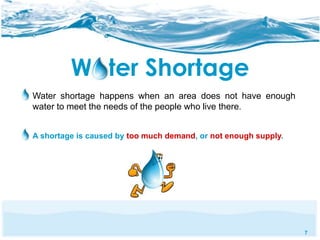
Water Shortage 
Water shortage happens when an area does not have enough 
water to meet the needs of the people who live there. 
A shortage is caused by too much demand, or not enough supply.
8 
Why should we save water? 
Of all the water in the world, only 3% is fresh. 
Less than one third of 1% of this fresh water is available for human 
use. 
The rest is frozen in glaciers or polar ice caps, or is deep within the 
earth, beyond our reach. 
To put it another way, if 100 liters represents the world's water, 
about half a tablespoon of it is fresh water available for our use.
9 
Saving water in…
10 
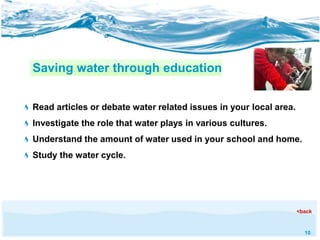
Saving water through education 
Read articles or debate water related issues in your local area. 
Investigate the role that water plays in various cultures. 
Understand the amount of water used in your school and home. 
Study the water cycle. 
<back
11 
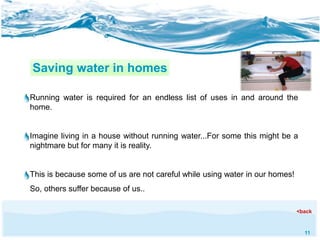
Saving water in homes 
Running water is required for an endless list of uses in and around the 
home. 
Imagine living in a house without running water...For some this might be a 
nightmare but for many it is reality. 
This is because some of us are not careful while using water in our homes! 
So, others suffer because of us.. 
<back
12 
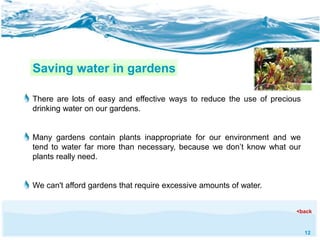
Saving water in gardens 
There are lots of easy and effective ways to reduce the use of precious 
drinking water on our gardens. 
Many gardens contain plants inappropriate for our environment and we 
tend to water far more than necessary, because we don’t know what our 
plants really need. 
We can't afford gardens that require excessive amounts of water. 
<back
13 
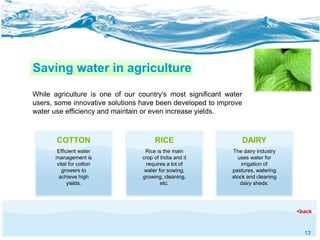
Saving water in agriculture 
While agriculture is one of our country's most significant water 
users, some innovative solutions have been developed to improve 
water use efficiency and maintain or even increase yields. 
COTTON 
Efficient water 
management is 
vital for cotton 
growers to 
achieve high 
yields. 
RICE 
Rice is the main 
crop of India and it 
requires a lot of 
water for sowing, 
growing, cleaning, 
etc. 
DAIRY 
The dairy industry 
uses water for 
irrigation of 
pastures, watering 
stock and cleaning 
dairy sheds. 
<back
14 
Water saving tips
15 
tips to save water 
A dripping tap could waste as much as 90 liters a week. 
Brushing your teeth with the tap running wastes almost 9 liters a minute. 
Rinse out from a tumbler instead. 
Cool water kept in the fridge means you won't have to run the tap for 
ages to get a cold drink. 
Don't use your washing machine until you've got a full load. A full load 
uses less water than 2 half loads.
16 
tips to save water 
Every time you boil an egg save the cooled water for your houseplants. 
They'll benefit from the nutrients released from the shell. 
Sprinklers can be wasteful. A sprinkler can use as much water in an 
hour as a family of four will use in a day! 
Trigger nozzles can save water by using it only when needed.
17 
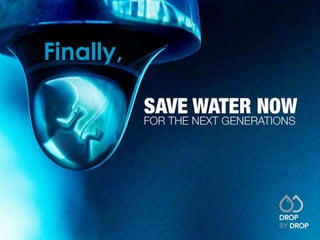
Finally,
18 
THANK YOU 
BY-A. 
PRADEEP 
(11B71A0244)

Water PPT

  • 1.
  • 2.
    2 What iswater? Water is made of tiny molecules of hydrogen and oxygen. Each one is so small that you can’t see it even with the most powerful microscope. Pure water has no colour, no taste and doesn’t smell of anything. Water exists in three forms on the Earth: > solid (ice, hail, snow or frost) > liquid (in lakes, oceans, rain, dew, fog or mist) > gas (steam or water vapour - "invisible" water in the air).
  • 3.
    3 Where canwe get water? About 97% of the water on the Earth's surface is in the world's oceans. This is where you can find most of the other 3%: > Lakes > Rivers > Polar ice caps > Clouds > Rain > Stored in rocks (aquifers) > Sea ice
  • 4.
    4 Why dowe need water? To carry nutrients and waste in the body. To lubricate joints, digestive tract and body tissues. To cool the body, especially during periods of physical activity. To be used in factories, agriculture, hospitals, hotels, etc.
  • 5.
    5 How muchwater do we need? Most people need about 6-8 glasses of water each day. Inadequate fluid intake can lead to constipation and dehydration. Caffeine-containing beverages (coffee, tea, colas, etc.) should not be drunk because caffeine actually causes you to lose water. More water may be needed during times of fever, or illness. Athletes should drink additional amounts before, during and after exercise.
  • 6.
    6 Most commonreasons for increased demand Increase in world's population as more people live cities and big towns. Increase in farming because farmers start growing more crops. Increase in money earned because people use a lot more water in their homes for things like dishwashers and lawn sprinklers.
  • 7.
    7 Water Shortage Water shortage happens when an area does not have enough water to meet the needs of the people who live there. A shortage is caused by too much demand, or not enough supply.
  • 8.
    8 Why shouldwe save water? Of all the water in the world, only 3% is fresh. Less than one third of 1% of this fresh water is available for human use. The rest is frozen in glaciers or polar ice caps, or is deep within the earth, beyond our reach. To put it another way, if 100 liters represents the world's water, about half a tablespoon of it is fresh water available for our use.
  • 9.
  • 10.
    10 Saving waterthrough education Read articles or debate water related issues in your local area. Investigate the role that water plays in various cultures. Understand the amount of water used in your school and home. Study the water cycle. <back
  • 11.
    11 Saving waterin homes Running water is required for an endless list of uses in and around the home. Imagine living in a house without running water...For some this might be a nightmare but for many it is reality. This is because some of us are not careful while using water in our homes! So, others suffer because of us.. <back
  • 12.
    12 Saving waterin gardens There are lots of easy and effective ways to reduce the use of precious drinking water on our gardens. Many gardens contain plants inappropriate for our environment and we tend to water far more than necessary, because we don’t know what our plants really need. We can't afford gardens that require excessive amounts of water. <back
  • 13.
    13 Saving waterin agriculture While agriculture is one of our country's most significant water users, some innovative solutions have been developed to improve water use efficiency and maintain or even increase yields. COTTON Efficient water management is vital for cotton growers to achieve high yields. RICE Rice is the main crop of India and it requires a lot of water for sowing, growing, cleaning, etc. DAIRY The dairy industry uses water for irrigation of pastures, watering stock and cleaning dairy sheds. <back
  • 14.
  • 15.
    15 tips tosave water A dripping tap could waste as much as 90 liters a week. Brushing your teeth with the tap running wastes almost 9 liters a minute. Rinse out from a tumbler instead. Cool water kept in the fridge means you won't have to run the tap for ages to get a cold drink. Don't use your washing machine until you've got a full load. A full load uses less water than 2 half loads.
  • 16.
    16 tips tosave water Every time you boil an egg save the cooled water for your houseplants. They'll benefit from the nutrients released from the shell. Sprinklers can be wasteful. A sprinkler can use as much water in an hour as a family of four will use in a day! Trigger nozzles can save water by using it only when needed.
  • 17.
  • 18.
    18 THANK YOU BY-A. PRADEEP (11B71A0244)