JEET BHADANIA
prepared by
5
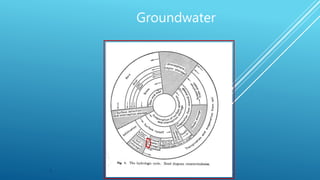
Groundwater
Source: Wisler & Brater, 1949, Hydrology
6
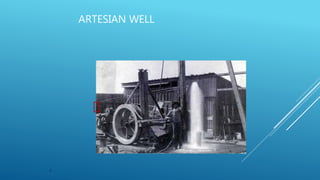
ARTESIAN WELL
7
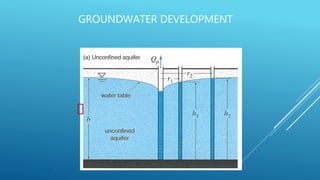
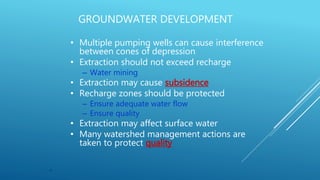
GROUNDWATER DEVELOPMENT
8
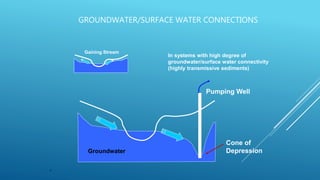
GROUNDWATER/SURFACE WATER CONNECTIONS
Gaining Stream
Cone of
Depression
Pumping Well
Groundwater
In systems with high degree of
groundwater/surface water connectivity
(highly transmissive sediments)
9
GROUNDWATER DEVELOPMENT
• Multiple pumping wells can cause interference
between cones of depression
• Extraction should not exceed recharge
– Water mining
• Extraction may cause subsidence
• Recharge zones should be protected
– Ensure adequate water flow
– Ensure quality
• Extraction may affect surface water
• Many watershed management actions are
taken to protect quality
10
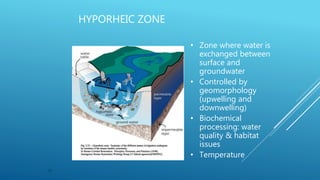
HYPORHEIC ZONE
• Zone where water is
exchanged between
surface and
groundwater
• Controlled by
geomorphology
(upwelling and
downwelling)
• Biochemical
processing: water
quality & habitat
issues
• Temperature
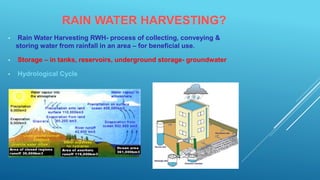
RAIN WATER HARVESTING?
• Rain Water Harvesting RWH- process of collecting, conveying &
storing water from rainfall in an area – for beneficial use.
• Storage – in tanks, reservoirs, underground storage- groundwater
• Hydrological Cycle
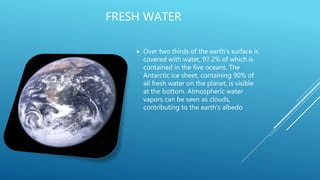
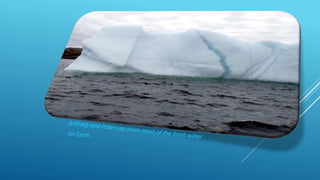
FRESH WATER
 Over two thirds of the earth's surface is
covered with water, 97.2% of which is
contained in the five oceans. The
Antarctic ice sheet, containing 90% of
all fresh water on the planet, is visible
at the bottom. Atmospheric water
vapors can be seen as clouds,
contributing to the earth's albedo
,
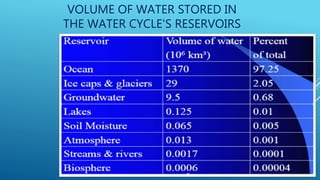
VOLUME OF WATER STORED IN
THE WATER CYCLE'S RESERVOIRS
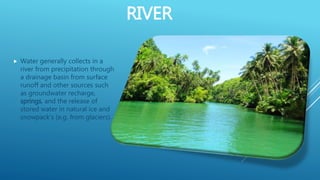
RIVER
 Water generally collects in a
river from precipitation through
a drainage basin from surface
runoff and other sources such
as groundwater recharge,
springs, and the release of
stored water in natural ice and
snowpack's (e.g. from glaciers).
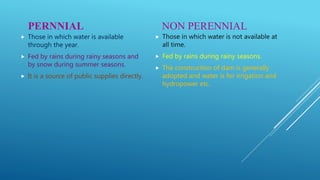
PERNNIAL
 Those in which water is available
through the year.
 Fed by rains during rainy seasons and
by snow during summer seasons.
 It is a source of public supplies directly.
NON PERENNIAL
 Those in which water is not available at
all time.
 Fed by rains during rainy seasons.
 The construction of dam is generally
adopted and water is for irrigation and
hydropower etc.
PROBLEM RELATED WITH OVERUSE OF
SURFACE WATER
I. Decrease in flow of water in stream and rivers.
II. Wet land surface reduction.
III. Water logging.
IV. Migration of people.
ANY QUESTION???????
Thank you

Water Resource

  • 1.
  • 5.
    5 Groundwater Source: Wisler &Brater, 1949, Hydrology
  • 6.
  • 7.
  • 8.
    8 GROUNDWATER/SURFACE WATER CONNECTIONS GainingStream Cone of Depression Pumping Well Groundwater In systems with high degree of groundwater/surface water connectivity (highly transmissive sediments)
  • 9.
    9 GROUNDWATER DEVELOPMENT • Multiplepumping wells can cause interference between cones of depression • Extraction should not exceed recharge – Water mining • Extraction may cause subsidence • Recharge zones should be protected – Ensure adequate water flow – Ensure quality • Extraction may affect surface water • Many watershed management actions are taken to protect quality
  • 10.
    10 HYPORHEIC ZONE • Zonewhere water is exchanged between surface and groundwater • Controlled by geomorphology (upwelling and downwelling) • Biochemical processing: water quality & habitat issues • Temperature
  • 11.
    RAIN WATER HARVESTING? •Rain Water Harvesting RWH- process of collecting, conveying & storing water from rainfall in an area – for beneficial use. • Storage – in tanks, reservoirs, underground storage- groundwater • Hydrological Cycle
  • 12.
    FRESH WATER  Overtwo thirds of the earth's surface is covered with water, 97.2% of which is contained in the five oceans. The Antarctic ice sheet, containing 90% of all fresh water on the planet, is visible at the bottom. Atmospheric water vapors can be seen as clouds, contributing to the earth's albedo
  • 13.
  • 15.
    VOLUME OF WATERSTORED IN THE WATER CYCLE'S RESERVOIRS
  • 16.
    RIVER  Water generallycollects in a river from precipitation through a drainage basin from surface runoff and other sources such as groundwater recharge, springs, and the release of stored water in natural ice and snowpack's (e.g. from glaciers).
  • 17.
    PERNNIAL  Those inwhich water is available through the year.  Fed by rains during rainy seasons and by snow during summer seasons.  It is a source of public supplies directly. NON PERENNIAL  Those in which water is not available at all time.  Fed by rains during rainy seasons.  The construction of dam is generally adopted and water is for irrigation and hydropower etc.
  • 18.
    PROBLEM RELATED WITHOVERUSE OF SURFACE WATER I. Decrease in flow of water in stream and rivers. II. Wet land surface reduction. III. Water logging. IV. Migration of people.
  • 20.