Water Environmental Science Spring 2010
Water Resources Two kinds of water found on Earth: Fresh water, the water that people can drink, contains little salt. Salt water, the water in oceans, contains a higher concentration of dissolved salts.  Most human uses for water, such as drinking and agriculture, require fresh water.
Global Water Distribution Only a small percentage of the water on Earth is liquid fresh water that humans can use. The fresh water we use comes mainly from lakes and rivers and from a relatively narrow zone beneath the Earth ’ s surface.
Name a conflict people have had over water.
Water Use and Management When a water supply is polluted or overused, everyone living downstream can be affected. A shortage of clean, fresh water is one of the world ’ s most pressing environmental problems. According to the World Health Organization, more than 1 billion people lack access to a clean, reliable source of fresh water.
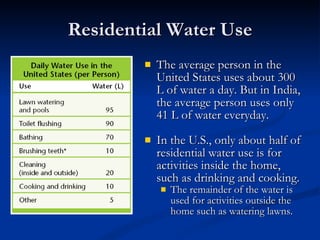
Residential Water Use The average person in the United States uses about 300 L of water a day. But in India, the average person uses only 41 L of water everyday. In the U.S., only about half of residential water use is for activities inside the home, such as drinking and cooking.  The remainder of the water is used for activities outside the home such as watering lawns.
What are the top 2 ways your family uses water in your home?
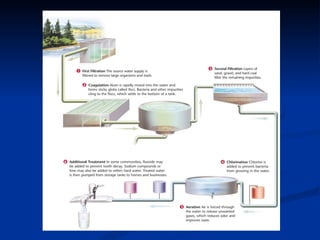
Water Treatment Most water must first be made potable. Potable  means suitable for drinking. Water treatment removes elements such as mercury, arsenic, and lead, which are poisonous to humans even in low concentrations. These elements are found in polluted water, but they can also occur naturally in groundwater.
A  pathogen  is a virus, microorganism, or other substance that causes disease. Pathogens are found in water contaminated by sewage or animal feces, but can be removed with water treatment. There are several methods of treating water to make it potable. A common method includes both physical and chemical treatment.
 
What kind of diseases are caused by water born pathogens?
Agricultural Uses Agriculture accounts for 67 percent of the water used in the world. Irrigation  is a method of providing plants with water from sources other than direct precipitation. In the U.S., high-pressured overhead sprinklers are the most common form of irrigation. However, this method is inefficient because nearly half the water evaporates and never reaches the plant roots.
Industrial Uses Most of the water that is used in industry is used to cool power plants. The water that is returned is usually warmer than the source, but is generally clean and can be used again
What industries do you think use large amounts of water?
Water Management Projects People often prefer to live in areas where the natural distribution of surface water is inadequate. Water management projects can have various goals, such as brining in water to make a dry area habitable, creating a reservoir for drinking water, or generating electric power, which then allows people to live and grow crops in desert areas.
Dams and Reservoirs A  dam   is a structure that is built across a river to control a river’s flow. A  reservoir   is an artificial body of water that usually forms behind a dam. Water from a reservoir can be used for flood control, drinking water, irrigation, recreation, and industry.
Name a water management projects in Georgia?

Water

  • 1.
  • 2.
    Water Resources Twokinds of water found on Earth: Fresh water, the water that people can drink, contains little salt. Salt water, the water in oceans, contains a higher concentration of dissolved salts. Most human uses for water, such as drinking and agriculture, require fresh water.
  • 3.
    Global Water DistributionOnly a small percentage of the water on Earth is liquid fresh water that humans can use. The fresh water we use comes mainly from lakes and rivers and from a relatively narrow zone beneath the Earth ’ s surface.
  • 4.
    Name a conflictpeople have had over water.
  • 5.
    Water Use andManagement When a water supply is polluted or overused, everyone living downstream can be affected. A shortage of clean, fresh water is one of the world ’ s most pressing environmental problems. According to the World Health Organization, more than 1 billion people lack access to a clean, reliable source of fresh water.
  • 6.
    Residential Water UseThe average person in the United States uses about 300 L of water a day. But in India, the average person uses only 41 L of water everyday. In the U.S., only about half of residential water use is for activities inside the home, such as drinking and cooking. The remainder of the water is used for activities outside the home such as watering lawns.
  • 7.
    What are thetop 2 ways your family uses water in your home?
  • 8.
    Water Treatment Mostwater must first be made potable. Potable means suitable for drinking. Water treatment removes elements such as mercury, arsenic, and lead, which are poisonous to humans even in low concentrations. These elements are found in polluted water, but they can also occur naturally in groundwater.
  • 9.
    A pathogen is a virus, microorganism, or other substance that causes disease. Pathogens are found in water contaminated by sewage or animal feces, but can be removed with water treatment. There are several methods of treating water to make it potable. A common method includes both physical and chemical treatment.
  • 10.
  • 11.
    What kind ofdiseases are caused by water born pathogens?
  • 12.
    Agricultural Uses Agricultureaccounts for 67 percent of the water used in the world. Irrigation is a method of providing plants with water from sources other than direct precipitation. In the U.S., high-pressured overhead sprinklers are the most common form of irrigation. However, this method is inefficient because nearly half the water evaporates and never reaches the plant roots.
  • 13.
    Industrial Uses Mostof the water that is used in industry is used to cool power plants. The water that is returned is usually warmer than the source, but is generally clean and can be used again
  • 14.
    What industries doyou think use large amounts of water?
  • 15.
    Water Management ProjectsPeople often prefer to live in areas where the natural distribution of surface water is inadequate. Water management projects can have various goals, such as brining in water to make a dry area habitable, creating a reservoir for drinking water, or generating electric power, which then allows people to live and grow crops in desert areas.
  • 16.
    Dams and ReservoirsA dam is a structure that is built across a river to control a river’s flow. A reservoir is an artificial body of water that usually forms behind a dam. Water from a reservoir can be used for flood control, drinking water, irrigation, recreation, and industry.
  • 17.
    Name a watermanagement projects in Georgia?