

Water is a common substance that is essential to all
known forms of life. Water covers 70 percent of the
planet’s surface. On the planet Earth water is mostly
found in oceans and large bodies of
water. 1.6percent of the earth’s water is found
underground in aquifers. A tiny percentage of the
world’s water is found in the bodies of plants and
animals and in manufactured goods.







Water recycling decreases the extraction of water form sources that may
be dwindling and may stop being viable as habitats for valuable and
endangered wildlife.
Recycling wastewater can decrease the discharge of effluents that may
damage and pollute the ecosystems of the sensitive bodies of water.
Recycled water can be used to create new wetlands or to enhance and
improve the quality of existing ones.
Water recycling can reduce and prevent pollution by leaving damaging
pollutants at the treatment plant.
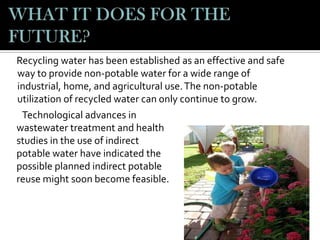
Recycling water has been established as an effective and safe
way to provide non-potable water for a wide range of
industrial, home, and agricultural use. The non-potable
utilization of recycled water can only continue to grow.
Technological advances in
wastewater treatment and health
studies in the use of indirect
potable water have indicated the
possible planned indirect potable
reuse might soon become feasible.

Bio

  • 3.
     Water is acommon substance that is essential to all known forms of life. Water covers 70 percent of the planet’s surface. On the planet Earth water is mostly found in oceans and large bodies of water. 1.6percent of the earth’s water is found underground in aquifers. A tiny percentage of the world’s water is found in the bodies of plants and animals and in manufactured goods.
  • 4.
        Water recycling decreasesthe extraction of water form sources that may be dwindling and may stop being viable as habitats for valuable and endangered wildlife. Recycling wastewater can decrease the discharge of effluents that may damage and pollute the ecosystems of the sensitive bodies of water. Recycled water can be used to create new wetlands or to enhance and improve the quality of existing ones. Water recycling can reduce and prevent pollution by leaving damaging pollutants at the treatment plant.
  • 5.
    Recycling water hasbeen established as an effective and safe way to provide non-potable water for a wide range of industrial, home, and agricultural use. The non-potable utilization of recycled water can only continue to grow. Technological advances in wastewater treatment and health studies in the use of indirect potable water have indicated the possible planned indirect potable reuse might soon become feasible.