Materials Storage
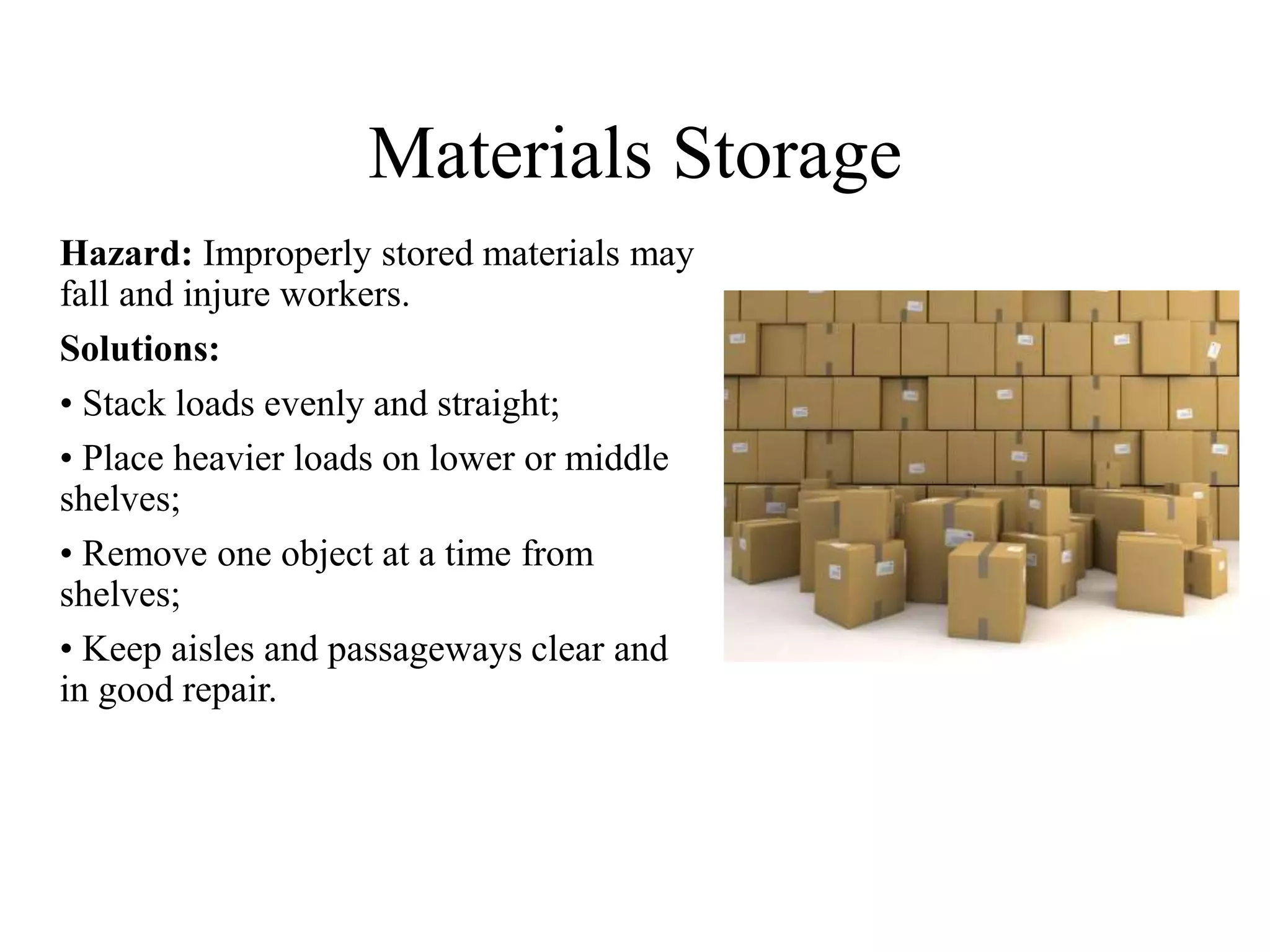
Hazard: Improperly stored materials may
fall and injure workers.
Solutions:
• Stack loads evenly and straight;
• Place heavier loads on lower or middle
shelves;
• Remove one object at a time from
shelves;
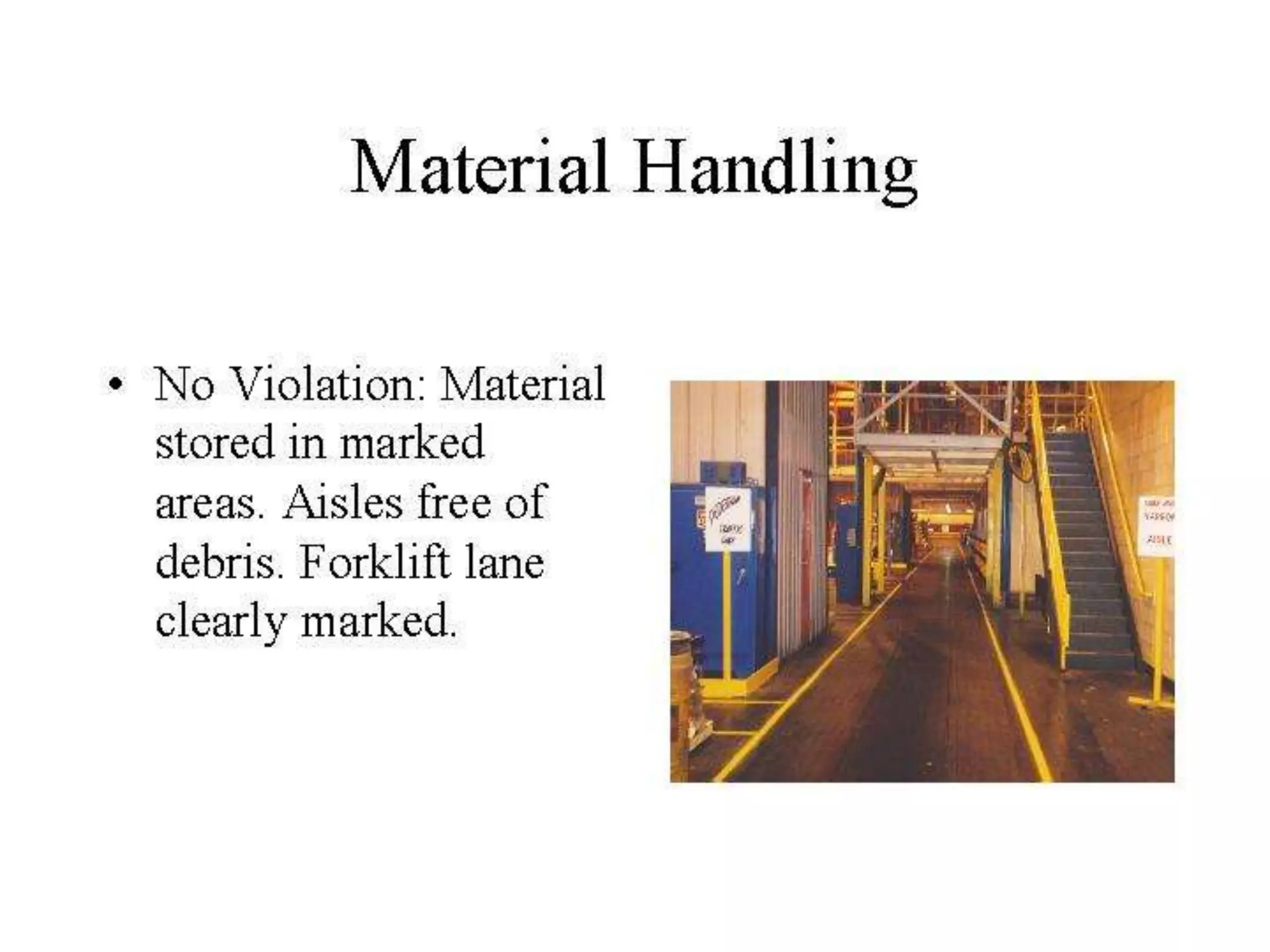
• Keep aisles and passageways clear and
in good repair.
Material Handling
General
• All materials stored
in tiers shall be
stacked, racked,
blocked, interlocked,
or otherwise secured
to prevent sliding,
falling or collapse
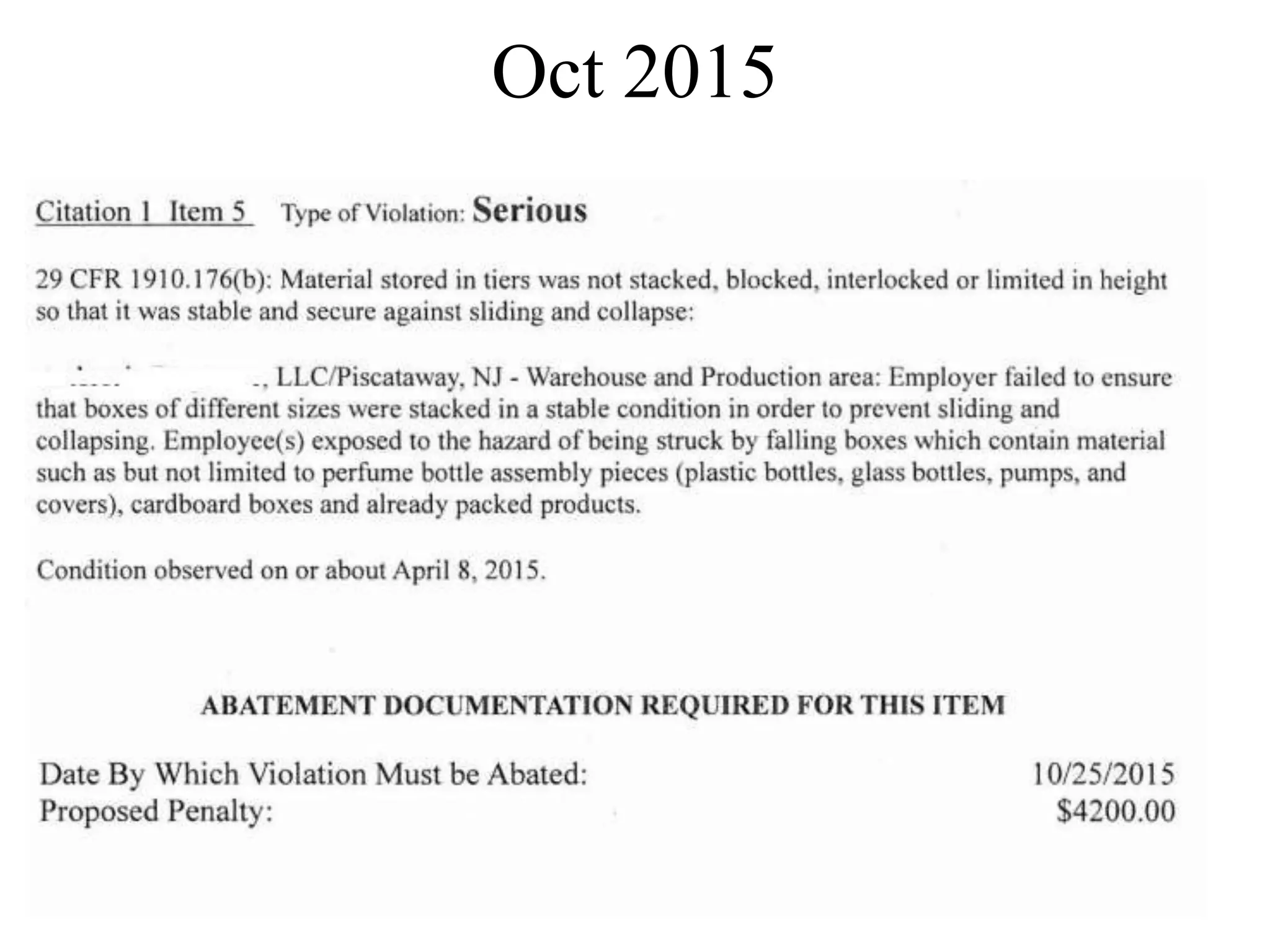
Oct 2015
Storage
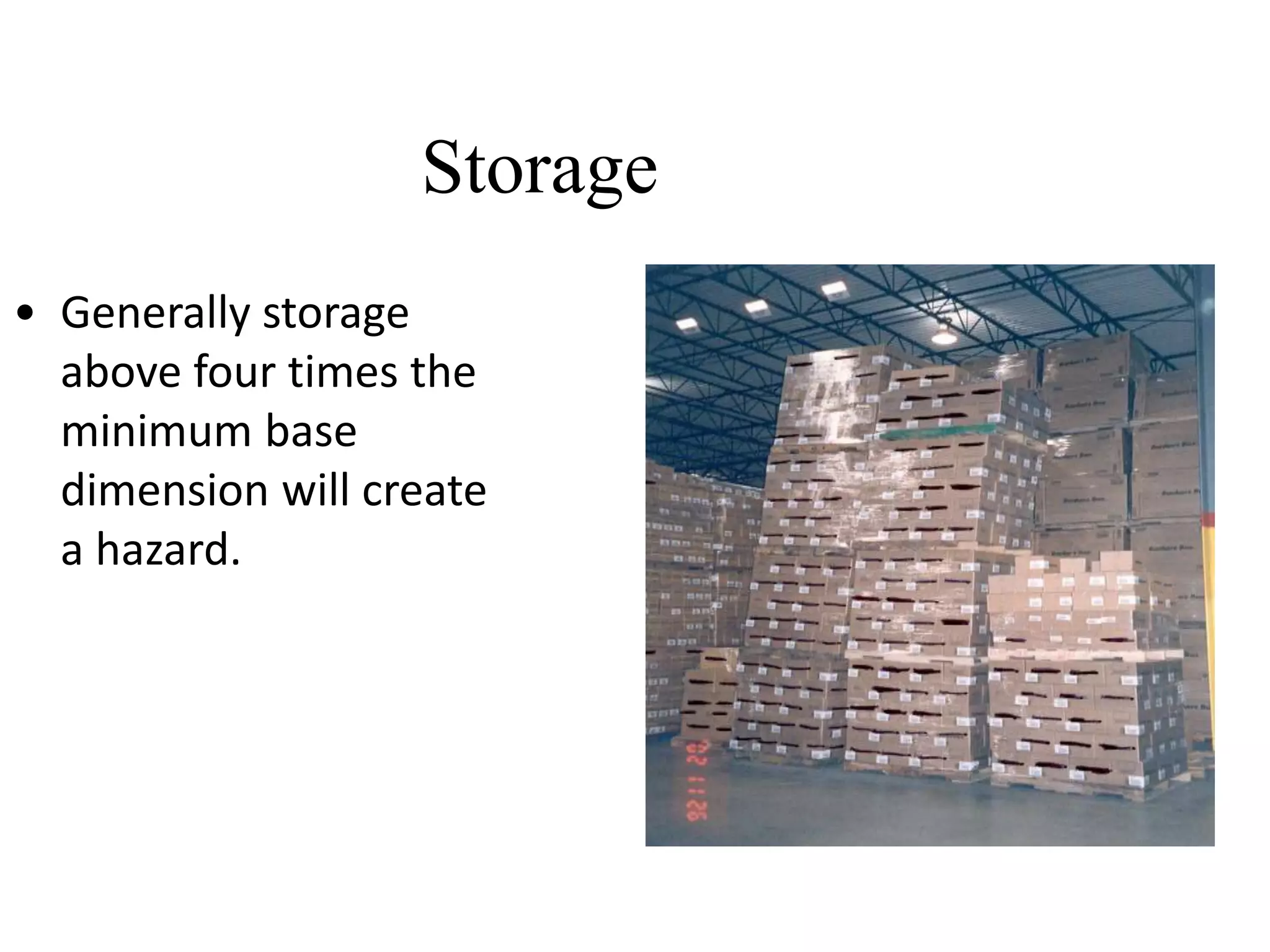
• Generally storage
above four times the
minimum base
dimension will create
a hazard.
Feb 2016
Material
Storage
The material itself,
whether in bags,
containers, bundles or
loose, must also be
stored in a manner
that prevents sliding or
collapse while it is in
the storage rack.
Material
Storage
• These materials frequently
slide or collapse due to several
factors:
• damaged pallets
• torn cardboard or fiber
packaging
• damage to shrink wrapping
• failure to properly place the
materials within the storage
rack by the forklift operator
• pushing material by the forklift
operator too far within the
rack and out of the storage
rack position into the adjoining
aisleway
Material
Storage
• In order to prevent
these occurrences,
the employer must
develop procedures
to inspect materials
being placed into the
storage racks to
ensure that they are
secure within their
packaging and
supported by an
undamaged pallet
April 2015
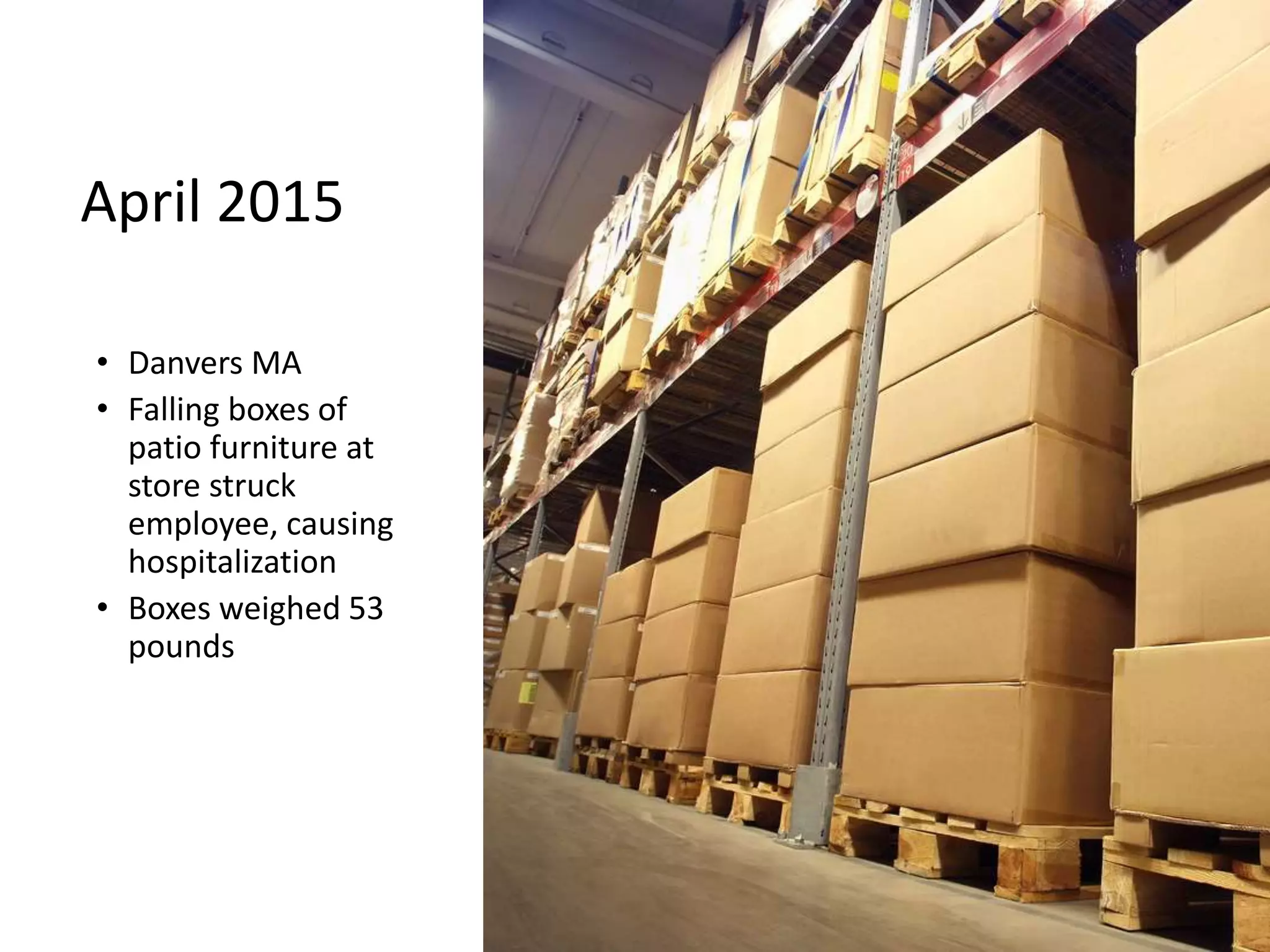
• Danvers MA
• Falling boxes of
patio furniture at
store struck
employee, causing
hospitalization
• Boxes weighed 53
pounds
April 2015
Material
Handling
• Rack was hit by
forklift and tagged
out and pallets
removed.
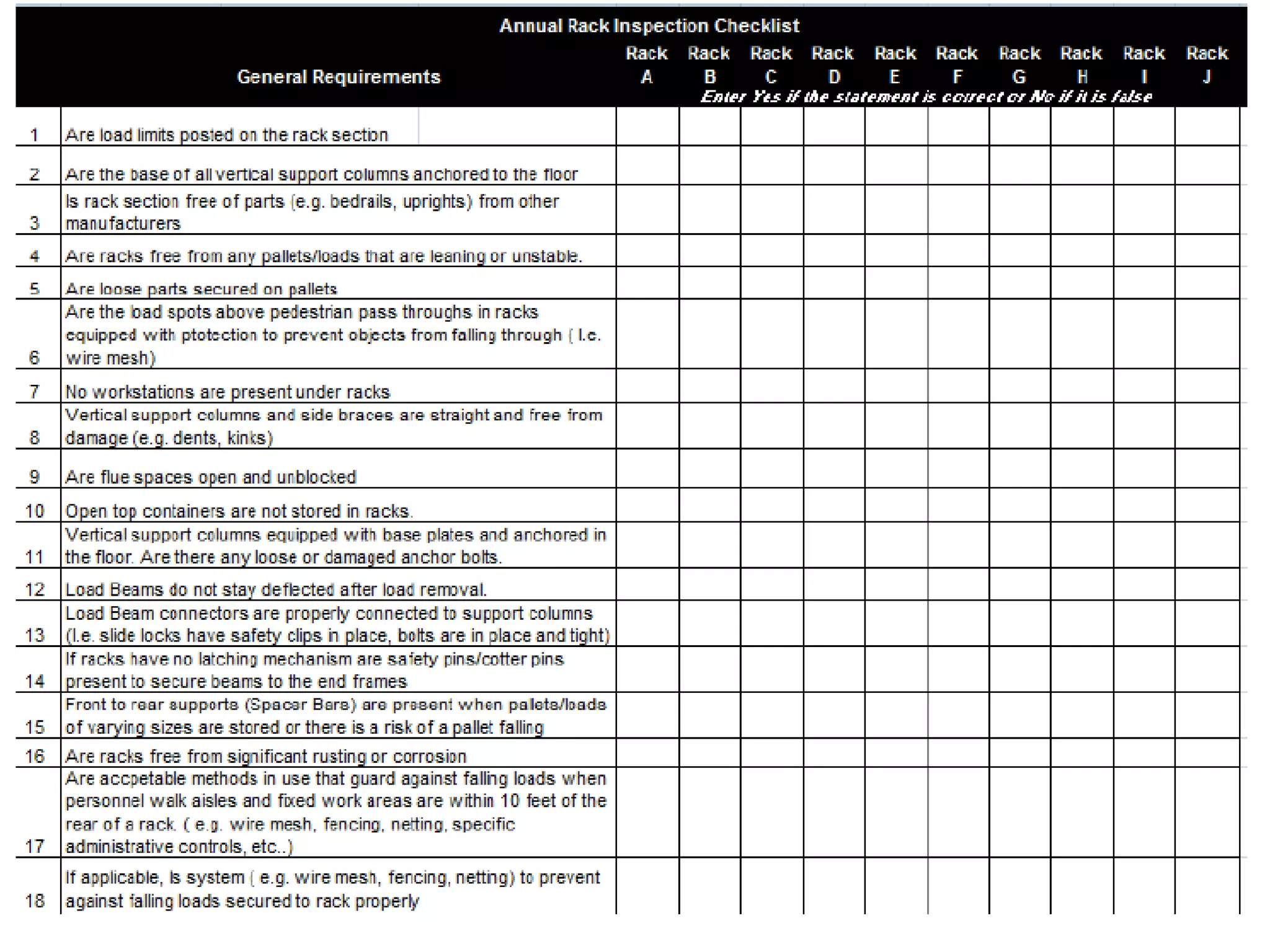
Rack Inspections
Oct 2015
Storage
Oct 2015
Rack
Failures
• Collisions
• Overloading
• Lack of planning /
Improper design
• Improper Rack
modification /
repairs
• Mixed components
from different
manufacturers
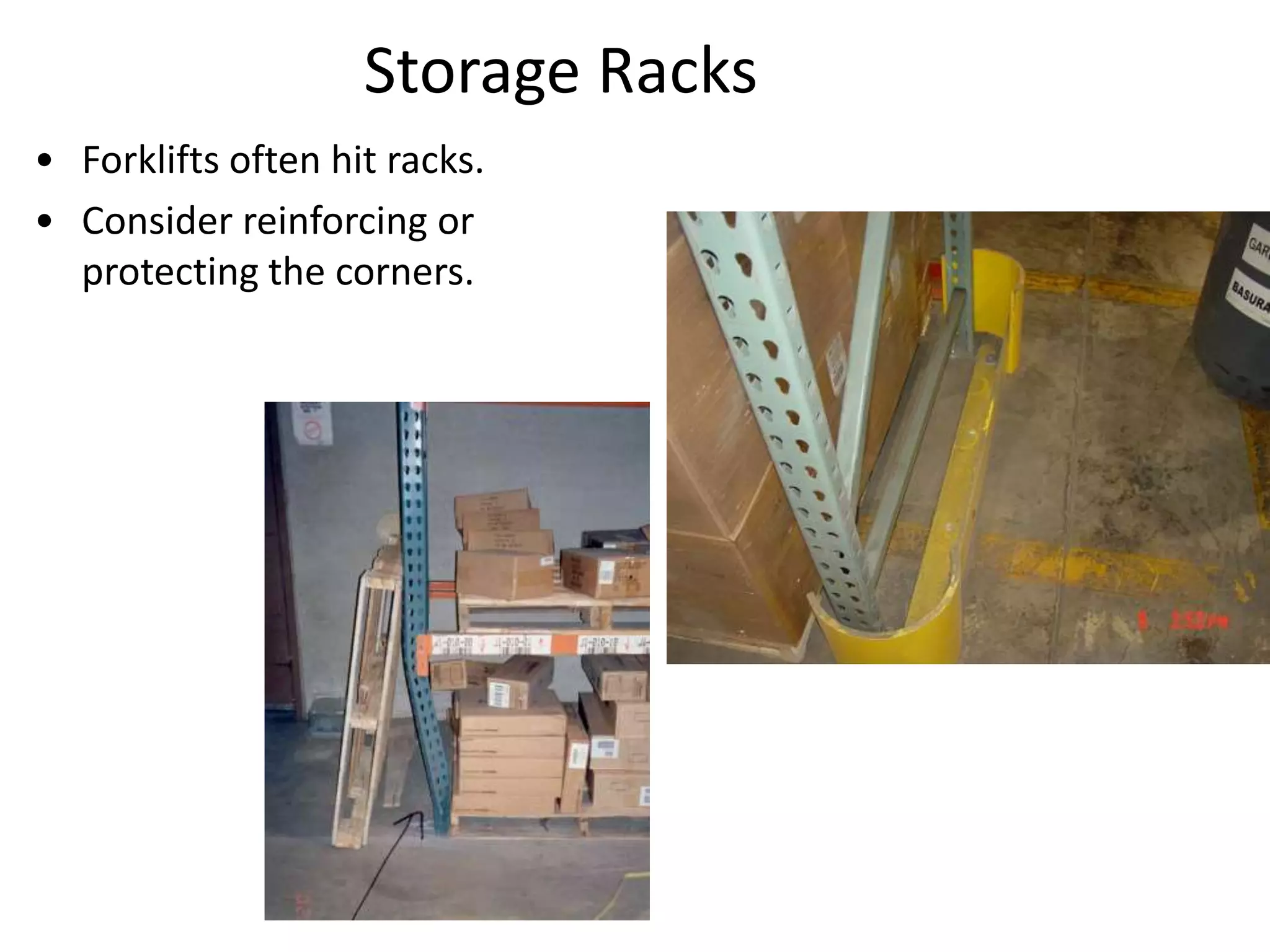
Storage Racks
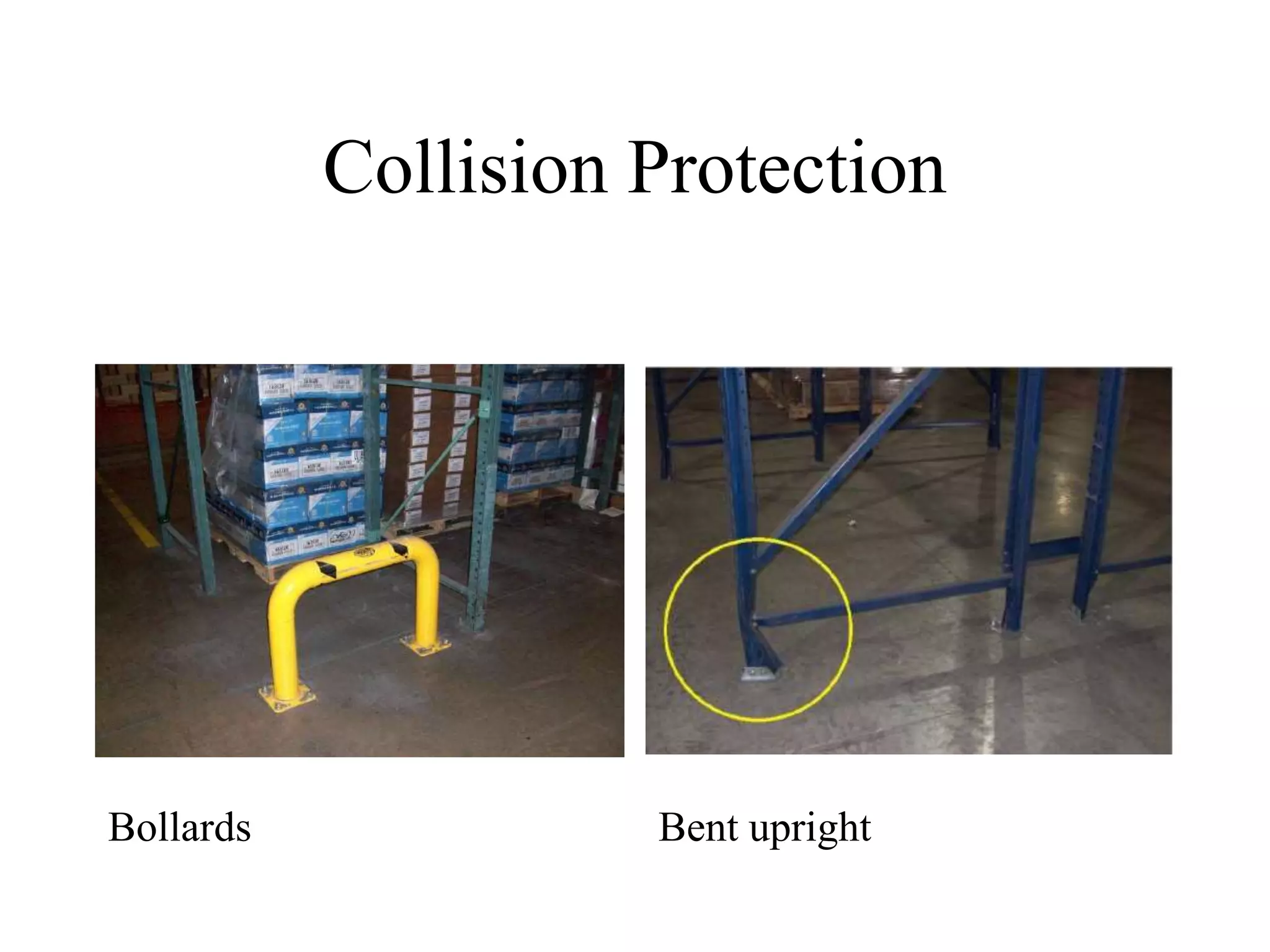
• Forklifts often hit racks.
• Consider reinforcing or
protecting the corners.
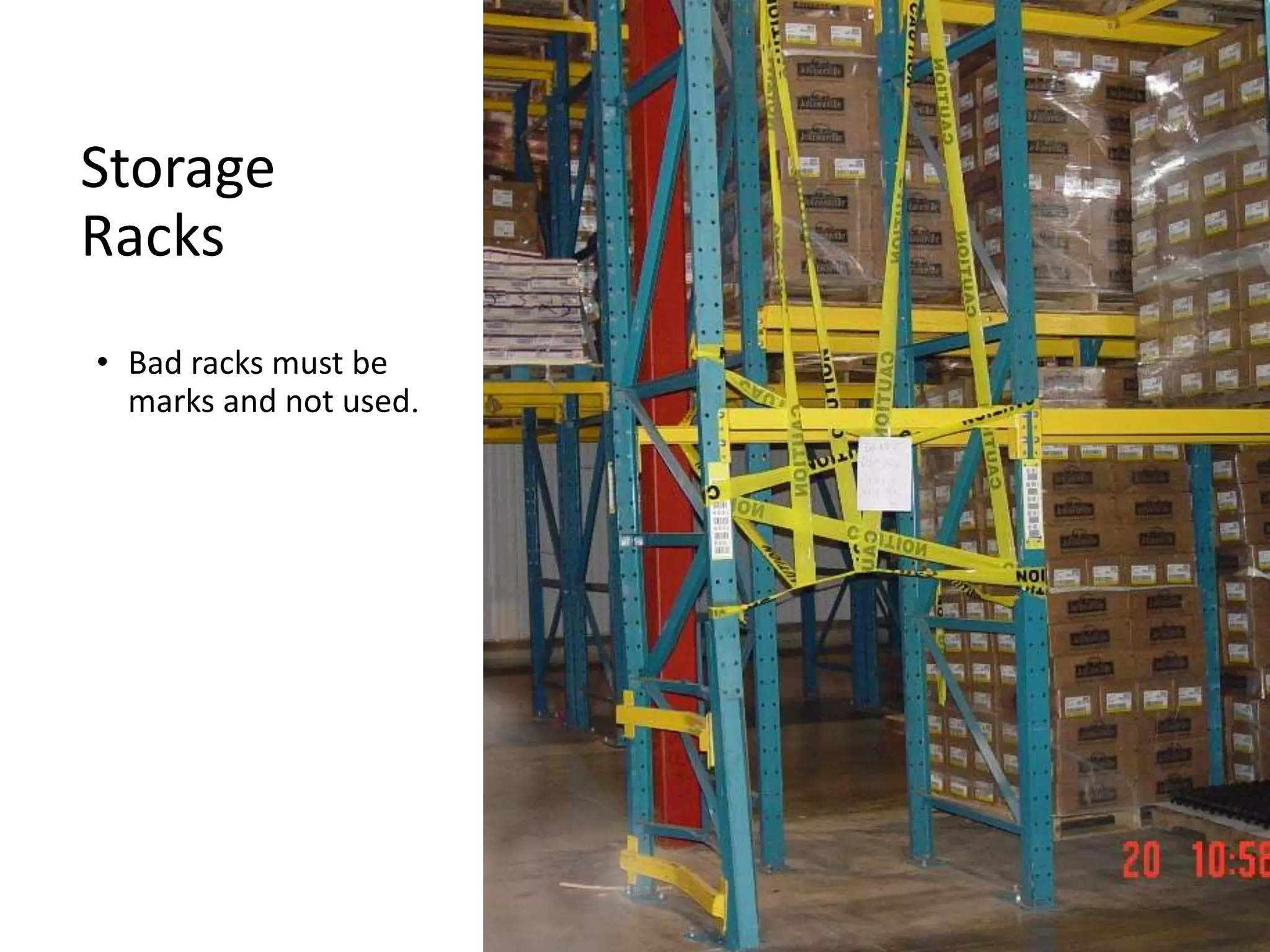
Storage
Racks
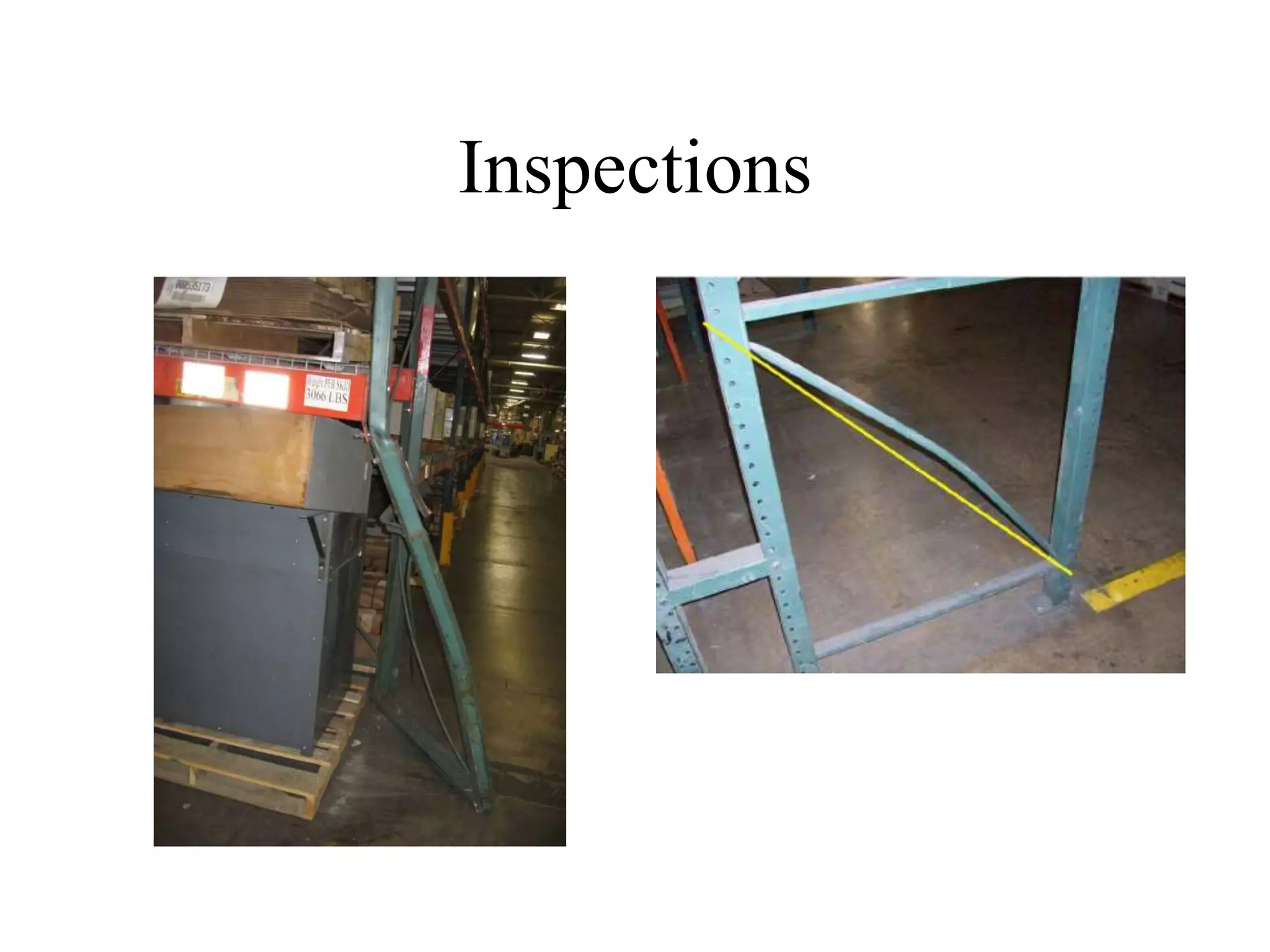
• Bad racks must be
marks and not used.
Pallet Flow Racks
Issues
Case Study
• Employees climbed
wooden grid to
knock off light
weight product to
the floor.
• What questions
would you ask?
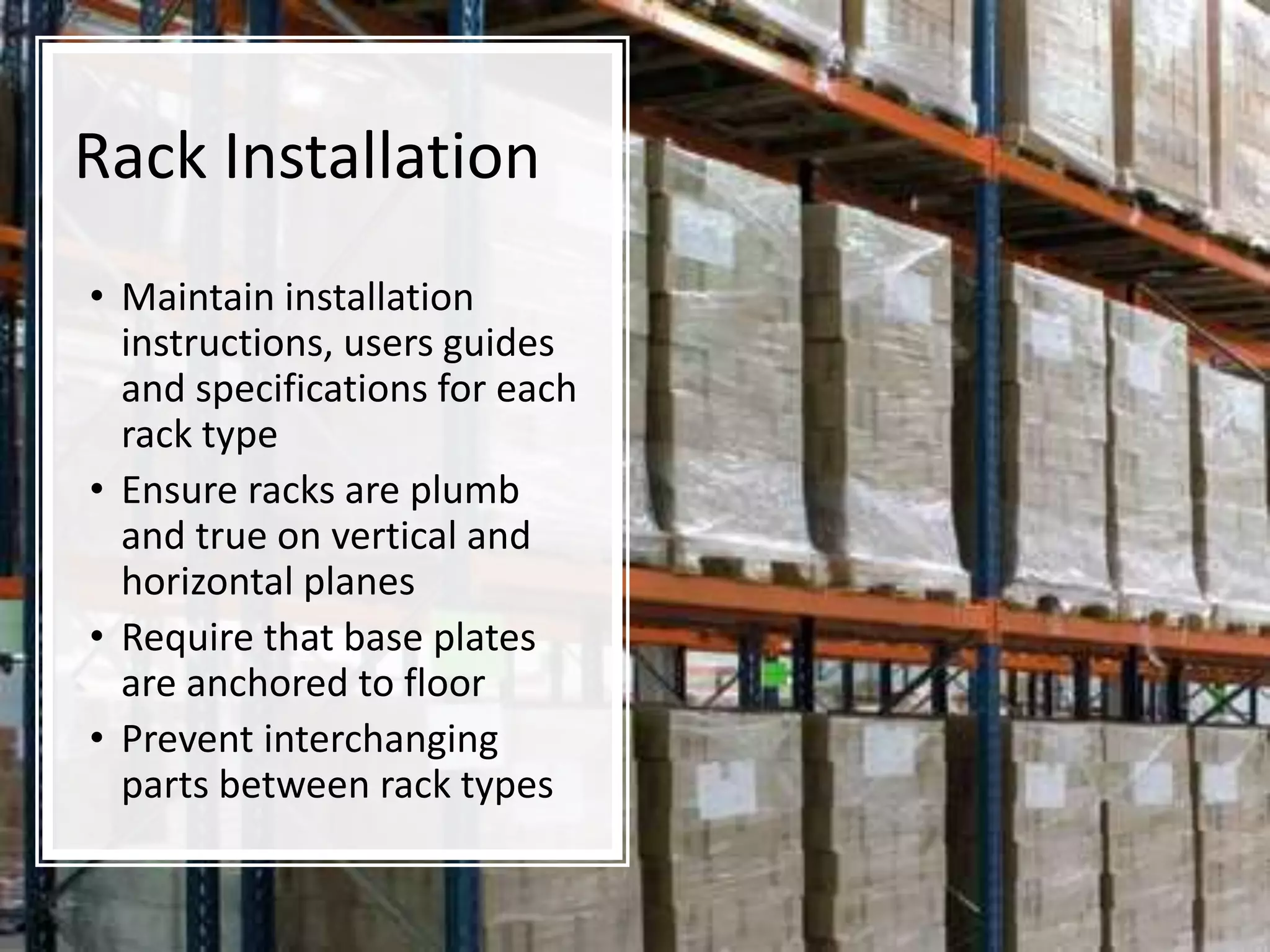
Rack Installation
• Maintain installation
instructions, users guides
and specifications for each
rack type
• Ensure racks are plumb
and true on vertical and
horizontal planes
• Require that base plates
are anchored to floor
• Prevent interchanging
parts between rack types
Collision Protection
V-Nose Boot Entry Guide rails
Collision Protection
Bollards Bent upright
Inspections
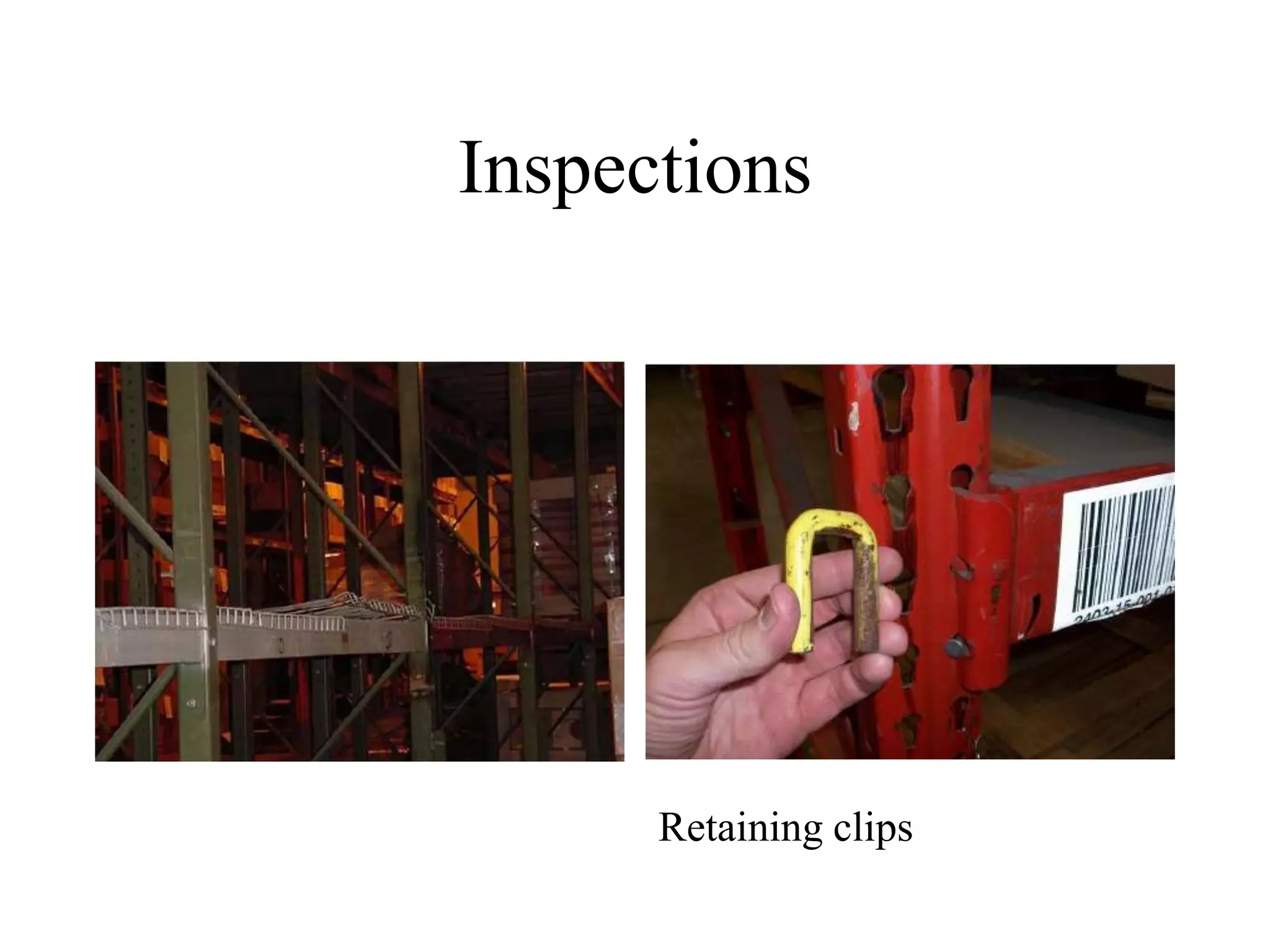
Inspections
Retaining clips
Inspections
Missing Retainer clips Spun base plate
Inspections
Missing base plate bolts
Inspections
Inspections
Good Repairs
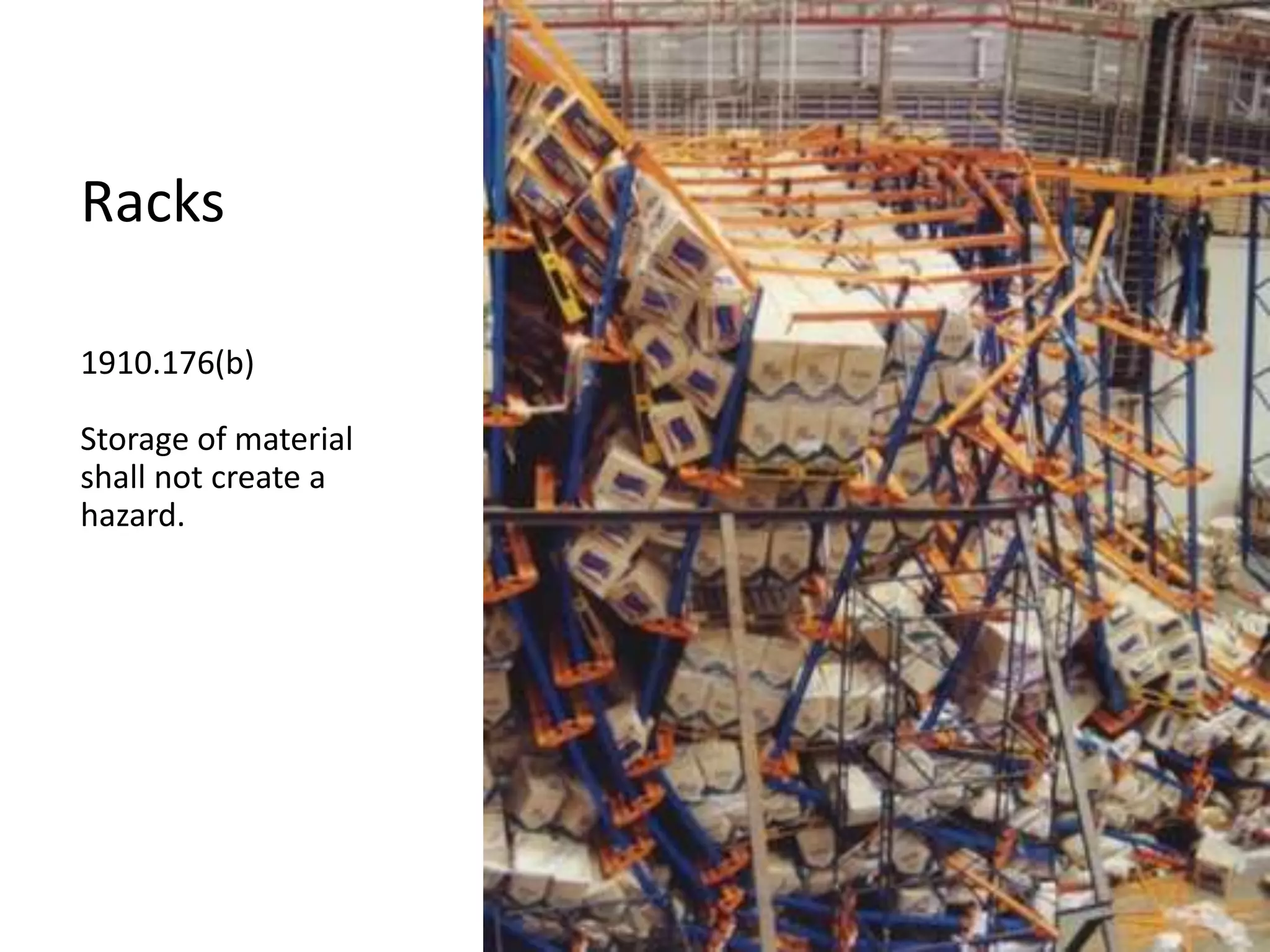
Racks
1910.176(b)
Storage of material
shall not create a
hazard.
ANSI
• OSHA regularly defers to ANSI
standards, which the Agency
calls “industry consensus
standards,” as evidence that a
hazard is “recognized.”
• Accordingly, OSHA generally
will take the position that an
employer must comply with
ANSI and industry standards to
protect employees from
recognized hazards, or face
possible inspections and costly
citations
ANSI Standard MH16.1
(2012)
• Published by the
Rack Manufacturers
Institute (RMI), is
the Specification for
the Design, Testing
and Utilization of
Industrial Steel
Storage Racks.
ANSI Standard
MH16.1
(2012)
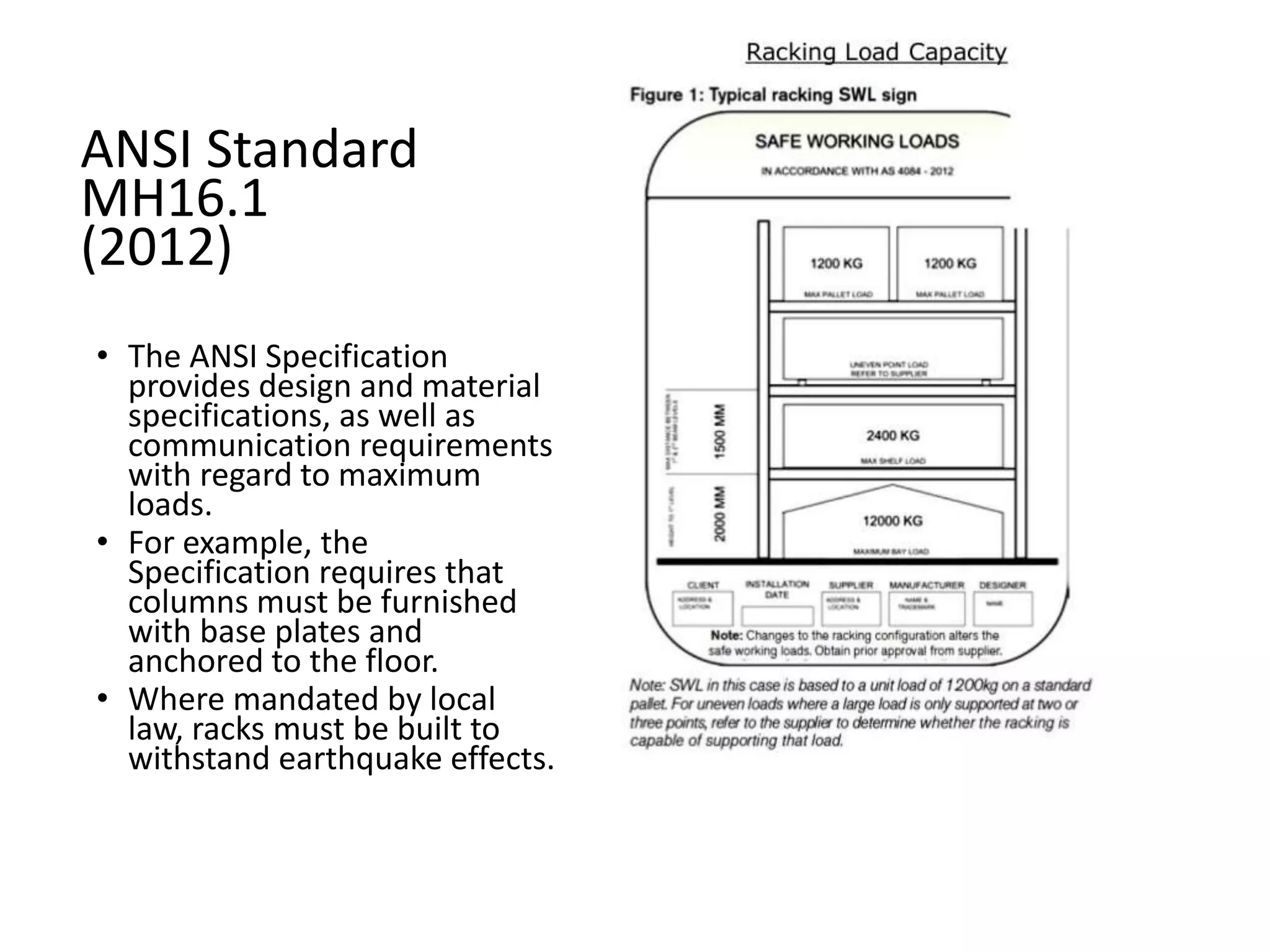
• The ANSI Specification
provides design and material
specifications, as well as
communication requirements
with regard to maximum
loads.
• For example, the
Specification requires that
columns must be furnished
with base plates and
anchored to the floor.
• Where mandated by local
law, racks must be built to
withstand earthquake effects.
ANSI Standard
MH16.1 (2012)
• Periodically inspect all
components of the rack
system for damage and
decay.
• Steel frame repairs and
modifications must be
designed by a qualified
engineer and installed
by qualified installers,
who must repair the
damaged storage rack to
a strength equal to or
greater than the original
load-bearing capacity
Ice
• Freezer areas must be
blocked off if ice is
present until cleaned
up.

Warehouse Storage and Racks 2017